

Let there be the Light: A new art gallery and museum opens in Durham
1 September 2026 • Tabish Khan
A £17m transformation has turned Durham’s former DLI Museum into The Light, opening with a dazzling contemporary exhibition
Dan Flavin was an American artist whose radical use of commercially available fluorescent light transformed the possibilities of sculpture and helped define Minimalism. From the early 1960s onwards, Flavin worked almost exclusively with standard fluorescent tubes, arranging light across walls, corners, floors and architectural spaces. Rather than concealing their industrial origins, he left the fixtures visible, turning ordinary manufactured objects into works in which colour, illumination and architecture became inseparable.
Born in New York in 1933, Flavin served in the United States Air Force before studying art history at the New School for Social Research and Columbia University. His earliest experiments with electric light emerged in the icons, a series begun in 1961 combining painted constructions with incandescent and fluorescent bulbs. In 1963 he created his breakthrough work, the diagonal of May 25, 1963 (to Constantin Brancusi), using a single fluorescent tube positioned diagonally against the wall. From this deliberately simple gesture, Flavin developed the visual vocabulary that would occupy him for the rest of his career.
Flavin restricted himself to commercially manufactured fluorescent lamps available in a limited range of standard lengths, shapes and colours. Within these constraints he discovered remarkable variation. Lines of white, yellow, pink, green, red and blue light could alter the apparent dimensions of a room, dissolve architectural boundaries or transform an overlooked corner into an intensely coloured environment. As his practice developed, the surrounding architecture became increasingly important, with installations extending across corridors and doorways or forming illuminated barriers that physically reorganised how viewers moved through a space.
Seriality and repetition also became central to his work. His long-running series of “monuments” for V. Tatlin, begun in 1964, used arrangements of white fluorescent tubes to reference the Russian Constructivist Vladimir Tatlin and his unrealised Monument to the Third International. Many other works were dedicated to artists, friends and public figures, giving Flavin’s apparently impersonal industrial structures an unexpectedly personal dimension.
Associated with artists including Donald Judd, Sol LeWitt and Carl Andre, Flavin became one of the defining figures of American Minimalism, although his transformation of entire spaces also anticipated the development of installation art. He died in 1996, leaving behind a body of work that fundamentally changed how artists could use light as a material. By reducing sculpture to fluorescent fixtures, colour and their interaction with architecture, Dan Flavin demonstrated that an artwork could be simultaneously an object, an atmosphere and an experience of space.
1 September 2026 • Tabish Khan
A £17m transformation has turned Durham’s former DLI Museum into The Light, opening with a dazzling contemporary exhibition
12 March 2026 • Mark Westall
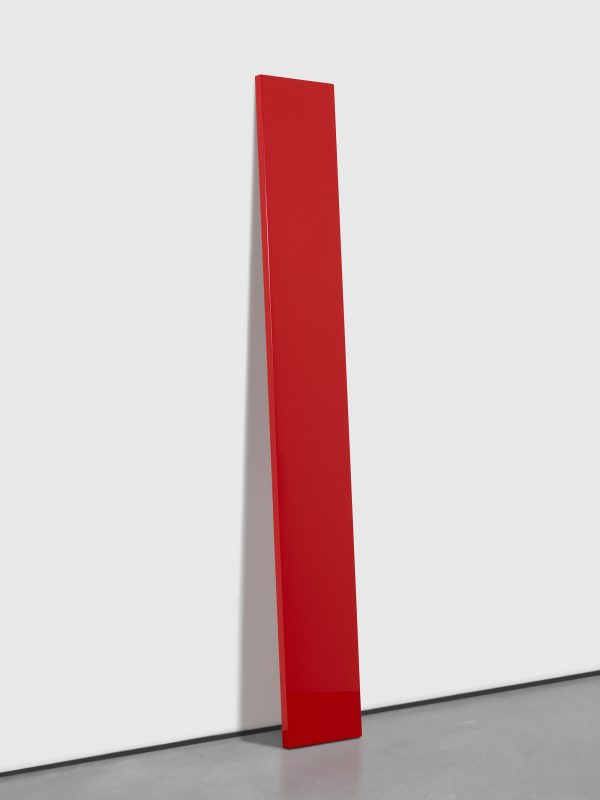
Dan Flavin, Donald Judd, John McCracken, Robert Ryman, and Fred Sandback 5 artists who helped redefine abstraction during the 60s and 70s.
22 March 2025 • Tabish Khan
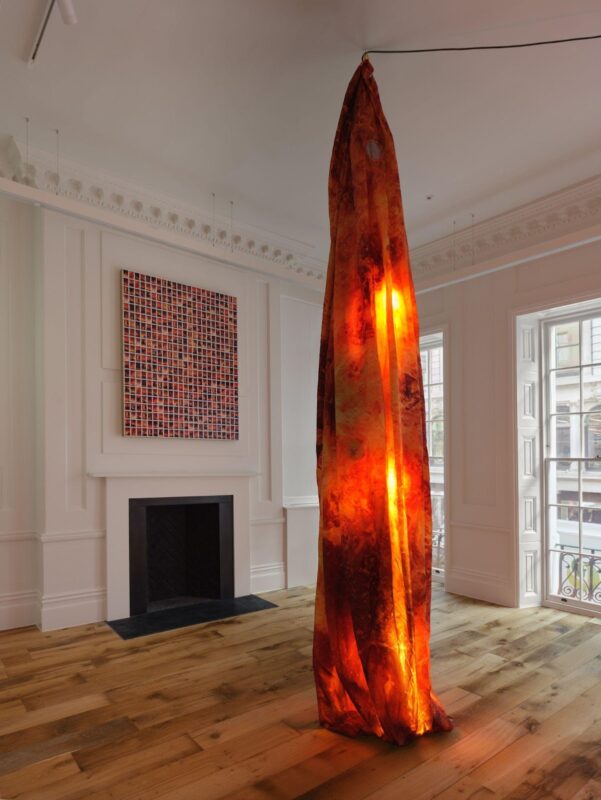
Playing cards, lights, fake flowers, plastic sculpture and submerged paintings.
29 January 2023 • Tabish Khan
Tabish Khan the @LondonArtCritic picks his favourite Top 5 Exhibitions to see in London right now.
10 January 2023 • Mark Westall
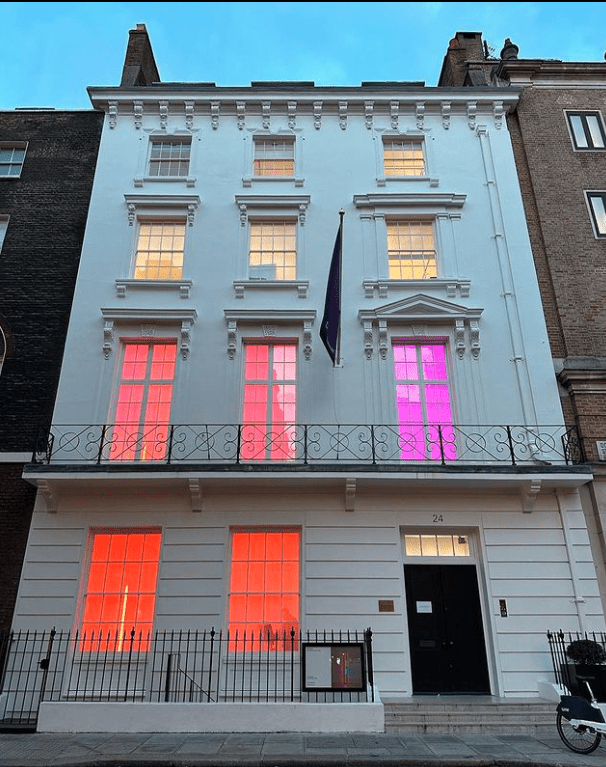
David Zwirner to show works that recreate the artist’s momentous colored fluorescent light exhibitions, which took place at Leo Castelli Gallery and Galerie Heiner Friedrich in New York and Cologne in 1976.
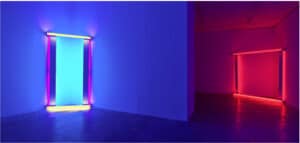
12 November 2021 • Mark Westall
Gagosian presents two sculptures by Dan Flavin: untitled (to Barnett Newman) two (1971), and untitled (to Sabine and Holger) (1966–71). The dates of the… Read More
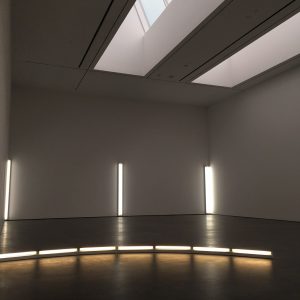
19 March 2018 • Staff
This week I crossed the Atlantic just in time to miss all of New York’s fairs (The Armory, Volta, NADA, Independent…). The city is far from barren though and on my first day I headed towards Chelsea’s galleries for an unexpected celluloid and neon trail, starting with David Zwirner.
11 October 2017 • Paul Carey-Kent
There’s always plenty of interesting stuff at Frieze London and Frieze Masters, whether or not you like it as art. Here are four unusual works which I did also rate highly as art.
25 June 2017 • Tabish Khan
Art critic Tabish Khan brings you the top art exhibitions to visit every week.
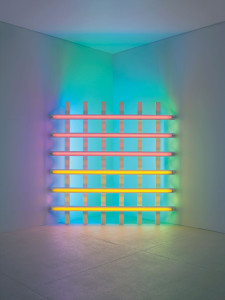
19 January 2016 • Mark Westall
Ikon is to present a major exhibition of fluorescent light works by Dan Flavin ..
1 April 2015 • Paul Carey-Kent
Dan Flavin: ‘Untitled (to Alan Shepard in honour of the upward and downward journey)’, 1984 I’ve mentioned before that it’s… Read More
14 January 2012 • Mark Westall
The exhibition brings together 8 works starting in 1963
9 September 2009 • Mark Westall
East Galleries 10th September – 31st October 2009 This autumn, Haunch of Venison London will explore the connections between four… Read More
1 June 2009 • Mark Westall
Byron Kim, Synecdoche 1991 © Courtesy of Max Protetch Gallery. At a time of unprecedented interest in the role of… Read More
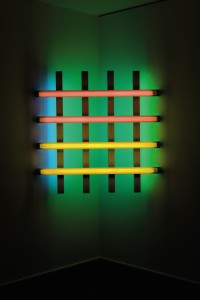
8 May 2009 • Mark Westall
MAJOR WORKS BY ROBERT GOBER, PHILIP GUSTON, JOHN BALDESSARI, ED RUSCHA, DONALD JUDD AND DAN FLAVIN TO BE OFFERED Phillips… Read More
24 March 2009 • Mark Westall
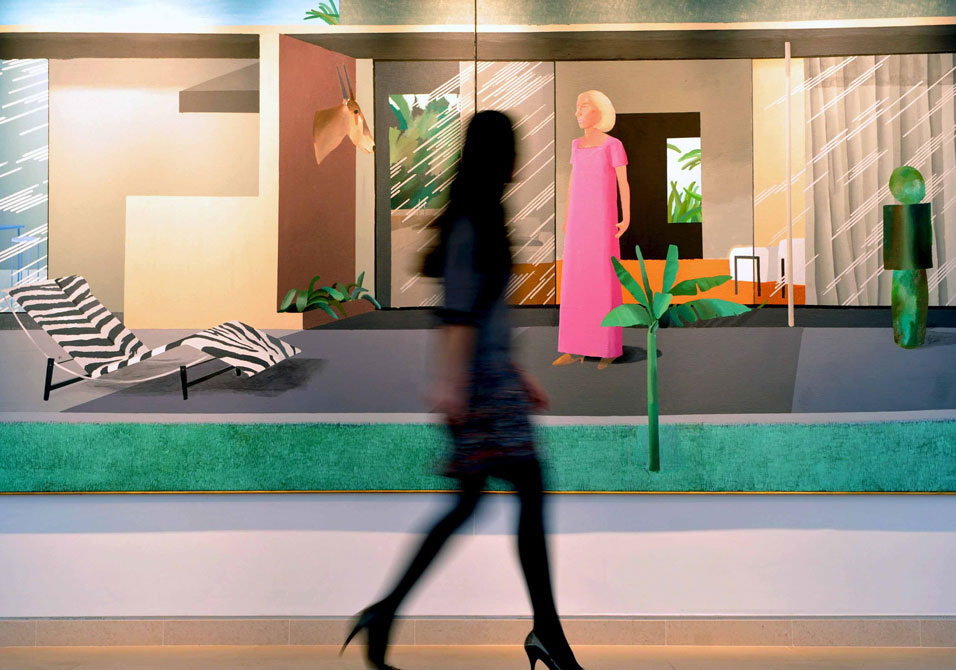
Christie’s will offer a selection of works from the Collection of Betty Freeman in the May 13 Post-War & Contemporary… Read More
19 March 2009 • Mark Westall
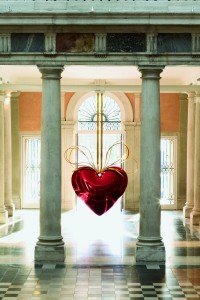
Hanging Heart (Red/Gold), 1994–2006 High chromium stainless steel with transparent colour coating 291 x 280 x 101.5 cm© Jeff Koons… Read More
7 January 2009 • Mark Westall
A battle to persuade HM Revenue & Customs that video installations and light sculptures are works of art has been… Read More