With essays by Petra Lange-Berndt and Esther Leslie, and an interview with Susanna Greeves – White Cube, 2025, 176 pages, £45
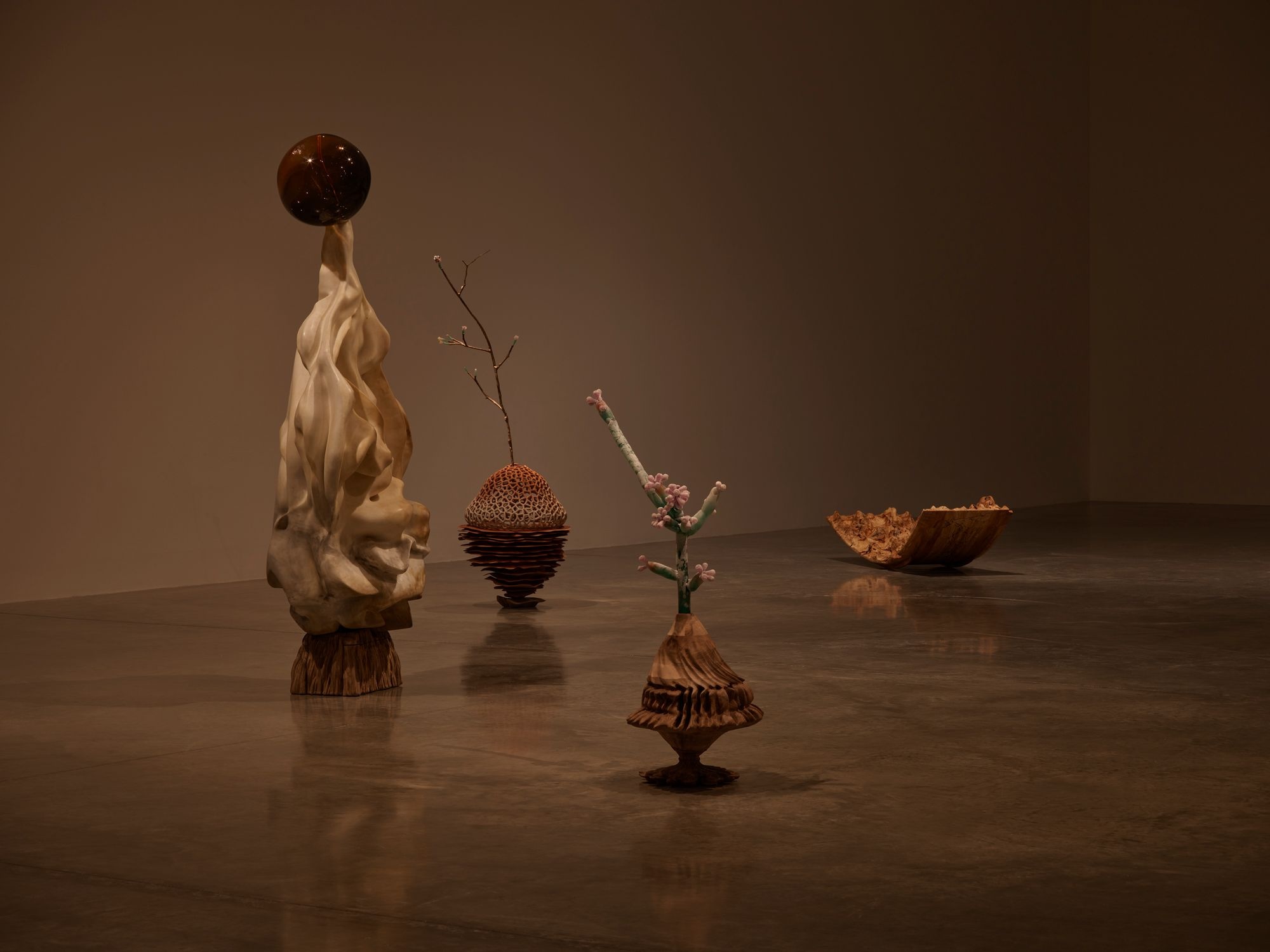
This year’s Turner Prize shortlist* is better than the recent average. My personal favourite, judged by previous work rather than the show for which she was nominated (last year’s ‘Torches’, presented in Copenhagen and Helsinki) is the London-based French artist Marguerite Humeau. I would have shortlisted her earlier, for ‘Meys’ at White Cube Bermondsey in 2023. White Cube’s publication gives a convenient overview of her practice through deep consideration of the aforementioned ‘Meys’ (London, 2023); the land art project ‘Orisons’ (Colorado, 2023), and the related works in ‘Dust’ (Korea, 2024). Two substantial essays, an interview with Humeau, and many illustrations serve to demonstrate what makes her an artist worthy of the Turner Prize: that she has fascinating and unusual ideas, and they lead to compelling sculptural forms.
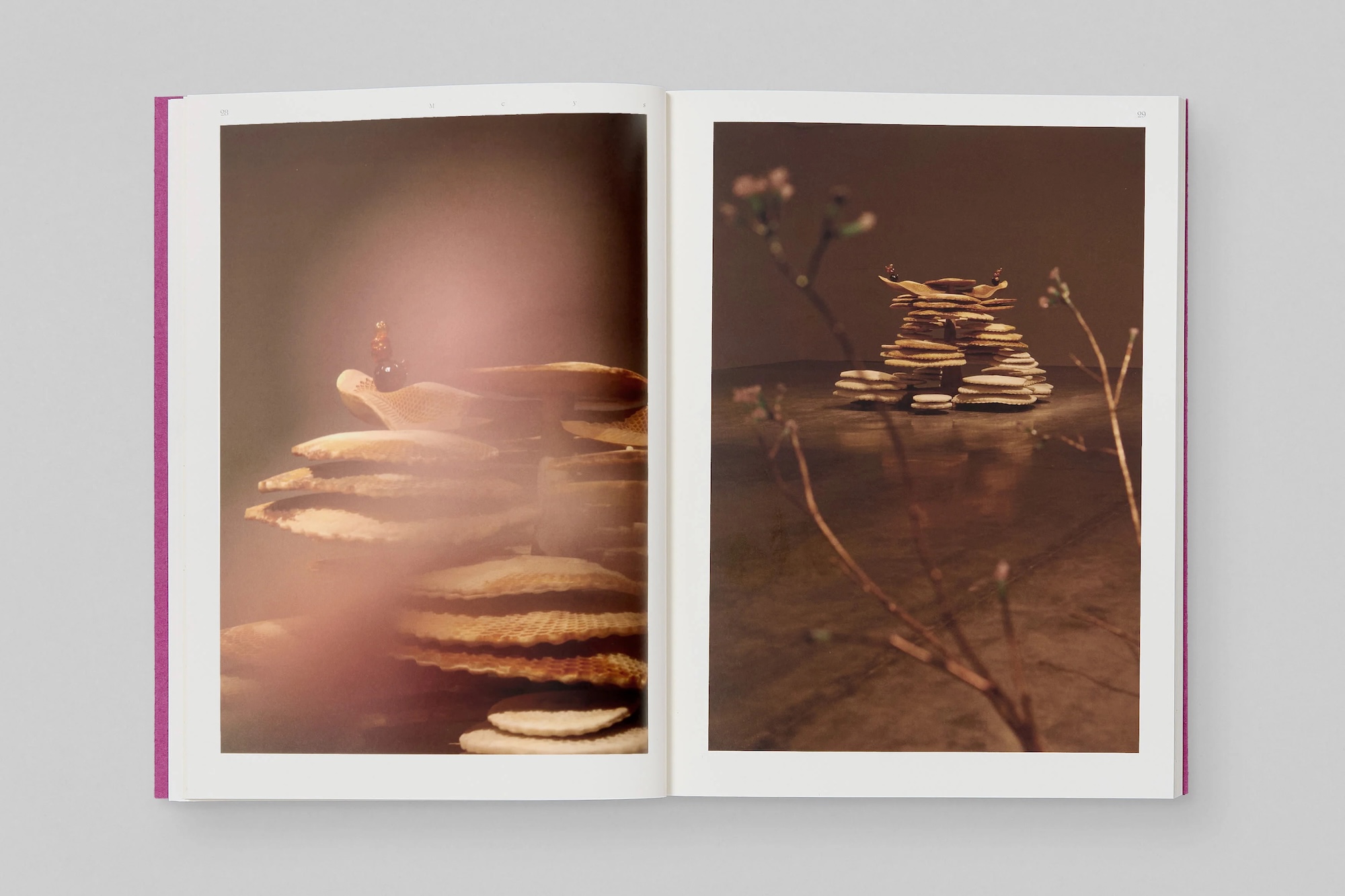
Humeau’s signature move is to approach the endangered status of humans by identifying companion species to play a major role in her art, and asking: what can we learn from them that might help preserve us? That led her to speculate (in ‘FOXP2’, 2016) on what would have happened had elephants been the first intelligent beings to evolve. ‘Meys’ proposes that we learn from termites, social insects that probably farmed fungi before homo sapiens moved into agriculture, and have perfected mutual aid. Consistent with that, Humeau’s art-making is widely collaborative: she fed still images into AI as the basis for 3D sculptures made by robots; and various experts contributed to a complex installation that also included yeasts, wax, poisons and a specially-composed soundtrack.
So what could we learn from how social insects organise themselves? Petra Lange-Berndt mentions how so-called ‘insect states’ – networks that consist of several million individuals – feed into debates about the human order. Social animals have out-manoeuvred the solitary through self-management founded on cooperative communication, division of labour, and the concerted action of the collective. True, their organic unity has been used to justify totalitarian systems, but perhaps we can take more positive inspiration by ‘being singular plural’, a concept from Jean-Luc Nancy. That might suggest a way forward – as could viewing AI as more akin to a collective intelligence than an individual genius.
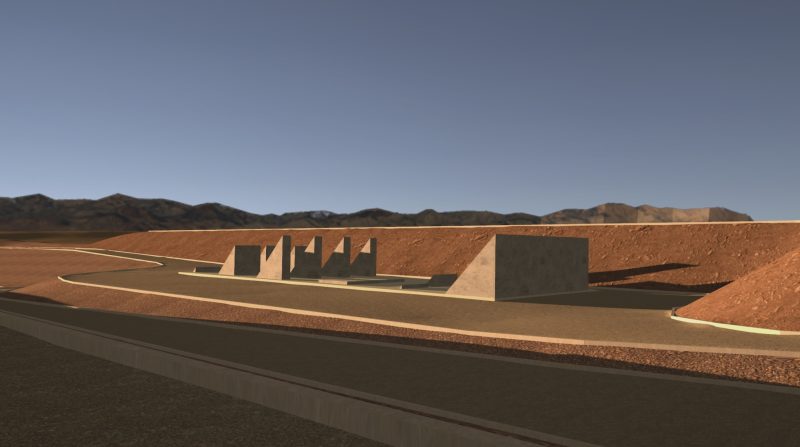
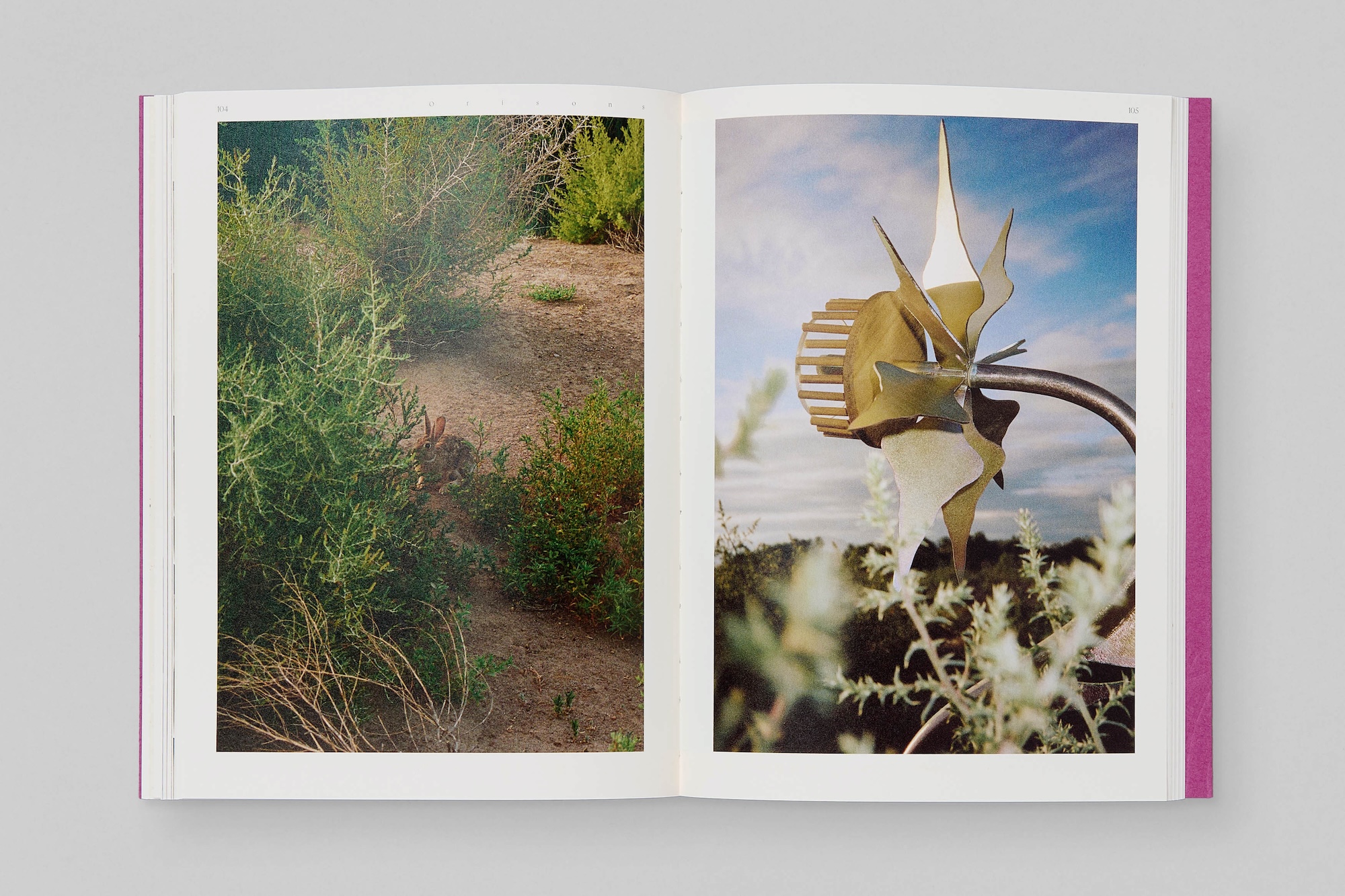
The 160-acre ‘Orison’ – the title invokes both prayer and scanning a horizon – is the biggest work of land art ever made by a woman, but it’s also modest. In Humeau’s words: ‘It was about restoring care for the land through the act of seeing. That’s where the project shifted at some point from working on a land artwork to thinking of the land as the artwork.’ Humeau’s interventions are comparatively small in their context, and respond to the atmospheric flows: the main companion species is the sandhill crane, with flute sculptures recreating their song, and hammocks shaped after them in flight. Plants also take a leading role, consistent with how, as Esther Leslie explains, they ‘process data constantly, just as humans and computers do’, enabling them to distinguish and respond to changes in light and vibrations – to show a sensitivity that might be called intelligence.
All of which can only hint at the richness and originality of Humeau’s work if explored fully, which ‘Auguries’ will help you to do. Yet you can also enjoy her sculptures as spectacle, as the outcomes of processes you don’t pretend to understand.
* Simeon Barclay, Kira Freije, Marguerite Humeau, and Tanoa Sasraku
Paul Carey-Kent selects a ‘Gallery of the Month’, a ‘Show of the Month’, a ‘Work of the Month’ and a ‘Book of the Month’ for his weekly column in FAD. A collection of previous gallery columns ‘Paul’s Galleries To Go’, is available from FAD.