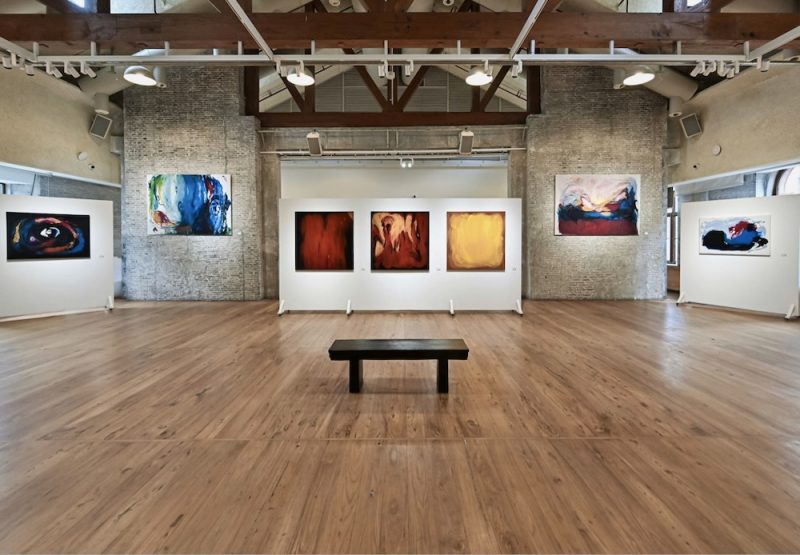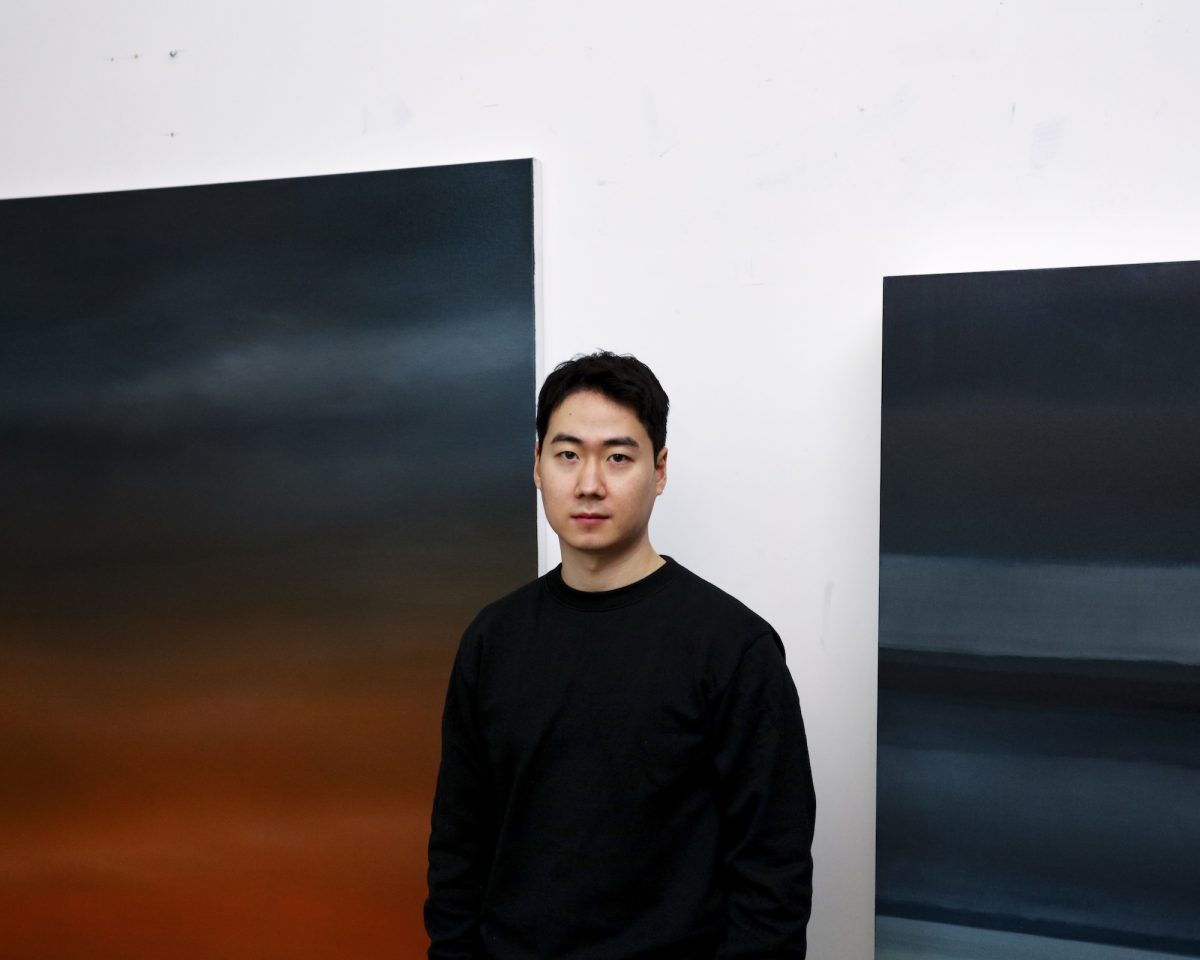
Stare into the intense, brooding paintings of Min Woo Nam, and what do you see? Is it a landscape, a seascape, a set of clouds, a portal to another world, a reflection of the emotional turmoil of the artist’s psyche? It’s the same question millions have asked themselves when they sit in front of Mark Rothko’s Seagram Murals at Tate Modern, or in the Rothko Chapel in Houston, Texas.
When you look at his paintings for long enough, you find yourself sucked into the darkness that appears to continue receding, as if we’re falling into a black hole or floating off into space. It’s a journey that will be comforting to some as they are enveloped by the darkness, and disturbing to others as they lose themselves.
Just as it takes our eyes up to thirty minutes to fully adjust to seeing in the dark, so do these paintings reveal themselves who spend time noticing the subtle gradations of colour and the almost imperceptible brushstrokes. Recent studies have found that the average visitor to an art gallery spends eight seconds looking at an artwork, prompting institutions to encourage slow looking. Min Woo Nam’s paintings are a clear case in point where slowing down to become fully absorbed in each work is the most rewarding way to view them.
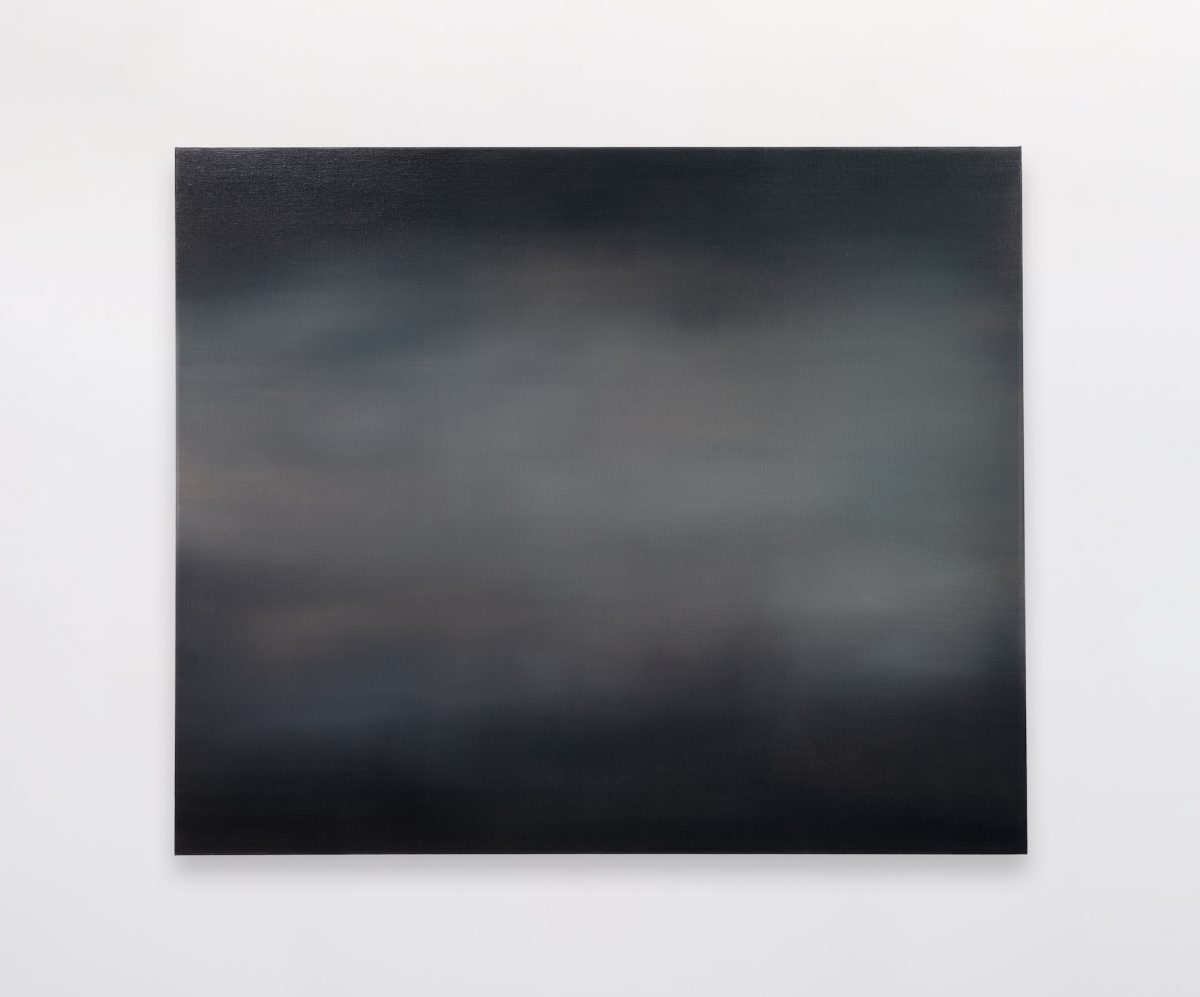
In the works where the two halves of a painting are split by a change in colour, it’s understandable to see them as seascapes, and they remind me of the black and white photographs of the sea by Hiroshi Sugimoto. However, there is more at play here: these paintings are based on memories of places and are painted in layers. A memory is more than what we saw at a particular moment: it’s the smells, the taste, and the emotions we felt at the time. They are seascapes and landscapes that are as psychological as they are physical.
The use of dark colours ensures there’s a sense of mystery that remains hidden from us, emotions that are just out of view, shrouded in the darkness. Is it something we’ll unlock if we look for long enough, or will it forever remain out of reach?
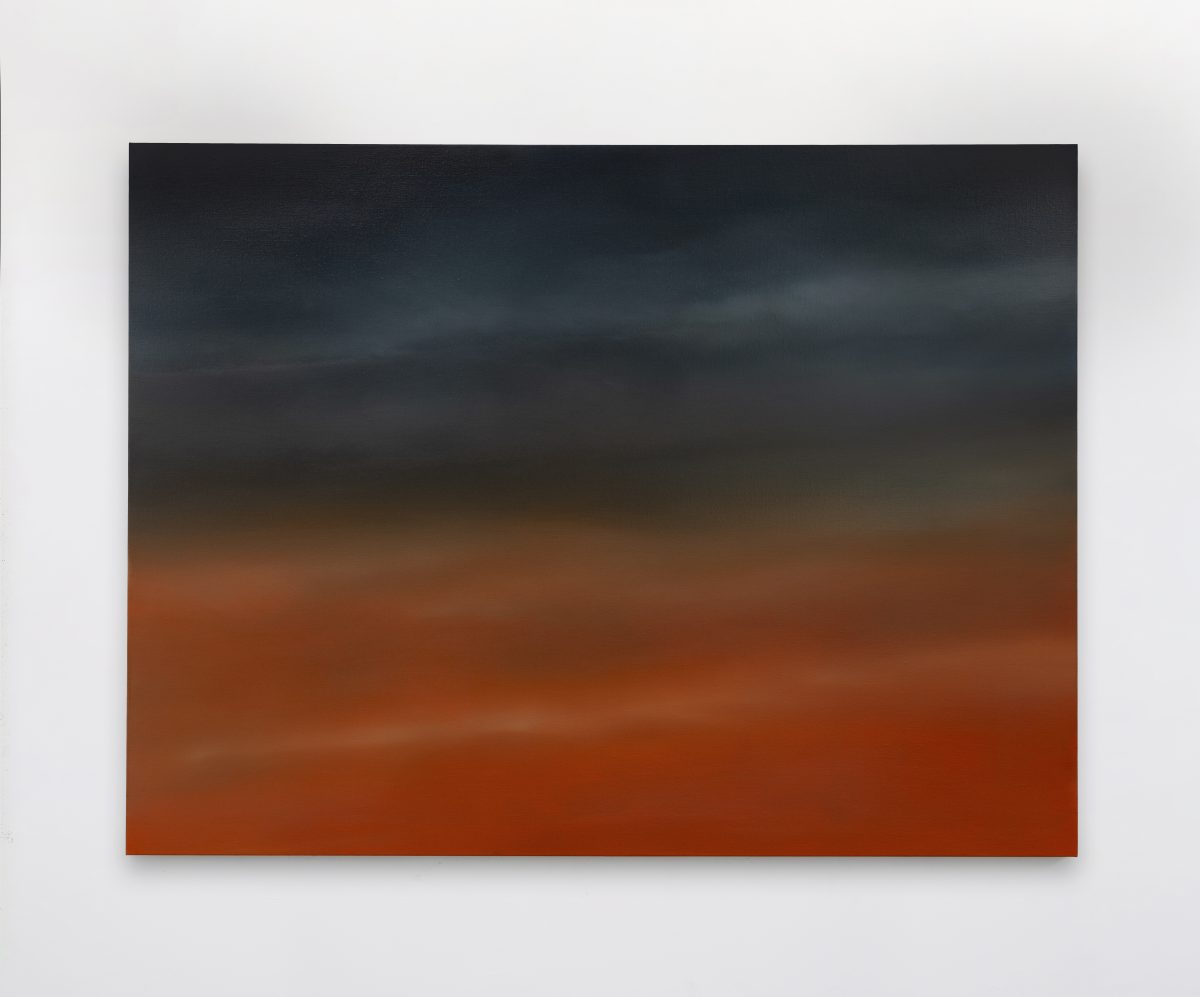
It’s this intensity that draws comparison to the works of Mark Rothko, but we can just as easily see similarities in works by Robert Motherwell, Clyfford Still, and, more recently, Sean Scully. I also see a link to Kazimir Malevich’s ‘Black Square’, in that it is about capturing the essence of the moment, rather than an accurate representation of the memory, even if Min Woo Nam’s works are more technically accomplished than those of the aforementioned artists.
Ultimately, the viewer will decide how to interpret the work, whether that is a memory of a particular place and time, a reflection of the emotions they feel at the moment, or a reflection of emotions from a more emotional time in their past. What these paintings by Min Woo Nam do is open a portal into his world, inviting all of us to step through it and become part of his journey.
You can find more information on Min Woo Nam’s paintings through his website and Instagram.