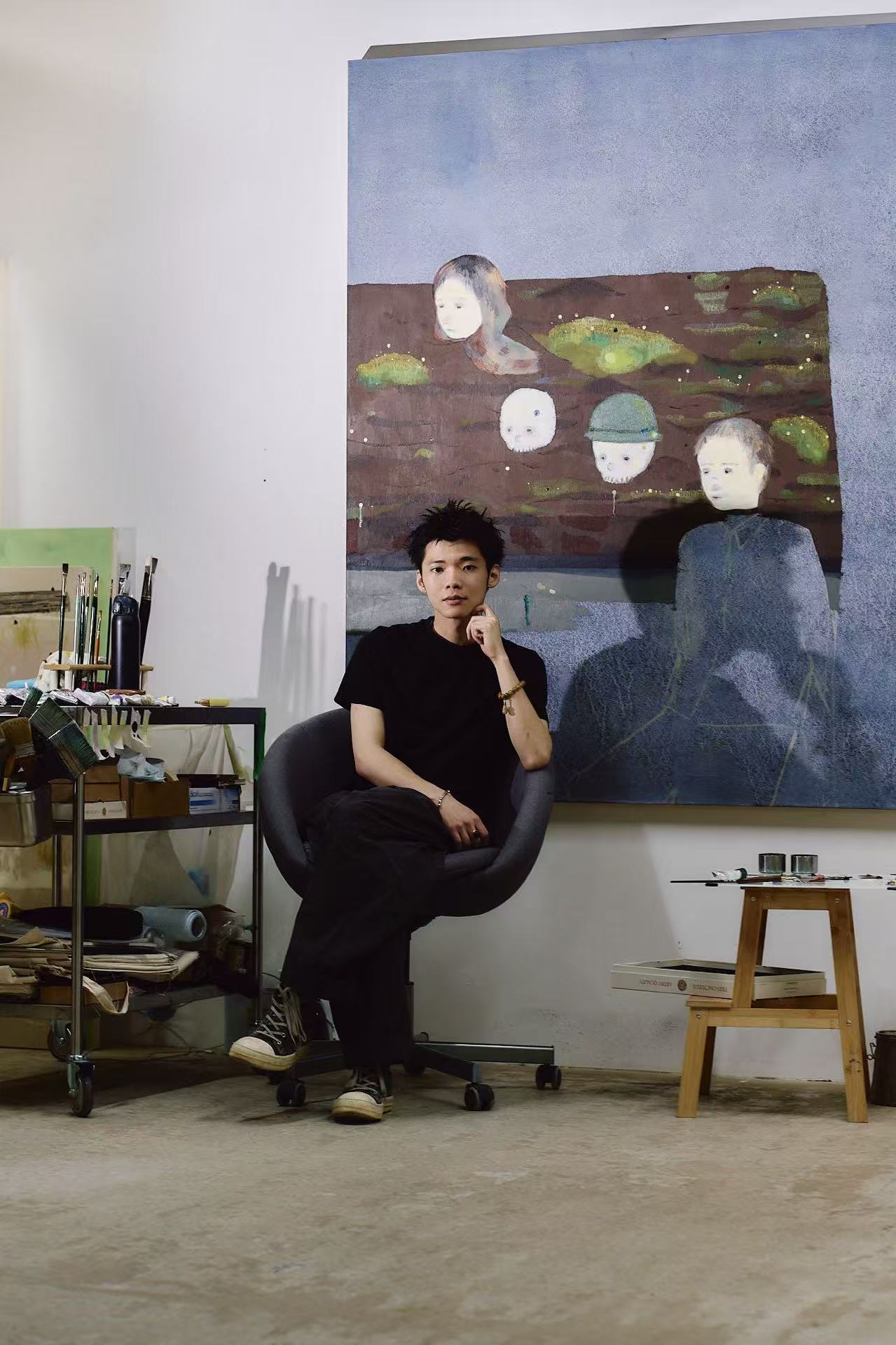
Hao Xing (b. 2001, Shenzhen, China) is a London-based painter whose work unfolds as a series of visual riddles—fragmented, elusive, and quietly disorienting. Drawing on folklore, ghost stories, literature, and personal recollections, Xing constructs layered compositions where symbols are collaged, displaced, and reassembled. The result is a body of work that questions how reality is formed, remembered, and misread, offering instead a fleeting, speculative alternative.
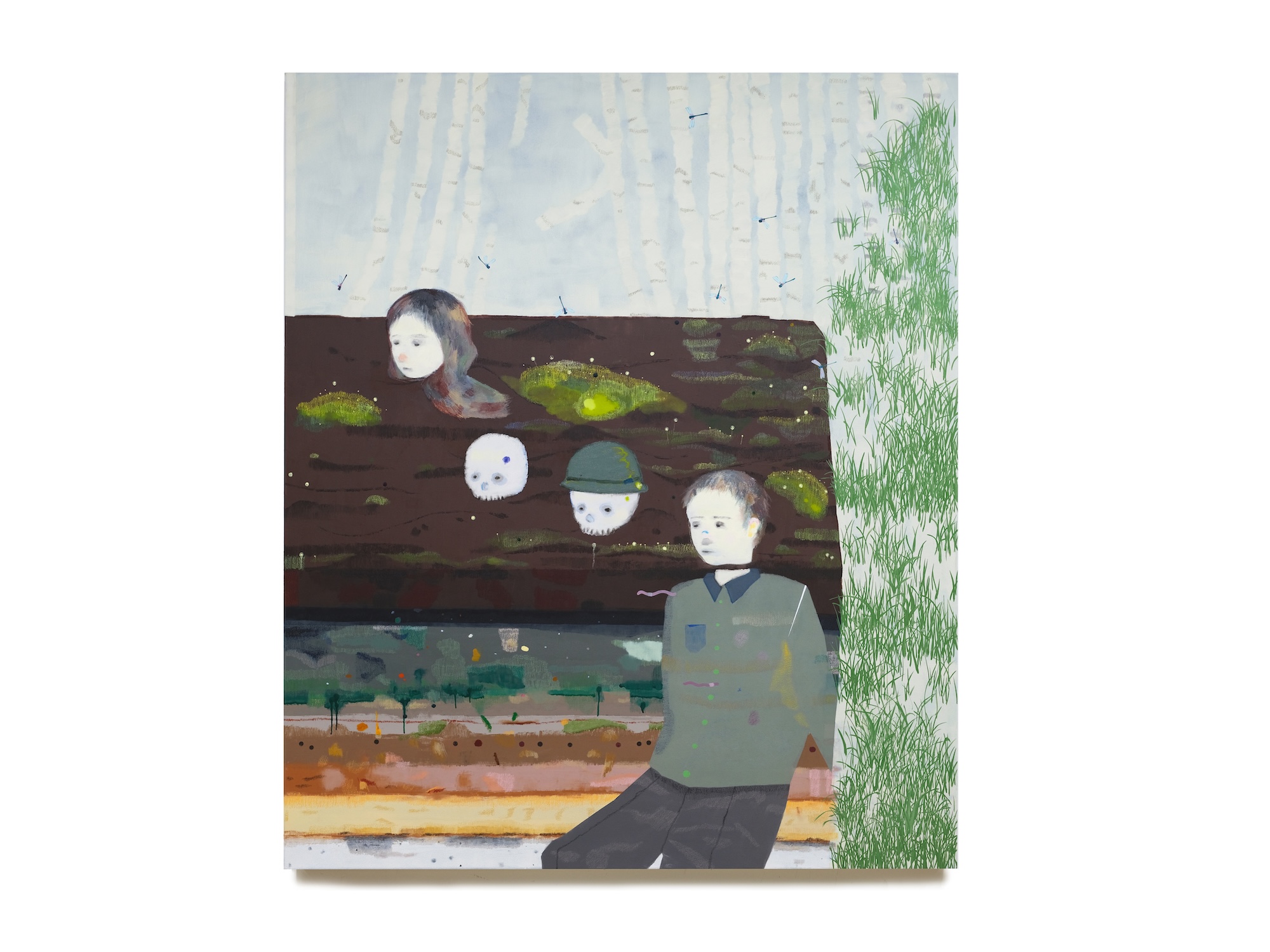
Working primarily in oil, Xing approaches painting as a process of assembling clues. Figures, architectural fragments, animals, and abstract marks drift across his canvases, rarely anchored to a fixed time or place. Instead, they occupy a shifting, indeterminate field—something akin to the lingering afterimage on the retina, where a residual image flickers after the source has disappeared. In this space, perception is unstable and meaning remains provisional; what is seen is always in the process of becoming something else.
Central to Xing’s practice is the notion of the “pretext,” a device borrowed from literary construction. Through it, he weaves together disparate elements—historical references, imagined narratives, and fragments of everyday life—to construct scenes that feel both staged and strangely familiar. These compositions do not function as direct representations of reality, but as speculative frameworks through which reality can be reconsidered. Memory and the present are continuously interwoven, allowing the artist to reflect on personal history while also engaging with broader social and cultural shifts.
The influence of Chinese classical allegory and zhiguai (records of anomalies) fiction is palpable throughout his work. Echoing texts such as Strange Tales from a Chinese Studio, Xing draws on the logic of ghost stories, where the supernatural operates as a metaphor for the unpredictability of fate and the fragility of individual agency. In his paintings, ghosts are not literal figures but conditions—manifesting through disjointed scenes, improbable juxtapositions, and an atmosphere of quiet unease. Through these strategies, Xing expresses an underlying sense of absurdity and powerlessness that resonates with contemporary experience.
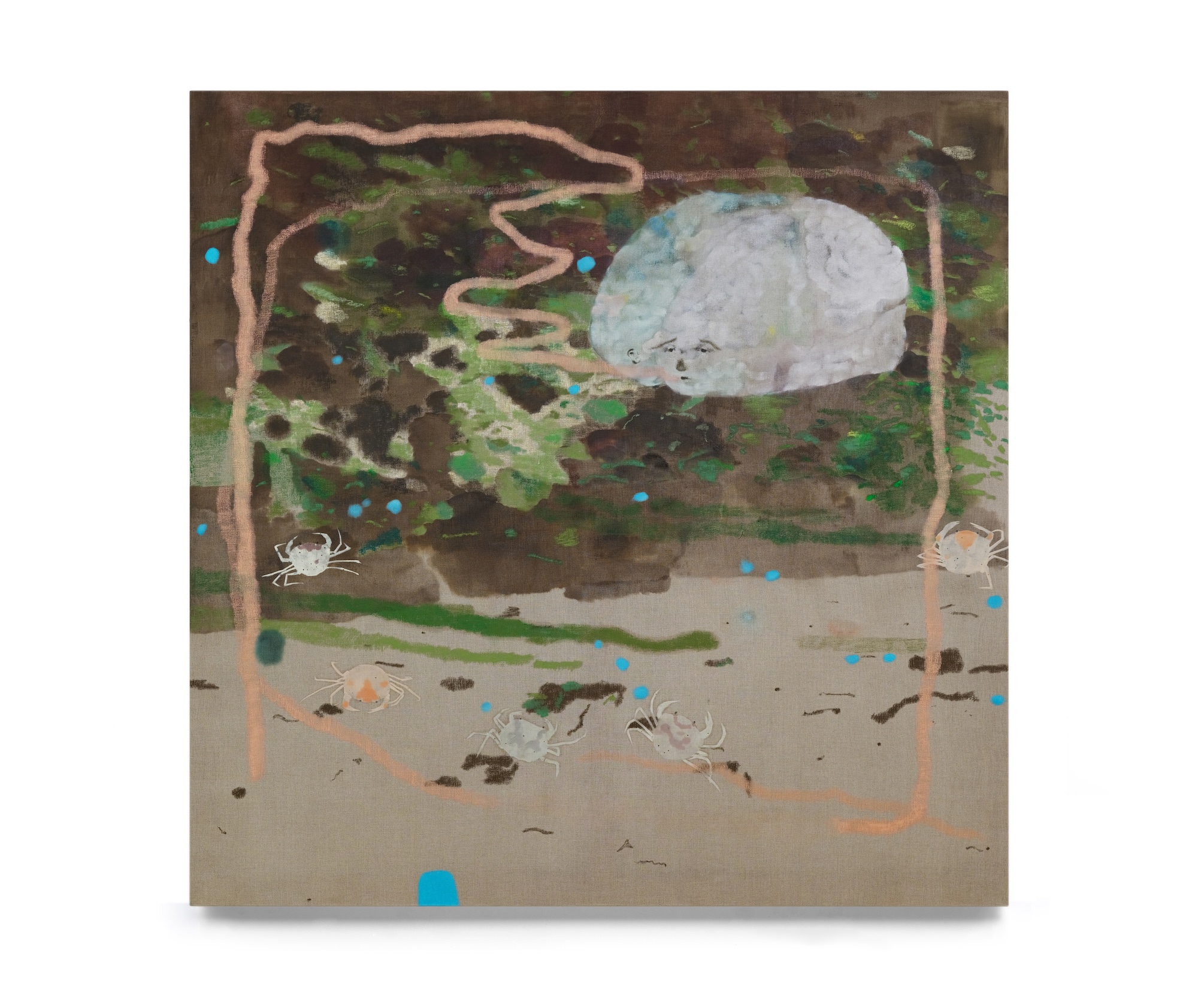
This sense of temporal and spatial dislocation is heightened by recurring motifs: interior spaces reminiscent of Suzhou garden architecture, industrial relics, hybrid animals, and geometric interruptions that appear and vanish without explanation. These elements carry traces of both personal memory and collective history, yet remain curiously out of place, suspended between eras. Xing deliberately obscures historical specificity, creating instead a floating, ambiguous environment where past and present overlap without resolution. The effect is one of subtle tension—an aesthetic of restraint where meaning is deferred rather than declared.
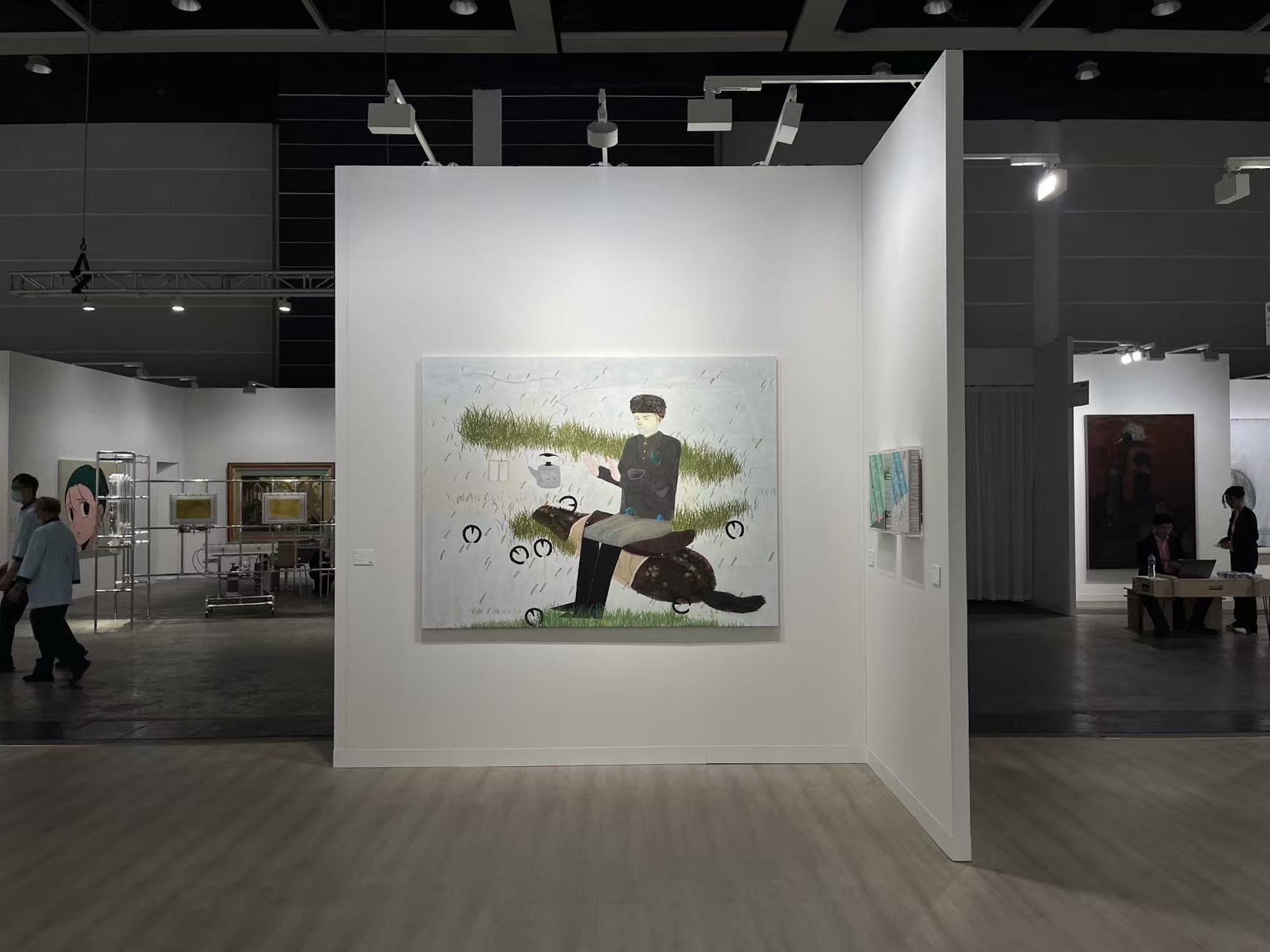
In works such as Afterimage, Xing extends this logic into a meditation on visual and historical persistence. A figure warming his hands, a horse dissolving into grass, a floating kettle—these scattered details operate like residues of a narrative that cannot fully cohere. The “afterimage” becomes both a perceptual phenomenon and a historical condition: a way of describing how past systems, symbols, and hierarchies continue to linger within the present, ghost-like and fragmented. Rather than reconstructing history, Xing allows it to surface in partial, unstable forms.
Underlying this approach is a sustained interest in uncertainty. Xing often describes his pictorial space as akin to fortune-telling—a speculative field where outcomes are not fixed but composed of multiple possibilities. This perspective resists definitive statements, favouring instead a mode of open-ended inquiry. His paintings do not resolve into a single reading; they remain deliberately indeterminate, inviting viewers to navigate their own paths through the imagery.
Materially, Xing treats painting as both a controlled and unpredictable process. While compositions may begin with carefully selected references drawn from his personal archive of images and texts, the act of painting itself introduces shifts and disruptions. Colour relationships, textures, and painterly gestures play an active role in shaping the final work, allowing unforeseen connections to emerge. In this way, the medium is not simply a vehicle for content but an integral part of the thinking process—where surface, structure, and meaning evolve together.
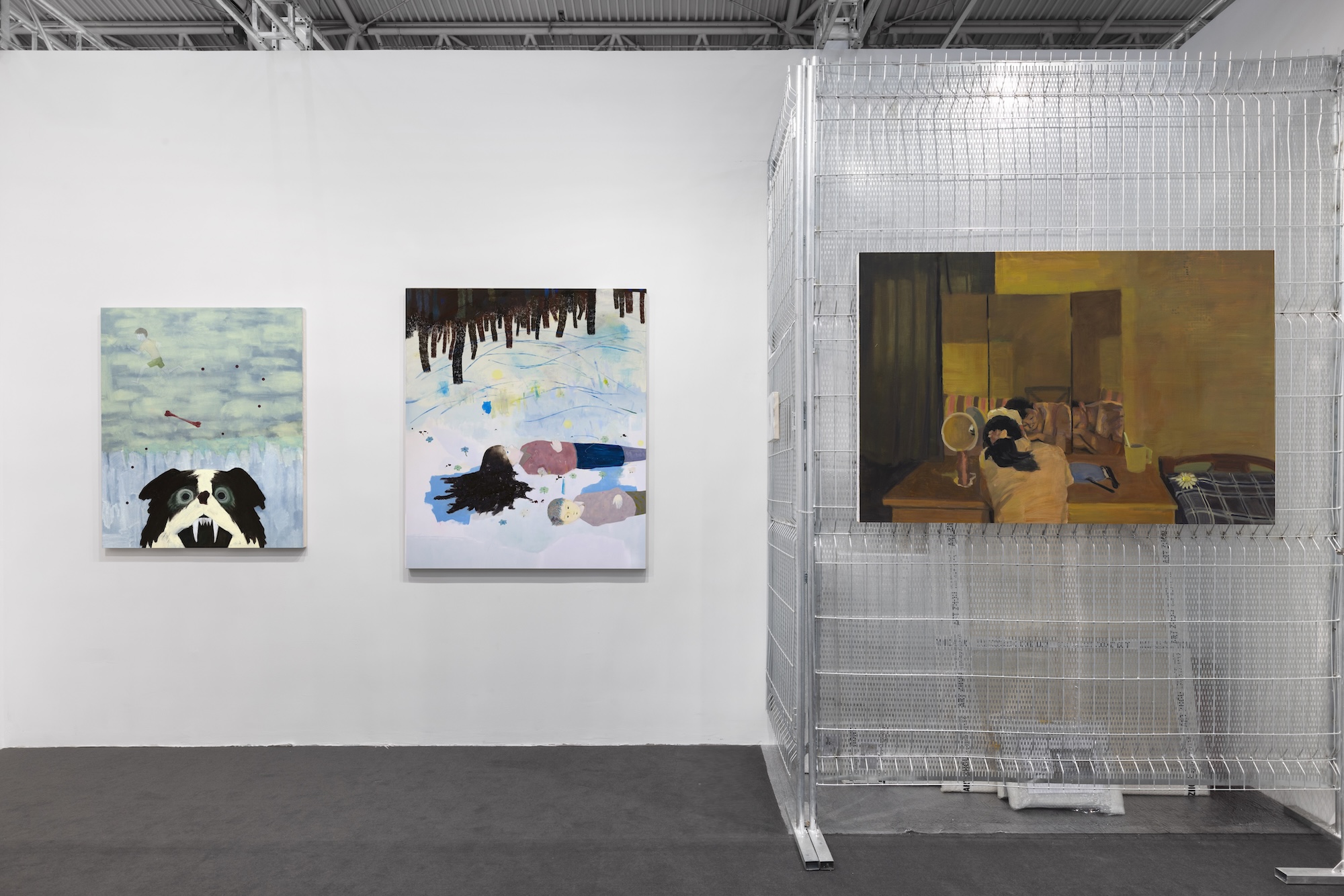
By adding a touch of fiction to the everyday, Hao Xing reinterprets daily life as something unstable and open-ended. His works hover between clarity and confusion, intimacy and estrangement, drawing viewers into a space where fragments accumulate, and logic loosens. Rather than offering answers, Xing constructs environments in which questions persist—where reality is not fixed, but continuously unravelled and reimagined.
MORE: @x_inghao