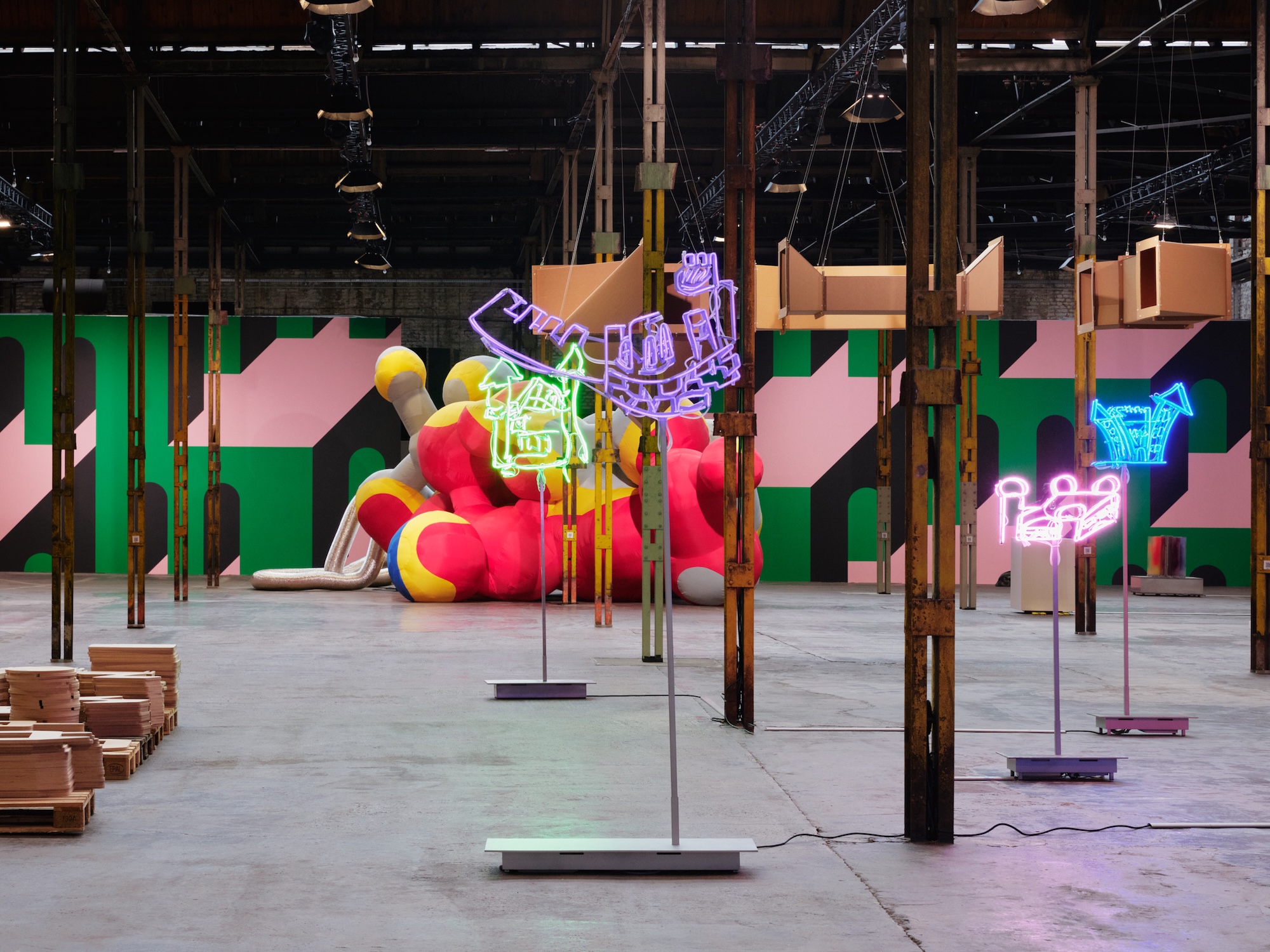
The 7th edition of HALLEN art festival takes over Berlin’s Reinickendorf district during Berlin Art Week, bringing together more than 40 participants spanning major art institutions, corporate collections and commercial galleries.
The line-up includes first-time participants such as Schirn Kunsthalle Frankfurt alongside returning names including the Berlinische Galerie, with contemporary art and video installations joined by a wider programme of design, live music, performances and workshops.
HALLEN doesn’t have an overarching theme, but sometimes it’s more interesting when one emerges by accident.
This year, four presentations focusing on digital art create a perhaps unintended conversation around how artists are working with technology — and, just as importantly, what happens when work born from software, networks and digital culture enters the decidedly physical environment of an art festival.
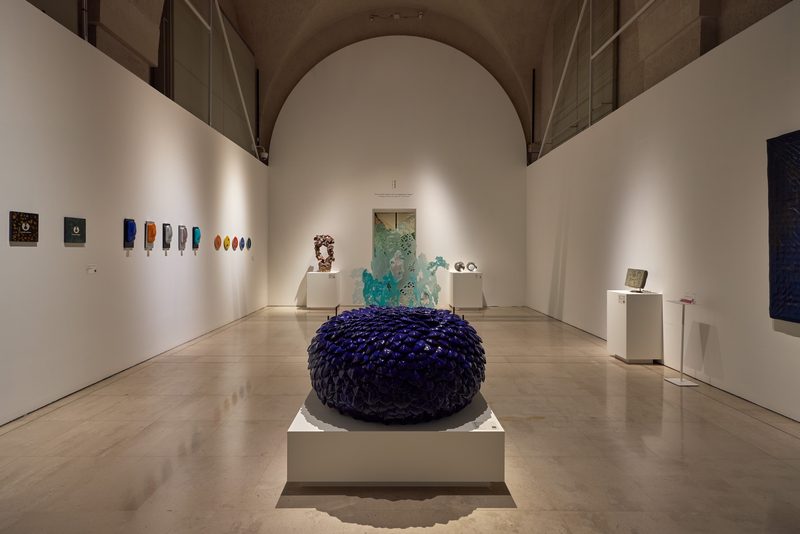
The Arab Bank Switzerland Art Collection makes its HALLEN debut with a direct focus on digital art, featuring works by four artists, including a large-scale LED installation by Swiss artist Andreas Gysin. Office Impart and Galerie Nagel Draxler also lean heavily into new technologies, with Nagel Draxler presenting its dedicated Digital Wall, showcasing pioneering Web3 and blockchain artists. The Mercedes-Benz Art Collection, meanwhile, provides something of a physical counterpoint with an exhibition exploring form through the tensions of abstraction.
Together, the four presentations raise some interesting questions. Is there still such a thing as a distinct “digital art” aesthetic? What happens when an artwork made for a browser ends up on a 65-inch screen? And when software can be projected, displayed across LEDs or spread over multiple screens, where exactly does the artwork end and its exhibition design begin?
At HALLEN 07, FAD spoke with Nina Roehrs, curator of the Arab Bank Switzerland Art Collection, about collecting digital art, NFTs, translating software into physical space and whether these four presentations reveal something larger about where digital art is heading.
What motivated you to show your corporate art collection at an art festival in Berlin?
The Arab Bank Switzerland Art Collection is still relatively young, and from the beginning it was important to us that the works would not simply remain within the bank. We want to bring them into different contexts and into dialogue with different audiences.
HALLEN is particularly interesting because it brings together galleries, institutions, collections and other initiatives within one exhibition context. For us, it is also an opportunity to present a focused selection from the collection during Berlin Art Week and to contribute to the broader conversation around digital art.
The Arab Bank Switzerland Art Collection is a relatively new NFT art collection. Can you explain a little about why the bank decided to collect NFTs instead of physical artworks?
The Arab Bank Switzerland Art Collection focuses on artists who critically and creatively engage with digital technologies and digital culture. The works can take many forms – from software, generative and internet-based works to video, prints, sculptures and installations.
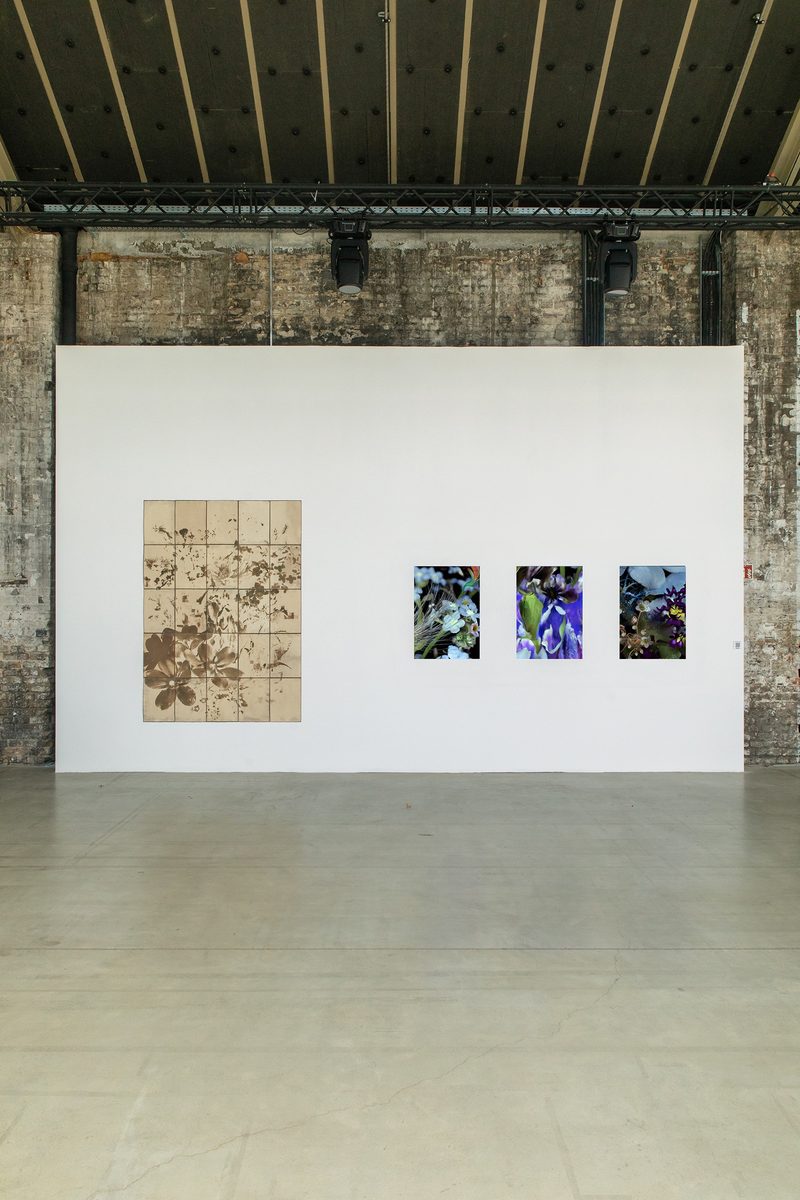
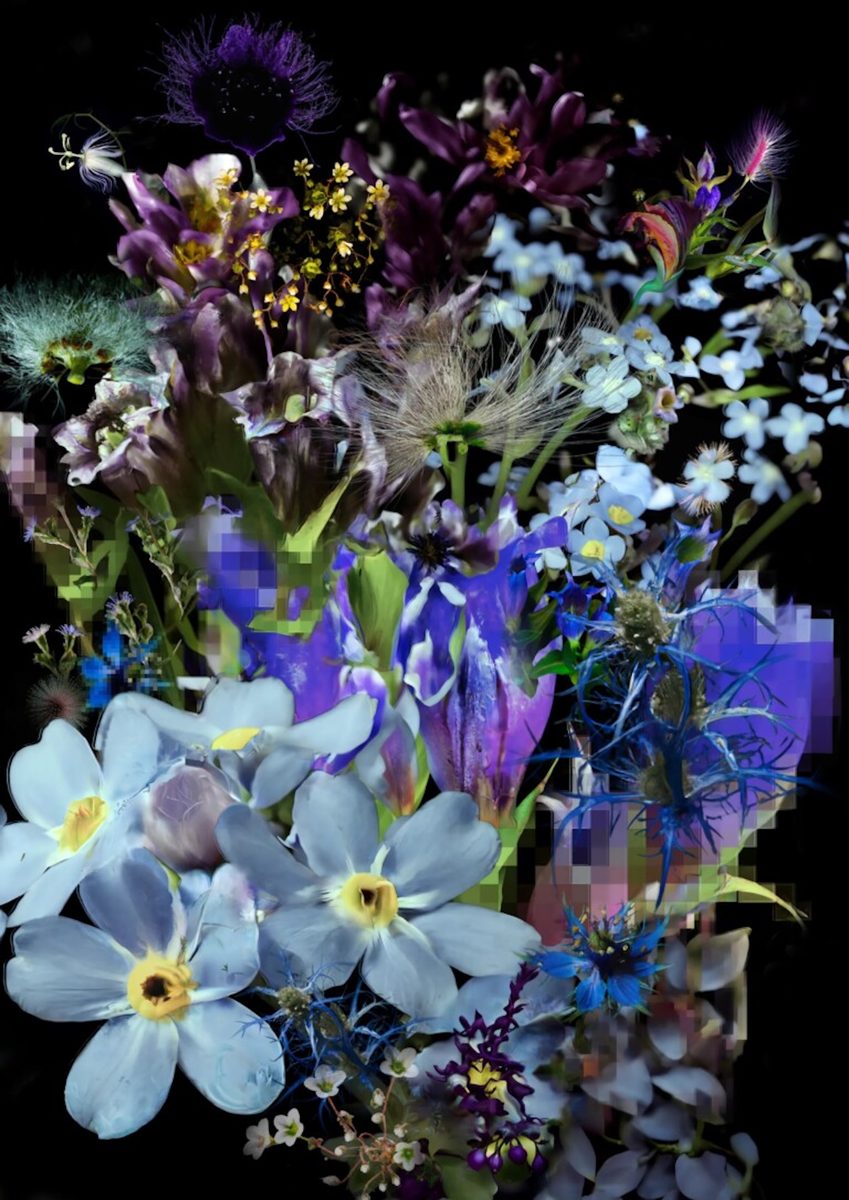
Importantly, digital and physical are not opposites. Many works move between the two or combine both. Anna Ridler and Sofia Crespo’s 83 Seeds from a Vanishing Mountain, which we are showing at HALLEN, for example, exists simultaneously as an installation of twenty-five large-format cyanotype prints and as twenty-five individually minted digital tiles. These tiles can be collected separately and have consequently become distributed across different collections – fragmentation is part of the work itself.
However, for many digital works, an NFT is simply a way of establishing ownership and provenance rather than an art form in itself. What matters to us is the artistic practice and its engagement with the digital conditions in which we live, rather than a particular technology or medium.
Since NFTs are digital artworks, what unique challenges do you face when showing originally digital works in a physical space?
Showing digital works in a physical space is always an interesting translation. Many digital works do not have one predetermined physical form: a software-based work, for example, might be presented on a monitor, as a projection or across a large-scale LED installation. Each choice changes how we experience the work.
This makes the physical presentation part of the curatorial process. We work closely with the artists to understand what is essential to a work and where there is room for interpretation. Scale, architecture, hardware and the relationship to the surrounding space all play a role. I see this less as a challenge than as one of the possibilities of working with digital art.
You are showing an almost historical work by Olia Lialina using Frankfurter Allgemeine Zeitung pages featuring Donald Trump, Vladimir Putin and Kim Jong Un. As a pioneer of net.art, which was originally meant to be experienced freely on personal browsers, how does the meaning of the work shift when it is shown fixed in a triptych format on a 65-inch physical LED screen?
Online Newspapers – Postfactual Edition is interesting in this respect because it was conceived as a screen-based work from the outset. It runs as a webpage in a browser, but the 65-inch screen and the triptych format are part of the work rather than a display format we introduced at HALLEN.
The series itself goes back to 2004, when Olia began adorning scanned newspaper front pages with first-generation animated GIFs amassed from the early web. In the Postfactual Edition from 2017–2018, she applies this treatment to Frankfurter Allgemeine Zeitung front pages featuring Donald Trump, Vladimir Putin and Kim Jong Un, juxtaposing the pageantry of political authority with the amateurish glitter text, animated GIFs and modified cursors of early web culture. Almost a decade later, it is unsettling how little of the work’s political urgency has faded.
Can you tell me a little about the background to this presentation of Andreas Gysin’s Lattice, and what makes this iteration different from how it was shown at the Institut du Monde Arabe (IMA) in Paris during NFT Paris Week?
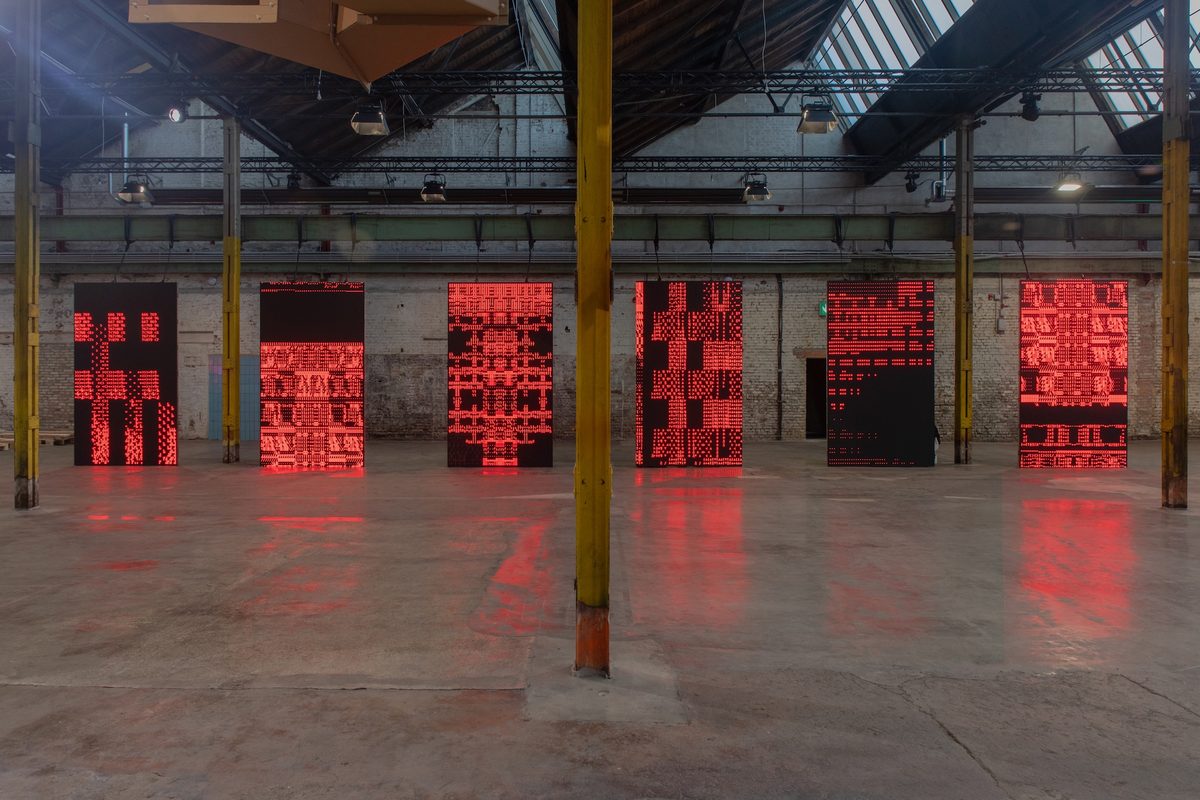
Lattice was commissioned by Arab Bank Switzerland to be presented at the Institut du Monde Arabe in Paris in January 2025. The work takes inspiration from the fractal-like structure of the building’s façade, where the mashrabiya-inspired windows form a grid that is progressively subdivided into smaller geometric elements.
Andreas translated this into a real-time software work that uses characters from the extended ASCII set to generate an evolving choreography of text-based patterns across as many screens as are available. Each screen shows only a fragment of a much larger computational surface extending beyond its physical frame.
At HALLEN, we are presenting Lattice across six vertical LED panels, each measuring two by three and a half metres. Compared with Paris, there are more screens, a new format and a higher pixel pitch, which required Andreas to adapt the work to this new configuration. The underlying system remains the same, but its manifestation in the space is different.
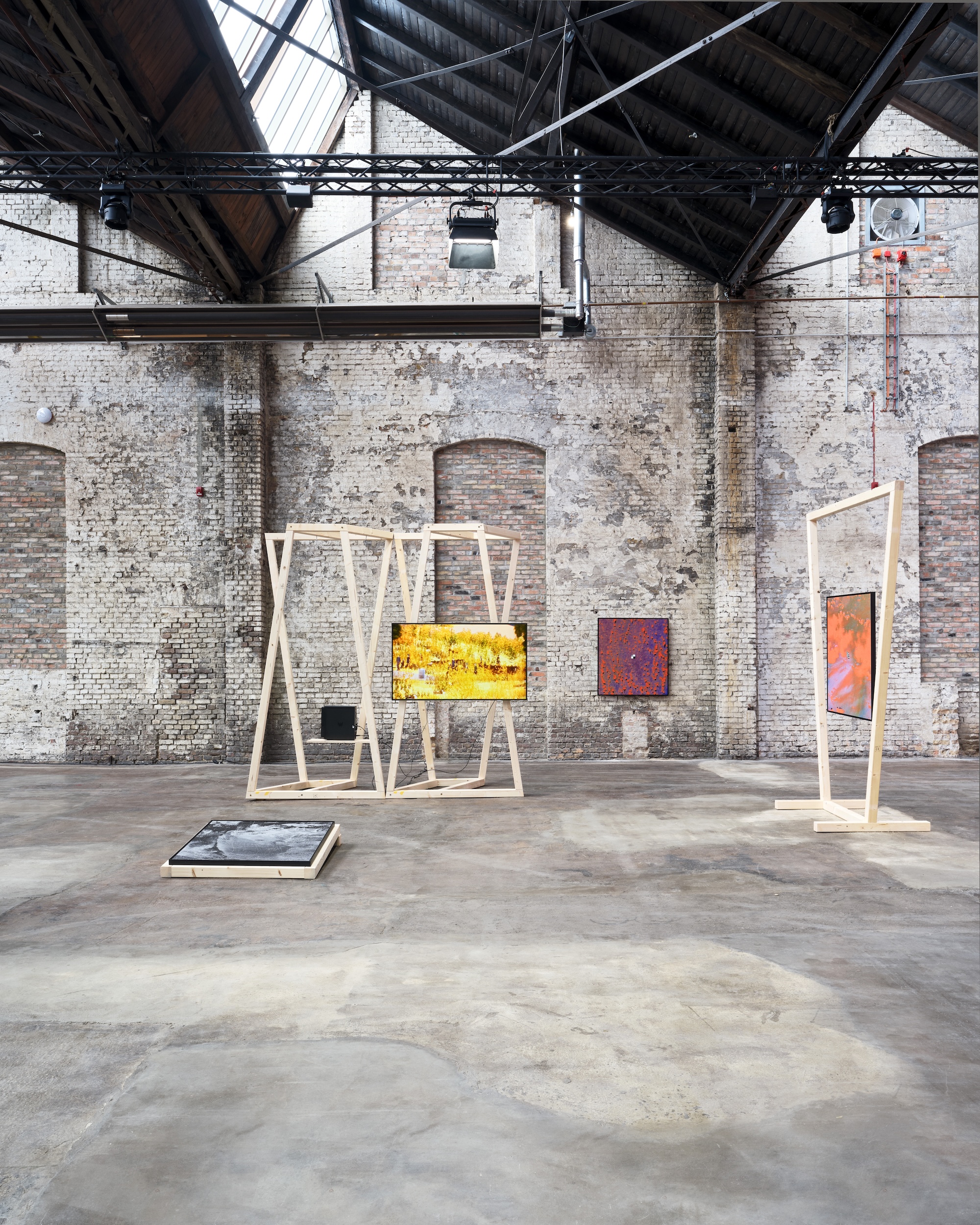
I am not sure I would describe it as a thematic coherence, but there are certainly interesting connections. Office Impart is showing artists such as Yehwan Song, Ana María Caballero and Cezar Mocan; Nagel Draxler brings together Sarah Friend, Rhea Myers, Anna Ridler, Paul Seidler and Kenny Schachter around the idea of the “technosphere”; and the Mercedes-Benz Art Collection includes a younger position such as Salomé Chatriot within its broader presentation. Alongside our own exhibition, this brings together very different generations and artistic approaches to technology.
What I find interesting across these presentations is that technology is rarely treated simply as a medium. The artists engage with the systems surrounding it – networks, AI, datasets, market mechanisms, online culture, questions of authorship and representation. There is no single digital aesthetic or theme connecting them, but there is a shared awareness of how deeply these systems have become embedded in contemporary culture.
HALLEN art festival, 5th – 13th September 2026 @hallen_kunstfestival