

London, November 2025. It’s chilly, the streets are too busy, the air is damp – sweat or participation, either way the feeling is rankle. I am in central Soho, dashing from Somerset House to Stone Nest, the experimental performance venue on Shaftesbury Avenue. I have made the trip on the occasion of Wayne McGregor’s exhibition Infinite Bodies (Somerset House) and the accompanying performance On The Other Earth (Stone Nest, both until February 22nd 2026). The atmospheric conditions are making the experience vexing; I would much rather be at home in Glasgow, seeking cultural stimulation via my laptop screen, than battling with the cold commotion of the UK capital. I don’t know what that stimulation would be; I suspect an AI could suggest something fitting. Indeed, with such tools at my disposal, I could question the need to ever venture out of the house again, undertaking all my cultural reviewing from the slouch of my bed!
‘It’s not the same as IRL’, the statement often used to counter that logic. Following my experiences with McGregor’s work, the performance On The Other Earth specifically, I am pondering the nature of this oppositional rally cry. It seems we are verging ever closer to an age where the interface between IRL and LCD (liquid crystal display) is nothing but arbitrary. Further, reading the technologies at the heart of Infinite Bodies critically, the deminishment of physical experience seems coeval with the dissolution of human creative production – soon AI will move from being a device that suggests content, playing a supporting role in the creative process, to a cultural producer itself. This line of thought leaves me pessimistic. I am suspicious of the raison d’être guiding art tech collaborations, left asking, why do we need computers to create culture when humanity has been doing this since the start of time? Money, I conclude, money.
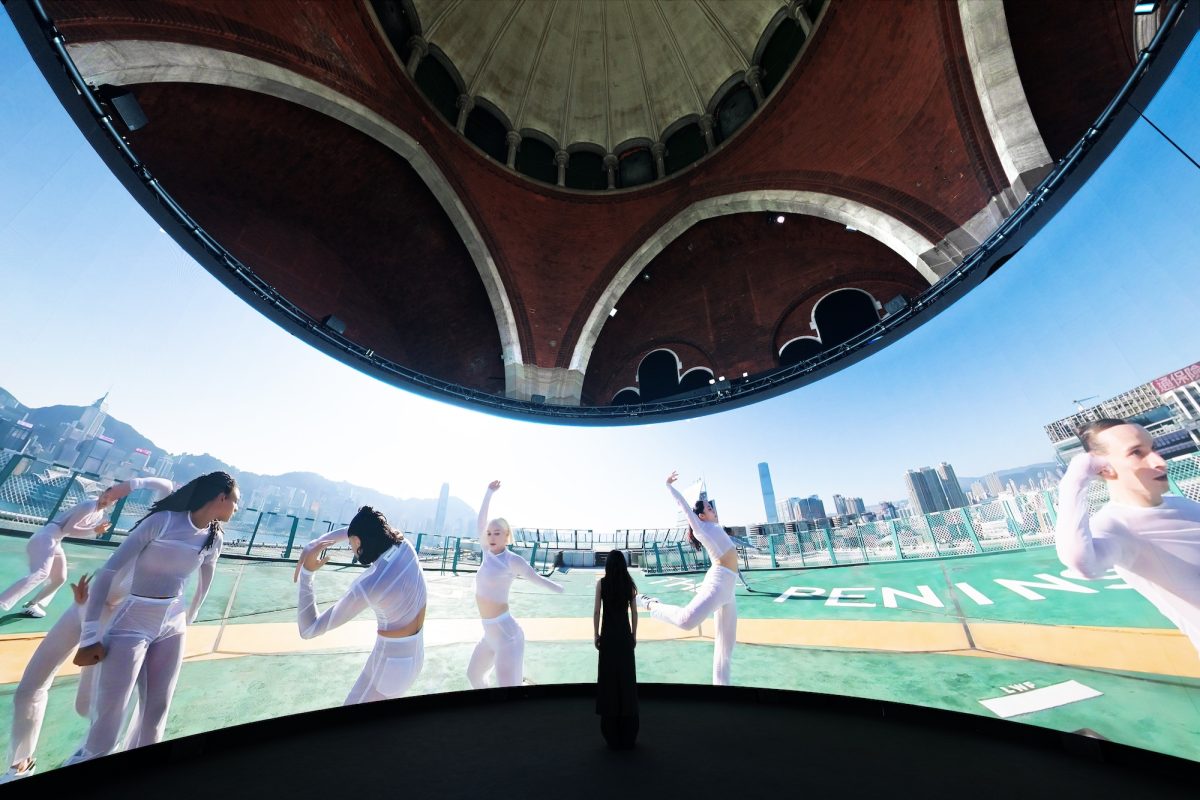
Back to the viscosity of Soho. McGregor’s On The Other Earth is a 57-minute, 360º 3D performance-for-camera presented as an immersive environment – the film is screened inside an eight-meter-wide, four-meter-tall silo-like structure surrounding viewers. Featuring dancers from Company Wayne McGregor and the Hong Kong Ballet, the film follows a periodic structure. It opens with almost nude dancers, spotlit, moving alone and together within a dark vacuum, before glitchy visuals present this troop as digitally rendered bodies standing frozen on a computer chip ground, revolving in space. A jump in scene sees a new set of dancers appear, fluidly moving in formation atop a Hong Kong skyscraper. The particularities of this location seem notable: the skyline images greening mountains beside ultra-shiny high-rise, visually alluding to McGregor’s interest in how the human body shifts and changes in time with advances in technology.
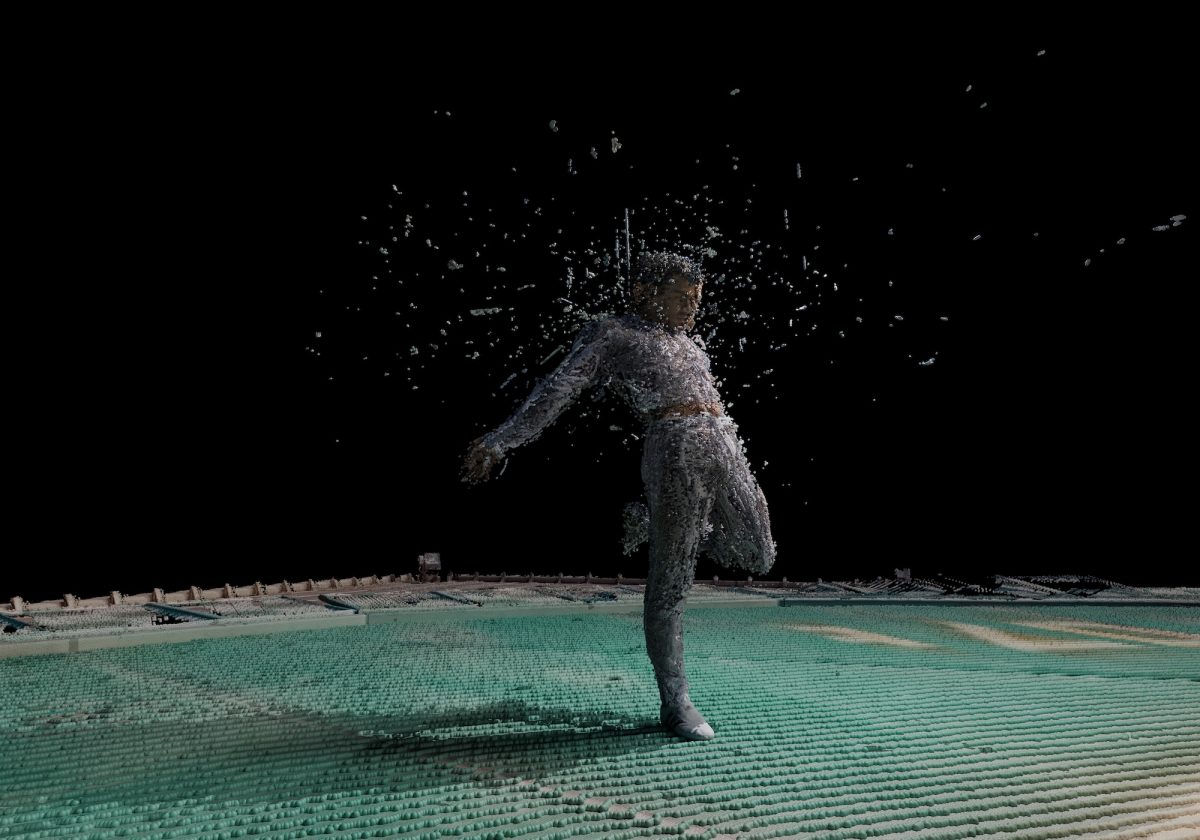
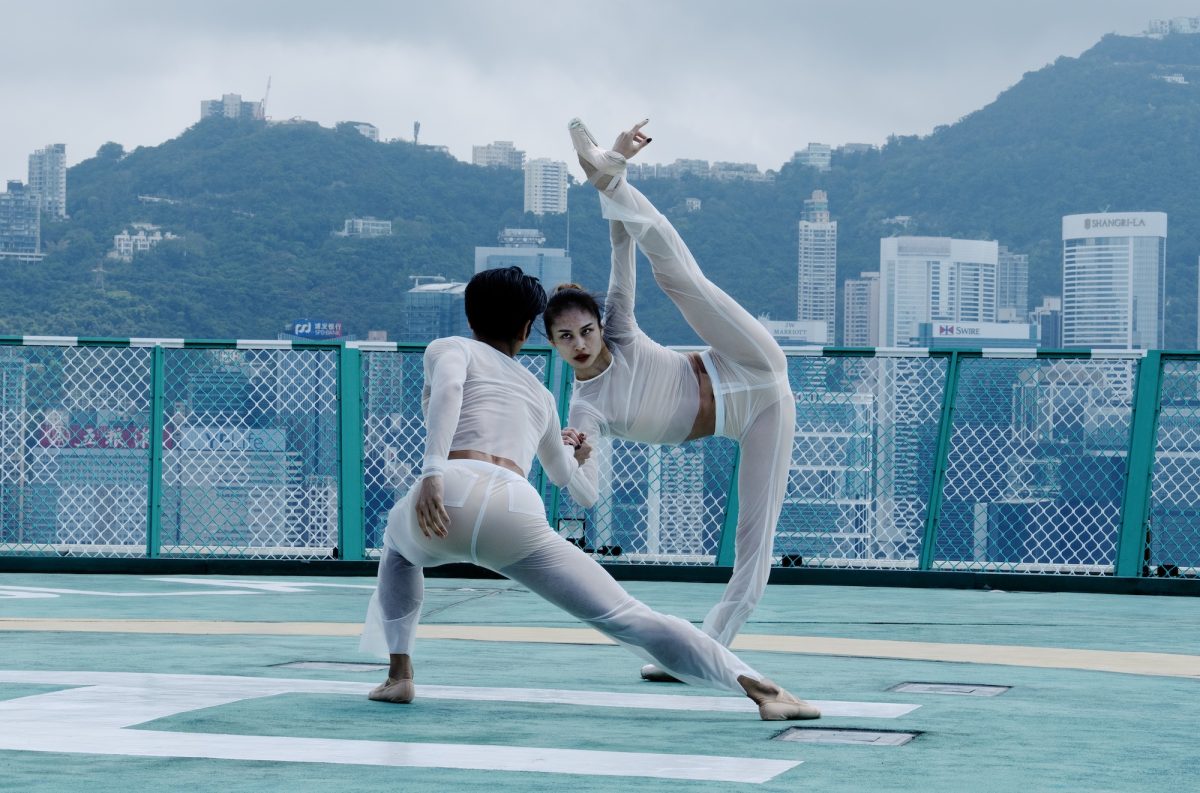
The use of 3D visualisation in On The Other Earth is phenomenal. McGregor’s dancers have been rendered with an accuracy and depth that I have only ever experienced IRL or via VR – they could have been in the screening chamber live with me. The formalities of the performance’s camera work, with bodies sometimes appearing cropped off-screen, reminded me that this is a filmic production. Being sucked into and then forced out of McGregor’s digital world in this way felt disquieting. From a metaphorical point of view, I want to suggest that this physical/digital trickery evidences how the human body is becoming an evermore technologically informed thing – today not only are our online selves being recorded, monitored and measured, but our corporeal body data is becoming big business, via wearable health tech for example. Moreover, the technical finesse of On The Other Earth reminds me that the once hard interface between the human body and a digital likeness is dissolving – as we can see with the AI-generated actress Tilly Norwood, who not only looks hyper life-like, the perfect ‘girl next door’, but who has the ability to don an eerily convincing persona. This barrier is only going to diminish more as human beings become ever more engaged with and therefore surveilled by the stuff of tech culture.
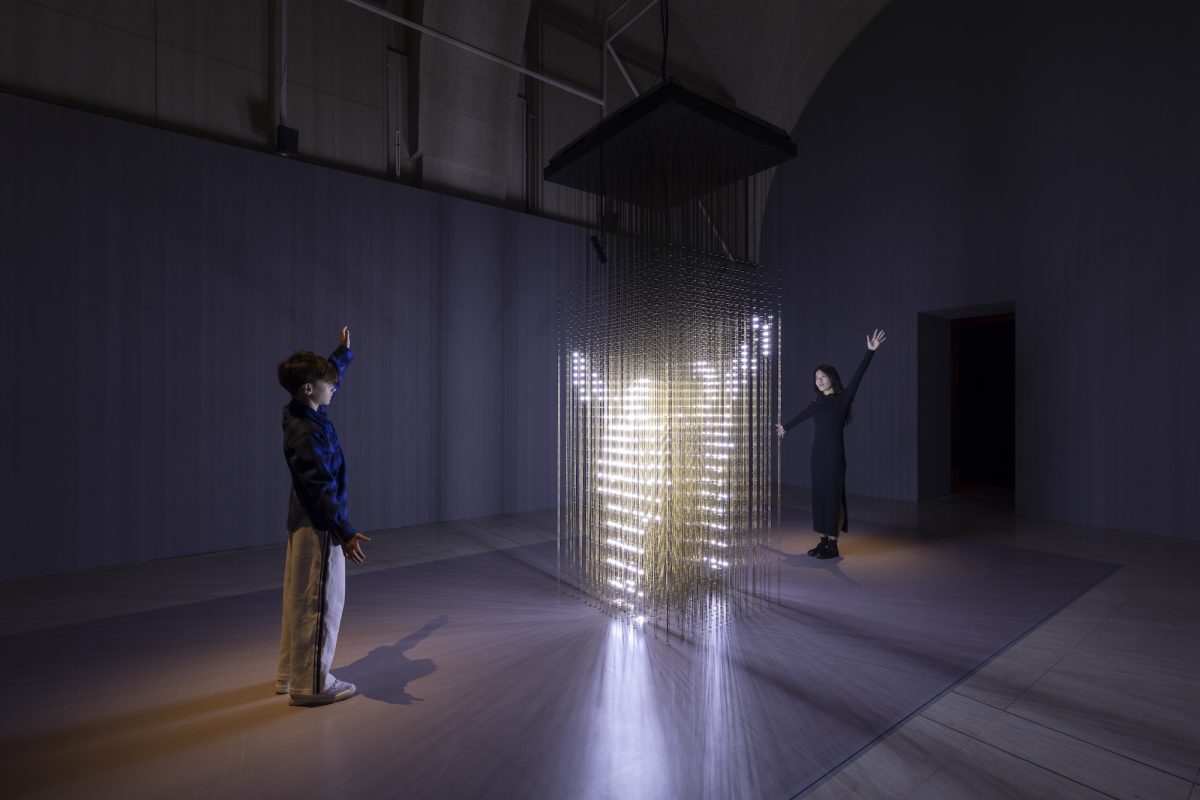
The exhibition Infinite Bodies foregrounds this relationship between the body and advances in technology, questioning what it means to be a physical human in the age of AI. Billed as a reflective look at McGregor’s choreographic work over the last thirty years – a practice characterised by a fusion of classical and contemporary dance steps – the body of the dancer is rather absent from the show. What we encounter are various rooms where different technologies (screens, robots, interactive installations) pose the questions: ‘How do our movements, instincts and senses change when they meet robotics and digital systems?’ and ‘When the body becomes both performer and instrument, what does it mean to move, feel and be human?’ Lines of thought that run throughout McGregor’s career.
My perspective on this exhibition reflects the nature of the show’s lighting: dim. The whole thing felt like an interactive spectacle – using my body to inform the movements of a robotic device isn’t interesting, I could look in the lavatory mirror to get that cultural effect. (I must note that throughout the course of the exhibition, McGregor’s dance company were in residence at Somerset House, sometimes interacting with and activating the installations, but I saw none of this.) The space opened in my mind thanks to this disdain allowed me to critically think about the nature of the technologies on show here and their relationship with the human body.
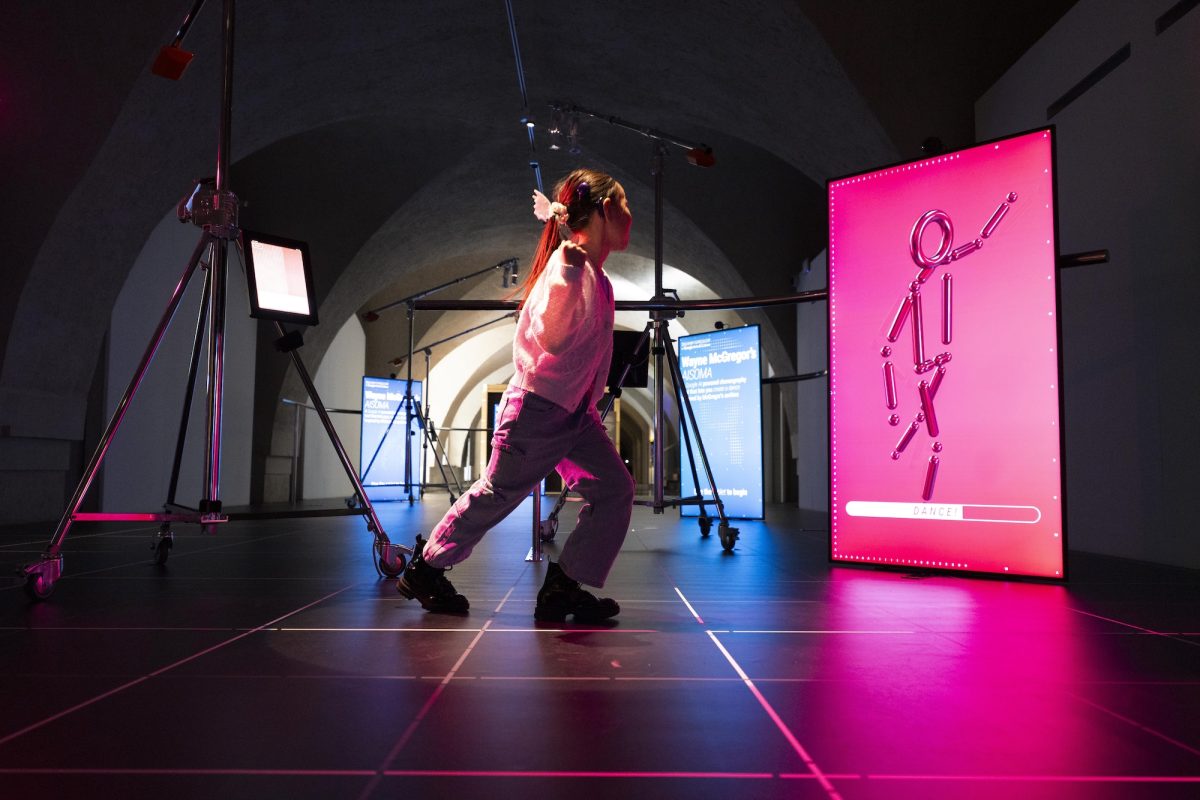
Google plays a central role in McGregor’s exhibition and wider work, providing technological resources as well as acting as a collaborator. Specifically, the research arm of Google’s ‘non-commercial initiative’ Google Arts & Culture used McGregor’s chorographic archive – the hours of filmed performance and rehearsal documentation as well as motion capture data – to develop the AI-powered choreographic tool Studio Wayne McGregor’s Living Archive. Essentially, this tool distils McGregor’s work into a Large Language Model (LLM), a data set like the one ChatGPT runs on, using this to recommend the next movement in a choreographic routine. On one level, we can see this AI tool as an aid to the choreographers’ creative mind, supporting them to resolve a unique score through historical evidence of an oeuvre and what works. Moreover, made publicly available, the tool gives anyone with the right internet connection to become a choreographer able to create a score for members of a company to follow. On another level, we could see the programme as the first step in the death of the choreographer, with dancers, while they are still real bodies and not computer-generated, made to perform the apathetic routines of industrial entertainment.
Reflecting on the use of AI technologies that underlie Infinite Bodies and the formal realism seen in On The Other Earth, I want to pose that what McGregor’s lines of thought are beckoning here is an age where the production of performance, art more broadly, becomes a body-less endeavour. Imagine, never going to the theatre again, and instead opening your laptop to watch a computer-generated performance at home, one performed by a troop of computer-generated dancers.
Fortunately, we are not at the level of body-less cultural production yet. For such a phenomenon to be achieved, technologists would need to perfect human image rendering as well as develop AGI (artificial general intelligence), a software which would be able to think relatively independently, adopting the traits of a human mind with the abilities to think abstractly, apply common sense and adapt to changing situations. Such a creative technology would usher in a new epoch of labour outsourcing, human indenture and redundancy, becoming a tool driving big business profits. Being worth an annual 2.3 trillion USD to the global economy (data via UNESCO), with expectations to grow exponentially, the creative economy is an obvious place for businesses to apply AGI. This could mean making access to cultural entertainment cheaper, allowing more people to create culture also. It could mean that. But it could transform human cultural life into a living, breathing TikTok feed, with content continuously streaming before our helpless eyes. A new form of Soho saturation.