Tonghe Yang’s project sits at a charged intersection of photographic skill, digital simulation, and autobiographical inquiry. It’s best understood not as a sequence of images but as a methodological system, one that folds making, writing, and staging into a single research practice. The photographs are only one register; poems, timelines, and process-driven confrontations operate with equal weight. What matters is how these elements probe the conditions under which a photograph can still hold embodied meaning in a culture of fast, frictionless image production.
Yang insists that authenticity cannot be recovered at the level of an image’s ontological “truth.” For her, truth is procedural rather than essential. This stance underpins her fusion of nineteenth-century wet-plate collodion with contemporary AI outputs. Collodion is not deployed as nostalgia but as a restrictive discipline—one that reinstates labor, time, and risk into an optimized terrain. When these hand-made plates are echoed by machine-generated near-duplicates, Yang shows that uniqueness is not guaranteed by technique alone. Craft becomes valuable precisely in its capacity to register difference when difference exists, and to demonstrate collapse when it doesn’t. In this, she offers a material, unsentimental way to reconsider Benjamin’s “aura.”
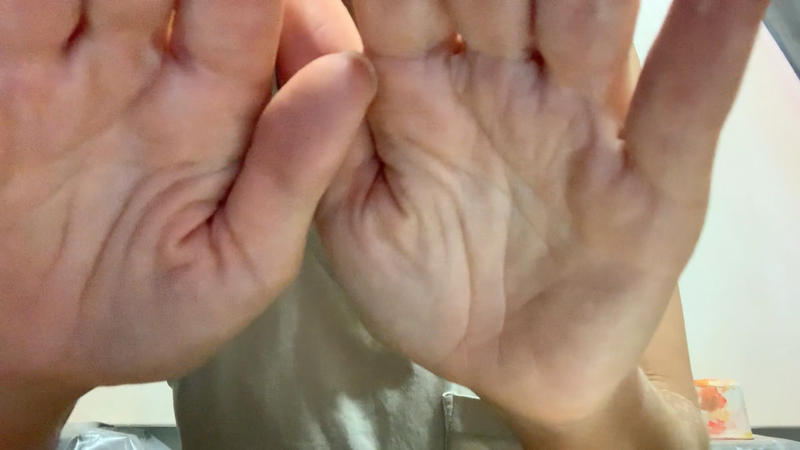
The second axis is the body—both subject and apparatus. While deeply self-imaging, the work avoids confession. Domestic spaces, erotic hints, mirrors, bathrooms: these read less as invitations to intimacy than as instruments that measure how visibility molds identity. The photographs pose a challenge: how to view a transgender subject without falling back into extractive habits of looking. Yang’s use of occlusion, textual overlay, and serial variation forms an ethics of partial disclosure. The image reveals enough to hold attention yet withholds enough to resist appropriation. The friction is the point.
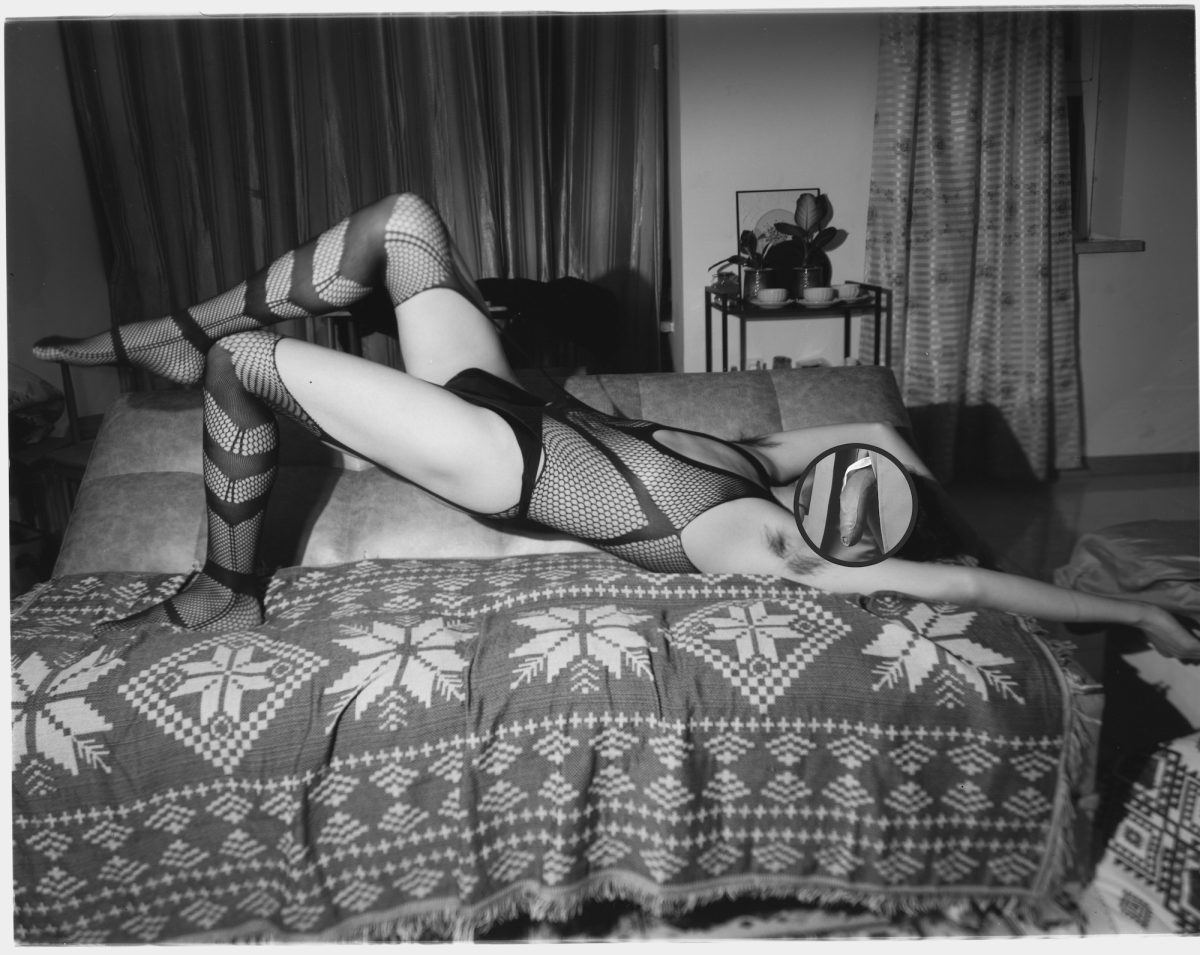
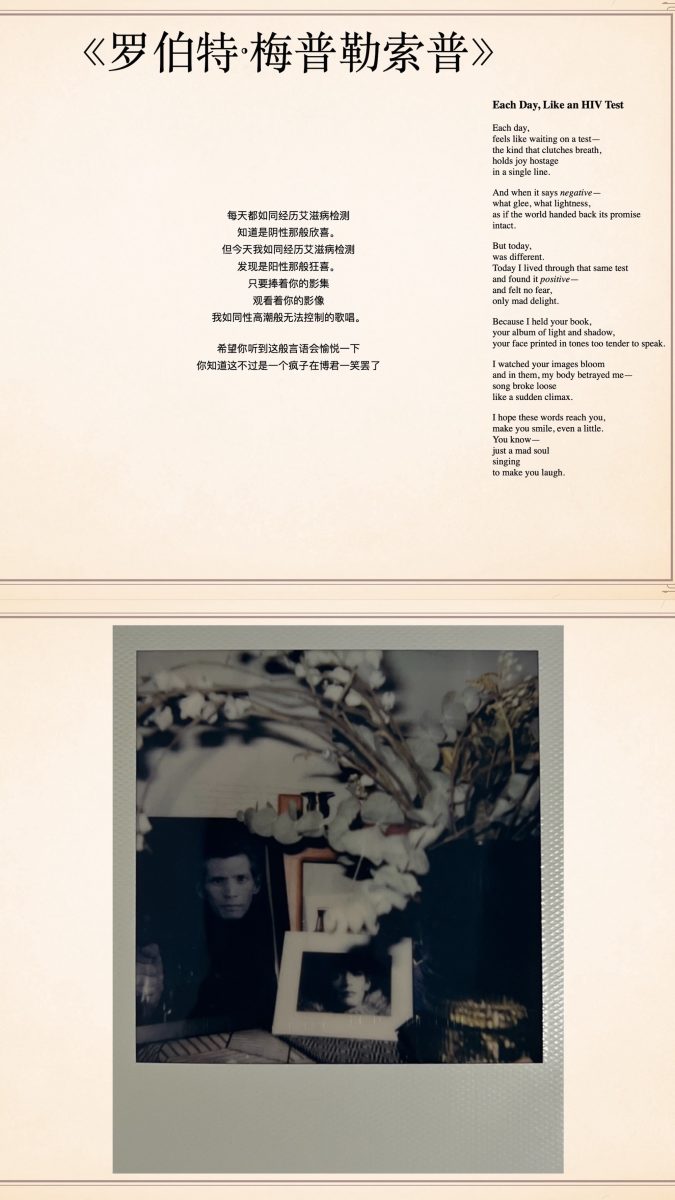
A third axis unfolds through text. Yang’s poems do not caption the photographs; they act as parallel models. Language proposes hypotheses that the images test. In an image-text landscape often plagued by redundancy, Yang keeps the channels distinct. The poems identify operative categories—misrecognition, desire, abandonment, performance—while accepting rhetorical risk. By foregrounding discourse alongside image, she invites judgment on the coherence of her propositions, not merely the charm of her surfaces. At the core sits misrecognition as a generative engine. The project builds encounters where image and self fall slightly out of sync. AI functions not as a novelty or foil but as a laboratory of misrecognition at scale. By placing algorithmic doubles beside hand-made plates, Yang treats near-duplication as evidence of a broader cultural shift—identity mediated by statistical inference. The issue is not “AI bad, craft good,” but how both systems reveal the production, stabilization, and dismantling of categories like gender and authenticity.
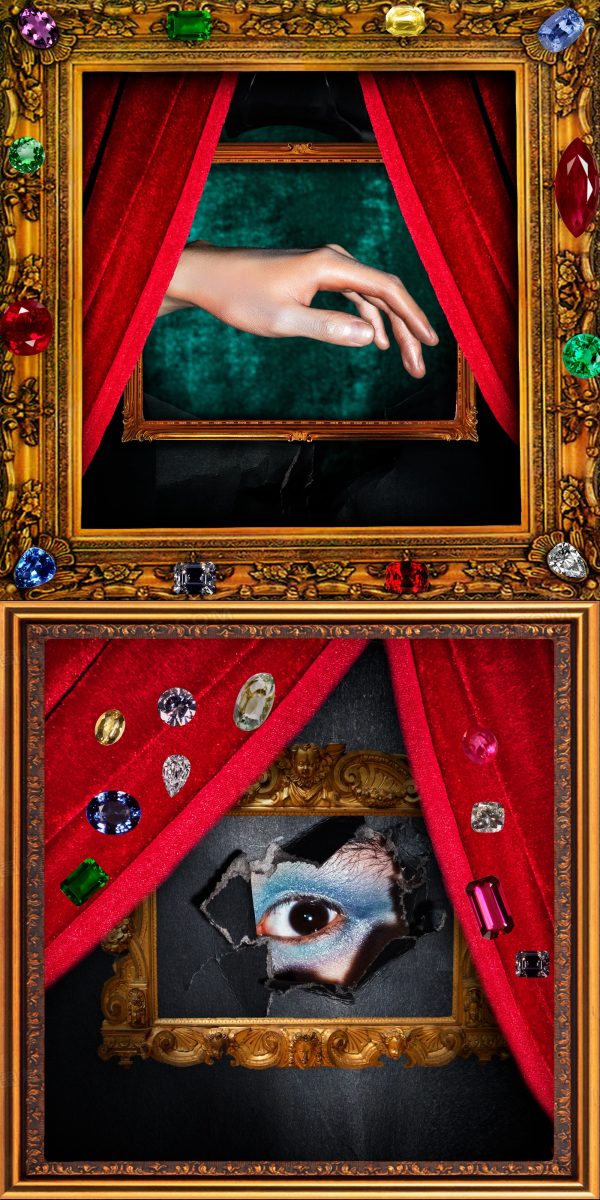
Her engagement with photographic history is strategic, not devotional. References to Sherman, Goldin, and Mapplethorpe are not prestige citations but critical markers. Sherman’s typological self-staging becomes, in Yang, a study of instability. Goldin’s private intensity is softened through obstruction and procedural repetition. Mapplethorpe’s pursuit of ideal form gives way to Yang’s chronicling of form’s failure to resolve identity. These are discerning revisions, not replicas.
The work carries risks. Text can become overly explanatory if it resolves tensions meant to remain alive. Repeated erotic cues may, without recalibration, risk normalizing the gaze they seek to critique. Yang’s strongest sequences arise when technical choice and conceptual intent are inseparable: the paired wet-plate and AI portraits, or the transfer of “abandoned” self-images onto inexpensive, unstable substrates in public restrooms. In these instances, site, material, and thesis magnify each other.
Ultimately, Yang’s project knows its stakes. In an image-saturated culture, meaning returns where production becomes demanding again, where the burden of looking is reinstated, and the photograph becomes a point of friction rather than a souvenir. Here, “daughter” is less an identity claim than a working position: to inherit in order to test, and to test in order to revise. On that ground, the practice fulfills what post-photography often promises but rarely delivers. It does not ask us to abandon belief in images, but to relocate trust in the procedures that grant them their force.
all the images © Tonghe Yang