I feel the same way about this tool as I did when I picked up my camera
-Laurie Simmons on AI
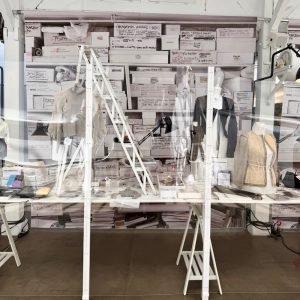
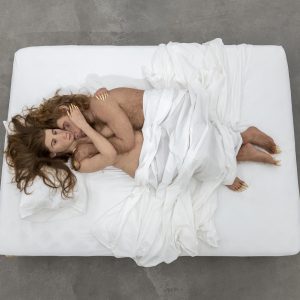
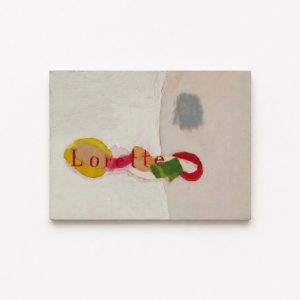
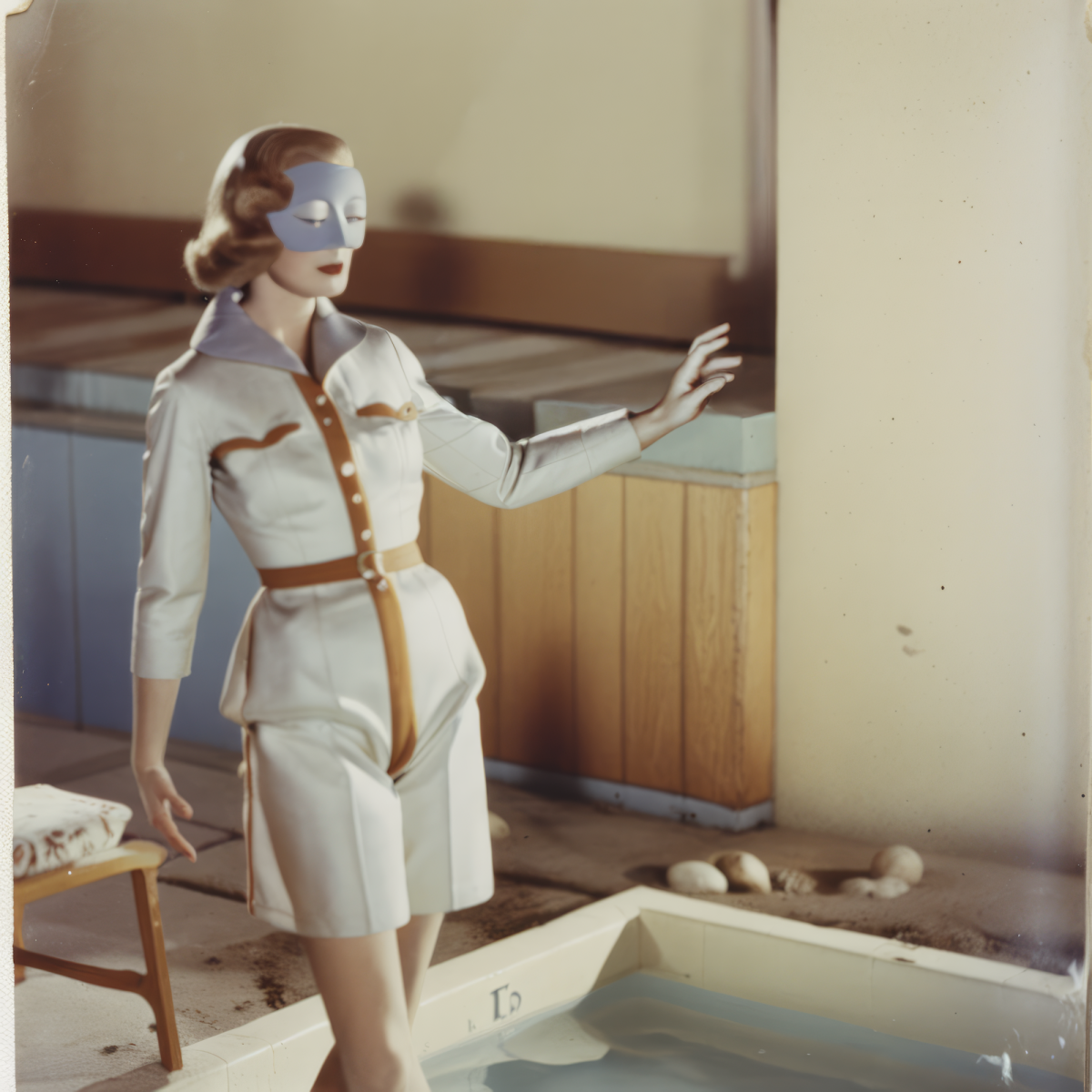
Laurie Simmons, artist and central figure of the Pictures Generation, first began exploring AI and text-to-image models in 2022 as a tool for image creation, much like her use of props and cameras for staged scenes. Simmons has been working with the world of AI and NFTs ever since, continuing her long-standing exploration into how images are made, disseminated and perceived.
For her new work Autofiction: My Collaborator, Simmons trained an AI model on her five-decade-long photographic practice, using it to generate images from prompts she provided. She then curates, edits and completes each image by hand. The resulting works exist as both physical prints and NFTs, marking the third time she has engaged with blockchain-based media. Rather than treating these technologies as
departures from her photographic practice, Simmons approaches the AI model(s) as collaborators.
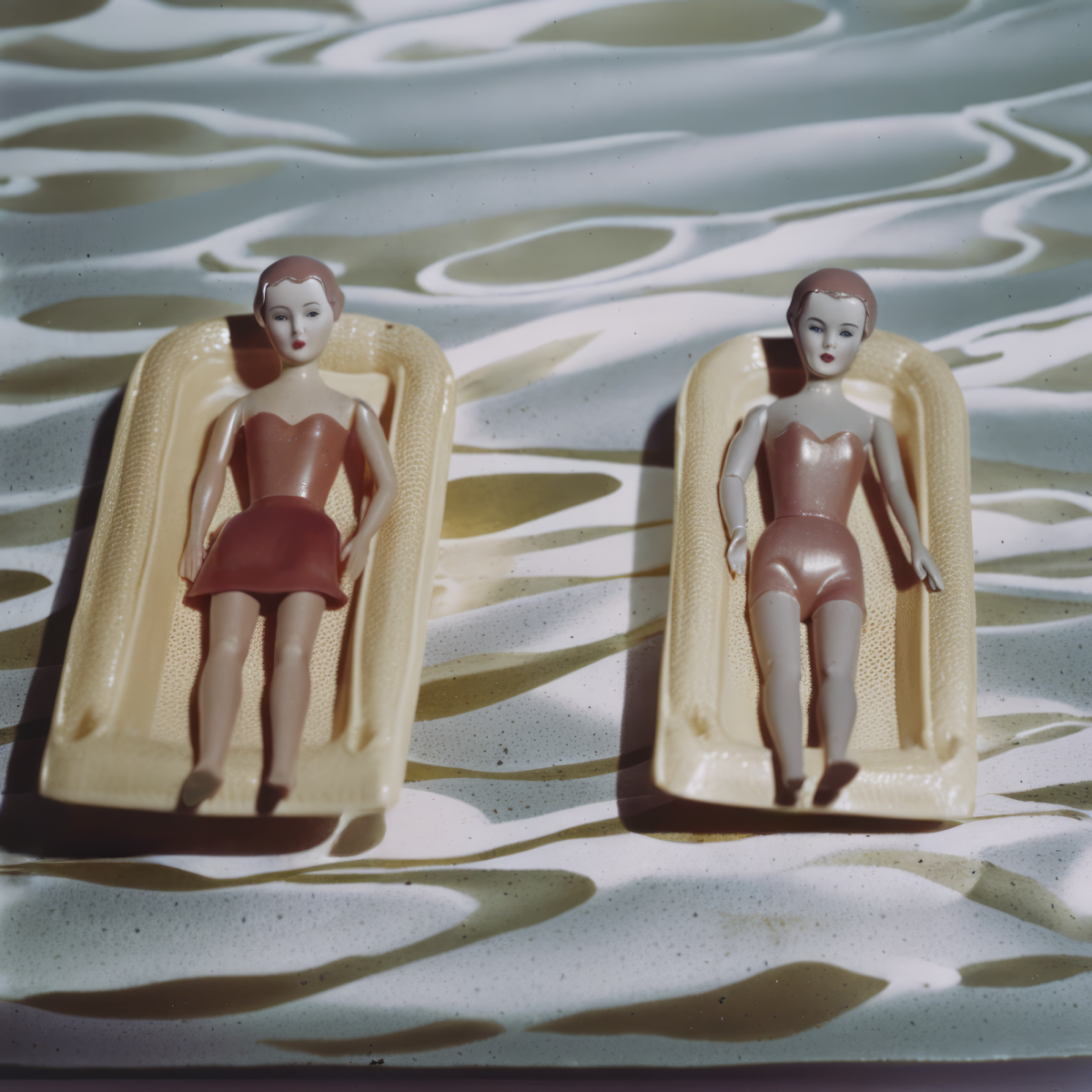
The series debuts alongside Laurie Simmons: Black & White at Almine Rech, Paris Matignon (– December 20th, 2025). The focus of this exhibition presents some of Simmons’ earliest photography in conjunction with AI paintings and wall reliefs. This SOLOS project presents her most recent digital works, connecting decades of image-making through evolving materials and methods.
Since the 1970s, Simmons has examined the mechanics of representation, from constructed domestic scenes to reflections on identity and performance. This new body of work continues that inquiry into the digital realm, asking what it means when an artist’s photographic archive is interpreted by an algorithm
fueled by image data, rather than a critic or historian. By presenting them across both physical and digital contexts , Simmons also probes how artworks are collected, shared, and preserved in contemporary culture. Embracing new technologies and ways of presenting images, Simmons continues to test how new systems shape the production and life of images.
For Simmons, the process also carries a personal resonance:
“I feel as deep a connection to language as I do to images, though they’ve always lived in separate compartments of my brain. Writing sentences [prompts] that convert to pictures feels oddly like a dream come true. I have no recollection of having had that dream, but the process feels like it was born from
an unconscious wish.”

About the artist
Born in 1949 on Long Island, Laurie Simmons grew up amid the postwar suburbs—an environment built on mass-produced appliances, automobiles, and furniture that promised comfort while enforcing a powerful drive toward sameness. The suburban home became both her landscape and her subject: rows of near-identical houses, immaculate kitchens, glossy surfaces designed to look new forever. In Walking House, Simmons revisits this terrain with a familiar tableau: a woman at an open refrigerator, a table lined with food. It reads like a warm memory until the illusion cracks—the woman is a doll, the room a painstaking miniature. These staged “interiors,” created in the late 1970s just after she graduated from Tyler School of Art and moved to New York, were her breakthrough. Through photography’s capacity for deception, she exposed the suburban ideal as an uncanny, manufactured dream.
Simmons’s early work reads the domestic realm as a distinctly feminine stage—one where the façade of perfection throws traditional gender roles into doubt. By the mid-1980s, her “Walking Objects,” complete with bare or stocking-clad legs, targeted the media’s relentless transformation of women into sexualized silhouettes. Her later series How We See cuts even deeper: fashion models styled as dolls, their oversized, luminous eyes painted directly onto their closed eyelids, collapse the line between human and object in one disquieting gesture.
Her reflections on male identity are just as pointed. In a 1985 image made with Allan McCollum, a microscope magnifies a tiny model-train figurine—barely identifiable as a person, yet unmistakably dressed in the default uniform of the white-collar worker. Generic masculinity, rendered miniature.
But Simmons’s most enduring male archetype is the ventriloquist’s dummy. Throughout the 1980s and 1990s, she used these articulated figures to probe masculine self-presentation and emotional distance. The motif resurfaced in her 2006 film, where the dummies shared the screen with Meryl Streep. The fascination traces back to her childhood: an early Christmas gift to her sister, a ventriloquist doll the siblings spent years trying to animate without moving their lips. That memory shapes some of her most autobiographical images—especially the 1993 series featuring a dummy crafted in Simmons’s own likeness. Here, object and person collide, reality and illusion blur, and even the artist herself becomes entangled in the culture of artificiality she has spent decades dissecting.