The 168 galleries that are part of Frieze London 2025 are arranged in the tent somewhat chronologically, with the youngest or most ‘emerging’ galleries positioned near the entrance of the fair and the blue-chip established towards the rear, physically closer, yet still at a distance to the gorgeousness of Frieze Masters. This year, 59 booths made it onto my pre-fair too-see list. And, in my dash about the fair, five more were added to this. That’s a big number for a listicle…
Dashing is the only way I can do art fairs. (I am shit at small talk and social niceties.) I like to get in and out fast, avoiding as much BS and/or kissery chit-chat as possible. My approach is frantic – a pigeon-like flickering with beady foot steps and eye movements. If a work catches my eye, I photograph it quickly before moving on. I like to think this approach taps into my subconscious, allowing me to log the works of art that rouse the greatest aesthetic affect – the moments of greatness within an otherwise saturated space. On a pragmatic level, this approach helps me to cut through the PR focus on emerging newness or economic novelty, and to identify ‘trends’ across the fair – how many paintings are in my camera roll vs how many sculptures might say something about market fashions. (It might, I have to stress that.)
Scrolling through my photos from this year’s Frieze London, what emerged was a general pooling of great stuff around the fair’s early mid-section – galleries positioned around section B or rather between A23 and C17. 65% of the photos I took were of artworks in this section (17 out of a total of 26). Reflecting, it seems of note that rather than being drawn to one artwork per booth, as per my tendency in other sections of the fair, my fleeting eyes were drawn to multiple artworks on each booth in section B – galleries such as Phillida Reid didn’t only present a range of individual greats but seemed to plan their hang ‘curatorially’, creating harmonious presentations often with artworks aligning through colour, form, shape or line, as well as a shared sensitivity. Pairing the data I collected through my manic snapping and my reflection on the curatorial form of these booths, here are my five galleries to see at Frieze London 2025.
B4 Adams and Ollman (Portland, Oregon, USA)
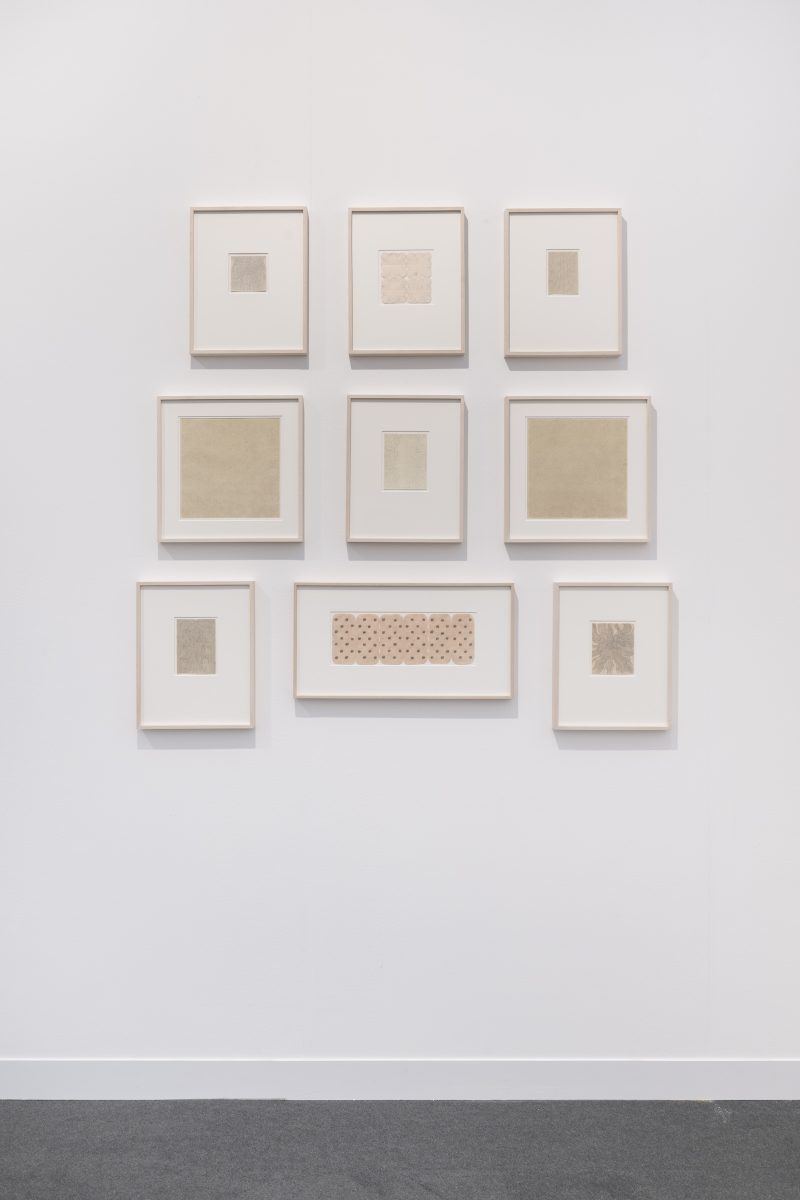
I wasn’t aware of Adams and Ollman gallery before Frieze 2025. After seeing their booth, I clicked follow, subscribing straight away. I would encourage you to do the same. Amy Adams, the gallery’s owner, described their programme to me as ‘incongruous’, reflecting her roots in artist-run spaces. Do not assume that this means a slackness in the art – far from it. I was drawn in by Lynne Wood Turner’s recent series of dainty drawings on scrap-like pieces of paper, each minimally mounted in pine-tone frames – they were just so dumb-bijou and utterly touching. Lingering before these drawings, I kept spying other beauties out of the corners of my eyes – paintings by Katherine Bradford, and Marlon Mullen specifically.
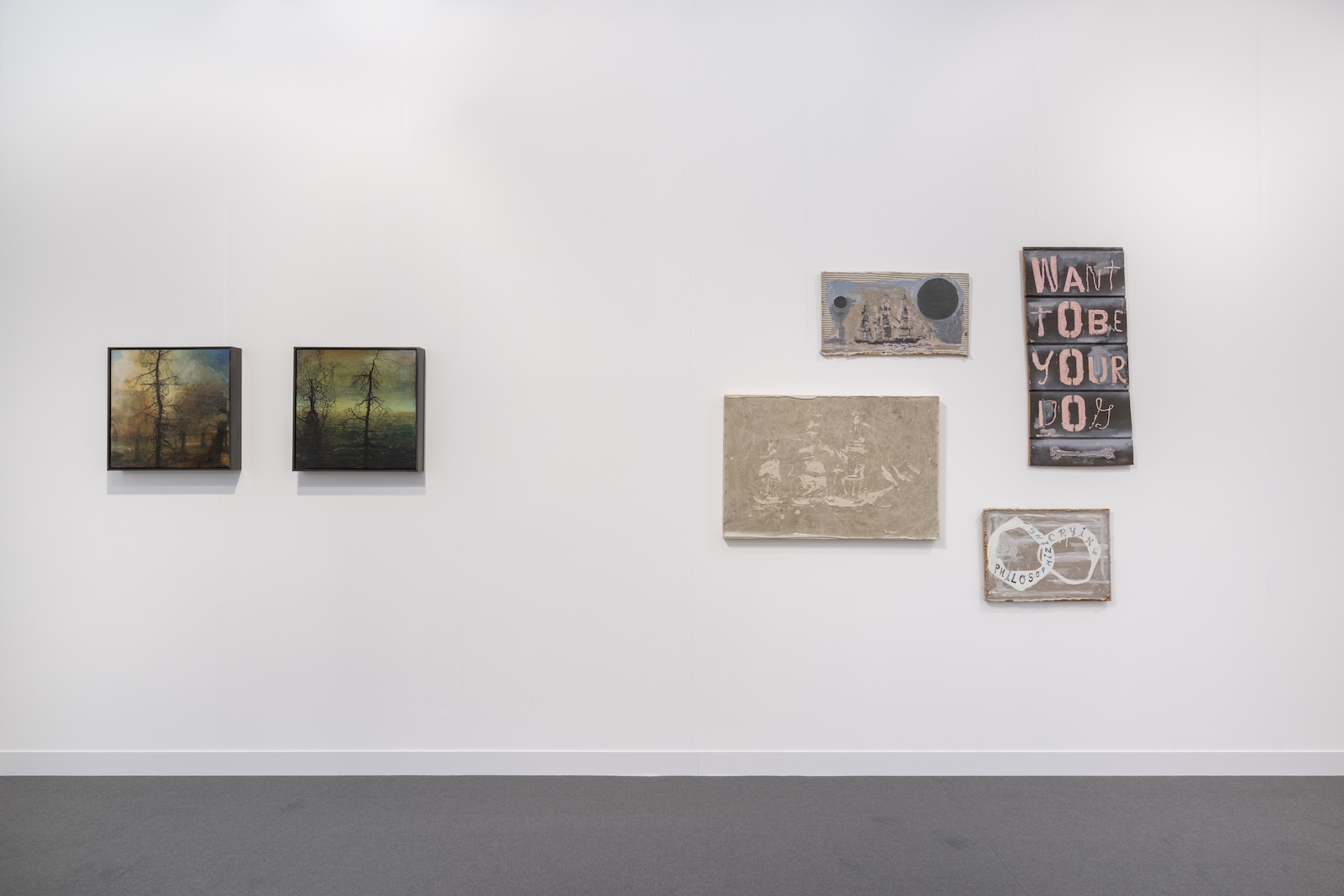
The mixed media paintings by Peter Gallo were also of note – he is an artist I need (need) to check out. At Frieze, Adams and Ollman have presented a cluster of fatly painted works by Gallo – oil on disused bed sheeting. Ghoul-like, depicting ghost ships, or ghosts of a ship, as well as textual word plays – “WANT / TO BE / YOUR / DOG” reads one such image – the works merge literary riff with Freudian feel, revealing the haptic messiness of a person’s psychology.
B7 Corvi-Mora (London, UK)
In 2018 I clocked Alvaro Barrington on god knows how many booths at Frieze London – Corvi-Mora being one. That presentation featured small, collage-like artworks in a style that has become a Barrington trope. I hum and har over Barrington’s work generally – at times it’s great at others not. Corvi-Mora’s booth this year features a new work by Barrington – Free (2025), a neat screen of taught rope with a concrete dove form doing The Dab at the bottom of the composition. Despite its heavy materiality, the work oozes sensorial lightness, frivolity even.
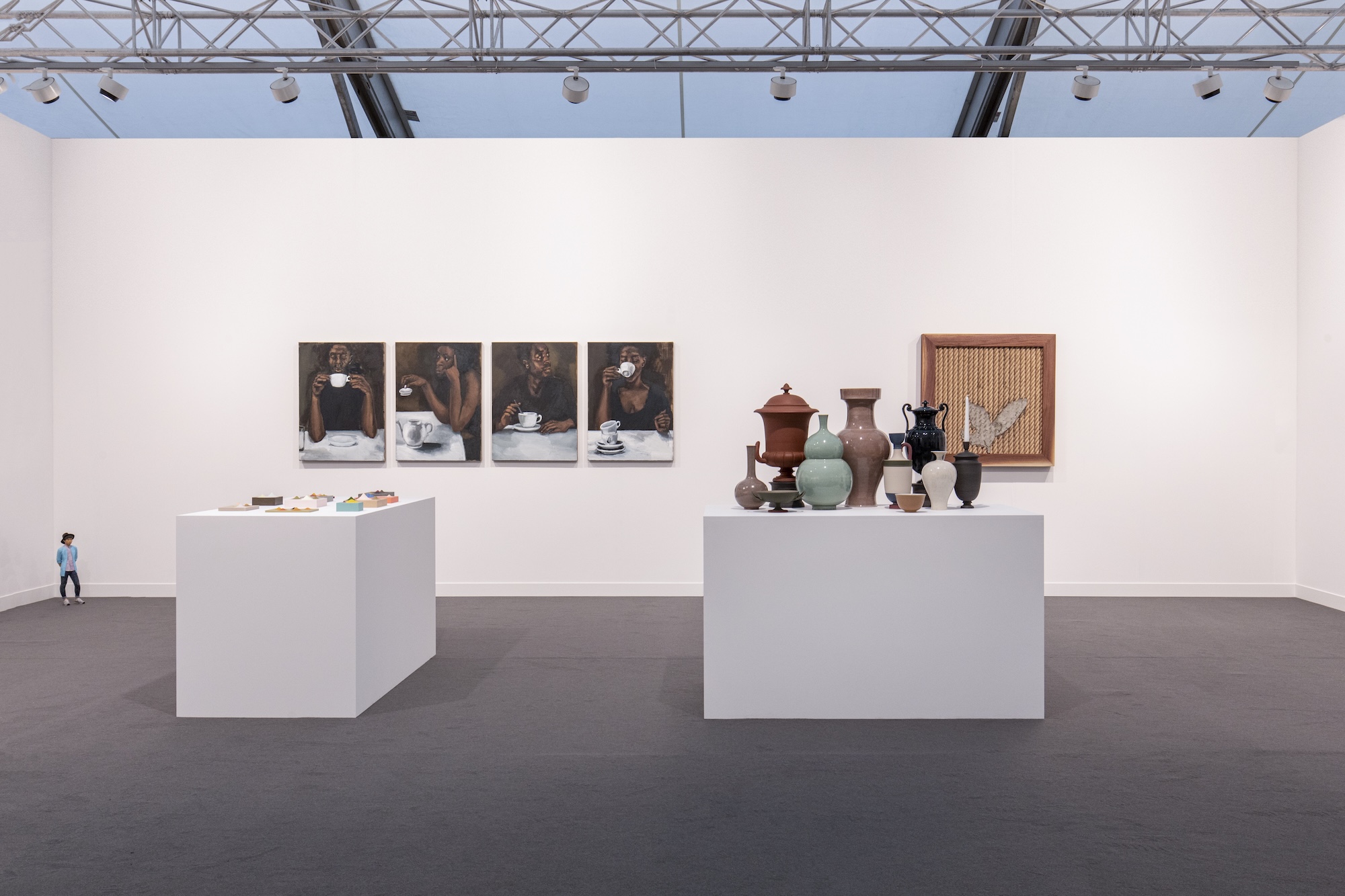
Besides Barrington’s work, the Corvi-Mora team have positioned a four-panel oil on linen work by Lynette Yiadom-Boakye. Titled A Reformation (2025), each panel depicts the torso of a different person nursing a cup of coffee. Characteristic of Yiadom-Boakye’s painting style, which embraces grainy dabs of oil, this series brings to mind photos by Carrie Mae Weems – The Kitchen Table Series (1990) in particular. Indeed, through Yiadom-Boakye’s hand these snapshot scenes become almost photographic – totally still yet animate in tone.
B8 blank projects (Cape Town, South Africa)
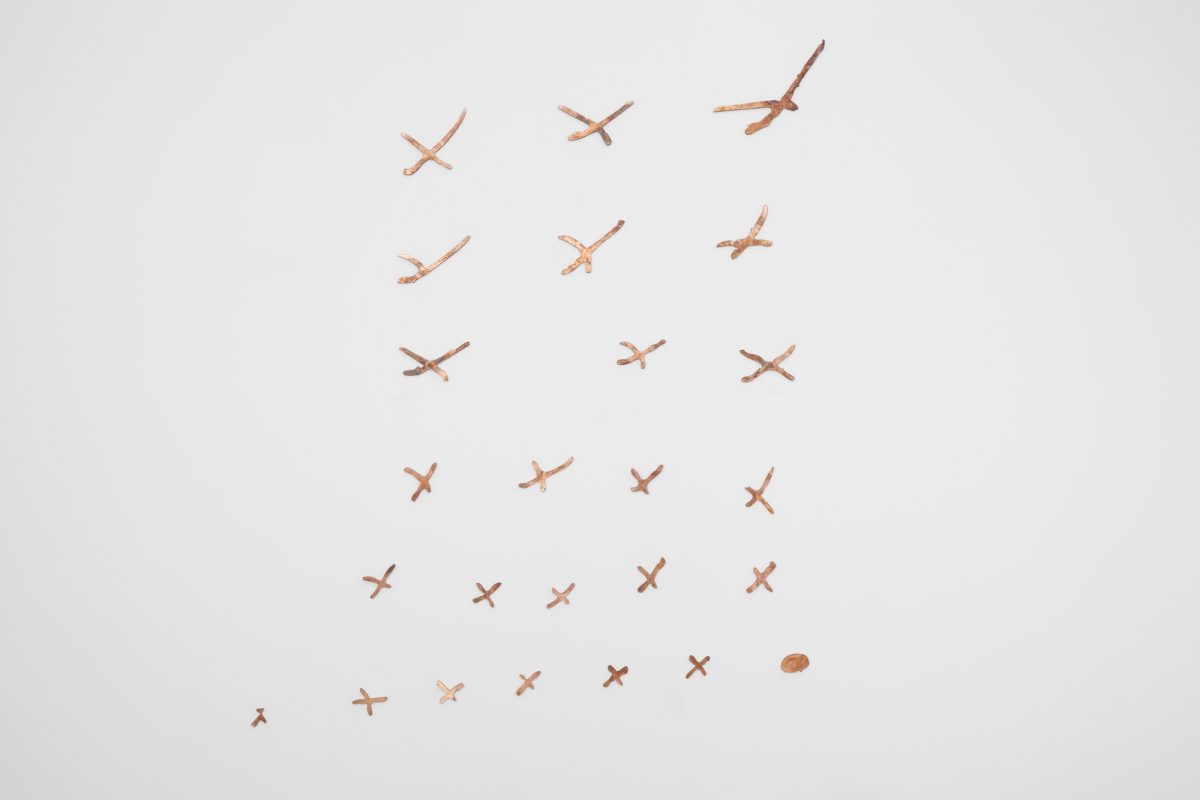
blank projects always do a coherent presentation. This year, donna Kulkama’s wall-based work Instead we counted ecocides, ethnocides, and democides (2016 – 2025) caught my eye initially. A series of oxidised copper kisses (x X X) bent and crooked in individual form as well as in their total formation (an irregular grid), the work has a powerful resonance – check the title for info.
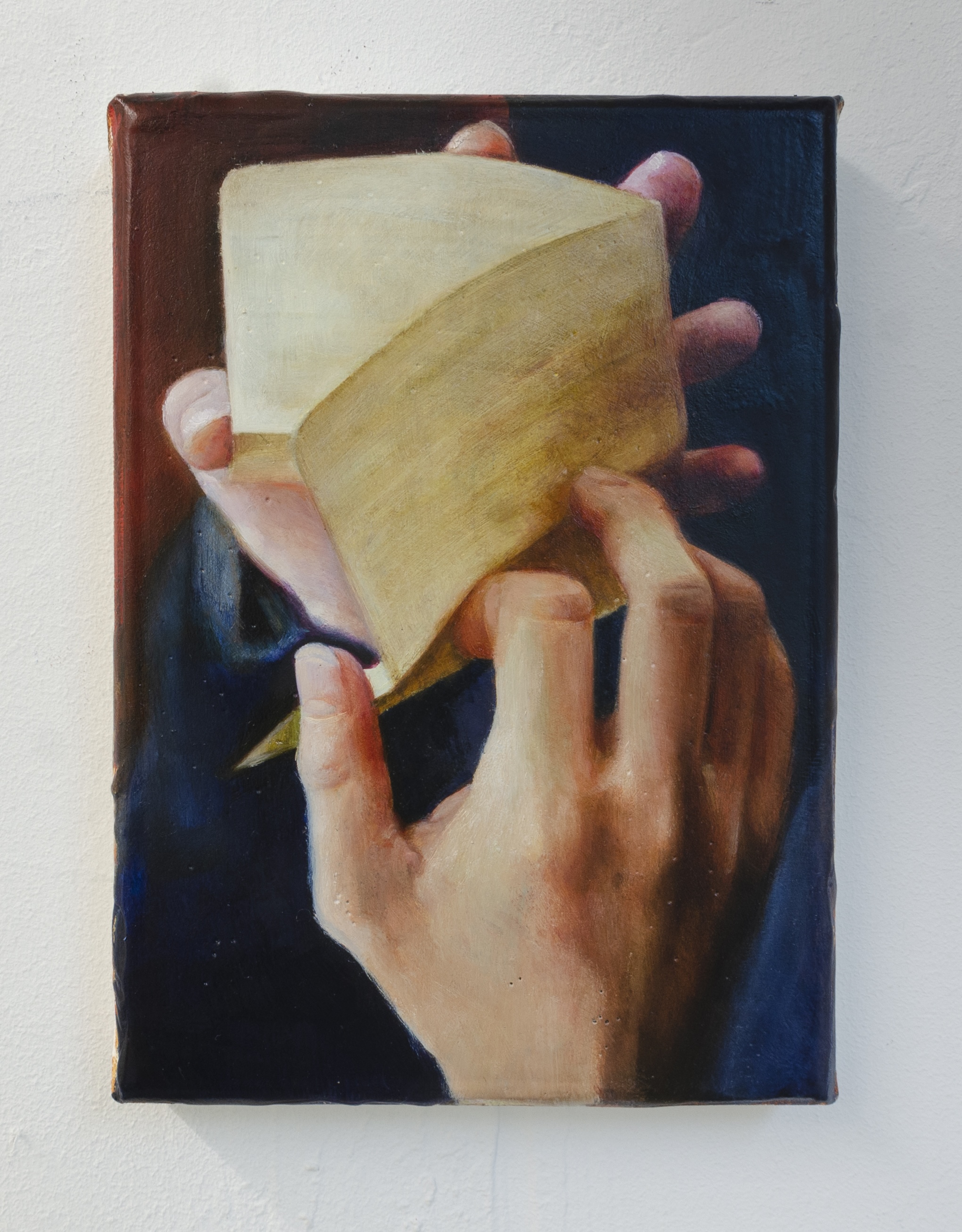
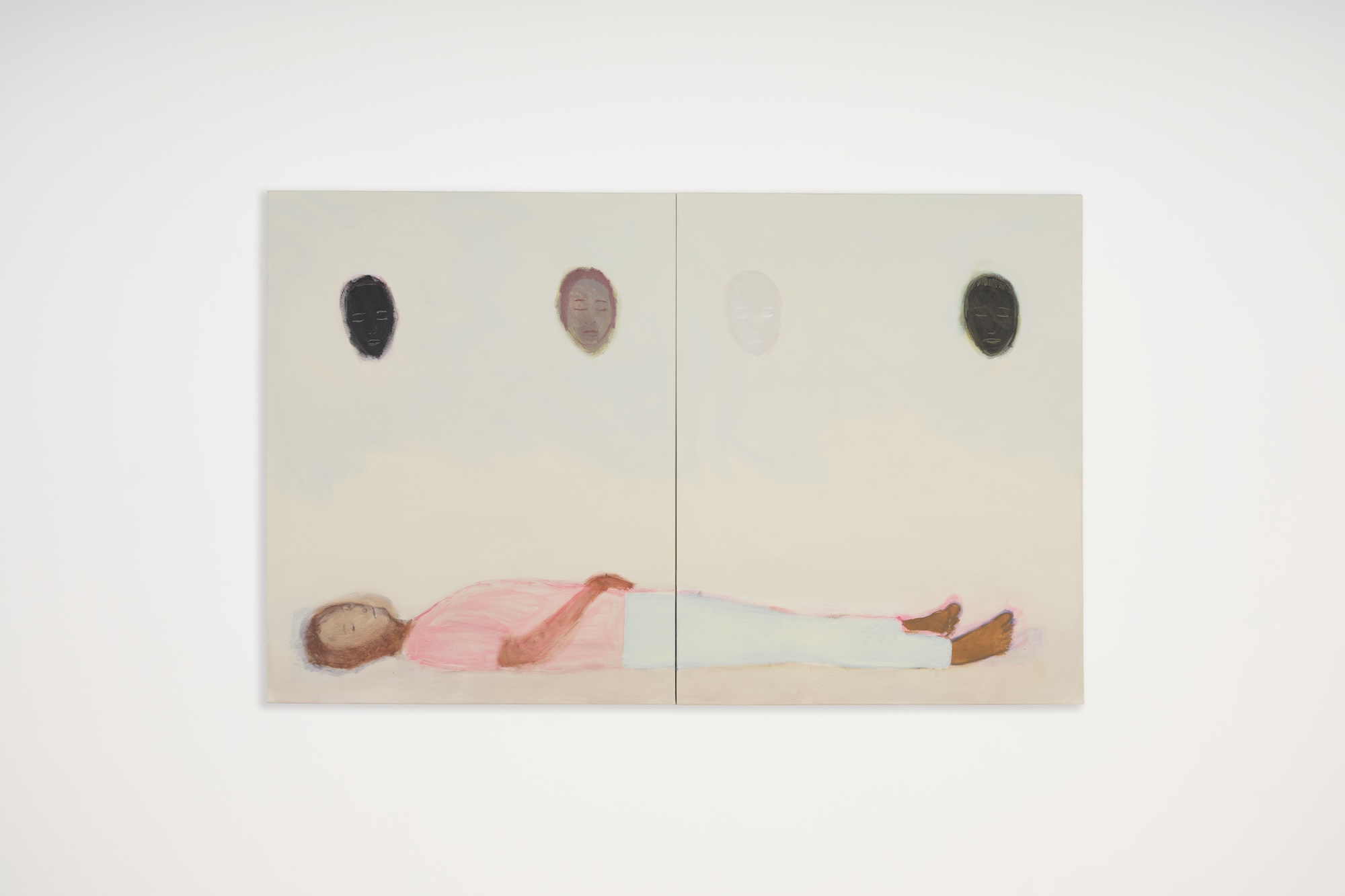
I couldn’t get close enough to Annabelle Agbo Godeau’s small painting Note (2025) to appreciate it properly – the crowd was thick and chatty. Almost A5 in size, Note depicts two hands unfolding a tri-folded sheet of paper.. The gesture is loving, a tone echoed in Agbo Godeau’s formal approach to the oil medium – the close-crop scene is slightly hazy, as if conjured from memory. Not being able to see Agbo Godeau’s work close-up wasn’t too much of a bother for me. I had Gregory Olympio’s diptych A l’abri des regards (2025) to awe at. A beige-oat tone scene featuring four floating heads and a pink outlined corpse-come-body, A l’abri des regards has a mournful quality. The work doesn’t ask for nor invoke a sense of sympathy however. Loosely formed and painterly, the simple composition has a lightness (to me it literally bleeds light), which makes me think this image is more akin to something one might see in church stained glass rather than on the front page of the Daily Mail. It’s of note that the work’s title Google translates to ‘Out of sight’, perhaps an allusion to all that which lies beyond the oversaturation of contemporary life.
B16 Maureen Paley (London and Hove, UK)
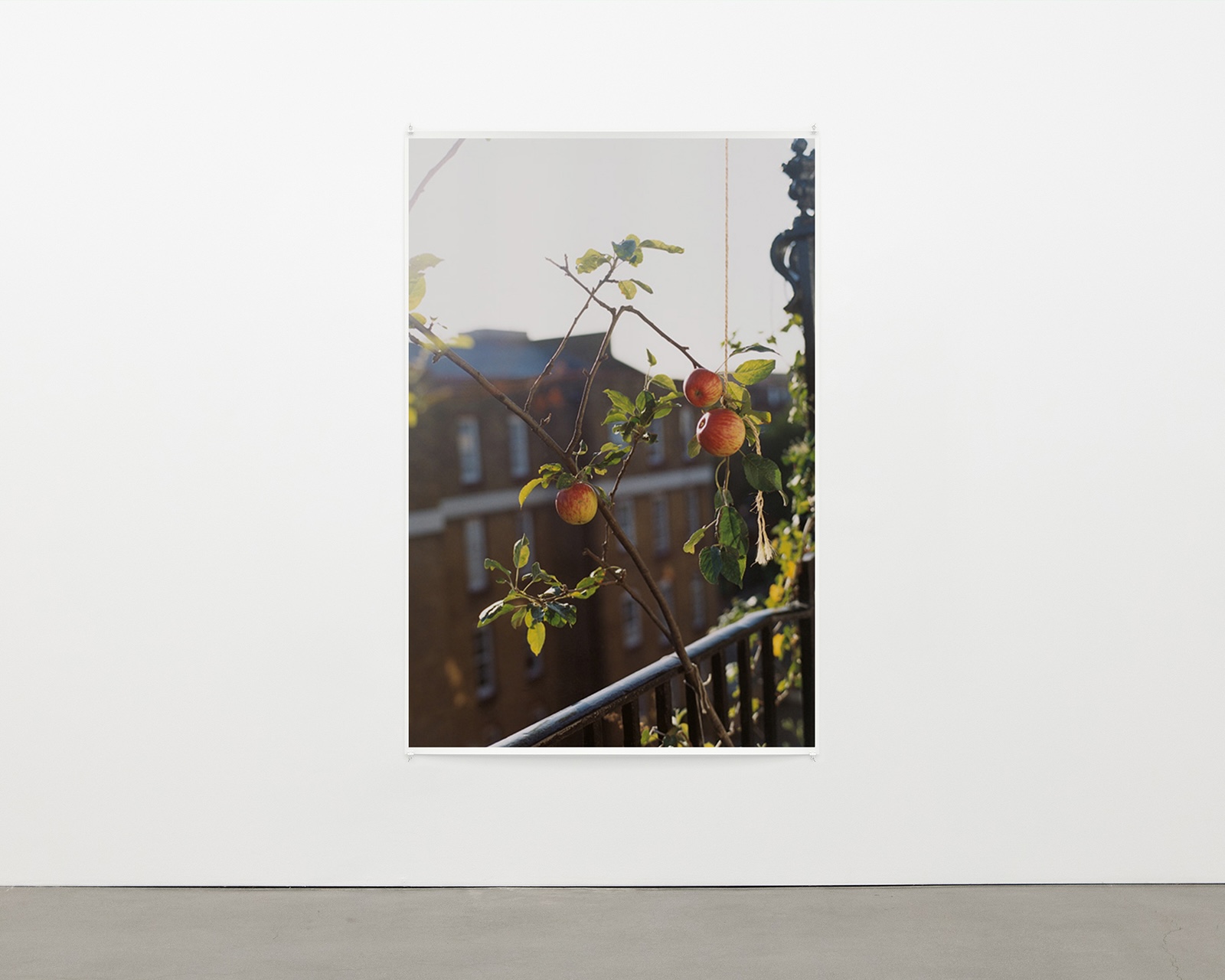
To paraphrase frieze magazine’s editor-in-chief Andrew Durbin (as interviewed by Broadsheet earlier this month), Maureen Paley knows where contemporary art is at and where it is headed. Paley just opened a new gallery space on Herald St, inaugurating this with a solo exhibition with (the) Wolfgang Tillmans. An artist whose photographic eye speaks so subtly of our contemporary moment, it’s not a surprise to see a large print by Tillmans on Paley’s booth wall. Unframed, in the most elegant manner, apple tree (f) (2004) images what I think is a cox-apple tree close-up. With a balcony railing bisecting the lower part of the composition and a semi-blurred row of brick flats in the background, it feels easy to position this tree as growing, as fruiting, in a small city living space. I hope the poetry in that is apparent.
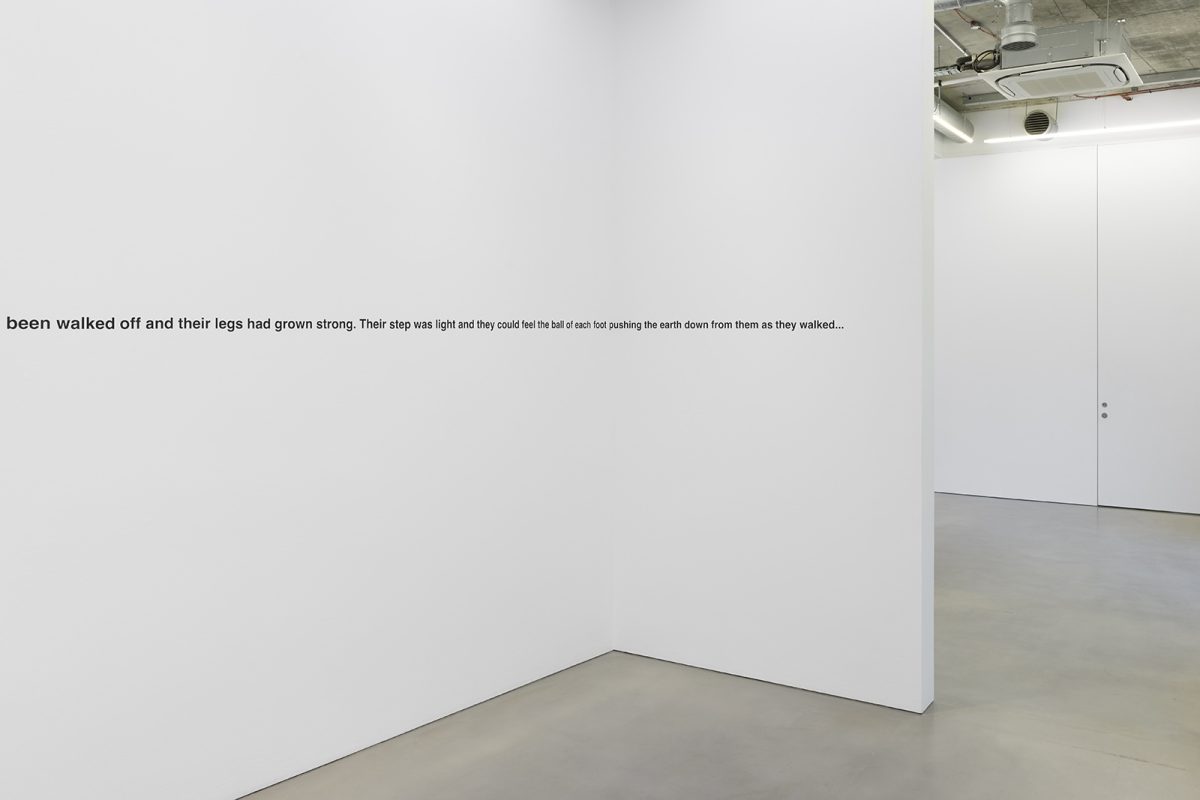
Other notable artworks on Paley’s booth include a smallish mixed-media work from Tom Burr – Untitled (Hollywood) (2011), a modernist collage of vintage record sleeves pinned on plywood – and a pink pool of painterly shimmers by Maaike Schoorel – Waterway (2025). I was particularly taken by Liam Gillick’s Introduction (2002), a black text vinyl pasted high and running around the perimeter of Paley’s booth. Literary in the reading, Introduction seems to set a scene, demarking ground for what is to come. Durbin’s thoughts on Paley’s vision seem extra resonant with this artwork in mind.
C6 Hollybush Gardens
When I lived in London, Hollybush Gardens was always a space I overlooked – why, I really don’t know. Their exhibitions are always formally and conceptually rigorous, tending towards the more ‘risky’ side of the London art market – they refuse the routine of pretty (shit) paintings that so many other spaces in the city thrive on. Their booth echoes this sentiment. Candace Hill-Montgomery’s woven works In Thee’s Future Spaces (2022) and Letter Only Tang Brats Matter (2018) bring together fabric and found materials – glass, feathers and beads, as is the case with the former, Japanese note paper in the latter – in wonderfully haptic assemblies. Here, looking is like reading, like feeling a burgeoning narrative in the making.
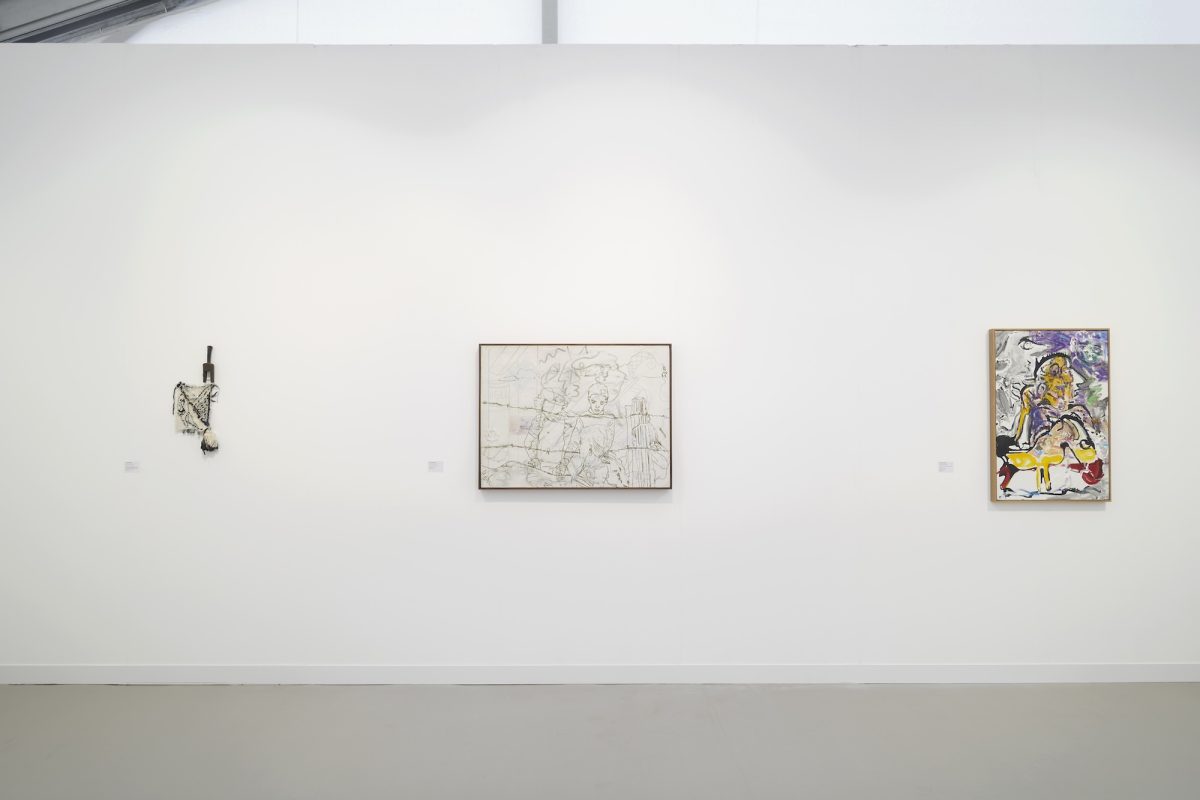
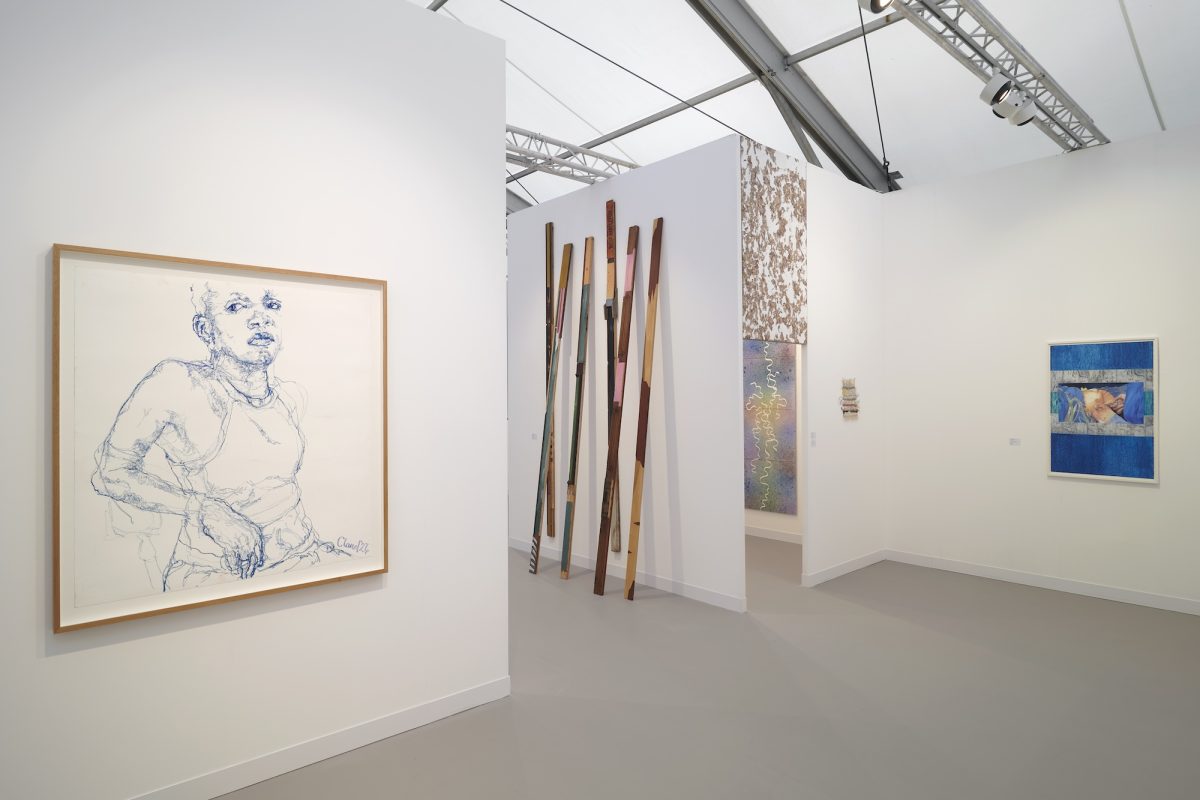
The riskyness of Hollybush Garden’s programme seems to be captured beautifully in Olu Ogunnaike’s handmade chipboard panel A touch up? (2025). Seemingly integrated into the very fabric of the Frieze booth, the work mutters ‘institutional critique’, yet visually recalls aged leaves appearing through a layer of snow – we can see traces of wood through the layers of white plaster Ogunnaike has brushed onto the panel. Ogunnaike’s surfaces the often overlooked aspects of contemporary life, revealing the social histories that construct a sense of place. Another wooden construction, Lubaina Himid’s Aunties 8 (2023) is composed of a set of six thin wooden beams painted in various pastel tones – bright peach, dusty yellow and mudded turquoise. More than flat painted boards, the carved details in these beams seem allusive of a previous life history – the boards could have once been a skirting board or dado rail. Cut from their original context, inverted (perhaps) and painted, these objects rest against the booth wall lazily, as if chatting. In doing so, the work, much like Ogunnaike’s, seems to point towards how familial histories build give a place its aesthetic feel.
Frieze London & Frieze Masters, 15th- 19th October 2025, Regents Park @friezeofficial