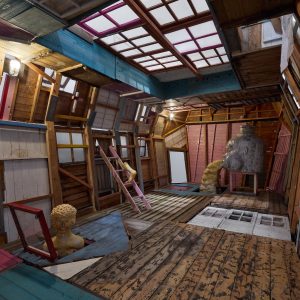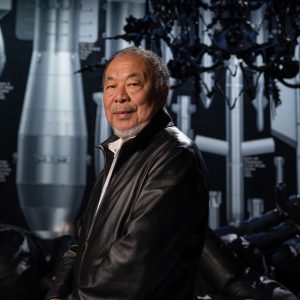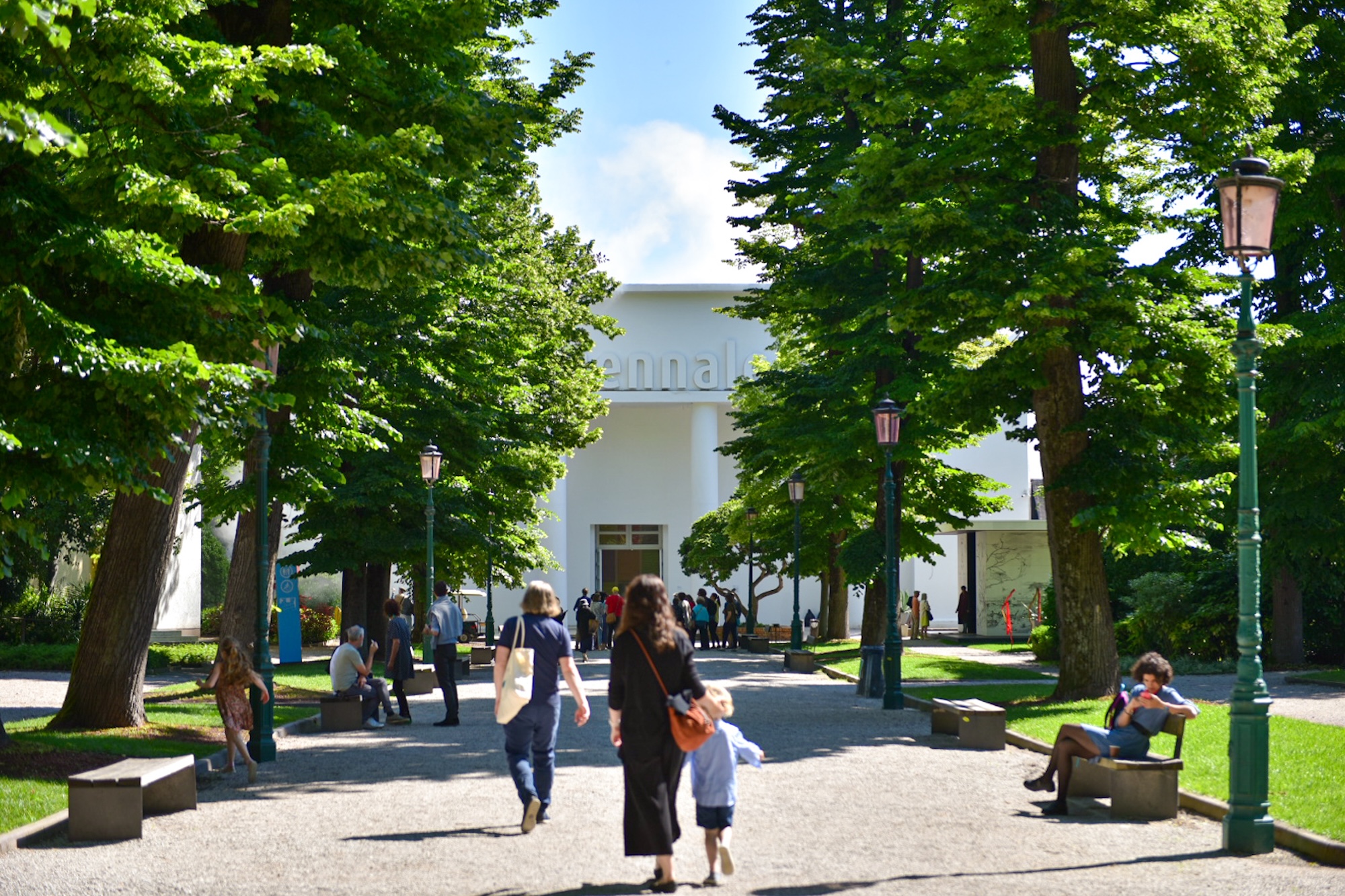
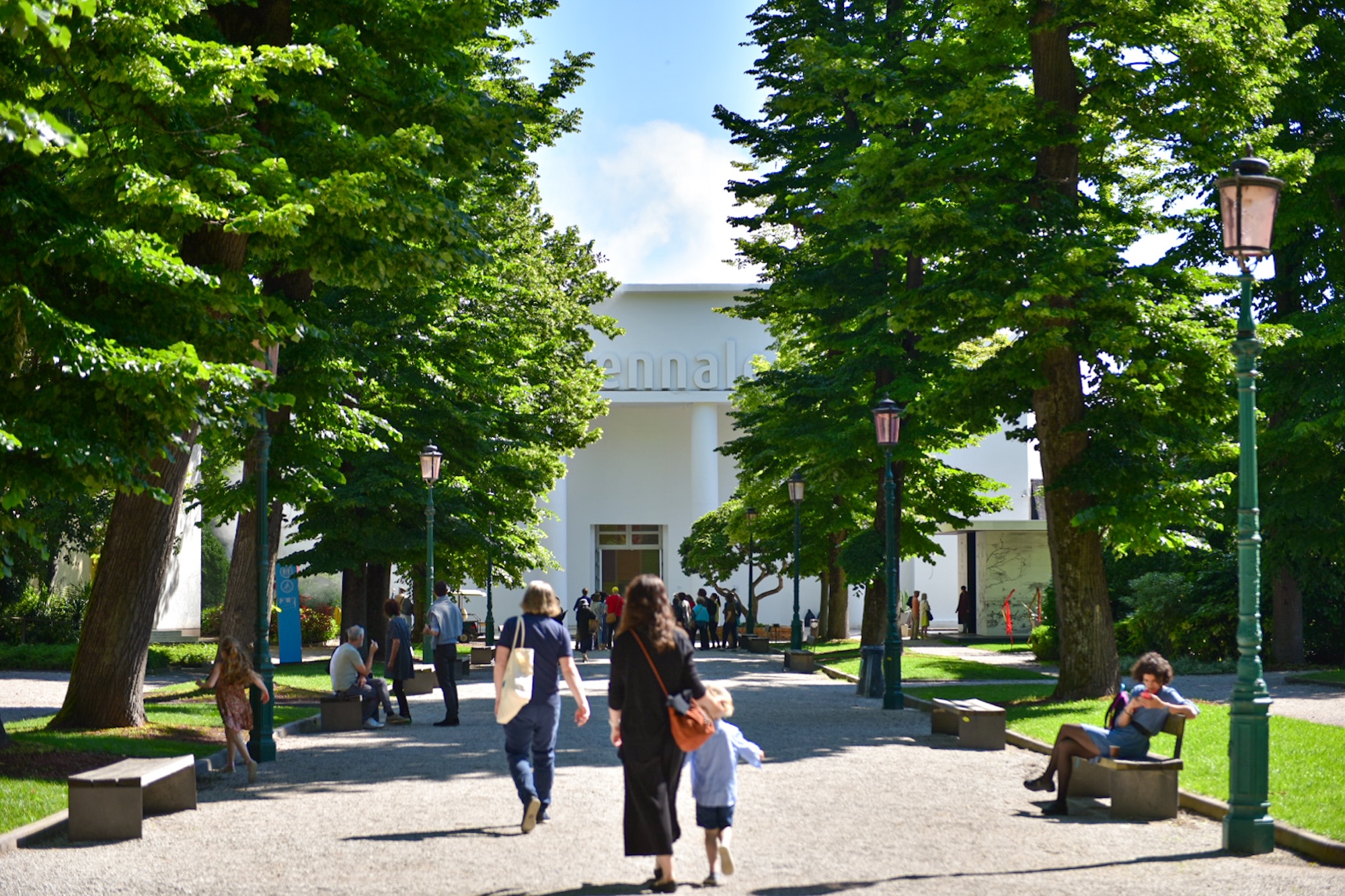
While I was in Venice for this year’s Biennale, I tried to see every national pavilion across the two main sites and the ones dotted around the city. I didn’t manage to see them all due to a mix of geographical inconvenience, time constraints, and some being closed when I visited, though I did manage to see most of them.
Here’s my pithy one-liner on every national pavilion, which reflects my first impressions – and also how hungry and tired I was at the time of visiting. I’ve split them across Giardini, Arsenale and off-site, and in the order I saw them (or didn’t). I’ve also included the pavilions that aren’t official national pavilions, but fulfil a similar function or occupy a similar space.
Giardini
Greece – a BDSM club meets soft play sculpture, begging for a performance that isn’t there.
Romania – under the sea, under the sea, there’ll be Romanians singing under the seeeeaaa, a calming space that doesn’t actually have anything to do with the Little Mermaid – second space in Canareggio feels unnecessary.
Poland – whale song turned into phonics and international sign language, a great concept and as an added bonus, you can lie down and listen to it – much appreciated when seating is at a premium in the rest of the Giardini.
Venice – a good idea of a diary of creatives in Venice, even if the end result feels slight.
Brazil – Rosana Paulino’s work about racial discrimination and captive bodies hits hard, though the other works aren’t at the same level.
Egypt – touch a rocking granite sculpture, come here when you feel overstimulated … and you will.
Serbia – archival materials on the walls and stacks of suitcases – I love the smell of the Serbian pavilion in the morning … smells like history.
USA – lots of lumpy sculpture; does it reflect American values? Does anyone care?
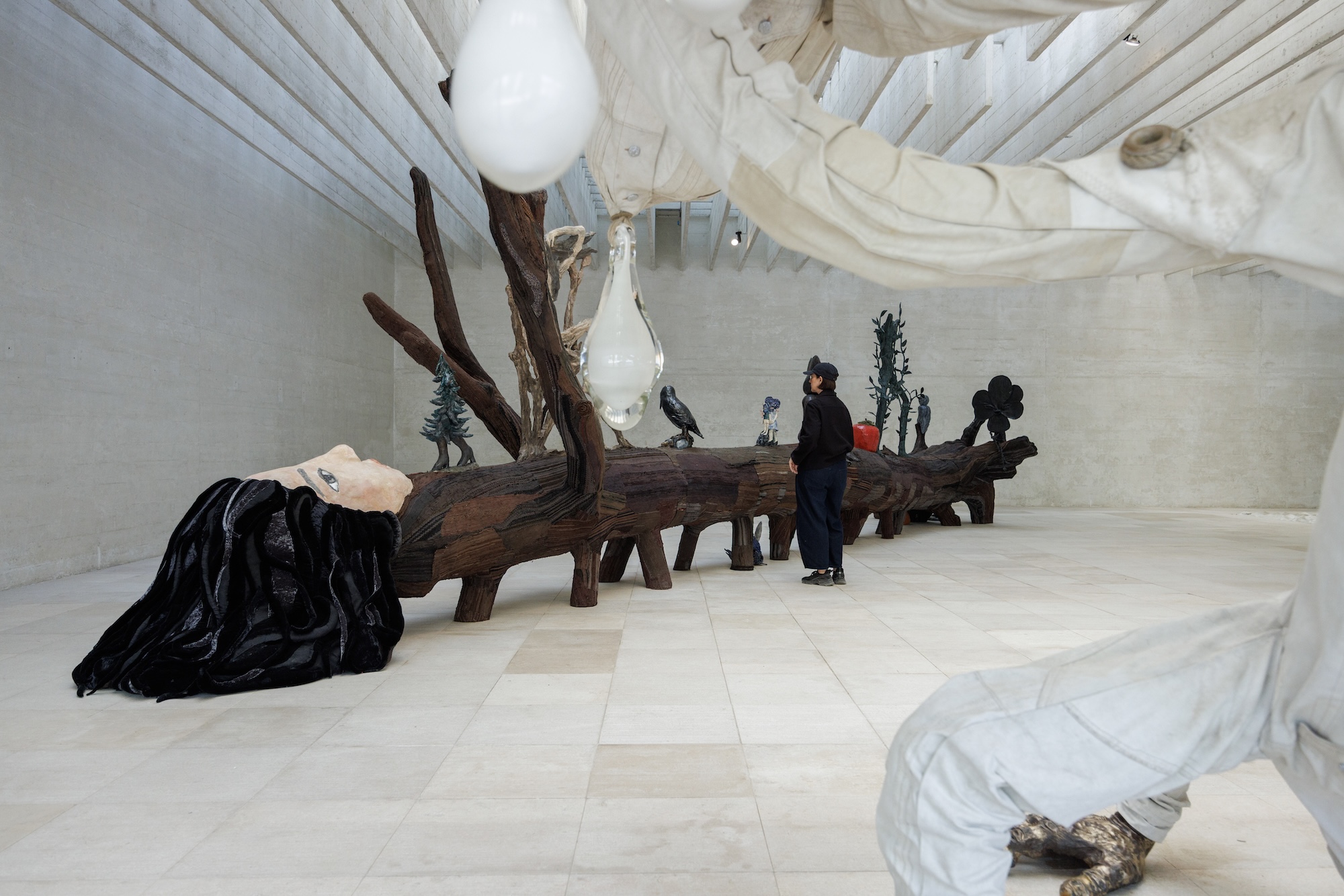
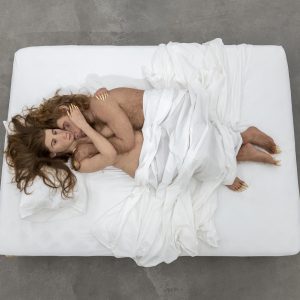
Nordic (photo above) – a giant tree woman lying down, bodies and hands combined into an animal-human hybrid – it’s creepy, surreal, and I love it.
Denmark – nicknamed the ‘porn pavilion’ for asking whether there is a benefit to viewing porn and asks the question nobody else thought about asking, can VR porn solve the male fertility crisis?
Switzerland – there’s an important commentary on homophobia here if you can find it in the jumbled mess of a presentation.
Russia – a dance floor with a DJ, serving vodka from a bar and lots of flowers, all feels as incongruous as Russia being at the Biennale.
Venezuela – closed and a big sign saying it will be reborn, but surely now is the time to be reborn – is it making a statement that I didn’t have time to figure out?
Japan – babies you can pick up and change, only to find a QR code poem in their nappies – the only way this could be better is if the babies had sunglasses, and they do, the best dressed and most enjoyable pavilion.
Great Britain – lovely concept about migration and belonging, with nice paintings, but just … nice, if not particularly memorable.
Canada – like the palm house at Kew Gardens, but a lot less interesting.
Uruguay – lots of rubble and a ball of clothing, and something about fragility, brace yourself as there’s more rubble to come in Venice.
Hungary – big chunks of metal that look imposing and dystopian, even if the concept doesn’t match how they feel.
Finland – hairy things and the sound of wind, needed to be hairier and windier.
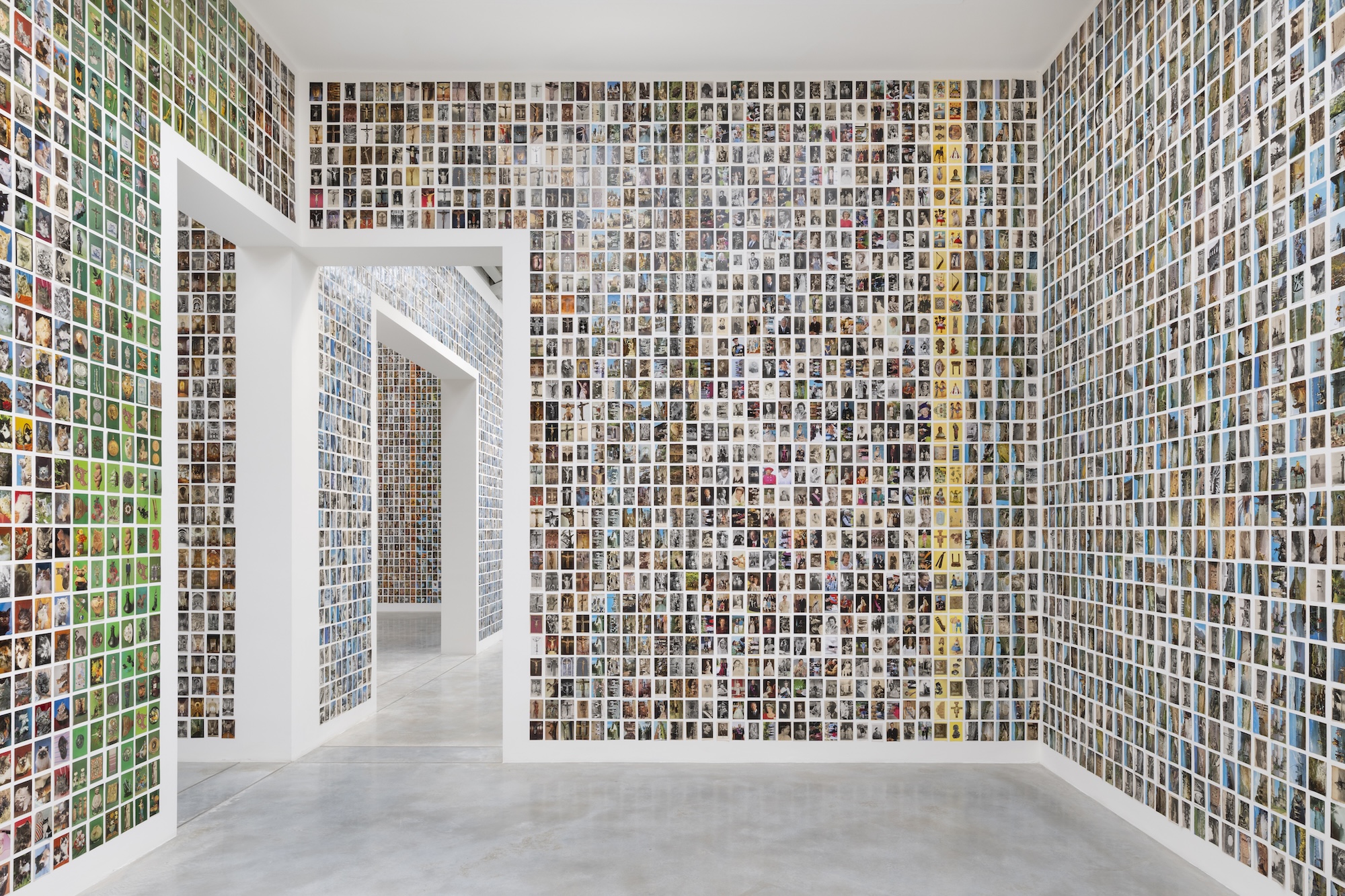
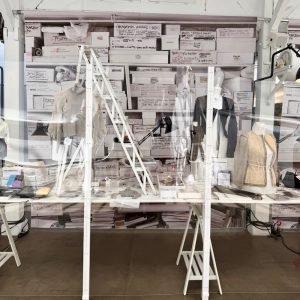
Spain (photo above) – this serious collection of postcards covers every wall and neatly captures the obsessive nature of artists.
Qatar – love the architecture of this pavilion, but you can’t focus on a film in an open-air space when it gets drowned out by the hubbub of others walking all around it.
Austria – all over the ‘gram and worth queueing for (an hour max), and while everyone is focused on the nudity on a jetski, ringing a bell and diving in ‘purified urine’ that you can contribute to, it’s the playful humour that won me over.
Australia – sadly, the controversy around the selected artist was more impactful than this meditative work.
Czechoslovakia – bizarre film about a mole man, though unfortunately not Hans Moleman from The Simpsons.
France – top marks for prettiest pavilion, but doubt anyone will remember the works over the curtains.
Germany – love all the East Germany references on the outside and inside of the pavilion, including the jarring green paint job, plus I love the corner filled with ladybirds.
Korea – a simple concept of a liberation space is the calm you need in the storm of the Giardini.
Belgium – intense, loud, dusty and a lot of fun as performers drum, scream and smash in this high-energy pavilion.
Netherlands – only pavilion I didn’t see, as you had to be locked in for a 25-minute performance, and I heard it was even more traumatic than having to turn your phone off for 25 minutes.
Arsenale
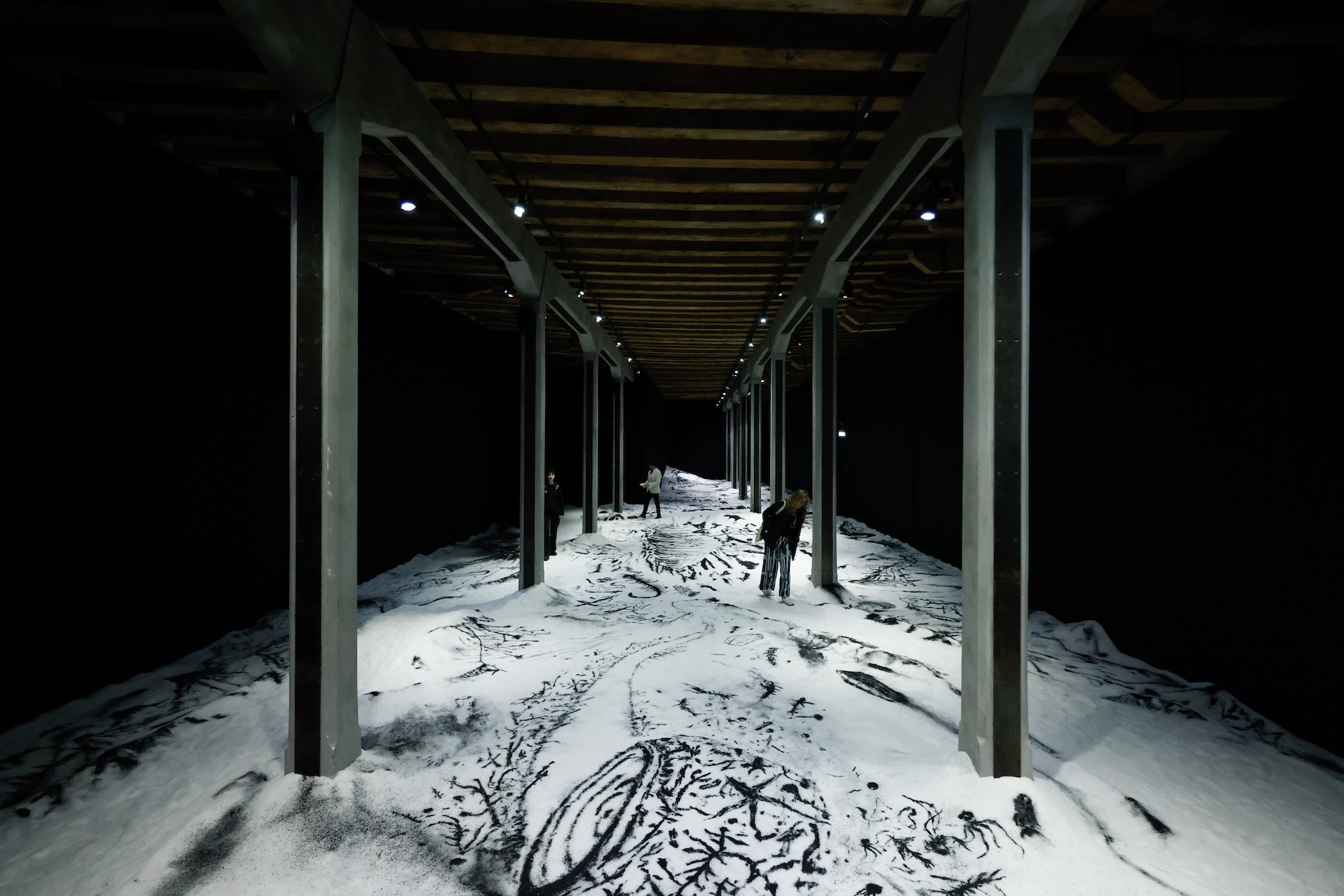
Argentina (photo above) – walk around a room full of salt and coal, which feels like walking on snow – of all the earthy salt/sand/mud/rock pavilions, I liked this one the most.
Saudi Arabia – a moving mosaic that references cultural destruction and heritage under threat in the Arab world.
Mexico – more salt again, this time in relation to indigenous culture and would have worked better as an installation, without the videos.
UAE – speakers blare out lots of email apologies, which filled me with flashbacks of my corporate life, there’s a creepy wooden sculpture with moving eyes, and a nice-smelling hammam room to finish – this rollercoaster of emotions ticks all the boxes.
V&A – a low-key and relaxed display, and yes, I’m aware the V&A isn’t a country, though with all the new museums it has opened, its footprint is getting close to one.
Ukraine – a great story about a sculpture being evacuated and documenting its travel to now hanging outside of the Giardini on a crane.
Albania – experimental film meets fashion catwalk meets dark fairy tales meets computer-generated landscapes – it’s a lot, especially when all the elements aren’t vibing.
Luxembourg – ET is confused by a mirror, and a literal shit takes the stage in a film and chats and flirts with the audience before exploding over them – way funnier than it sounds and guaranteed to make you smile; it’s the shit.
Singapore – walking videos, close-up body photographs and lots of wood, a gentle and calming alternative to the turd of Luxembourg across from it.
Turkiye – telling stories through textiles, I liked it, but there are a lot of textiles in this year’s Biennale.
Peru – muted fabrics with a nice concept, but work feels threadbare, especially with so many more textile pavilions nearby.
Slovenia – tells the important history about the ruins of a mosque, but not sure this display of rubble conveys it successfully – also, what’s with all the rubble this year?
Lebanon – big panels of paintings, not clear that it’s anything more than that.
Latvia – twisted clothing racks mimic a backstage area, and feel like they belong backstage, rather than centre-stage.
The Philippines – lots of big industrial metal, turn the lights down and it could be a nightclub.
Timor-Leste – textile and video works cover an important part of the nation’s history, but it’s hurt by how small the space they have is.
Morocco – more textiles and a massive bed you can sit on, a much-needed breather of a space, can you tell how much I’m enjoying sitting down?
Malta – there are some great works here, but will anyone notice them when there’s a chocolate Russell Crowe of Gladiator?
Oman – you’ve stepped on salt, now step on some sand with what look like blades hanging above you, atmospheric if small.
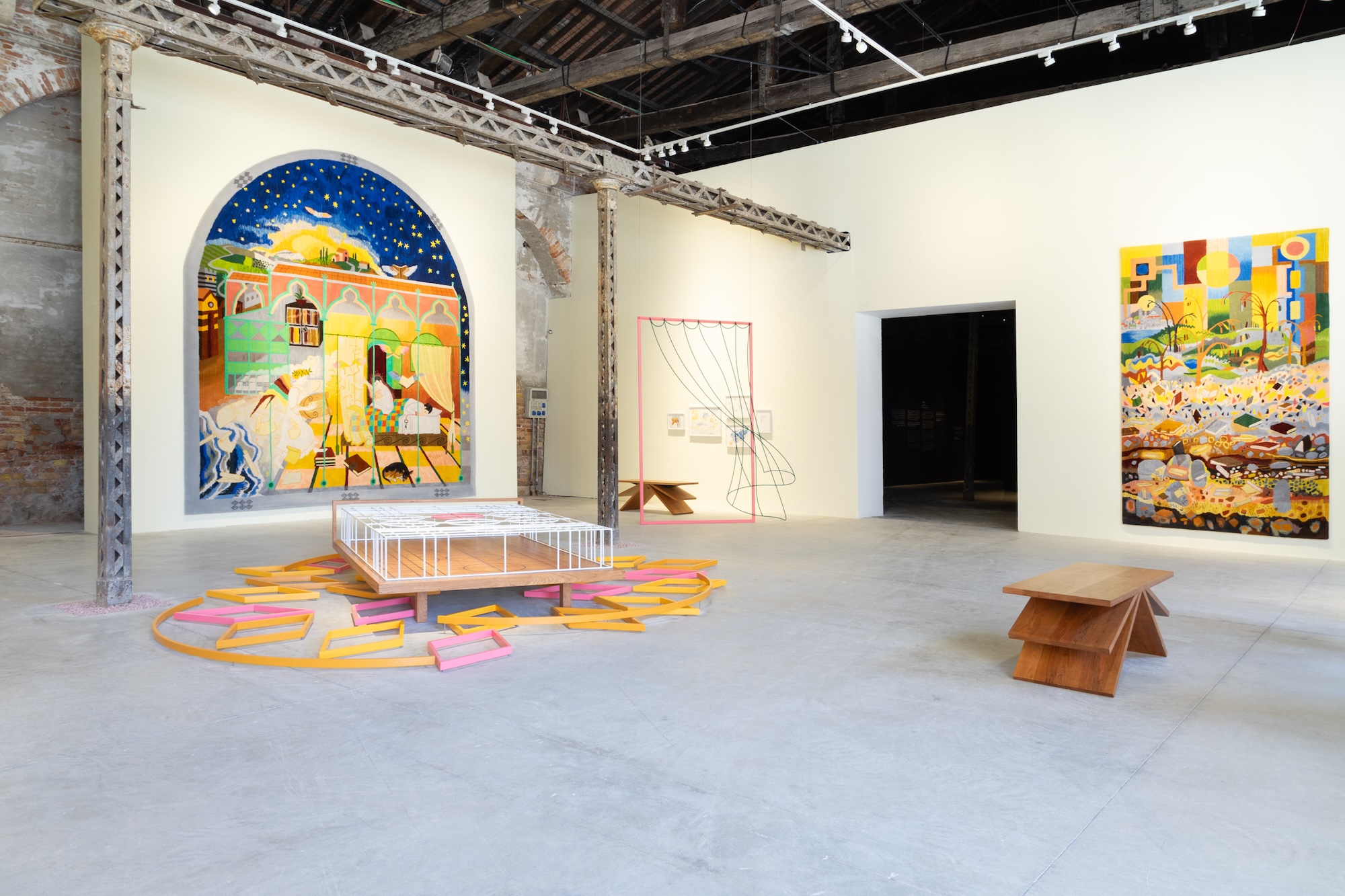
Ireland (photo above)- I liked these textiles, but by this point, I was reaching textile capacity for the day.
Chile – kick off your shoes and walk onto a white platform, where you look through peepholes and climb some stairs as you struggle to figure out what’s going on in this adventure playground for adults.
India (photo above) – beautiful architecture made from silk, a suspended garden, a massive bamboo structure, and papier-mache architecture in this stunner of a pavilion.
Uzbekistan – the story of the Aral Sea drying up is important, but too many artists spoil the narrative here, though you do get to play with a salt pit.
Italy – lots of ceramic sculptures fill the space, and for some reason, there’s a disco ball and thumping music in one corner – do the figurative sculptures come to life and party when we leave?
China – art meets technology, and if you time it right, a robot will make you a calligraphic print to take away – though no idea why it has to be so dark in here.
Israel – somehow missed this, maybe my subconscious stopped me from seeing it due to Palestinian solidarity or maybe I couldn’t see past the armed guards near it.
Off-site
Wales in Venice – earthy, nice concept, smells great, this won’t be my only earthy encounter at the Biennale.
Zimbabwe – couldn’t visit as they were still installing during preview week.
Ethiopia – nice-looking abstract art in an even better-looking building.
Nauru – mixed quality of works, but great concept about disappearing from the world’s smallest island nation.
Lithuania – people embracing where the sea meets the land is poetic, but who’s got time for a 40-minute film during preview week?
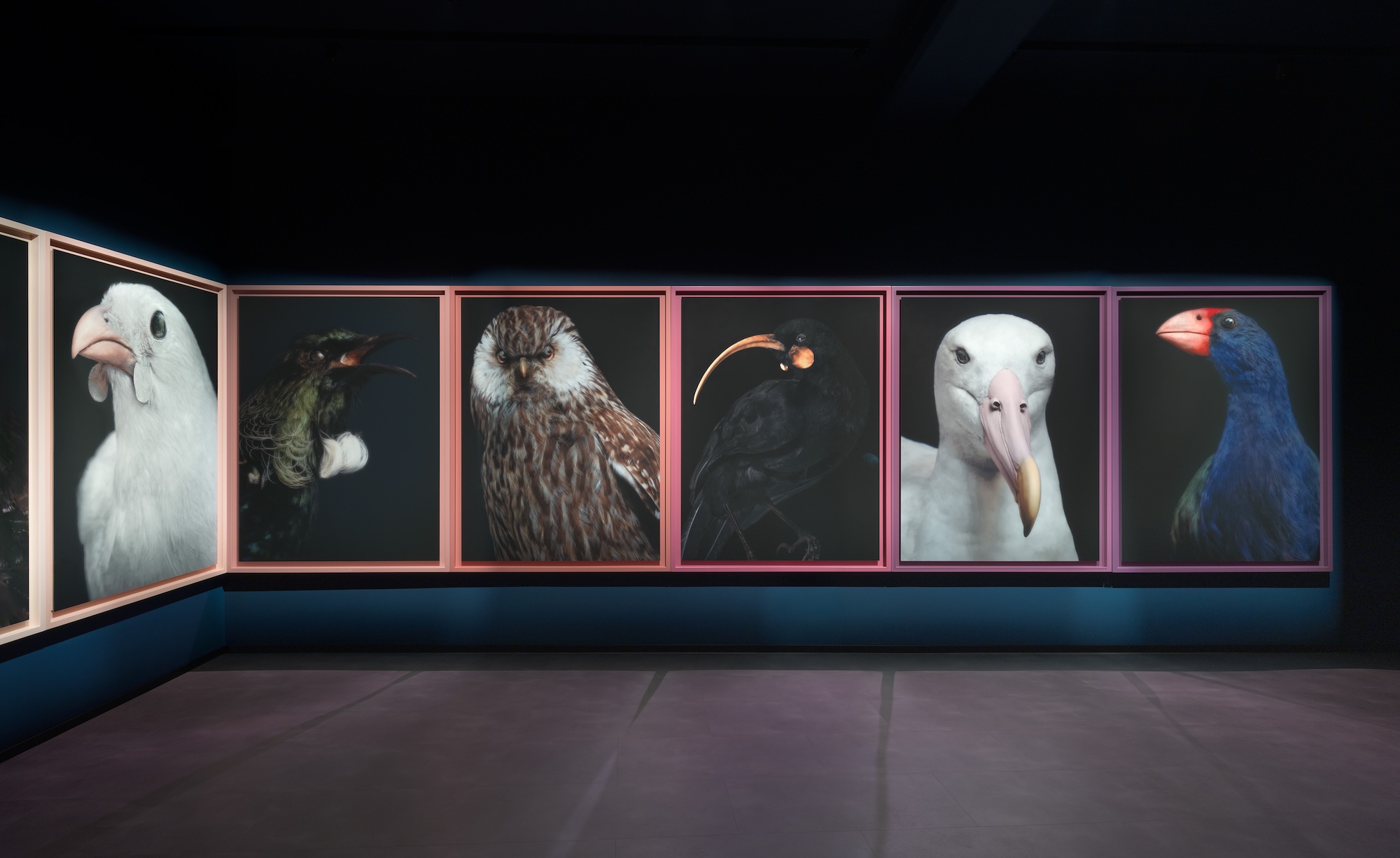
New Zealand (photo above) – a simple concept of large portraits of extinct or endangered birds that works well in a darkened space.
Montenegro – walk on a glass floor with rooms of little people beneath my feet – I may not understand what’s going on, but I’m totally here for it.
Kazakhstan – walked past it twice, and it wasn’t open both times – maybe I timed it wrong, someone please tell me if they actually managed to make it inside.
Mongolia – couldn’t find it, maybe because it was closed on the day of the workers’ strike.
North Macedonia – a big gold Pieta in a church made up from the blankets given to refugees, a simple concept that hits hard.
Scotland + Venice – closed on the day of the workers’ strike.
Iceland – furry artist among wolves in a film that switches from peaceful to intense, and a carpet you want to sink into, relaxing if confusing.
Catalonia in Venice – paper watermarks is a weird choice of subject matter for this bizarre exhibition, but I got tissues to take away, and these helped with my tears of exhaustion.
Cuba – an important exhibition on the maroon uprising of enslaved people, and while the giant wood and metal heads didn’t convey that message for me, I did like them.
Estonia – a great concept of an artist living in Venice with her family, and the painting on a basketball court evolving over the length of the Biennale, no idea what it will look like when finished.
Ecuador – the film about indigenous people and LGBT+ representation seemed interesting and powerful, but I was in desperate need of a pizza and couldn’t handle a 26-minute film.
Somalia – welcoming living room space and powerful, painful poetry above it about how migrants are treated – arguably the strongest debut country and a great use of a corner building.
Senegal – lots of gold-looking bling in a mirror maze, and I’m here for it.
Croatia – poor paintings, slightly better films.
Pakistan – fantastic textiles linked to the history of craft in Punjab, and that makes it worth navigating a building with more trip hazards than an obstacle course.
The Bahamas – a lovely concept about the unrealised pavilion of a late artist, teamed up with a contemporary artist, and they work well together.
Bulgaria – just around the corner from Pakistan and the Bahamas, but I just missed the final minutes before it closed for the day – a shame, as at the last Biennale, Bulgaria’s living room installation was one of my favourites.
San Marino – Richter-like abstract paintings based on soundwaves – meh.
Azerbaijan – I’ve always liked Faig Ahmed’s distorted rugs, and using them to guide you round an exhibition is a great idea – there are also interactive works, but there was a queue that I couldn’t wait for.
Hong Kong – vibrating colourful string, spinning lights and goldfish printed on moving bags – it all looks cool, even if I have no clue what’s going on.
Macao – wasn’t open, but the poster looked great.
Cyprus – a great example of how less can be more: a largely empty space filled with chanting, with just a model bird twitching but not dead, plus copper drums spinning in a second space, makes for a hauntingly effective pavilion.
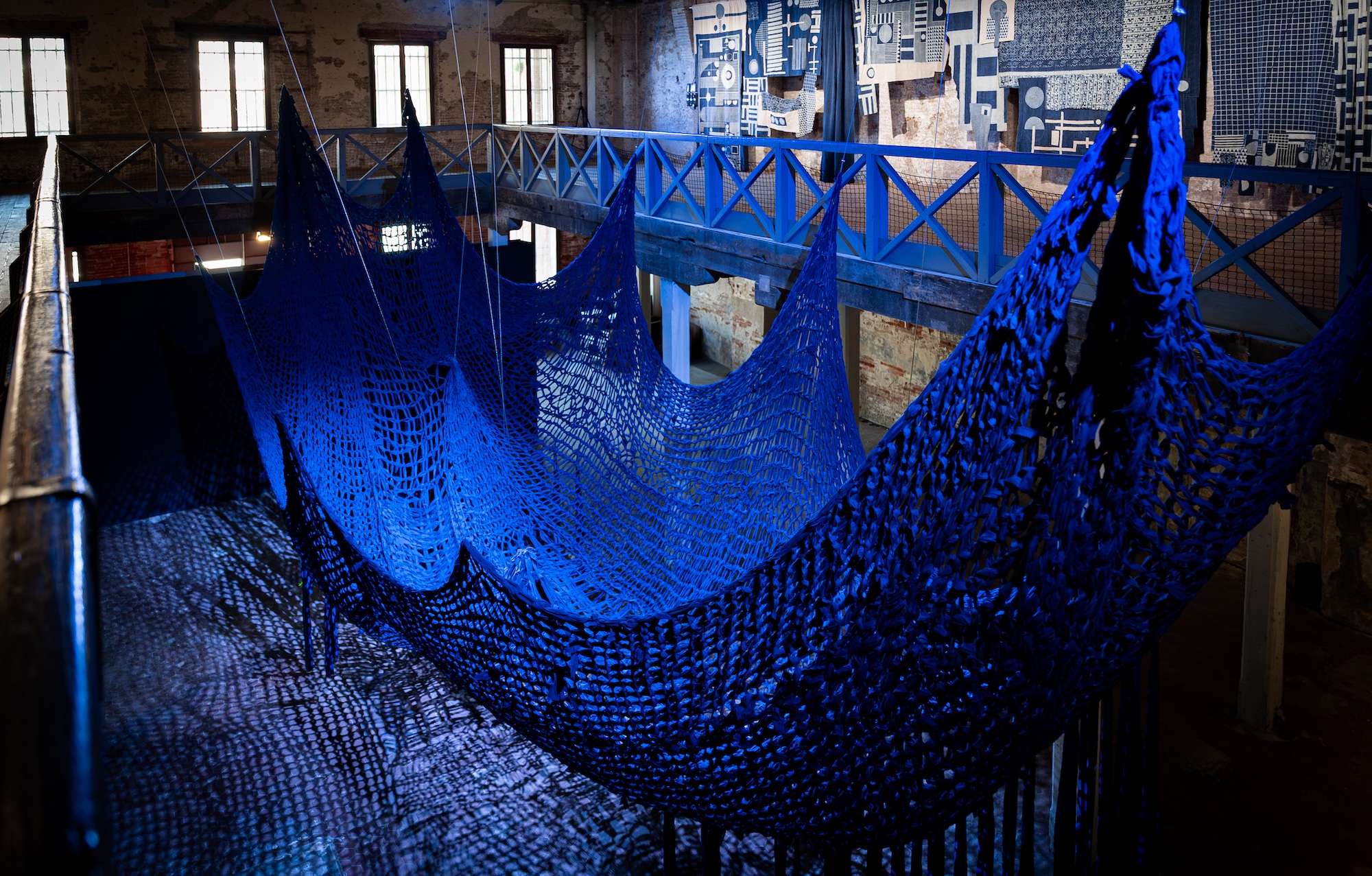
Panama (photo above) – hard to find and even harder to get to opposite the Arsenale, but worth it for a stunning installation in a cavernous building, an important history and a soothing soundtrack.
Armenia – lots of big colourful blocks and paintings, Duplo goes big – at least Panama is next door.
Kosovo – haunting painting of a line of fleeing persons, with a soundtrack of explosions in a stunning octagonal church.
Guatemala & Grenada – two countries sharing a space seemingly without a theme as it could easily be confused for a gallery group show, it pains me to be hating on these two smaller nations, but come on – you can do so much better.
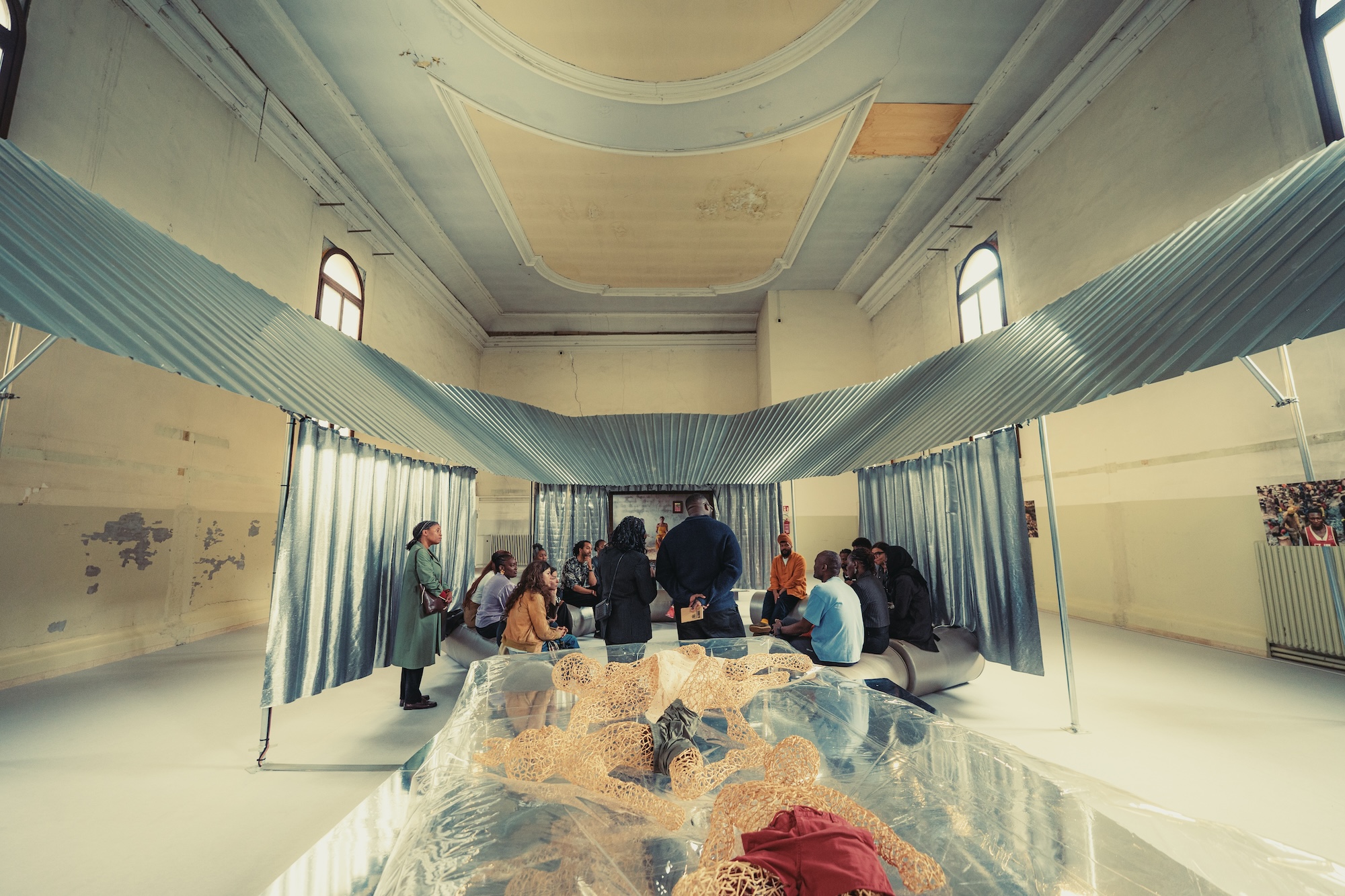
Congo (photo above) – tapestry, photography, film and light within an impressive, giant metallic structure inside a hospital, worth visiting for the journey alone of having to find it.
Equatorial Guinea – a mixed bag, but a vast collection of works and those in the entrance hall are the strongest, in yet another stunner of a building that I hadn’t visited before.
Kyrgyzstan – a big mechanised centaur-like creature looks like it could have stepped out of the video game Doom, alongside footage of the traditional sport Kok-boru (look it up, it’s wild) – other works are less effective.
Haiti – awful painting, slightly better photography.
El Salvador – Giacometti-like sculptures in a courtyard lead to a much larger, non-biennale, group show in the Palazzo, so these works just feel like part of that show – confusing and overshadowed.
Indonesia – love that they’ve focused on printmaking as the medium, since it doesn’t get much coverage at the Biennale, and these are based on an imagined story of trade between the West and East – plus you get a bracelet in exchange for giving your email; that’s how you build a mailing list.
Moldova – flying carpets held aloft by drones inside a church is a wild concept, and the noise in the darkness is genuinely terrifying and a phenomenal experience.
Tanzania – another mixed bag of work and the venue is far from other pavilions, but it has tons of art and should get props for some of the best directional signage of any off-site pavilion.
Holy See (photo above) – the perfect soul cleanser to end the Biennale on, as you walk these hidden and gorgeous gardens with locational audio, ignore the other part of the Holy See pavilion that’s a church filled with yellow lights, but don’t miss this one.
Gabrielle Goliath – should have been South Africa’s pavilion, and it’s even more haunting in a church as women support each other in singing a single note to comment on those who are persecuted, and I’m glad to hear it’s coming to London.
Cameroon – missed this because the maps I was using had it in two different locations, so I wasn’t sure where it was.
Georgia – one of a handful in Dorsoduro, in the only section of Venice I didn’t manage to cover.
Sierra Leone – also in Dorsoduro, and didn’t get to it.
Syria – the furthest national pavilion on the main island from where I was staying, a shame to have missed it, as I love Sara Shamma’s paintings.
Belarus – not particularly remote but isolated and not close to anything else, which is why I never got to it.
Guinea – didn’t make it as it’s on the island of San Servolo, and I’ve only managed to visit the island once in my seven trips to Venice, and that was when it hosted the Golden Lion-winning Armenian pavilion.
That’s all of them, and I’m hoping I haven’t missed any.
The Venice Biennale runs until 22nd November, and many of the collateral events run for a similar duration. Entrance to the main sites is ticketed; other events are either ticketed or free.
Lead image: Photo Andrea Avezzu, Courtesy of La Biennale di Venezia
Nordic pavilion photo: Jacopo Salvi
Spain image: © Roberto Ruiz. Courtesy of the artist.
Argentinian pavilion photo: Jacopo Salvi
Irish pavilion photo: Luca Zambelli Bais
New Zealand image: Photography by Neil Pardington.
Panama image: © Panama Pavilion
Congo image courtesy of Antoine Assumani.
Holy See image: Photo David Levene