I enjoy Munich’s art scene, its ‘system’ as they say. For the last four years, I have ventured to the Bavarian capital, sampling the artistic ‘positions’ shown during the city’s ten-day contemporary art festival, Various Others. Born in the spirit of collaboration, VO provides an opportunity to rethink historical narratives, allowing art to spark new ideas in everyday life.
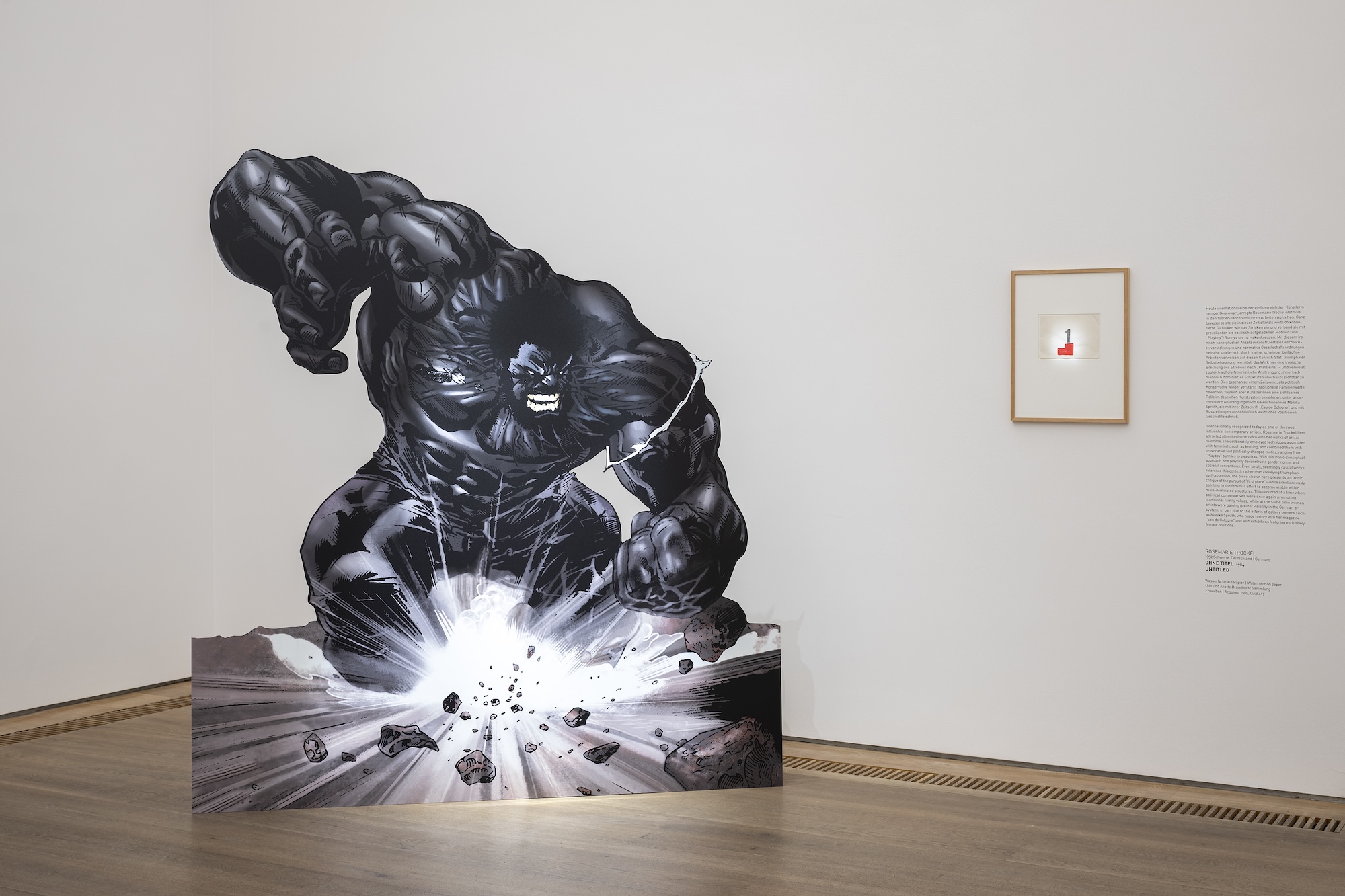
Any connection between the artworks of Arthur Jafa and those of Rosemarie Trockel might seem tenuous. Focusing on the formalities of each artist’s output, however, foregrounds some affinities. Namely, how each artist brings differing bits of stuff, filmic as is often the case with Jafa or sculptural with Trockel, together in ‘affective proximities’, assemblages that speak on an emotional level. The exhibition Confrontations: Pairings from the Collection, at the Museum Brandhorst (until September 27th 2026), embraces such incongruous pairings.
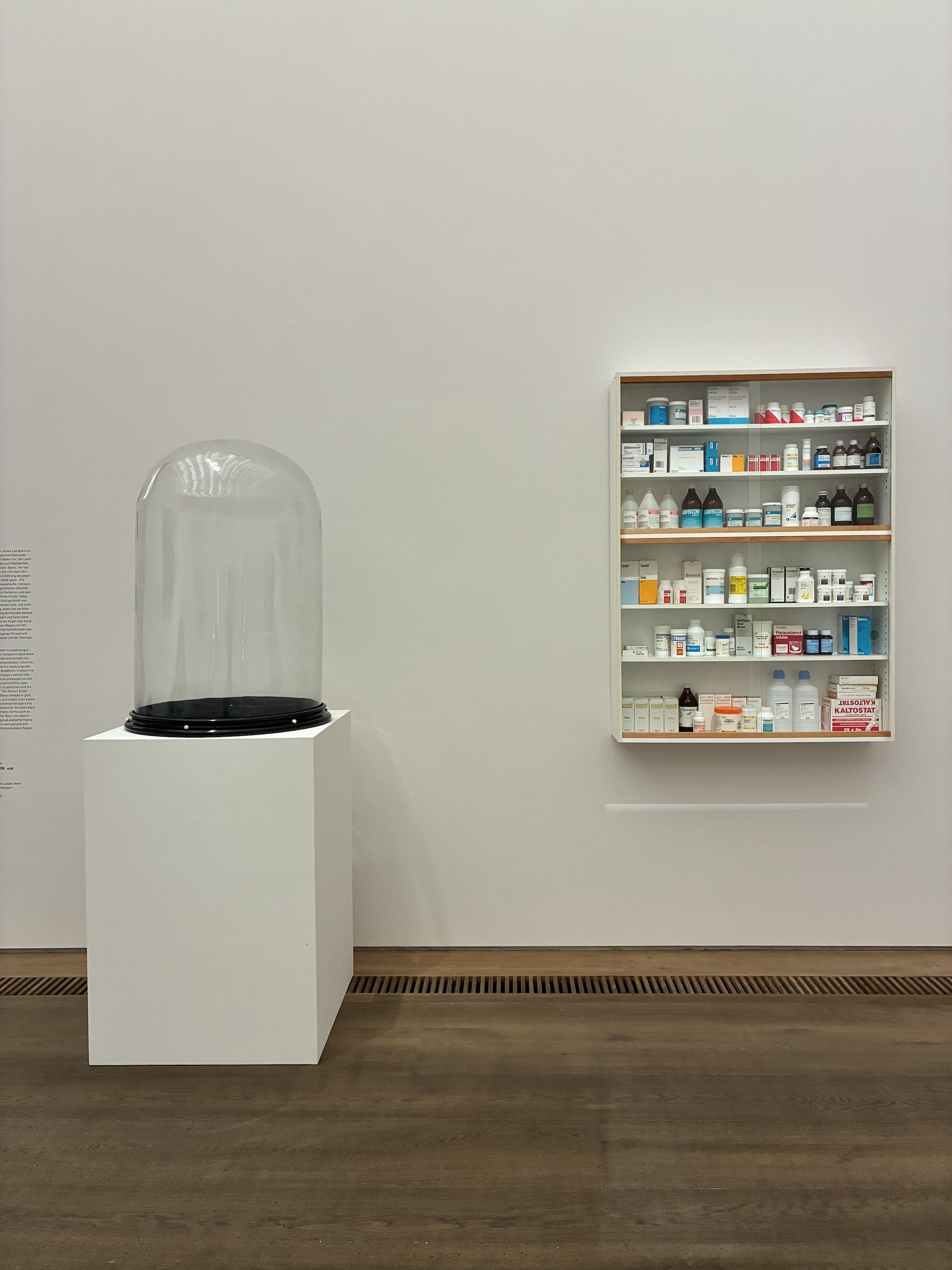
A collection exhibition, throughout Confrontations, artworks by the likes of Andy Warhol sit next to Rachel Harrison, a Pope. L before a Mike Kelley, and, in an apt confrontation, James Lee Byars’ The Perfect Question (1978), a monumental glass bell jar which appears totally empty, besides one of Damien Hirst’s medicine cabinets, E.M.I. (1989). (I will refrain from discussing the shallowness of Hirst’s career trajectory; that argument is well rehearsed elsewhere.) Tensions like this are at the core of the exhibition. In an age when so much art is made and used illustratively, to highlight sociopolitical or cultural problems, failing to speak beyond a particular moment, the approach pursued here operates productively, cracking open ‘new spaces for thought’, prompting intuitive thinking and emotional intrigue.
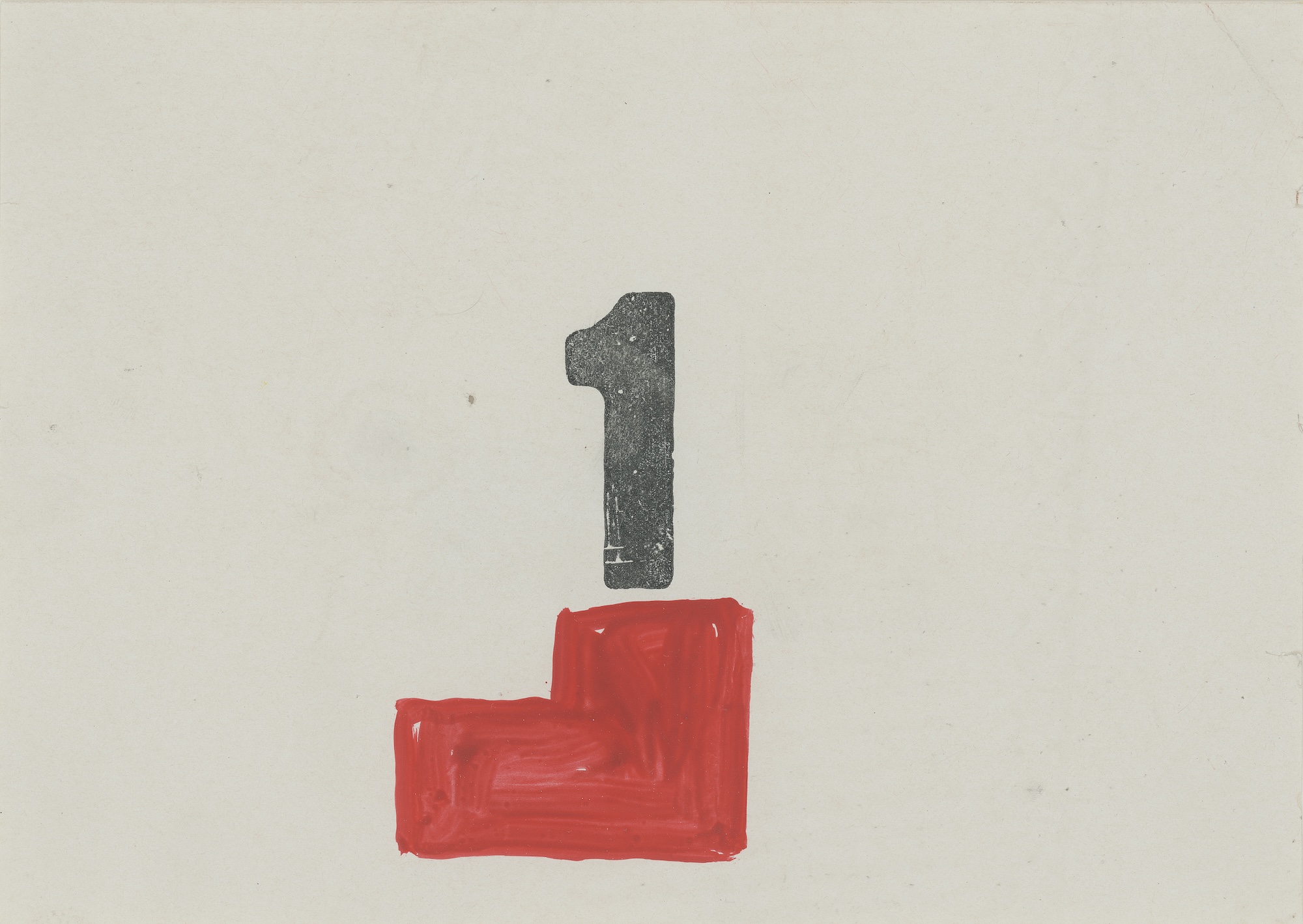
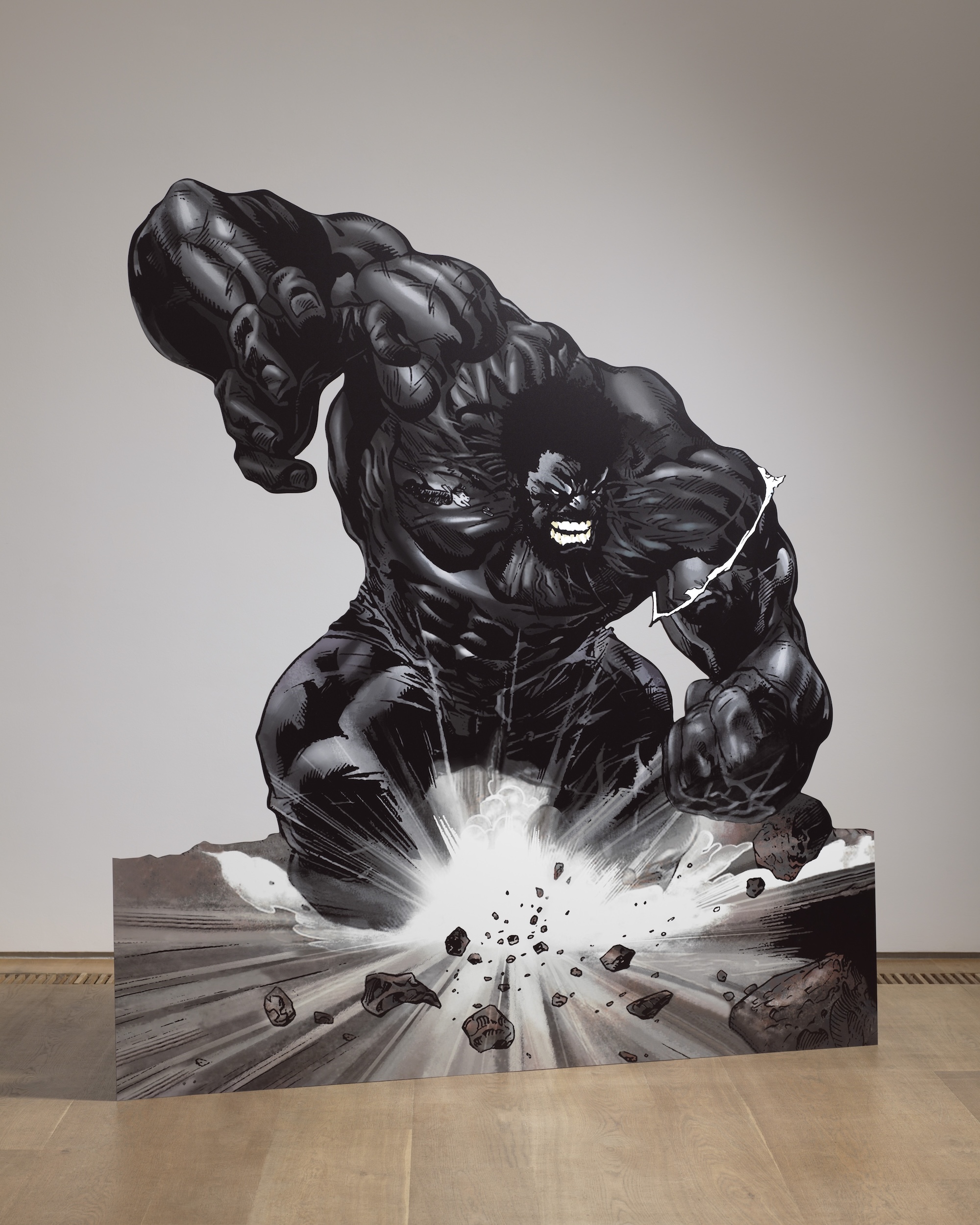
It seems of note that Jafa features heavily throughout the exhibition (the Museum Brandhorst has a large collection of the artist’s work). Rather than screening his canonical films, however, Confrontations focuses on Jafa’s static work, his paper-based prints and, as a rare airing, a collection of his notebooks (visual scrapbooks where fashion photos sit beside artworks, so-called ‘anthropological’ imagery beside political, etc.). Reflecting on the exhibition as a whole, it seems the approach Jafa follows in these notebooks has guided the overall curatorial strategy.
Some might hate Confrontations’ departure from the canonical hang. I love it. I love it because it makes me rethink art-historical narratives and to see new sides to artistic work. I love it, furthermore, because it tugs differently at my emotions, allowing me to find points of empathy with positions I might not otherwise connect to.
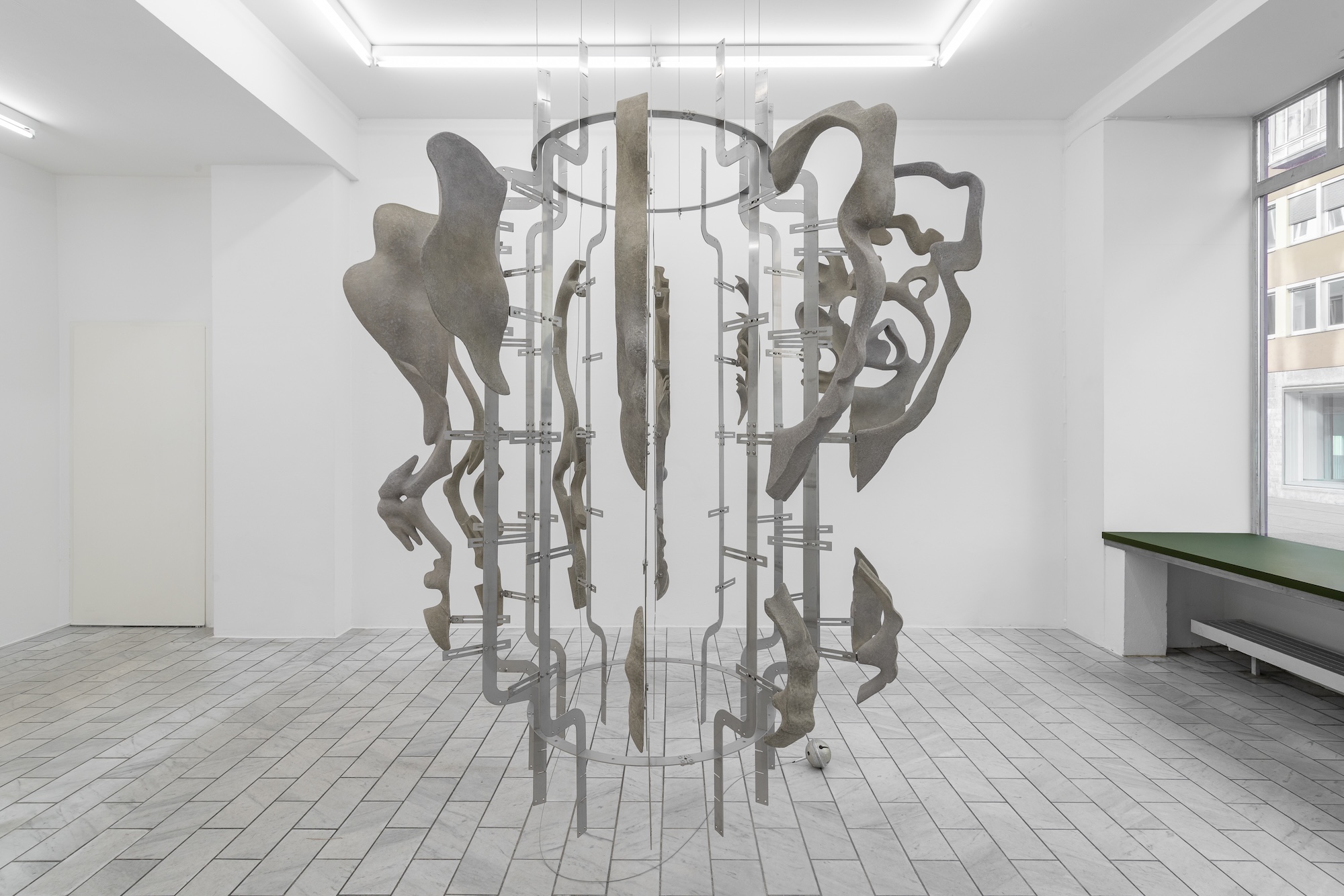
The significance of form resonates through Paola Siri Renard’s solo exhibition, Double Star, at nouveaux deuxdeux (until July 4 2026). Co-curated by Dr. Luisa Seipp, the exhibition builds on Renard’s interest in architectural languages; how styles such as Neoclassicism and Art Nouveau stood, and stand, for certain ideals, being used in public space to assert these. These built languages are often tinged with a grammar of coloniality.
In this exhibition, as with her practice more broadly, Renard doesn’t focus on style in particular, critically confronting visual codes in retrospect; instead, she traces how the colonial grammar of public space morphs as eras progress and oppression changes face.
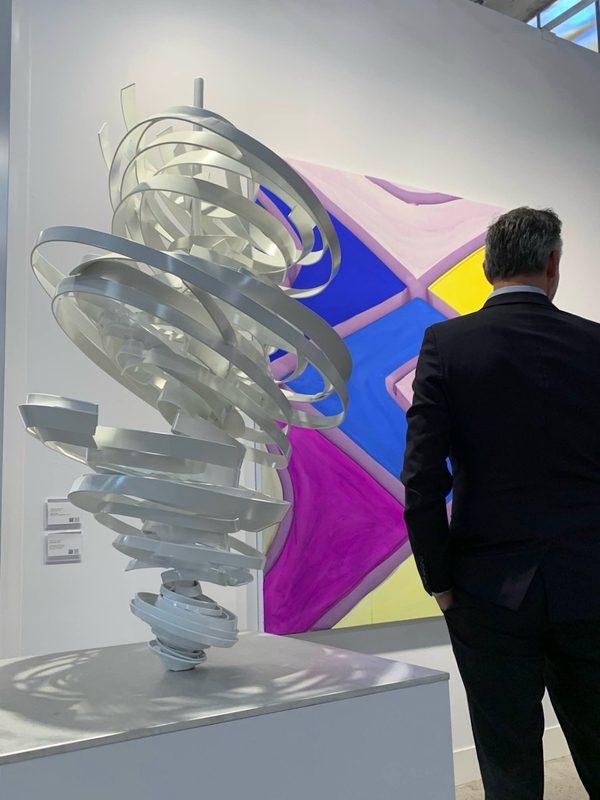
Double Star features a range of small aluminium sculptures alongside a large jesmonite and steel installation, a mobile-like structure which pointedly recalls the meat rails found in abattoirs. On first appearance, these grey forms look like fragments of ornamental architecture, spirally frills which often appear on civic squares or adorning old-school bank buildings. Looking closer, however, hoof and hind leg shapes emerge. Indeed, what Renard has sculpted here are a series of horse legs, each coming from an equestrian statue, the kind of public monument contested today. Renard was first drawn to the physical moulding of these statues, how undulations in the bronze-cast flesh echo formal style seen in other authoritative arts, the blocky forms found in Futurism for example. For Renard, the formalities of this styling accentuates the muscular, that is macho, didacticism espoused by such movements as well as the political forces which sit beside (Futurism and Fascism share a common history, let’s not forget). From the wrought-work of this moulding, Renard traced how this visual style evolved coeval with architectural fashions. For example, how the hidden language of these muscular forms visually transitioned from the Neoclassical era to the age of Art Nouveau, where this blockade moulding became curved, flowing, yet still used to elucidate Manly strength.
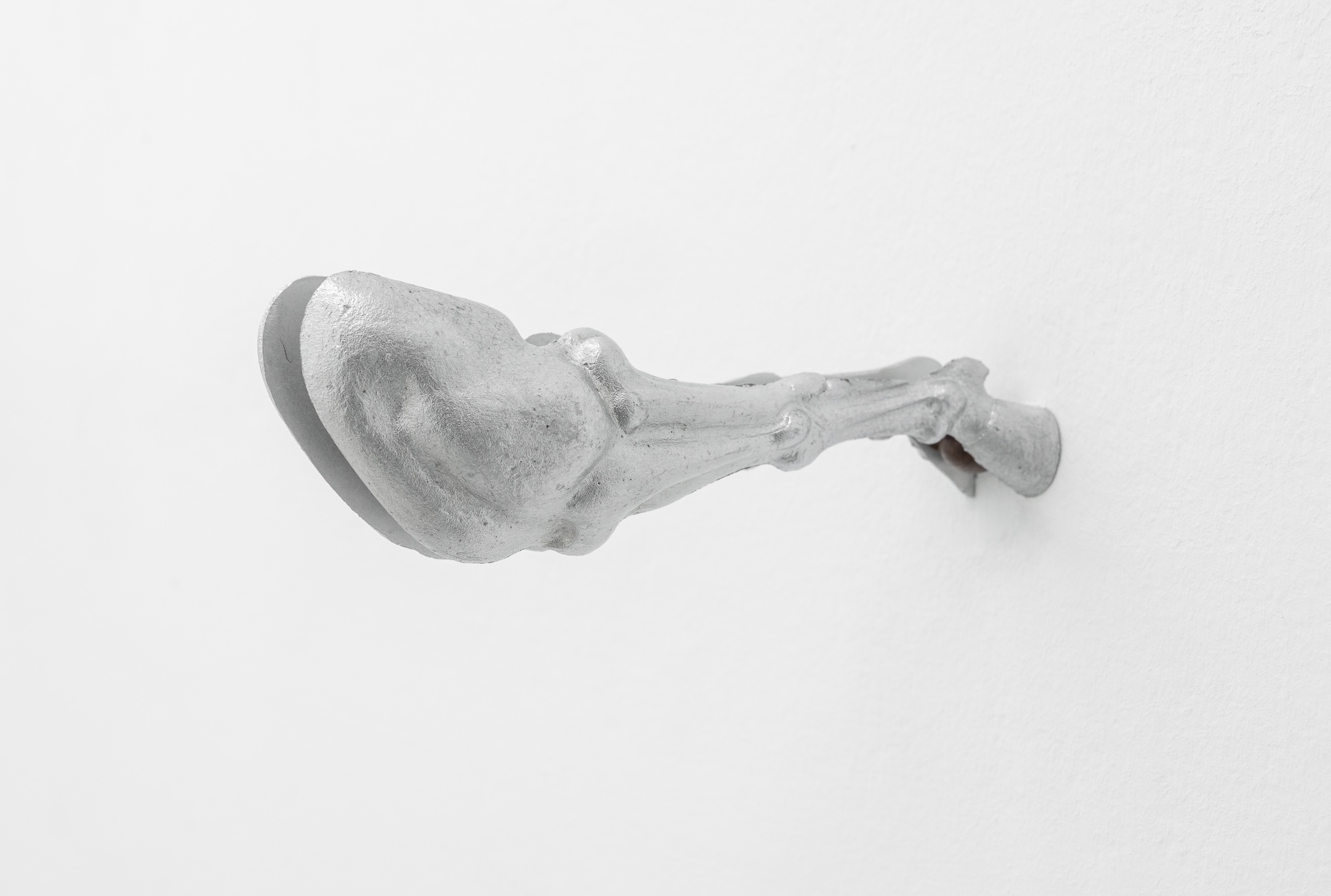
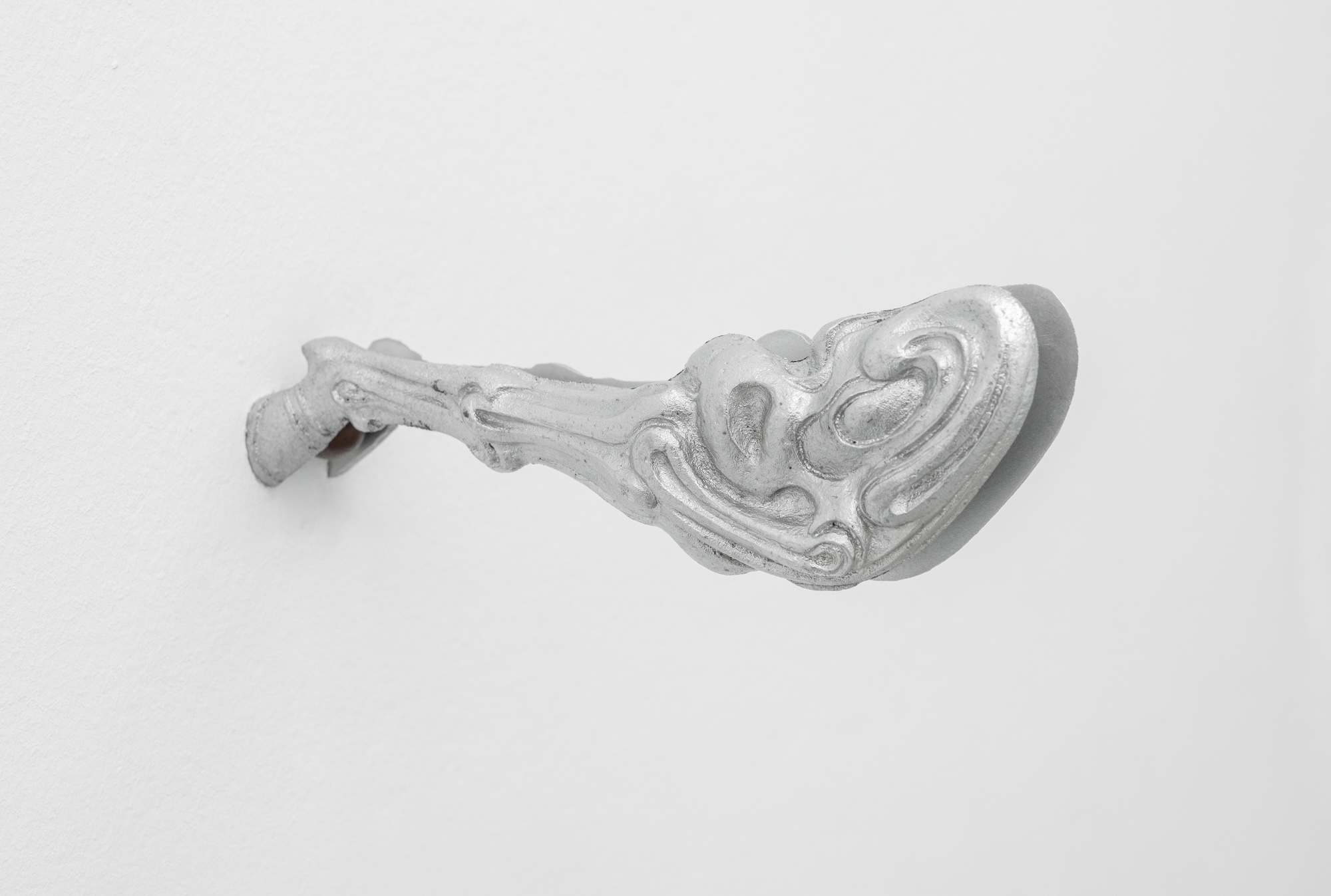
The sculptural works in this exhibition expose this hidden morphology; one side of Renard’s house legs are rendered in the Neoclassical style, softly rippling, while on the other side, Art Nouveau and Art Deco shapes are used to pick out muscular undulations. In positioning these two seemingly divergent styles back-to-back, these artworks literally expose how the grammar of coloniality transcends ages, changing face in time with the stylings of the right-wing.

Outside of the city’s museum and gallery spaces, another project exploring language, manifesting this in public space, is Christine Sun Kim and Thomas Mader’s installation ABC (Always Be Communicating) (until December 31 2026). Commissioned and produced by Public Art Munich, in cooperation with the Munich and surrounding area Deaf Association, this media art project tracks the continual cultural development of American Sign Language, playfully rendering this across eleven monitor screens.
Kim and Mader’s research for this project originated in Emily Shaw and Yves Delaporte’s book A Historical and Etymological Dictionary of American Sign Language, a book which highlights how American Sign Language developed from a mix of French Sign Language, amongst others, and the gestures used by Indigenous North Americans. In this way, the project highlights how similar Sign Language is to audible language; a hybrid of cultural expressions continually evolving in relation to sociocultural contexts.
In ABC (Always Be Communicating), Kim and Mader have taken words from Shaw and Delaporte’s book, using these to construct an abecedarian-like poem, a text where the first word starts with the letter A, the second with B, then C, etc. Appearing in English, in a blocky font face reminiscent of ‘90s computing, the poem reads surreal: Any Beautiful Character Damage / Expert False / Government Have Important Jealous Kiss / Language Mock, Mature Owe Print Quick, Rabbit / Silly, Take Advantage, Use Vehicle / Walk Yesterday. Reading this text closely, the poem points to the inequalities in language; how people with certain languages are isolated in an increasingly Anglophone age, seen as other, a situation not supported by most governmental organisations.
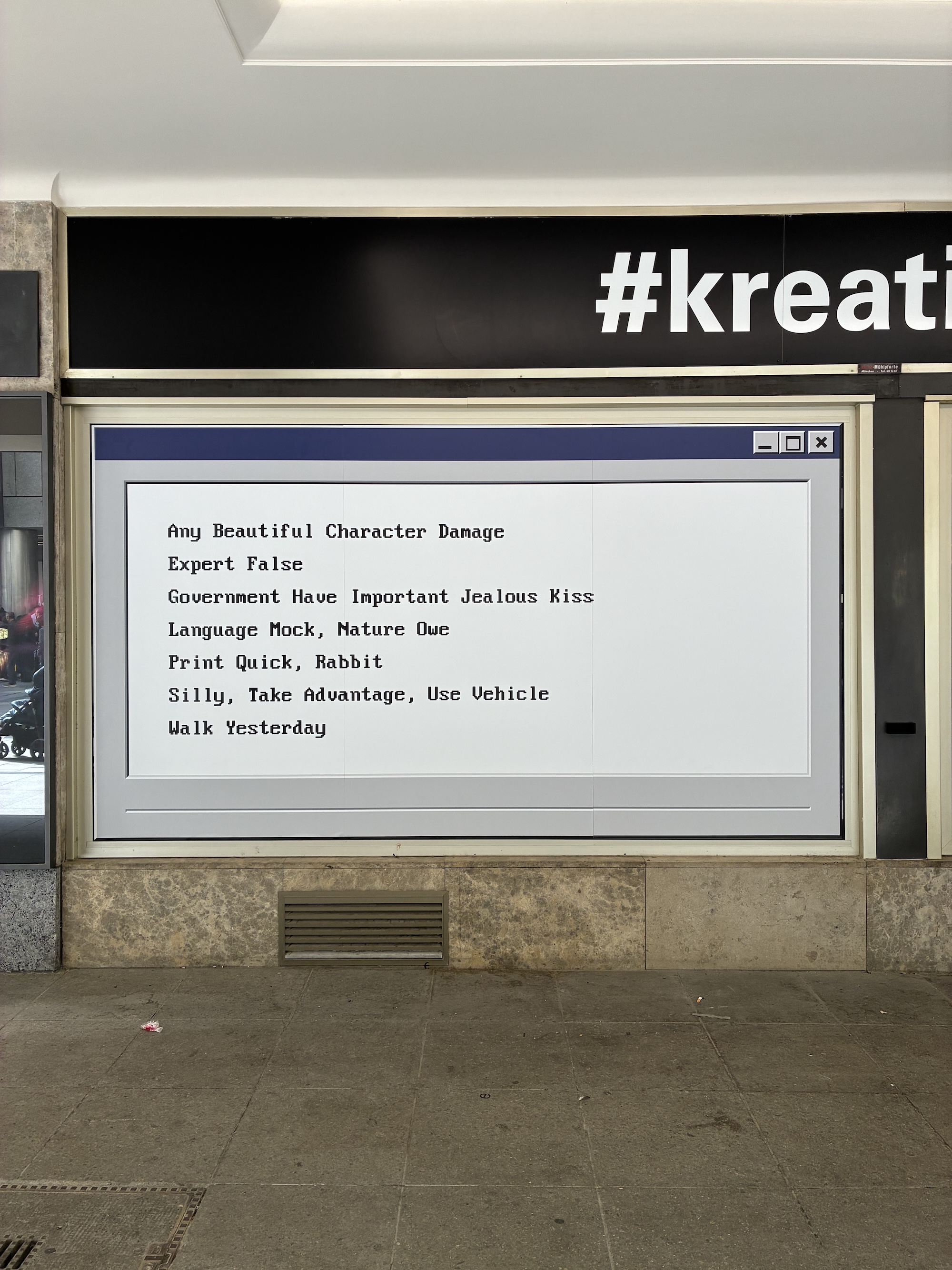
Against this undercurrent, Kim and Mader have developed a moving image artwork from their poem; an animation singing the poem through pixelated emojicons. Working with the regulations imposed by Munich’s city government, their policy banning moving images in public space specifically, this animation appears across the project’s eleven cosituative monitor screens as a series of stills, something like a storyboard, changing each day.
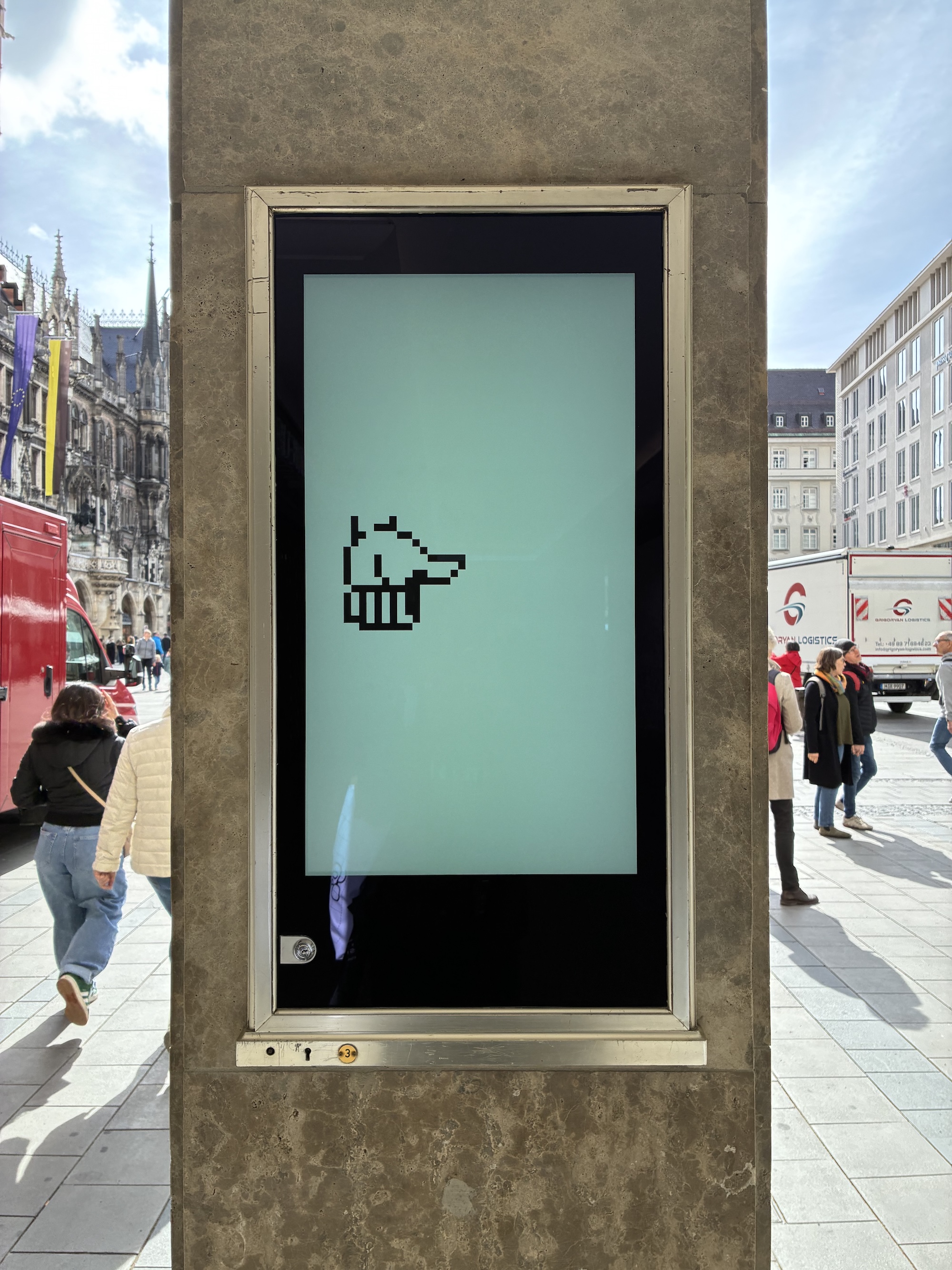
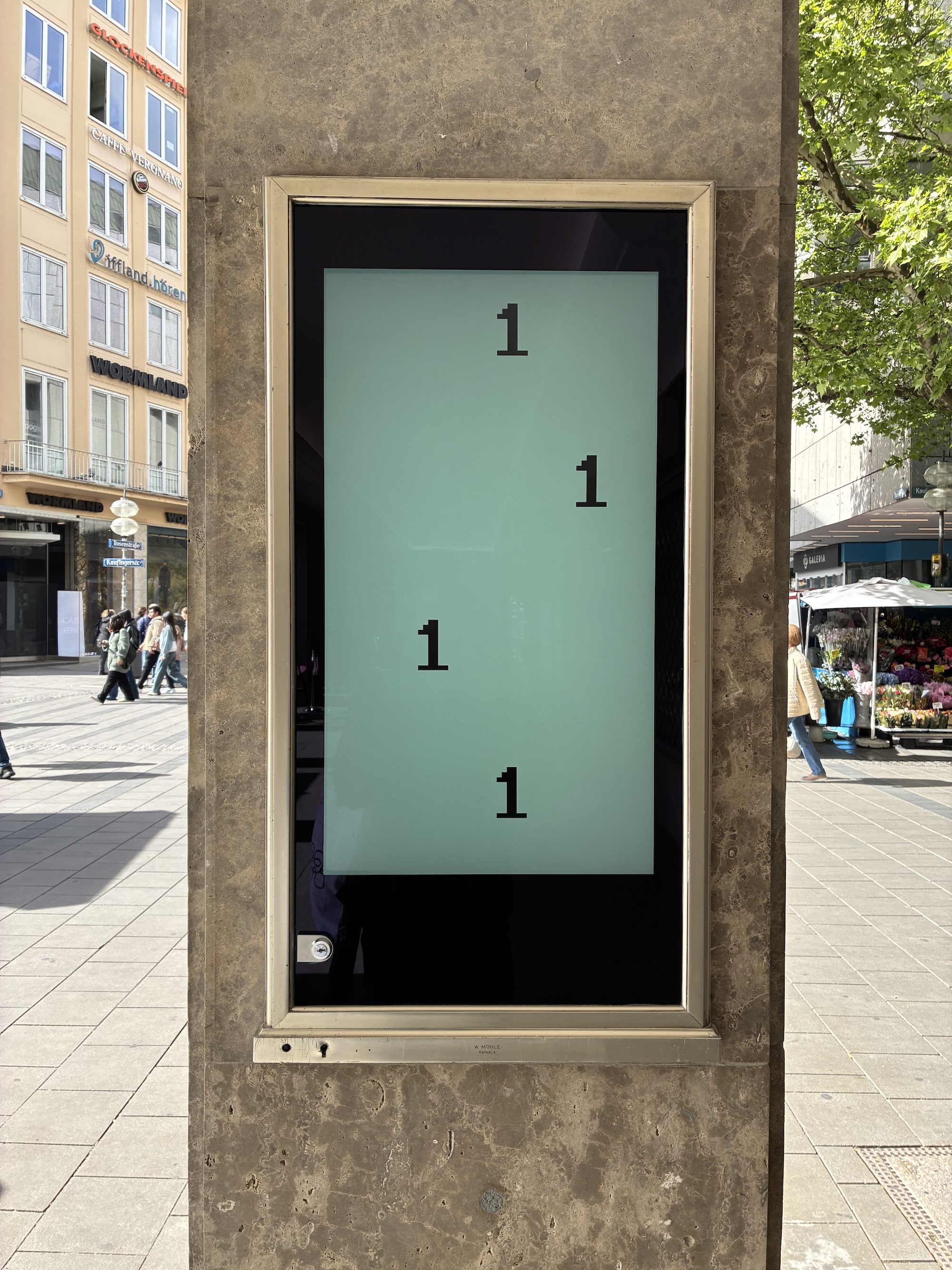
ABC (Always Be Communicating) is not a historically reflective exercise. Walking between the monitor screens, trying to mirror the actions being shown, I find it poignant that the work stages visual language as an emergent phenomenon; a language which, much like its phonic cousins, is constantly changing and developing as differing peoples meet and, in our contemporary age, as technologies change. In this way, ABC (Always Be Communicating) demonstrates the affinities that exist between all forms of languages, between all peoples. Here, that is, sign language is not seen as other, stuck in the past, but as a language I actively engage with, shape and use as a body in the world 🙂 -|–<
The exhibition Cunningham Capsule, at Knust Kunz Gallery Editions (until June 6th 2026), also instanciates a new way of understanding the body. As the title suggests, the exhibition revolves around the work of Merce Cunningham, ‘one of the most influential choreographers of the twentieth century’, to quote the press spiel, and a creative who collaborated closely with many artists of the post-modern era.
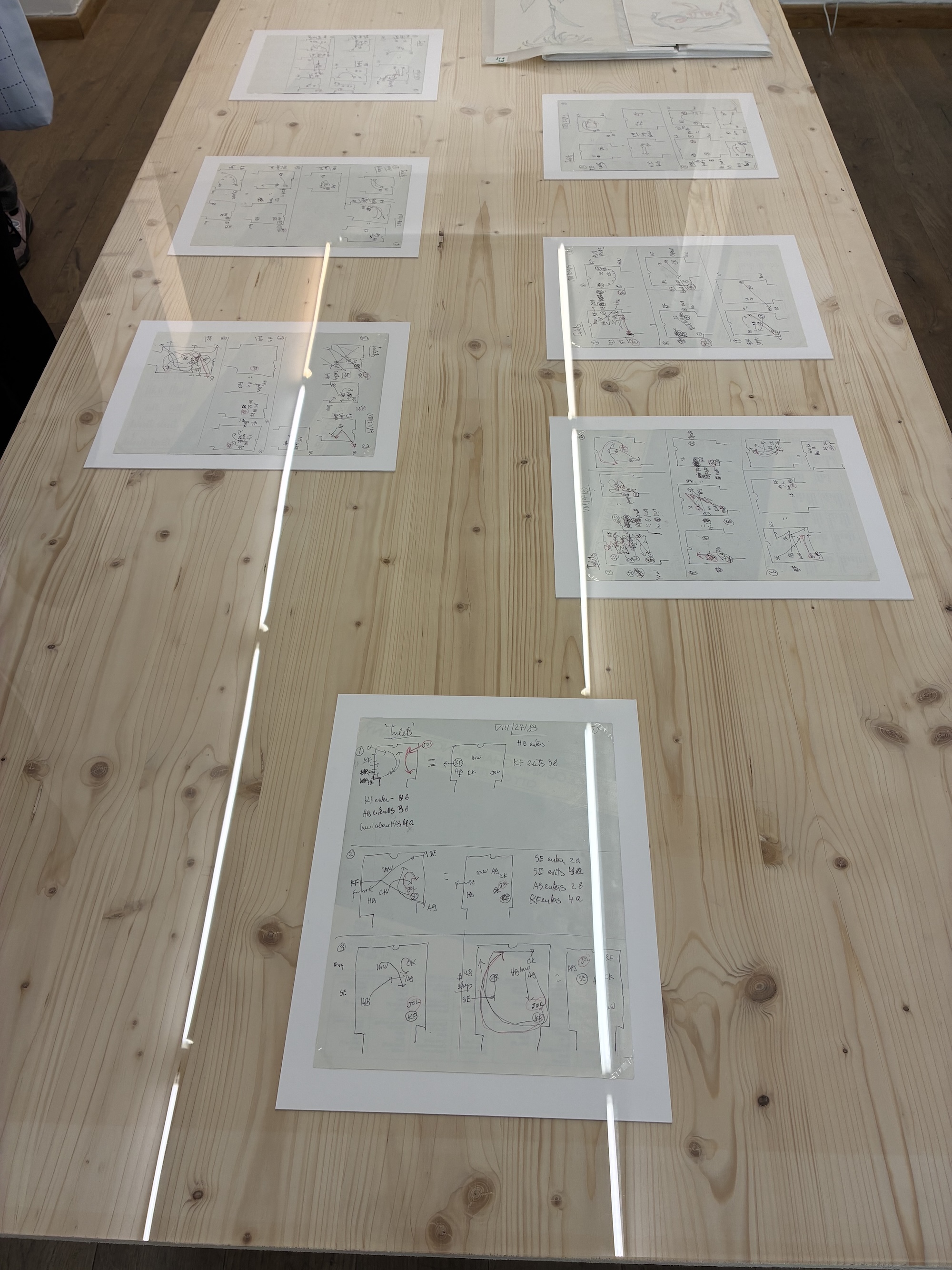
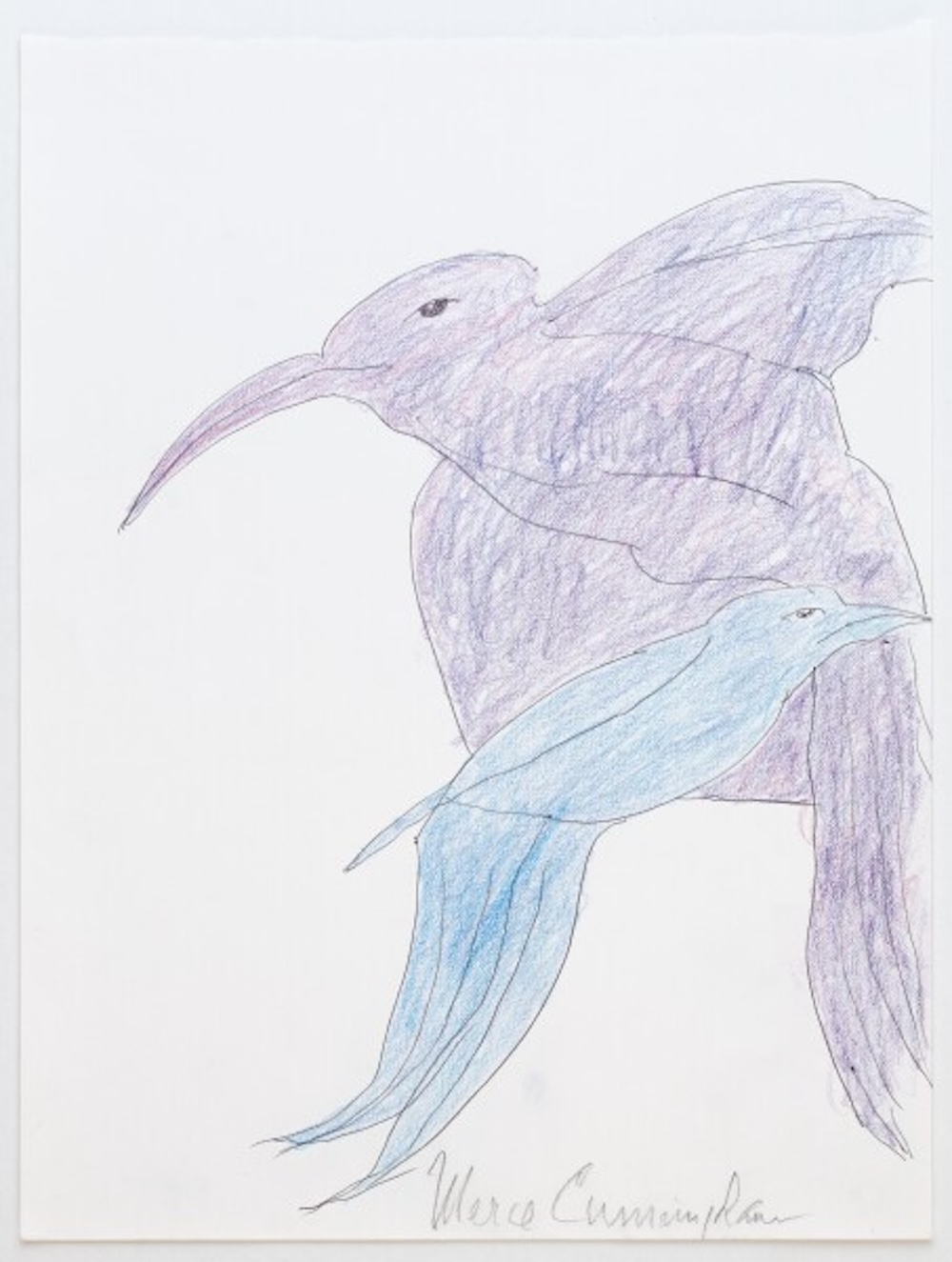
Cunningham Capsule feels like a special exhibition. The show is small and intimate, empathic in a way. Literally hung around a hand-drawn score for a dance routine, it brings together artworks by Lena Grossmann, Nam June Paik, Saul Leiter and Chuck Close, to trace Cunningham’s impact as well as illustrating a motivation core to his thinking: to strip dance of its subservience to music and emotive stagery; Cunningham’s are routines were art and life coincide, one never more than the other. Most excitingly for me, the exhibition features a number of drawings made by the choreographer himself. Drawn fast and coloured faster, in jewel-tones of pencil, these works mostly depict vegetal and animal life, in some cases a diptych transition between the two.
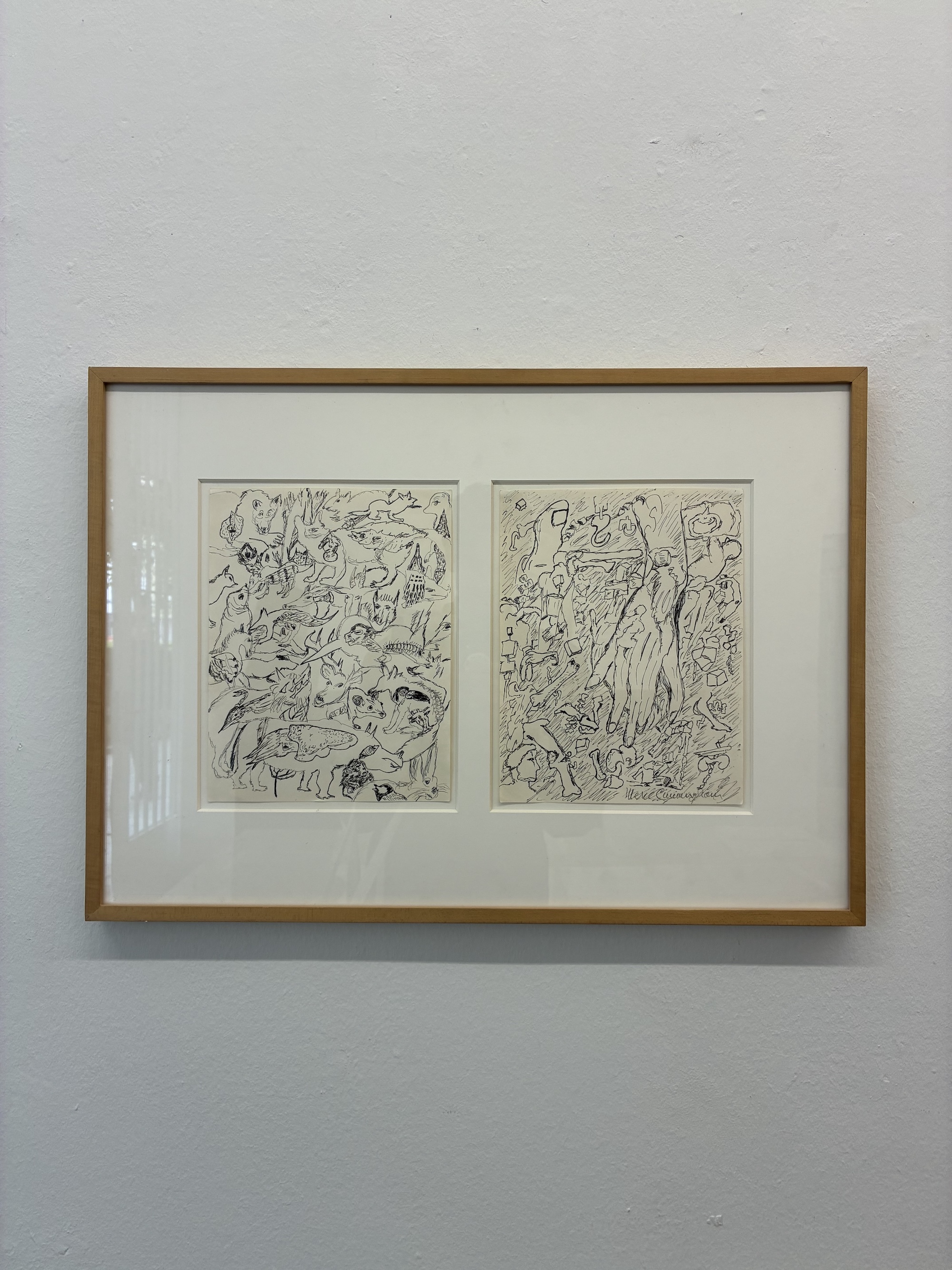
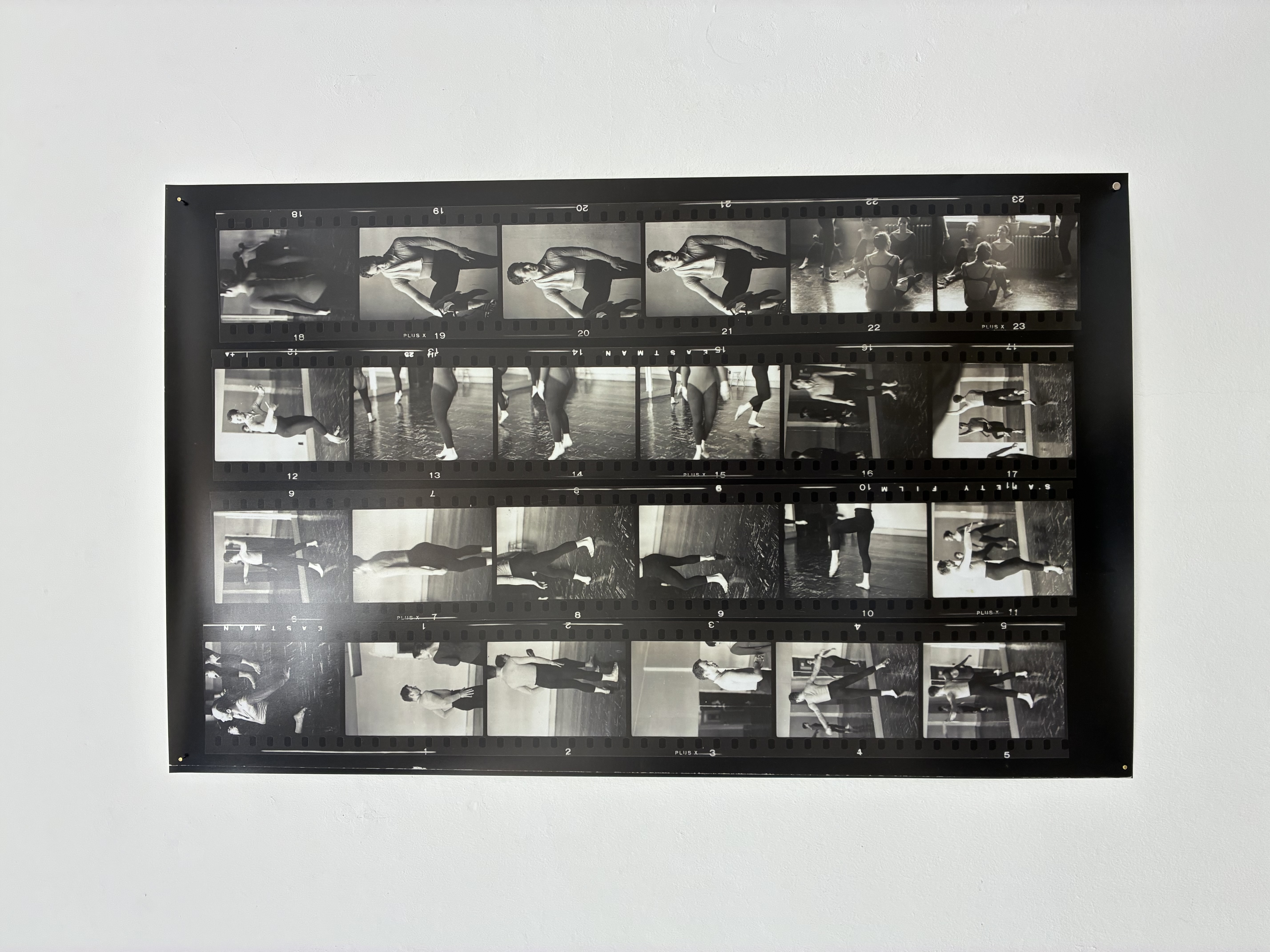
These sketches feel like little chorographies, zig-zagging progressions of shape, colour and line. They ooze a sense of bodily movement, that is, reminding me of the compositional arrangements sketched out in Cunningham’s score. Indeed, it is almost as if Cunningham’s freehand animals are performing his dance routine through their squiggly body-work. It seems of note that here drawn wings flay in much the same way as the limbs seen in Saul Leiter’s photographic contact sheets, which depict dancers rehearsing a Cunningham dance. With these relationships in mind, it seems the creaturely figures in these drawings appear as both Cunningham’s score and his performer. I would like to end by suggesting that such quick-moving allusions attest to what Cunningham aspired to throughout his art: here dance manifests as a living practice, a phenomenon found in all life’s things.
Various Others Munich 2026, May 14th – 24th, 2026
Categories
Tags
- Andy Warhol
- Art Festival
- Arthur Jafa
- Christine Sun Kim
- Chuck Close
- contemporary art
- Contemporary Art Munich
- Damien Hirst
- Exhibition Review
- German Art
- James Lee Byars
- Merce Cunningham
- Mike Kelley
- Munich
- Museum Brandhorst
- Nam June Paik
- Paola Siri Renard
- Public Art Munich
- Rachel Harrison
- Rosemarie Trockel
- Saul Leiter
- Thomas Mader
- Various Others