
Paulo Nimer Pjota’s exhibition is like walking through a fairytale adventure you read as a child. Titled Encantados (meaning enchantment), this exhibition lures you in with nostalgia and magical imagery, but leaves you wondering whether there is something darker behind the transient romantic charm.
The paintings and wall drawings are jumping and dancing all over the large exhibition hall at South London Gallery. There is a child-like playful freedom to the space, here adults are not upset about drawings on the walls, and an overactive imagination is key. This is only fitting for an artist who sold his first painting at 15 and grew up in the graffiti and hip-hop scene of São José do Rio Prêto.
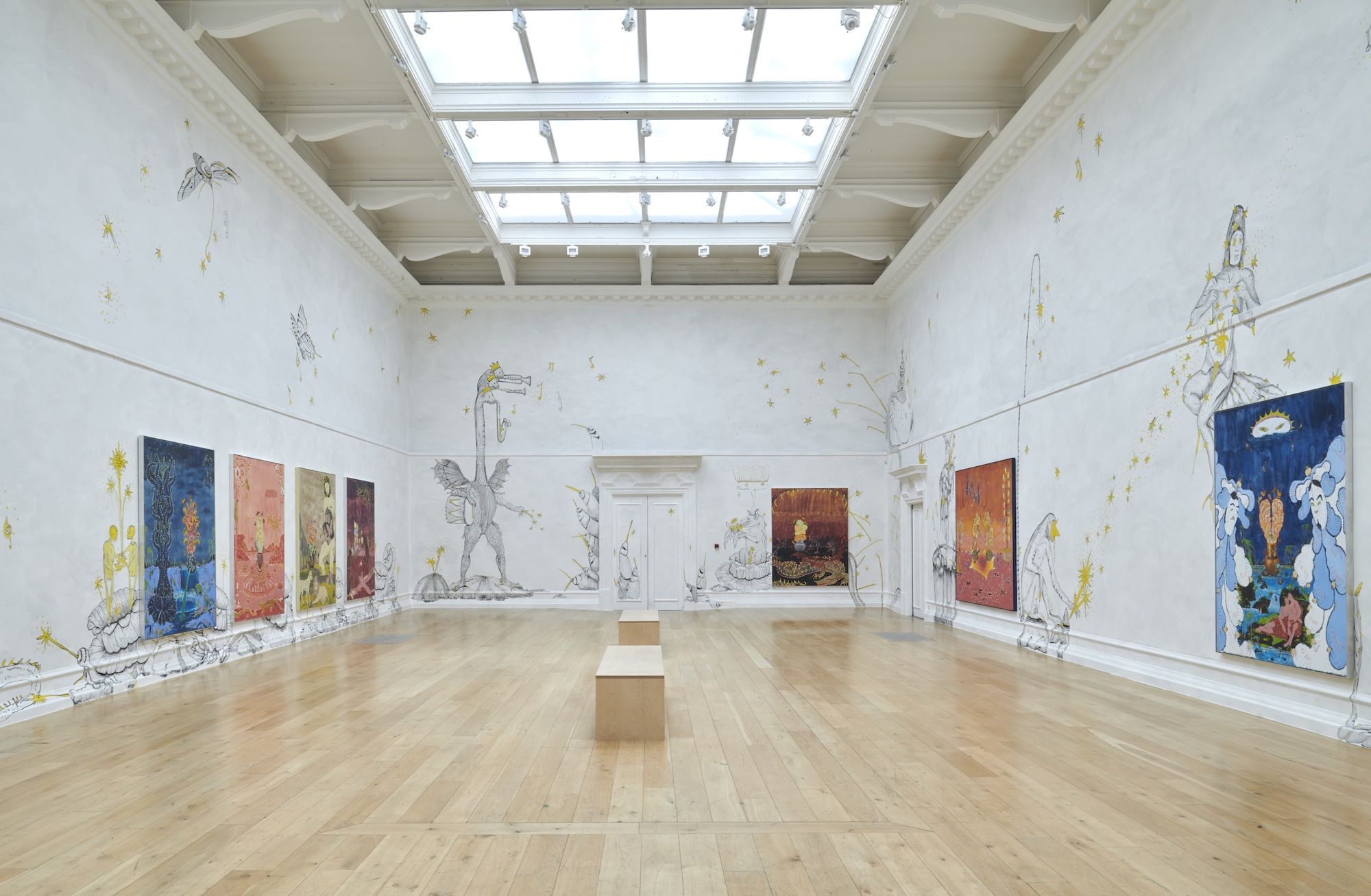
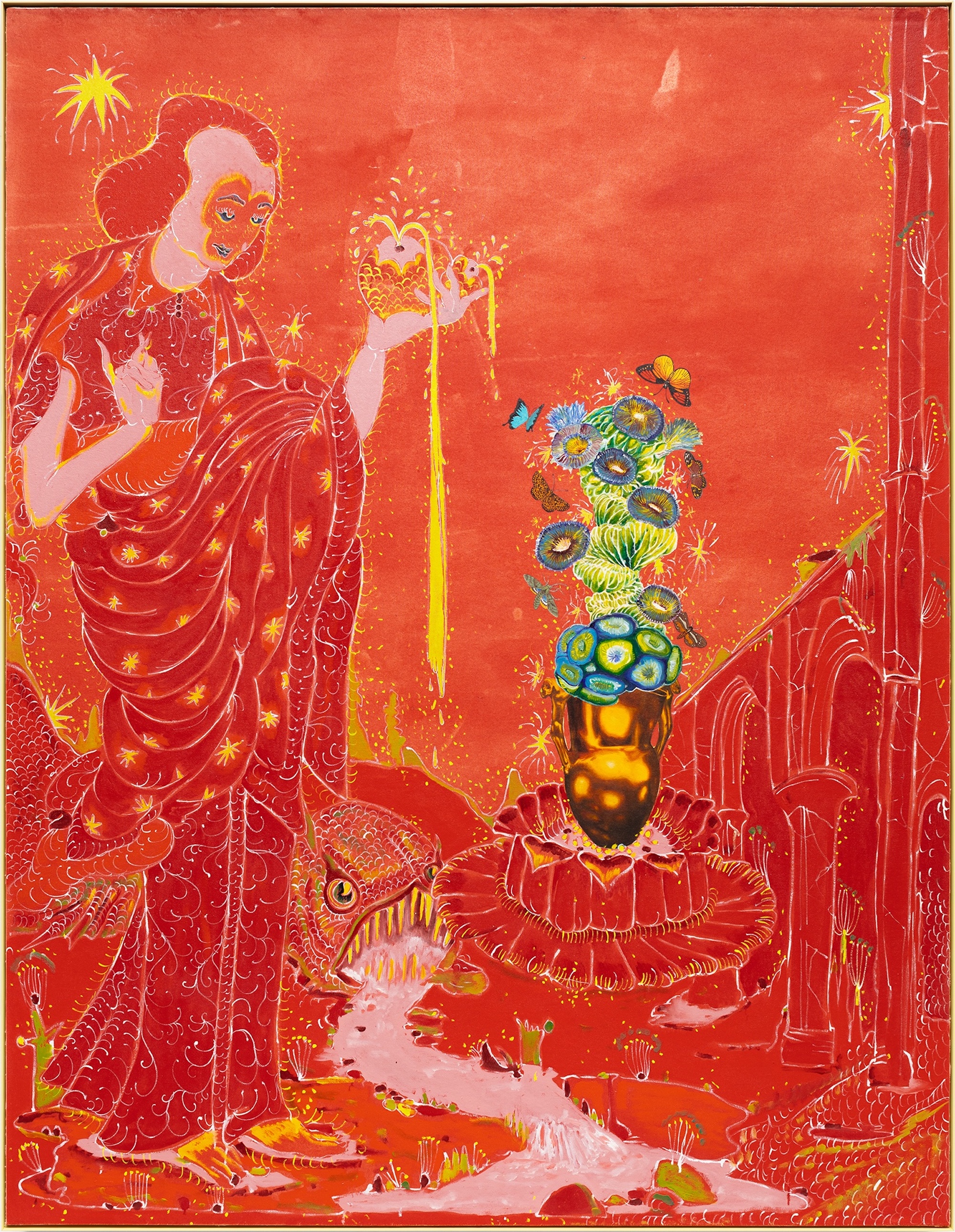
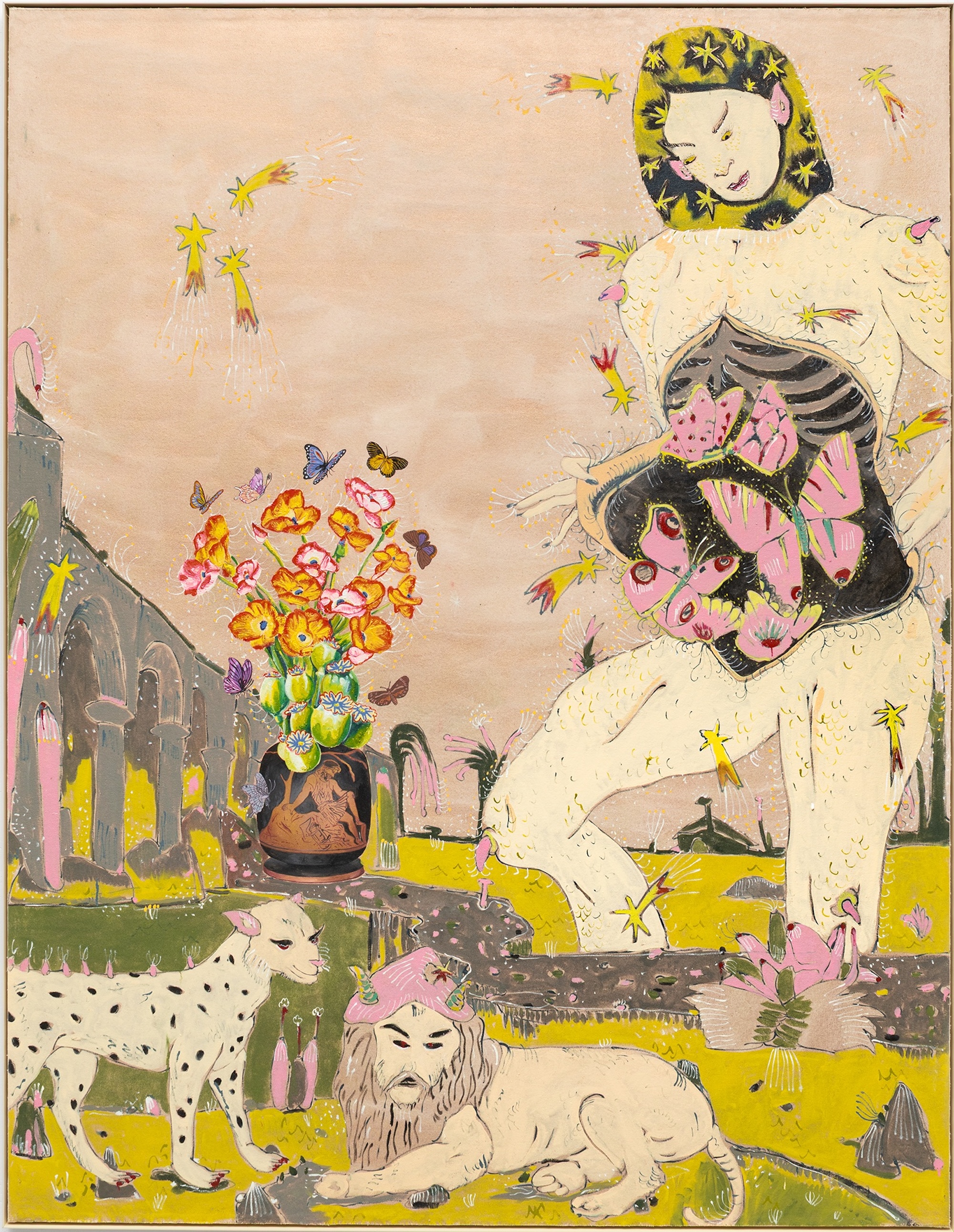
Drawings of magical creatures peer down on us from the walls, guiding us from painting to painting, as if custodians of this world and the secrets it holds. The paintings themselves are the type you could spend all day gazing into, finding unusual objects and otherworldly beings. Lakes emerge from the sharp teeth of fish, monkeys collect rainwater in vases, butterflies emerge from a woman’s pregnant stomach, and figures embrace in lush landscapes.
Pjota’s work is reminiscent of folklore, mythology, altarpiece paintings, and surrealist landscapes where there is a story to be told, a lesson to be learnt, or a dream to illuminate. There are clues, symbols, and hidden meanings to find within the suns, stars, butterflies, and masks. There are vases in almost every painting, each with an assortment of blooming and unusual flowers. The vases appear almost photo realistic against the mystical scenes. This makes them feel like glittery idols, in fact many of them are elevated on plinths as if ready to be worshipped.
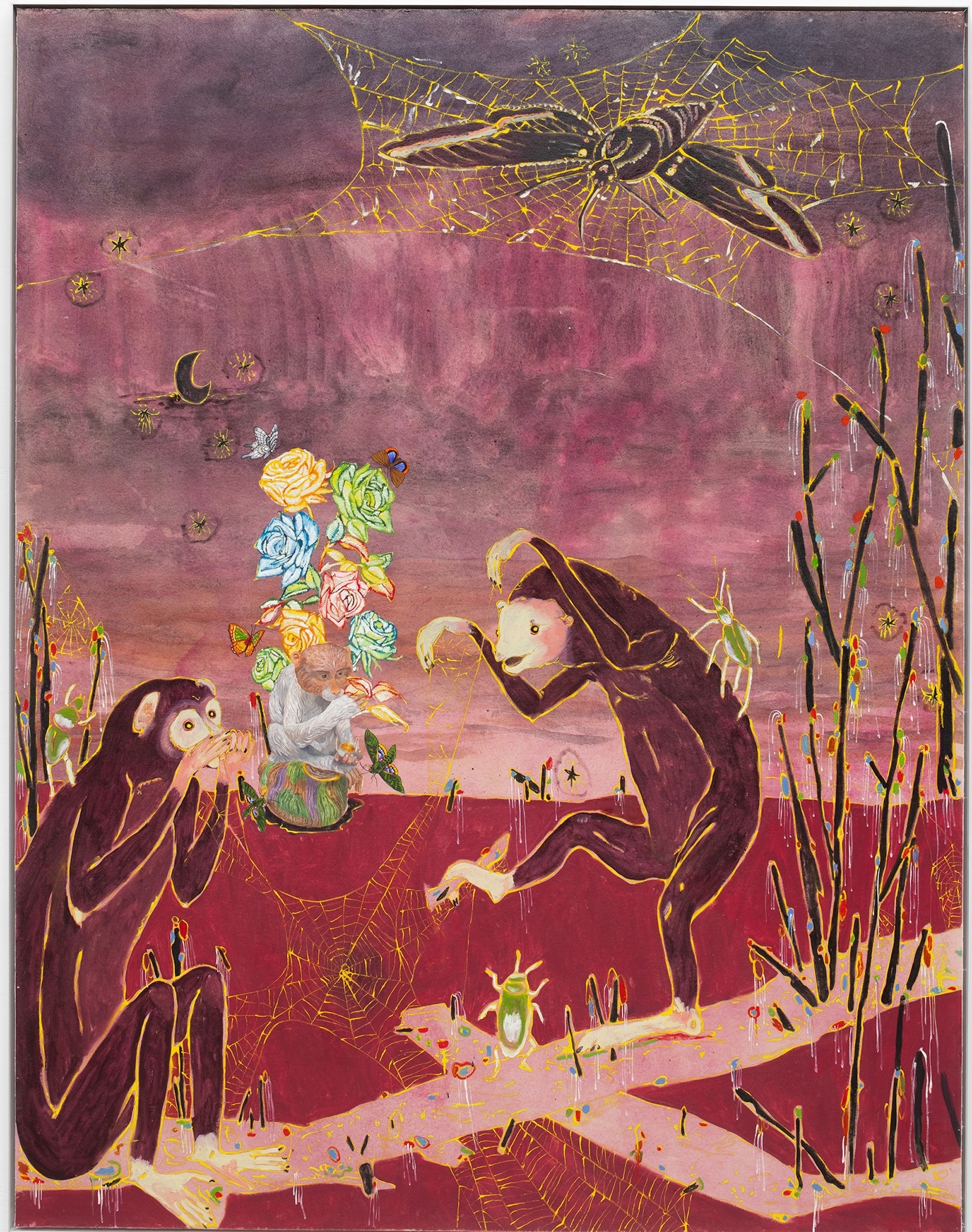
Similar to Hieronymus Bosch’s Garden of Earthly Delights, the beauty and magic in this room starts to wobble the more you look at it. The surreal faces and strange objects feel like a puzzling dream. If we reach out and touch it, look too hard at it, it could all crumble away. But the mysticism and the unknown are alluring, and we want to know more. Some of the characters are preoccupied and appear sad, a dragon lurks in the darkness, a butterfly is lying on its back in the trap of a spiderweb. All of a sudden, it’s not all fairytales and shooting stars.
It’s inevitable that fairytales will eventually hold a mirror to the world we inhabit. There is often a lesson within them, as there is with mythology and religious narratives. Bosch used the paradise of Eden to warn us about the temptations of lust and greed. While it’s unclear the lesson (if there is one) that Pjota is trying to teach us, the openness has me questioning the imagination of idealism itself. Even fantasy worlds bring within them the ingrained failings of our reality. There is often something implicitly darker lurking behind explicitly beautiful sparkly worlds.
This exhibition has an interesting way of appealing to your childhood nostalgia whilst also popping its bubble. Outside of this room I need to return to work and pay London rent. There might be no mystical animals playing instruments, no butterflies or shooting stars, but the sun is shining and my neighbour’s cat will be waiting to be stroked. Perhaps there are still magical moments beyond the enchantment of paradise.
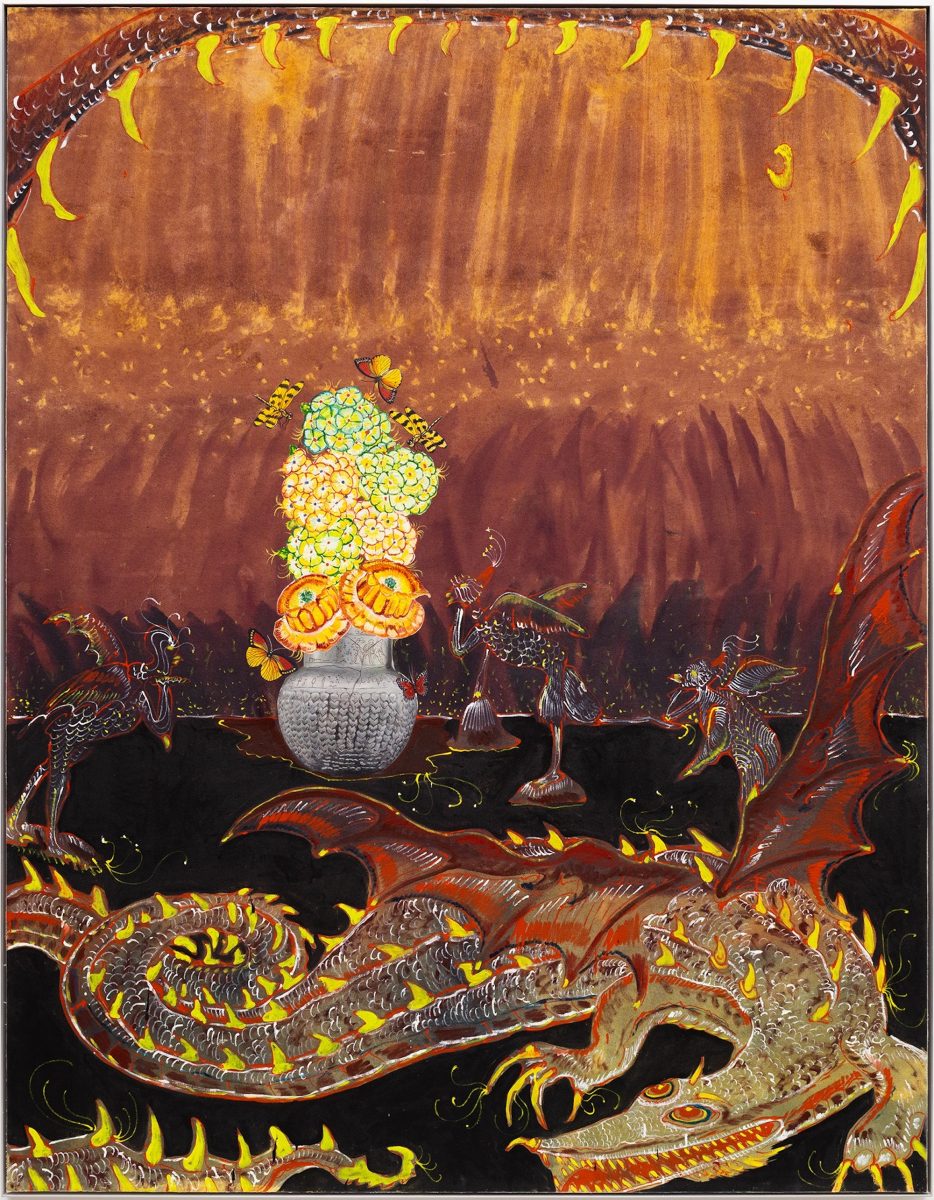
Paulo Nimer Pjota: Encantados, 1st May – 23rd Aug 2026, South London Gallery
Free exhibition