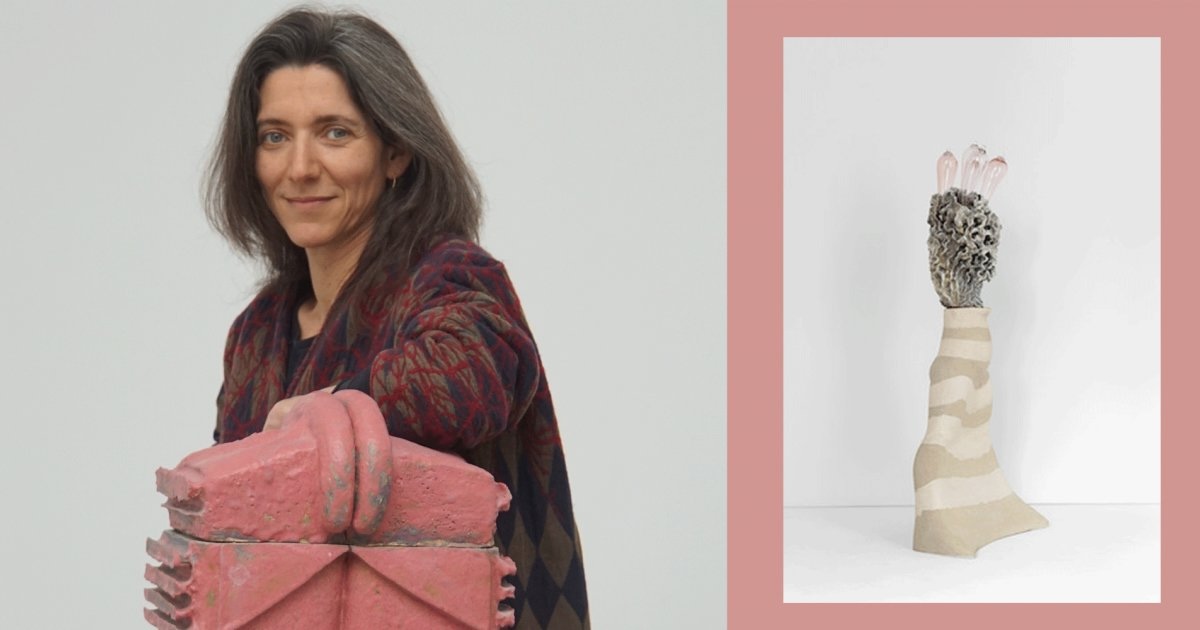
French sculptor Elsa Sahal has been awarded the second edition of the Her Art Prize at the 28th edition of Art Paris, receiving €30,000 alongside an international promotional campaign led by Marie Claire and Boucheron.
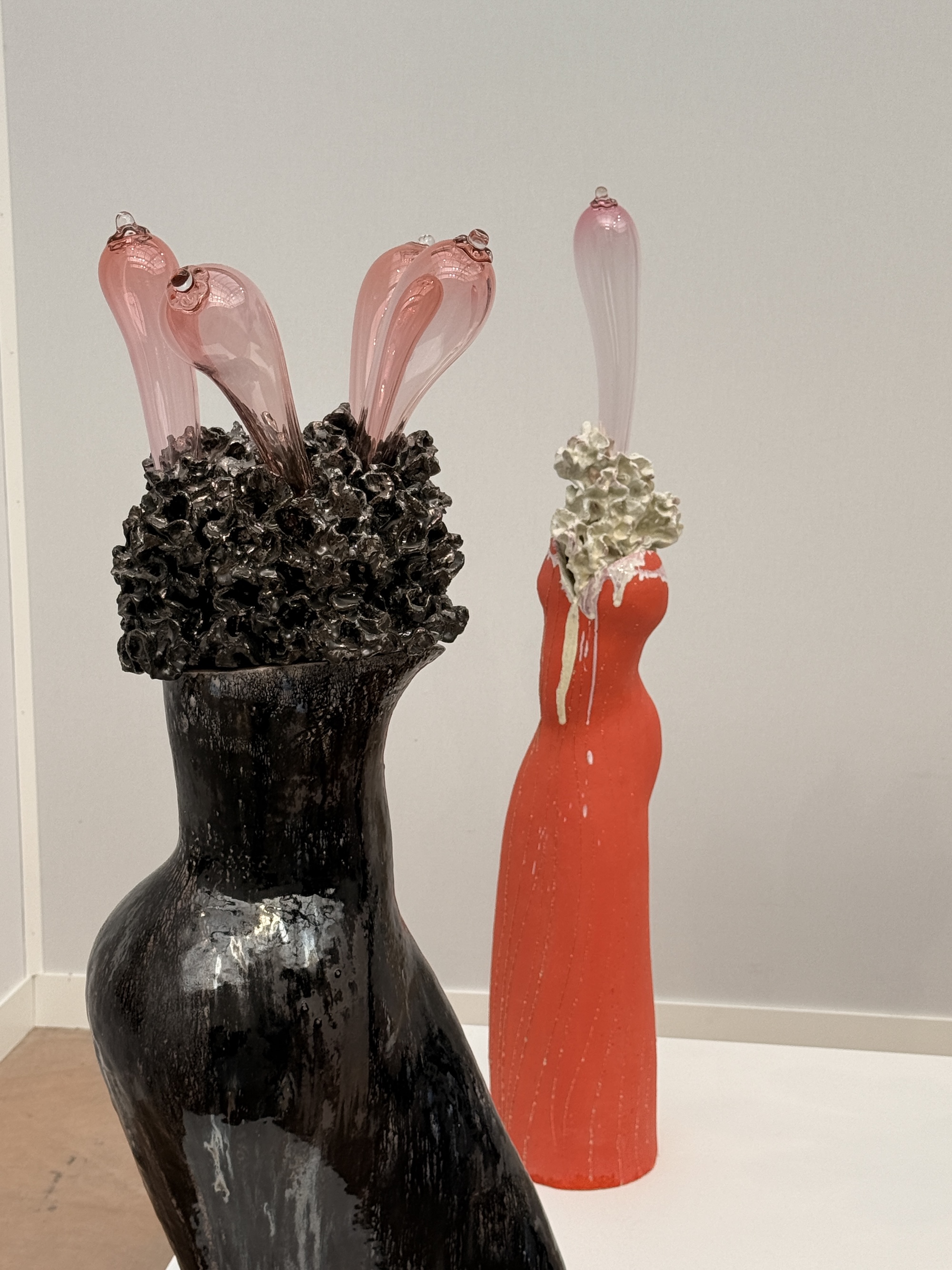
Announced at the Grand Palais on 11th April 2026 by a jury chaired by actress Louise Bourgoin and including Hélène Poulit-Duquesne, CEO of Boucheron, the prize recognised a group of three sculptures presented by Galerie Papillon — Suzanne, Gene and Gilda. The works pair substantial ceramic forms with delicate blown-glass elements, extending Sahal’s long-running exploration of the female body, language and material fragility.
Reflecting on the jury’s decision, art consultant, curator and jury member Marion Vignal said:
“We don’t just select strong artists; we look for artists with a strong vision of society. Elsa’s work carries a powerful message around the female body, liberation and moving beyond stereotypes. She’s someone deeply committed, and her work speaks beyond the art world — it has a broader cultural impact.”
A few days after the announcement, I visited Sahal at her Paris studio to talk about clay, movement, the body and the possibilities — and limitations — of the medium.
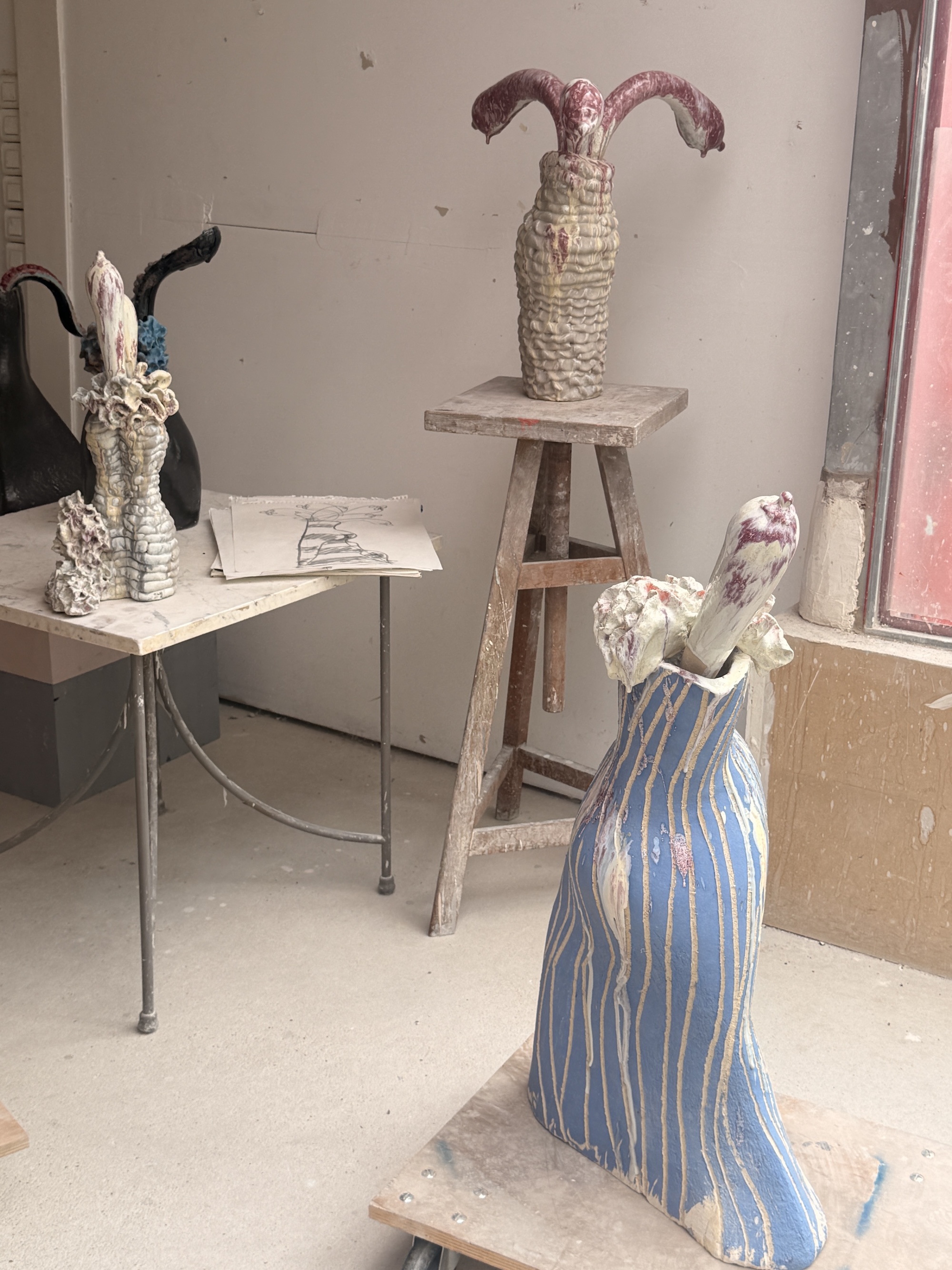
Olena: Throughout your practice, you’ve explored the human body. Why does this theme continue to interest you?
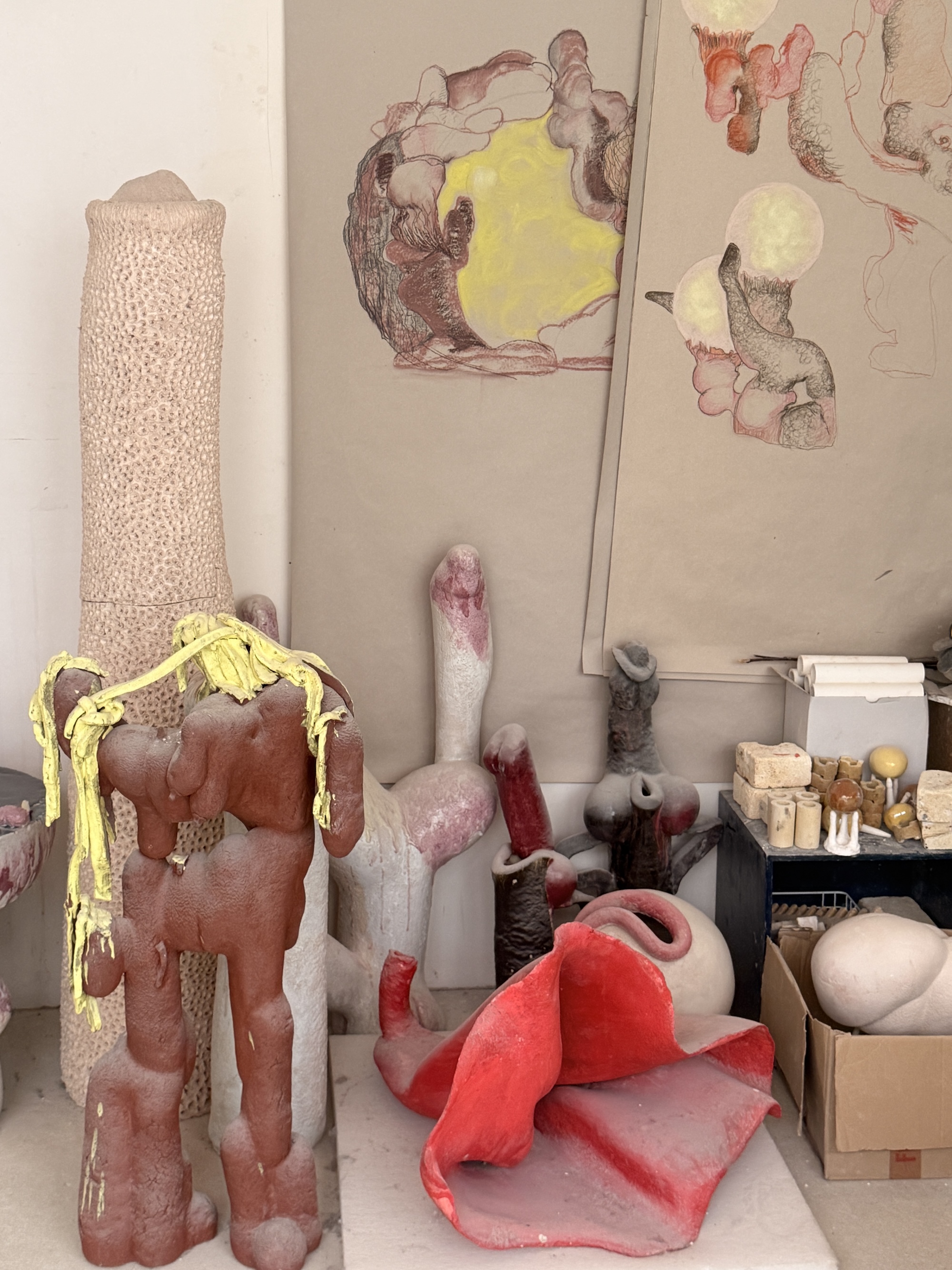
Elsa: Clay is a material that is very close to the body. In English, we even say “clay body”. Every time you begin making something with clay, it often naturally takes the form of a figure, sometimes even resembling something phallic.
You mentioned that ceramics is a medium through which you’re happy to explore limitations. What are some of those limitations?
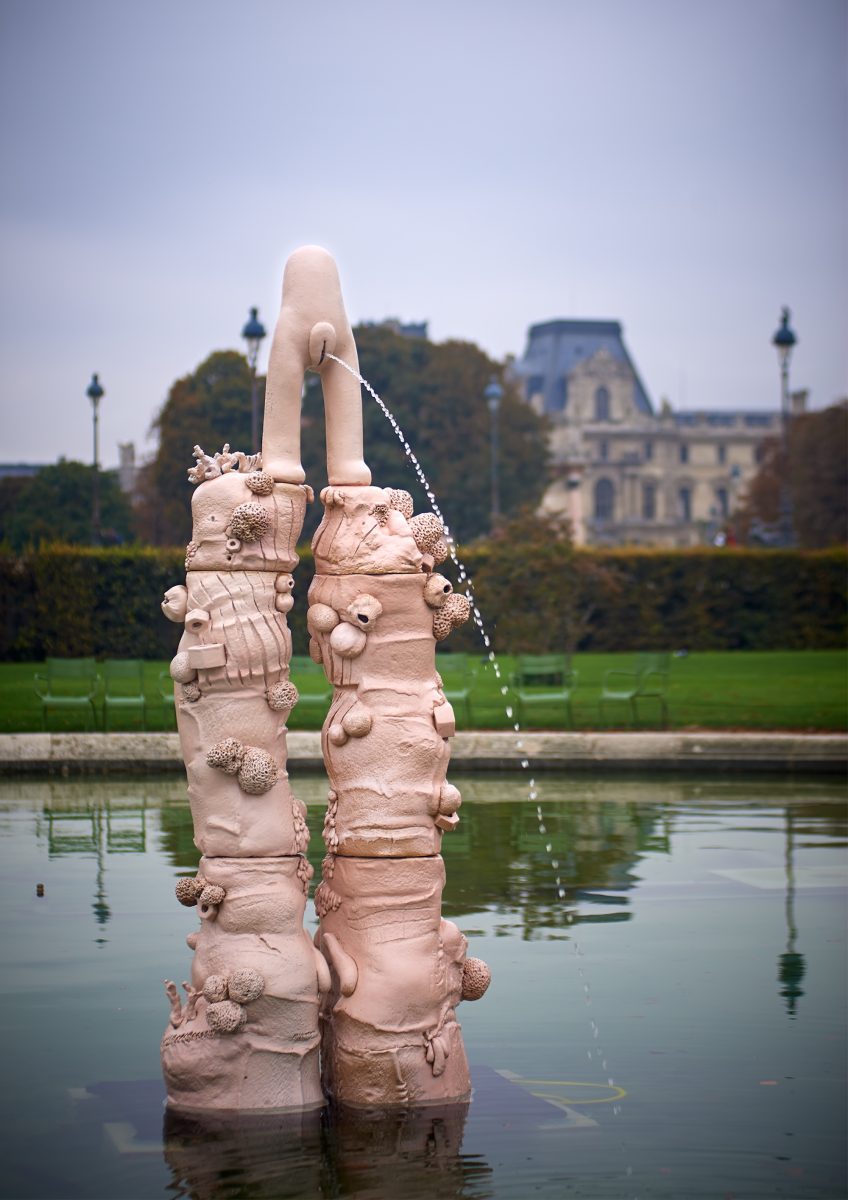
The first limitation is the size of the kiln. If you want to fire a piece, it has to fit inside, so scale immediately becomes a constraint.
For example, I’m currently working on a large public commission for the Toulouse subway, measuring six by six metres, but it’s made up of many smaller elements. Working in a modular way allows you to move beyond that limitation.
I also made a work called Fontaine in 2012, which consists of six separate pieces.
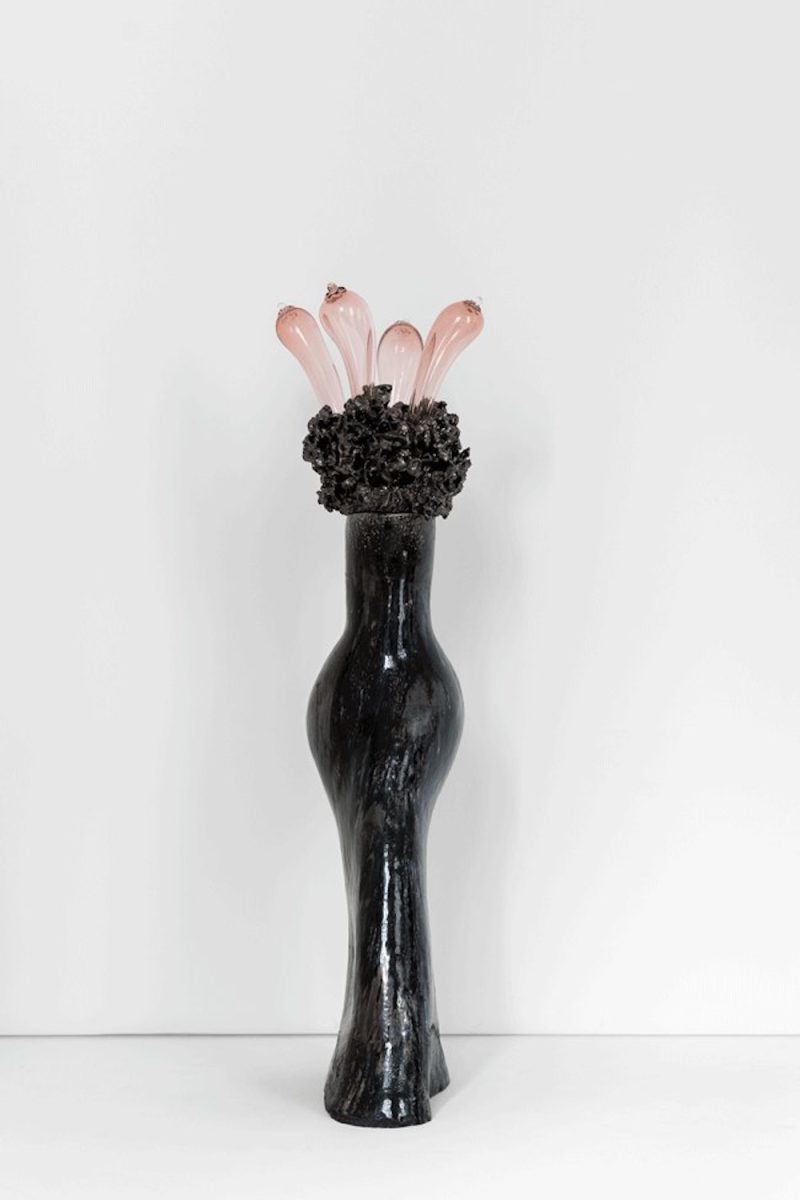
Your winning sculptures Suzanne, Gene and Gilda — do they represent women you’ve known, or are they fictional characters?
They are fictional, especially Gilda. I borrowed the name from the film with Rita Hayworth. There’s a scene where she dances in a very provocative, almost dangerous way — you feel that something might happen at any moment. I like that powerful, almost phallic femininity.
Sahal also plays with language itself:
“In French, some ceramic terms are also used as insults for women. I like turning those negative meanings into something positive — something proud, something in motion.”
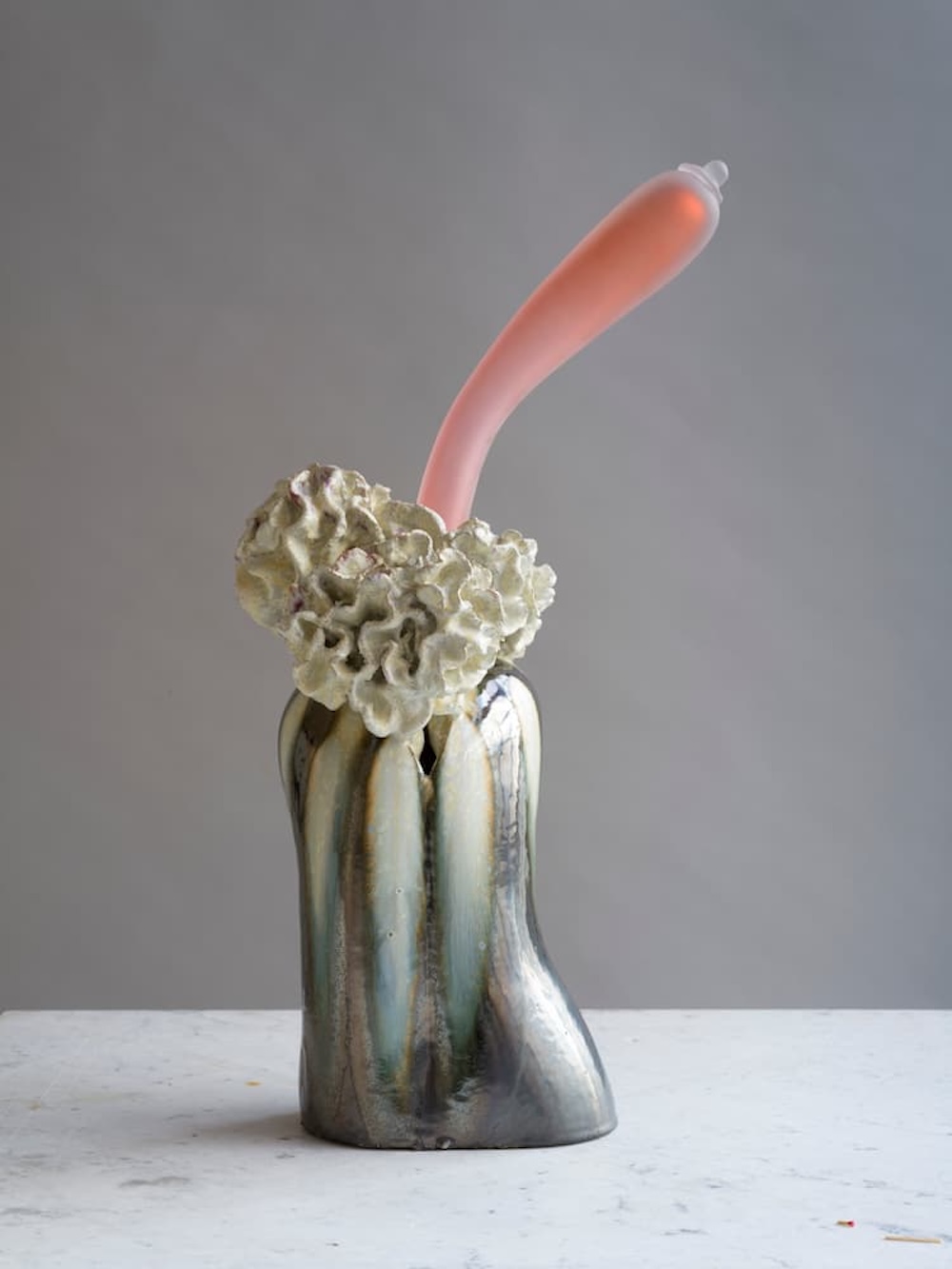
Was it intentional that the glass elements resemble something… perhaps aubergines?
I was actually thinking of flowers, because what you place in a vase is flowers. But yes, they are also bodies, breasts. They can feel priapic at the same time, almost like a baseball bat, but fragile because they’re made of glass.
How did the idea emerge to combine something as substantial as ceramics with a material as light and fragile as glass?
Ceramics offers many possibilities — textures, glazes, finishes — but it doesn’t have the same refinement as glass.
Glass and ceramics belong to the same family. Ceramic glaze is actually made from glass. Introducing glass allowed me to bring in something more subtle and fragile, and to create a continuity between the inside and outside of the body.
The female figures in these sculptures lean forward. Why?
I want them to feel joyful, like they are moving somewhere. Sculpture is static, but from the beginning, it has always tried to represent movement.
For me, it’s also about believing in tomorrow. If you don’t believe things can improve, then you don’t fight for them. I like this idea of moving forward.
Marion Prouteau, director of Galerie Papillon, which has represented the artist since 2000, added:
“The collaboration has now continued for 25 years, and we’re very proud of this prize. For us, it’s both an honour and an accomplishment.”
Claudine Papillon, the gallery’s founder, originally discovered Sahal’s work through her husband, the renowned artist Erik Dietman, who was teaching at the Beaux-Arts academy when Sahal was one of his students.
Sahal said:
“They completely respect the artist’s freedom. They never tell you what to change, never say ‘make it bigger’ or ‘add more colour’. That’s rare.
Working with them is both efficient and enjoyable. And that matters, because I spend most of my time working — I need to love the people I work with.”
Hélène Poulit-Duquesne, CEO of Boucheron, also commented:
“This year, we were particularly touched by the originality of Elsa Sahal’s approach to ceramics. She has greatly contributed to pushing back the limits of the medium by revisiting both its forms and subjects.
Supporting contemporary creation and encouraging the careers of audacious women artists seems, in my opinion, to be more important than ever.”
I also asked Marion Vignal about the wider conversation around supporting women artists today.
Do you think there are ways we can better support and promote women artists? If so, how?
“Visibility is important, but it’s not enough. Institutions need to acquire works by women artists, not simply exhibit them. Financial inequality still exists — women’s work is often valued less.
Supporting artists means changing that through collections, the market and long-term representation.”
Interview by Olena Yara