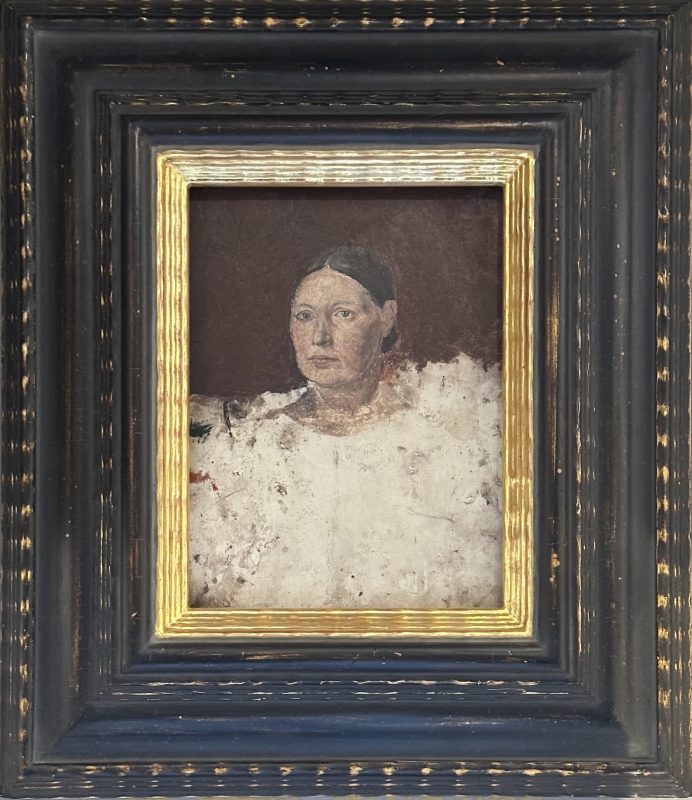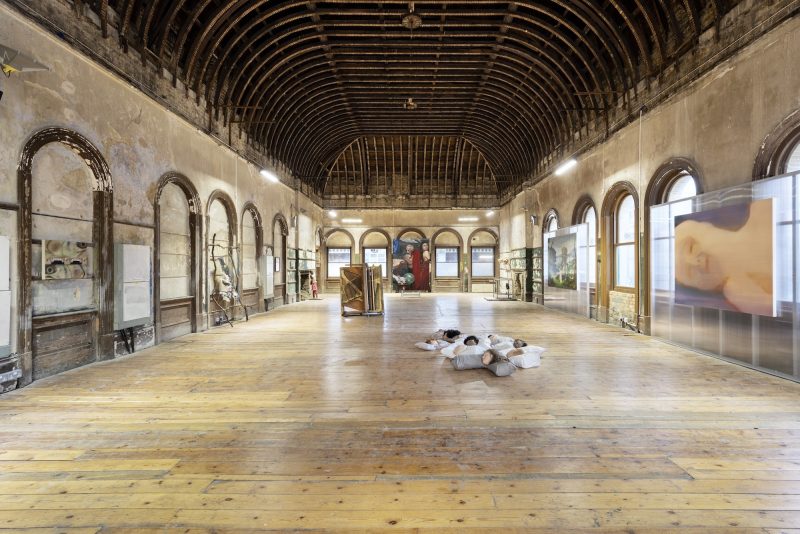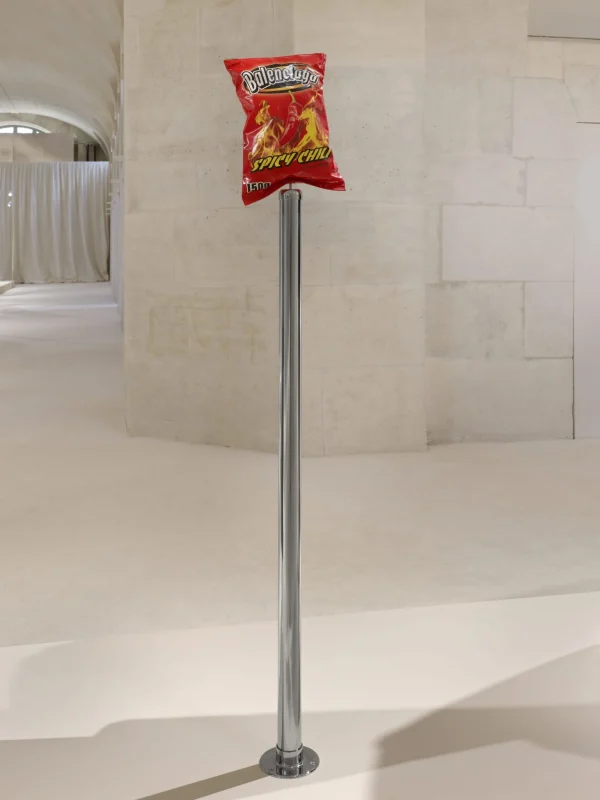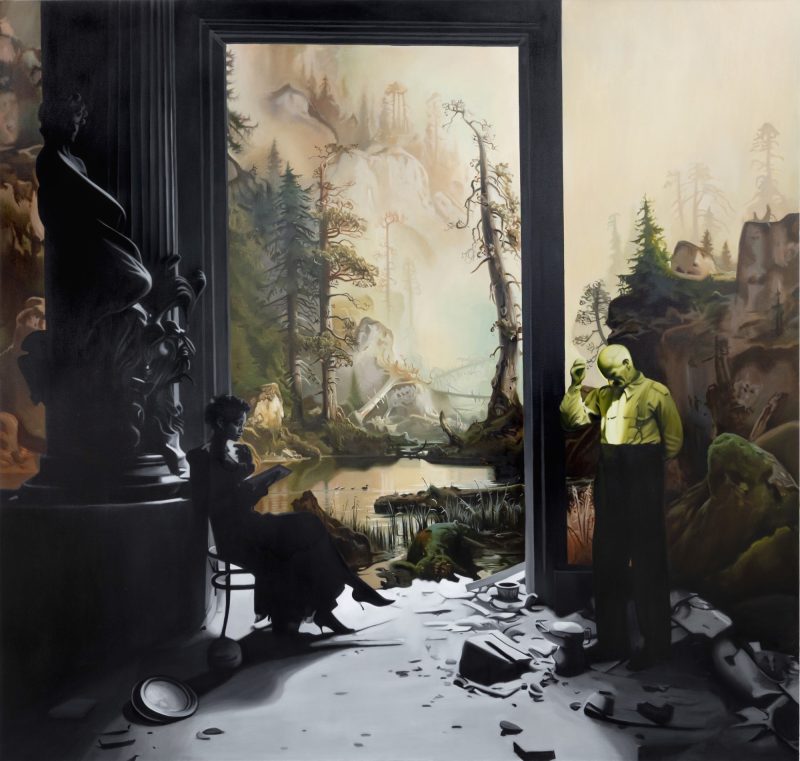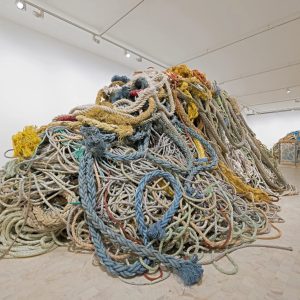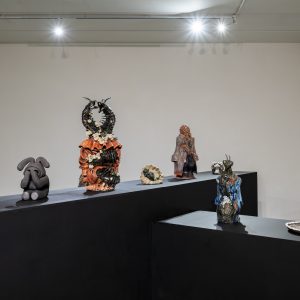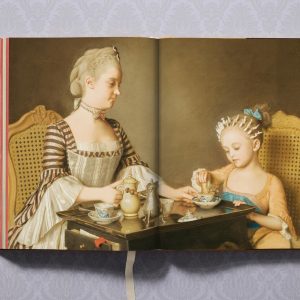
This year’s ‘Berlin Art Week’ provided plenty to see and experience in the major institutions and galleries, including the tail-end of the Berlin Biennale and the same 50-odd major commercial spaces opening till late as feature in the spring-timed ‘Gallery Weekend’. There were plenty of powerful shows there: my favourites were Petrit Halilaj at the Hamburger Bahnhof, Julian Rosenfeldt at C/O Berlin, Lee Bae at Esther Schipper, Magnus Plessen at Wentrup and a remarkably full survey of Mark Leckey’s work at the Julia Stoscheck Foundation. Here, though, in a democratic spirit that demonstrates the depth of the scene, are some things I liked aside from those more obvious venues.
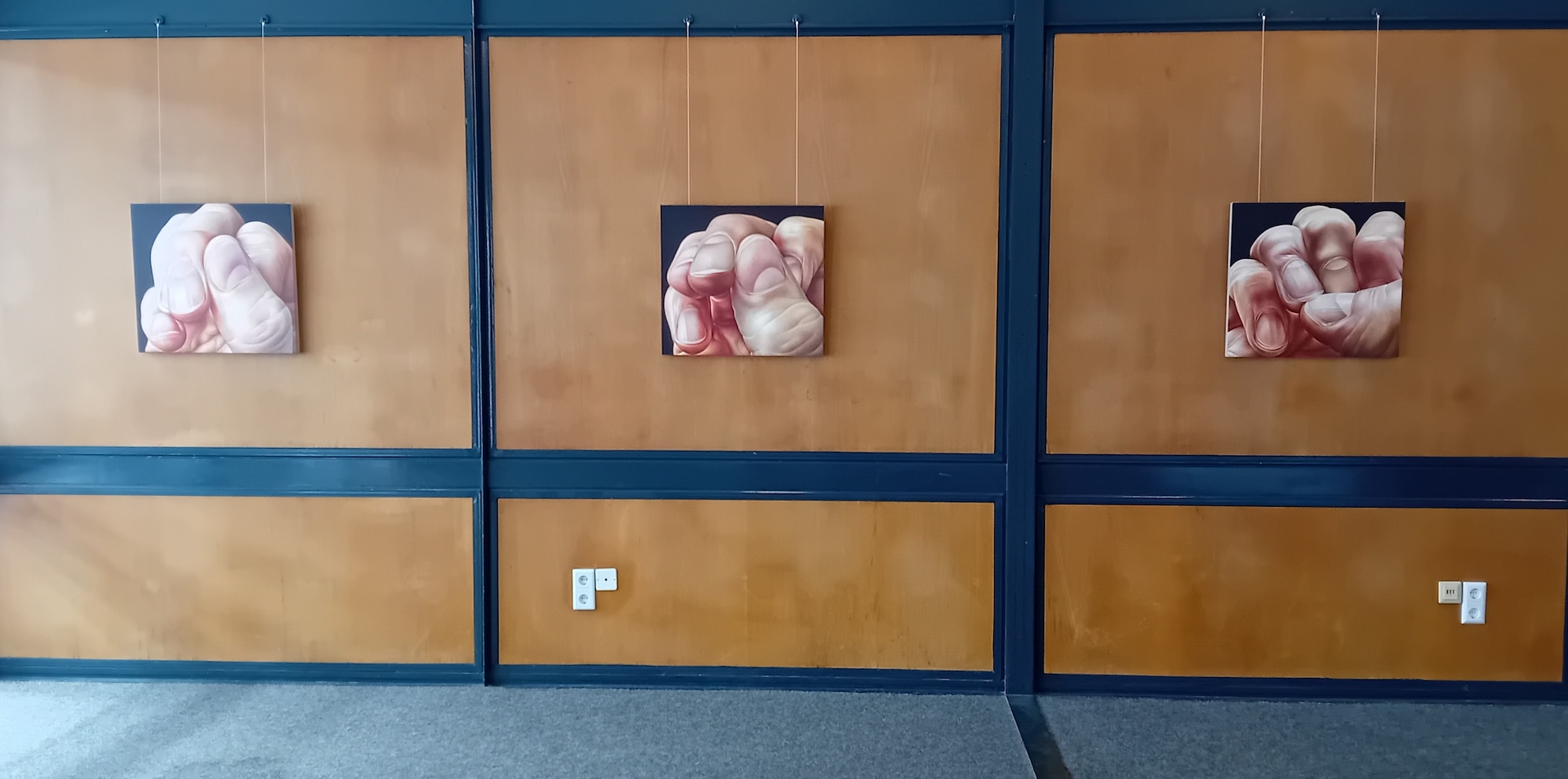
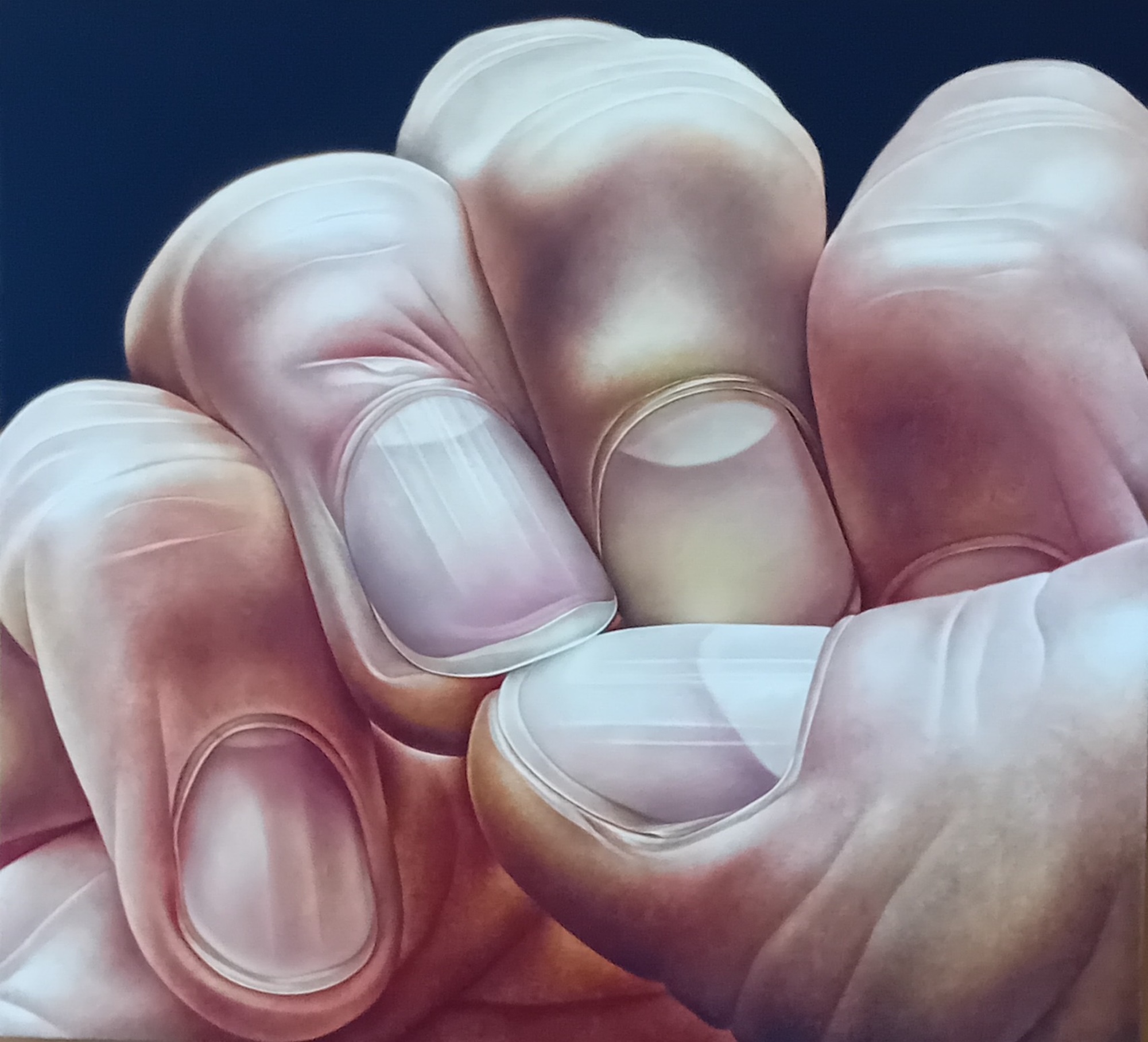
Lukas Luzius Leichtle: ‘Probe 1’, ‘Probe 2’ and Probe 3’, 2025, at CCA Berlin – top and above
Surfaces come together with impact at the Centre for Contemporary Arts, where Lukas Luzius Leichtle’s intensely detailed paintings, most of them zooming in on the skin, are set against the wood-panelled series of former offices of the adjoining cathedral. The German artist seeks to convey something of the mystery of what is going on inside you, how you might feel a stranger in your own body. These three paintings enlarge the artists’ hands so that, as Nan Xi’s exhibition text puts it, ‘Each wrinkle becomes a slit or valley, each curve opens into a niche of flesh’ as ‘ fingers twist into enlarged statues’, suggesting ‘the body turning against itself, until its homogeneity crumbles’. Consistent with that, I wasn’t sure if the striations on the nails were reflections of windows or signs of a fungal disease.
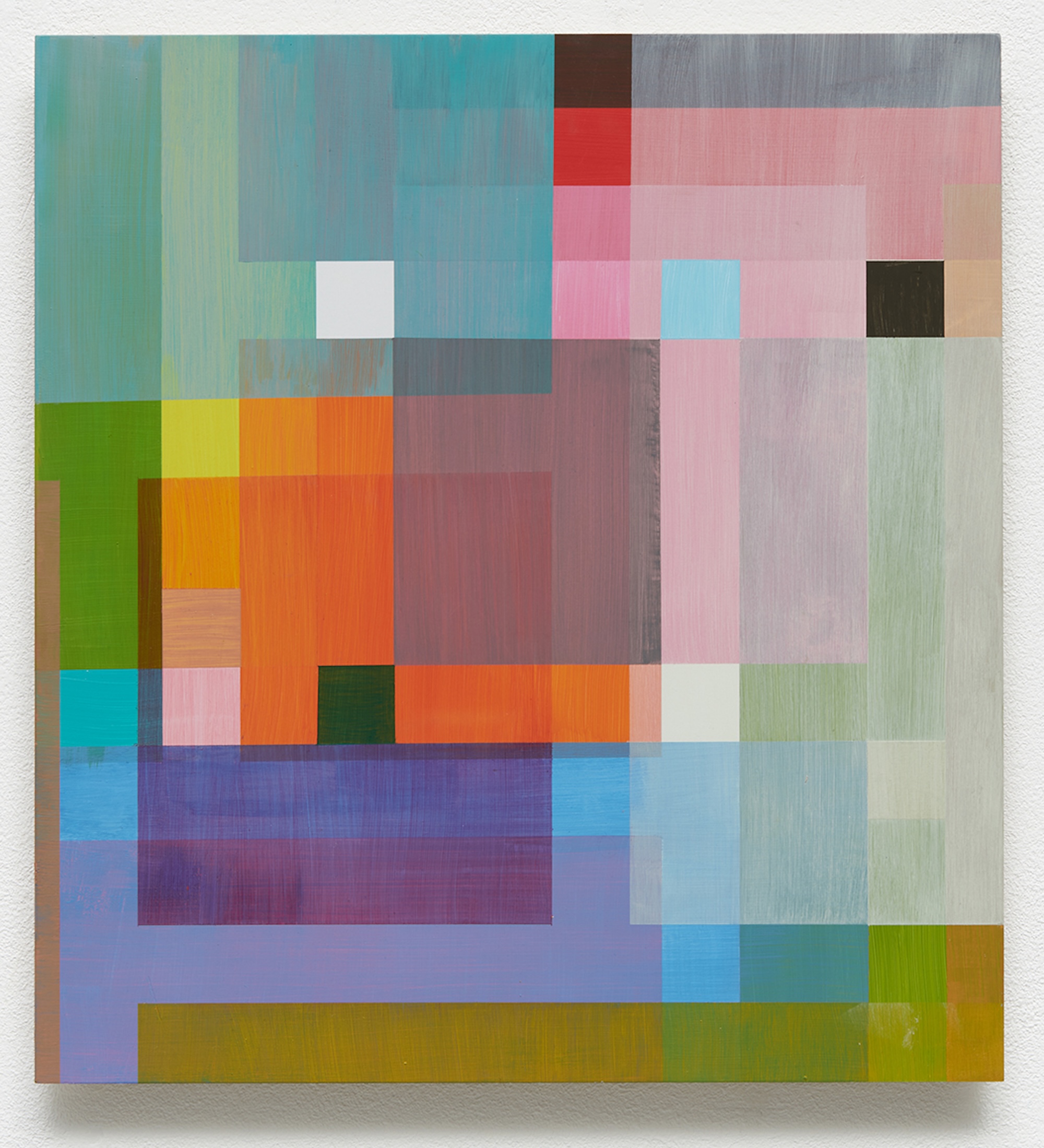
Beat Zoderer: ‘Haiku, G3 No. 6’, 2025, at Taubert Contemporary
You won’t find a more inventive explorer of the concrete principles of fundamentally abstract art than the Swiss artist Beat Zoderer – primarily through colourful constructions using a wide range of materials, but recently in a more painterly style as well. This is made, with extensive yet unfussy use of tape, with transparent layers of water-soluble acrylic paint on an MDF board, so that overlapping fields appear in mixed tomes with an effect Zoderer terms ‘Concrete Watercolour’. It consists, though it’s hard to believe until you look closely, of just three colours applied in layers over a white ground. Hence such works are titled after the haiku, a three line form of poem which can also richer than you would expect.
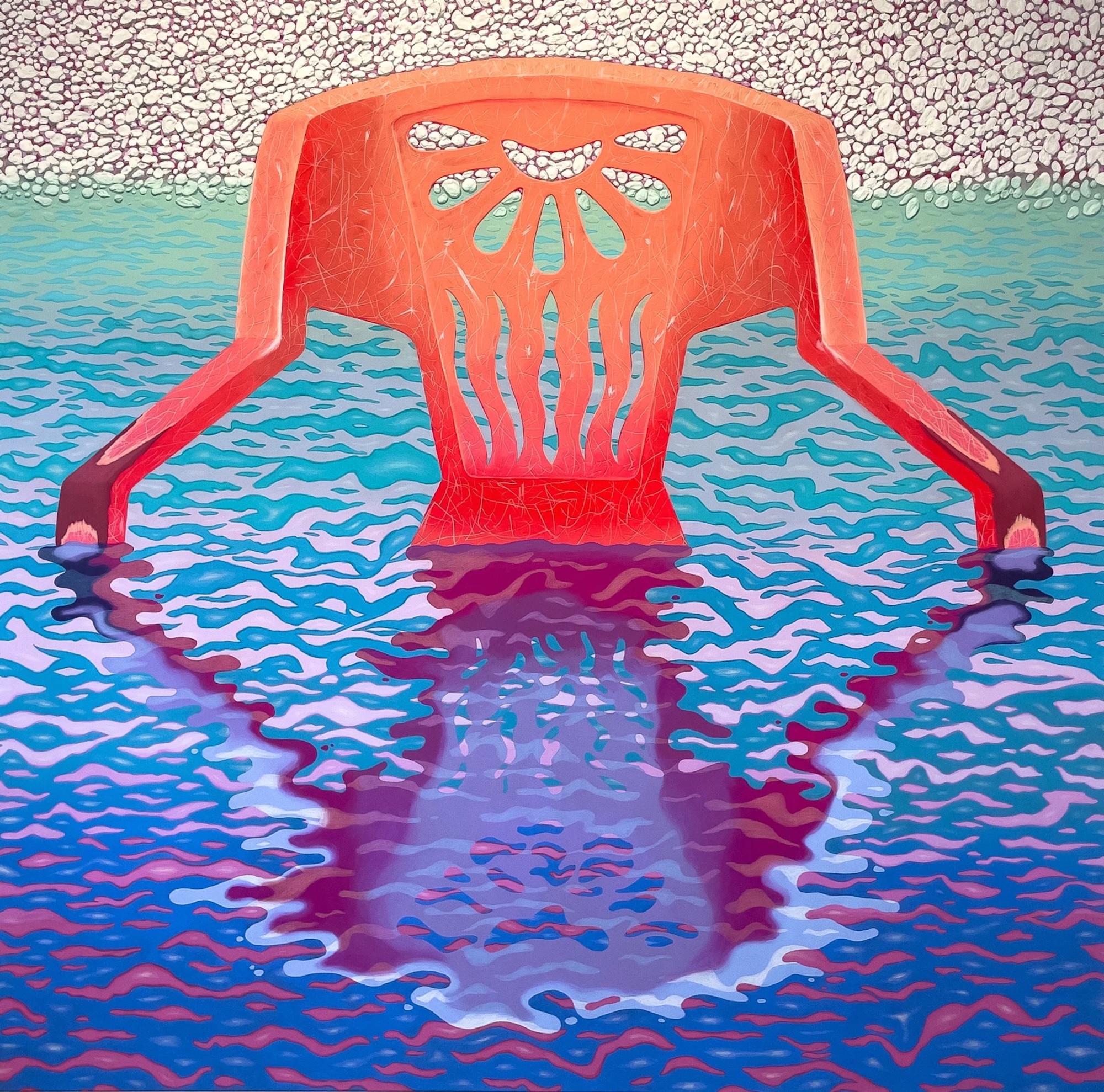
Lottie Keijzer ‘Neither here nor there’, 2025, at Kristin Hjellegjerde Gallery
Dutch artist Lottie Keijzer shows what might be reckoned a dozen still lives in her Berlin exhibition ‘Position of Being’. However, they also act as abstracts and narratives. She builds in subjective cover choices to reflect her moods (and paints on a bright red ground), and is happy to explain how the various items – many of them seats – fit in with her personal history. Indeed, you can hear her reading entertainingly about the background to each painting in turn on a Walkman as you tour the gallery. Of semi-submerged plastic chair, she says: ‘My in-laws live in Croatia and have an amazing, self-built holiday house on the Adriatic coast. At the little pebble beach nearby, there used to be this old plastic chair, legs broken off and battered by the sea and time. It would be half in the water for anyone to sit and enjoy the sun and sea at the same time. Sitting in the clear sea, where my significant other feels at home, I longed to return to my home country, the Netherlands, which is ironically mostly below sea level. I thought this beaten-up seat was a strong metaphor for my life there – I felt out of place while being surrounded by beautiful scenery, moments, and experiences.’
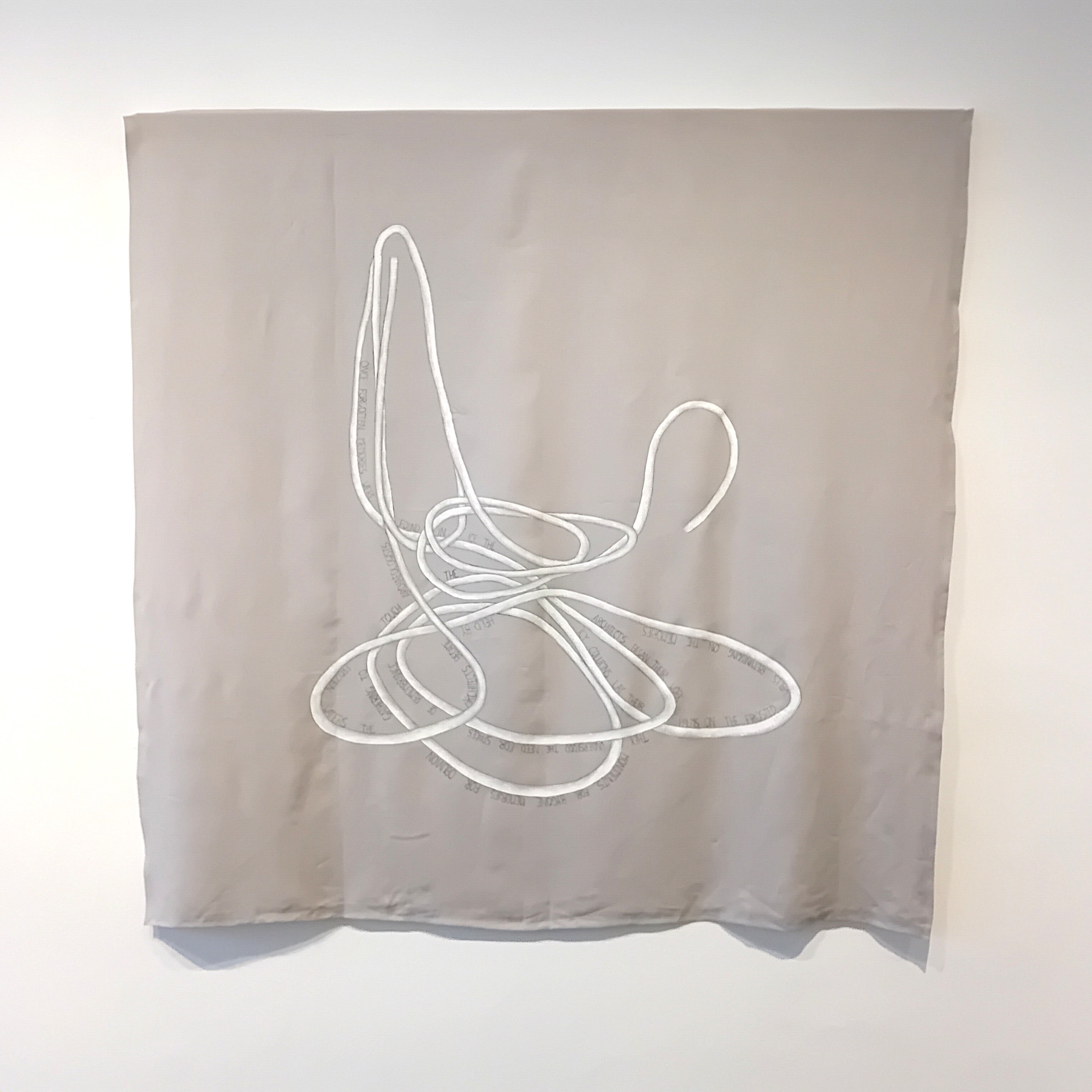
Ángela Jiménez Durán: ‘The Architects’, 2025 at pied-à-terre
Paris-based Spaniard Ángela Jiménez Durán’s first solo exhibition in Germany, ‘The Era of Temperature’, unfolds the hidden stories, images and memories of water via tapestry-style drawings. Each derives from a photograph of a water hose, the letters then following the invisible flow of water inside the water hose. This one, unravelled, reads as follows: ONCE FORGOTTEN MEMORIES WERE FOUND IN ICE / THE ARCHITECTS BEGAN THEIR WORK / THEY UNDERSTOOD THE NEED FOR SPACES OF REMEMBRANCE / MONUMENTS FOR BYGONE MEMORIES / FOR OBLIVION GATHERING TO TOUCH THE ICY COLUMNS / LAY THEIR PALMS ON THE FROSTED WALLS /REMINISCING / ON THE MEMORIES HELD BY FROZEN WATERS / THE TRUE ARCHITECTS BECAME THE NEW ARCHAEOLOGISTS
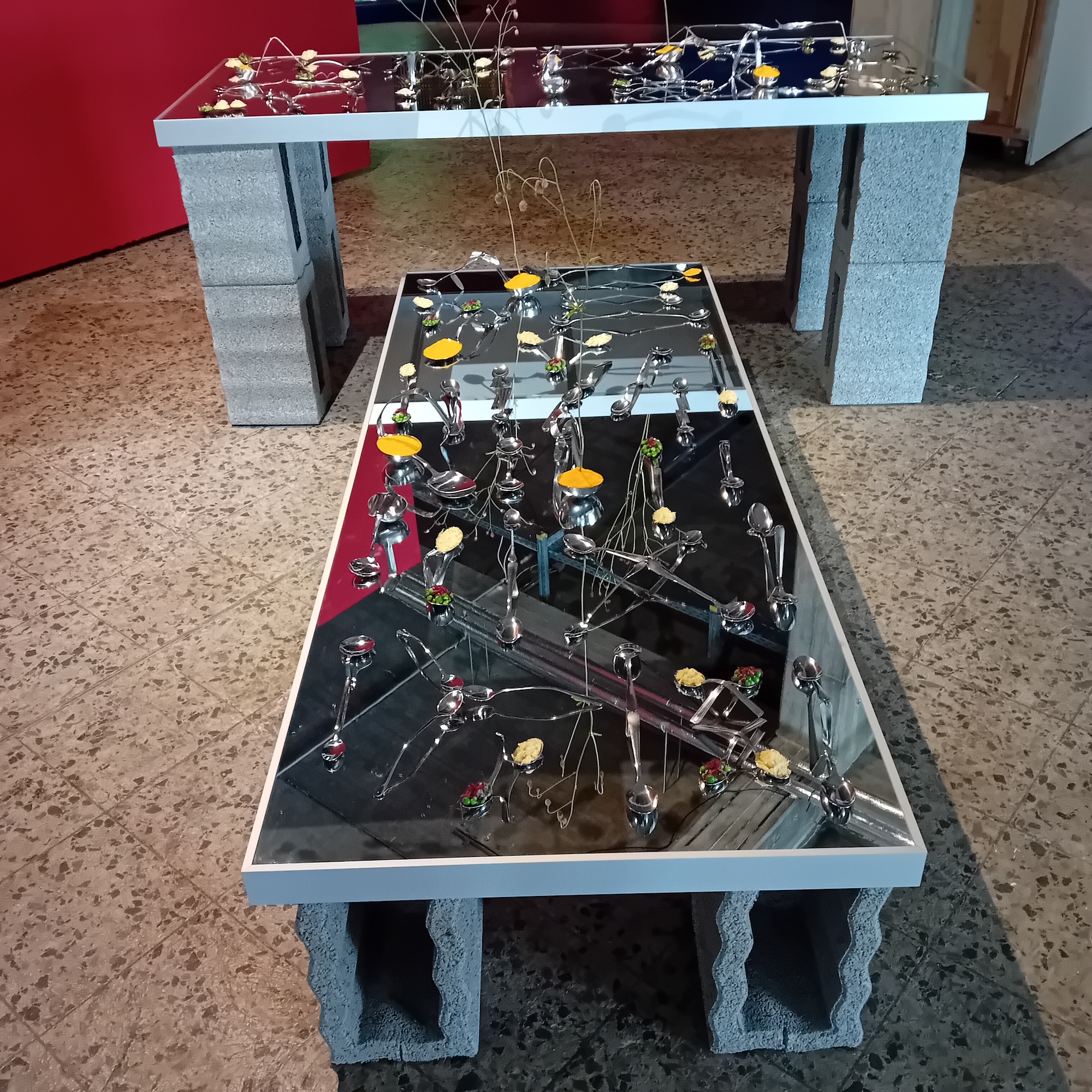
Akshita Garud and Avantika Khanna ‘Cross My Palm with Silver’, 2025 at Savvy Contemporary
The twelve artist group show ‘Close to Home’ has an unusual topic: the phenomenon of remittance, whereby emigrants send money back to their country of origin. Is that a straightforwardly selfless act? Perhaps not, as collaborative guilt, a wish to maintain connections, and a desire to please are also in play. That was most economically encapsulated by Akshita Garud, in collaboration with metal worker Avantika Khanna. The title of the installation ‘Cross my palm with silver’ refers to the old practice of paying a silver coin to a fortune teller ahead of their services in the hope that it will improve one’s forecast prospects. The undercurrent of reciprocity is symbolised by double spoons – made by merging many different types in different ways – on a mirrored table that multiplies and reflects their forms in the ‘ubiquity of remittance’, says Garud. ‘Each utensil cradles Indian food with contrasting yet complementary flavour profiles to carry forth the payment’s bittersweet nature. On one side, duty, and the other, desire.’ During the opening, visitors were invited to eat from both ends of the spoons…
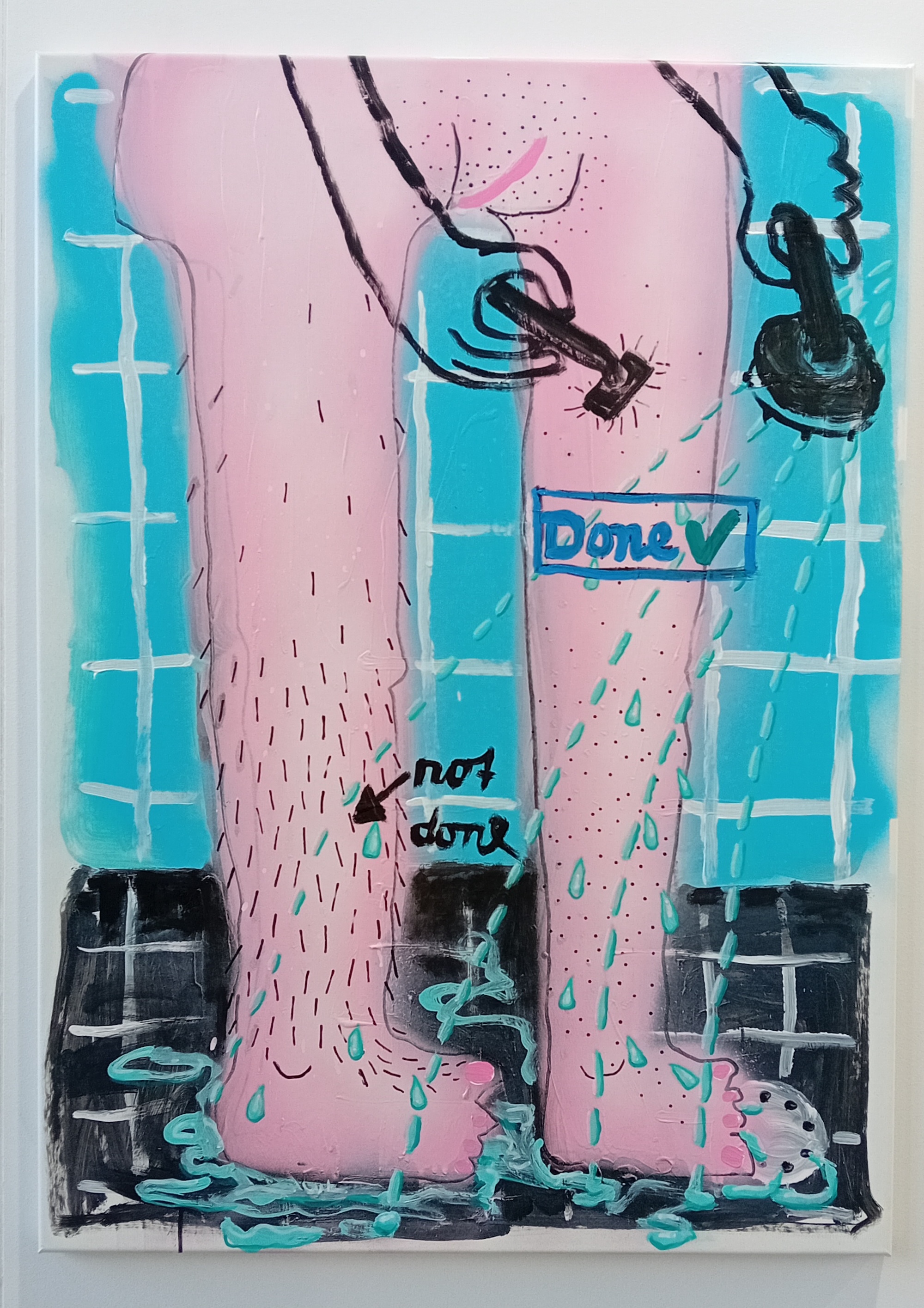
Katharina Arndt: ‘Done – not done’, 2025 at Ting Art Space in the Positions art fair
This lively painting acts as a complaint, Katharina Arndt told me, about the need to shave her legs thrice weekly if she wishes to avoid an aesthetic which, whatever its feminist credentials, she doesn’t fancy. To maintain what she describes as the phone- screen-style invisibility of expectations is a pain – though I do note that the German artist makes it harder for herself by having long legs. Nice details include the comically obvious labels, childlike streams of water, and the way the tile colour trumps the flesh of the hands. This was at the generally underwhelming Positions Fair at Templehof. Berlin could do with a better fair, though it would be hard to complain that there isn’t enough to see in the city without one!
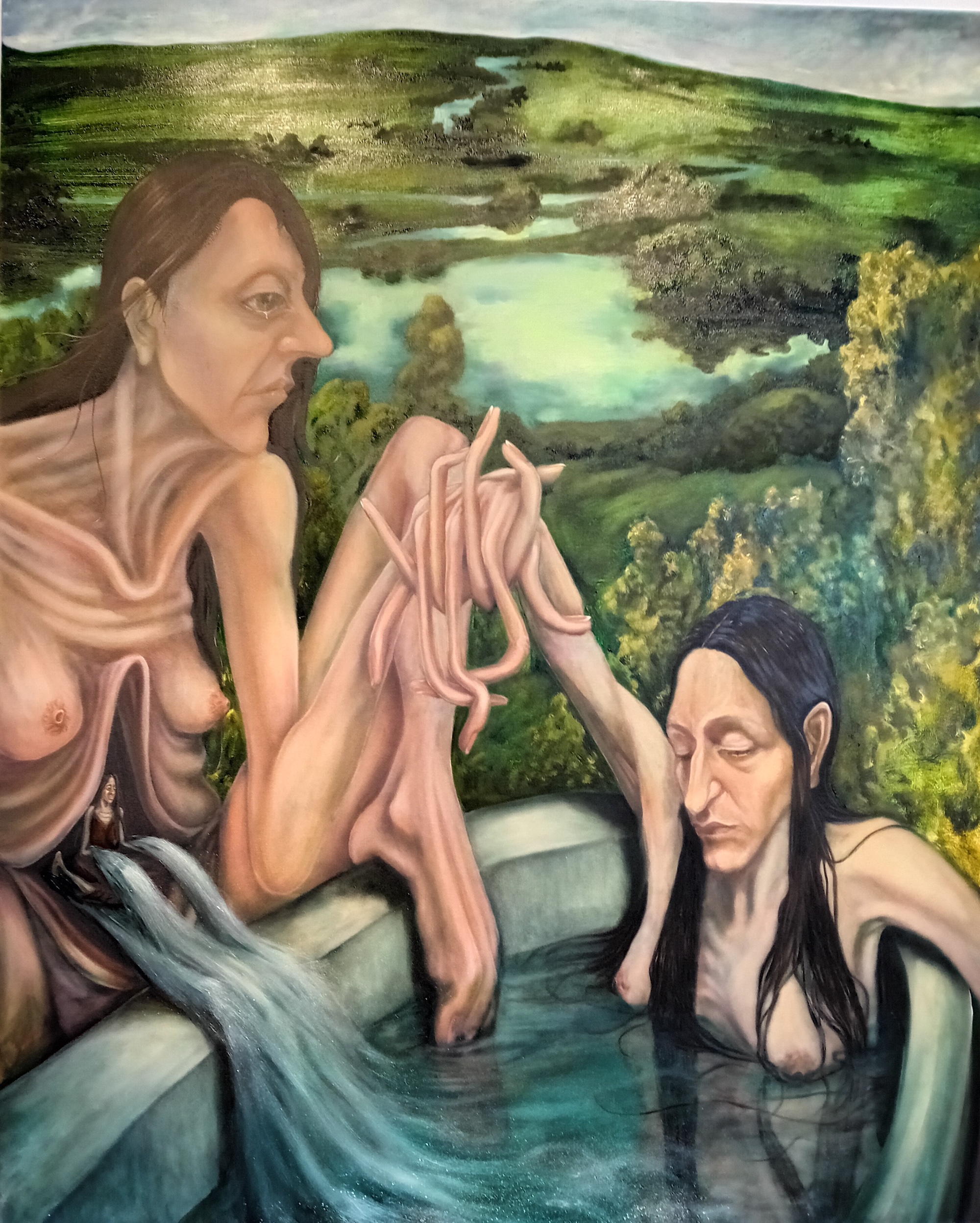
Nour El Saleh: ‘Spoon-feed’, 2025 at GNYP
I like painters to have a distinctive language, even if it’s one that won’t appeal to everyone, as I suspect is the case with the young Lebanese painter Nour El Saleh. You’d probably have to cross something like Cranach, Dali, Marwan and Mika Rottenberg to arrive in her zone of bodies in extremis, with weird distortions, obscure goings-on and absurd contrasts of scale. ‘As if’, says Martin Herbert, ‘emotions reshaped physiognomy, sat literally close to the bone’: the show text suggests that her characters are ‘scrutinized beyond the bounds of biology’. I had assumed, incidentally, that GNYP was an acronym of partners’ initials – until I met the gallerist, Marta Gnyp.
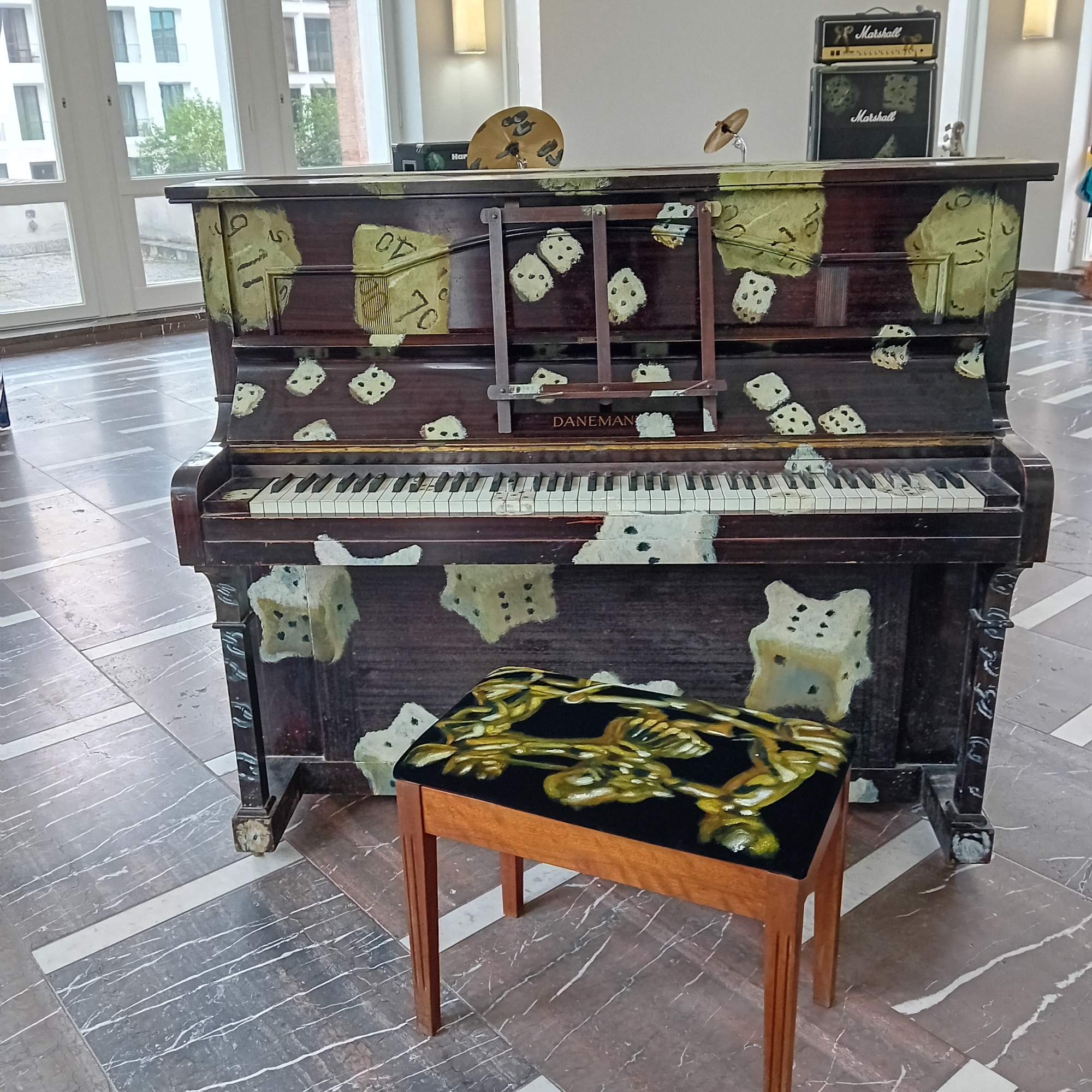
Issy Wood: ‘MUSIC’ and ‘Self Portrait 64’, 2025 at the Schinkel Pavilion (above and below)
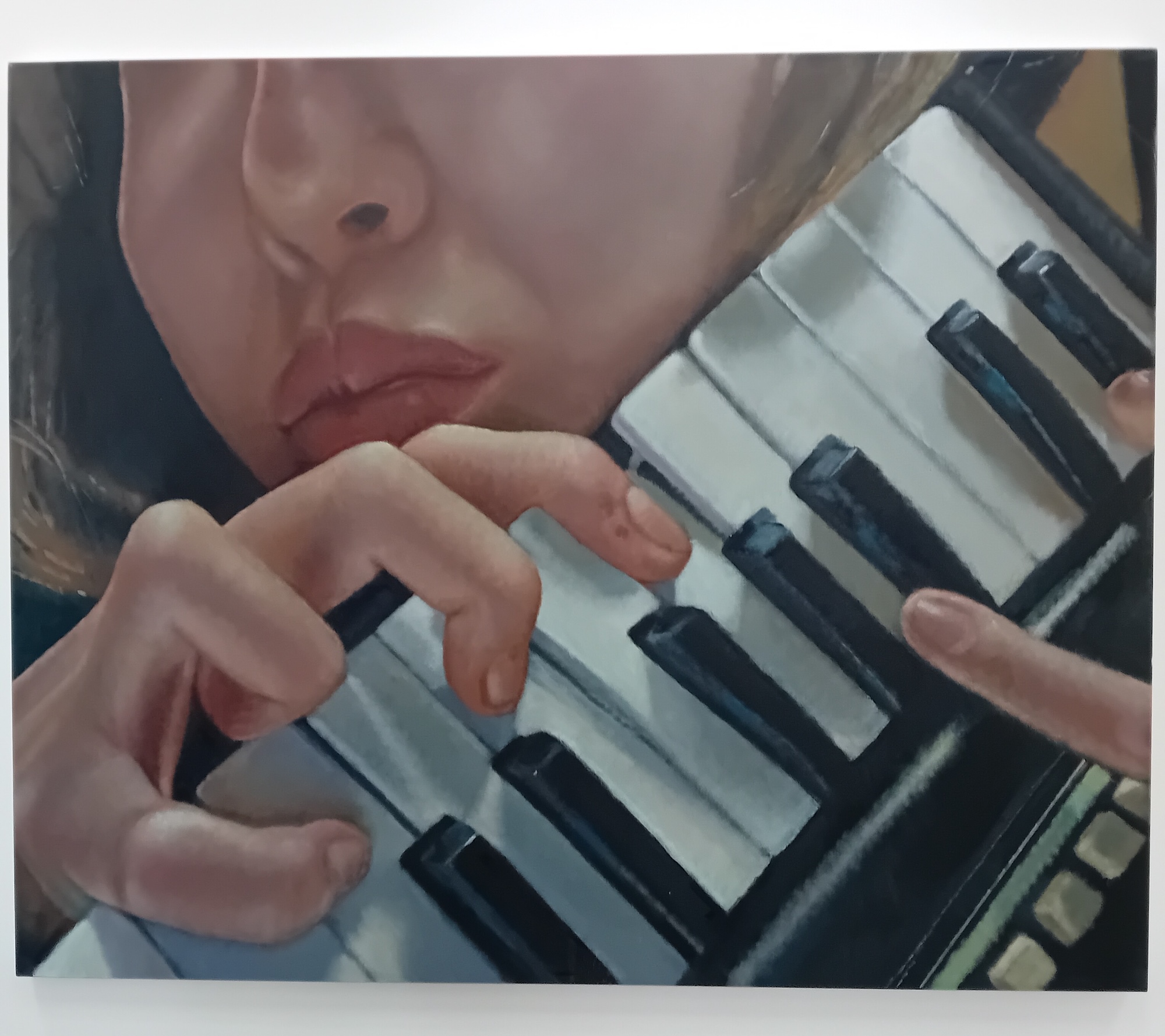
Britons were prominent in Berlin with highly-regarded shows by Jesse Darling, Cornelia Parker and Mark Leckey – as well as the painter, writer, musician and self-described ‘medieval millennial’ Issy Wood. She expanded her surface-aware trompe-l’œil still lifes onto musical instruments and speakers broadcasting a 17 minute soundtrack. Falling dice were a prominent motif, symbolising, according to Margaret Kross’s accompanying essay, ‘the attempt to act without certainty of outcome’ while asking ‘Do we even have free will?’ and ‘Does the house always win?’. Thus ‘Wood’s practice insists that to live is a wager, to accept a pact with the uncertain. To look, to act, to paint, to love is to throw the dice that, in Mallarmé’s formulation, will never abolish chance. The piano – Wood on wood, I suppose – was shown close to a more orthodox self-portrait in musical mode…
Categories
Tags
- Akshita Garud and Avantika Khanna
- Ángela Jiménez Durán
- Beat Zoderer
- Berlin Art Week
- Berlin Art Week 2025
- C/O Berlin
- CCA Berlin
- Cornelia Parker
- GNYP
- Hamburger Bahnhof
- Issy Wood
- Jesse Darling
- Julia Stoscheck Foundation
- Julian Rosenfeldt
- Katharina Arndt
- Kristin Hjellegjerde Gallery
- Lee Bae
- Lottie Keijzer
- Lukas Luzius Leichtle
- Mark Leckey
- Nour el Saleh
- Petrit Halilaj
- Savvy Contemporary
- Ting Art Space