After three decades at the centre of the international art market, Stephen Friedman Gallery has entered administration and closed its London space, bringing the dealer’s gallery operations to an end.
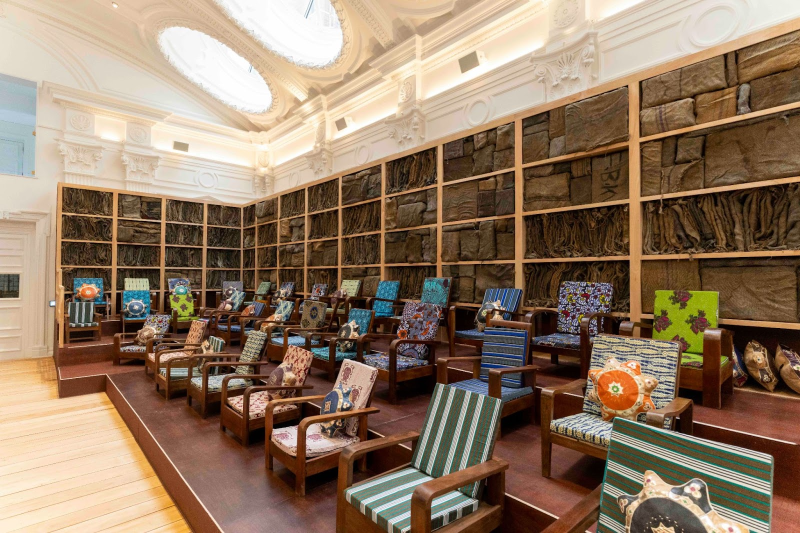
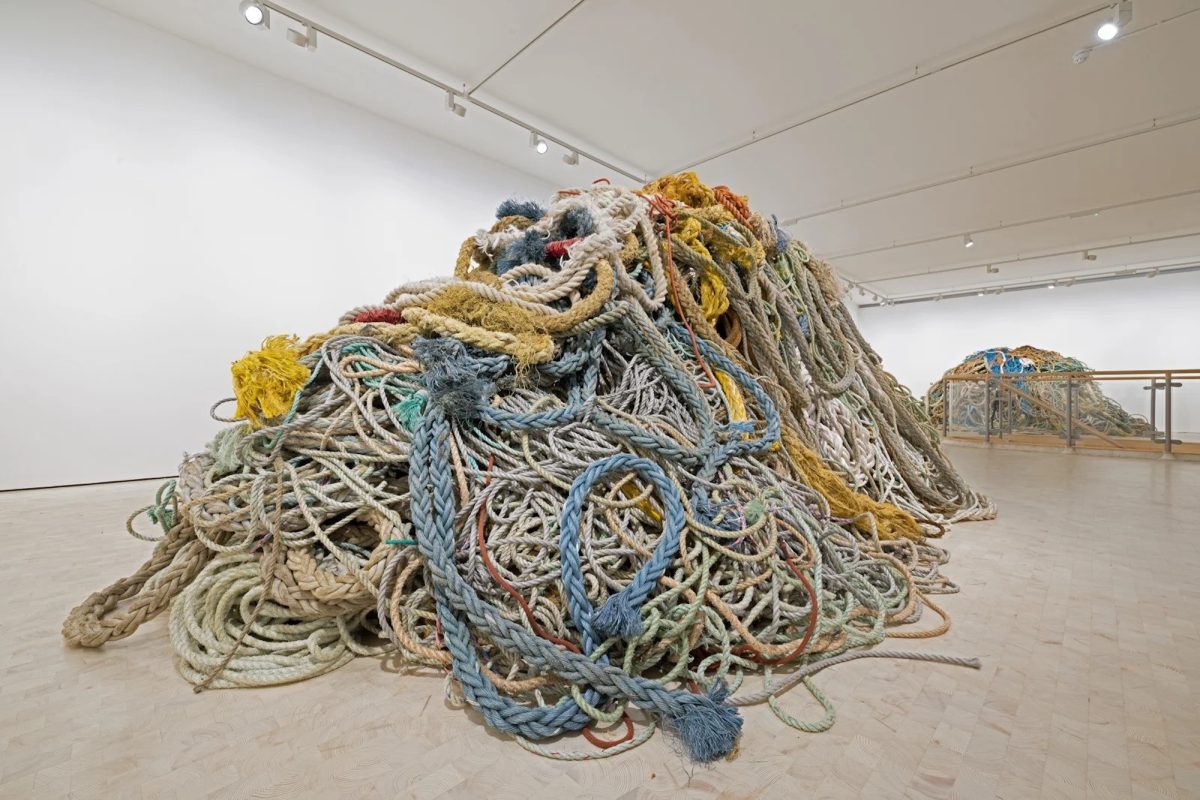
One of the final exhibitions to occupy Stephen Friedman Gallery’s London space was David Shrigley: Exhibition of Old Rope — a deliberately perverse gesture even at the time. The show handed almost the entire gallery over to a 10-ton installation made from discarded rope, priced at £1 million, with only a single neon work punctuating the vast, fibrous mass. What initially read as a brazen provocation — a wry test of value, belief and commerce — now feels uncannily prescient. As the exhibition text noted, Exhibition of Old Rope playfully toys with notions of commerce and disrupts the conventions of a commercial gallery — a line that lands with particular weight in light of the gallery’s closure.
After more than three decades at the centre of London’s contemporary art scene, Stephen Friedman Gallery has entered administration and closed its London space, bringing an abrupt end to one of the city’s most established mid-to-large galleries.
A statement confirmed that the gallery commenced the administration process on 2nd February 2026, with FRP Advisory appointed to oversee an orderly review of its financial position. The gallery is now closed to the public and has withdrawn from all upcoming fair participation.
The closure follows the shuttering of the gallery’s New York space at the end of 2025, which had originally been framed as a consolidation strategy focused on London after the appointment of several new senior directors. Instead, the London gallery — which had relocated to a larger Cork Street premises in 2023 — has now also ceased operations.
At Art Basel Qatar, the impact of the closure was immediately visible. A solo booth of work by the late Huguette Caland, originally planned under the Stephen Friedman banner, was presented instead by the artist’s estate, with representatives from Lisson Gallery stepping in to staff the stand. It is understood that Lisson underwrote the costs of the booth.
What remains unclear is the future of the gallery’s roster of 39 artists and estates. As of now, no formal announcements have been made regarding transfers of representation, though it is widely expected that conversations are underway behind the scenes.
Founded in 1995 on Old Burlington Street, Stephen Friedman Gallery built its reputation during the YBA-dominated 1990s before evolving into a globally active programme spanning painting, sculpture and installation. The gallery’s move to Cork Street — alongside the opening of a New York outpost — marked an ambitious expansion phase. However, accounts filed at Companies House later revealed a £1.7m loss in 2023, largely attributed to the cost of constructing and running two new gallery spaces simultaneously, combined with a broader market slowdown.
Those filings also pointed to tightening cash flow, slower sell-through on major exhibitions, and increasing reliance on bank facilities — pressures that have become familiar across the mid-tier gallery sector as operating costs rise and collector behaviour grows more cautious.
Stephen Friedman Gallery’s exit leaves a notable gap on Cork Street and within London’s international gallery ecosystem, raising fresh questions about sustainability, scale and survival in today’s art market.