The UK Ministry of Justice has spent more than £85,000 trying to remove Banksy’s mural from the Royal Courts of Justice in London, with the work still not completely gone and the final bill potentially set to rise.
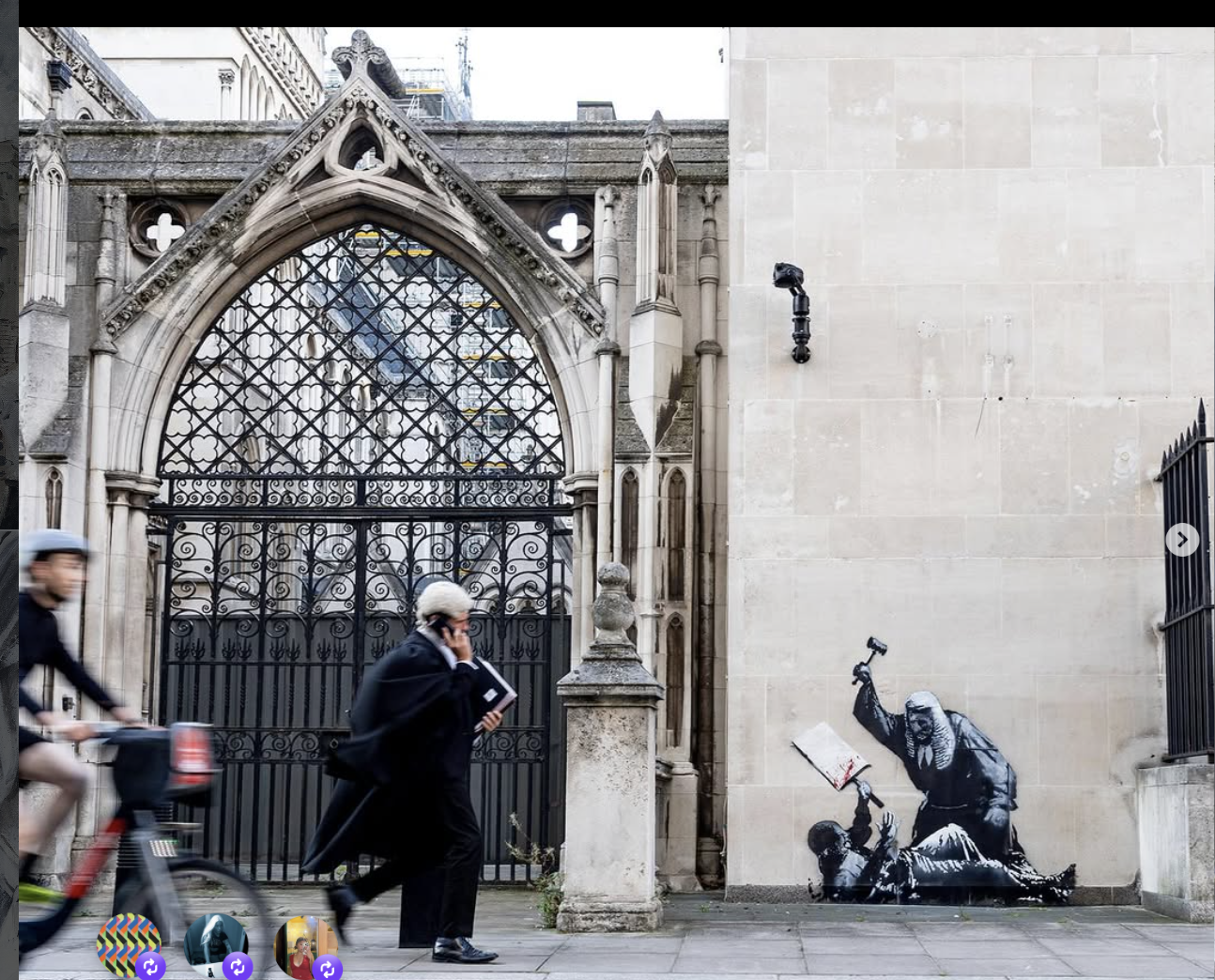
The mural appeared on the Grade II-listed building in September 2025, depicting a bewigged judge striking a protester lying on the ground with a gavel. Banksy subsequently confirmed the work as his.
Figures released following a Freedom of Information request show that approximately £50,000 has been spent attempting to remove the paint, with a further £35,000 spent on security and staff overtime. Initial cleaning attempts failed, and contractors have since turned to laser technology to remove the work from the historic stonework.
HM Courts and Tribunals Service has defended the decision to remove the mural, pointing to the building’s protected status: “The Royal Courts of Justice is a listed building and HMCTS are obliged to maintain its original character.”
The £85,000 figure may not be the end of it. If the current cleaning is judged inadequate, another method could be required, while replacing the affected stonework remains a final option. An application has also been submitted to install railings across the wall where the Banksy appeared, the cost of which is not yet known.
And the Royal Courts mural isn’t the only recent Banksy generating a substantial public bill.
Almost £60,000 has been spent by Westminster City Council dealing with the artist’s statue of a man carrying a flag, which appeared at Waterloo Place near Trafalgar Square in April. The money has gone towards safety barriers, security and administration while the council, which now owns the work as landowner, decides what to do with it.
A third Banksy, the shoal of piranhas painted over a City of London police sentry box in 2024, cost £2,200 to remove. That work, however, was preserved and is due to go on display at the London Museum when it reopens in November. Together, the three works have so far cost the public almost £150,000.
The figures reopen the familiar argument over what happens when an unsolicited Banksy appears on public property: preserve an artwork by one of the world’s most famous living artists, or remove what is, legally, unauthorised graffiti.
In Banksy’s case, authorities have been making that decision for decades — sometimes with hindsight. Works have been painted over, demolished, stolen and physically cut from walls, while others have subsequently sold for enormous sums.
There are now enough casualties to warrant an entire Wikipedia page documenting Banksy works that have been damaged or destroyed. The surprisingly long list of damaged and destroyed Banksy works
For the Royal Courts of Justice, however, the immediate story is rather simpler: £85,000 has already been spent trying to make a Banksy disappear — and the job isn’t finished yet.