Frieze London opens to the public today, bringing 176 galleries from 43 countries and regions to Regent’s Park. That is far too much art for anyone to properly absorb, so here are six artists that stopped me in my tracks — plus three paintings I’ll come back to, and somewhere to eat.
Looking back at what I picked, there seems to be a theme. Beautiful, cute, romantic works, a bit of ecology and quite a lot of optimism.
Which feels good.
After walking around Frieze this year, I came away energised rather than exhausted. Maybe we can — and will — save this world after all.
Benjamin Lallier, presented by Heidi London, Stand F21
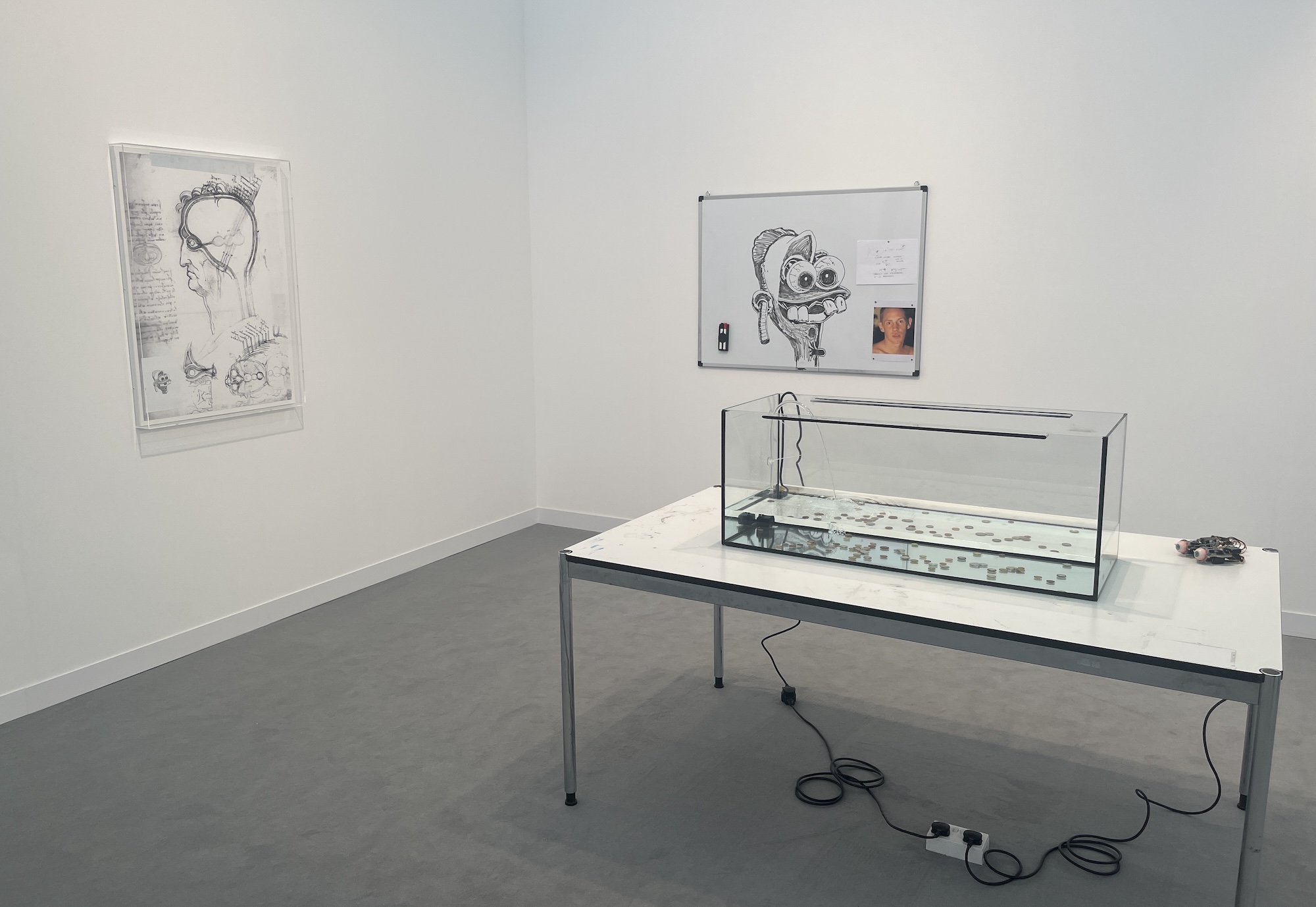
Wow. I loved this before I knew anything about it, and then discovered Benjamin Lallier is from Marseille — which immediately made it even better for me. My mum is from Marseille and I spent every summer there from the age of five.
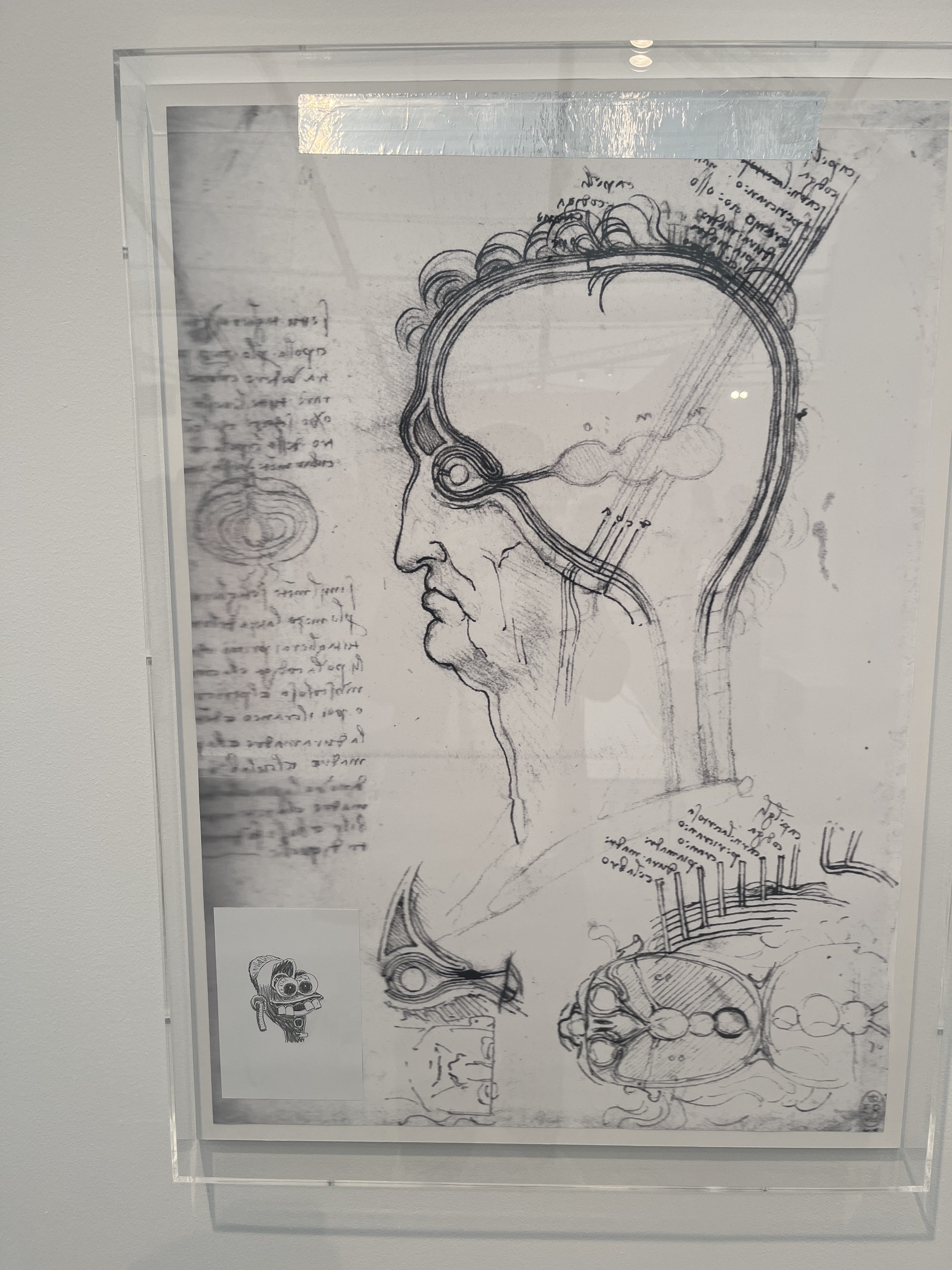
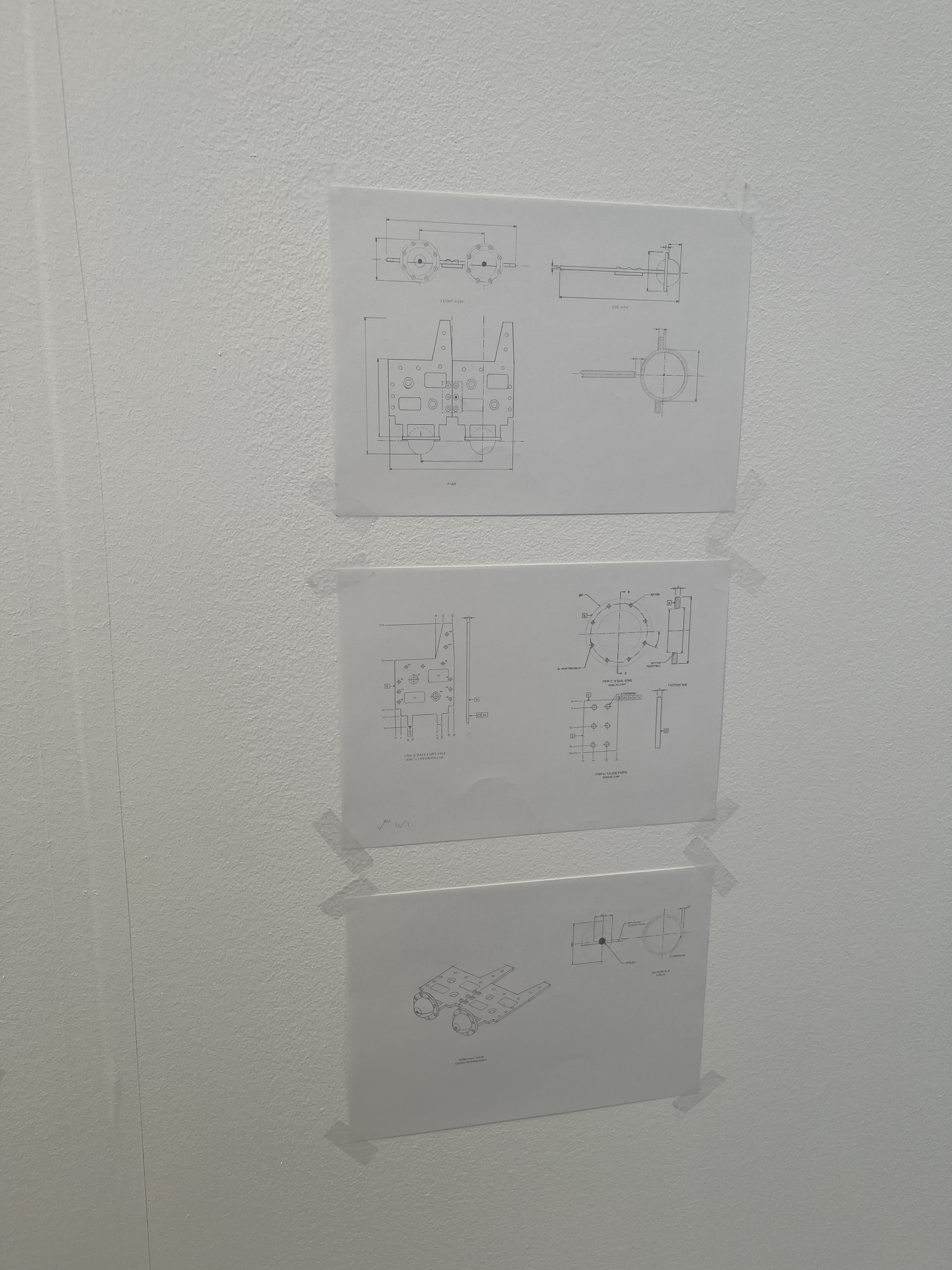
Lallier mixes cartoon imagery, animation, science, technology and pop culture in a way that somehow feels incredibly French — playful, intelligent and just slightly strange. Born in Marseille in 1985 and now based in London, he moves freely between media, pulling together scientific and philosophical ideas with everyday situations and popular beliefs. There’s humour everywhere, but beneath it something darker and more questioning. It looks light on its feet while quietly asking why we accept so many of the things around us without thinking twice.
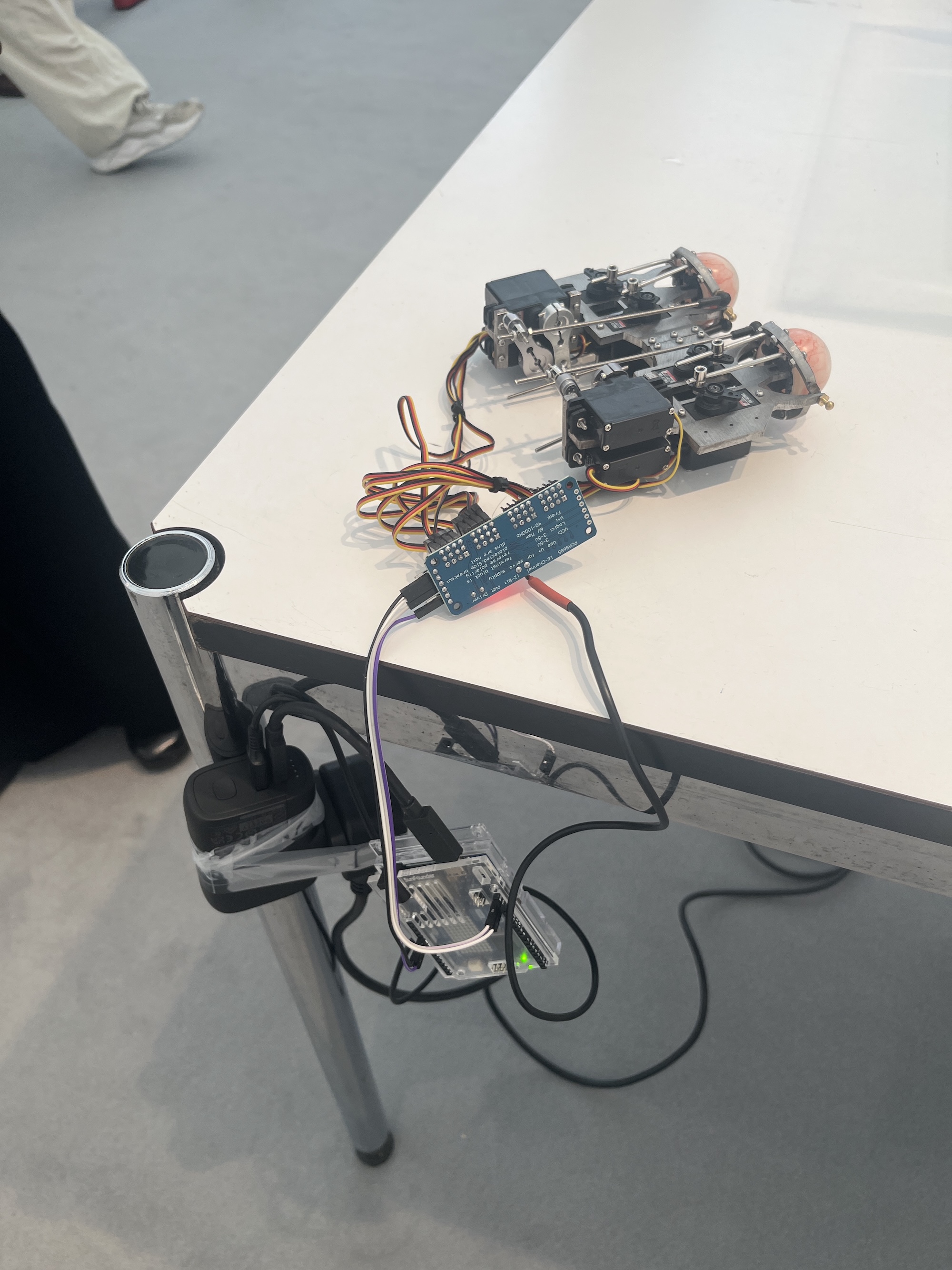
Magnifique.
Karim Boumjimar presented by Tina, London, Stand S2
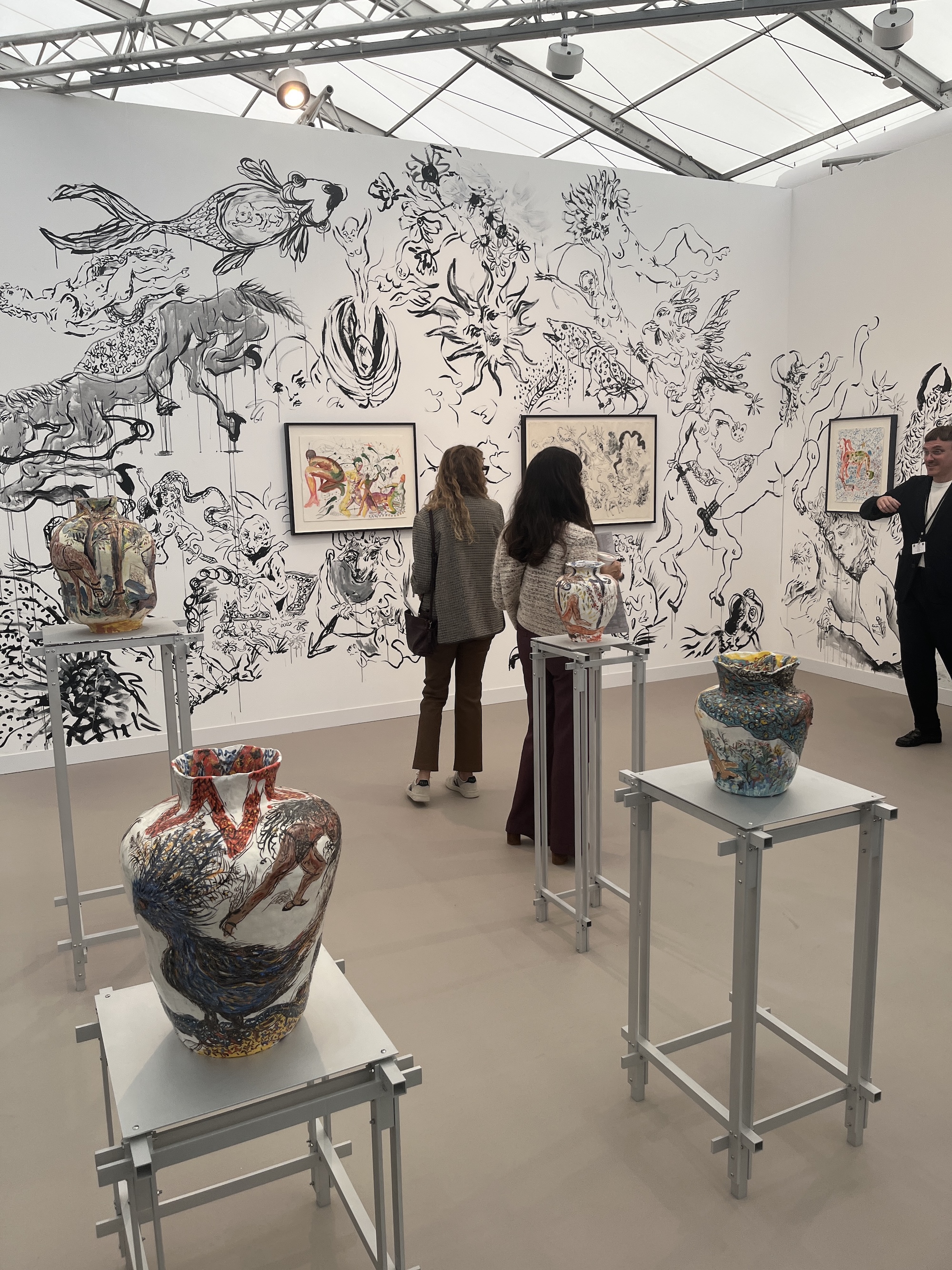
Karim Boumjimar draws everywhere — on ceramics, canvas and, at Frieze, directly across the walls of the stand in a site-responsive mural painted in a day.
And it flows.
Bodies, lovers, sirens, devils and hybrid human-animal figures tumble through the work in a world filled with desire, romance and transformation. Boumjimar’s practice explores the body as something fluid rather than fixed, shaped by mythology, queer kinship, imagery and the social systems around us.
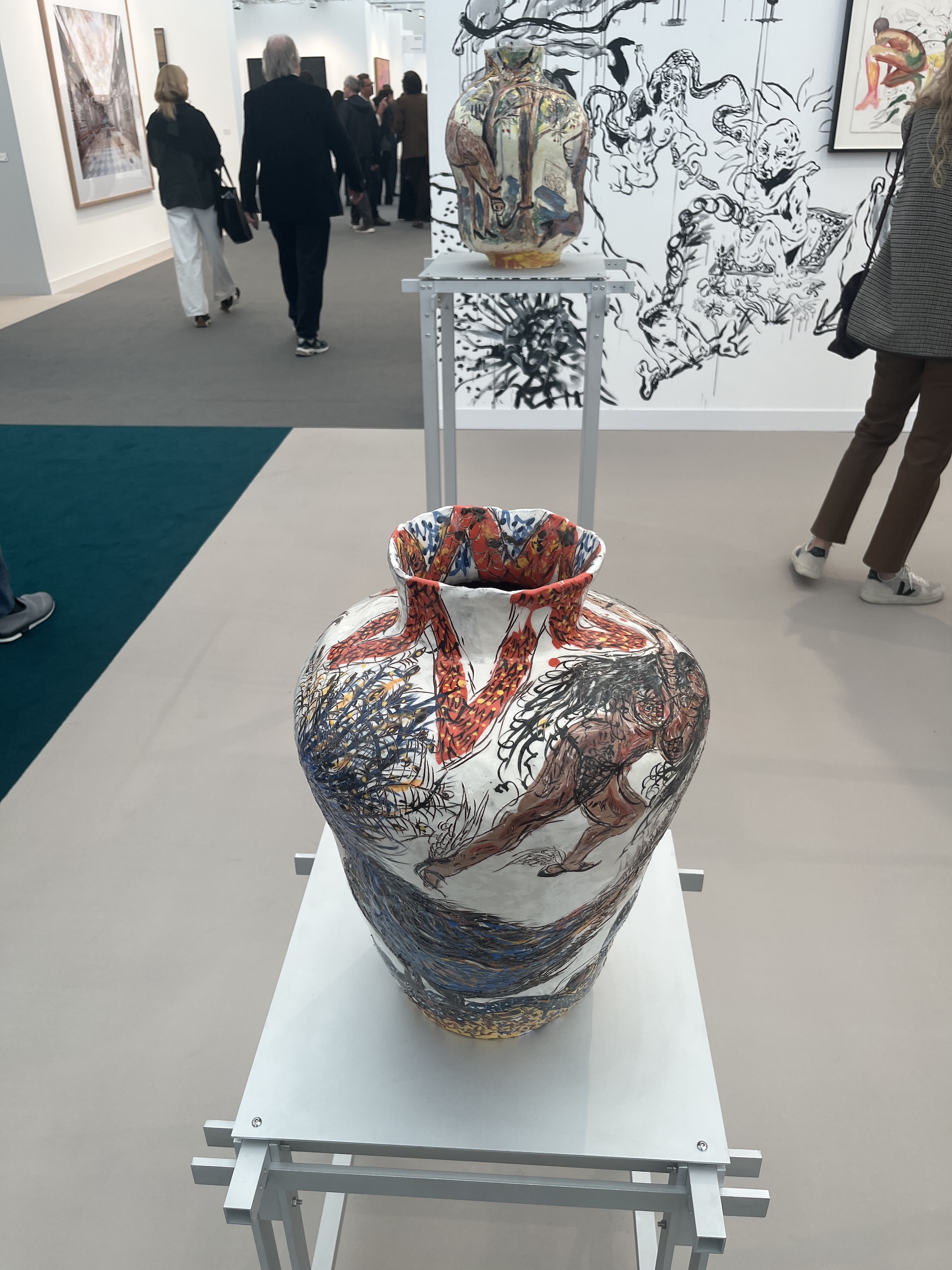
The ceramics sit naturally within that world, becoming vessels in both the literal and metaphorical sense. There is politics here — particularly around identity, intimacy and marginalisation — but what struck me first was the freedom of it all. Bodies merge, identities move and everything appears capable of becoming something else.
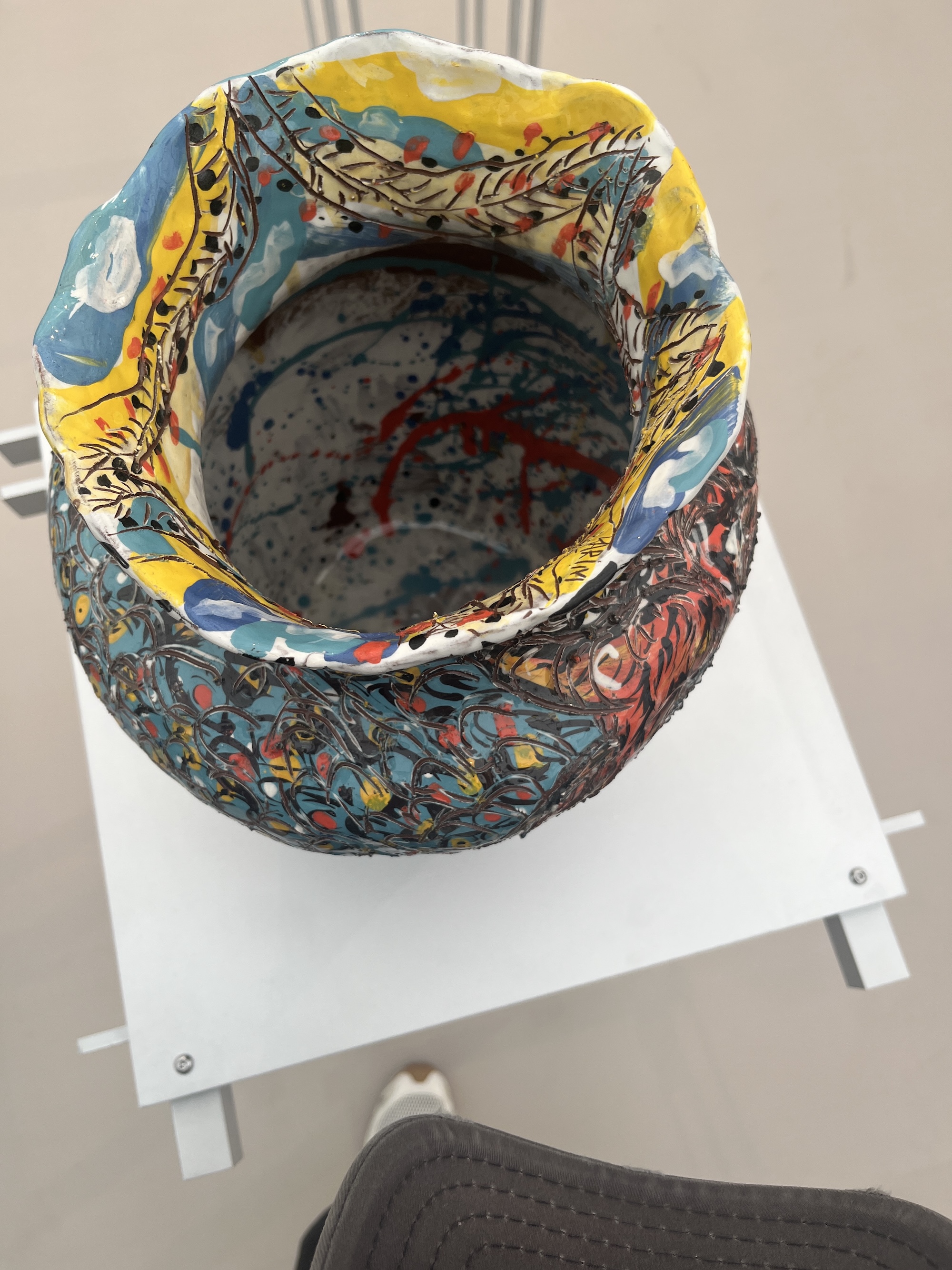
Wonderful, flowing desire. Yeah. (Ohhh, also love the plinths also made by the artist)
Payne Zhu, presented by SPURS GALLERY Beijing, Stand S4
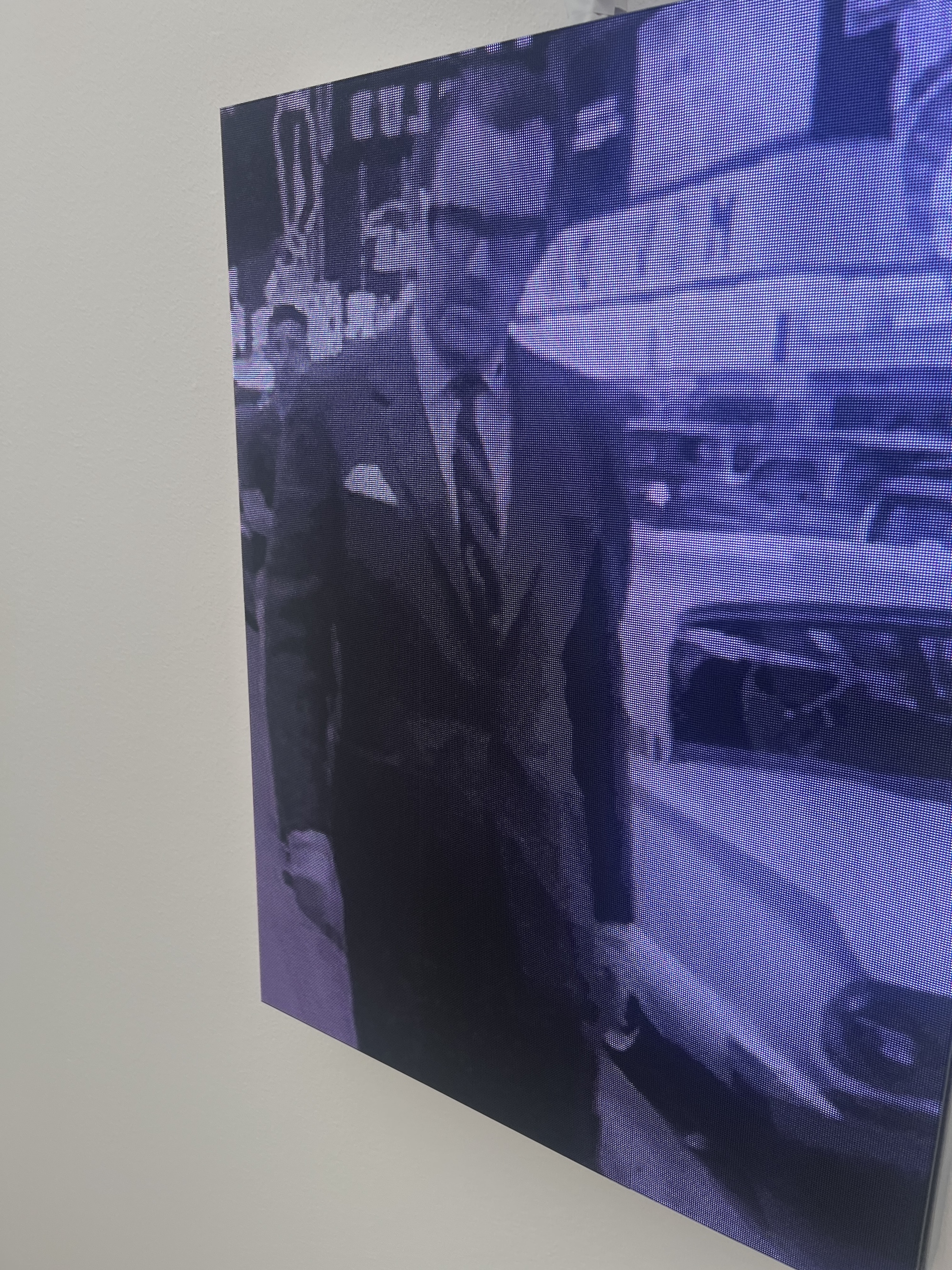
.I loved this — and then I spotted Alan Whicker.
Payne Zhu has edited together around 3,000 videos for a huge moving-image installation that mixes found footage with his own animation, alongside beautiful paintings made on algae leather with oils distilled from squid, fish, crab and prawn.
His practice begins around Zhènzé and its relationship with rivers, tides, language and trade before moving outward towards the ocean. More recently, Zhu has been looking at marine ecology through the perspective of vertically migrating whales, imagining the ocean almost as the planet’s digestive system.
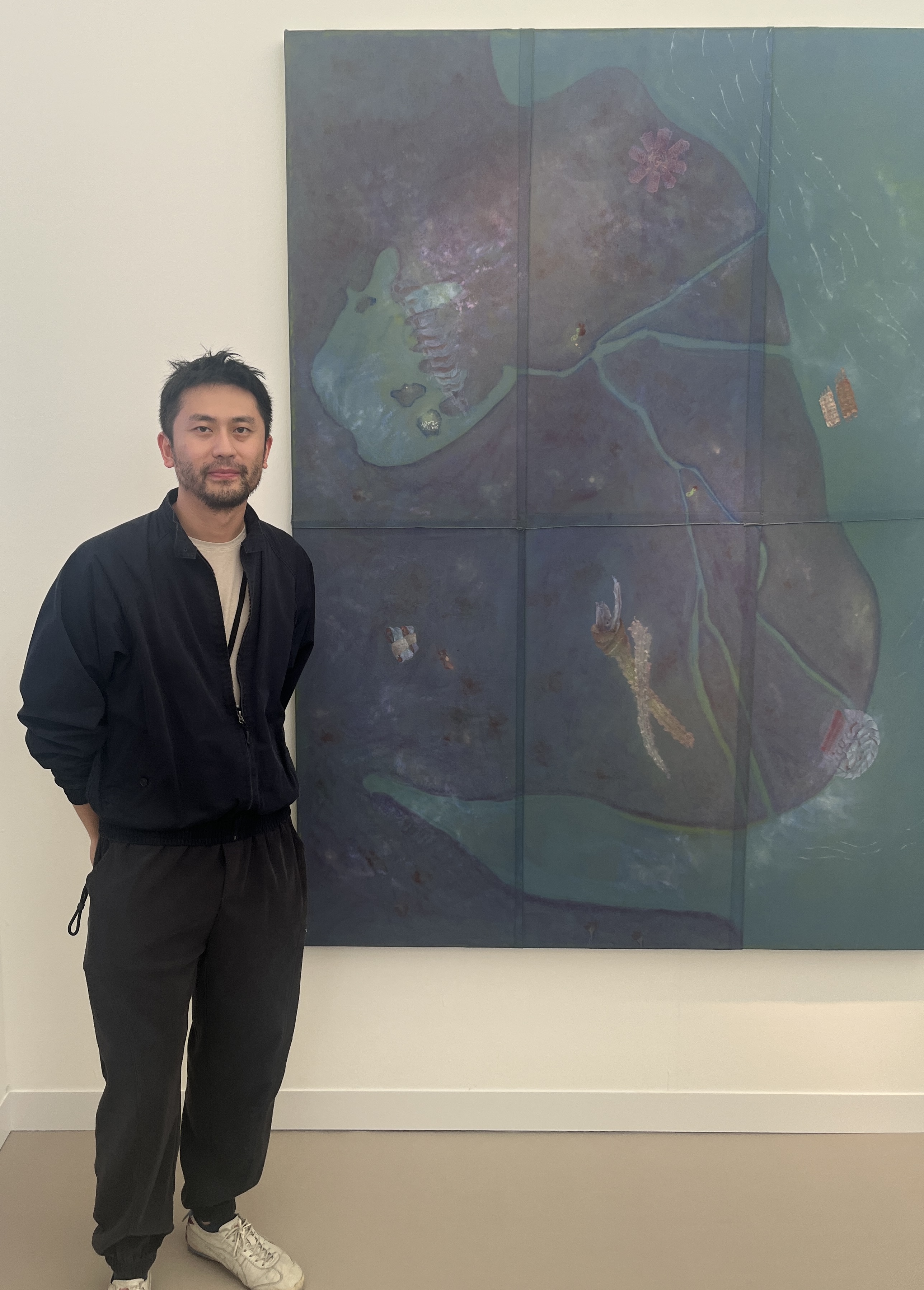
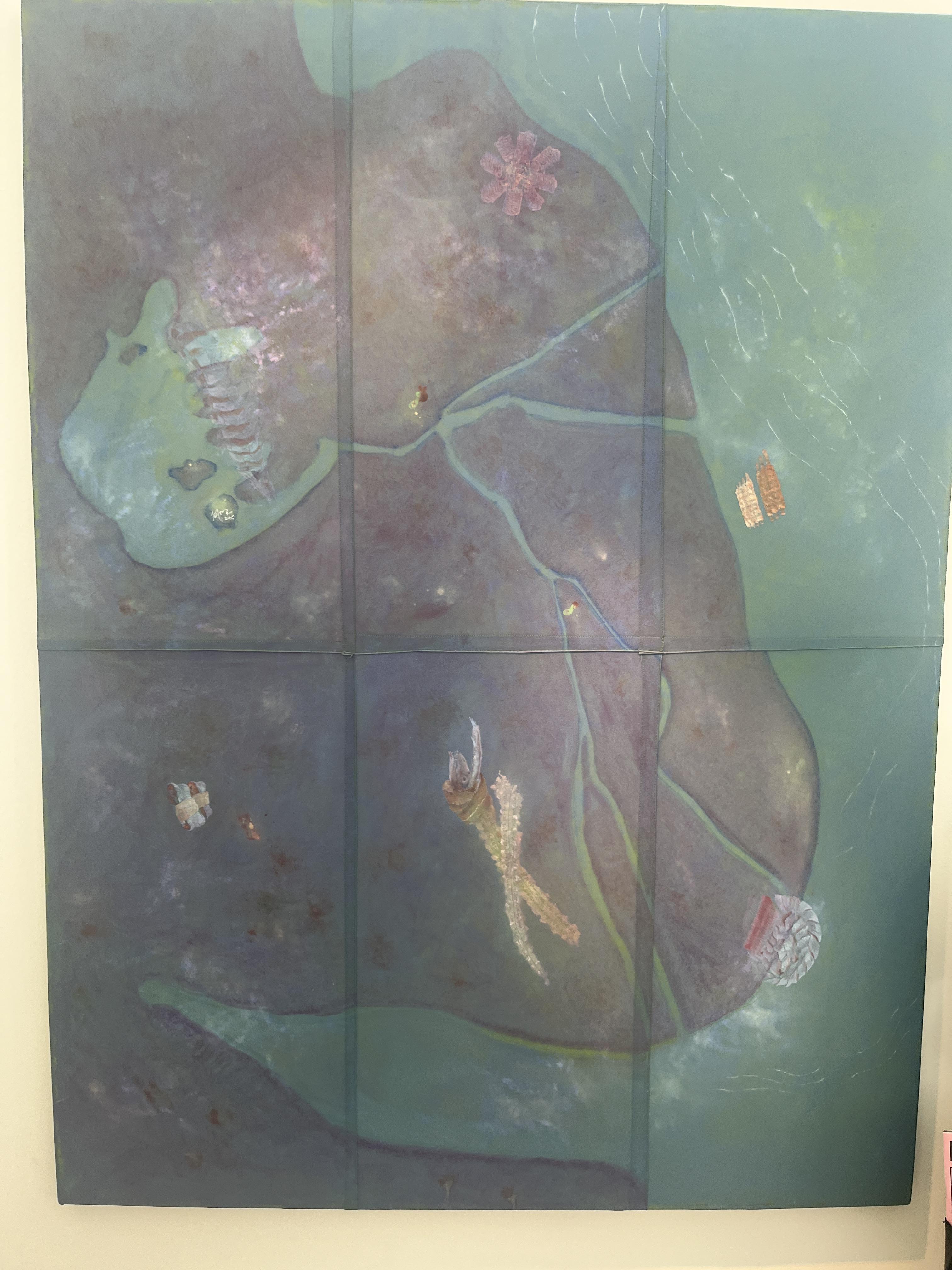
That strange collision of natural systems, technology, economics, media and human behaviour is what makes the presentation so compelling. There is an enormous amount going on, but it never feels like information for information’s sake. Instead, everything seems caught in the same current — history, finance, ecology, television, technology and memory all washing into one another.
Ilana Savdie, presented by White Cube London, Stand D21
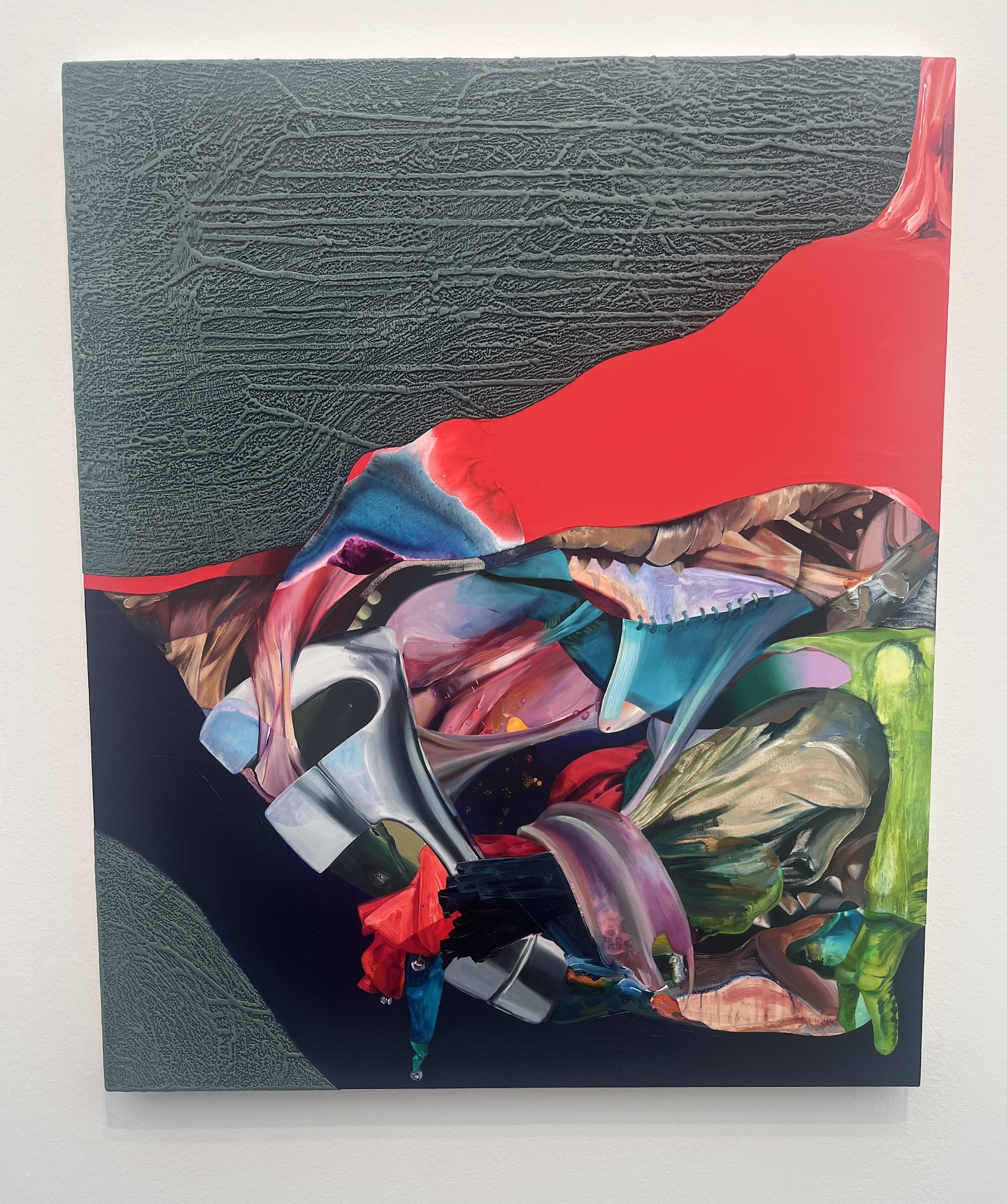
Beeswax.
That was what got me. Ilana Savdie paints on beeswax, and somehow I felt the material before I properly understood what I was looking at.
White Cube has built its Frieze presentation around Savdie’s new paintings and works on paper, placing them in dialogue with artists including Leonor Fini, Salvador Dalí, Hans Bellmer and Louise Bourgeois.
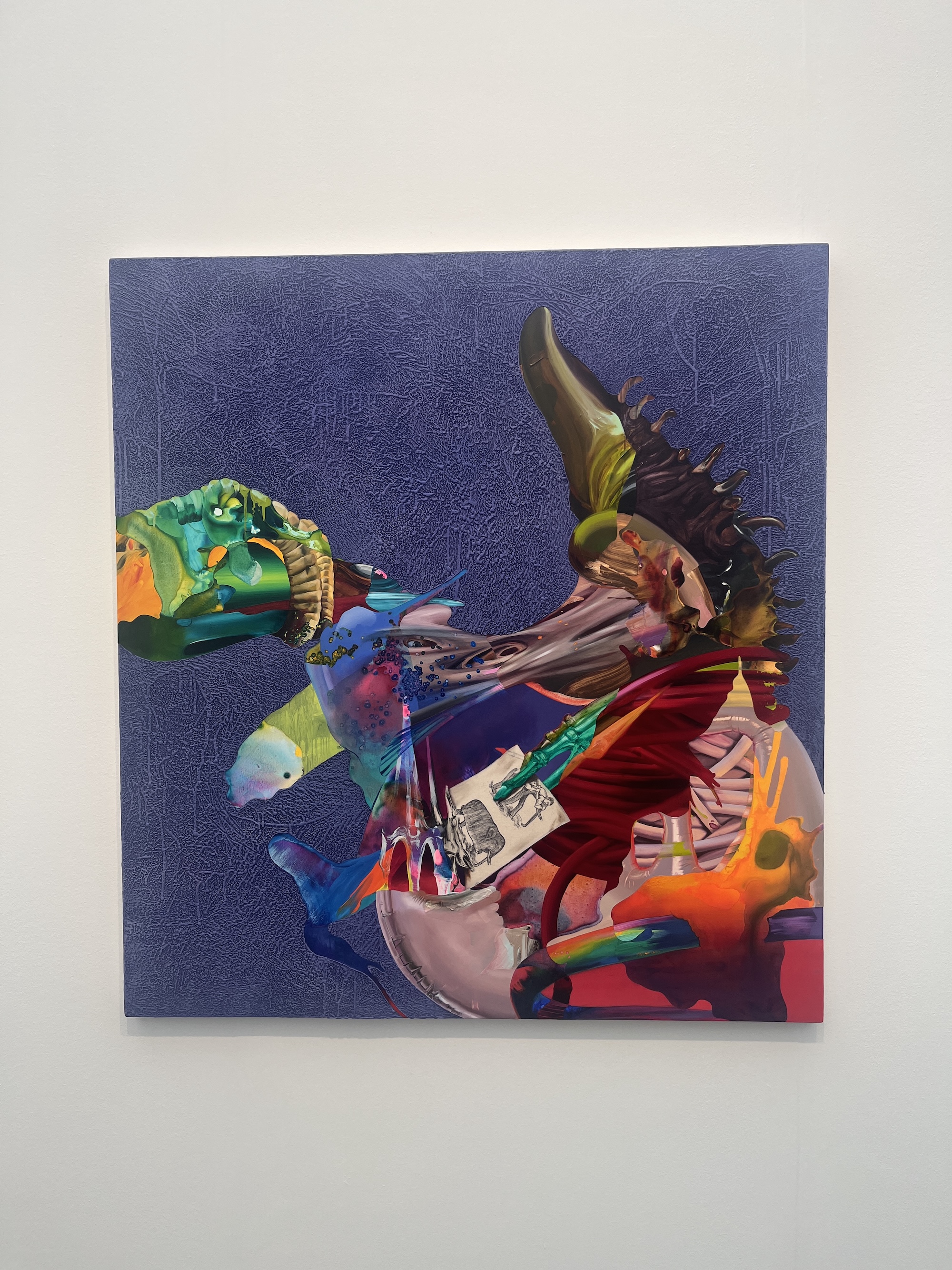
Savdie’s paintings investigate the body as spectacle — from carnival and costume to anatomy and medical examination. Bodies leak, merge, mutate and refuse to stay politely within their boundaries. Her native Colombia’s traditions of carnaval also enter the work as places where disguise can become protest and excess can disrupt order.
But before all that comes the physical sensation of the paintings themselves. The wax gives the colour and surface a strange presence: seductive, fleshy and slightly unsettling.
Love.
Rachel Youn, presented by G Gallery Seoul & SARGENT’S DAUGHTERS New York, Stand C11
What’s not to love about mechanical moving flowers?
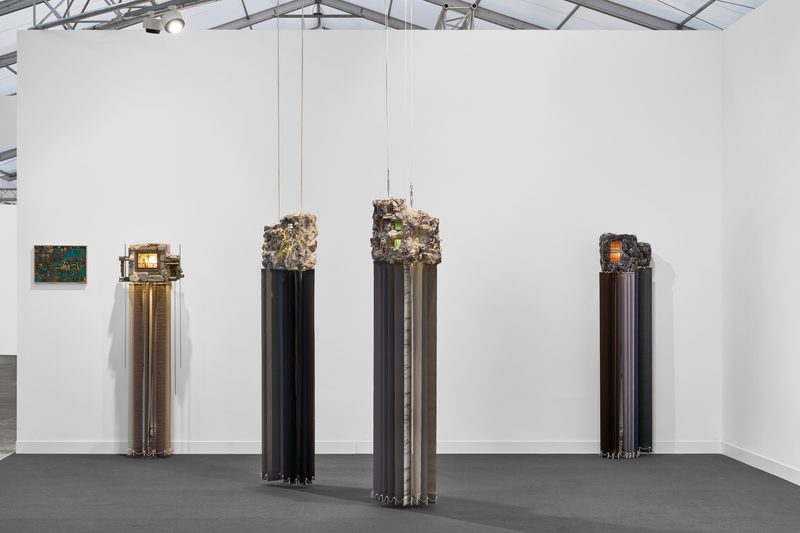
Rachel Youn’s kinetic sculptures combine artificial plants with secondhand personal massage devices, producing bizarre little botanical cyborgs that twitch, sway and move as though desperately trying to convince us that they are alive.
They appear in Cross-pollination, the joint Frieze presentation by G Gallery and Sargent’s Daughters, alongside works by Yaron Michael Hakim and Choi Yoonhee.
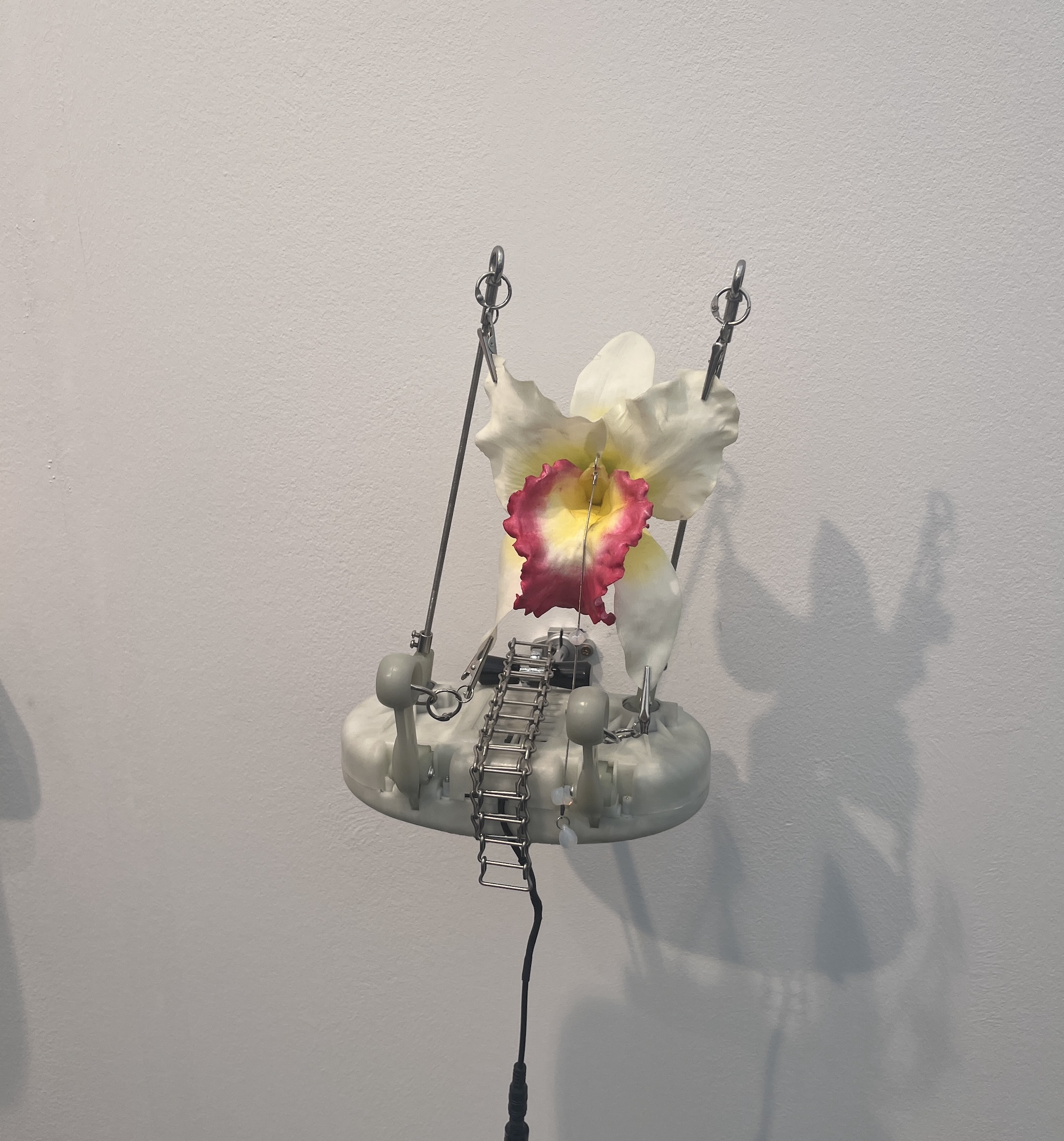
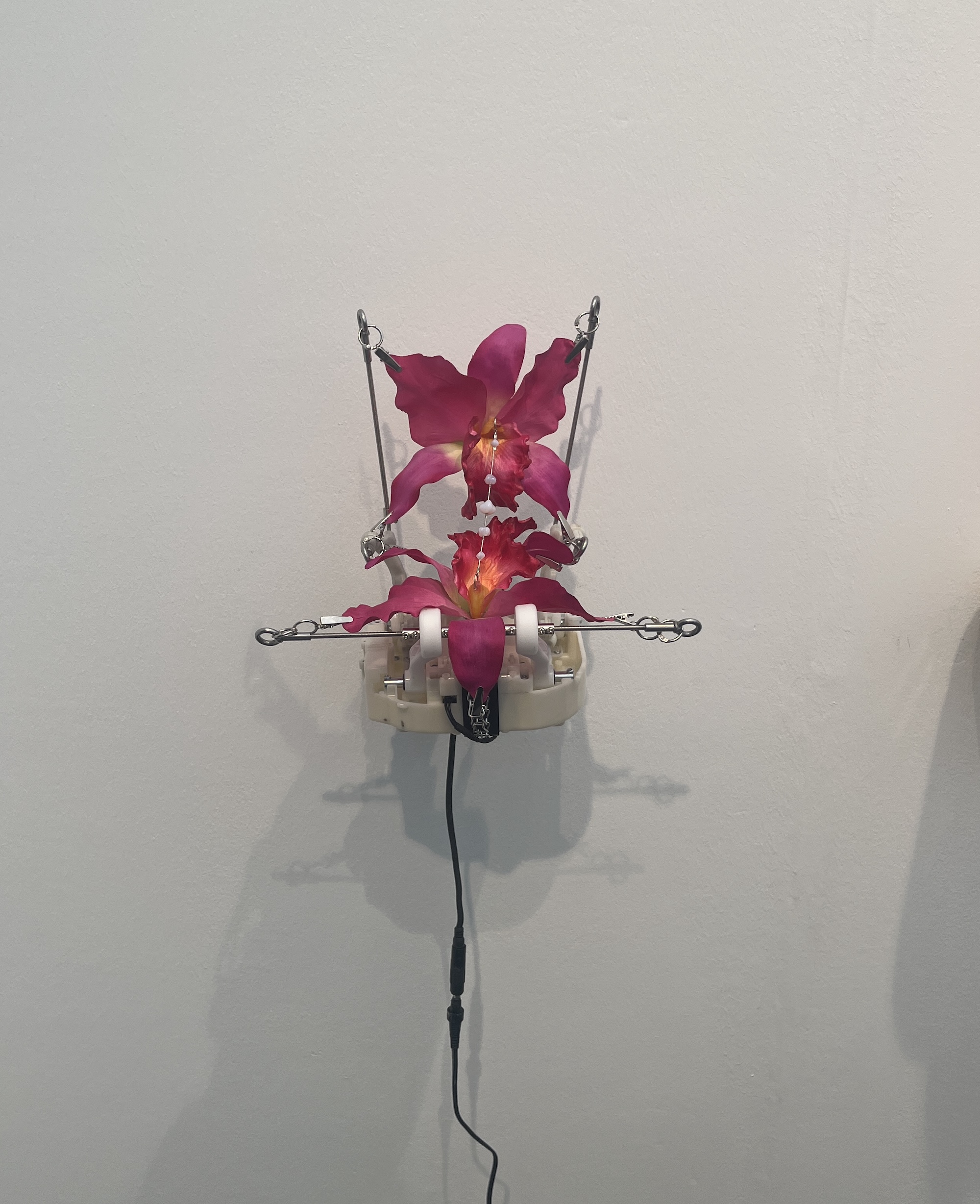
There is something immediately funny and cute about Youn’s sculptures, but also something slightly sad. These fake plants are powered by machines originally designed to care for human bodies, creating objects that simulate intimacy without ever quite achieving it.
They are replicas wanting to become real — failed domestic objects given another existence.
And yes, they are lovely.
Yuichi Hirako, presented by Gallery Baton Seoul, Stand B28
Oh my, so cute.
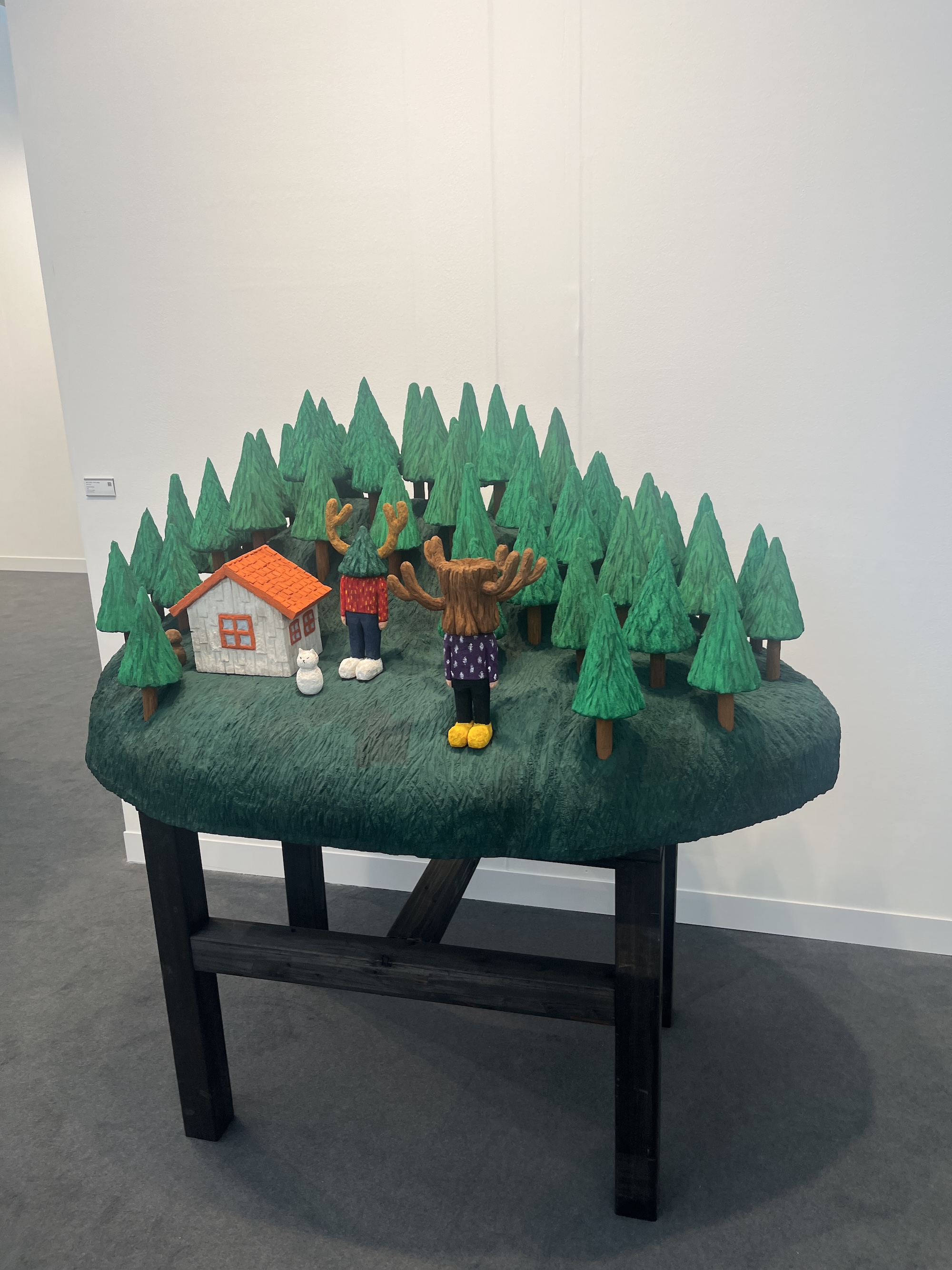
I loved Yuichi Hirako’s Wooden Wood 157, part of his long-running exploration of the relationship between humans, plants, animals and the environments we create for them.
Hirako grew up in Okayama, surrounded by nature, but it was while studying in London that he began questioning the way plants are brought into cities largely for human comfort — transplanted into artificial environments, carefully controlled and eventually discarded.
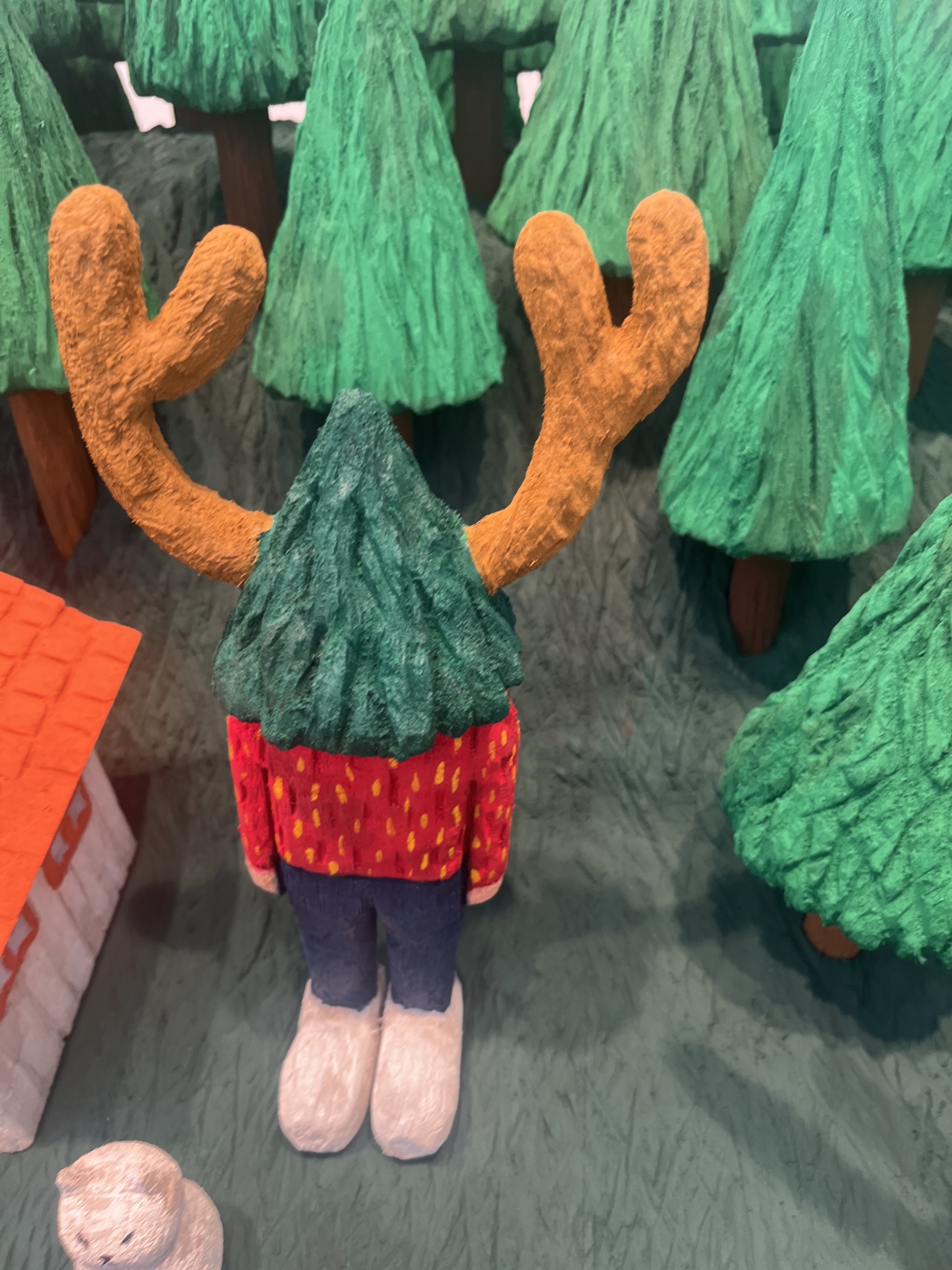
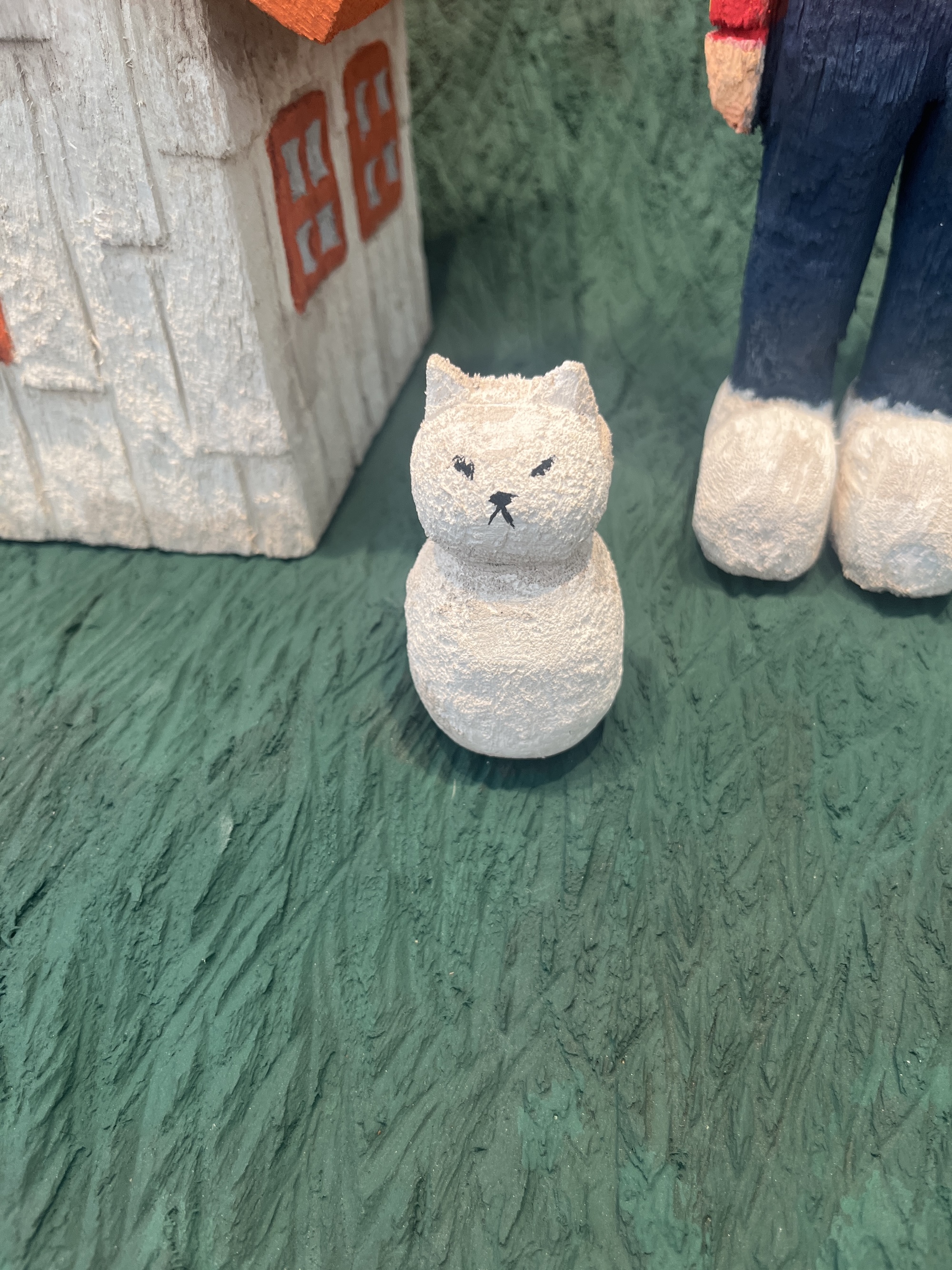
That question developed into a strange parallel world populated by a tree-headed human figure living alongside cats, dogs and other creatures. Hirako moves between painting, sculpture and installation to build this mythology, combining cuteness and fantasy with a much deeper question about our relationship with nature.
It is charming, but the charm isn’t an escape from the ecological idea. It is how he draws you into it.
Plus 3 Paintings
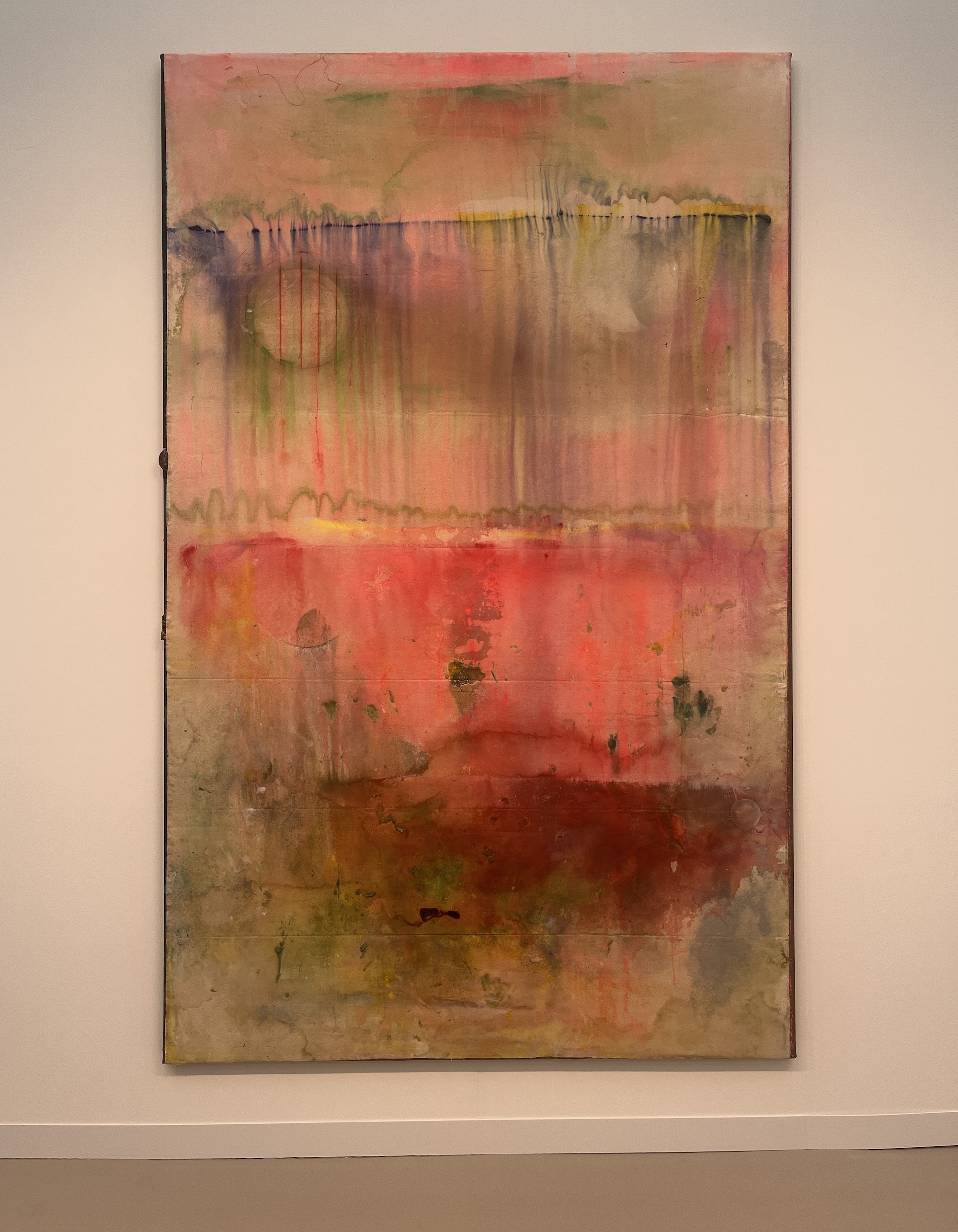
Frank Bowling — Watermelon Light, Hauser & Wirth
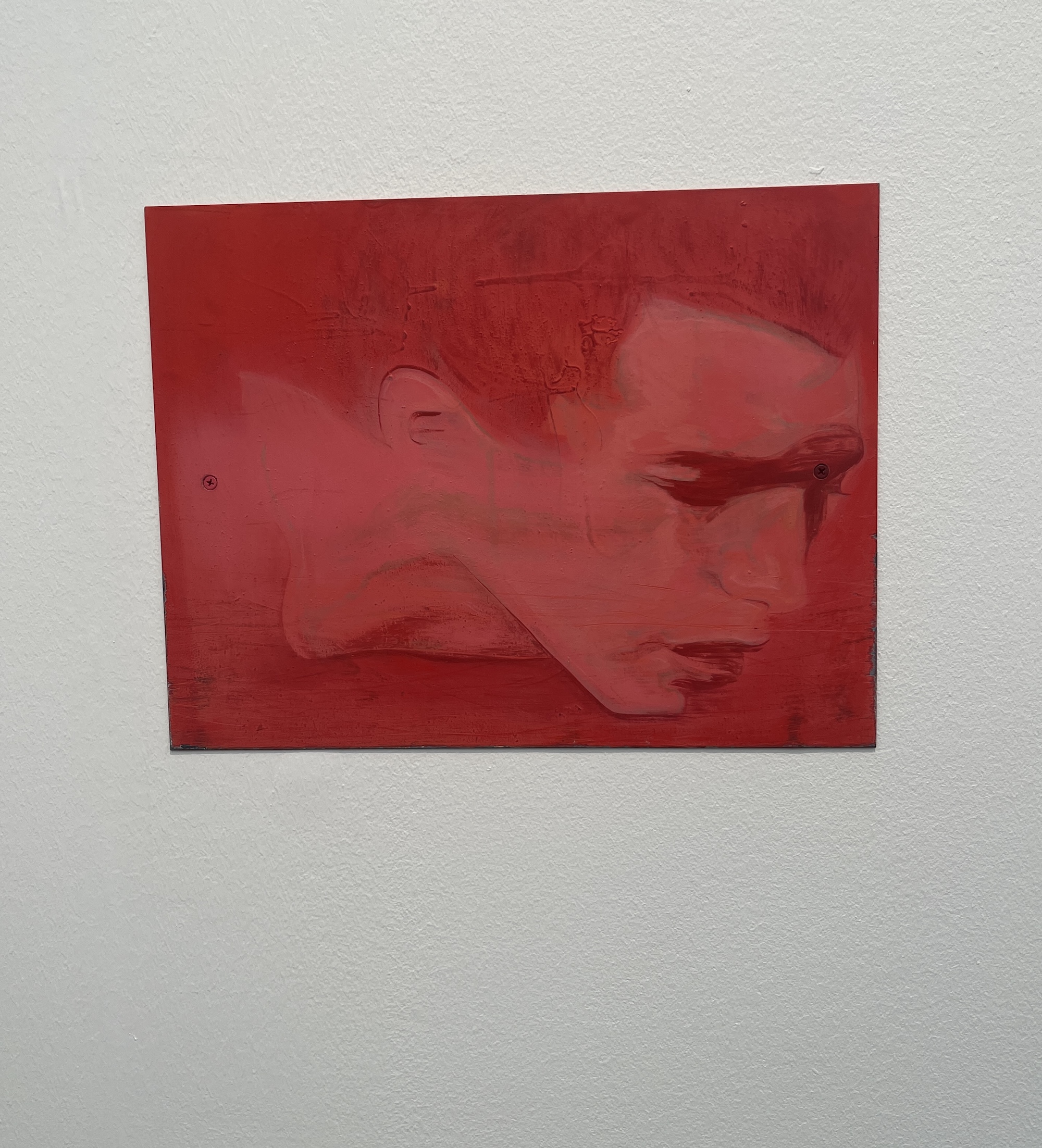
Sam Lipp — After, 2025, Soft Opening
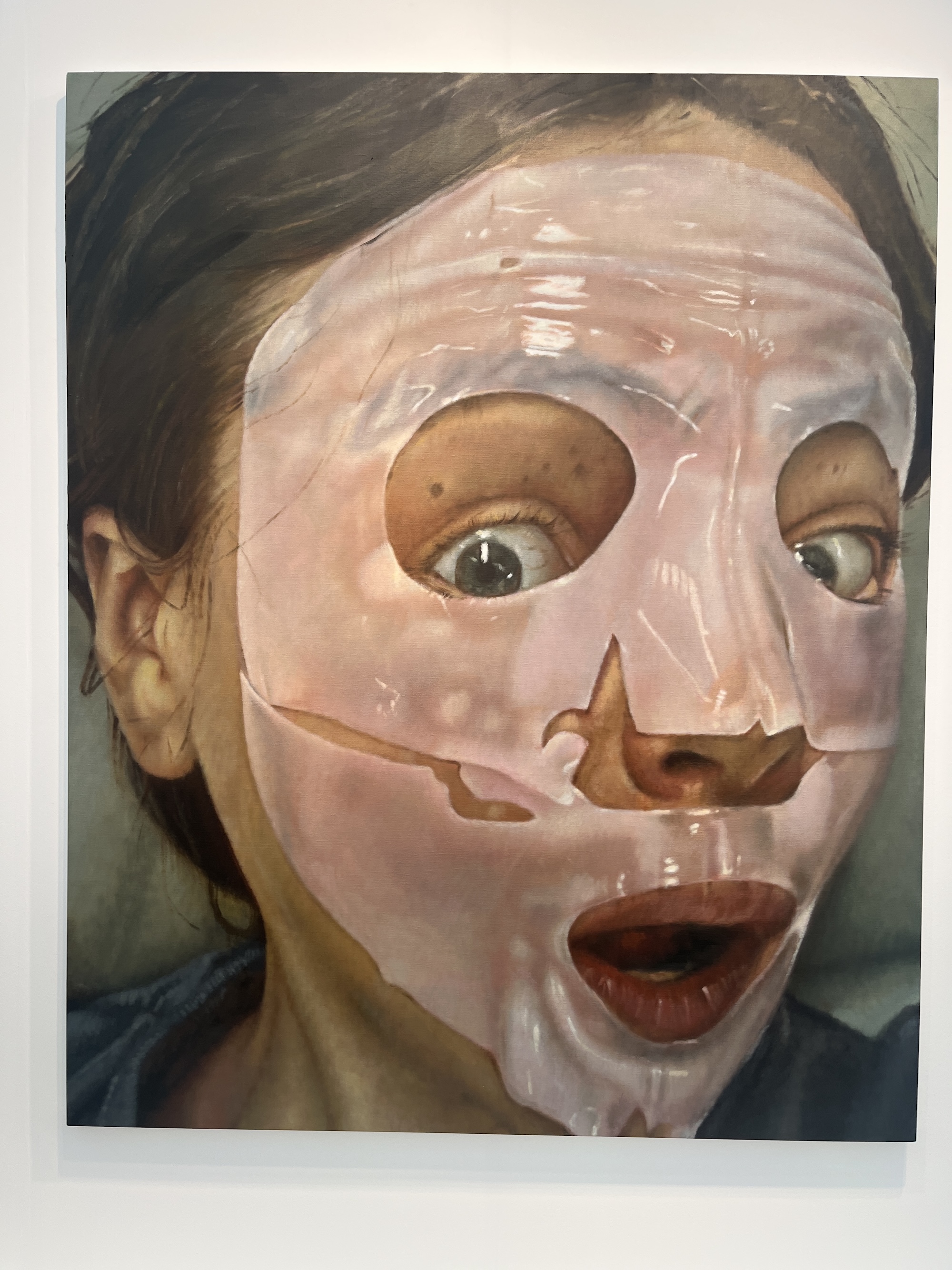
Issy Wood — Self Portrait, Carlos/Ishikawa
[TO FINISH]
& Somewhere to Eat: Sessions Arts Club
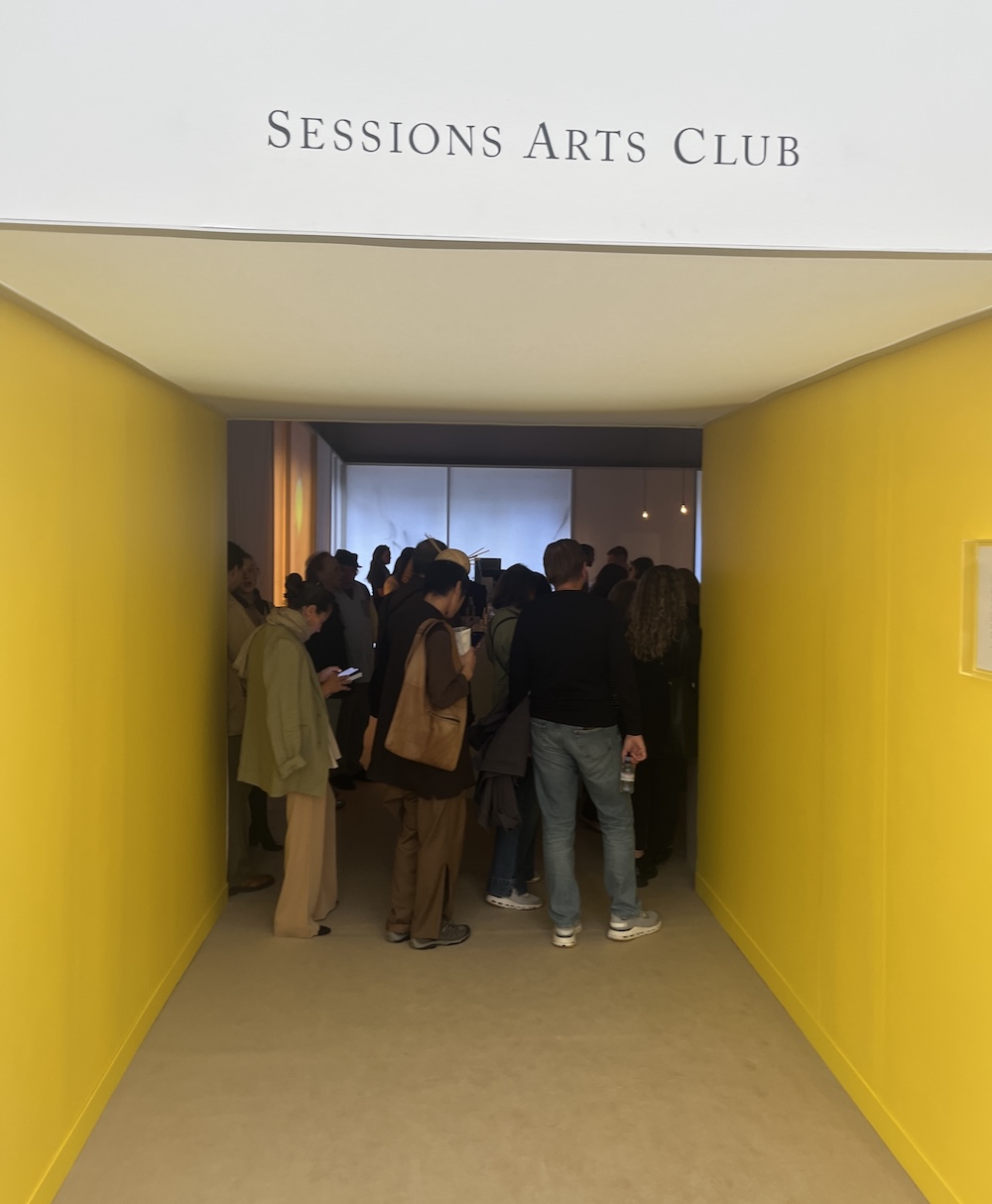
If you can get a table, Sessions Arts Club is the place to eat.
Not that getting one is particularly easy, so book ahead if you can.
Sessions returns to Frieze London for its third year, with founder and creative director Jonny Gent bringing together the restaurant and his creative practice Cabin Studio.
This year’s project is titled Pilgrimage, inspired by a series of sunset paintings Gent made in 2015 and Brian Bates’s The Way of Wyrd. Food, music, art and supplies come together inside an imaginary landscape somewhere between memory and invention.
It feels appropriate after walking around Frieze all day: getting slightly lost, following whatever catches your attention and worrying less about the destination than what you discover along the way.
Frieze London 2026, 14th–18th October 2026, The Regent’s Park, London.