Given the state of the world, you might have expected plenty of work to engage with its many problems at this year’s edition of Frieze. Perhaps there should have been more such, but the overall impression was bright, upbeat, apolitical, and maybe somewhat escapist. Going with the flow, here are nine works I liked for their wit – which is not to say there might, as ever, be some melancholy beneath the humour. The first five are from Frieze London, the others from Frieze Masters…
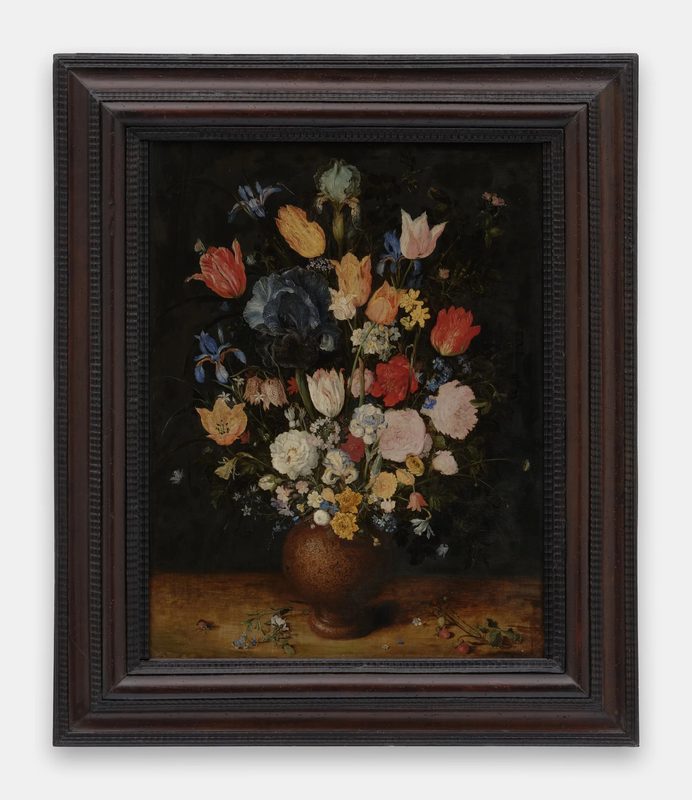
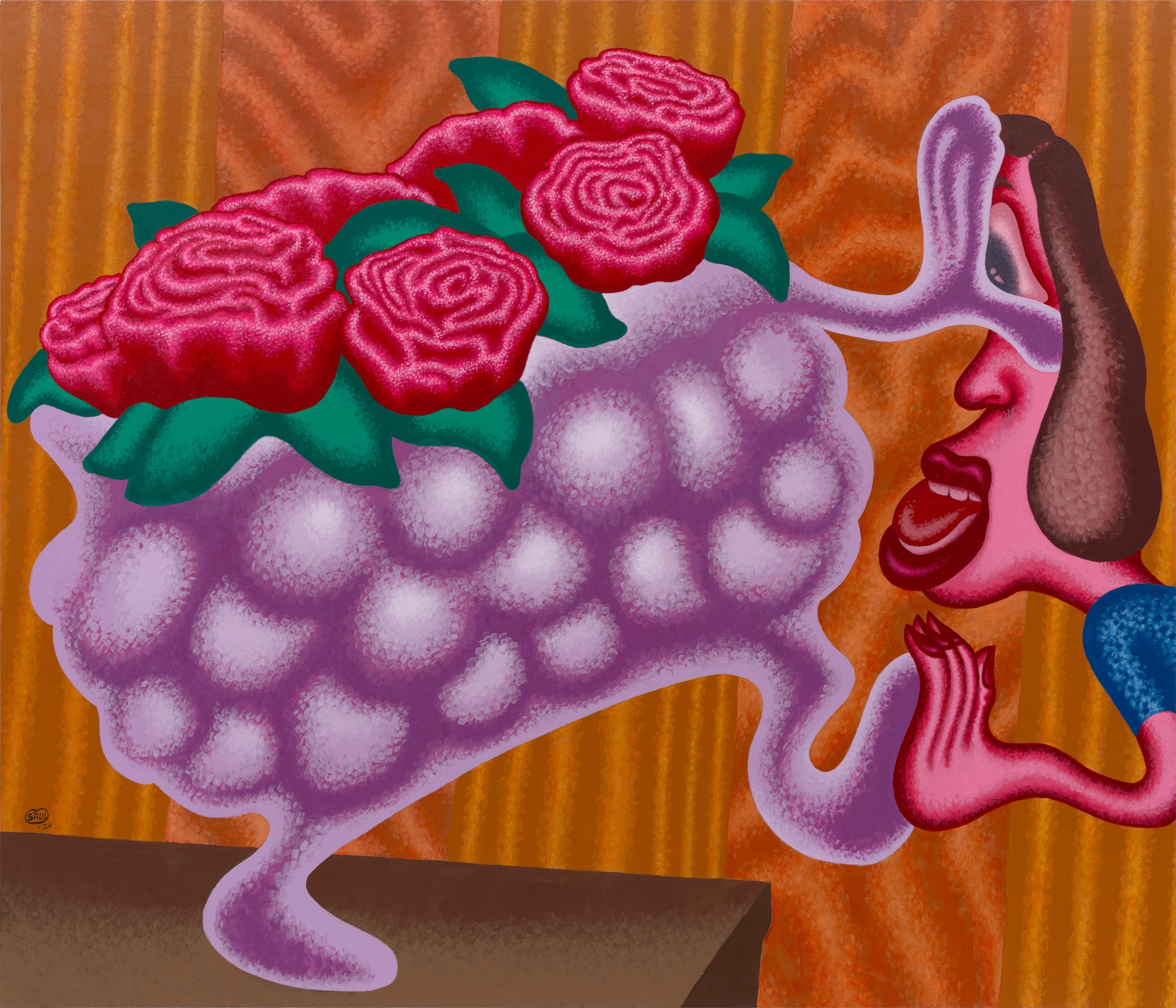
Peter Saul: ‘Argument with a Bowl of Flowers’, 2024, at VeneKlasen (top)
Peter Saul is more than capable of – indeed, best known for – turning his distinctively cartoonish language to biting political satire. Here, though, he sticks to art by satirising the still life genre: it seems that a bouquet has turned on its depicter (or perhaps, its viewer) to assert a more active role than tradition suggests. There again, Saul might be invoking the wider need for nature to fight back against man.
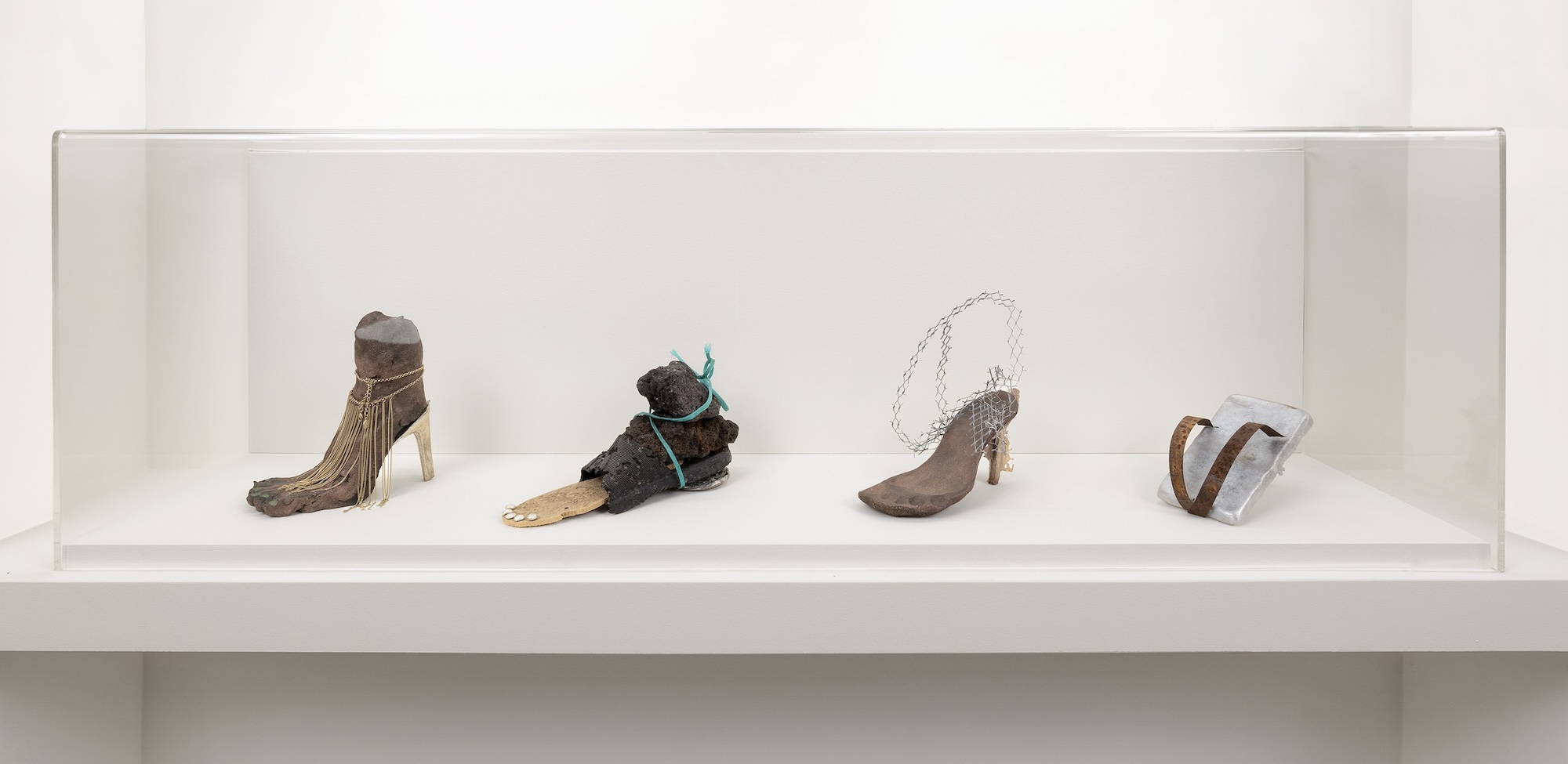
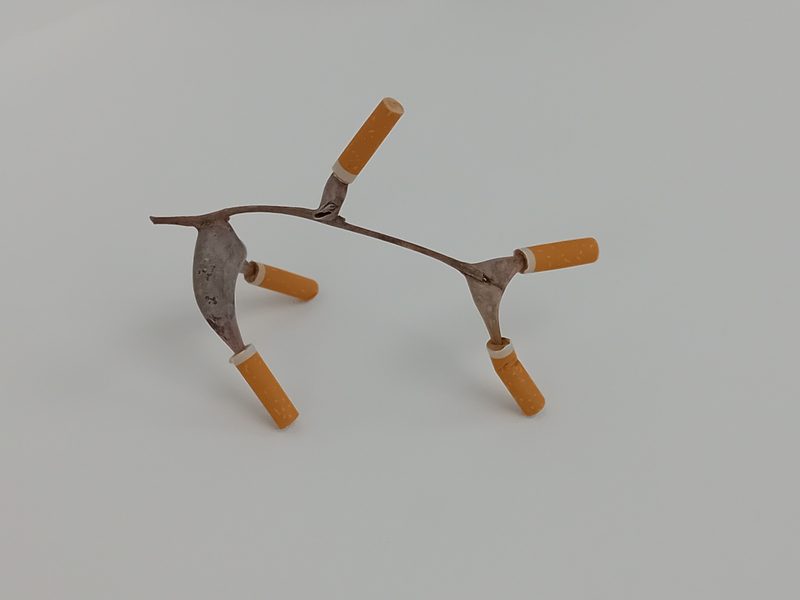
Anne Hardy: ‘Attitudes (fringe, rocks, wired, strapped)’, 2026, at Maureen Paley
Anne Hardy likes to work with what she finds in ‘the pockets of wild space’ from various cities to transform what she sees as ‘small touches of human presence, ready to be swept away’. Here she combines such finds with some cast elements and what could be ceramic soles to make a range of gloriously impractical footwear. A critique, perhaps, of how far mainstream fashion already goes in that direction.
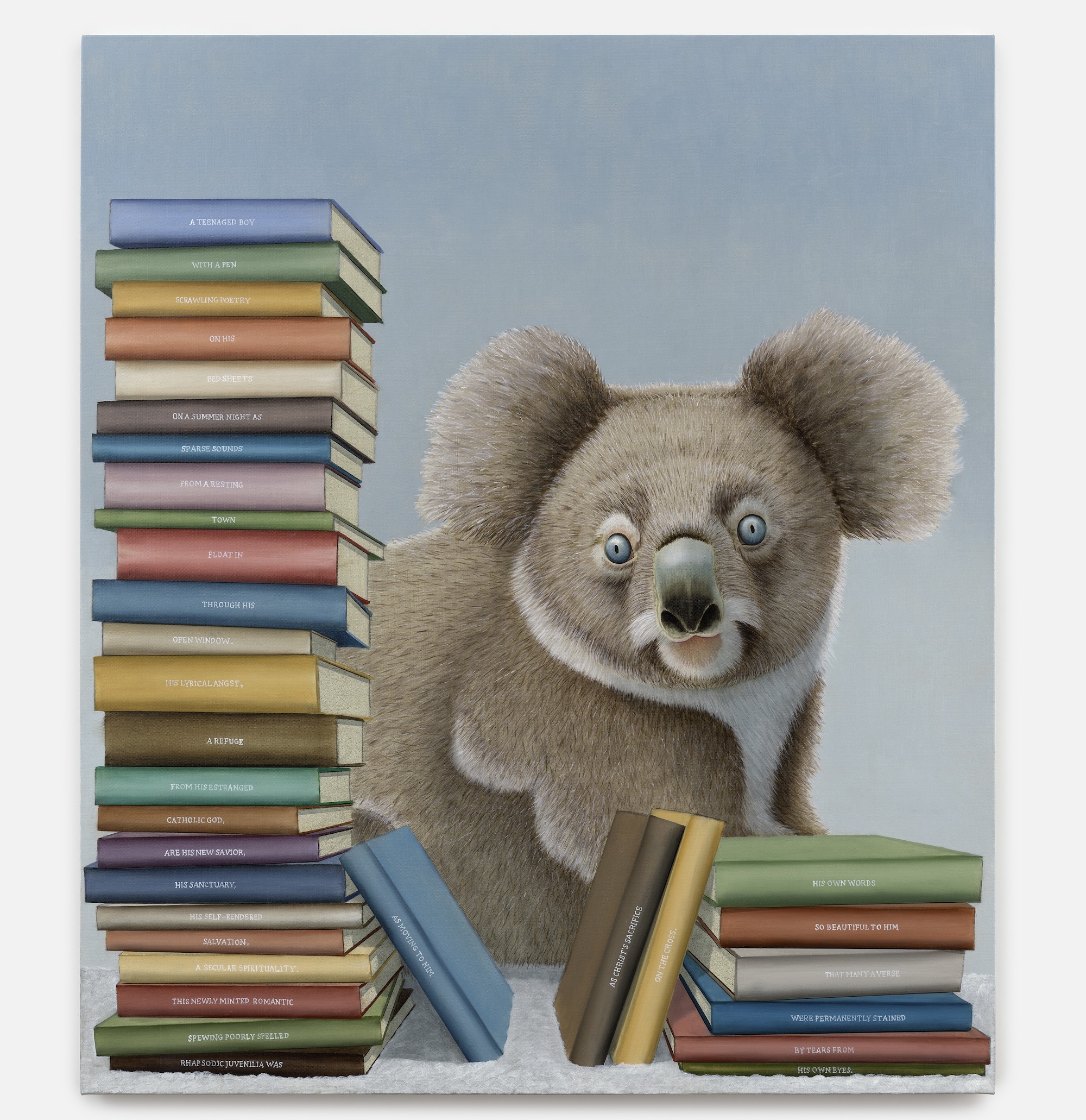
Sean Landers: ‘His Own Eyes’, 2026 at Timothy Taylor
‘What a well-read koala!’ I thought. But the titles of those imagined books spell out Landers’ humorously self-deprecating musings in a context of inter-connection – another in the series point out that ‘A single book appears to be an individual object but it belongs to a library… A single human is an individual but belongs to humanity. So, concludes this particular self-portrait as animal: ‘his own words – so beautiful to him – that many verses – were permanently stained – by tears from – his own eyes’
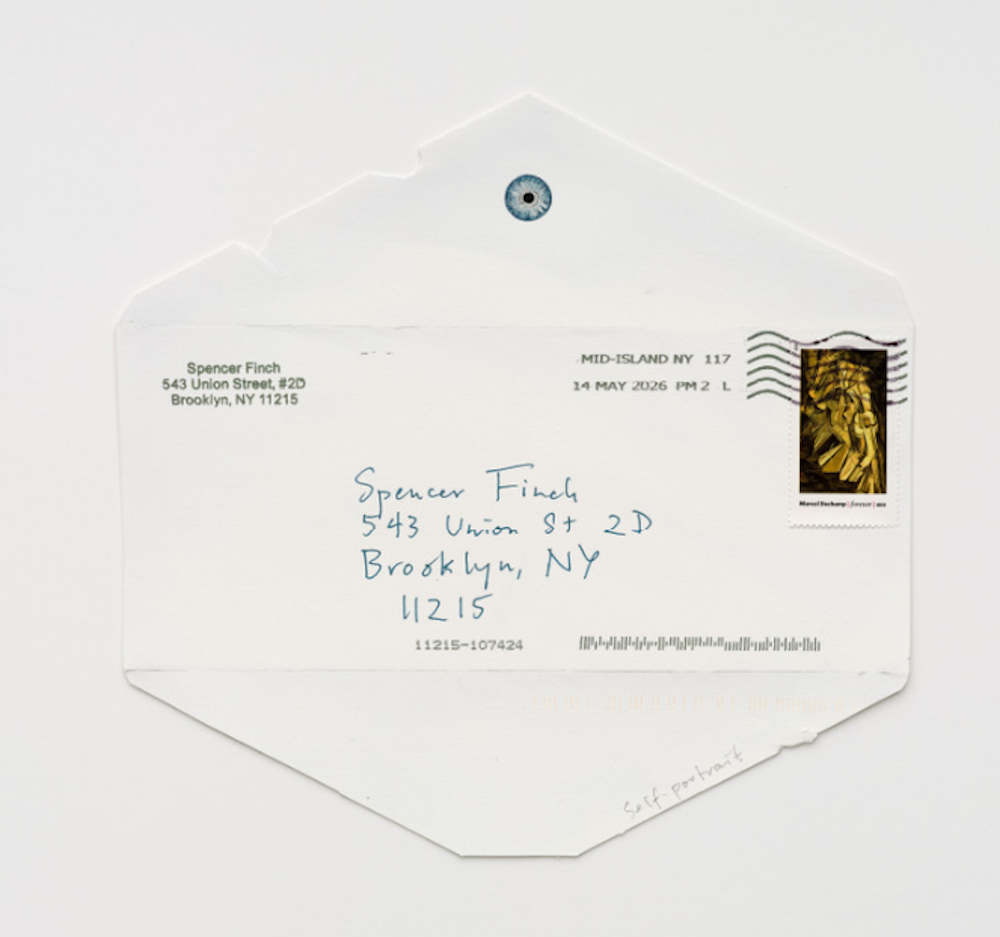
Spencer Finch: ‘Gorgeous Nothing 50, Self-Portrait’, 2026, at Galerie Nordenhake
Another unorthodox self-portrait, by means of a self-addressed envelope sent using a stamp featuring Finch’s favourite artist, Marcel Duchamp, and a minutely drawn rendition of his own eye. It’s from a series of 53 works on envelopes to match the poems Emily Dickinson wrote on discarded envelopes. They have been published as her ‘gorgeous nothings’ – fragmentary late texts which shape, spacing, unorthodox punctuation and other marks render visual as much as verbal. Finch is best known for his recreations of natural phenomena, but as those recognise the subjectivity of how we experience them, the self is always in there.
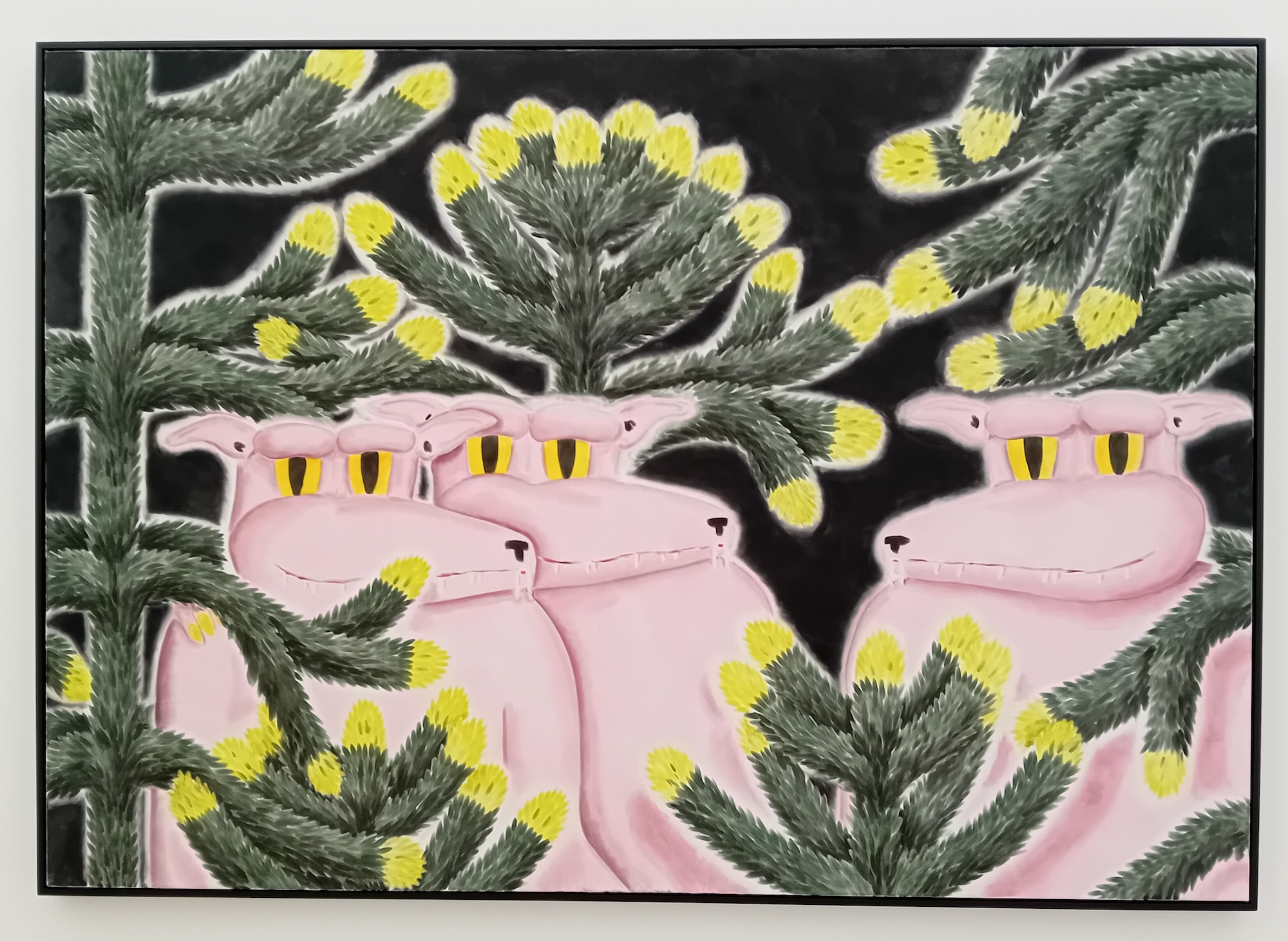
Andrew Sim: ‘Three werewolves without hair in a forest’, 2026, at The Modern Institute
The gallery explains that New York-based Scot Andrew Sim – who applies his pastel colours with a soft foam-tipped palette knife as if applying makeup – uses the archetype of the werewolf as a familiar motif to portray ‘the duality of Queer identity, existing as both an isolated and idealised cultural image and an individual, as both monster and divine’. Here the werewolves are set among monkey puzzle trees, as recollected from Sim’s childhood, and are entertainingly bald – leading me to wonder where they fit in the gay lexicon of bears, otters and twinks.
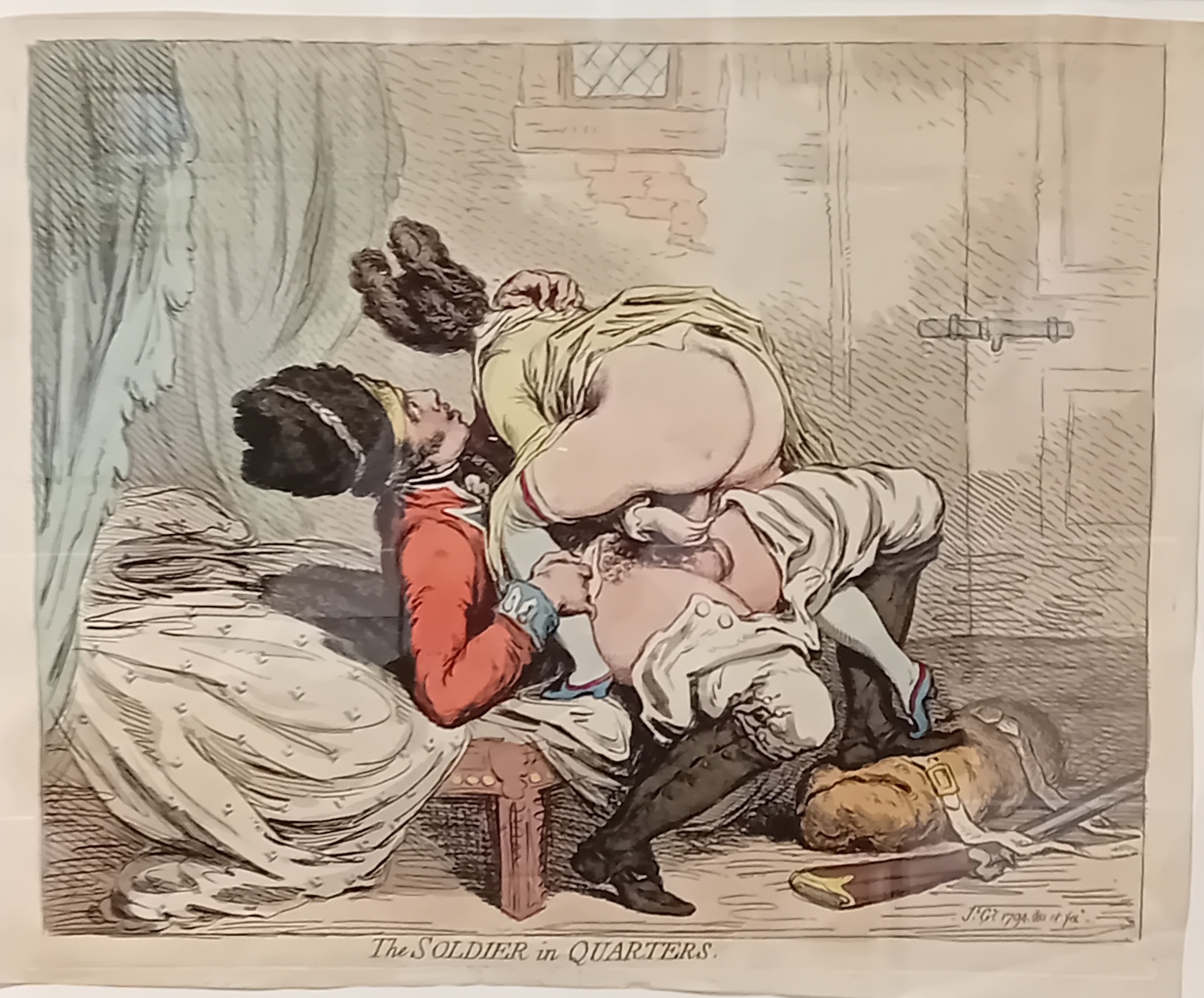
James Gillray: ‘The Soldier in Quarters’, 1794, at Daniel Crouch Rare Books
This hand-coloured etching is described as ‘the only surviving pornographic print created by James Gillray’, its explicitness leading it to be unrecorded in the standard historic catalogues of his work. Gillray made it after returning from documenting the 1792-95 military campaigns against the French in Flanders. Aside from the titular jest, there’s a nice visual pun between the woman’s hair and the bearskin cap which the British Foot Guards grenadier is – in his urgent haste – still wearing.
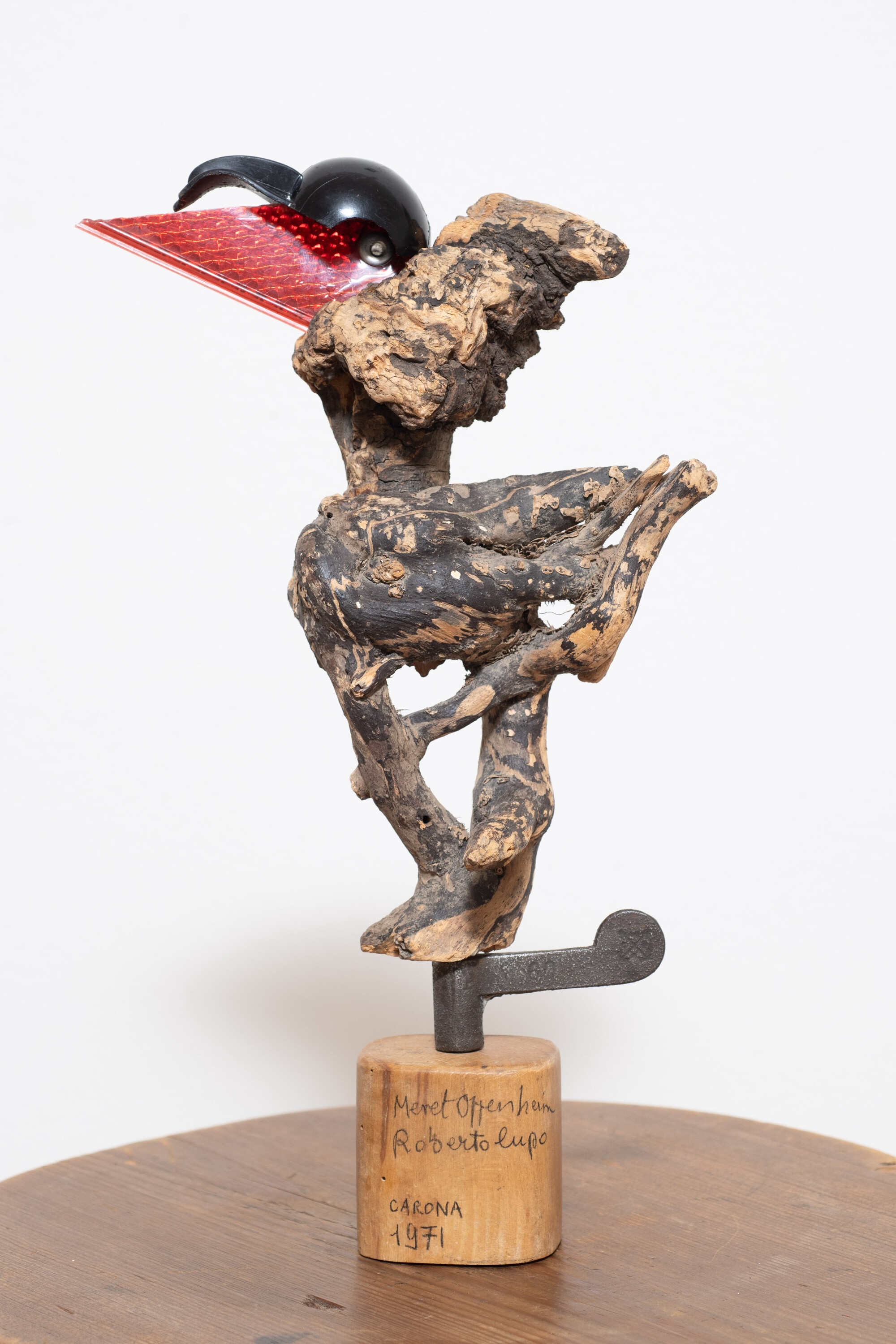
Meret Oppenheim: ‘Il Se Retourne (He Turns Around)’, 1971, at Larkin Erdmann
Though the gallery attributes it solely to Oppenheim (1913-85), this is a collaborative work made using the sculptural equivalent of the well-known surrealist game of ‘exquisite corpse’, whereby different artists draw parts of a figure without seeing the whole Here, Oppenheim and Roberto Lupo took turns to pick from a box of found objects as they worked on a box with a mechanism suggesting that the resulting wittily compiled creature might be wound up to turn around, though it cannot.
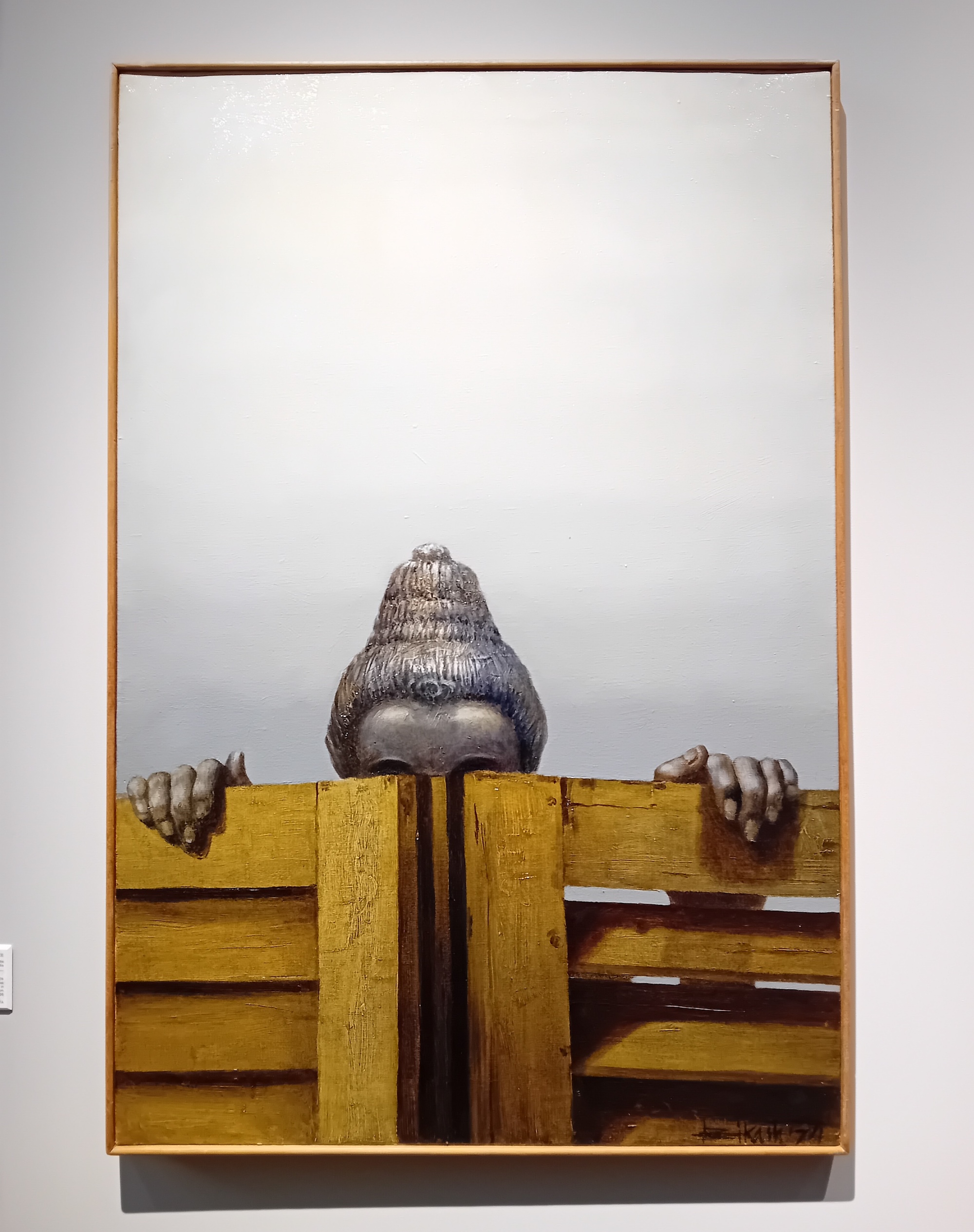
Bikash Bhattacharjee: ‘And the Door’, 1974, at Aina Gallery
The New York gallery’s presentation of the surrealistically-inclined Indian artist included a levitating figure and cat, and Bhattacharjee holding his own head. Here the apparent combination of a Buddhist statue head with human hands makes one wonder what is going on the other side of the door’s threshold. Dressing-up, deception or other-wordy incursion? It’s consistent with his well-known series, which inserts a doll or a goddess into everyday Bengal scenes to satirical effect.
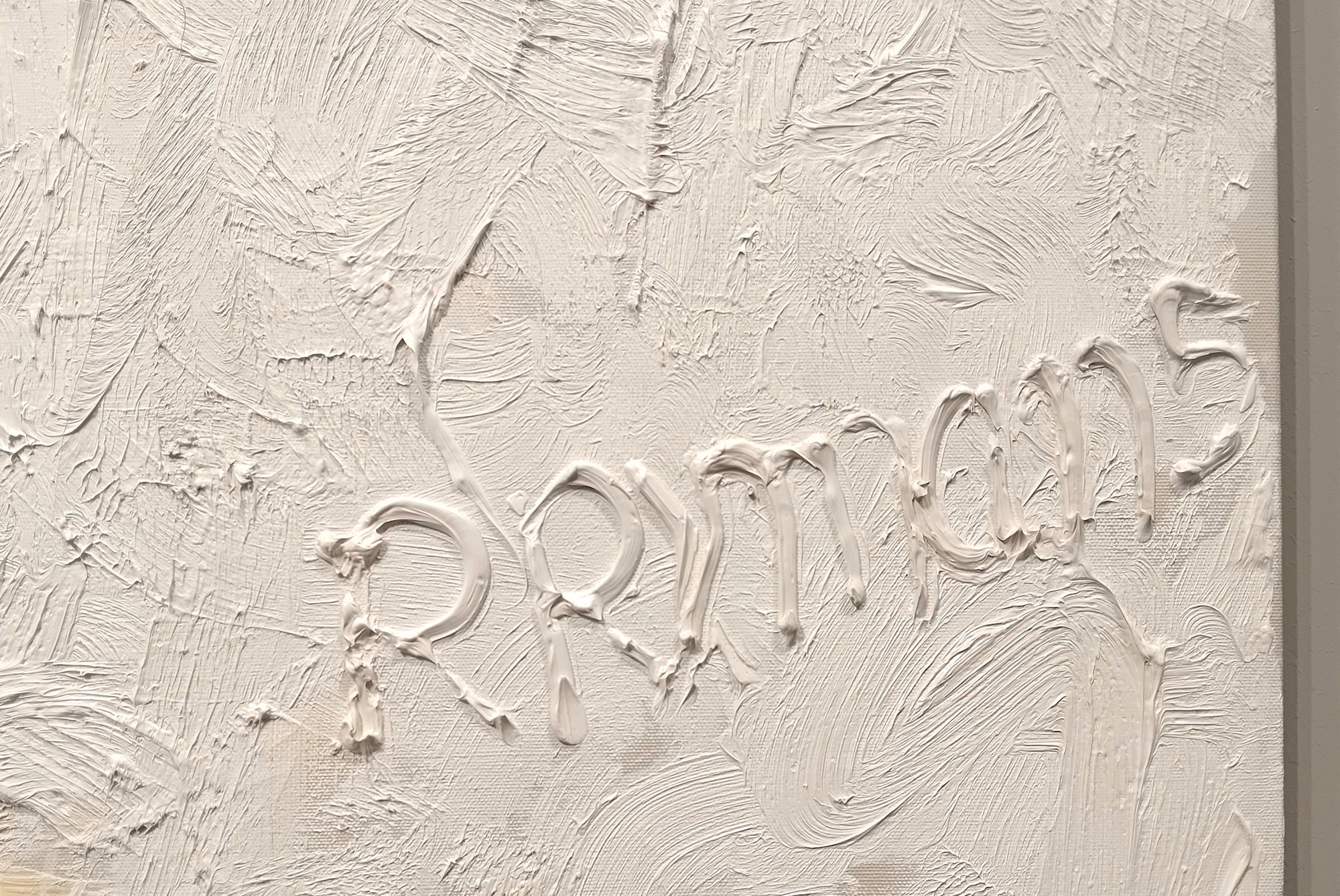
Robert Ryman: ‘Untitled’, 1959, at Ortuzar
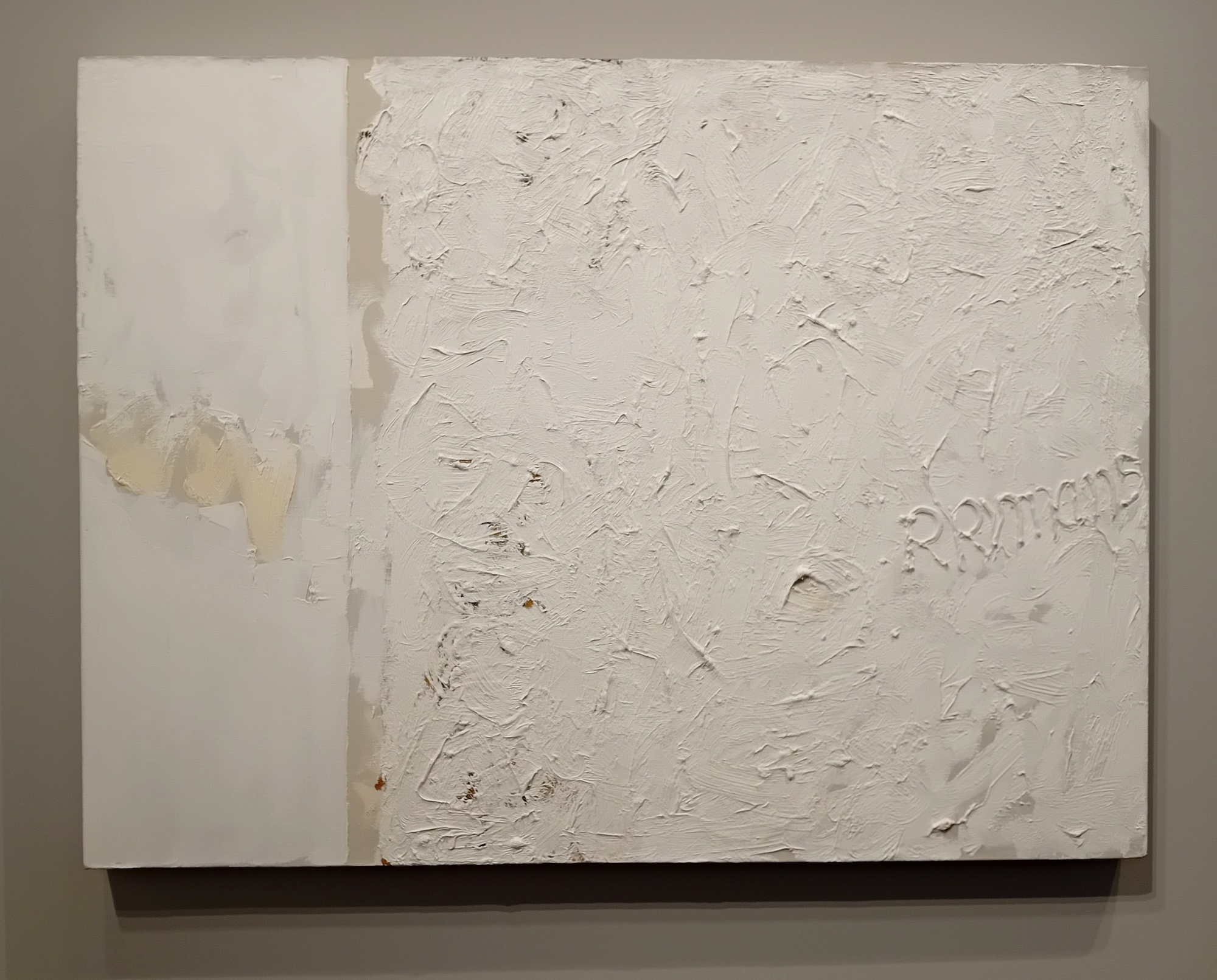
As the extensive retrospective at the Barbican reveals, there is often some sly humour in the work of Robert Ryman (1930-2019). Here there is an obvious joke: this fairly typical exploration of white paint-as-paint in the context of the materiality of its support is somewhat unusually signed white-on-white. It reads ‘RYMAN5 ’-evidently Ryman meant to spell out the date as ‘59’ but ran out – or pretended to have run out – of space.
Frieze London & Frieze Masters 2026, 14th–18th October 2026, The Regent’s Park, London.