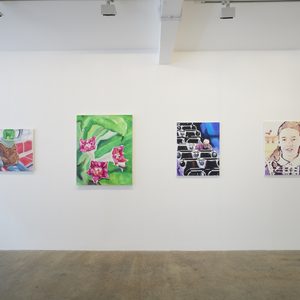
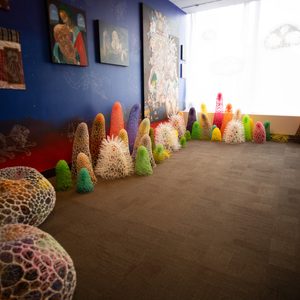
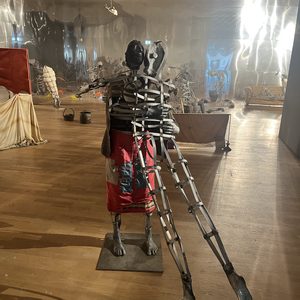
It’s always a treat to see a Magritte, and a feast to see a collection of them, but that’s just half of what Gagosian has brought together in the show This Is Not a Pipe at their Grosvenor Hill gallery. Works by 45 more recent artists ranging from legends like Ed Ruscha to contemporary rising stars such as Isabelle Alberqueque intermingle with a stunning parade of over 50 works from the Belgian surrealist master, including more familiar masterpieces than you could shake a stick at. Surely only the Magritte Museum in Brussels has more Magrittes in one place! A cornucopia this big and deep could well overwhelm, but the Gagosian’s presentation in the discreetly lit four-room space is calming and simply gorgeous.
What brings René Magritte and later artists together? Many have argued that the influence of Magritte’s is pervasive across today’s visual culture, but in many cases in this show, it’s enough that the connection artists make may be just a resonance, or merely sharing an object that Magritte made his own, regardless of whether by coincidence or in homage.
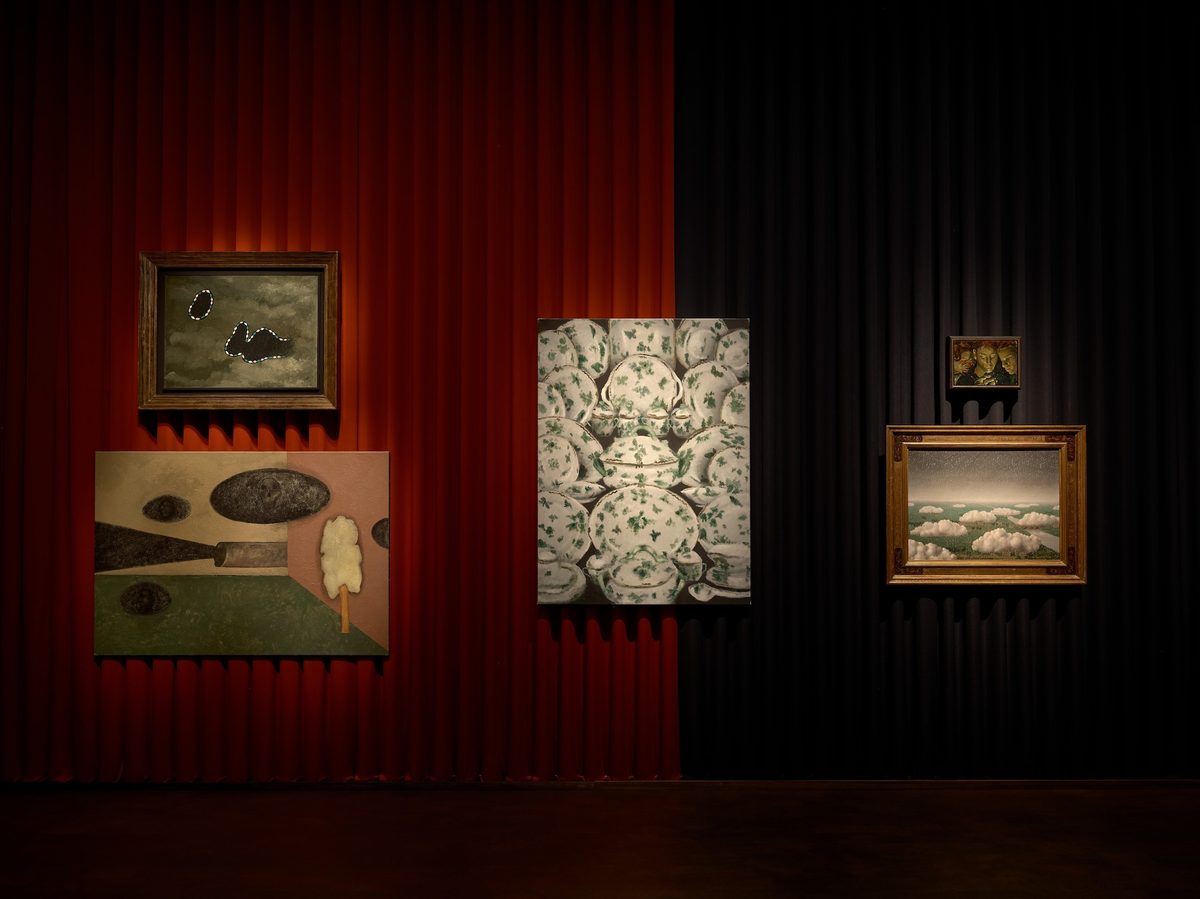
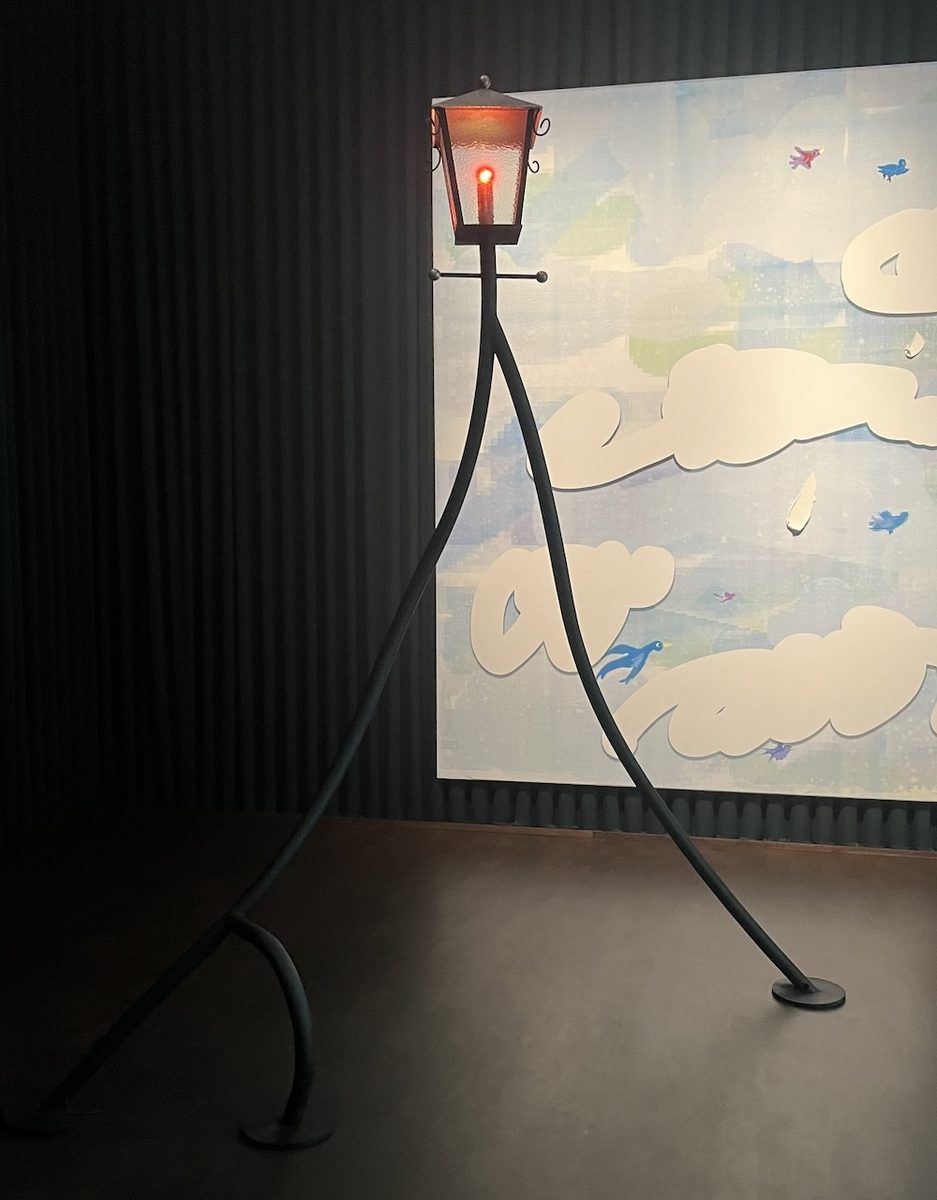
The gently shining lamp-post in Magritte’s Empire of Light, a painting series started in the 1940s which depicted a house at night under a daylight sky, is one such object. We’re instantly reminded of it in Gagosian’s reception space, which hosts no Magrittes at all, only a few contemporary works. It is dominated by Alex da Corte’s Streetlamp for Drunk (2018), a three-legged, 3m-high sculpture standing fluidly as if it was the drunk. Taking Magritte’s subversive tactic of transforming an everyday object into a mysterious trompe-l’œil, Da Corte’s gently shining lamp-post is a perfect riff on those of Magritte, which are actually absent from this show. We do, however, find a house at night under clouds in a blue sky, in his L’empire des lumières (1961) in the large, adjacent room 2.
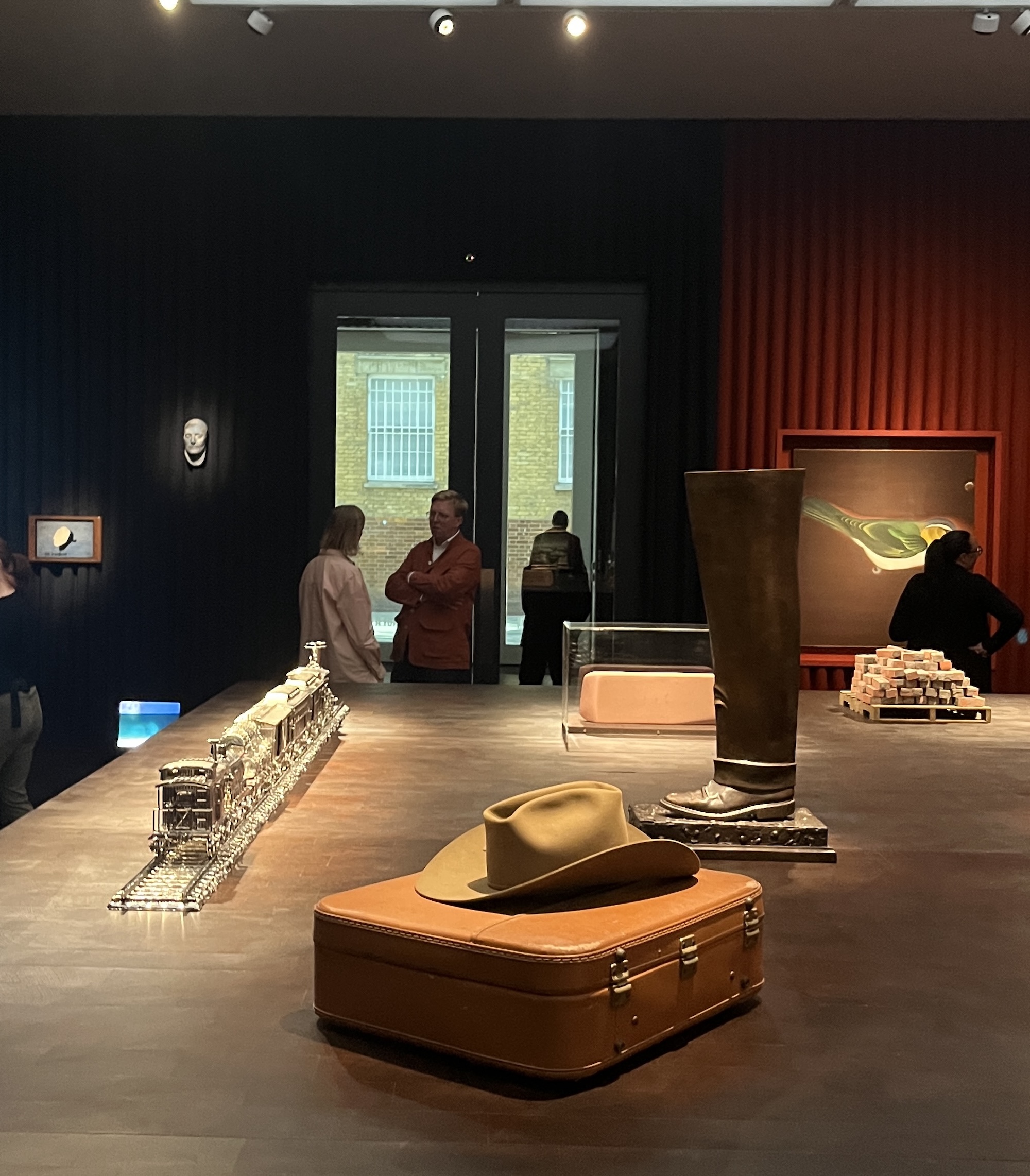
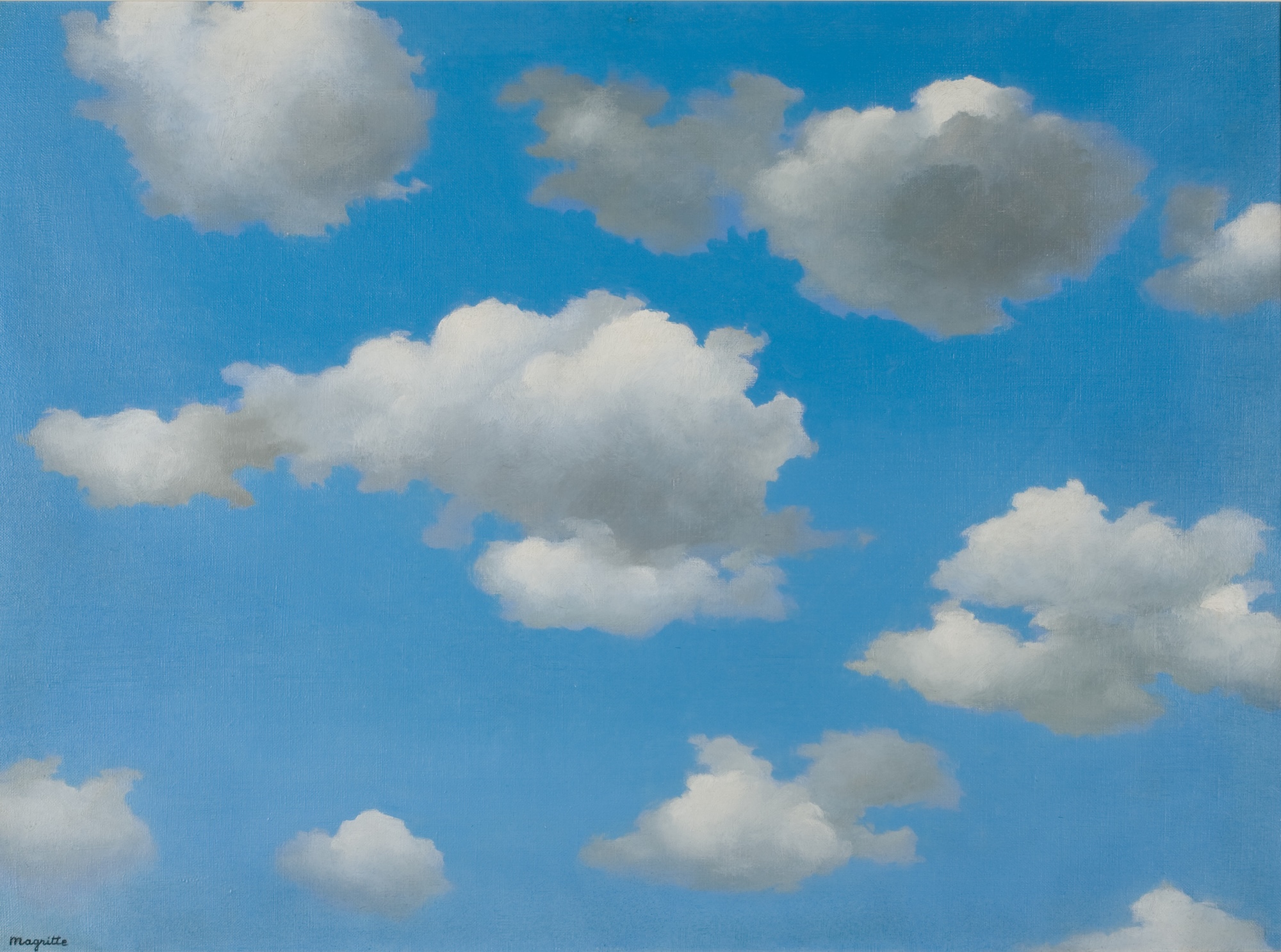
There, the relational interaction between Magritte and later artists is in full play. 15 sculptures, including two by Magritte (plus his actual hat and suitcase), are spread out on a wide, low black central plinth. Jeff Koons’ almost 3m-long stainless steel train Jim Beam – J.B. Turner Train (1986) runs most its length, and although stationary, it has the dynamism of Magritte’s locomotive erupting from a fireplace in Time Transfixed (1938) (also not in the show, but does it matter if we know it so well?) The wall-mounted works are rich with iconic Magrittes. I just had to laugh comparing his hallmark suited man, but with a huge floating balloon-like head in L’art de vivre (1967), against George Condo’s The Apple Picker (2009), who has a tiny head that’s an apple. Magritte’s recurring theme of clouds in images ungrounded by landscape are there in two paintings and his sculpture Ciel-bouteille (Sky Bottle) (c1943), and Yoko Ono echoes the subject and name in her Sky TV (1966) video. Giangiacomo Rossetti’s casually intimate domestic composition Pastiche généologique (2026) owes its place in the show because it includes a self-portrait with a pipe in his mouth.
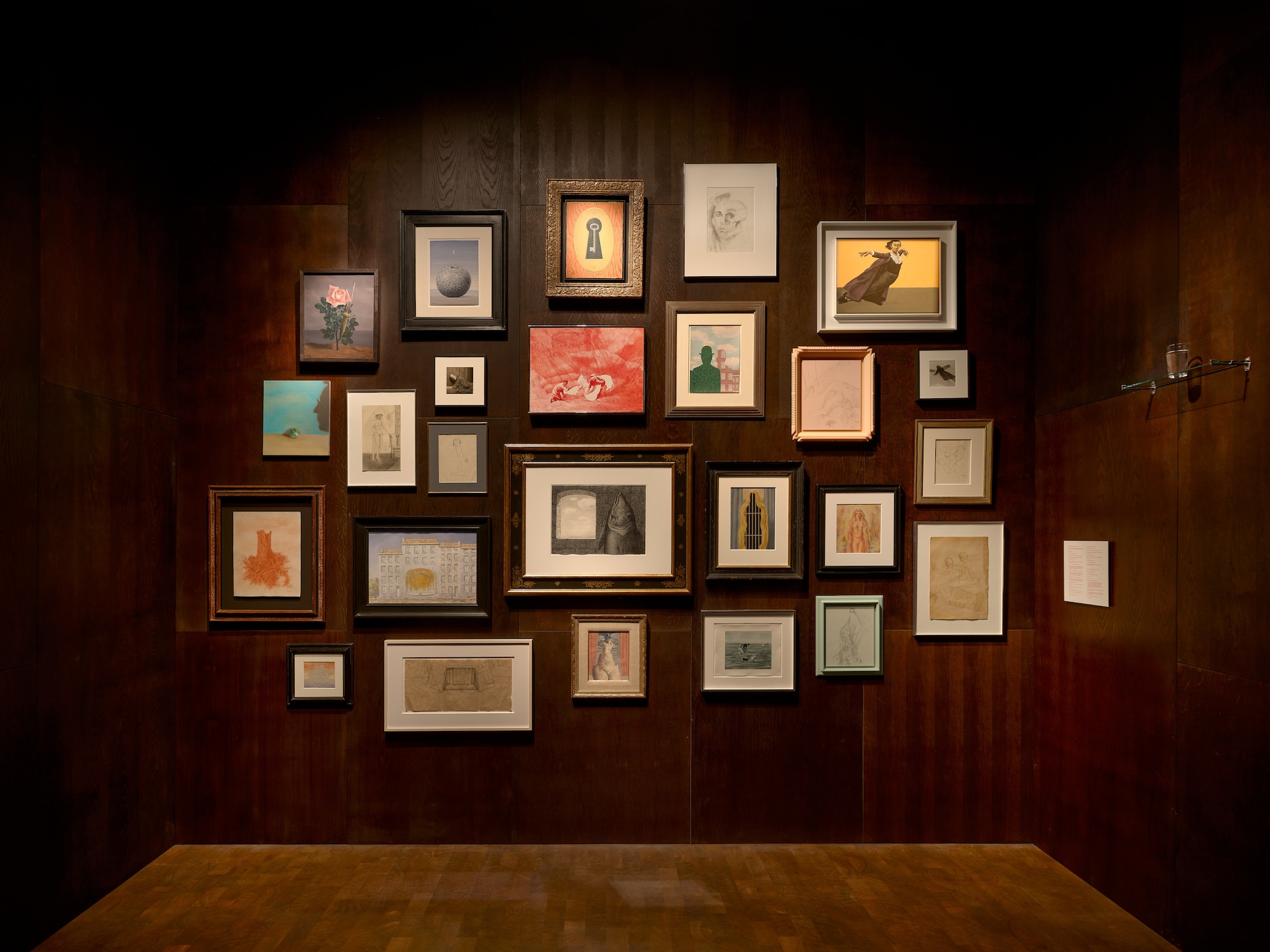
Gagosian’s third room hosts a cluster of no less than 25 works on one wall, about half of them by Magritte. Controversially, they include an image printed by Bennett Miller using AI, but also delicate drawings by Soshiro Matsubara and (surprisingly) Matthew Barney which are somewhat elusive to connect with Magritte. His own drawings are more revealing — he displays masterful technique in an untitled 1966 image featuring a fish and clouds, crude irony in Un autre projet des tableaux (Another painting project) (1948), which puts a female face at the head of an erect penis, and ambiguity in the two sketched characters in Les Effusions ou la bonne amitié (Bloodshed or Good Friendship) (1940), which perhaps reflects his break with André Breton and the French surrealists as, despite his communist associations, he stayed on in Brussels as Hitler invaded. Magritte’s paintings in this cluster include the striking La folie des grandeurs (Megalomania) (c1942), a woman popping up with a dove and egg from tapering slices of a nude torso.
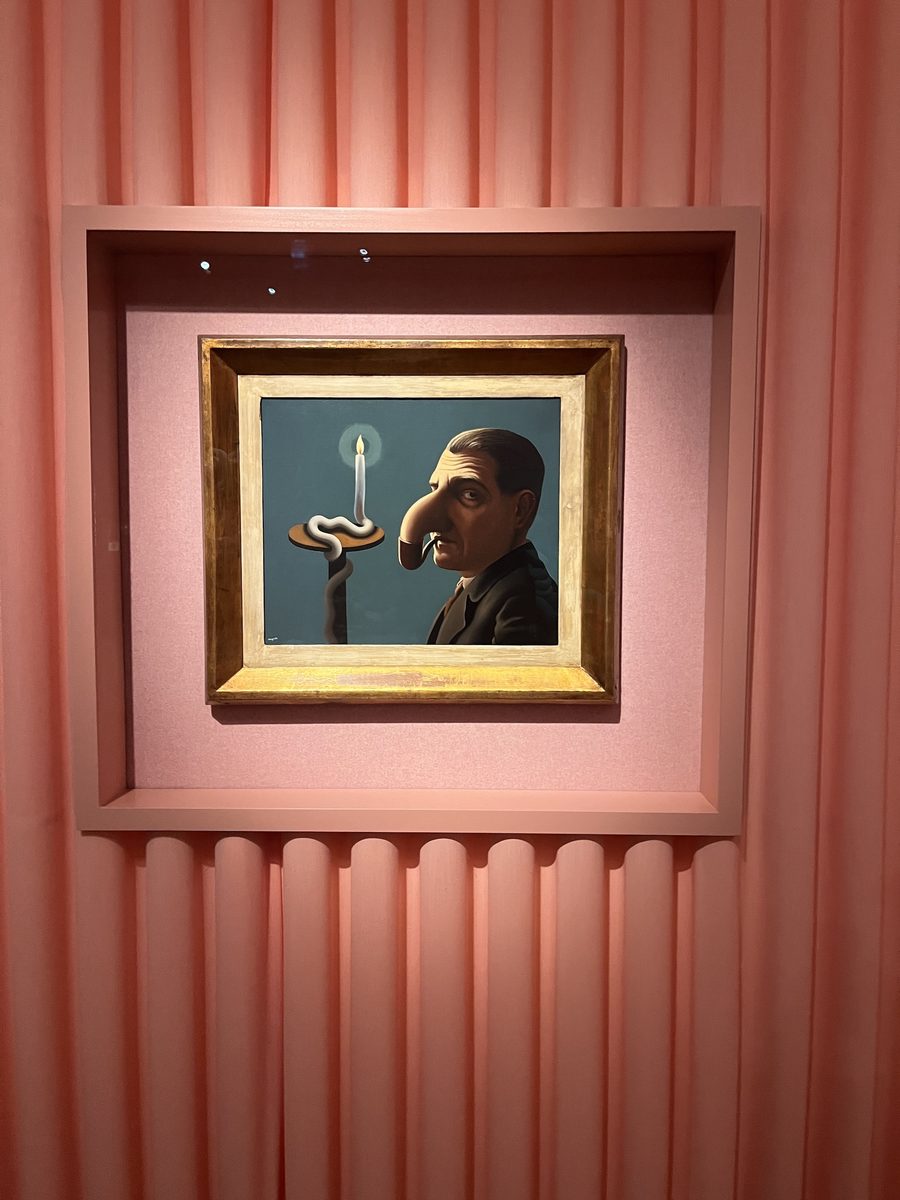
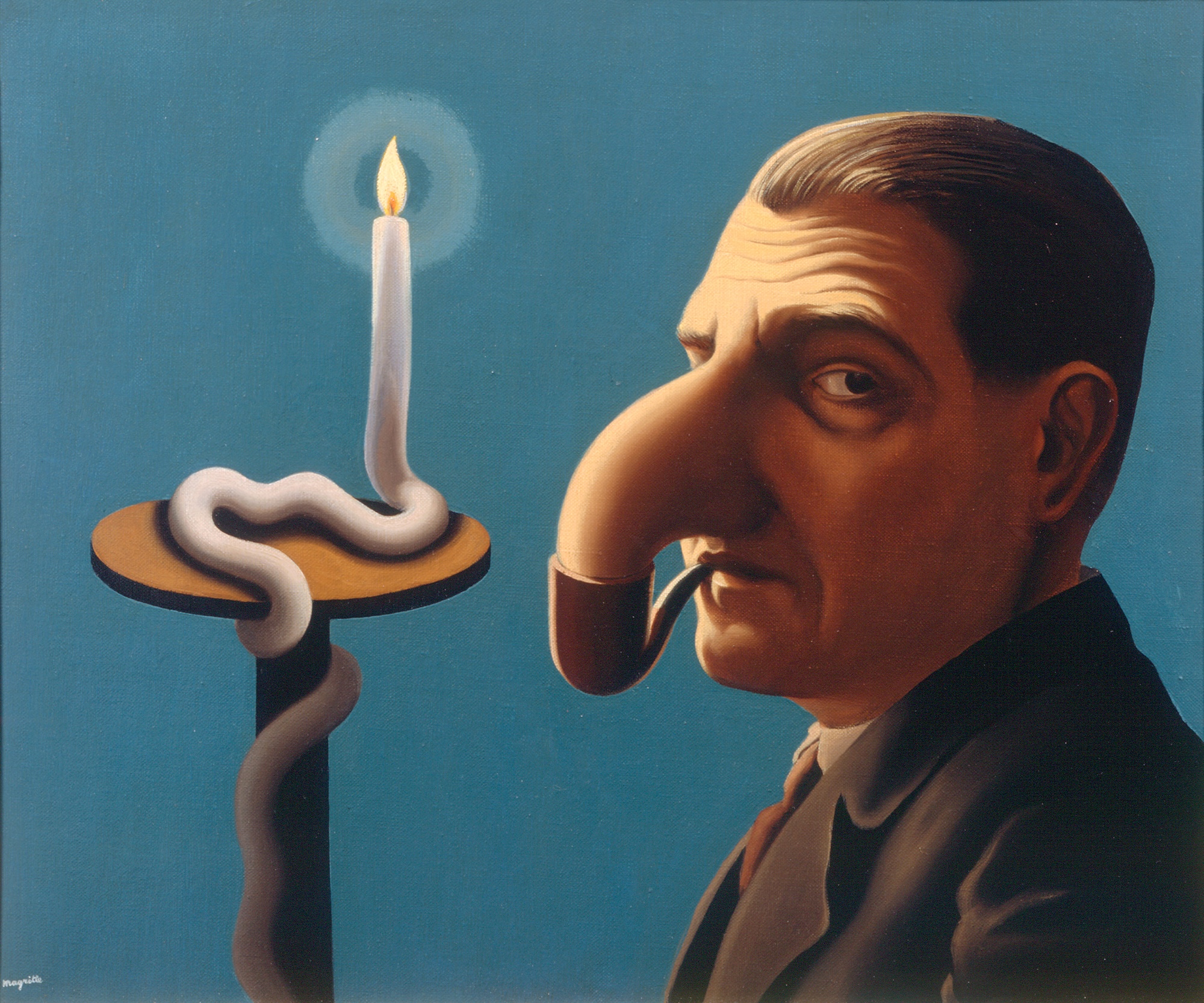
Beside these works is a key Michael Craig-Martin’s work, An Oak Tree (1973). The title is a denial of what it is — a glass of water on a glass shelf. That chimes with Magritte’s depiction of a pipe in La trahison des image (The Treachery of Images) (1929) in which he painted the caption ‘C’est ne pas une pipe’ (and that is translated in the show’s title). It was controversial at the time, despite the obvious truth that an object is not the same as an image of it. That work would forever link him to the pipe. In this show’s final room, we find him playing with the idea in the painting La Lampe Philosophique (The Philosopher’s Lamp) (1936), in which he gives the viewer a guarded look as his nose curves languidly downward into his pipe.
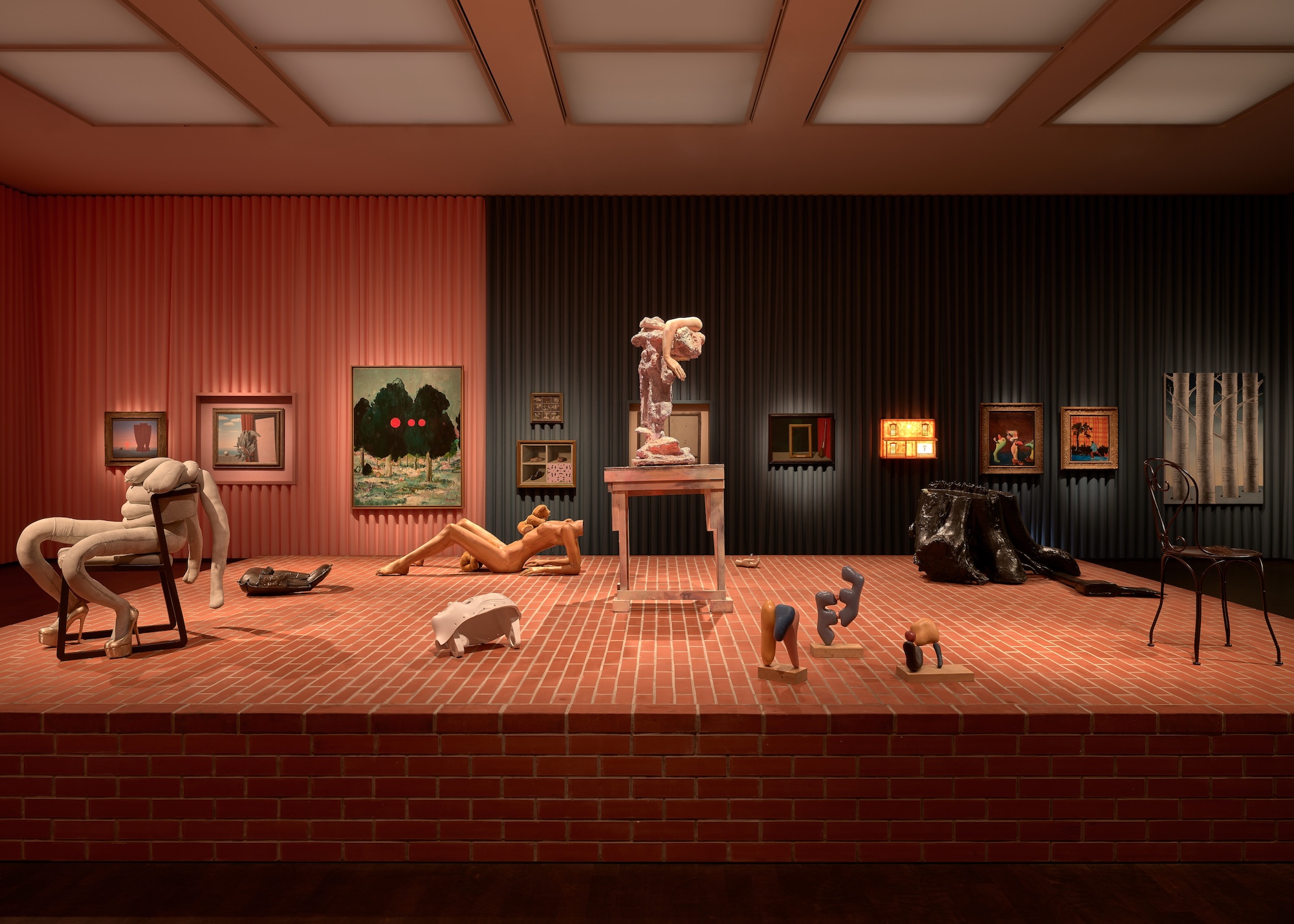
Room 4 has the same layout as Room 2, but its low plinth is brick, and supercharged by two sculptures in particular. Sarah Lucas’ breast-headed sitting SLAG (2022) and Isabelle Albuquerque’s headless, reclining Orgy For Ten People In One Body: 7 (2021) with teddy bears are both female figures with legs open, more provocative and erotic than Magritte’s relatively demure nudes elsewhere. His La bouquet tout fait (1956) features a Botticelli muse in a floral dress, its materiality and colours responded to by the brown tweed jacket hung on Charles LeDray’s adjacent Backward Suit (2010-13). Another linkage is found in three grouped works, each dividing its frame physically into rectangular compartments: Magritte’s La Musée d’une nuit (1927), Betye Saar’s Window of Sirens (1966) and David Hammond’s untitled 1992 work that seems to trap flies like a Damien Hirst, but in fact they’re tiny zippers.
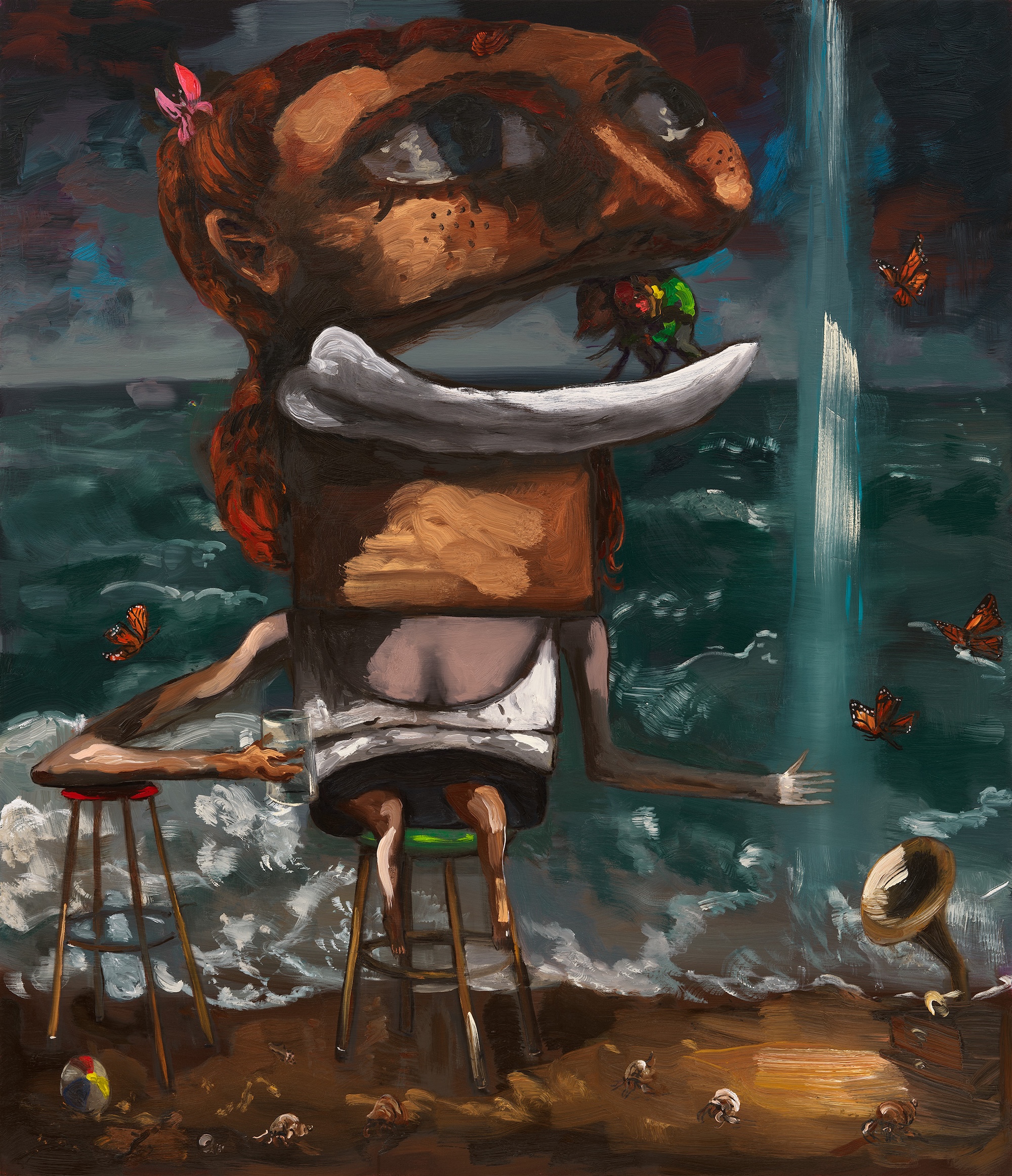
Also in room 4 is the oldest Magritte on show, Les fleurs du voyage (The Flowers of the Journey) (1926) from a series featuring a tree and roses, and unexpectedly, three paintings from his brief change to a more dynamic, expressive style in 1948. The grinning, gun-toting figure in Le Contenu Pictural (Pictorial Content) sprouts bird’s heads sprouting, while Dana Schutz’s stunning The Singer is an ecstatic figure and surrounded with small creatures.
Without the Magrittes, the other artists at Grosvenor Hill would still have made this world-class group show. If the Magrittes were separated, they wouldn’t quite make a retrospective (for example, his pre-war advertising and anti-fascist designs don’t appear, nor his wartime ‘Renoir’ period), but as it is, we get a full measure of his object memes and the unique and precisely composed scenography which continued without loss of quality or surprise up until his death in 1967. What does this combined show say about his legacy? Magritte’s inspiration is timeless, and here, we see clearly that the spirit of his subversion of the ordinary, and his literally fantastic vision, remain very alive.
This Is Still Not a Pipe: The Afterlife of Magritte – 12th December, Gagosian, Grosvenor Hill