MK Gallery will stage the first major exhibition dedicated to L.S. Lowry in more than 13 years this autumn, bringing together over 140 paintings and drawings that reveal new perspectives on one of Britain’s most celebrated artists.
Opening as the culmination of the nationwide programme marking 50 years since Lowry’s death, L.S. Lowry: The Theatre of Life explores the full breadth of the artist’s career, moving beyond the industrial scenes for which he is best known to include rarely seen studies, landscapes, portraits and works on paper.
Drawing on loans from The Lowry, Tate, the Royal Academy of Arts and private collections, the exhibition features more than 140 works, including several paintings that have rarely been exhibited publicly.
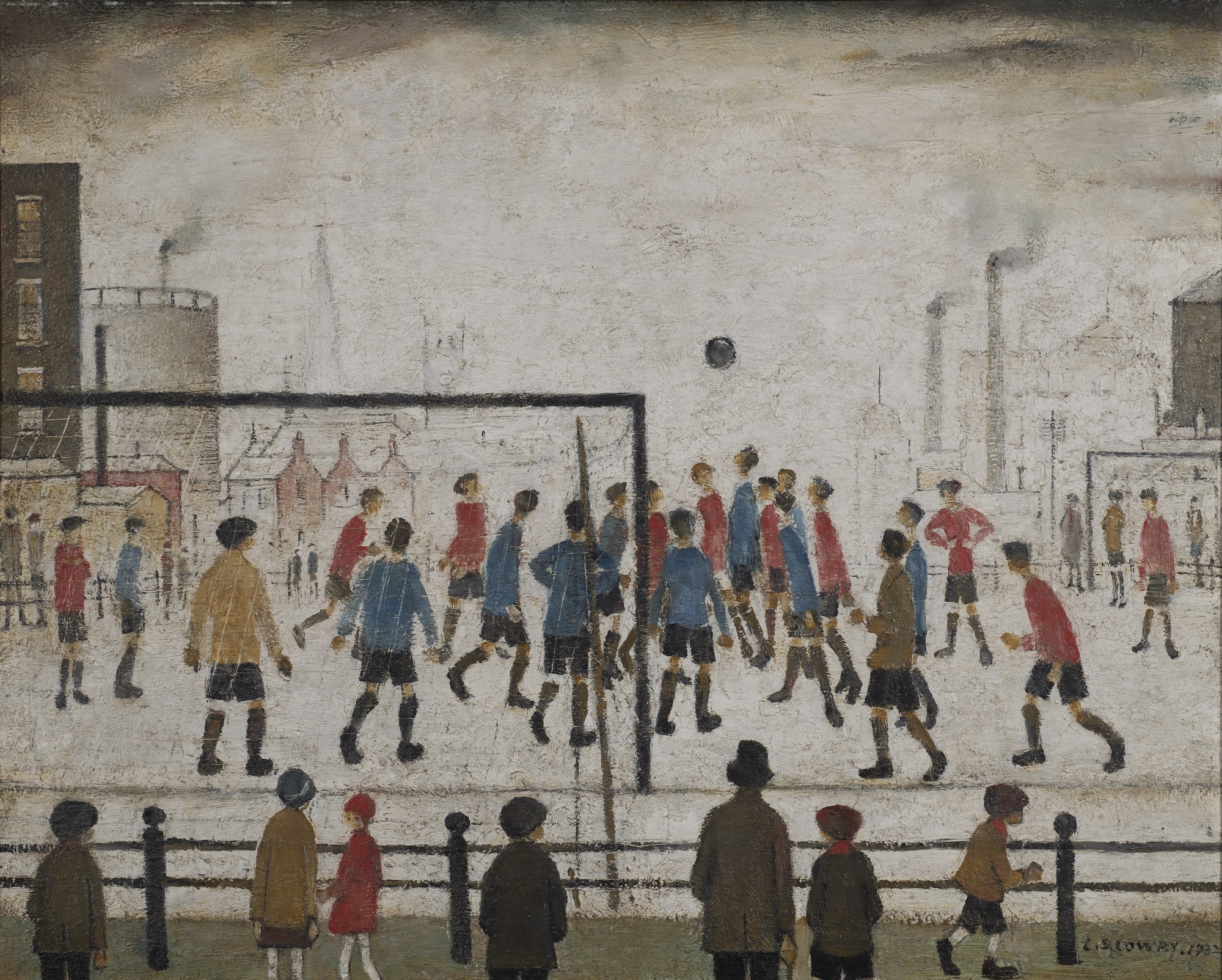
Among the highlights is A Football Match (1932), shown in a public gallery for the first time in almost 85 years. Although Lowry was a lifelong football supporter, he painted the sport surprisingly infrequently, making the work one of the exhibition’s standout loans. Also on display are Sunday Afternoon (1957) and Beach Scene (1947), both from private collections and seldom seen by the public.
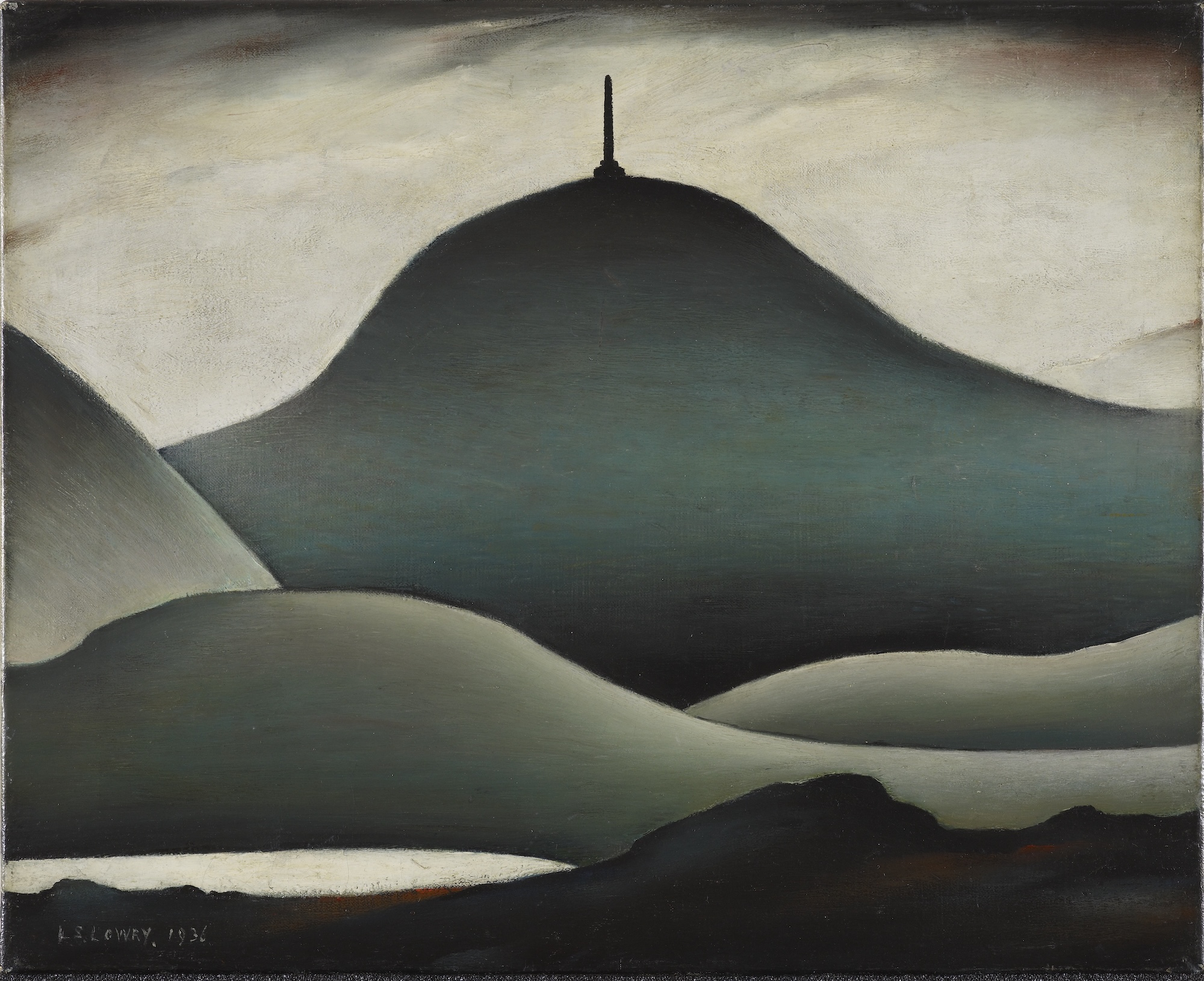
Best known for his depictions of factory workers, terraced streets and smoking chimneys across northwest England, Lowry drew directly from his experiences as a rent collector travelling around Salford and Greater Manchester. Yet The Theatre of Life seeks to broaden that familiar image, revealing an artist whose practice extended well beyond Britain’s industrial landscape.
Visitors will encounter early life drawings, charcoal studies, urban sketches, watercolours and pastels alongside the iconic oil paintings that established Lowry as one of Britain’s most recognisable artists. Together they demonstrate the remarkable consistency of his distinctive visual language, created using just five colours of undiluted oil paint: ivory black, vermilion, Prussian blue, yellow ochre and flake white.
The exhibition also reconsiders many of the myths that have surrounded Lowry throughout his career. Often portrayed as a solitary outsider disconnected from modernism, the exhibition instead places his work within the dramatic social and cultural changes that reshaped Britain during the twentieth century, as the mills and working-class communities he documented gradually disappeared.
Anthony Spira, Director of MK Gallery and co-curator of the exhibition, said:
“Lowry is one of the UK’s most beloved artists, yet his exhibitions remain rare. This is an opportunity to see new sides to his art alongside the classics. His work remains unusually relatable, maybe for its lack of pretension, portrayal of everyday life and human gesture.”
He added:
“The drama and depth of feeling, occasional humour and absurdity found in his work underpin a strong sense of empathy and humanity that continues to appeal today.”
The exhibition forms part of a year-long programme celebrating the artist’s legacy, alongside recent exhibitions in Berwick and Cheshire and the BBC documentary L.S. Lowry: The Unheard Tapes, narrated by Ian McKellen.
L.S. Lowry: The Theatre of Life, 24th October 2026 – 28th February 2027 MK Gallery
L.S. Lowry: The Theatre of Life will be accompanied by a fully illustrated catalogue.
About the artist
L.S. Lowry (Laurence Stephen Lowry) was born in 1887 in Stretford (then Lancashire, now Greater Manchester). Best known for his paintings of mill scenes and industrial landscapes, Lowry enjoyed drawing from a young age but was not able to pursue a career as a full-time artist. He worked as a clerk and rent collector until his retirement in 1952.
While his work took him around the industrial towns of northwest England, he translated what he saw onto canvas most evenings after work, often late into the night. His paintings were widely admired as astute observations of industrial Britain, capturing scenes that postwar urban redevelopment would later alter. Lowry initially studied painting and drawing at the Municipal College of Art (1905-1915), where he trained under the French artist Adolphe Valette, before continuing his studies at Salford School of Art (1915-1925). Throughout his career he painted from sketches and memory in his workroom at home.
Lowry held his first one-man exhibition in London in 1939 at Alex Reid & Lefevre Gallery, which received critical acclaim and he went on to achieve national fame. A private man, Lowry is believed to hold the record for the greatest number of British honours refused by any individual, explaining that “all my life I have felt most strongly against social distinction of any kind”. Lowry died in 1976, months before the opening of his major retrospective exhibition at the Royal Academy of Arts in London.