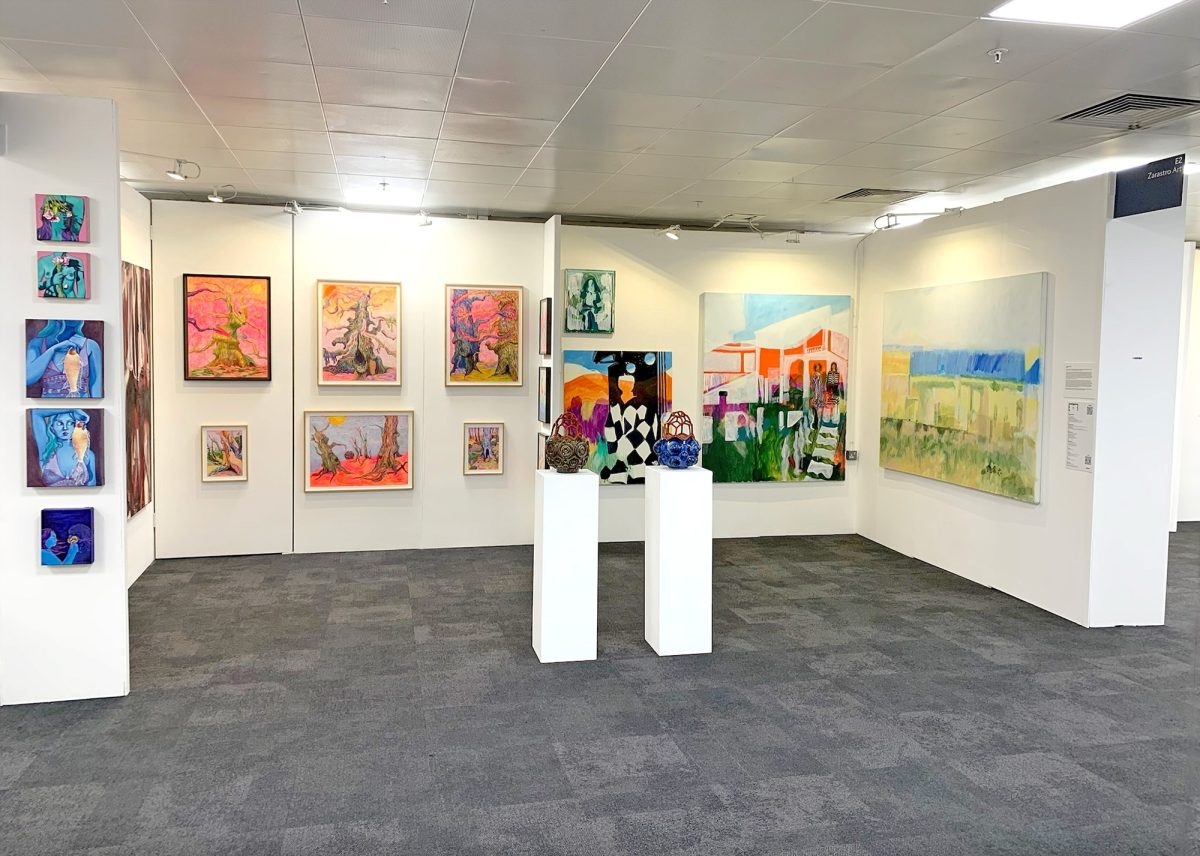
I am no longer a fan of the art fair, my one-time enthusiasm having waned more than a decade ago. Thus, when approaching this art-fair exhibition, which brings together works by five international female artists to consider the extraordinarily broad-sweeping question of ‘what shapes the way we see ourselves, one another, and reality?’, my heckles are perhaps unsurprisingly raised, as I wonder whether this vaguery is simply attempted justification for yet another hapless curator to throw together their best-selling and/or most eye-catching artists in a mele of brushstrokes and bling. Indeed, if I were to go by the accompanying text, I might feel bolstered in this fledgling opinion, since anything that promises to reveal seeing ‘not as neutral, but as deeply entangled with lived experience’ really does come across as trying to teach its audience to suck eggs as large as the two prominently poised amid the display at hand. However, the aesthetic curation of the works on Zarastro Art’s stand at London Art Fair proves me wrong, offering something much more considered and well-constructed than its less well-chosen wording might suggest.
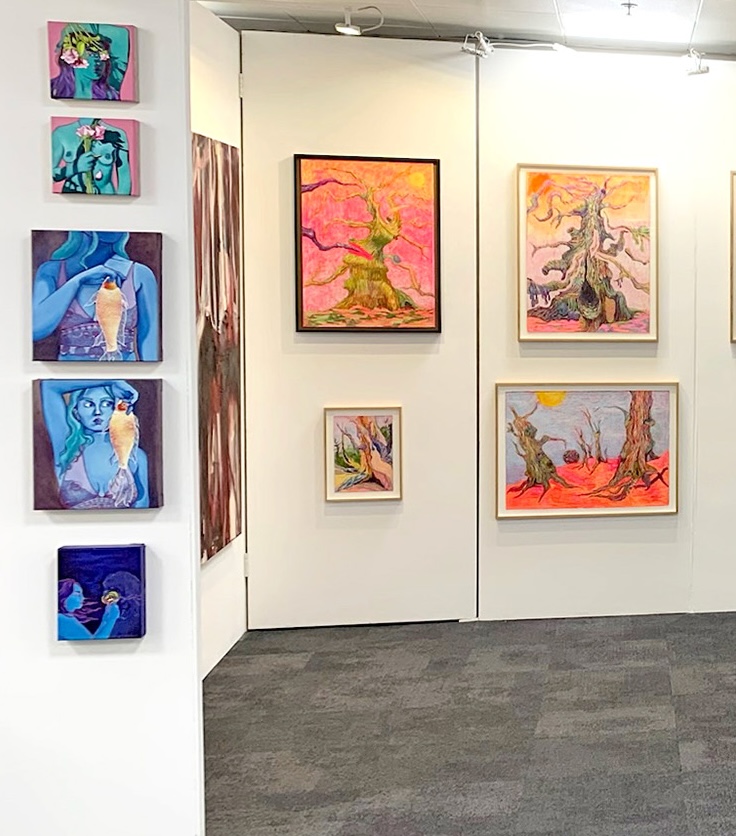
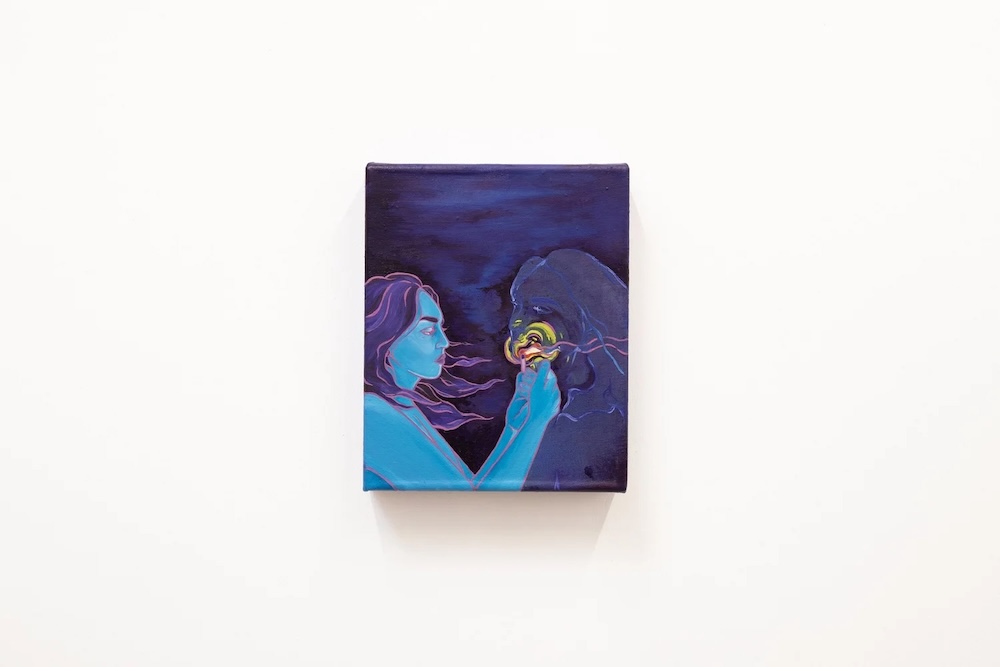
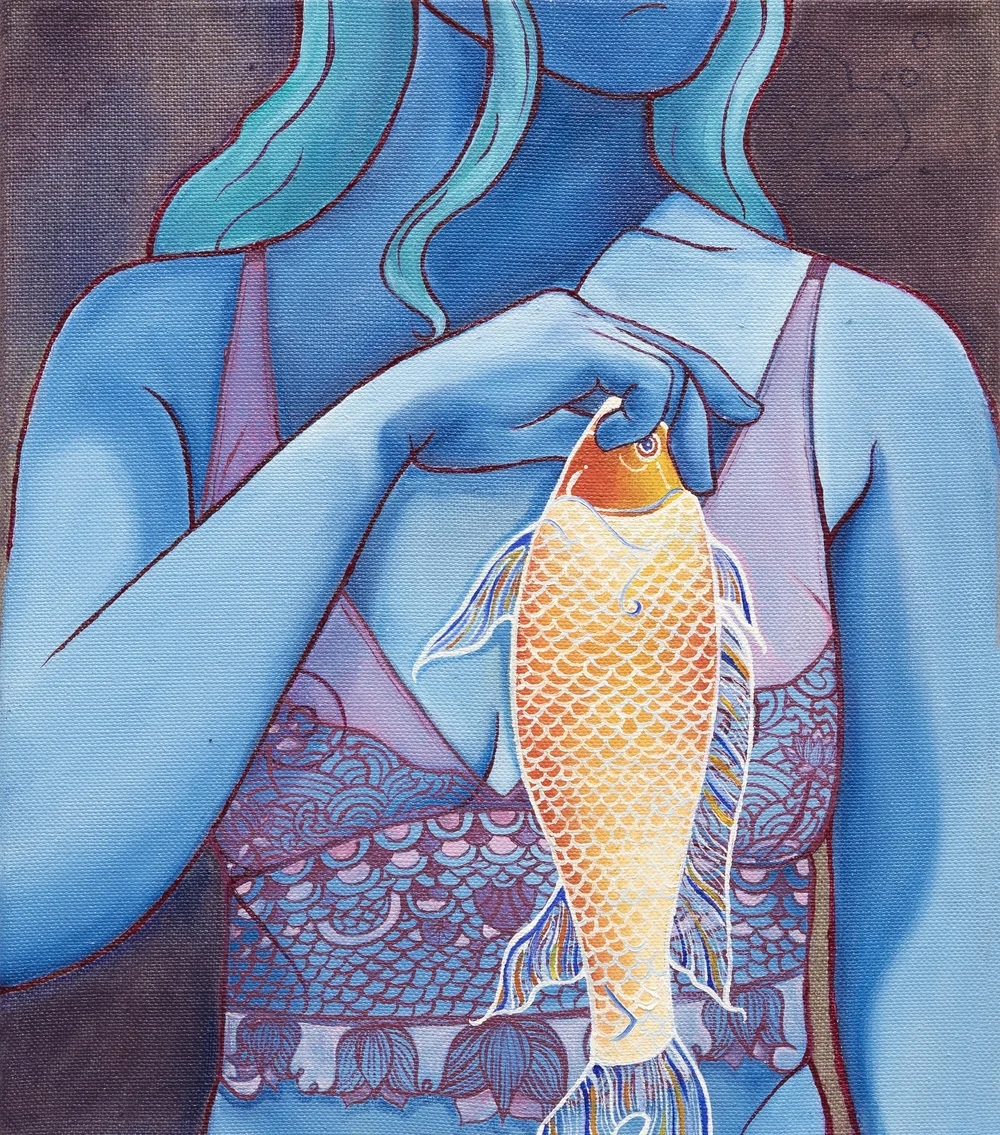
Reading the display from left to right, one is greeted by the blue-tone figurative works of Imogen Marsteller. The positioning of two pairs of paintings – the smaller Roses are actually my favourite flower, did you know? Maybe it is because they are beautiful despite the thorns (2024) and Roses are actually my favourite flower did you know? Maybe it is because they are beautiful even as they wilt (2024) – titles which, in themselves, could constitute interesting curatorial propositions – above Fish’n’Tits (2025) and Fish’n’Nips (2025) weights the hang as expected, and the danger inherent in the roses’ thorns is kept narrowly out of reach. But this is unsettled by the addition, at the bottom of this wall, of the once-again-smaller Hunting for Warmth (2023). This, nevertheless, while standing alone, might be seen as a double portrait, with its leonine reflection of the protagonist.
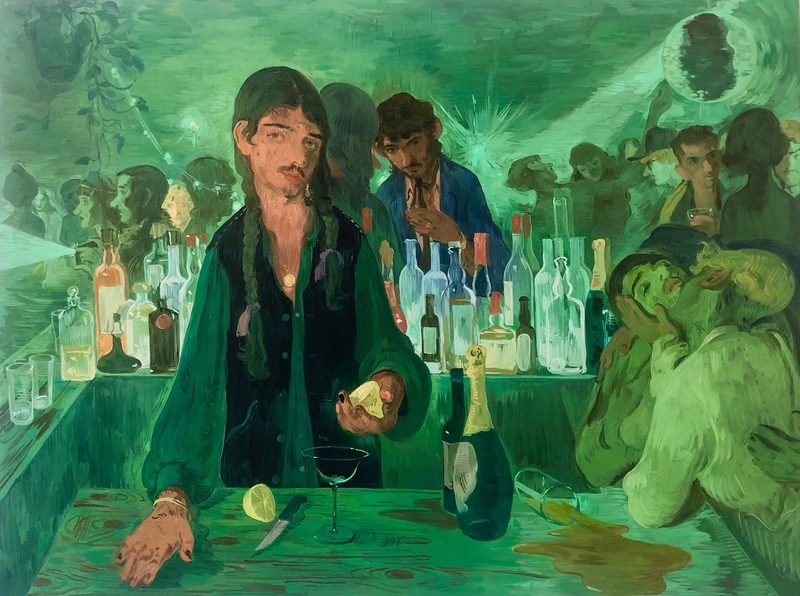
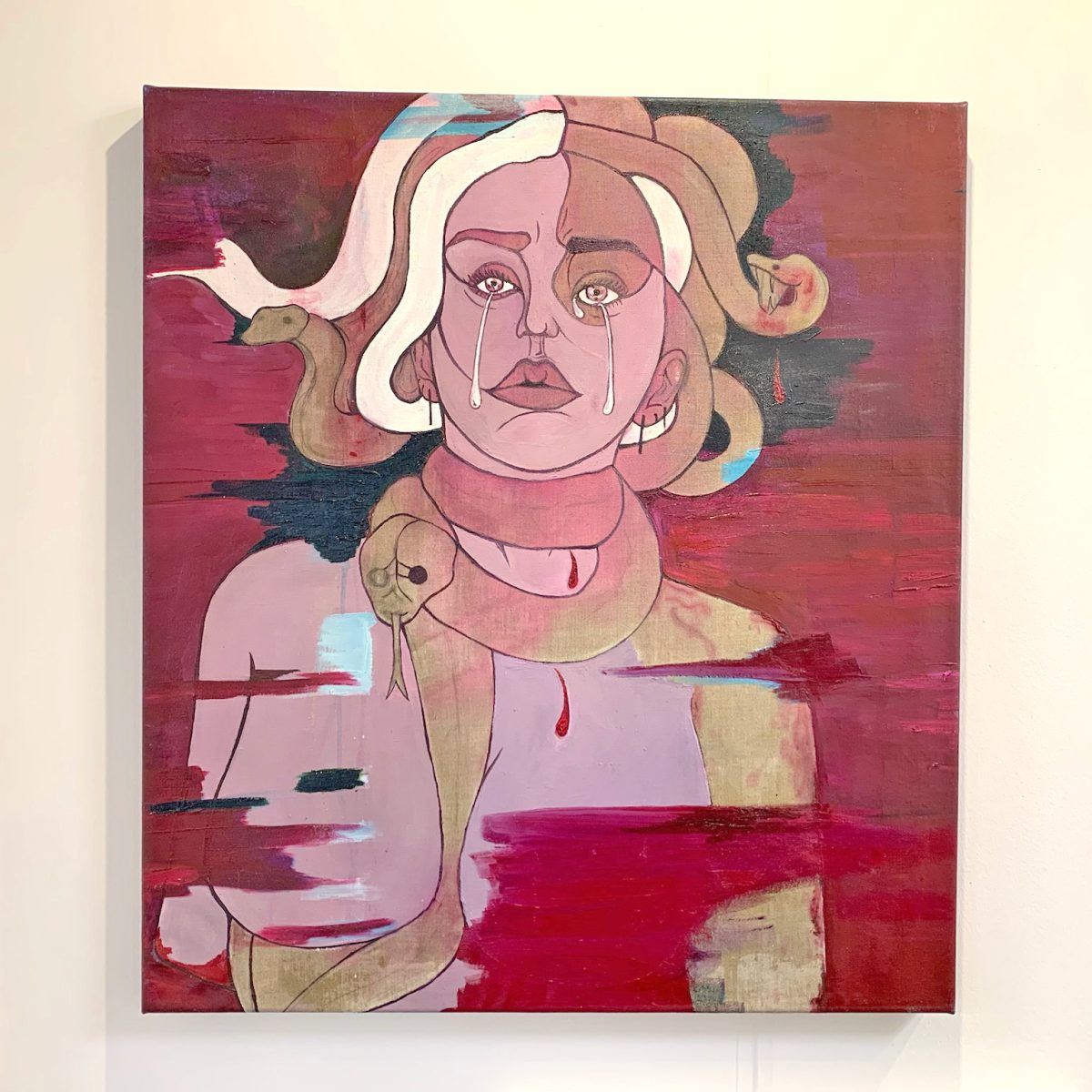
A much larger (and more conceptually challenging – it is a modern-day portrait of Medusa) Marsteller takes us around the corner and leads tonally into the gloriously visceral and corporeal paintings – albeit of trees – of Shumaiya Khan, whose alchemical practice draws on Abrahamic origin mythology.
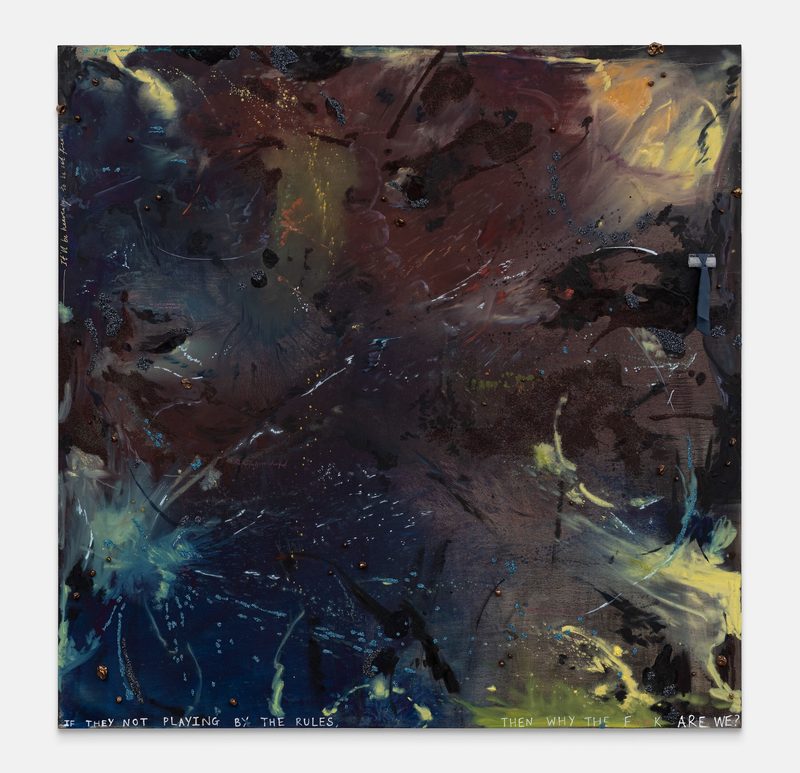
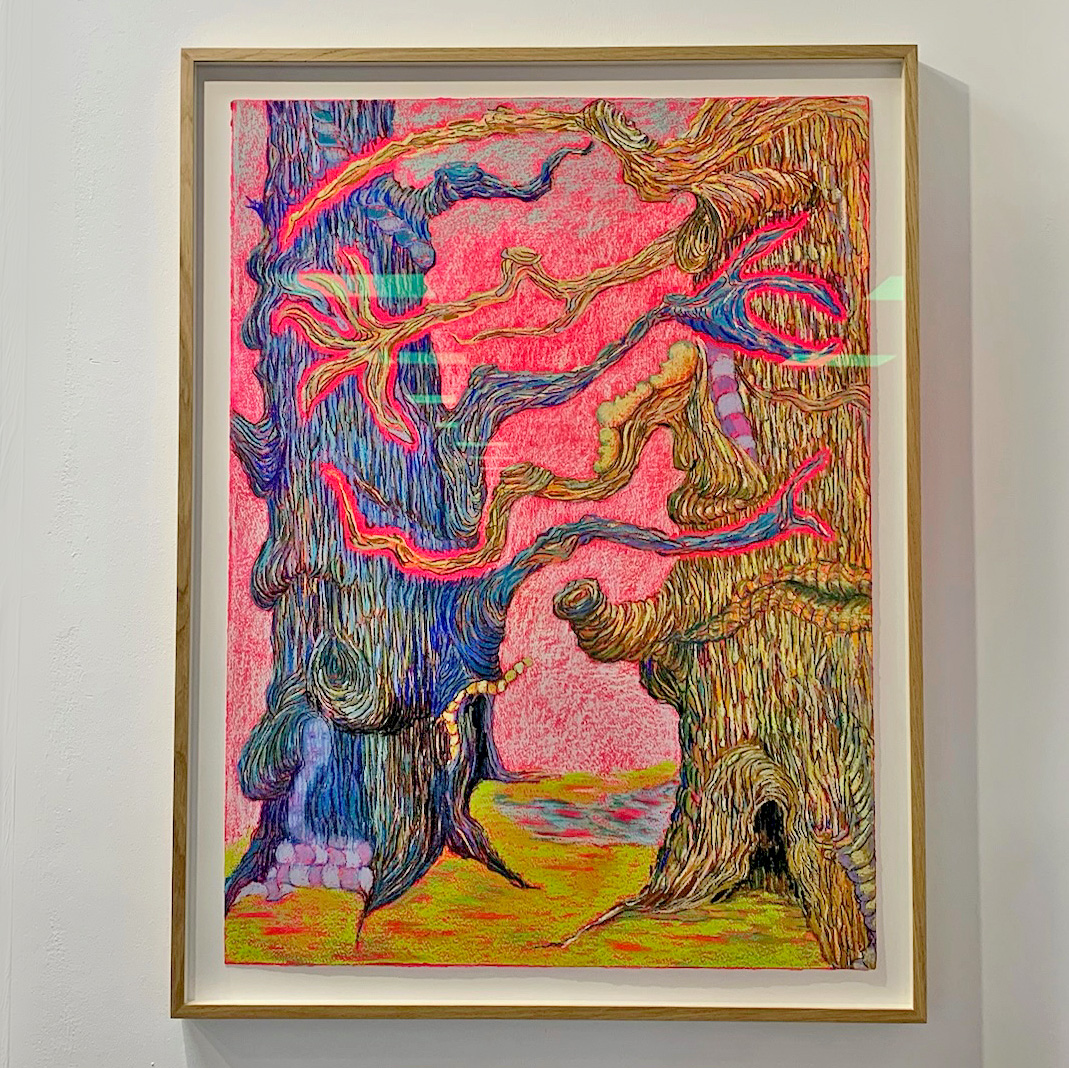
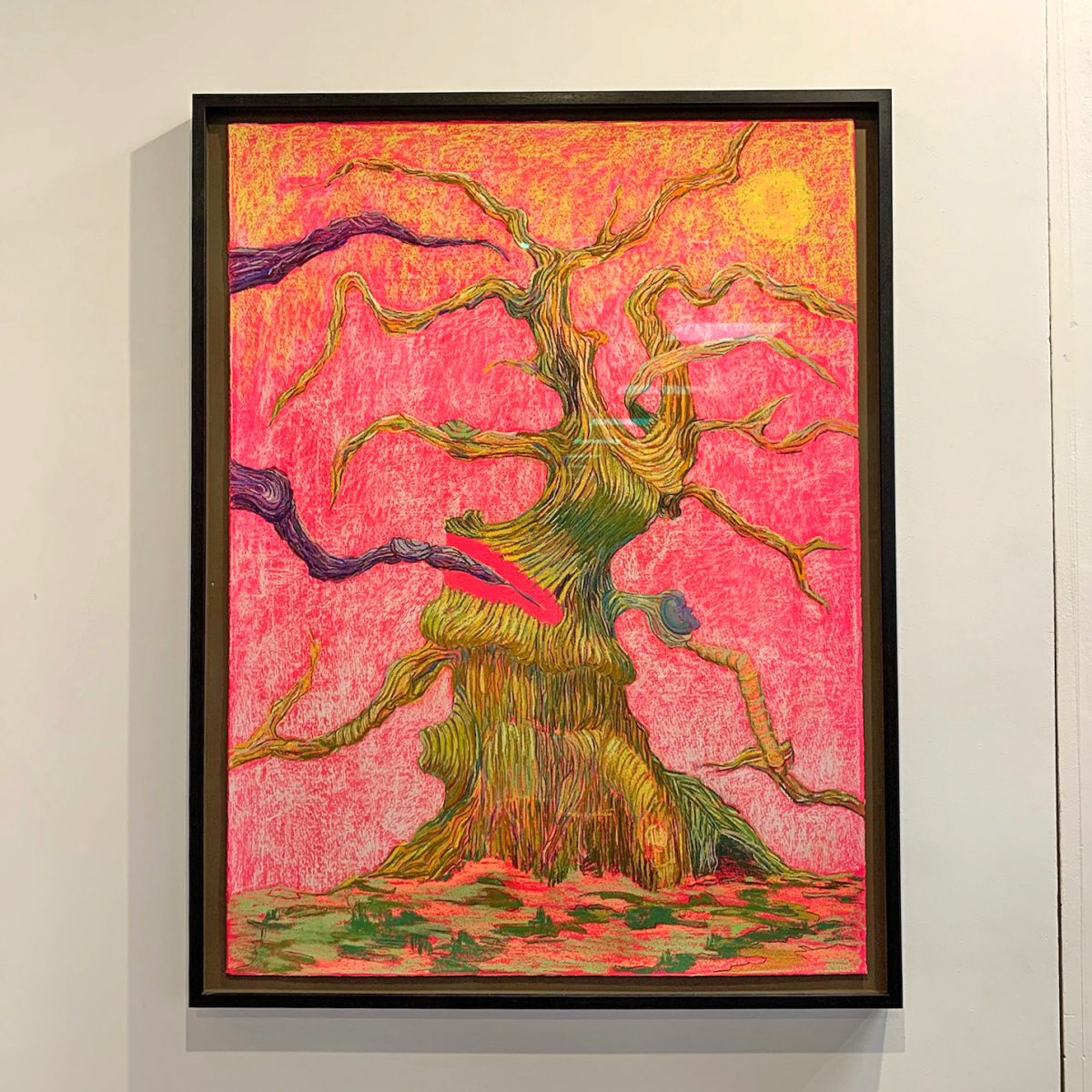
Staying with the subject of trees, the rest of this half of the booth is inhabited by Rebecca Byrne’s surreal pink, blue and yellow specimen, bare-branched and threateningly toxic in their luminosity. The second half of the booth is wholly given over to Jo Chate, who creates human landscapes with faceless figures.
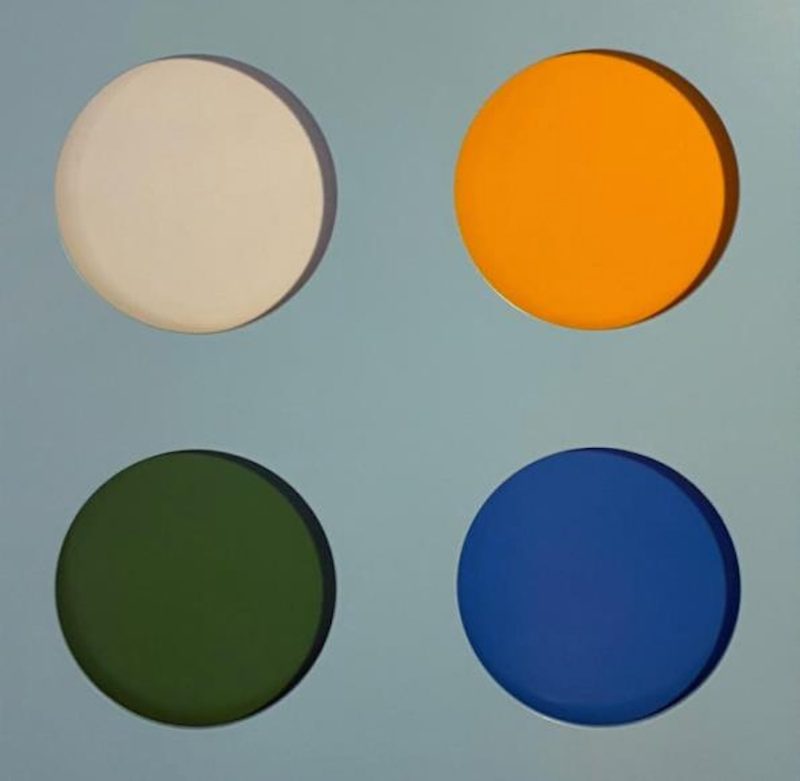
Sculpture can frequently feel a bit awkward placed amid the tired art fair-goers, separate from its 2D counterparts, and at risk of swinging backpacks, but, if anything, here, it is the two sculptures that pull together the various strands of the curation: the metaphorical cherry on top, if you like. Danning Xie’s Metamorphosis of the Red Cage, No. 3 and No. 4 (undated) use the distinctive form of the red cage fungus (Clathrus ruber), combined with the feminine ovoid of the egg, to turn nature (Chate, Byrne and Khan), through birth, back into humanity (Marsteller).
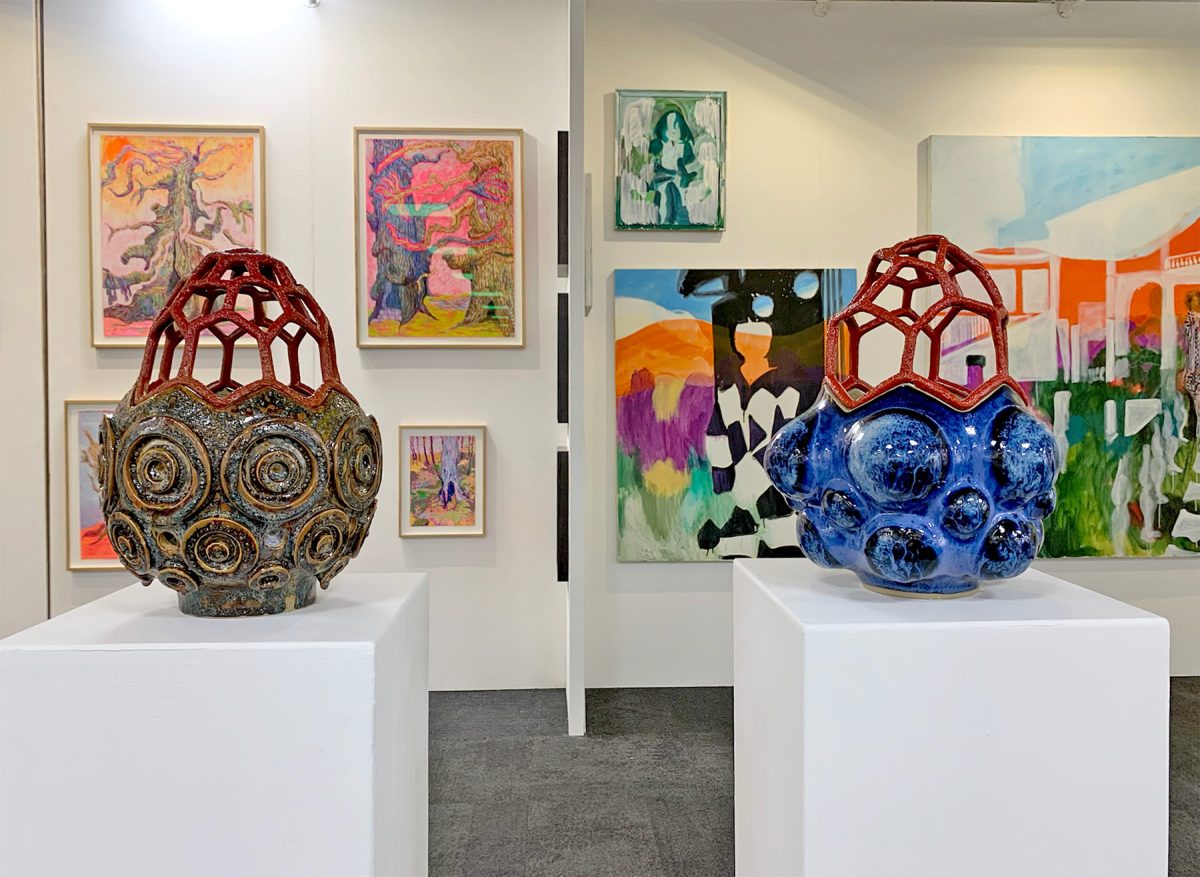
Returning to the essay, it states that the exhibition ‘considers perception as something continually revised’, and, while this proposition alone could render an exhibition dissonant and fragmentary, the gentle dance of flowing colour and subject, from the entirely figurative to the entirely landscape, and back again, choreographed by platform founder and curator Haydar Taygun, permits the visitor to circulate smoothly, as if reading a well punctuated text. The juxtaposition of differently sized canvases, especially with the placement of the smaller ones beneath the larger, subverts any notion of hierarchy, and the overall sense is of entering a liminal space, where power systems are suspended, but where there is continual slippage, in and out of reality and dream, humanity and nature, living and dying, safety and danger. The imbalance between the number of works shown by each artist makes it feel less like a PR exercise, and the result is far more than simply five women being brought together at a fair. Clearly Taygun was working to Zarastro Art’s stated vision of ‘making contemporary art accessible through transformative experiences that empower artists to create boldly and inspire audiences to engage deeply’. He may not have stuck to his goal, stated in an interview with .ART, of ‘dismantling “artspeak”’ but the curation itself feels mindful and uncomplicated.
The curatorial concept as stated cannot fail to be addressed since it is so broad. But what the curation of the artworks does is hone in on the issue of perception, and, through harmonic placements and jarring juxtapositions, it exemplifies some of the many possible revisions thereof. A simpler and narrower conceptual starting point would have been preferable, as would maybe a slightly smaller showcase, but Taygun’s skilled aesthetic judgments win over nevertheless.
Review by Anna McNay
Zarastro Art London Art Fair 2026 | Encounters Stand E2 21st-25th January 2026, Curator: Haydar Taygun