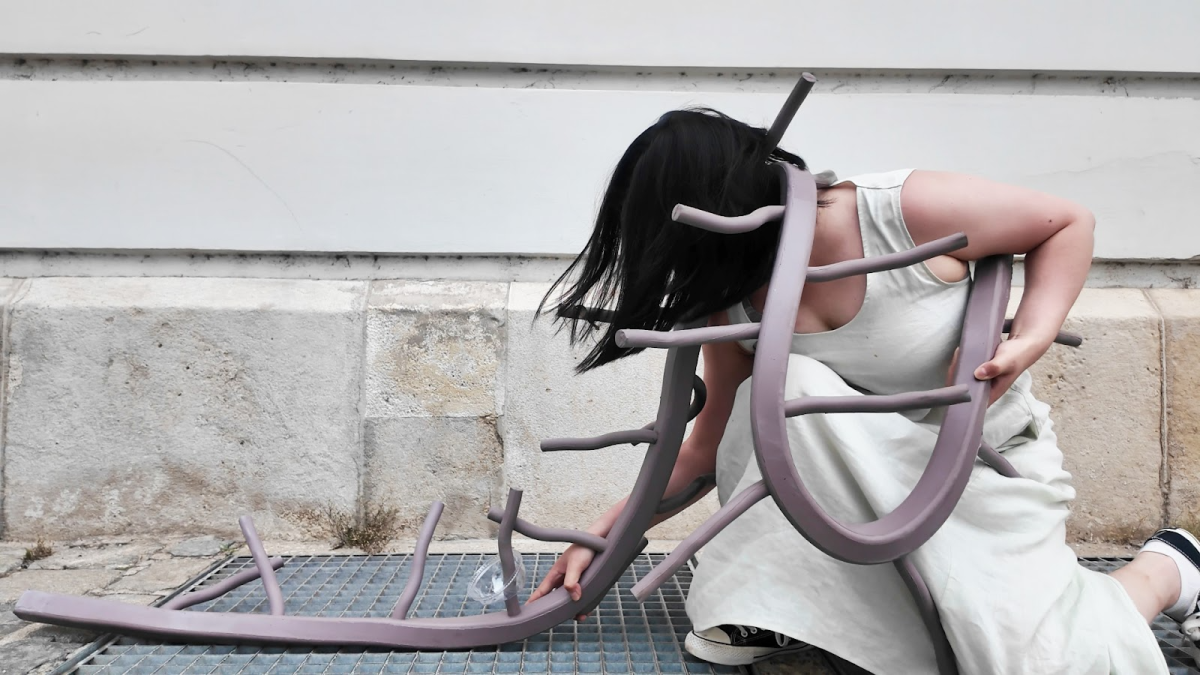
When we see monsters in our nightmares, on screen or in literature, they act as stand-ins for something we can’t visualise – our fears, anxieties and doubts. Historically, they have also been used to demonise powerful women, think witches, Medusa, the Sirens, Lilith and countless more. This concept of the ‘monstrous feminine’ informs Yiyang Chen’s work, which looks at the idea of the body and how we see it. It’s a theme we see coming through in her work across mediums – painting, ceramics, performance, moving image, and writing.
Born in Shenyang, China, and now based in Glasgow, her work encompasses both East Asian and Western traditions, reflecting on how Eastern mythology has comparable stories to Western myths. These include the monstrous embodiment of forces and entities that seduce and kill through metamorphosis, while in a feminine or non-binary form. The myths are drawn from the Chinese mythical archive Liaozhai zhiyi.
Her dual background also allows her to focus and challenge the unrealistic beauty standards the Western world places on all women, but also the fetishisation of East Asian women for their slim figures, pale complexions, and being viewed as subservient to men. She brings all of this research and experience into her works across different media.
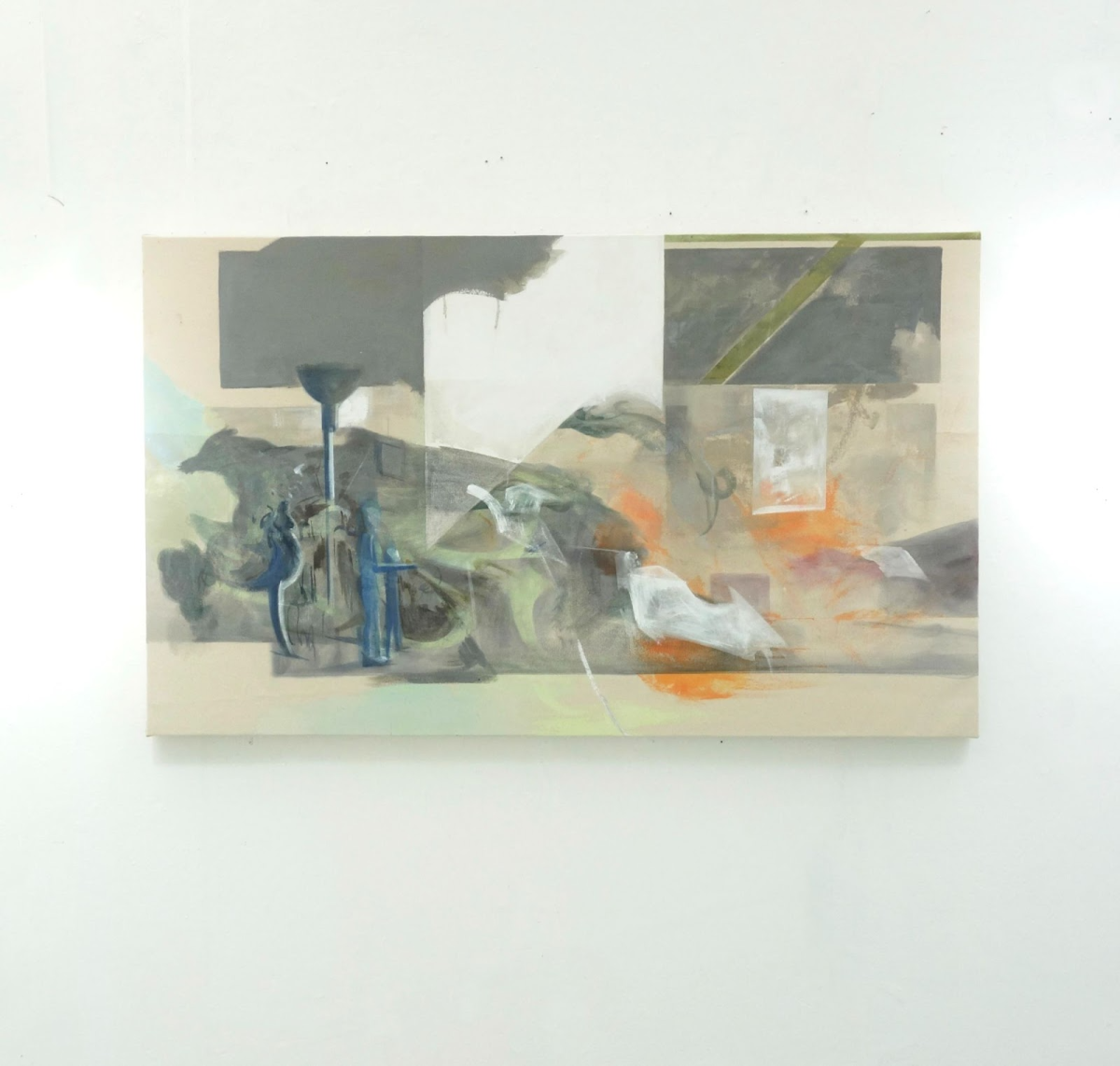
At the heart of Chen’s practice is a fascination with the body. But she’s not solely interested in depicting bodies as recognisable figures. Instead, she treats canvas, clay, or screen as a kind of skin. A surface that records gestures, erasures, and afterimages. In her Untitled Series II, forms are compressed and colour blocks collide in ways that never quite settle into something easily recognisable to our eyes.
In Flux, a ceramic work, the traces of the hand are frozen in glaze, as if capturing the gesture of a body rather than its presence. Elsewhere, in Blend, hints of an arm or torso surface only to be smeared, covered, and pulled away. She’s gently teasing us to see the body’s actions without revealing it.
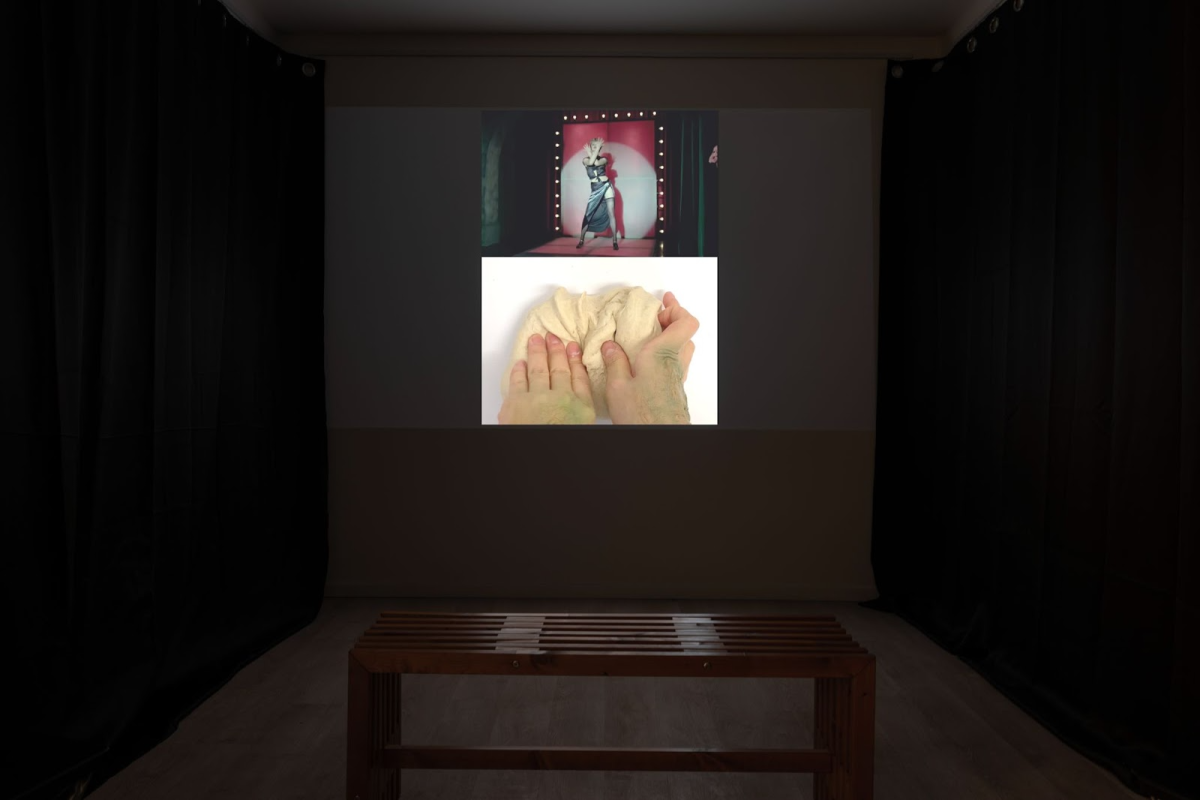
In her film Myths of Disavowal, she combines the making of her ceramic works using her hands alongside a performance of the female body. It highlights both aspects of her practice, both the male and female gazes and the subjectification of the female body, and the absence of the body that can be seen in the production of her ceramic pieces.
Her work is deeply research-led. It draws on 1970s feminism and transgender studies through the exploration of the body and surfaces, the gaze, screens, myths, archives and domesticity. She uses this lens to reclaim the concept of the monster as a way to resist the rigid binaries that underpin both representation and power. She’s not happy to simply create work on this topic, and community also matters deeply to her. In Glasgow, she co-organises Rhizomatic Webs, a reading group dedicated to queer, feminist, and trans perspectives in visual culture. She sees this community as a necessary antidote to the hierarchies and absurdities of the art world. Her voice doesn’t operate in a vacuum; it’s part of a larger debate, and she wants to invite other voices into that discussion.
Yiyang Chen’s work doesn’t confront you with its message; it asks us to join her in exploring how female and non-binary bodies are displayed in art and to question our assumptions about them, whether it’s the presence or the absence of the body in mythology, film, literature, advertising and art. It’s a challenge and an invitation to open that discussion and to ask how we can change our own minds and those of people around us.
You can find out more about Yiyang Chen’s work on her website and Instagram.
All images copyright Yiyang Chen.