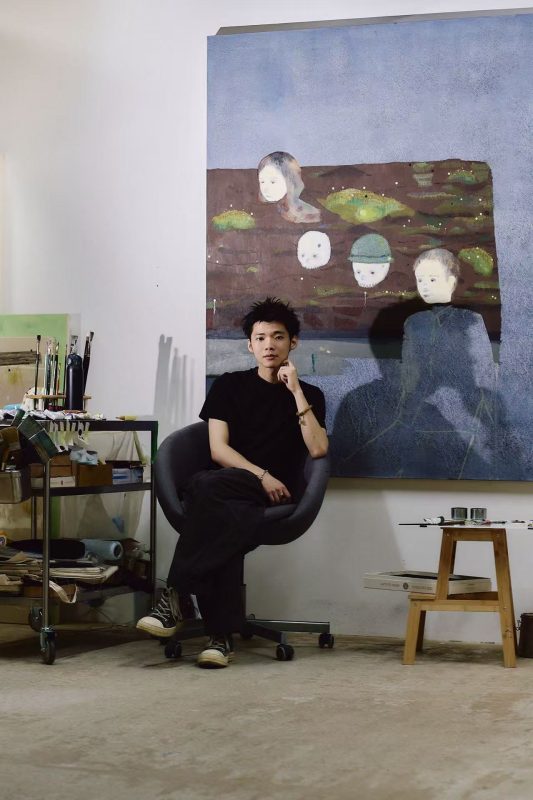
Yuyue He’s paintings often appear modest in scale, but they unfold vast internal geographies where memory, longing, and cultural symbolism reverberate. In works such as I’ll Go Downstairs with You and I Am Doing Well. Please Come See Me Again., she constructs painterly installations that invite viewers into emotionally charged, symbol-laden landscapes. Across both projects, the act of viewing becomes a kind of ritual—both intimate and critical—through which inherited memory is rehearsed, reinterpreted, and sometimes gently resisted.

I’ll Go Downstairs with You—exhibited at Next Art Market at XYZ Gallery, London—is a hinged diptych created in collaboration with Yuyue’s grandmother. The work transforms a common parting phrase—“I’ll go downstairs with you”—into a structural and emotional device. One panel is painted by Yuyue, the other by her grandmother, whose visual language draws instinctively from a mid-century Chinese iconography: red-scarfed schoolchildren, plum blossoms, swallows, and paper lanterns.
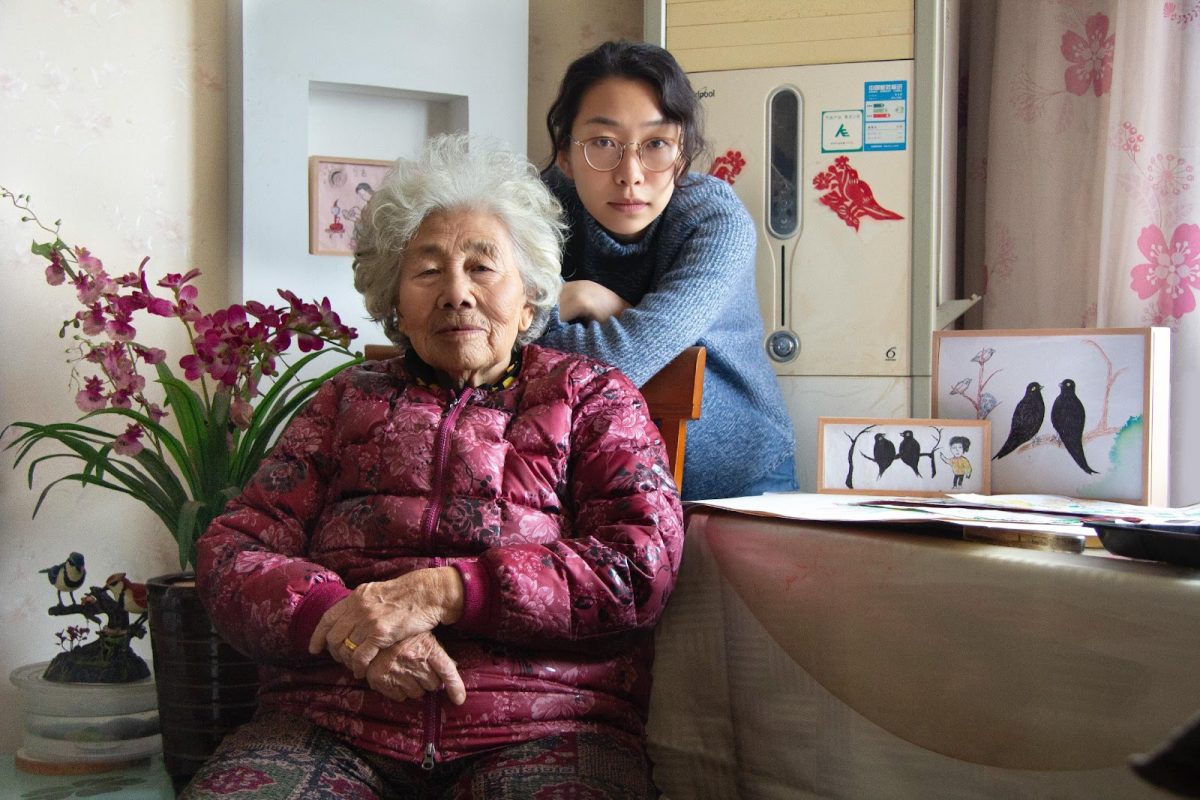
The hinged structure literalizes an intergenerational dialogue, enacting what Claire Bishop calls “participatory aesthetics” that preserve both intimacy and critical distance. As viewers interact with the panels, they participate in a “choreography of care,” re-enacting a domestic gesture of accompaniment and separation. Rather than constructing a linear narrative, her work dwells in what Roland Barthes might describe as the punctum—a piercing detail that wounds, holds, and suspends meaning.
If I’ll Go Downstairs with You focuses on gesture and familial legacy, I Am Doing Well. Please Come See Me Again.—exhibited in Line Shift and Bakery Shift at Small-Time Projects (STP), London, and in The Summer Show at RBSA Gallery, Birmingham—extends these concerns into solitary, diasporic reflection. This body of work constructs what Yuyue describes as “symbolic infrastructures,” where solitude is not an absence but “a pervasive emotional condition, characterised by a quiet intensity”.
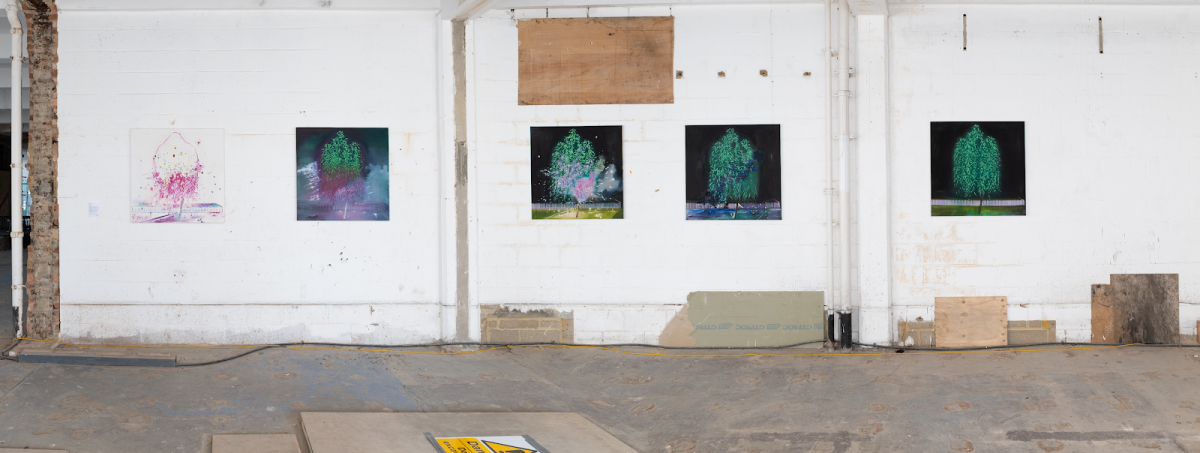
Throughout these paintings, decorative lights—drawn from both Eastern and Western traditions—appear not as ornamental detail, but as emotional catalysts. Often associated with ritual, celebration, and domesticity, these objects become what the artist calls “carriers of affect, transmitters of cultural knowledge, and markers of time”. Their subtle presence charges the compositions with emotional resonance, especially in moments of transition or remembrance.
She writes, “When something is watched, is it only then acknowledged as existing? If no one watches, does its existence still hold?” Yuyue He’s practice wrestles with the politics of visibility—not merely in the sense of being seen, but in how perception, memory, and emotional identity are shaped by the act of seeing and being seen.
Across I’ll Go Downstairs with You and I Am Doing Well. Please Come See Me Again., a shared visual vocabulary reveals itself: paper effigies, red lanterns, stylized flora, domestic spaces lit with faint, reflective warmth. These are not nostalgic embellishments, but what might be called “migrating symbols”—folk motifs that traverse time and geography, repurposed within contemporary emotional and cultural framework.
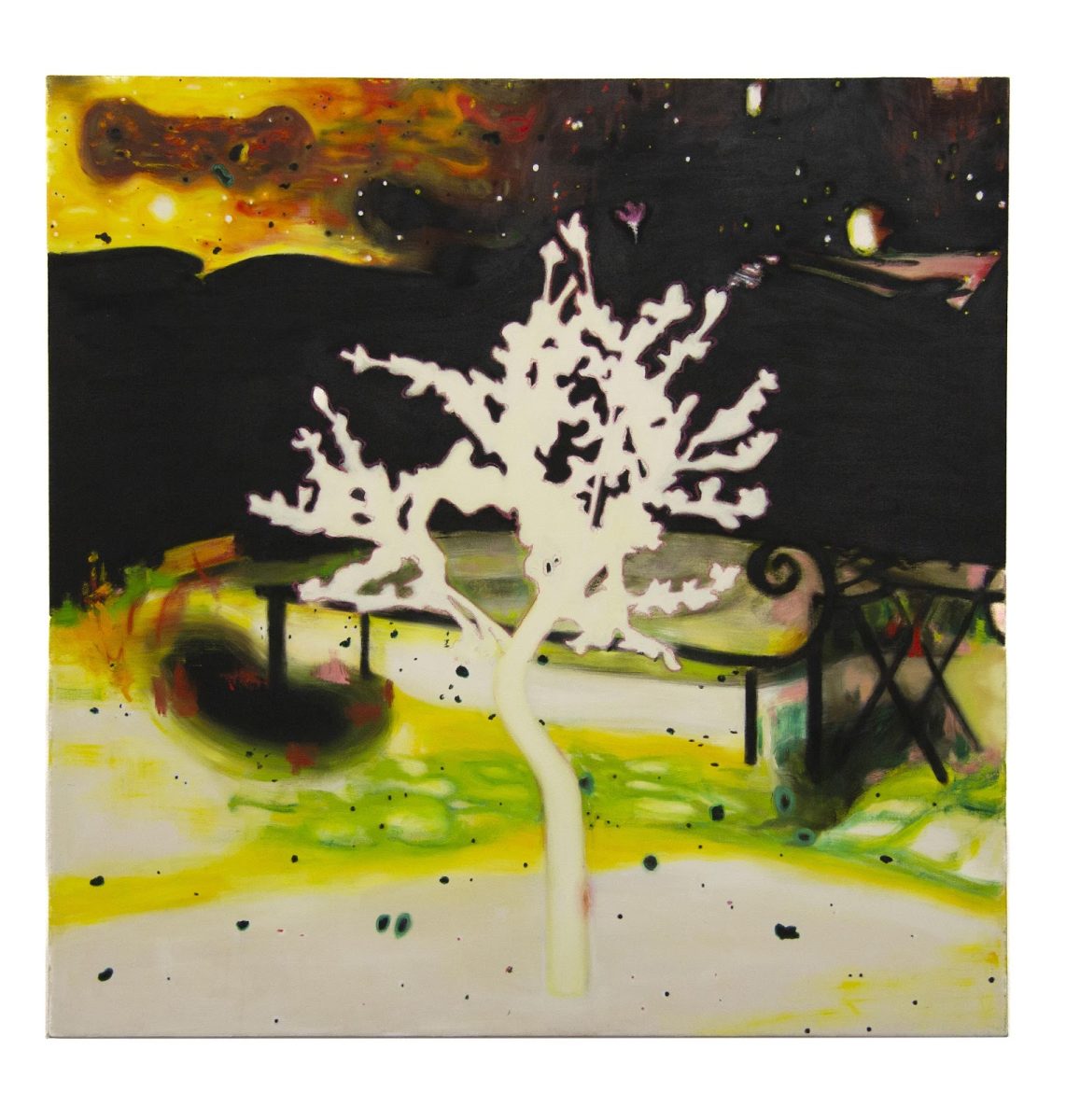
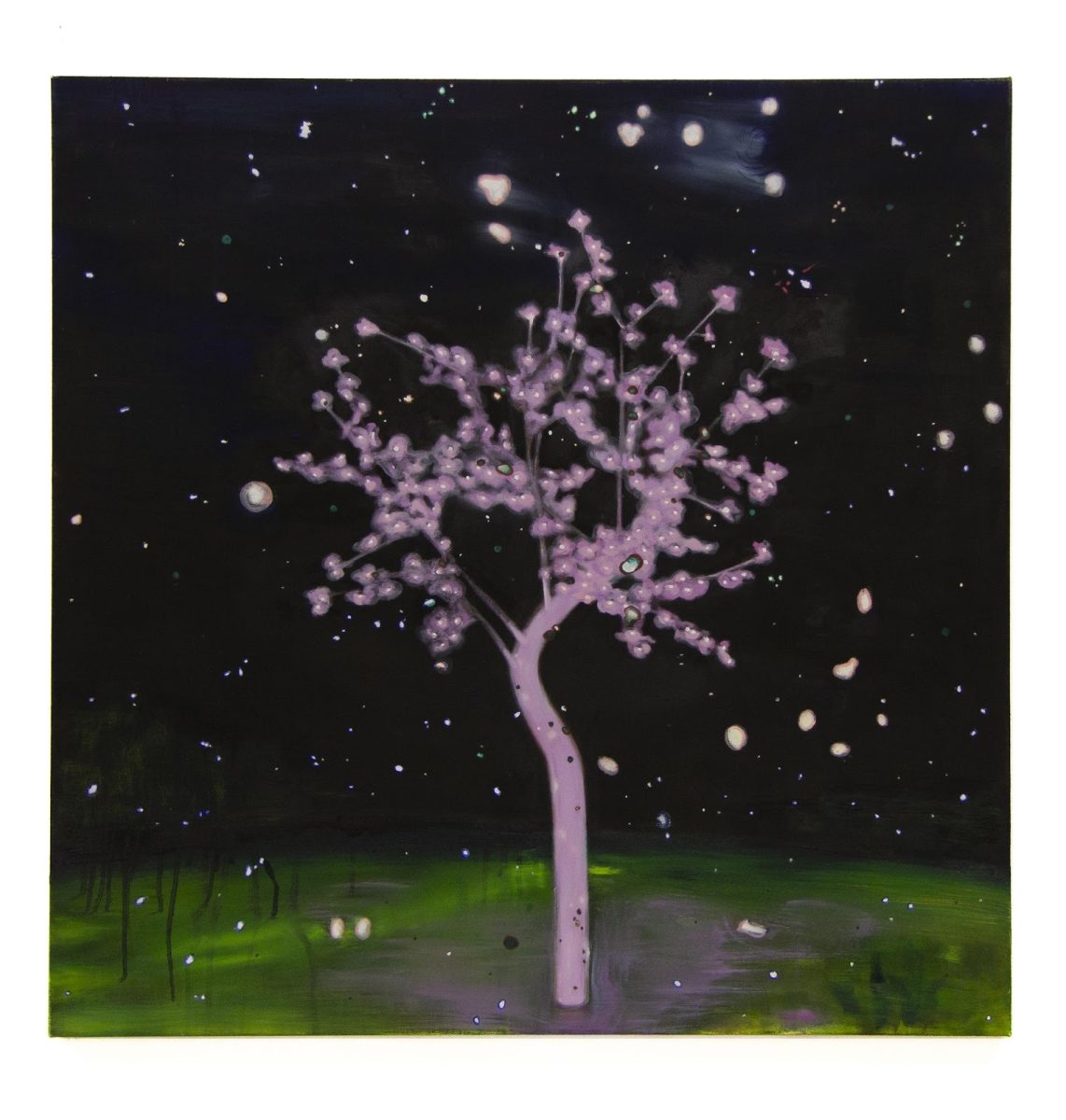
Rather than rehearsing a fixed or nationalistic past, Yuyue’s work embraces what cultural theorist Svetlana Boym termed “reflective nostalgia”: a mode of remembering that lingers with loss while resisting the illusion of restoration. “Reflective nostalgia,” Boym writes, “dwells on the ambivalences of human longing and belonging and does not shy away from the contradictions of modernity.” In this sense, her paintings are not reenactments of origin but acts of temporal layering—moments of emotional compression where symbolic meaning becomes fluid.
Formally, Yuyue He’s use of repetition, symmetry, and slow variation evokes the serialized strategies of artists like On Kawara or Félix González-Torres, yet directed toward a culturally embedded emotional terrain. Her “landscapes,” as she calls them, are “not defined by physical terrain, but shaped by flows of memory, displacement, and cultural transmission”.
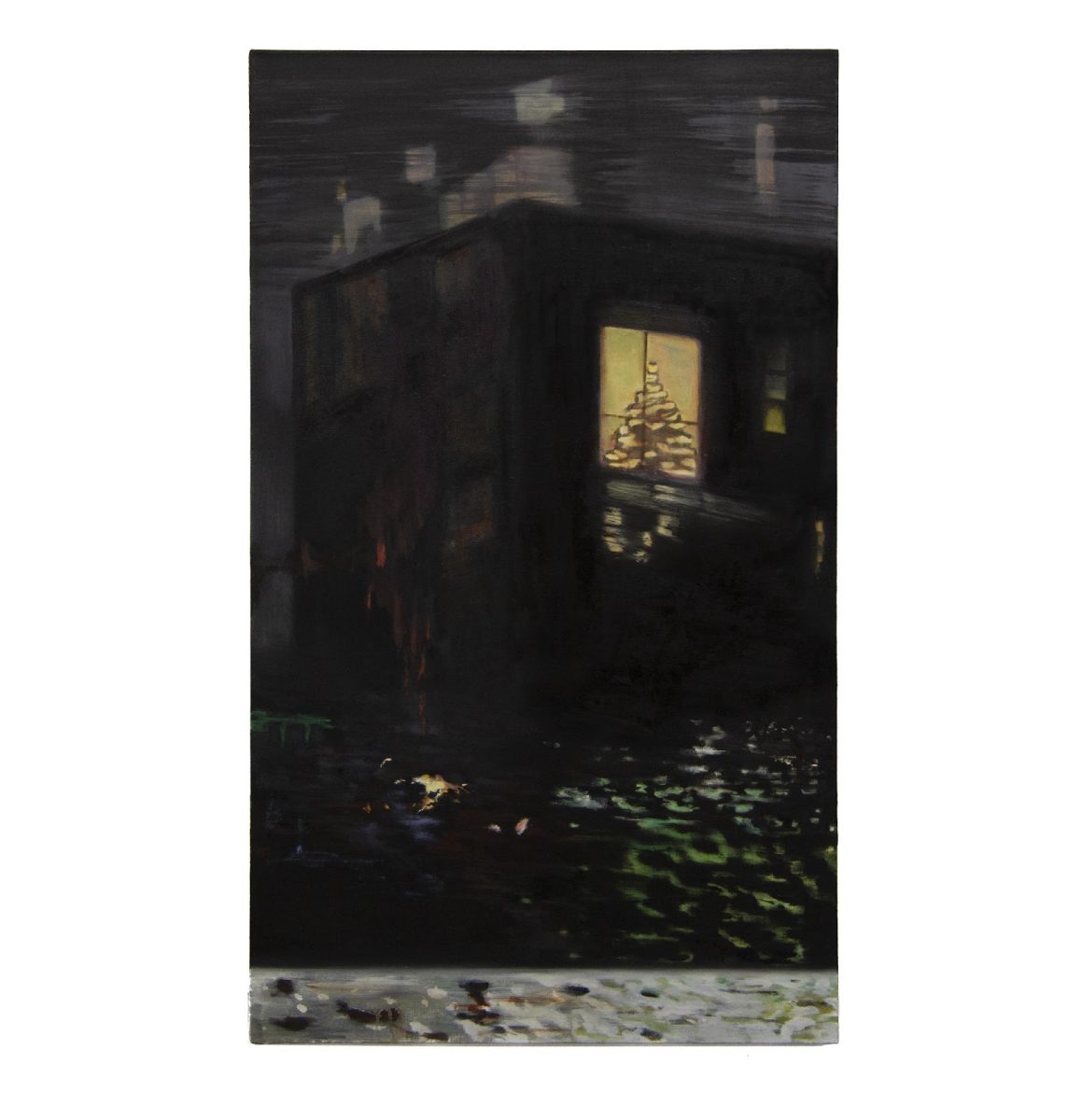
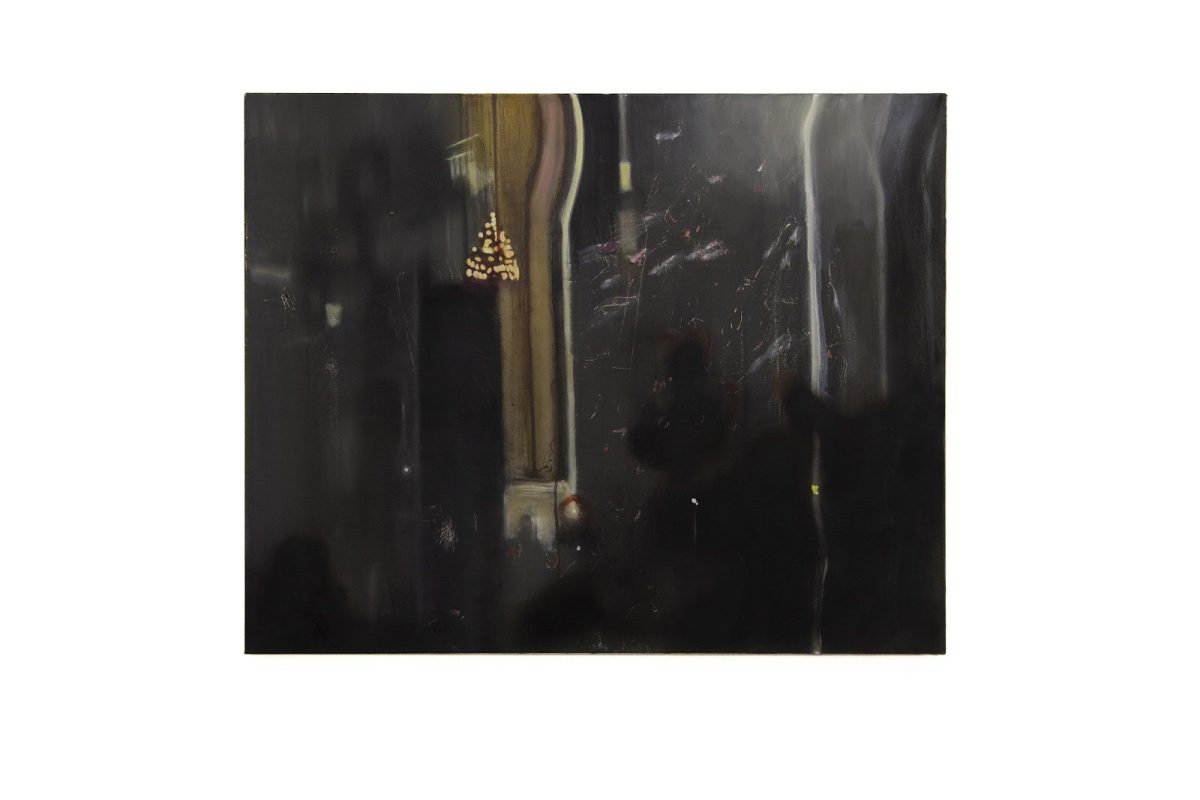
Ultimately, her practice presents a theory of looking that is never passive. Viewers are asked not to decode meaning, but to inhabit a space of suspended resolution. As in I Am Doing Well., where interior scenes glow with quiet melancholy, and I’ll Go Downstairs with You, where familial parting is translated into gesture and structure, viewers are positioned not merely as spectators but as ethical witnesses.
In these spaces, the boundary between image and ritual collapses. Presence is not illustrated, but sensed. Meaning is not delivered, but unfolds—slowly, reflectively, across the hinge of memory. Yuyue’s art reminds us that to look is to care, and to remember is to participate in the fragile labor of cultural continuity.