The Fondation Louis Vuitton to present a major retrospective of works by Gerhard Richter—one of the most influential contemporary artists—born in Dresden in 1932. He fled East Germany for Düsseldorf in 1961 before settling in Cologne, where he currently lives and works. The Fondation Louis Vuitton will dedicate all its galleries to Gerhard Richter, widely regarded as one of the most important and internationally celebrated artists of his generation.
Gerhard Richter was featured in the inaugural presentation of the Fondation Louis Vuitton in 2014, with a group of works from the Collection. Now, the Fondation Louis Vuitton is honoring the artist with an exceptional retrospective — unmatched both in scale and in chronological scope — featuring 270 works stretching from 1962 to 2024. The exhibition includes oil paintings, glass and steel sculptures, pencil and ink drawings, watercolors, and overpainted photographs. For the first time, an exhibition will offer a comprehensive view of over six decades of Gerhard Richter’s creation.
Gerhard Richter has always been drawn to both subject matter and the very language of painting — a field of experimentation whose boundaries he has continually pushed, avoiding any singular categorization. His training at the Dresden Academy of Fine Arts led him to engage with traditional genres such as still life, portraiture, landscape, and history painting. His desire to reinterpret these genres through a contemporary lens lies at the heart of this exhibition. Regardless of subject, Richter never paints directly from nature or from the scene before him: every image is filtered through an intermediary medium — through a photograph or a drawing, — from which he constructs a new, autonomous work. Over time, he has explored an extraordinary range of genres and techniques within painting, developing various methods of applying paint to canvas — whether with a brush, a palette knife, or a squeegee.
The exhibition brings together many of Richter’s most significant works up to his decision in 2017 to stop painting, while continuing to draw. Presented in chronological order, each section spans approximately a decade and traces the evolution of a singular pictorial vision — one shaped by both rupture and continuity — from his early photo-based paintings to his final abstractions.
The exhibition is curated by Dieter Schwarz & Nicholas Serota
Gallery 1: 1962–1970 — Painting from Photographs: Photography as a Source of Imagery

From the outset, Richter’s choice of subject matter was complex, on the one hand, seemingly mundane images sourced from newspapers; on the other, family photographs tied to his own past — such as Uncle Rudi and Aunt Marianne —and to the shadows of German history, as seen in Bombers.

Already in the mid-1960s, Richter was challenging the conventions of illusionistic painting with sculptures such as Four Panes of Glass and his first Color Charts. In his Cityscapes, he experimented with a pseudo-expressionist impasto technique, while in his Landscapes and Seascapes, he revisited traditional genres, reinterpreting them through the intermediary of photography and challenging their painterly conventions.
Gallery 2: 1971–1975 — Investigating representation.
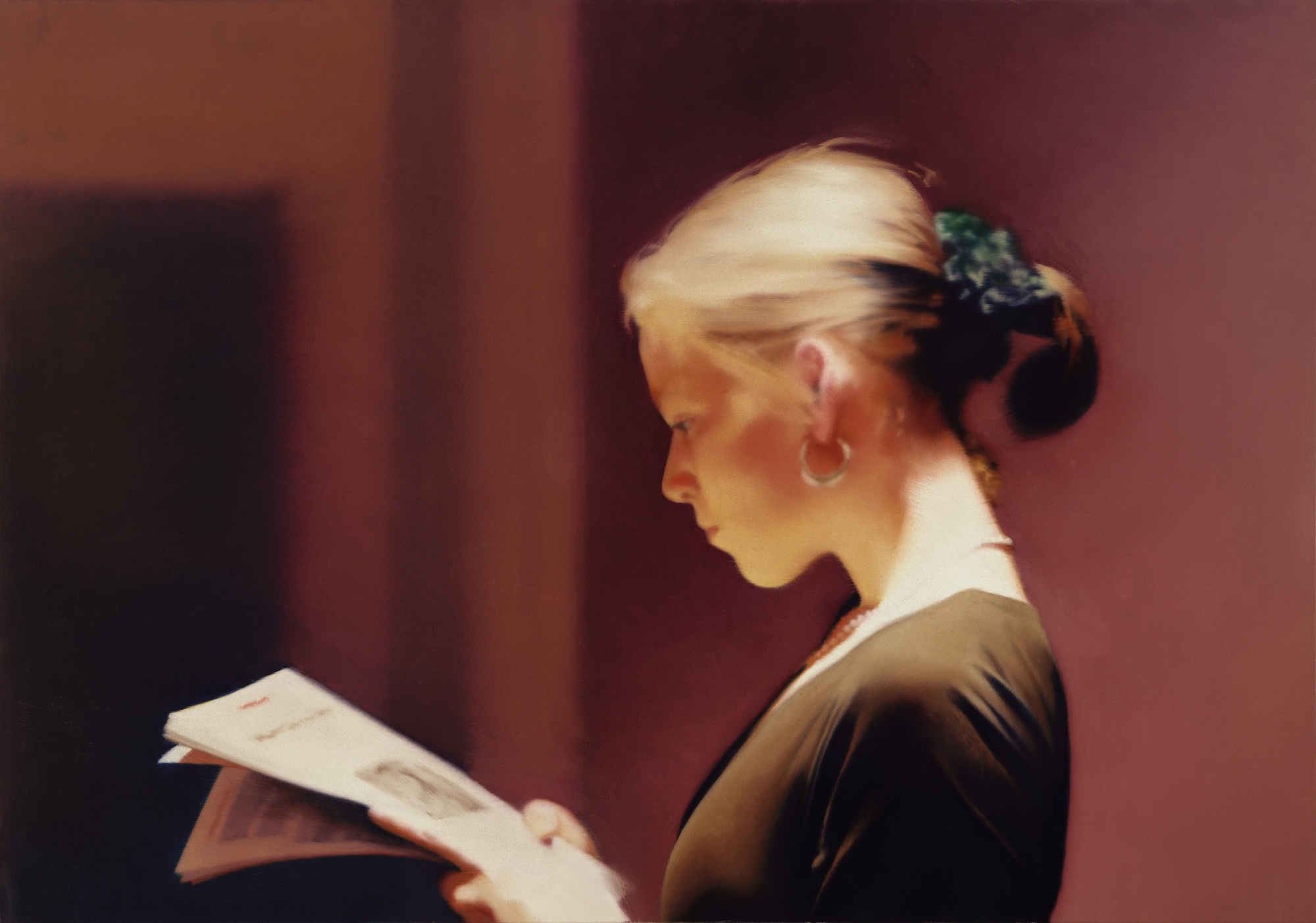
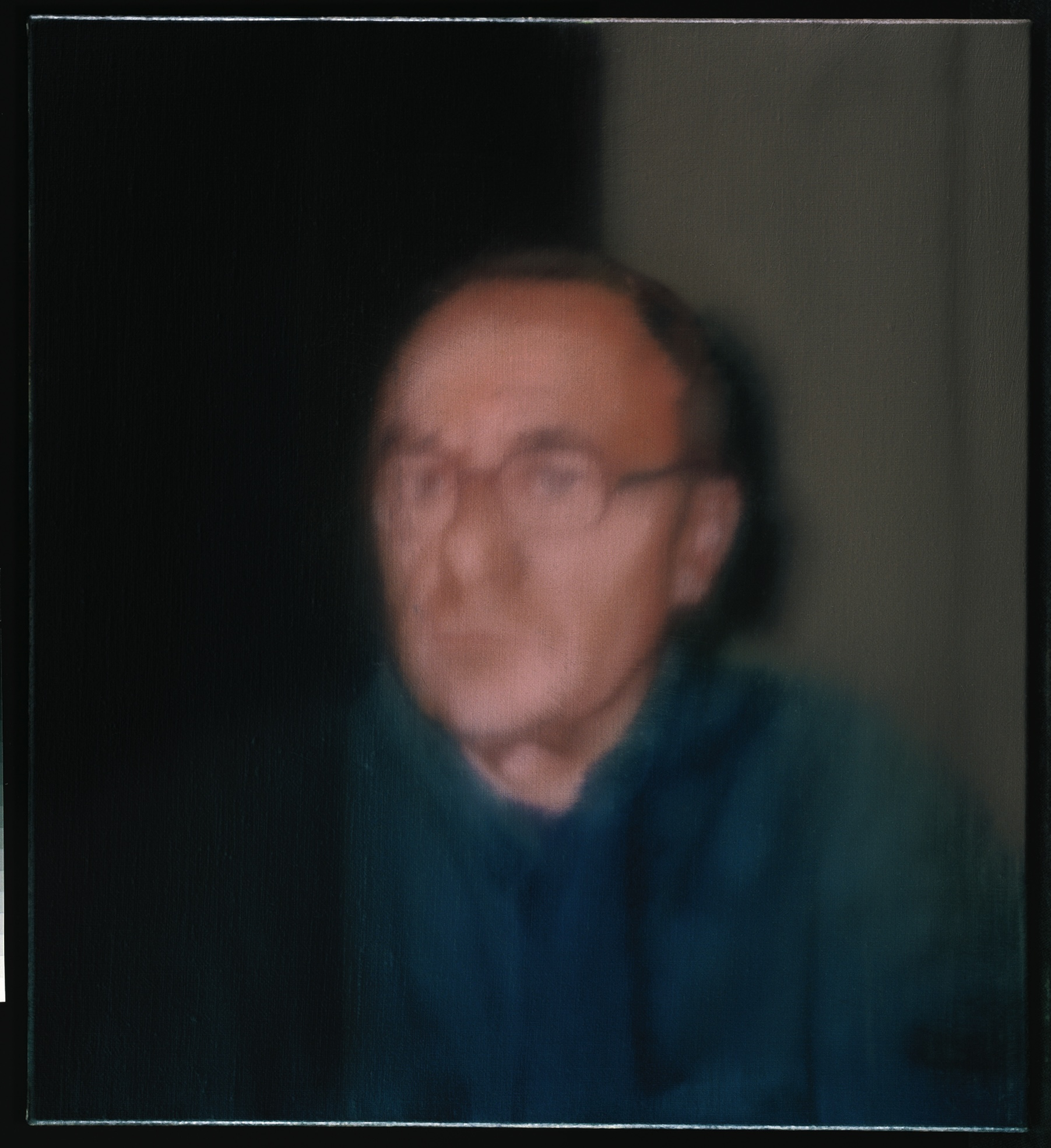
The 48 Portraits, painted for the 1972 Venice Biennale and a true tour de force, mark the beginning of a new chapter in which Richter interrogates the nature of painting in multiple ways: through the use of his signature blur technique (Vermalung); the progressive copying and dissolution of a Titian Annunciation; the random distribution of color in the large Color Charts; and the rejection of representation and expression in the Grey Paintings.
Gallery 4: 1976–1986 — Exploring abstraction.
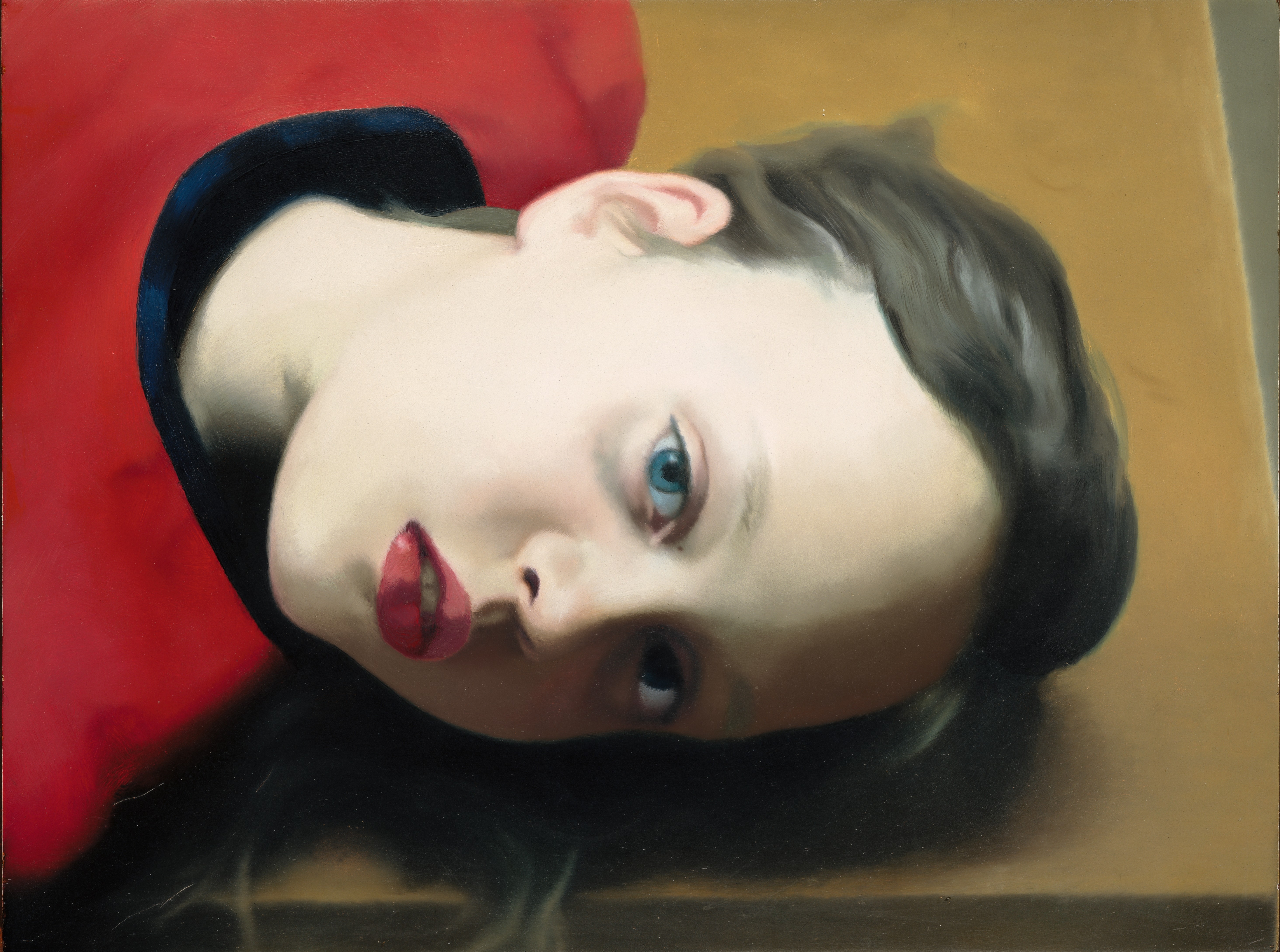
During this decade, Richter laid the foundations of his distinctive approach to abstraction: enlarging watercolor studies, examining the painted surface, and making the brushstroke itself the subject of a painting (Strich). At the same time, he painted the first portraits of his daughter Betty and continued exploring traditional subjects such as landscape and still life.
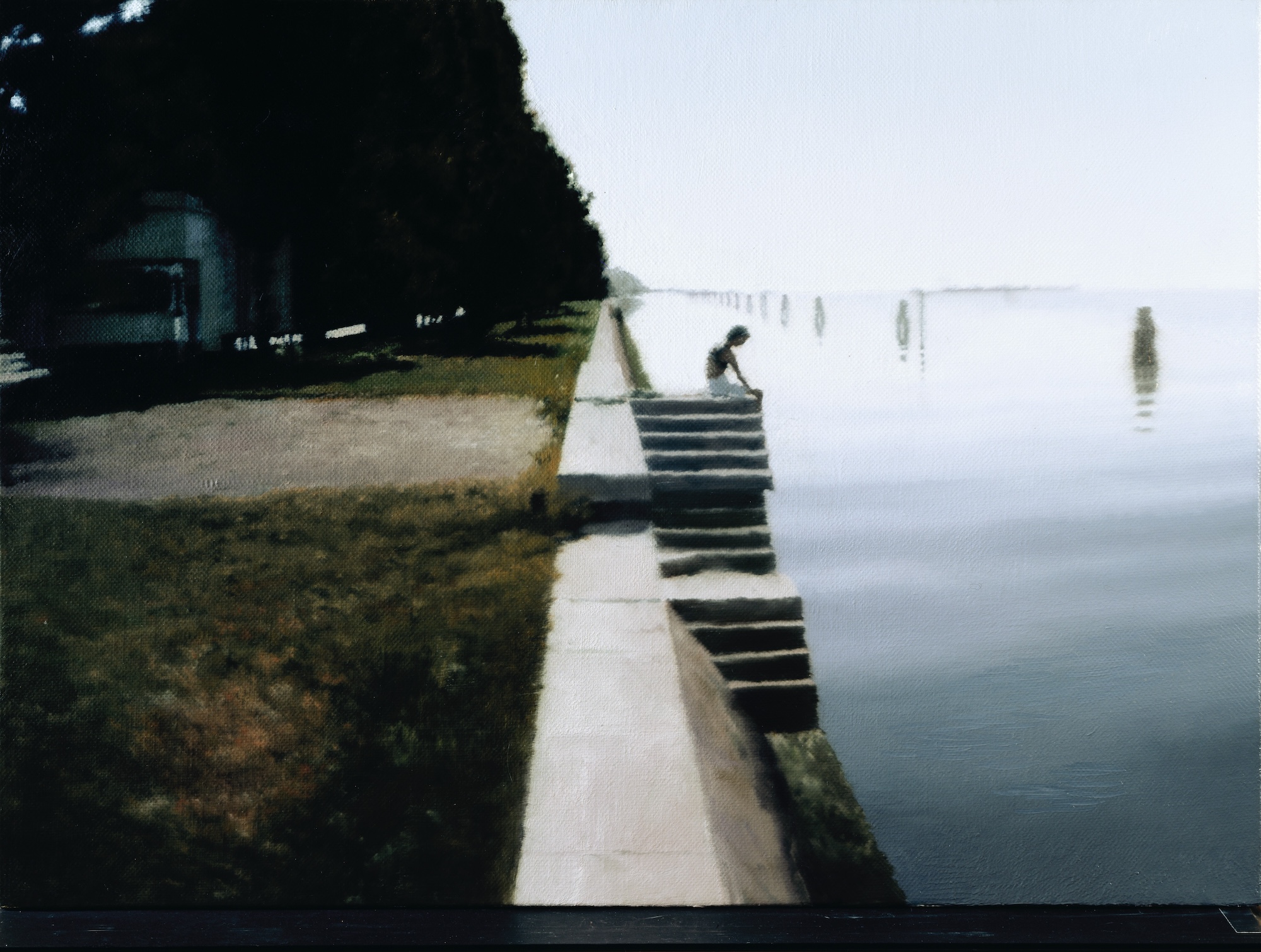
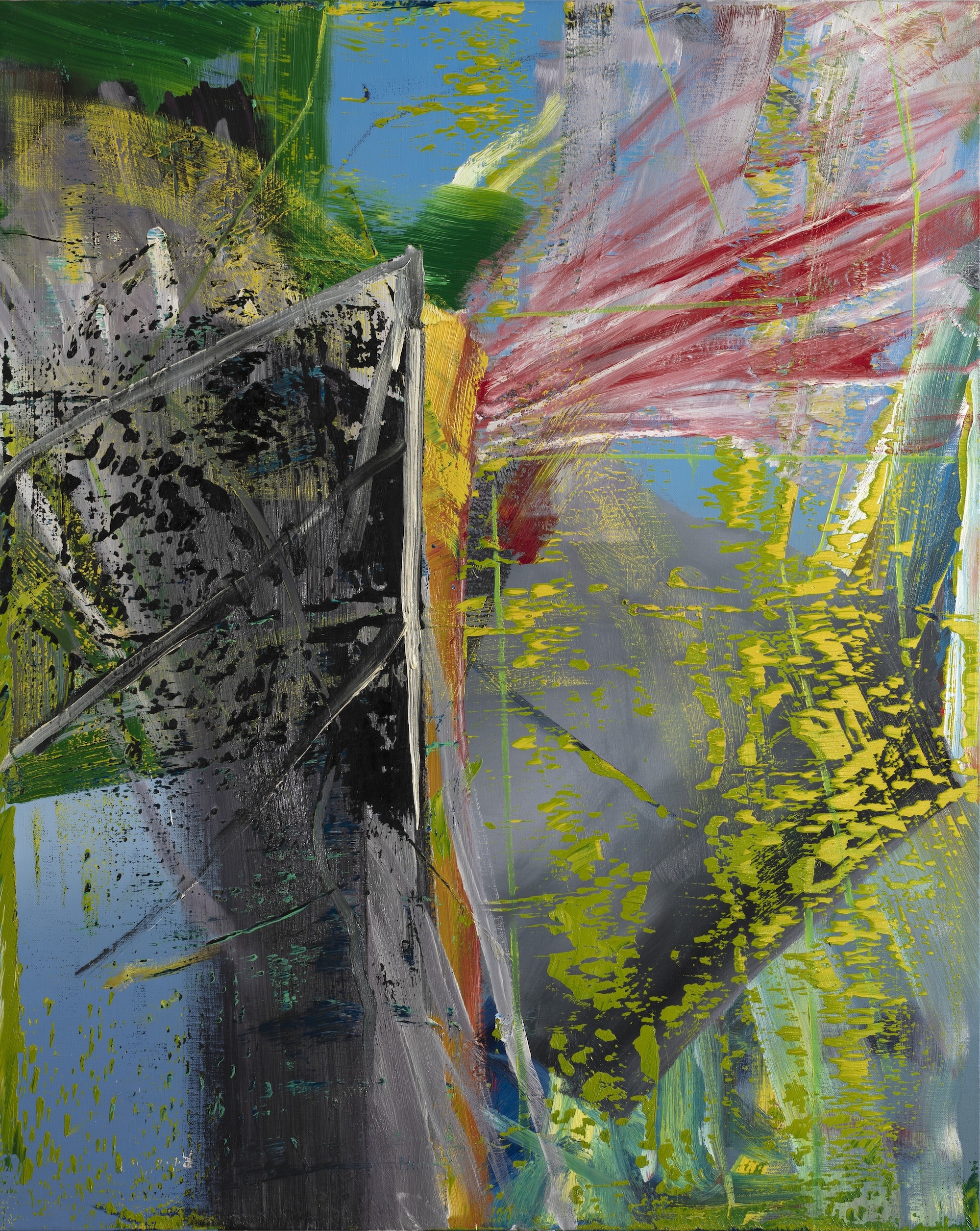
Gallery 5: 1987–1995 — Sombre reflections.
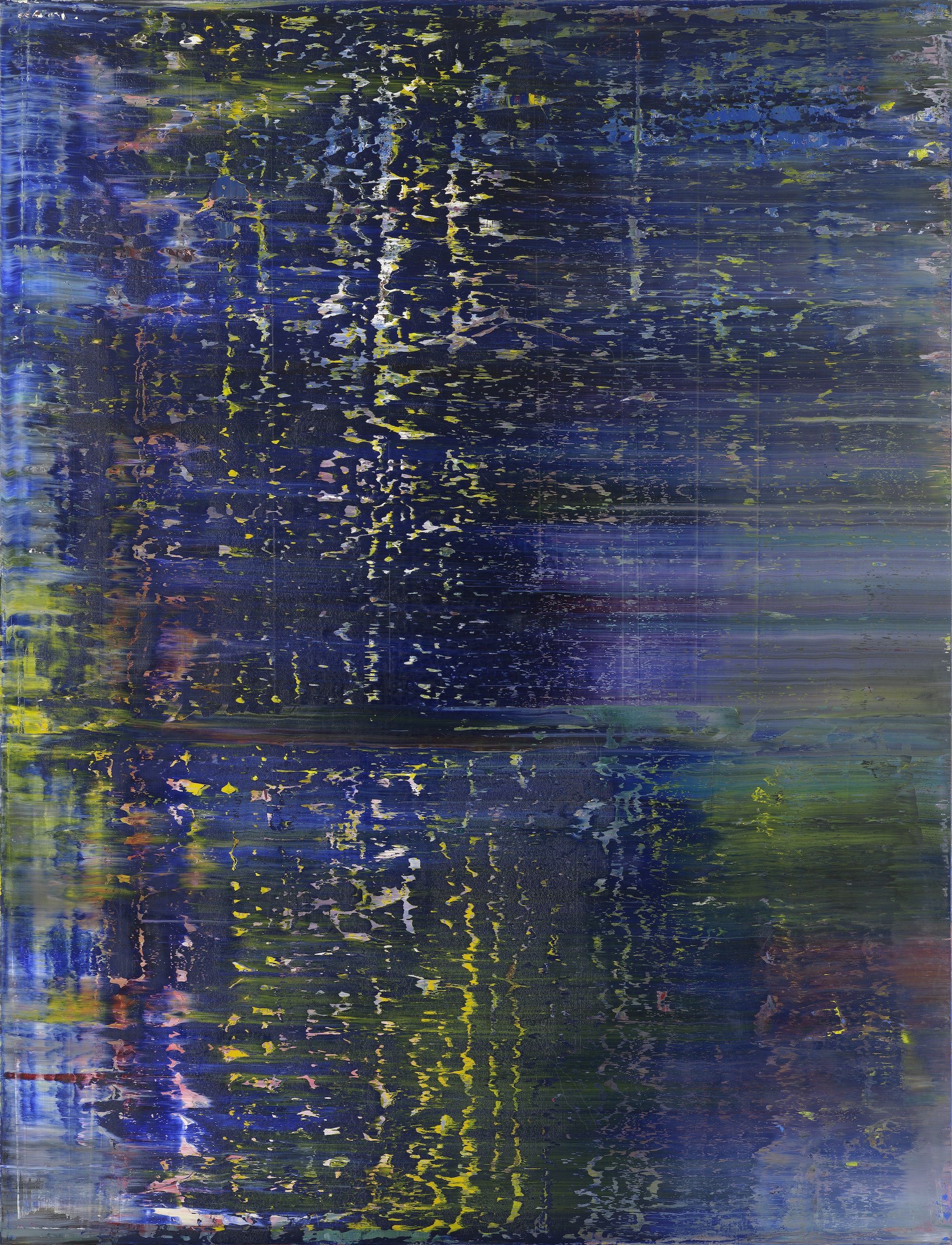
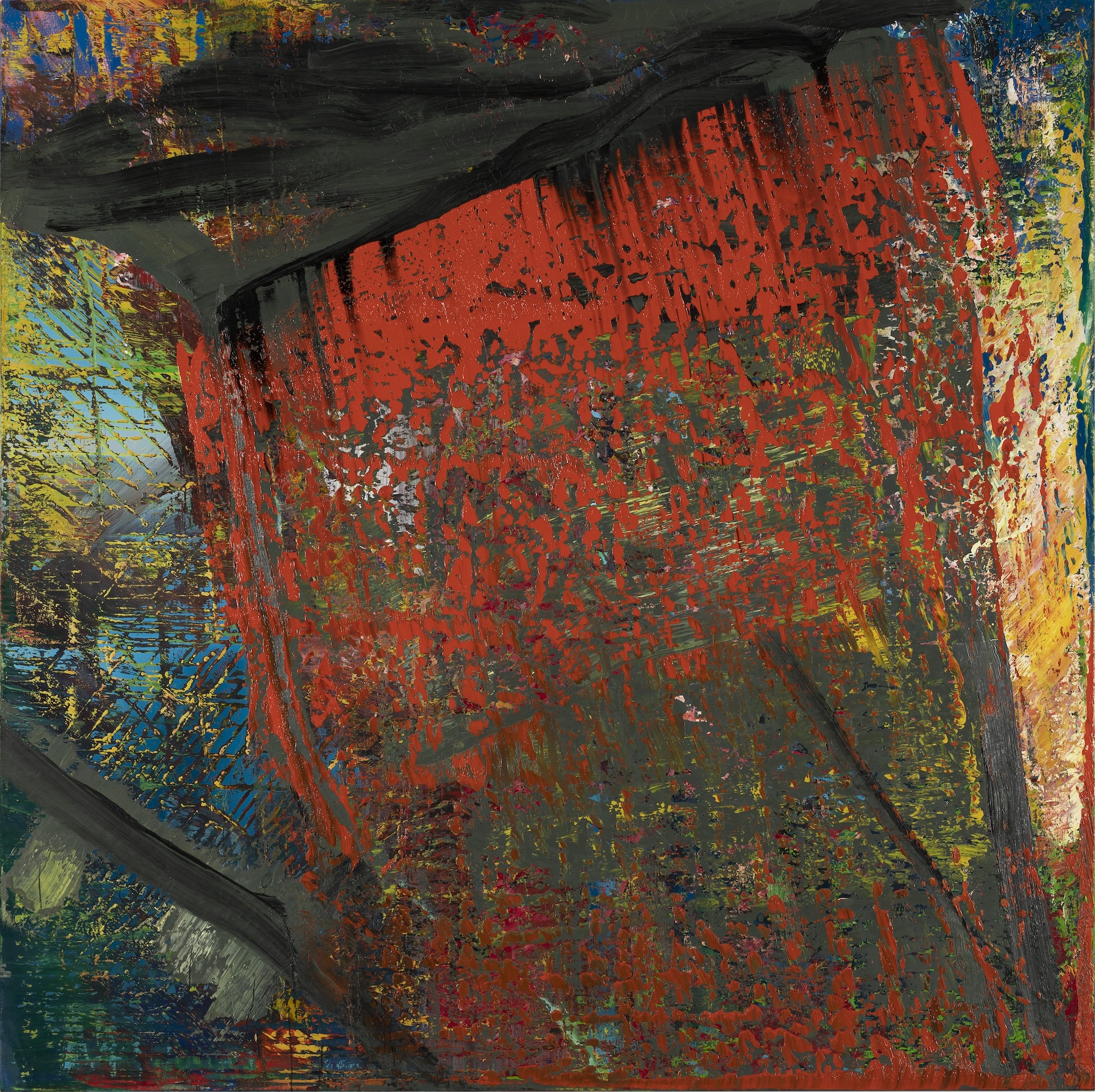
Motivated by a profoundly skeptical view of artistic and social change, Richter painted the October 18, 1977 series — exceptionally on loan from MoMA — his only body of work that explicitly refers to recent German history. During this period, he also produced some of his most striking and somber abstract works. Returning to the theme of his early family paintings, Richter created the Sabine mit Kind series.
Galleries 7 and 9: 1996–2009 — New perspectives in painting: chance.
In the late 1990s, Richter entered a highly productive period, spanning small figurative and abstract works, the austere Silikat series, experiments with chance that culminated in 4900 Colors, and the meditative Cage Paintings, a tribute to composer John Cage.
Galleries 9 and 10: 2009–2023 — Final paintings.
Richter surprised audiences by abandoning painting for several years to experiment with glass works and digitally generated Strip images. He returned to painting with Birkenau, a group of works inspired by four photographs taken inside a Nazi extermination camp. The final room presents his last masterful abstract canvases.
Sculpture appears at key points throughout the exhibition, and three rooms dedicated to watercolors, drawings and overpainted photographs provide an interlude and change of pace in the 1970s and 1990s, while illustrating the artist’s ongoing concerns since he stopped painting in 2017.
GERHARD RICHTER, October 17th, 2025 – March 2nd, 2026, Fondation Louis Vuitton, Pari
About the artist
Born in Dresden in 1932 in the then East Germany, Richter fled the GDR just before the Berlin Wall was built in 1961. He settled in Düsseldorf and later in Cologne, where he still lives and works today.
From 1951 to 1956, he studied mural painting at the Dresden Academy of Fine Arts. In 1961, he left for Düsseldorf, where from 1961 to 1964 he studied painting under K.O. Götz at the State Academy of Fine Arts. Some 10 years later, he became a professor of painting there, a position he held until 1994. Starting in 1962, while still a student, he developed his own artistic practice, initially based on photographic models and later exploring a wide variety of abstract language. Alongside his canvases and objects, Richter’s complex body of work also includes drawings, watercolors, overpainted photos, editions and multiples.
Gerhard Richter is unanimously regarded as one of the most important and influential living artists. His works are held in major museum collections and have been exhibited worldwide. Since 1967, Richter’s work has been exhibited in France by institutions and galleries, including retrospectives at the Musée d’Art Moderne de la Ville de Paris in 1999 and more recently at the Centre Pompidou in 2012.