One hundred years after Willem de Kooning left Rotterdam for New York, the Rijksmuseum will present the largest exhibition of the artist’s work in Europe for more than 40 years, featuring over 120 drawings, paintings and sculptures.
Opening on 9th October 2026, Willem de Kooning at work will feature more than 120 drawings, paintings and sculptures, making it the largest De Kooning exhibition in Europe since 1984. Developed in collaboration with the Art Institute of Chicago and The Willem de Kooning Foundation, the exhibition places drawing at the centre of the artist’s practice, offering a fresh perspective on one of the defining figures of twentieth-century art.
Rather than treating drawing as a preliminary stage, the exhibition reveals it as the engine of De Kooning’s creative process. Across more than 65 years of work, visitors will follow the artist as he sketches, experiments, revises and continually reinvents his approach, demonstrating how drawing remained central to his thinking, whether working on paper, canvas or sculpture.
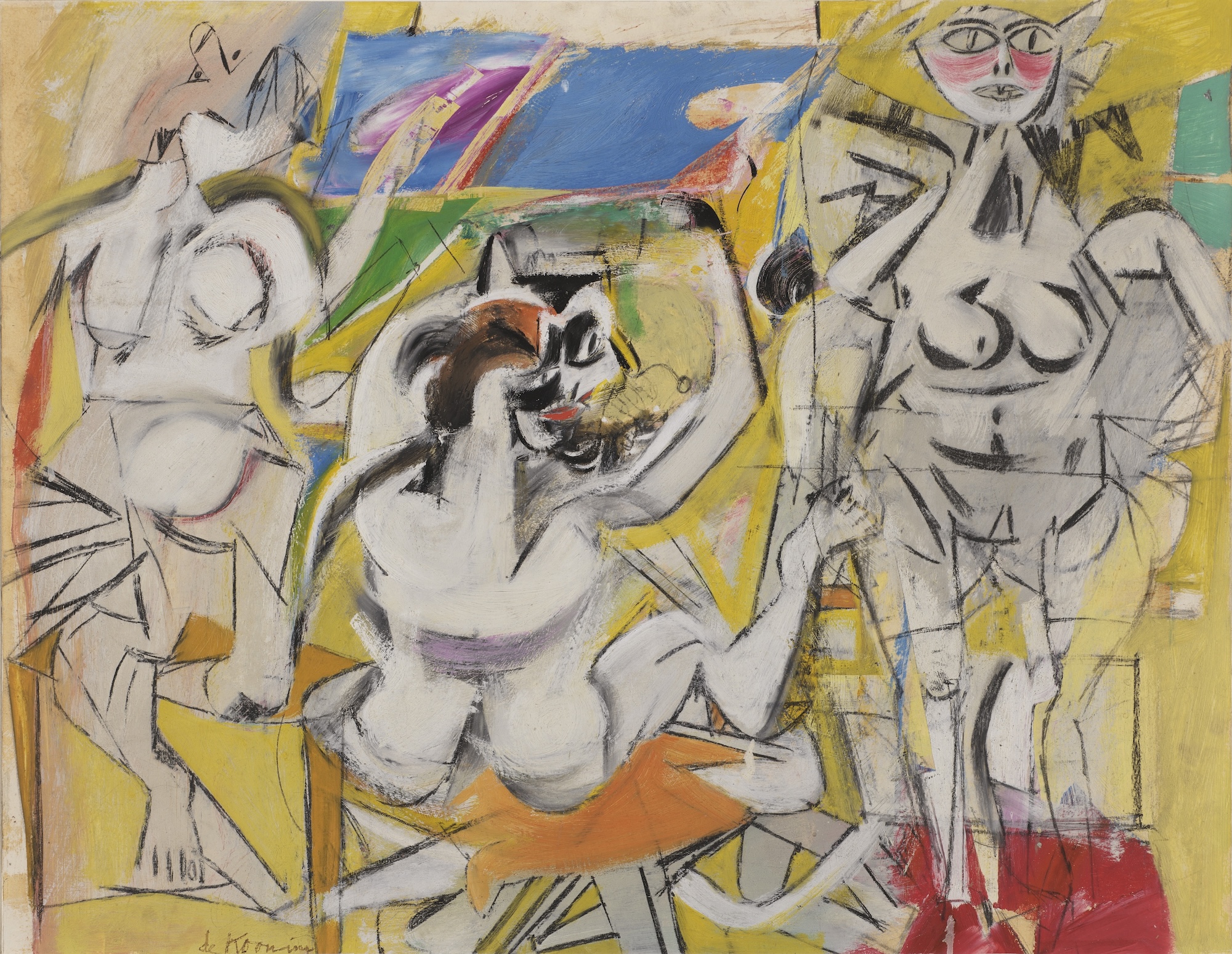
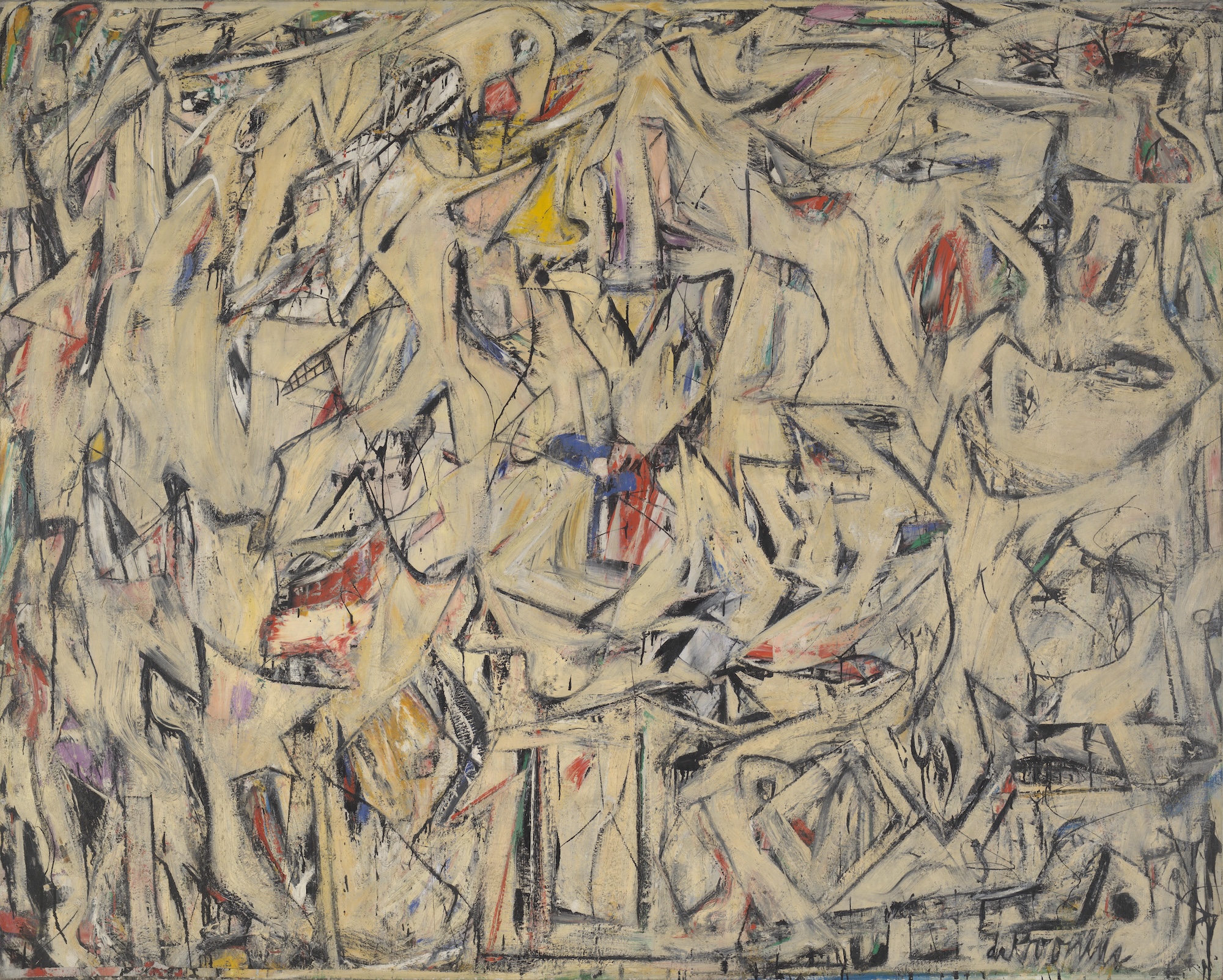
The exhibition brings together rarely seen drawings from private collections alongside some of De Kooning’s most celebrated works, including Excavation (1950) from the Art Institute of Chicago, Pink Angels (c.1945) from the Frederick R. Weisman Art Foundation, Abstraction (1949–50) from the Museo Nacional Thyssen-Bornemisza, and Woman (1983) from Museum Ludwig.
Themes that would define De Kooning’s career—including the human figure and landscape—recur throughout the exhibition, illustrating an artist whose practice was driven less by stylistic consistency than by perpetual exploration and self-renewal.
In a symbolic gesture marking the centenary of De Kooning’s departure from the Netherlands in 1926, the Rijksmuseum will also display two of his most celebrated paintings, Woman I and Woman and Bicycle, in the museum’s Gallery of Honour. Installed alongside masterpieces by Rembrandt, Vermeer and Frans Hals, the presentation recognises De Kooning not only as an American Abstract Expressionist but as one of the Netherlands’ most influential artistic figures.
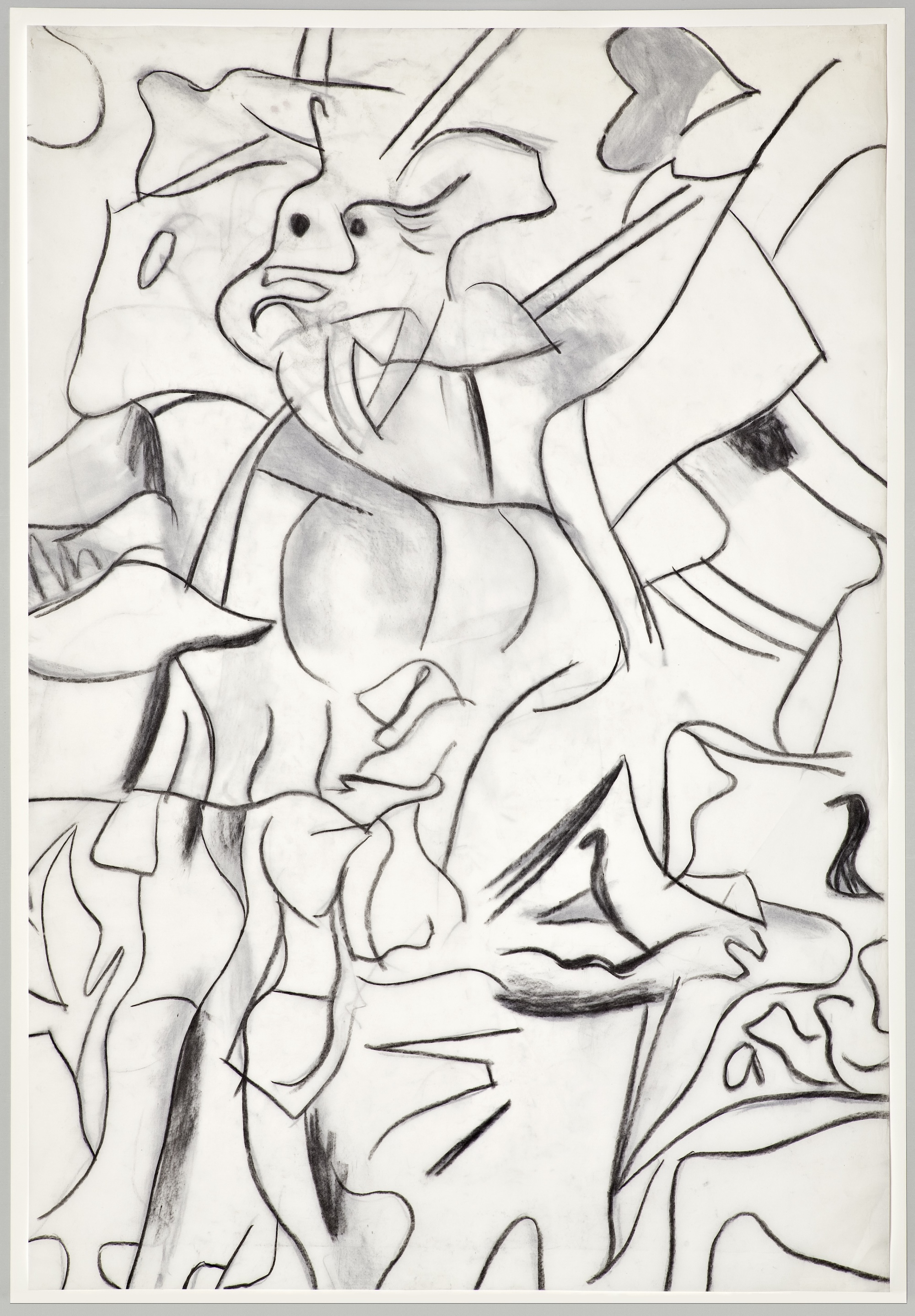
Born in Rotterdam in 1904, De Kooning left the city aged 22 aboard the cargo ship SS Shelley, travelling as a stowaway to the United States. He would go on to become one of the leading artists of Abstract Expressionism, profoundly shaping post-war painting while later expanding his practice into sculpture
Willem de Kooning at work, 9th October 2026 – 17th January 2027, Rijksmuseum
About the artist
Born and raised in Rotterdam, Willem de Kooning (1904–1997) developed a passion for drawing and painting at an early age. De Kooning took drawing courses as a night student at the city’s Academy of Visual Arts and Technical Sciences and apprenticed at the decorative arts studio of Jan and Jaap Gidding in Rotterdam. In 1926, he stowed away aboard a cargo ship bound for America. He settled in New York, where he worked during his first years as a house painter, illustrator and shop-window designer. The art world beckoned, however, and de Kooning made the transition to becoming an independent artist. Following his breakthrough in the late 1940s, he became a key figure in the New York School, alongside contemporaries such as Jackson Pollock, Lee Krasner, Barnett Newman and Mark Rothko. In the decades that followed, de Kooning grew into one of the most influential modern artists. Although his work is often associated with Abstract Expressionism, he resisted every attempt to place him within a particular category.
Accompanying the exhibition: Two publications, a catalogue and a book, will accompany the exhibition. The catalogue, edited by The Art Institute of Chicago, presents new research and offers an in-depth exploration of Willem de Kooning’s drawings. The book, published by the Rijksmuseum, is especially for readers discovering de Kooning for the first time, or for those wishing to reacquaint themselves with the artist. The public programme accompanying the exhibition includes a masterclass on modern art history, a drawing workshop at the Rijksmuseum’s educational centre the Teekenschool, and an audio tour.
More in the Netherlands
Fenix, Rotterdam’s art museum dedicated to migration, is also commemorating Willem de Kooning this year. Starting on 18th July 2026, three of his monumental bronze sculptures will be on temporary display on the quay in front of the museum.
Five Graphic Design students from HKU University of the Arts Utrech drew inspiration from Willem de Kooning. They were tasked with creating poster designs featuring quotes by the artist. The ten resulting designs will be displayed in several cities throughout the summer.
Students at the Willem de Kooning Academy in Rotterdam are invited to take part in an open call to upcycle the Rijksmuseum’s canvas tote bag. The two winning designs will be sold in the Rijksmuseum Shop during the exhibition.