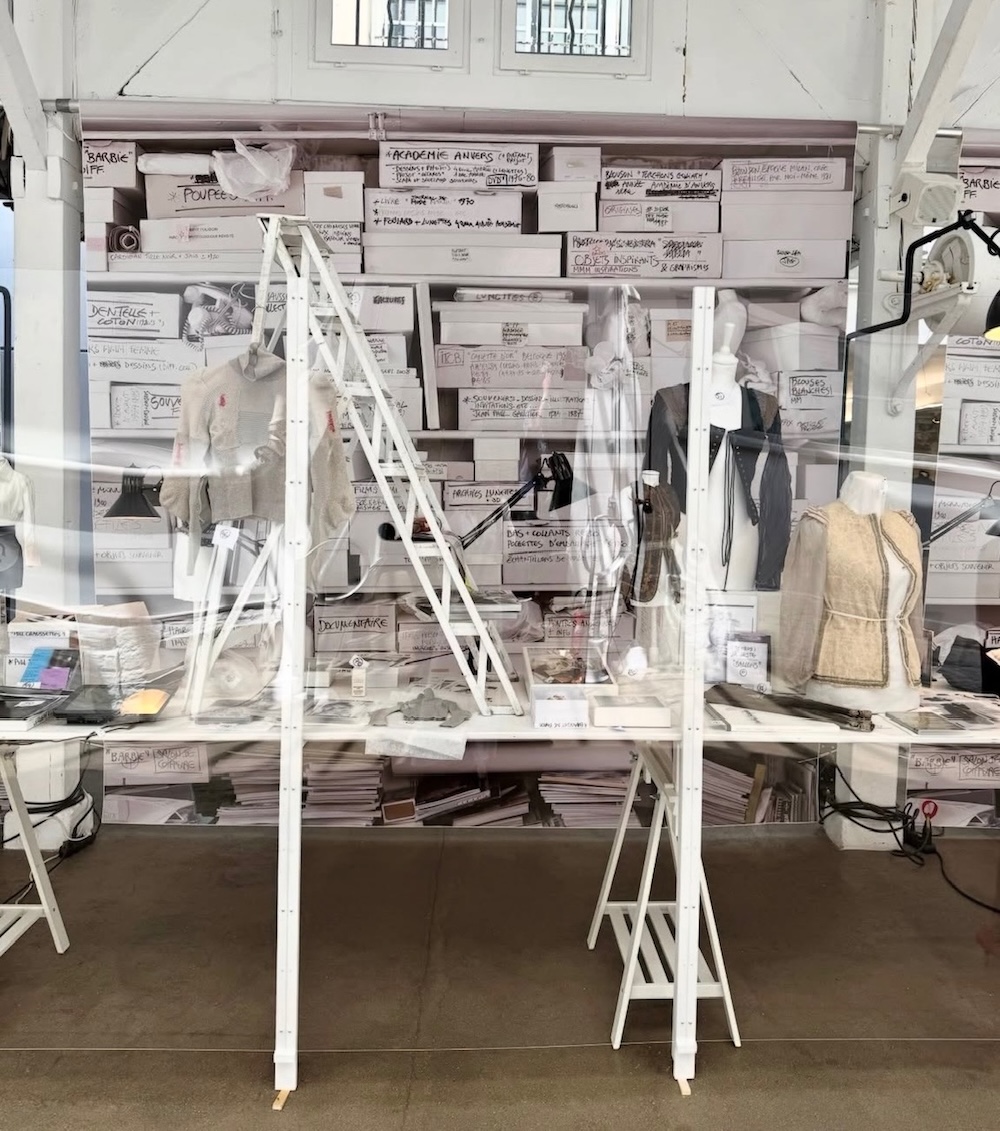
More than 200 objects from the personal archive of Martin Margiela are heading to auction in Paris this week, opening a rare window into the private world and working process of one of fashion’s most influential and elusive figures.
Initiated by Margiela himself, the sale spans almost his entire career, from his designs for the Canette d’Or in Antwerp in 1984 to his departure from Maison Martin Margiela in 2008, alongside a small number of works created during the pandemic.
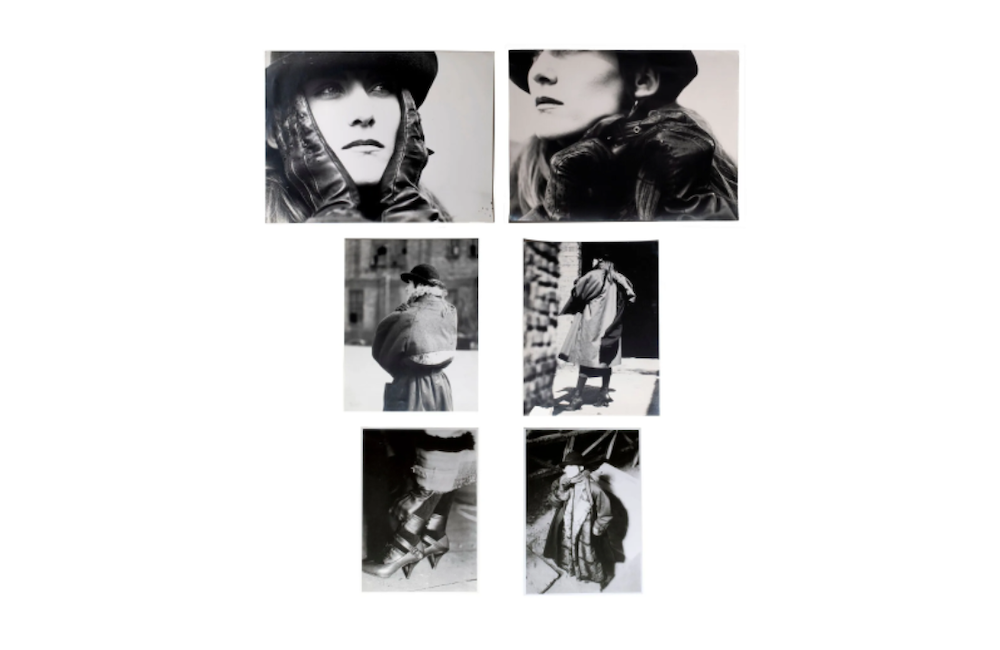
MARTIN MARGIELA – ANTWERP – GOLDEN CAN COMPETITION – Lot 2 MARTIN MARGIELA – ANTWERP – GOLDEN SPIN CONTESTS Set of six photographs by Karel Fonteyne (born in 1950), for the Golden Spindle Contest in Antwerp, Autumn-Winter 1983-1984 – Large photographs (2 silver gelatin prints): 30.5 x 41 cm – 12 x 16 in. – Small photographs (3 silver gelatin prints and one digital print): 30 x 21 cm – 11.25 x 8.25 in. Each image stamped on the reverse. Provenance: Martin Margiela’s personal archives. – The smallest (3 silver prints and 1 digital print): 30 x 21cm, 11.25 x 8.25in. Stamped on verso of each one Provenance: Martin Margiela’s personal archives.
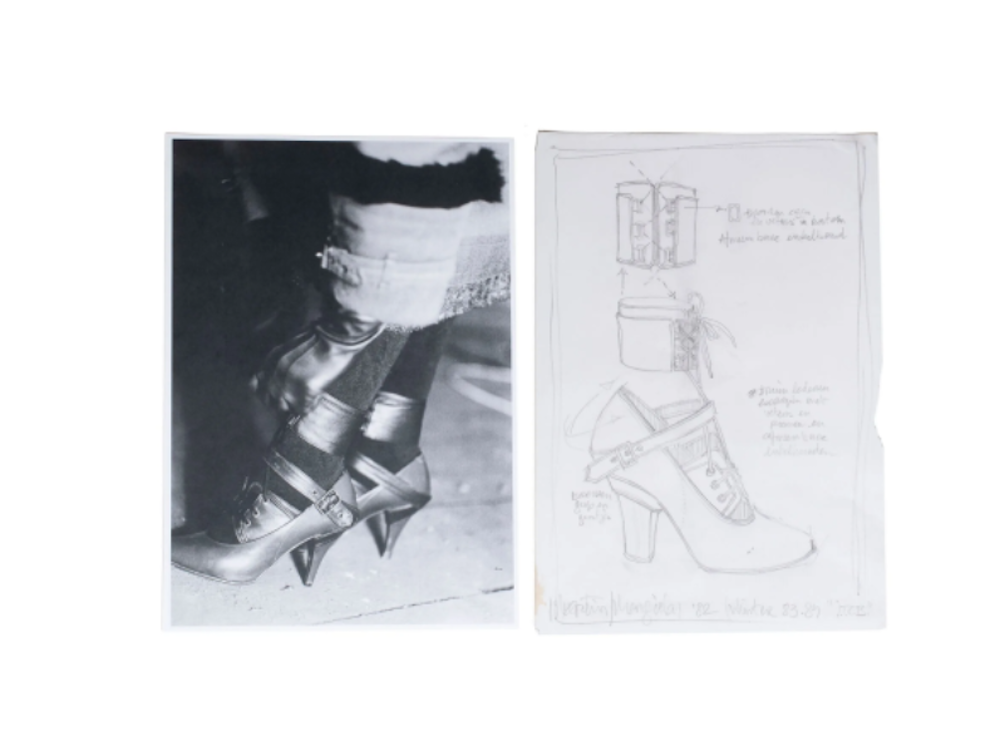
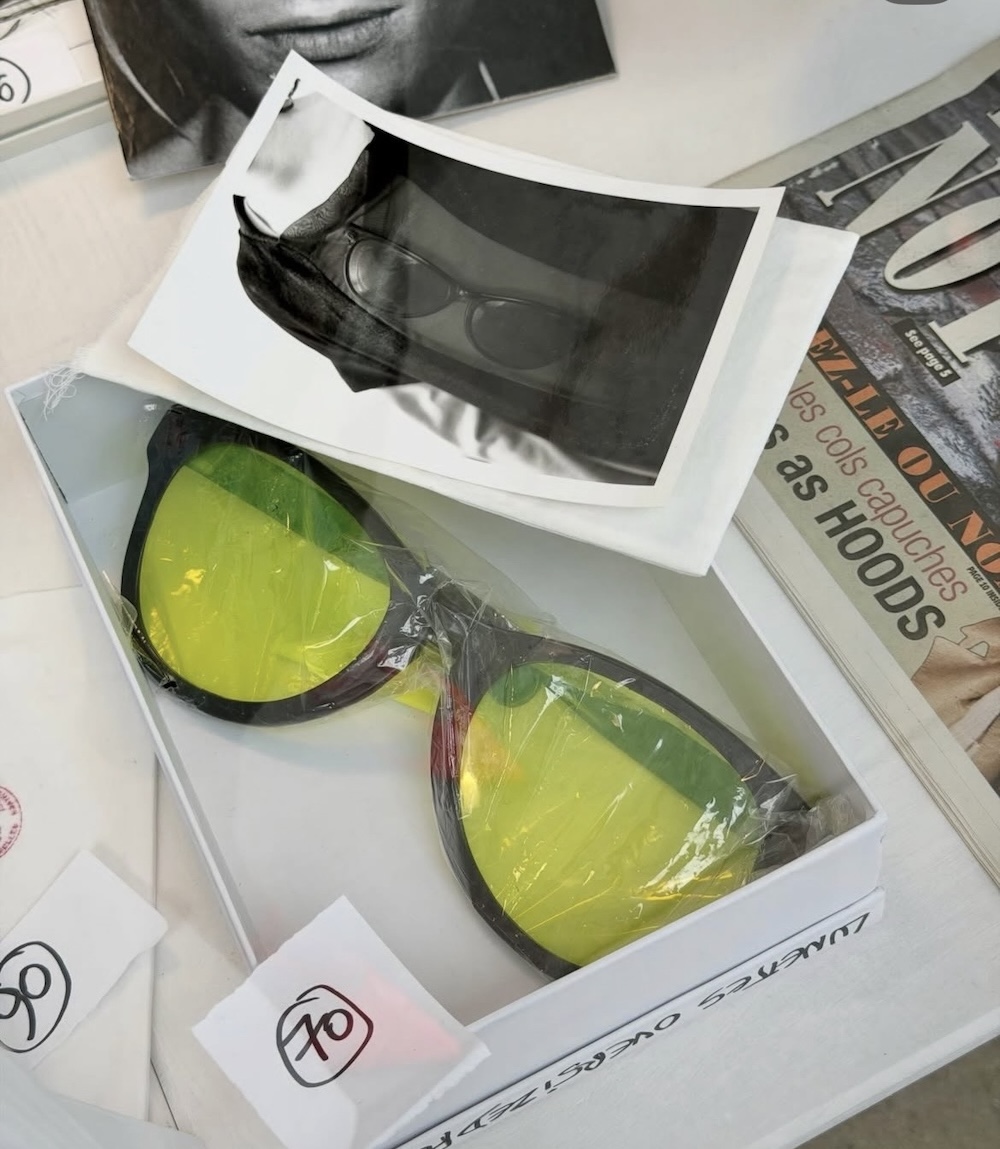
MARTIN MARGIELA – ANTWERP – GOLDEN CAN COMPETITION – Lot 1 MARTIN MARGIELA – ANTWERP – GOLDEN SPIN CONTEST Pencil drawing and corresponding photograph for the Golden Spindle Contest in Antwerp, Autumn-Winter 1983-1984 – Hand-drawn sketch, pencil on paper, signed and dated 1982, 30 x 21 cm – 11.75 x 8.25 in. – Photograph by Karel Fonteyne (born 1950), digital print, 30 x 21 cm – 11.25 x 8.25 in. Stamped. Provenance: Martin Margiela’s personal archives. – A photograph by Karel Fonteyne (born in 1950), digital print, 30 x 21cm – 11.25 x 8.25in. Stamped Provenance: Martin Margiela’s personal archives.
“After many years of moving archival material from place to place and subsequent loans for exhibitions, I felt it was time to let go a part of my fashion memorabilia,”
Margiela said.
“After a long questioning, it was the idea of making happy several collectors and institutions that made me finally decide to send them into the world.”
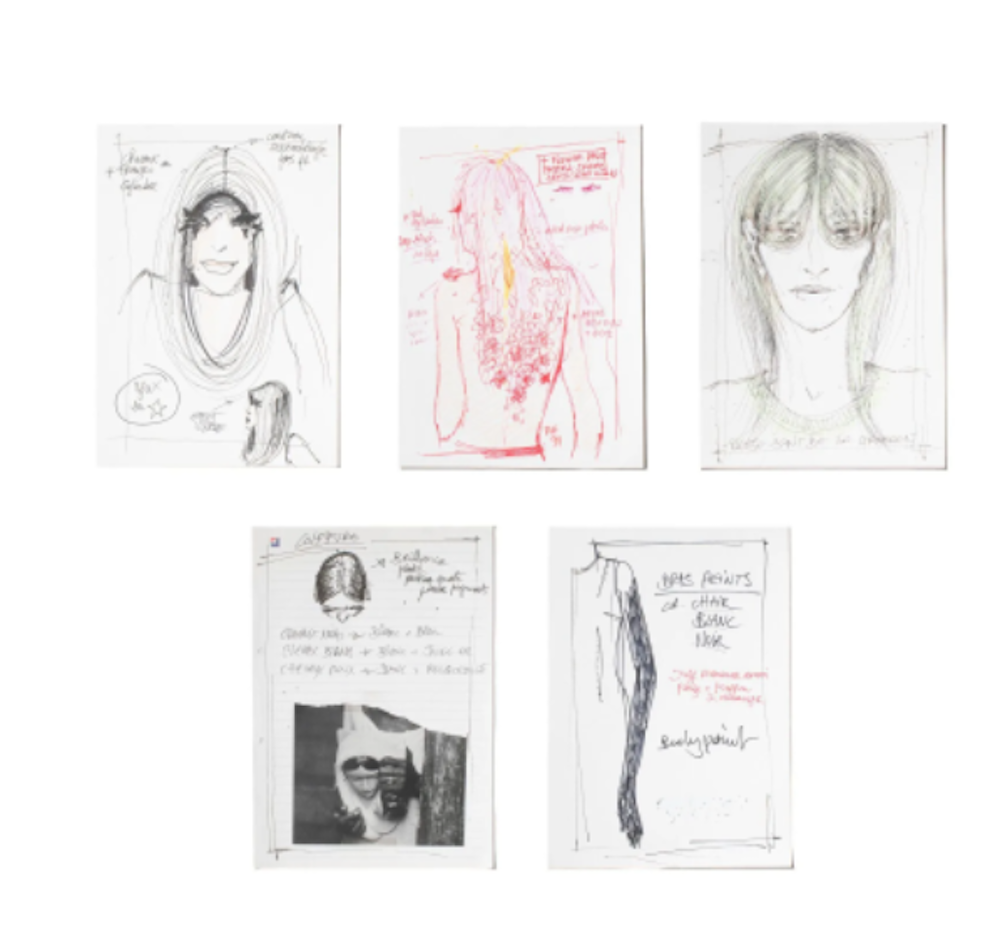
MAISON MARTIN MARGIELA 1988-2008 – Lot 18 MAISON MARTIN MARGIELA 1988-2008 Five sketches by Martin Margiela, ideas for makeup and hairstyles, various collections. Pen, colored pencil, Tipp-Ex, photo glued to paper. One is monogrammed, some are dated. Stamped on the back. Each: 29.7 x 21 cm – 11.75 x 8.25 in. Provenance: Martin Margiela’s personal archives.
Taking place this week on Thursday, 9th July 2026, Martin Margiela: Personal Archives is organised by Maurice Auction in collaboration with Kerry Taylor Auctions. According to the auction house, it marks the first time a living designer has collaborated directly with an auction house to offer their personal archive of clothing and creations.
A public exhibition of the archive is open in Paris until 8th July, turning the sale into something approaching a temporary Margiela retrospective.
Spanning the years from 1984 to 2008, the archive brings together photographs, drawings, garments, prototypes, artworks and personal objects that chart the evolution of Margiela’s singular practice—from the years before founding his eponymous fashion house, through his revolutionary collections for Maison Martin Margiela and his tenure at Hermès, to his decision to step away from fashion in 2008.
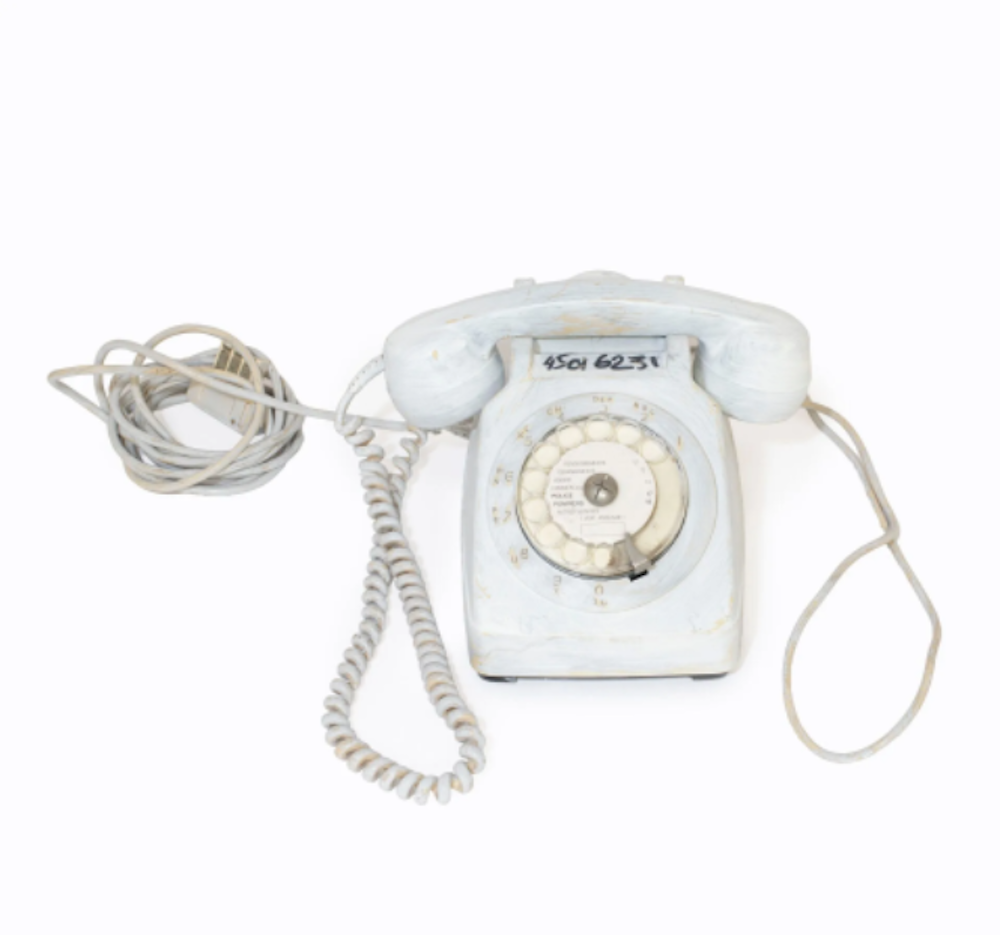
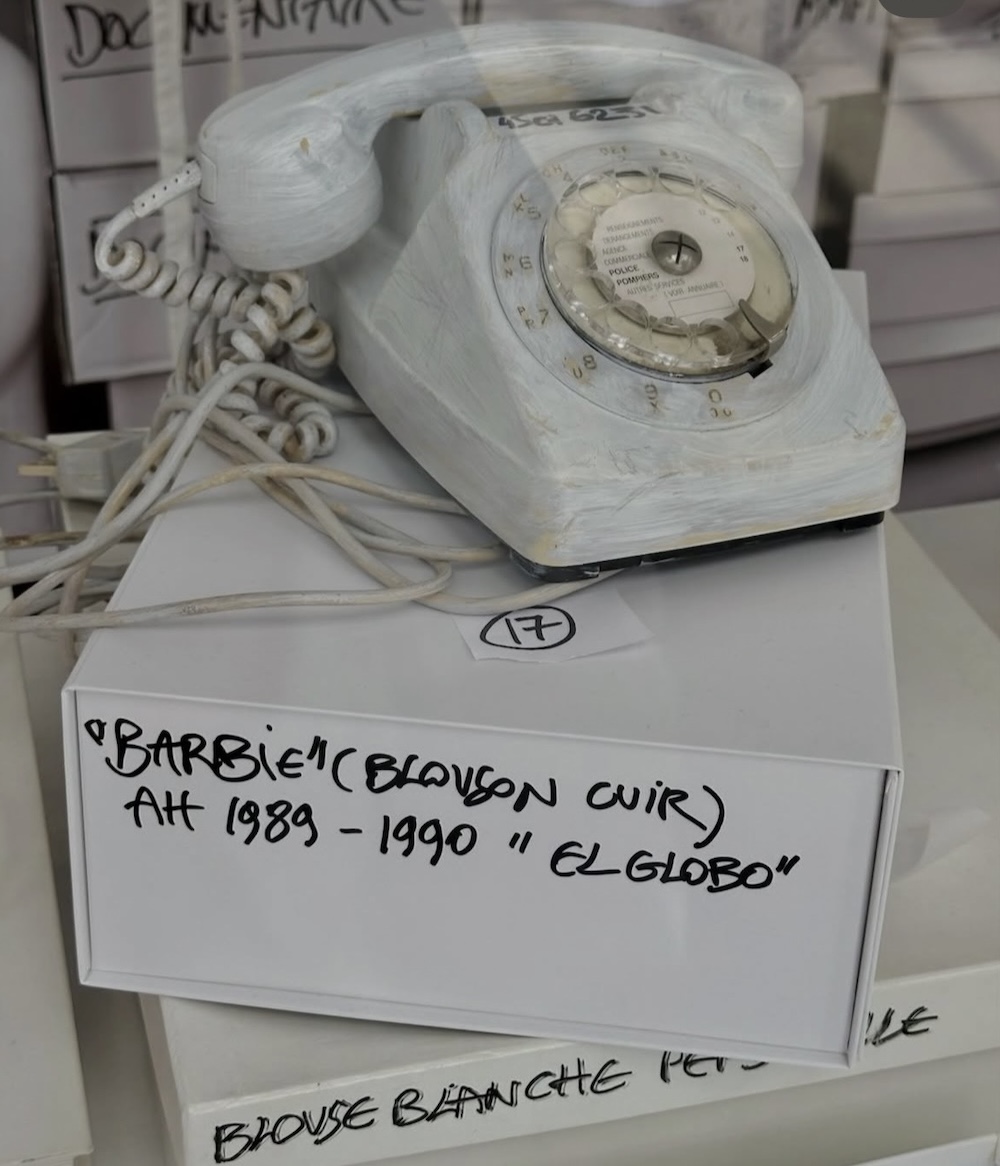
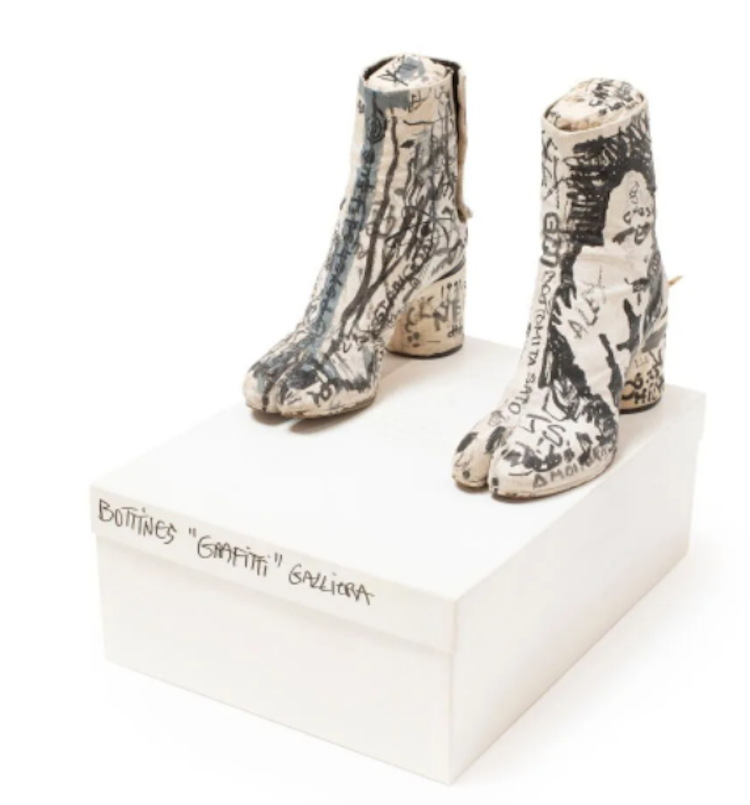
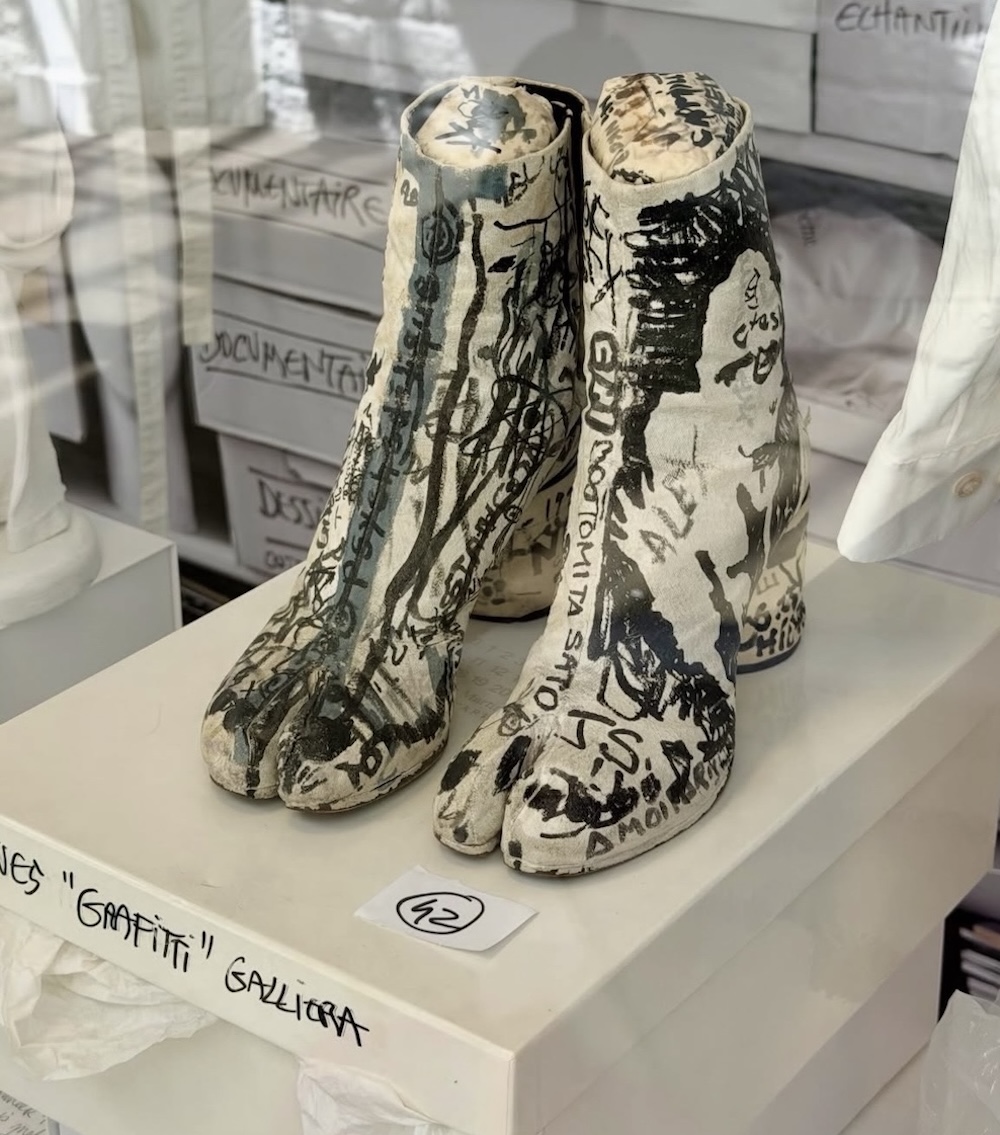
Among the more unusual lots are Margiela’s own white cotton blouse, worn as part of his personal uniform, a rotary telephone from the Maison Martin Margiela headquarters, the first Hermès bag he owned, original design drawings and prototypes, Graffiti Tabi boots, miniature works created during the Covid pandemic and pieces from his late mother’s Hermès wardrobe.
MAISON MARTIN MARGIELA 1988-2008 – Lot 17 MAISON MARTIN MARGIELA 1988-2008 Rotary dial telephone painted white, circa 1988 Telephone number written by Martin Margiela in black felt-tip pen Width: 15 cm – 6 in. TELEPHONE 1988 “By the end of the 1980s, it was clear that I couldn’t embrace the ubiquitous concrete gray and black designer furniture. Japanese designers Kawakubo and Yohji Yamamoto had started it, and everyone had been using it for years. I wanted to stand out by choosing the exact opposite: the color white. Everything had to be whitewashed, from the walls to the floors, including cotton slipcovers for the furniture, the television, and even the telephones. The effect was striking. This one is one of my personal telephones, and since I could never remember my number, I wrote it directly on the handset.” Martin Margiela Provenance: Martin Margiela Personal Archives. A white painted rotary dial telephone, circa 1988 Handwritten phone number to top by Martin Margiela Width: 15cm – 6in. TELEPHONE 1988 “Back in the end 80’s it was obvious that I could not use the widespread concrete gray and black design furniture. The Japanese designers Kawakubo and Yohji launched it and everyone used it for years. I felt that I had to be different by choosing the opposite, the color white. But everything had to be roughly painted white, from walls to floors, to the white cotton covers on the furniture, the TV monitor and even the telephones were painted white. The effect was astonishing. This is one of my private phones and since I never could remember my number, I wrote it directly on the phone.” Martin Margiela Provenance: Martin Margiela’s personal archives.
For a designer who built his career around anonymity, absence and resistance to celebrity, the sale represents an unusually personal gesture. Margiela famously avoided taking a bow at the end of his shows, rarely gave interviews and allowed the work itself to become the identity of the Maison. By selecting and releasing objects he has preserved for decades, he offers an intimate insight into the creative process behind one of fashion’s most influential practices.
MAISON MARTIN MARGEILA – PALAIS GALLIERA, 1991 – EXHIBITION – Lot 42 MAISON MARTIN MARGEILA – PALAIS GALLIERA, 1991 – EXHIBITION “THE WORLD ACCORDING TO ITS CREATORS” Pair of Tabi ankle boots covered in graffiti, 1991 White painted canvas, heels covered in white cotton, padding in tissue paper The graffiti texts and drawings were created by the public during the exhibition “The World According to Its Creators” at the Palais Galliera in 1991 Unique piece Size 40 In a white box annotated by hand by Martin Margiela This is the only pair in private hands. The other two pairs belong to the collections of the Palais Galliera in Paris and the MoMu in Antwerp. GRAFFITI “TABI” 1991 “The unusual silhouette I imagined in 1988 required a style of shoe radically different from anything that existed. I thought of bare feet topped with massive high heels.” I suddenly remembered the street workers I had seen in Japan, with their intriguing outfits and supple Tabi boots. I was thrilled by the idea of ??making them in leather, mounted on high, heavy, cylindrical heels. No one liked them, but I continued to present them season after season. Gradually, they gained popularity, and today, almost 40 years later, they are still being produced and sold. This particular pair is the result of my first group exhibition at the Galliera Museum in Paris. I liked the idea that visitors could leave messages on the white-painted walls and floor, but they also unexpectedly wrote on the white-painted Tabi boots. I love that spontaneous result. Martin Margiela These tabis are reproduced in: – “Margiela, The Hermès Years”, MoMu, Antwerp, March-August 2017 (and traveling), p.162 – “Martin Margiela, The Women’s Collections, 1989-2009”, Palais Galliera, Paris, March-July 2018, p.7 Provenance: Martin Margiela’s personal archives. A pair of painted graffiti Tabi boots, 1991: White painted canvas, heels covered in white cotton, stuffed with tissue paper Graffitti texts and drawings have been realized by the public during the Galliera Exhibition “Le Monde according to its Creators” in 1991 Size 40 Unique In a white box inscribed by Martin Margiela Last exist pair still in private hands. The two other ones are owned by the Palais Galliera in Paris and the MoMu in Antwerp. GRAFFITI “TABI” 1991 “The unusual silhouette I had in mind in 1988, needed a very different style of shoe than everything that was around. I thought of bare feet and high massive heels. I suddenly remembered the street workers who I saw in Japan. They had intriguing outfits and wore soft Tabi boots. I was thrilled by the idea to construct them in leather on high, heavy, cylindrical heels. Nobody liked them, but I continued to present them season after season. They slowly gained interest and today,nearly 40 years later, they are still being produced for sale. This particular pair was the result of my first group exhibition at the Galliera museum in Paris. I liked the idea that visitors could leave messages on the white painted walls and floor, but they unexpectedly wrote even on the white-painted Tabi boots. I love this spontaneous result.” Martin Margiela These tabis are photographed in: exh. cat. ‘Margiela, The Hermès Years’ MoMu, Antwerp, March-August 2017 (and tracking shot), p.162 exh. cat. ‘Martin Margiela, The Women’s Collections, 1989-2009’, Palais Galliera, Paris, March-July 2018, p.7 Provenance: Martin Margiela’s personal archives.
The auction follows a landmark sale in January 2025 devoted to Margiela’s early collections, also organised by Maurice Auction and Kerry Taylor Auctions. While that auction explored the designer’s work through the eyes of dedicated collectors, Martin Margiela: Personal Archives shifts the focus to the designer himself and the objects he chose to keep.
Taken together, the archive reveals many of the ideas that have defined Margiela’s career: reconstruction, reuse, anonymity and the transformation of overlooked objects into works of cultural significance. Finished garments sit alongside prototypes, sketches and everyday studio artefacts, blurring the distinction between fashion, artwork and archive.
More than simply a fashion auction, the sale offers a rare archaeology of artistic practice. Objects once destined to remain behind the scenes become evidence of a way of thinking that continues to shape contemporary fashion, art and design.
Timed to coincide with Paris Haute Couture Week, the auction offers an alternative perspective on fashion history—not the unveiling of a new collection, but the careful release of a lifetime’s worth of ideas, memories and experiments by one of the industry’s most enigmatic figures.
Martin Margiela: Personal Archives, public exhibition until 8th July 2026, 71 rue de la Fontaine au Roi, 75011 Paris. *Entry by appointment only. Auction 9th July 2026 2PM mauriceauction.com/catalogue/180923
Mark Westall has spent over thirty years creating platforms for culture. Since founding FAD Magazine in 2006, he's dedicated his career to documenting, championing and questioning contemporary art through publishing, criticism and conversation. As founder and editorial director of one of the UK's leading independent contemporary art publications, he has interviewed artists, reviewed exhibitions and covered the ideas shaping contemporary visual culture for more than two decades. He also founded Art of Conversation, Despoke and FAD Bazaar, and regularly serves as a judge for international art and photography awards.