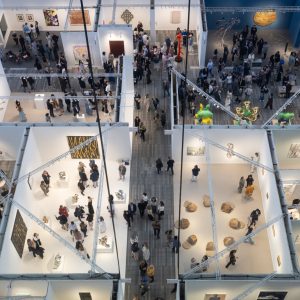

Conversations at this year’s Photo London (14th-17th May) often started with evaluation of the 11th edition’s move from the characterful but tricky-to-navigate rooms of Somerset House to the Paris Photo style spaciousness of Olympia, purpose-built in 1925 and now nearing the end of remodelling works. Opinions were generally positive, and what is on view is well up to the standard established by the previous ten editions of the fair, perhaps better. Here are some things I liked. I’ll touch on such topics as our impact on the environment, the passage of time, Artificial Intelligence, East European history, feminism, colonialism, George Orwell and the other Olympia. But shall we start with legs?
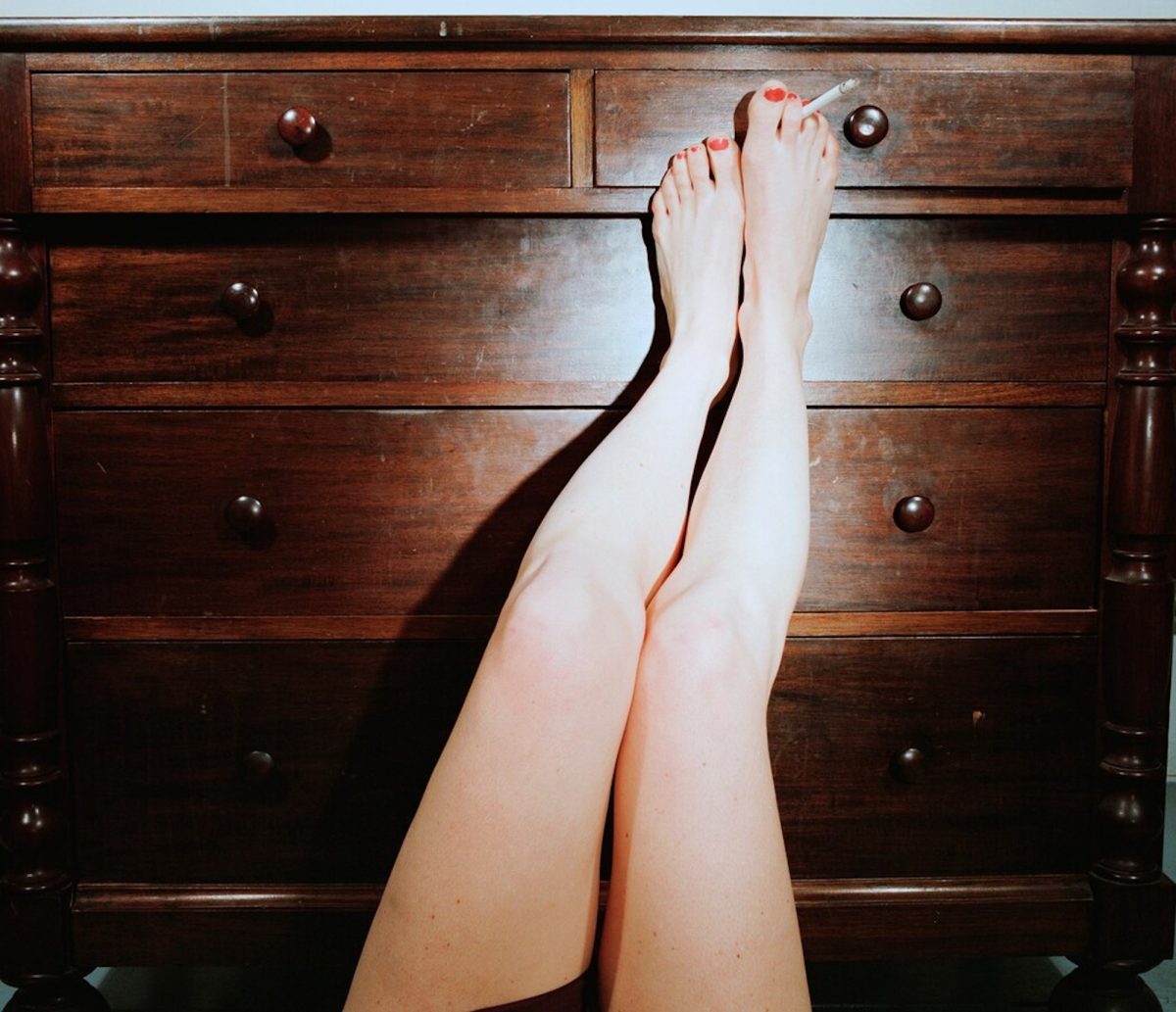
Jo Ann Callis: Cigarette in Toes (Legs on Dresser), 1976-77, at ROSEGALLERY, Santa Monica
Recent prints of LA artist Jo Ann Callis’s mid-seventies ‘Now and Then’ series evoke, says the gallery, ‘the pleasures and tensions of domestic life’, such that, in line with the Women’s Liberation movement then at its height, ‘Callis crafted enigmatic visual metaphors of power and play, dominance and submission, desire and intimacy’. True enough, with a touch of David Lynch thrown in… but I was wondering: is that a thing, to smoke with your toes if you have enough flexibility of leg to achieve the necessary foot-to-mouth coordination?
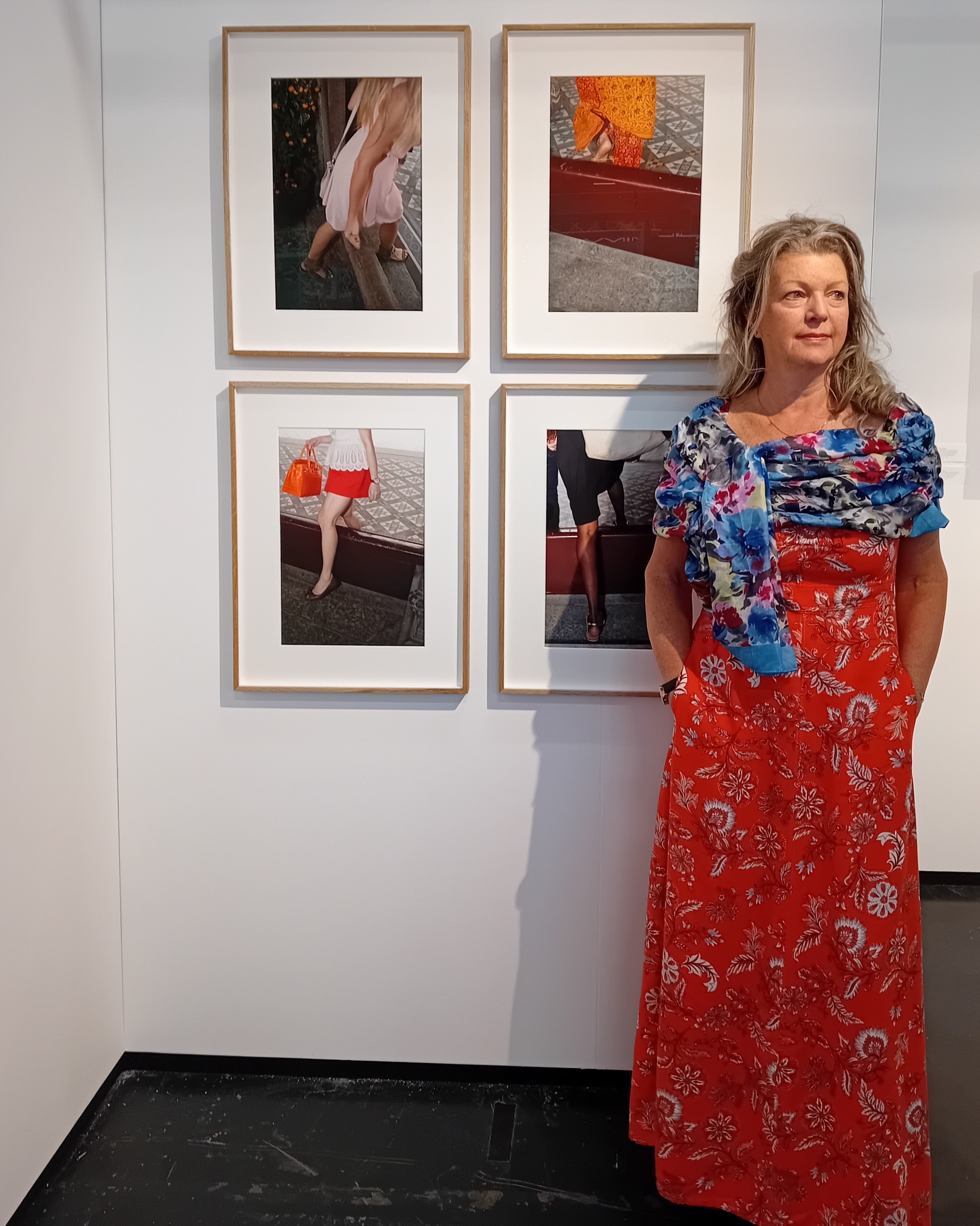
Denise Webber with works from the Threshold series, 2103-15, at Close, Somerset / London
Denise Webber’s dress reached the floor as she presented a series that focuses on the legs: she travelled widely during 2006-14, and came across a Taoist building in Singapore where lunchtime meditations were popular. The very high thresholds – perhaps symbolic, perhaps just to keep out street materials – meant that visitors had to make an effort to enter. That focused attention on the legs of the arrivals, most of them women. Webber started to photograph them as a metaphor for passing from one realm to another, overcoming an obstacle but doing so freely. They are cinematically cropped, which emphasises abstract colours and sets up a little mystery while anonymising the subjects.
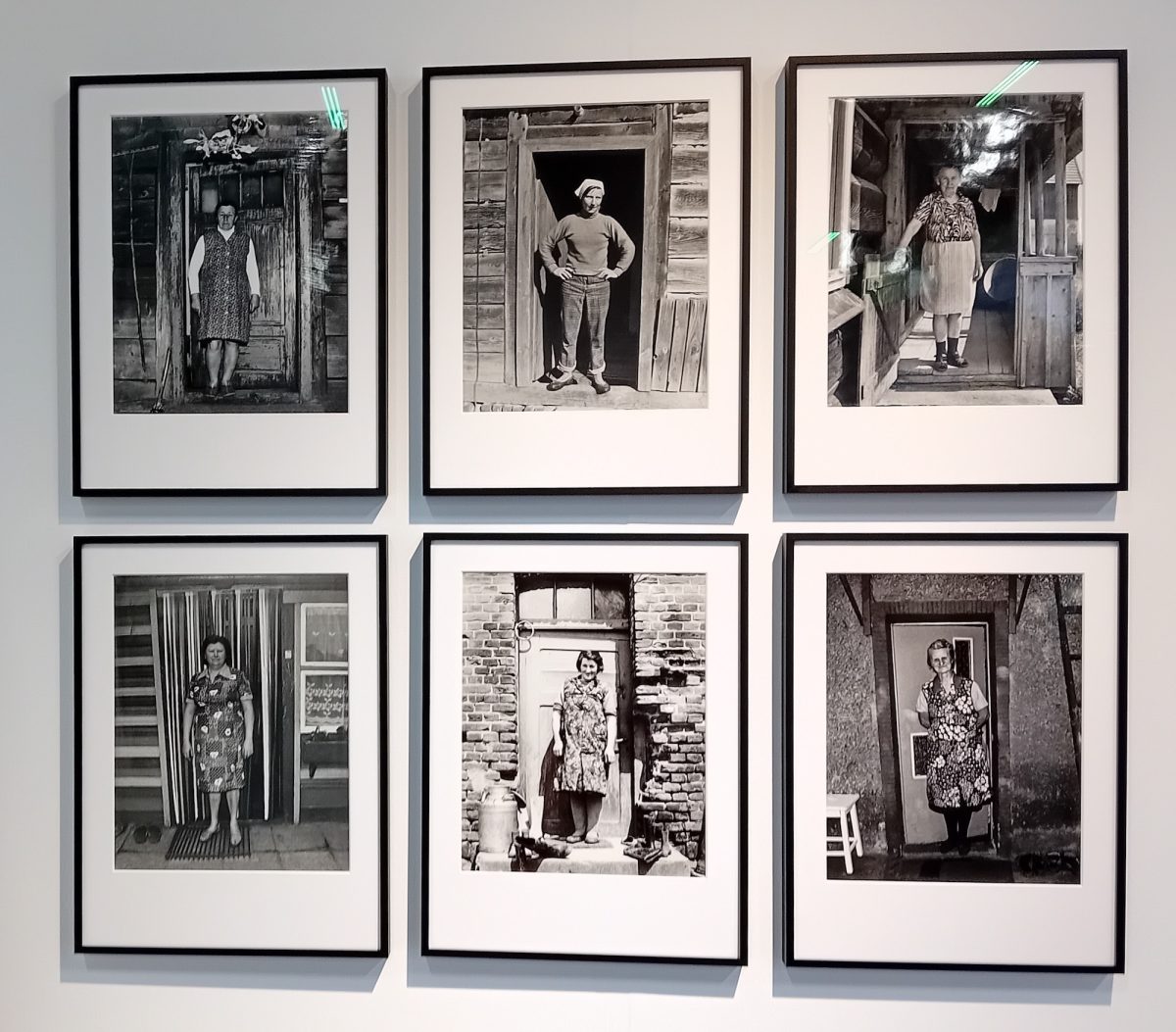
Following on from a fuller display at the Photographer’s Gallery recently, Raster’s presentation of the Polish photographer Zofia Rydet (1911-97) included some more women on thresholds – in this case, standing outside their homes. Rydet was keen to show the dignity and inner strength of older women in particular. These are Rydet’s own prints from 12,000 negatives which constitute an unofficial repository of the material culture of Eastern Europe in opposition to official propaganda. Many have not been printed, and all are made from landscape format negatives which she cropped, so it is not straightforward to print authentically from unused negatives. This is a strong fair for the Photographer’s Gallery, as two of this year’s Deutsche Börse prize finalists – Jane Evelyn Atwood and Weronika G?sicka – have excellent solo stands.
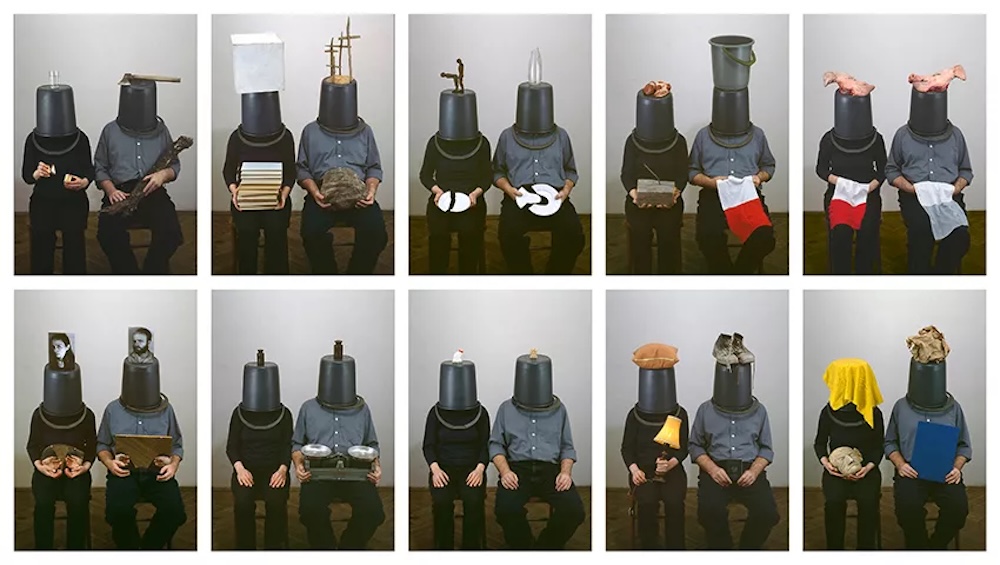
KwieKulik: Banana and Pome-grenade, 1986, at Persons Projects, Berlin
This set of ten photographs document a 1986 performance to audience and camera in communist Poland that has only recently been printed. Zofia Kulik and Przemys?aw Kwiek, active as an artist duo 1971-87, sat motionless on chairs, while a curtain opened to reveal a sequence of carefully arranged scenes. With each unveiling, new objects appeared, creating a chain of poetic and political associations: identity, censorship, surveillance, religion, and the objectification of the individual under political power. By concealing their faces beneath buckets, the artists aimed to deny personal subjectivity and transform themselves into objects among objects. Art – often symbolised by a banana – meets revolution, it seems to me – in the form of the pome-grenade pun. And those were two fruits not so readily available, further emphasising the oppressive conditions of the time.
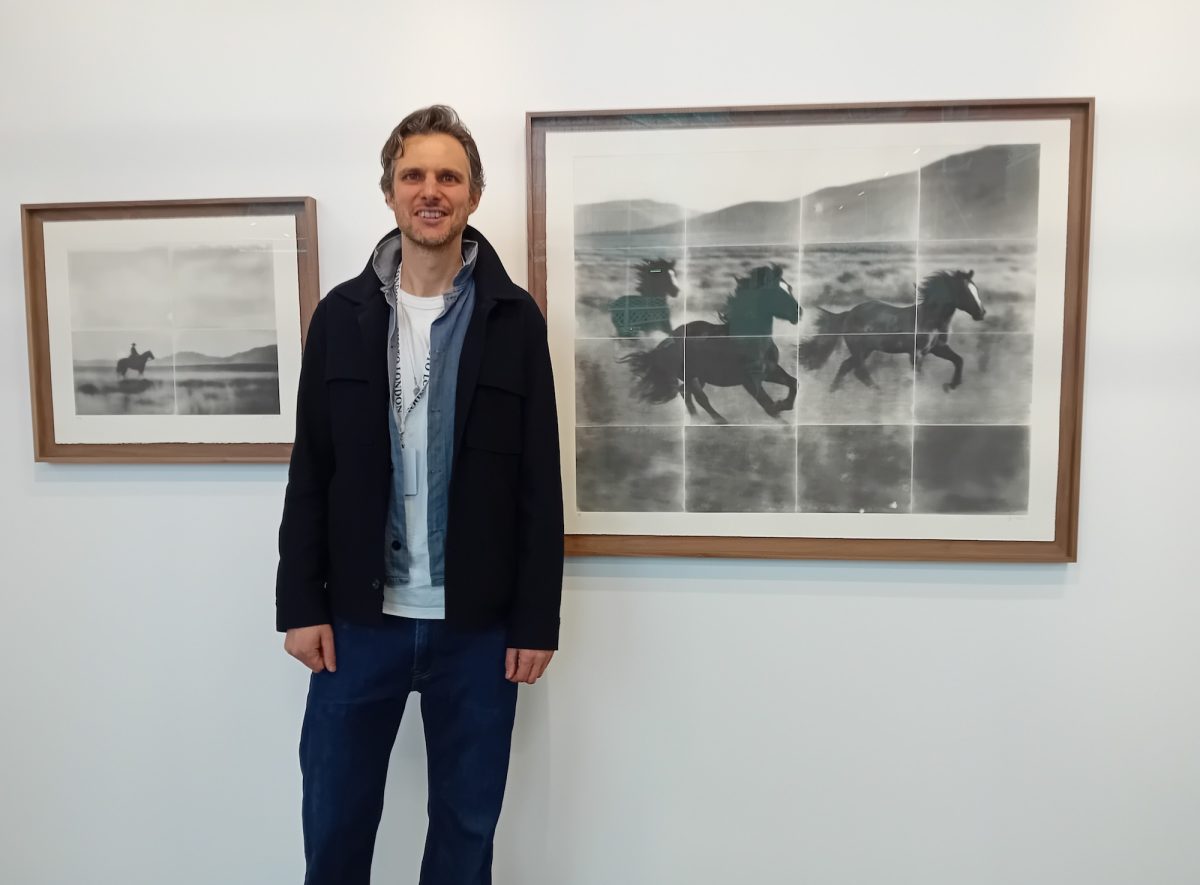
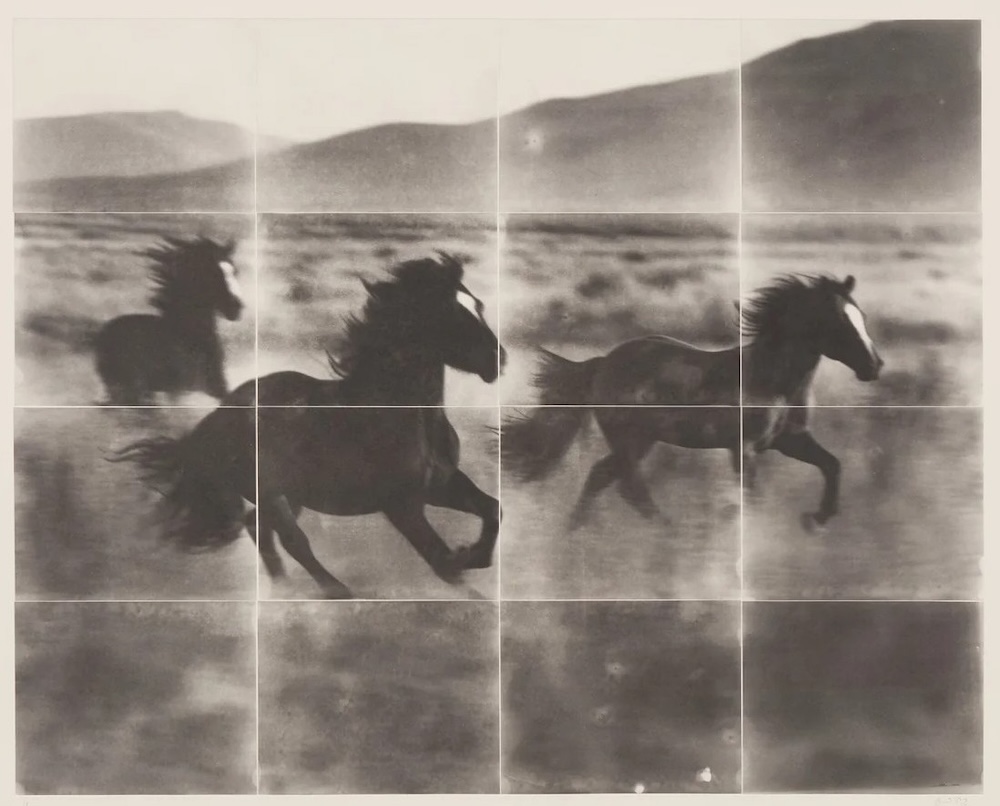
Baud Postma with Untitled (Horses I), 2025 at Canopy Collections, London – he is also showing in the shortlist for the Nikon Emerging Photographer Award
Are these photographs, and if so, of what? Baud Posta starts by writing prompts from which AI generates images. He then photographs those with an 8 x 10 camera, the direct prints from which determine the scale of the components which he then converts to intaglio prints. A process far from photographic in its speed! Postma evokes the world of the American western. That brings Richard Prince to mind – Postma appropriates the arch-appropriator – and suggests an analogy between AI and the Hollywood cowboy: both operate at a frontier, both bring the optimism of progress but also the potential for destruction – be that of the Native American way of life or everyone on Earth in scenarios in which AI goes rogue.
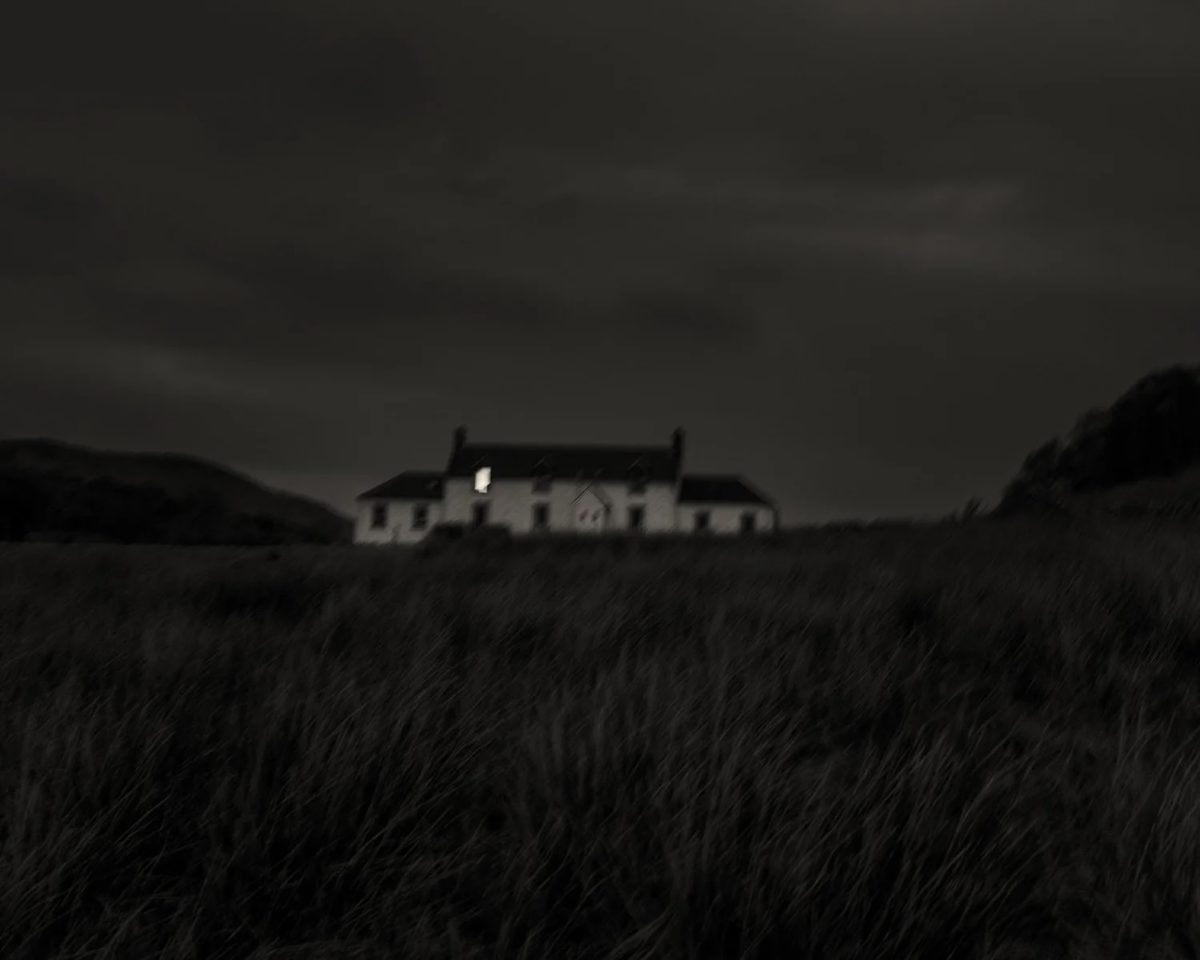
Photo London has many different sections, including for unrepresented artists, upcoming galleries, awards, special displays, a public programme, film… and more than 40 publishers. You can read my review of one of the books on display here: Craig Easton’s ‘An Extremely Un-get-atable Place’ is at the GOST Books stand, an atmospheric account of the Hebridean island of Jura as filtered through George Orwell’s time there while writing ‘1984’.
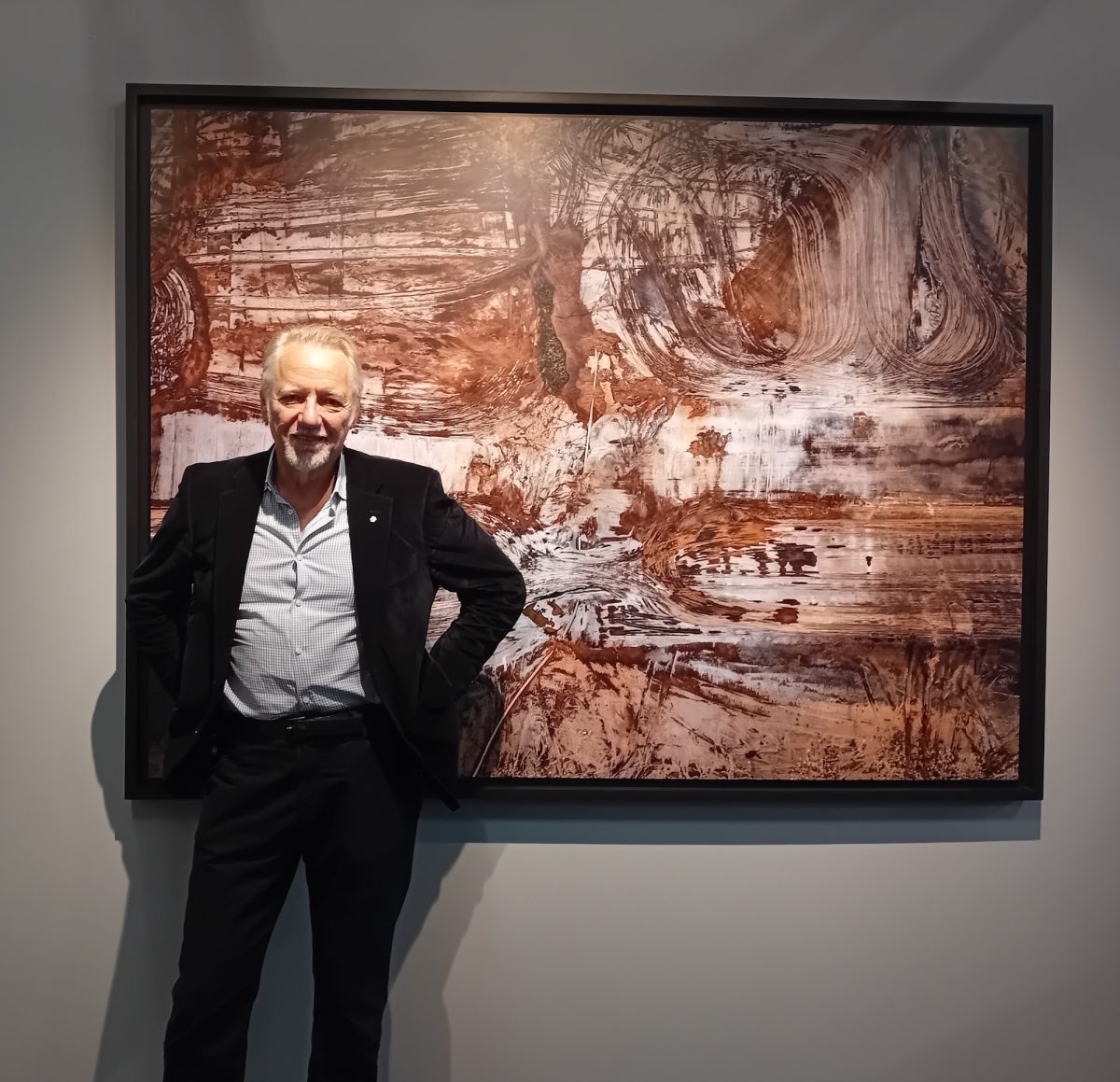
Edward Burtynsky with Kwinana Alumina Tailing #1, Alcoa Kwinana Alumina Refinery, Perth, WA, Australia, 2025, presented in the public programme by Flowers Gallery, London / Hong Kong
A highlight of the public programme was the Canadian photographer’s recent Australian minescapes: they’re astonishingly painterly, even while telling of the environmental destruction caused by our demand for materials. This image is taken from 600 feet above a tailings field, where the residual red mud from bauxite processing is deposited as part of the process of aluminium production. Burtynsky told me that the lone wedge of undisturbed vegetation at the centre will by now have been drowned in the caustic sludge. Yet tracks of very large machinery, the narrower curves of truck routes, a lone pipe, and the layering of discharged materials do create an unlikely visual harmony.
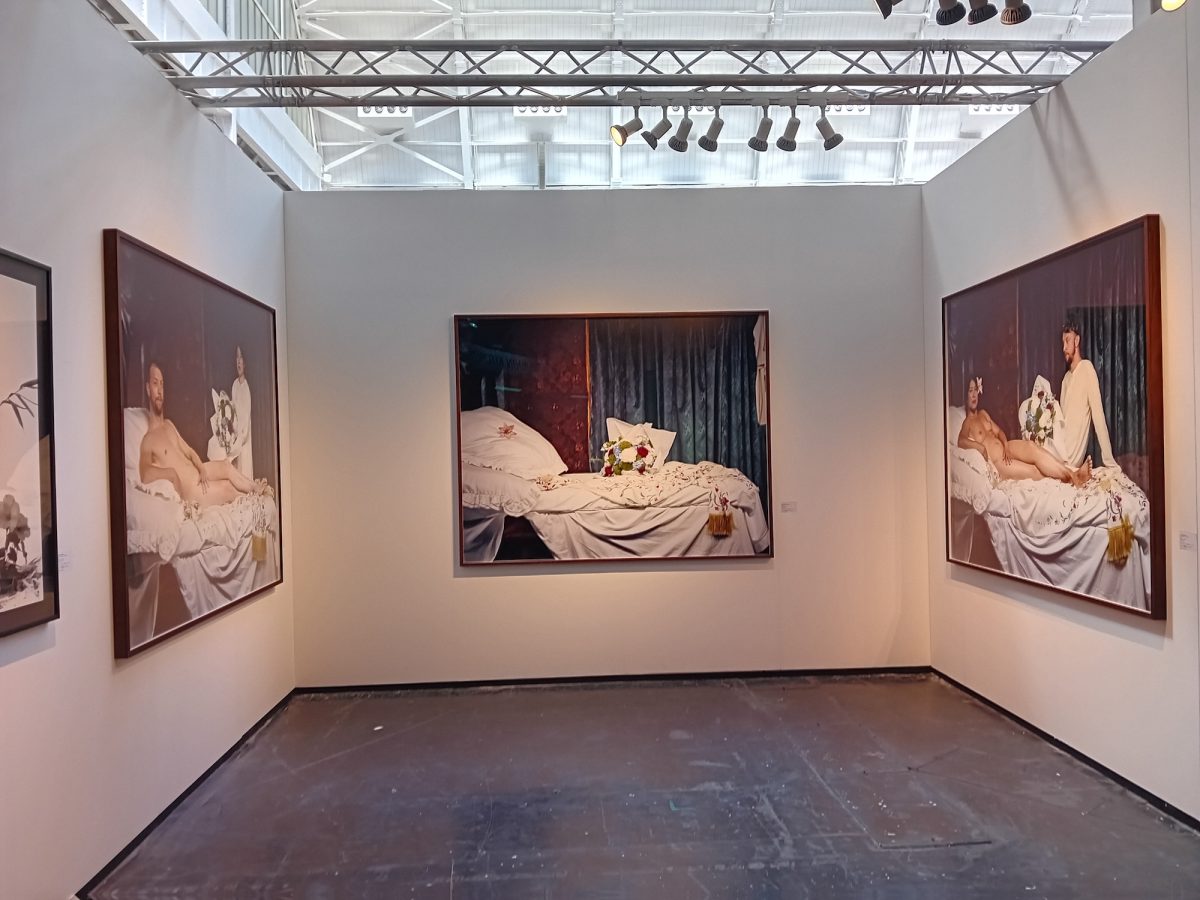
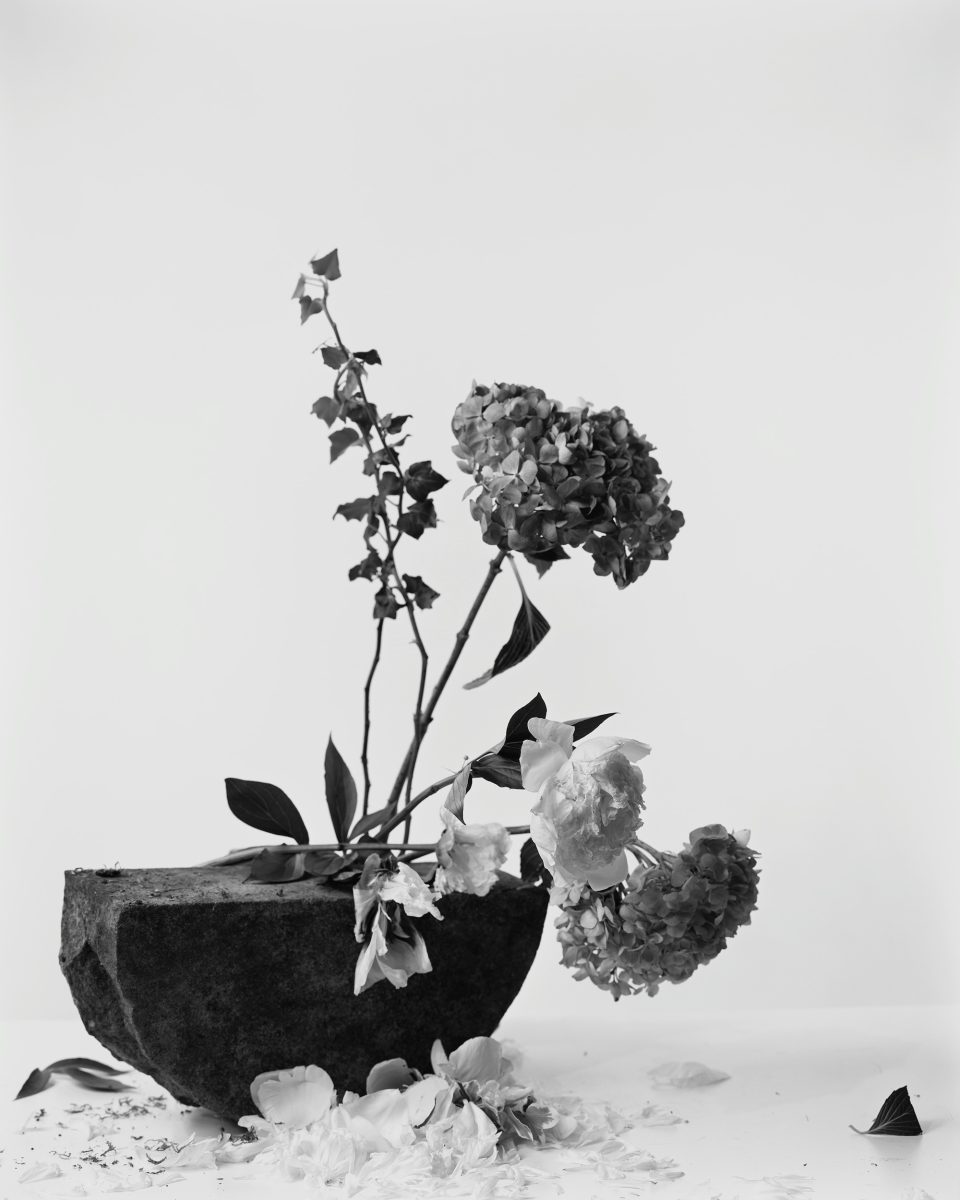
Yan Wang Preston: After ‘Olympia’, 1863, 2023 at Messums, London / Wiltshire
By way of a light-hearted homage to Photo London’s new venue, Meesums presented Yan Wang Preston’s six-work reimagining of Manet’s ‘Olympia’. That said, Wang Preston’s version of the oft-referenced work does have substance. She brings the perspective of a non-white female migrant from China as a means of asking how our backgrounds affect views of such canonical works. She plays the courtesan and black servant in turn, returning rather than enduring our gaze, and gives unusually heavy emphasis to the painting’s flowers. The bouquet, which includes peonies introduced to Britain from China in the eighteenth century, becomes the inspiration for three black and white prints in the manner of classical Chinese flower paintings, but withered to symbolise how she views the interwoven roles of patriarchy and imperialism.
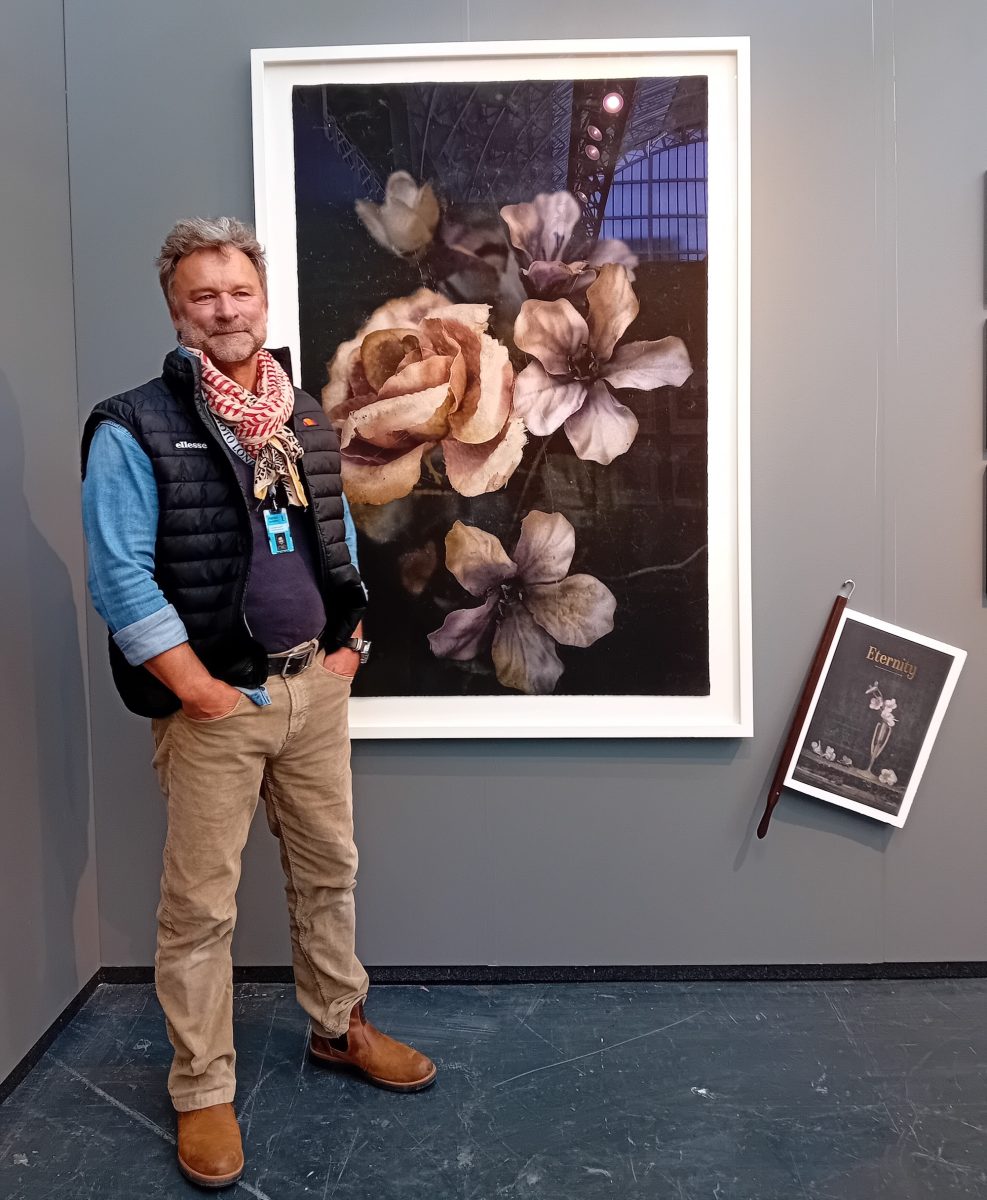
Christopher Thomas with Eternity 09, Valencia, Spain, 2009 – from the series ‘Eternity’, published in 2019, at Ira Stehmann Fine Art, Munich
He may not have the most Teutonic name – and says his classmates found it an awkward one – but Christopher Thomas had German parents and grew up in the countryside near Munich. He works in thematic series, this one emerging from fifteen years visiting cemeteries around the world to photograph the artificial flowers left on graves. This is a Spanish bouquet made of cloth – though as Thomas captures it, I’m reminded of hand-tinted studio photographs. Textile and plastic may last longer than natural flowers, but they’re still worn by the weather in a journey parallel to human deterioration. The full series is shown in a newspaper with a wooden holder, old café-style, so that the most fugitive of daily productions operates as the setting for mourning the remorselessness of time.
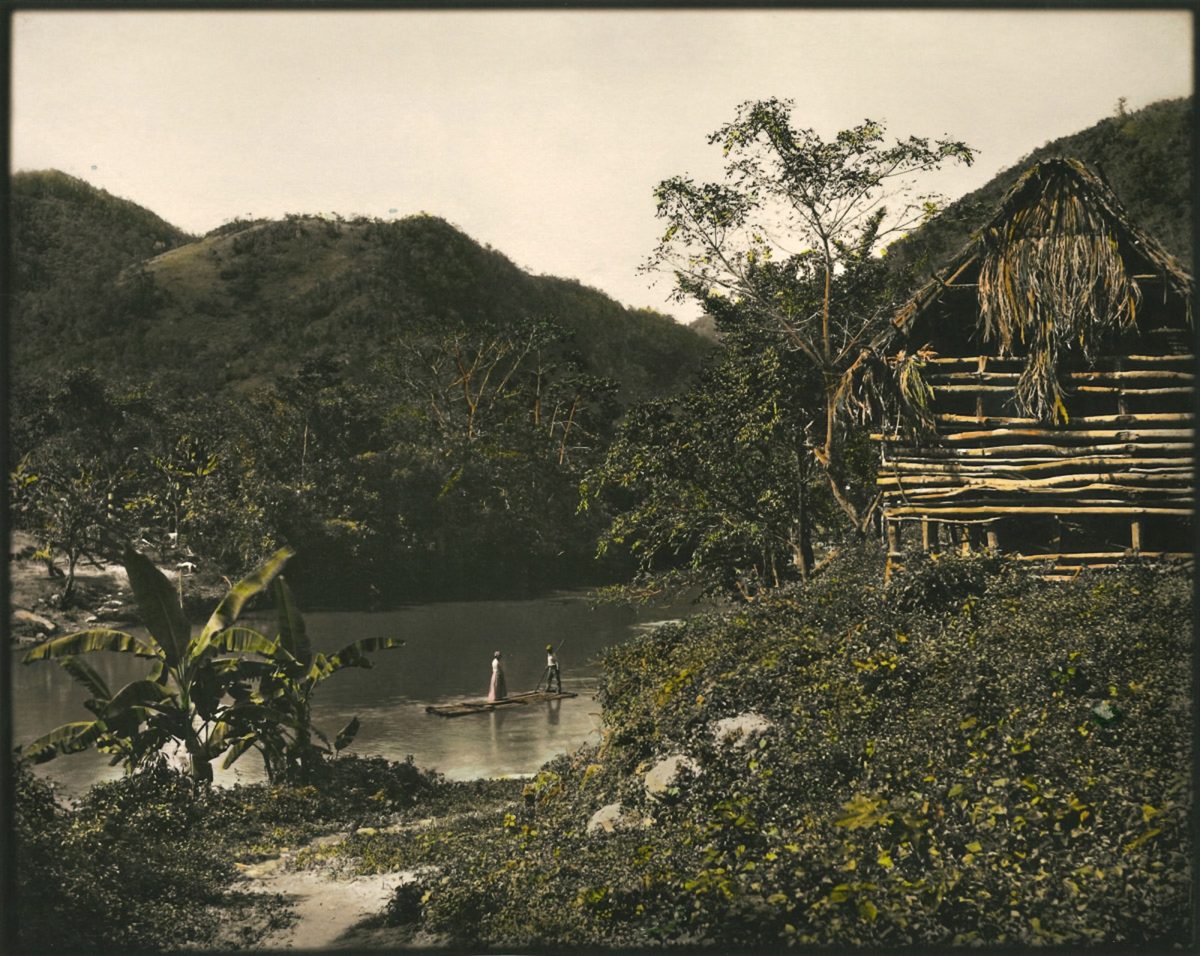
Ingrid Pollard: from the series The Valentine Days, 2017 at Autograph, London, as part of the public programme exhibition ‘We Are the Ones We Have Been Waiting For’
This actually does derive from a hand-tinted image: Valentine Days is a series of six large-scale prints Ingrid Pollard, Turner Prize nominated in 2022, created from 19th-century black and white postcards of Jamaica. Originally produced by Valentine & Sons, they presented a carefully constructed and romanticised vision of the island as a commercial and tourist paradise under British colonial rule. Pollard’s hand-tinting reworks the image to draw attention to the black figures within it and shift the narrative of the original photograph so that the people marginalised within colonial image-making emerge more prominently as individuals with agency, revealing the layered histories embedded in the image.
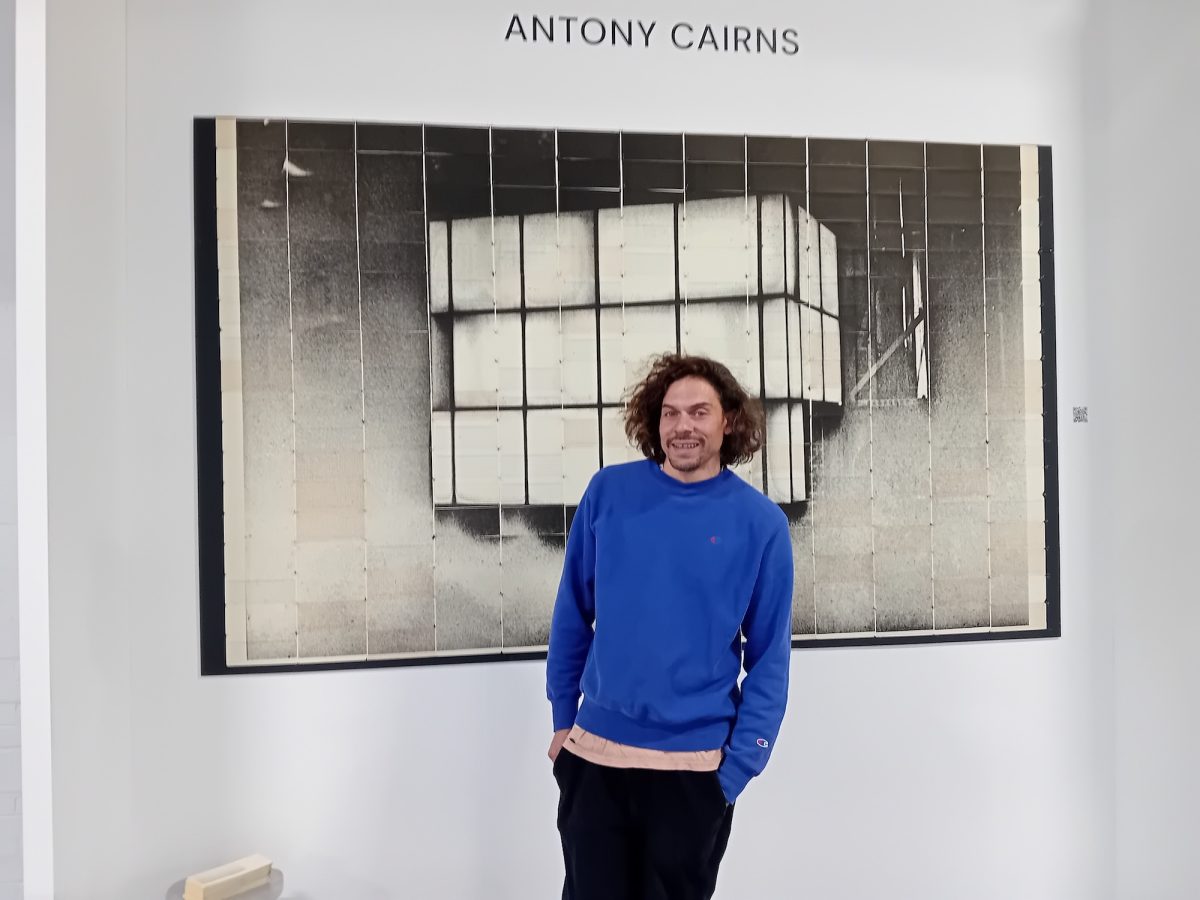
Antony Cairns at his special exhibition stand with LDN 06, 2011-12, plus (below) pages from his catalogue
Antony Cairns presents a changing installation by performatively switching to a new multi-element work daily. His signature subject is cityscapes rendered unfamiliar in something like a science fiction manner to probe what defines a city as much as depict a particular one. That emerges from images taken at night, using just the available light cast by buildings, with a 35mm black and white film camera. Cairns develops the negatives in reverse, to reach a black and white positive, and then further foregrounds his process by printing onto unorthodox but appropriate materials, such as the 234 8.3 x 18.7 cm computer punch cards that make up this image, or the IMB Disk Operating System Technical Reference manual he has turned into his catalogue by printing in the gaps left for notes.
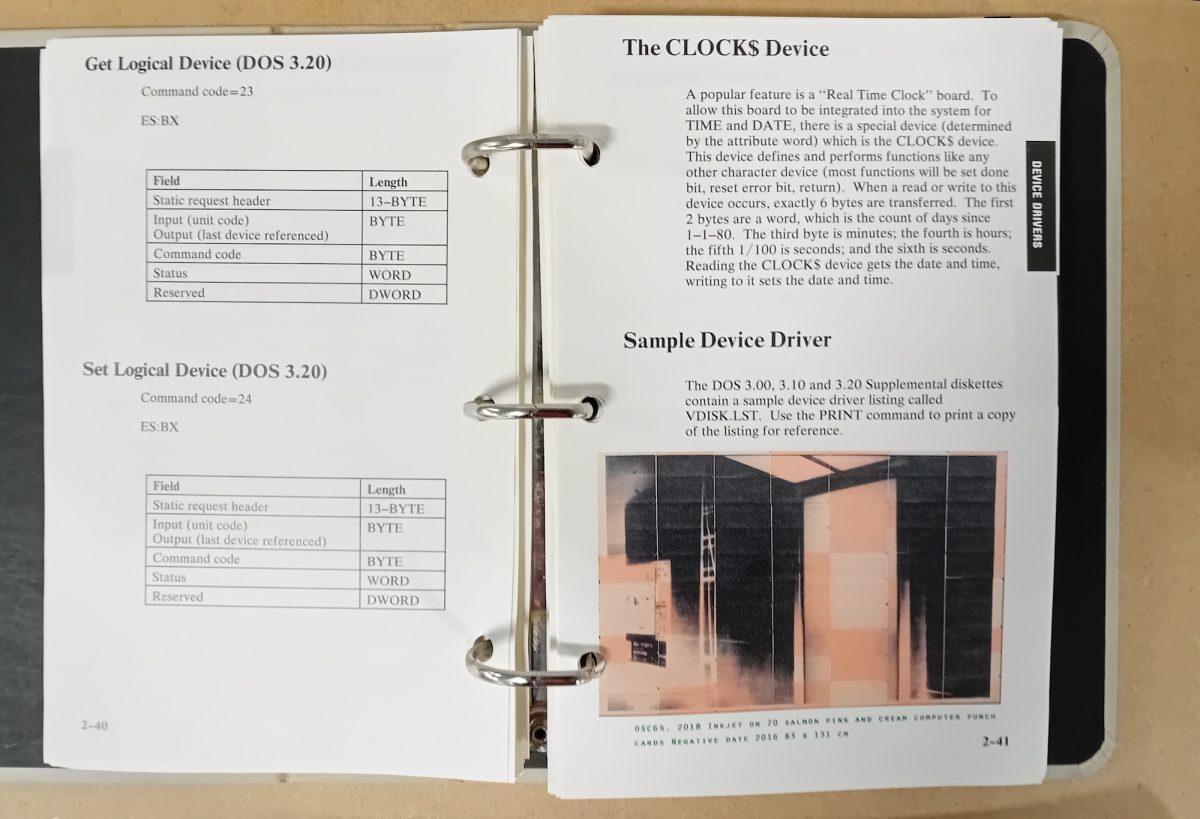
Photo London 14th-17 May 26, photolondon.org
Categories
Tags
- AI art
- ANTONY CAIRNS
- art fair review
- artificial intelligence
- BAUD POSTMA
- Christopher Thomas
- colonialism
- conceptual photography
- contemporary art
- contemporary artists
- contemporary photography
- Craig Easton
- Denise Webber
- documentary photography
- Eastern European art
- Edward Burtynsky
- environmental art
- experimental photography
- FAD magazine
- feminist art
- fine art photography
- George Orwell
- ingrid Pollard
- Jo Ann Callis
- KwieKulik
- London art fairs
- Olympia London
- Paul Carey-Kent
- Photo London
- Photo London 2026
- Photography
- photography fair
- photography review
- polish photography
- Visual Culture
- Yan Wang Preston
- Zofia Rydet