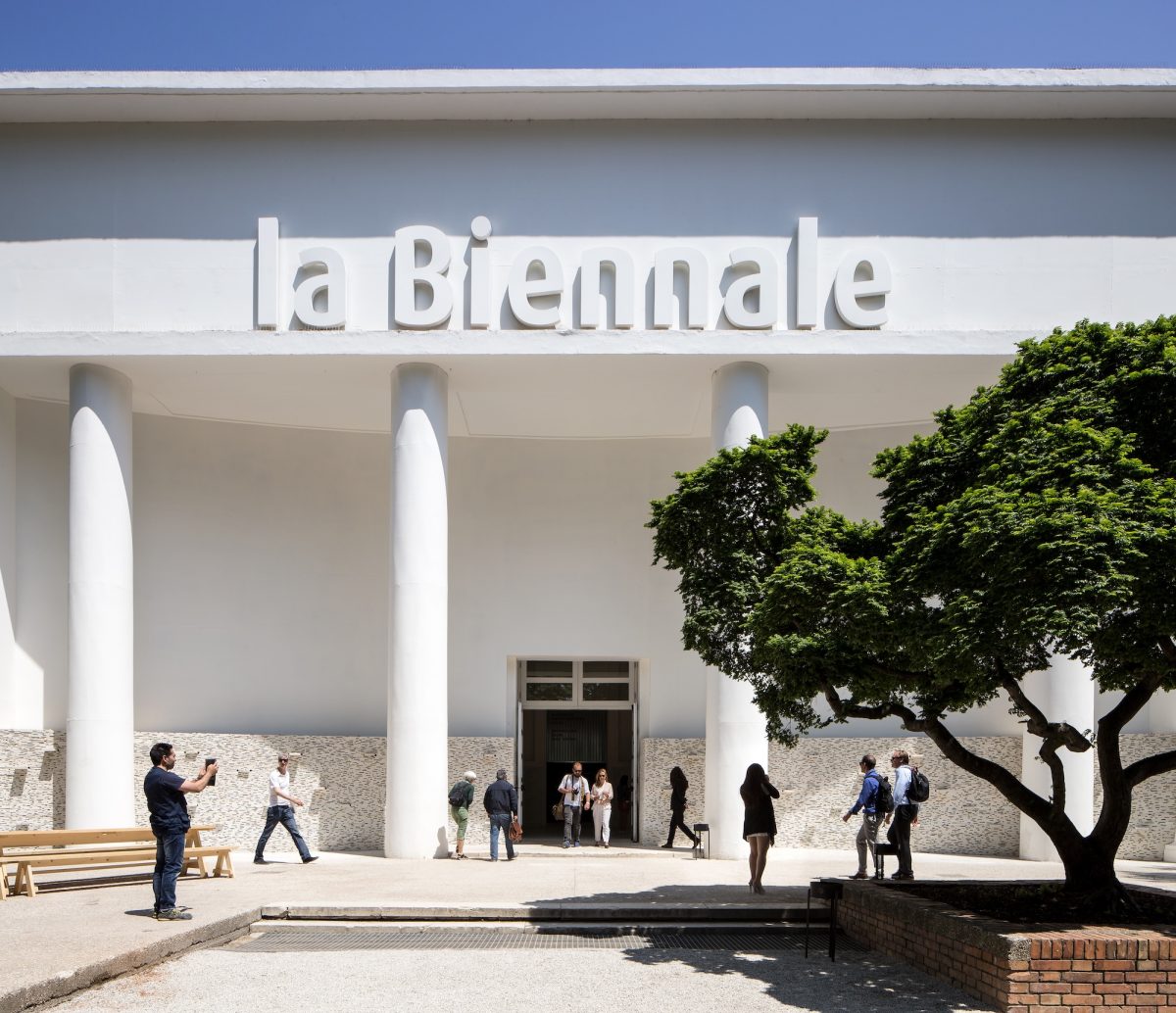
The big headlines from this year’s Venice Biennale were more about who should be allowed to show at arguably the art world’s biggest event, often referred to as the Olympics of the art world. The opening week featured protests against both Russia’s and Israel’s participation, and understandably, many participants, artists, art professionals and politicians were upset that these two countries were allowed to show at the Biennale.
The EU has cut its funding for the Venice Biennale over Russia’s participation, and the International Jury that picks the best national pavilion (golden lion) and best featured artist (silver lion) also resigned in protest, though that appears to be Israel-related. These awards will now be decided by the public, with each visitor having a vote, though many pavilions and artists have withdrawn from consideration in protest.
Whether these protests will result in the Biennale changing future editions, we’ll have to wait and see, though it feels unlikely, given how resistant they are to any changes in tradition. After all, they haven’t even embraced developing a usable digital map, or even a half-decent paper one, which makes navigating all the pavilions and exhibitions dotted around town a nightmare. But what about the art on display? Is it any good?
Main Section
This year’s curatorial theme for the main exhibition is ‘Minor Keys’, which has also had a turbulent history: the main curator died shortly after her appointment was announced, but her co-curators have tried to deliver her vision. With dozens of artists across two sites, it’s always a dense hang, and the theme is often loose enough to fit all the selected artists under the umbrella.
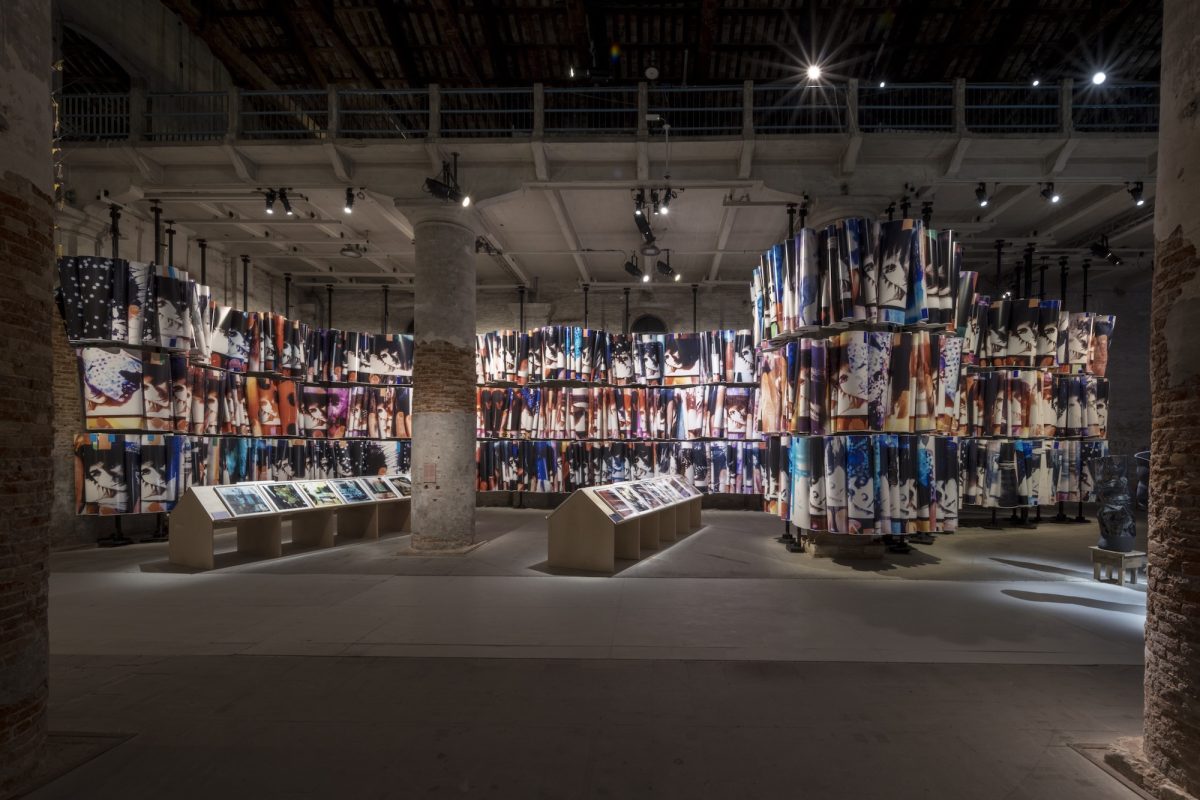
A few standouts are Alfredo Jaar’s tiny slabs of rare-earth materials stacked in a layered cube within a cavernous red room, with the violent extractive history of each one written on the wall behind it. As well as Carrie Schneider’s one-kilometre-long large-scale photographs that concertina and surround us, based on a film sequence printed on chromogenic paper.
For me, the key to a good guest curator is how many names I don’t recognise in an exhibition, which is a sense of a curator bringing new voices that should be heard, and I’m glad to report there were dozens of artists I hadn’t heard of. Even those that I knew were often from the Global South or from that diaspora.
Why does this matter? Because, during the Biennale, there is art everywhere, with major museums and foundations in Venice putting on blockbuster shows. There’s Marina Abramovic at Gallerie dell’Accademia, Jenny Saville at Ca’ Pesaro, Michael Armitage at Palazzo Grassi, Georg Baselitz at Fondazione Giorgio Cini, and Arthur Jafa and Richard Prince at Fondazione Prada. Many of these are excellent exhibitions, but it’s the same names we see regularly in museums in the UK and the US, so it’s important to introduce new voices, and by that measure, I thought Minor Keys was a success.
National pavilions at the Giardini
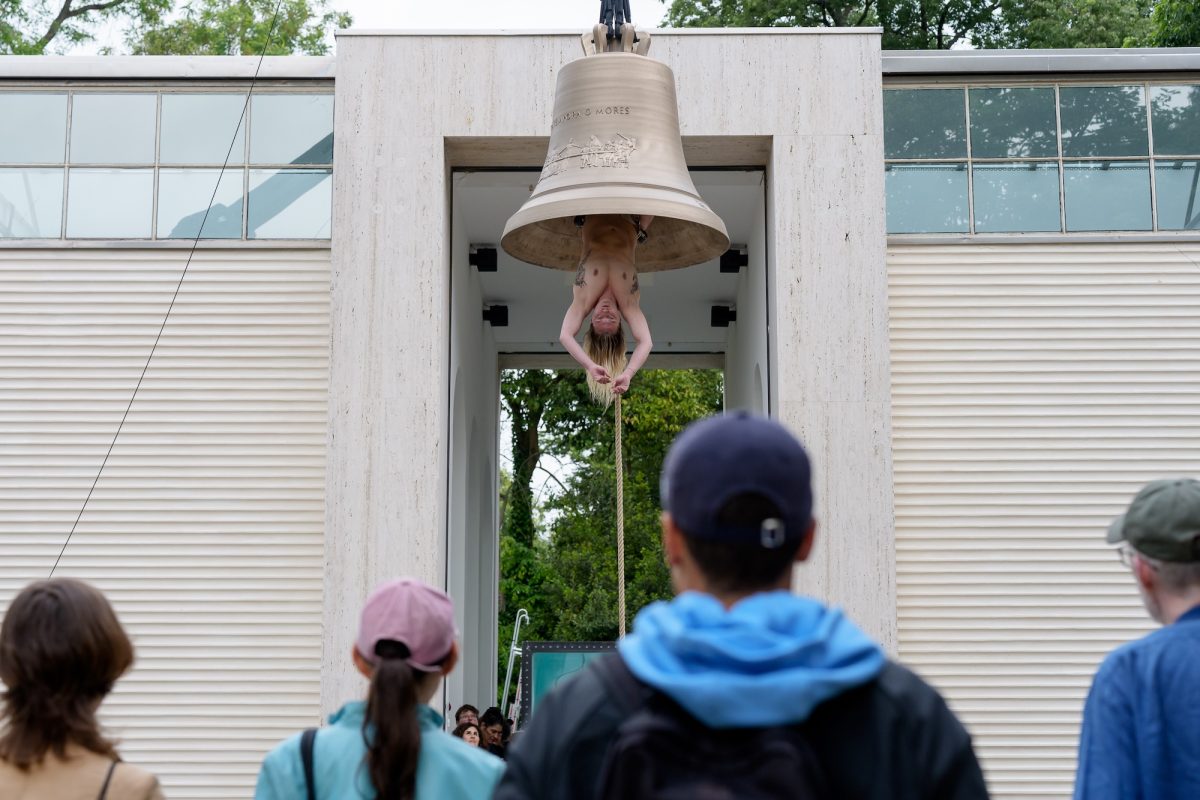
f you look up Venice on social media, or even if you try to avoid it, you were probably bombarded with images of Florentina Holzinger’s Austrian pavilion, and its nude female performers, including one riding a jetski and one in a tank of ‘purified urine’ that you can contribute to via two portable toilets either side of the tank – spoiler, purified urine is just water and what we drink every day has passed through dozens of other humans and most likely even through a dinosaur.
The queues to see it are long, so visitors are advised to enter via the back entrance and head straight there; otherwise, the wait can be hours. One work that you can see without queuing is a bell suspended from a crane that, on the hour, is rung by a performer who climbs the rope, hangs upside-down and becomes the bell’s clapper by swinging back and forth violently in a visceral performance.
The concept is about ringing the alarm about the climate catastrophe, and once inside, the cleaning staff also add a touch of playfulness to the interaction, making it a fun experience, albeit with a serious message.
Japan is also creating a buzz and was one of my favourites, as you get to pick up a baby, carry it upstairs and once you open its nappy, there is a QR code that takes you to a poem about said baby. It’s a fun concept about community and care, and in a nice touch, the babies have also spread to the neighbouring Korean pavilion to share the love.
There was a general theme throughout: the pavilions covered serious topics, but we can approach these issues with a sense of lightness. Belgium’s intense performance involves smashing tiles that greet us in different languages, reflecting how we’re all overwhelmed by communication, and Denmark asks the question, can virtual reality porn solve the male fertility crisis? It has been shown to significantly increase sperm motility.
Lubaina Himid’s contribution for Great Britain explores the idea of feeling welcome in a new place, and while her paintings do capture that sense of the migrant experience, they aren’t strong enough to hold the attention when there are so many more ambitious pavilions nearby.
National pavilions at the Arsenale
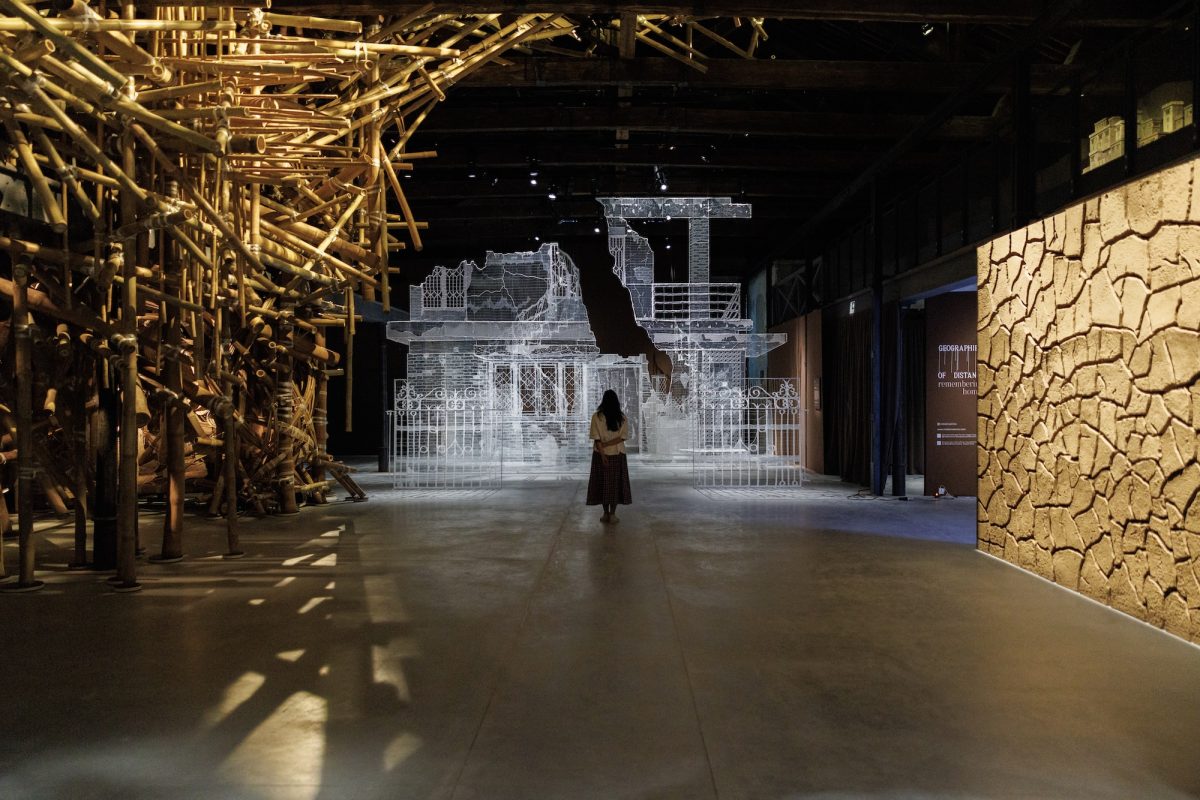
The Arsenale has the better space for the main exhibition, but it is always trickier to host a pavilion here, as you don’t have a distinct building, and people spill from one national pavilion into another.
Luxembourg was a highlight, featuring a film of a woman dressed as a giant piece of excrement delivering a speech to an audience that becomes increasingly uncomfortable with her flirting and with pieces of her exploding onto them. It’s literal toilet humour, but exceedingly funny.
India’s space is filled with stunning architectural sculpture; Ukraine has a moving story of how a concrete deer sculpture was rescued from war and now hangs outside Giardini; and the UAE gave me corporate flashbacks with a room full of speakers reading apology emails from all directions.
The general themes were a lot of textile work, to the point that they started to detract from one another, and there were frequent uses of earth, rock, sand, and salt across many of the pavilions.
National pavilions outside the main sites
The more established nations and those with the most funding get the prime spots at Giardini and Arsenale. This leaves other nations having to find spots around town, including seven countries making their first appearance. There’s been much discussion about whether the concept of national pavilions should be abolished, as many deem them no longer relevant, but the excitement among first-timers is palpable.
The strongest of the lot is Somalia, which has taken over a corner building and has a relaxing living room space to hang out in with powerful, painful poetry on the floor above about the appalling treatment of refugees and asylum seekers.
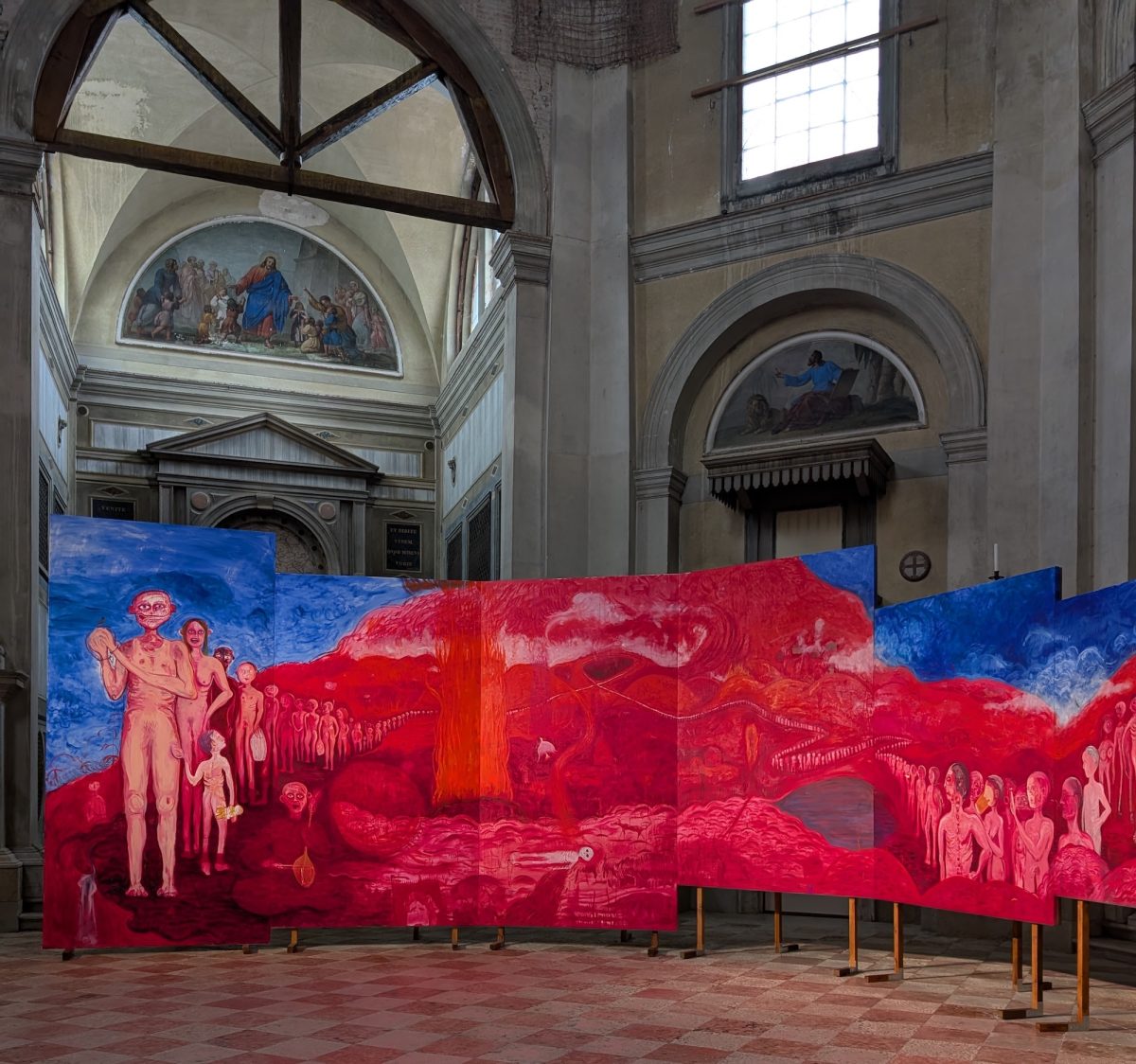
One that’s far from the other venues is Kosovo in an octagonal church. It’s one large painting of a line of people fleeing, painted largely in reds and pinks. It’s a simple concept that reflects the country’s history and today’s world events; couple that with a soundtrack of bombs and the hallowed setting, and it’s deeply moving.
Part of the fun is discovering spectacular buildings because of where the pavilions are located, and we find that the DR Congo is housed within a working hospital and Equatorial Guinea in a stunning building, which I had never visited on my seven trips to Venice.
The best way to end any trip to the Biennale is by booking a ticket for the Vatican pavilion at the Giardino Mistico dei Carmelitani Scalzi, a hidden-away garden next door to Venice’s train station. It’s an oasis of calm in the bustling city, and now there’s a location audio track to listen to as you explore the beautiful gardens.
Other exhibitions in Venice
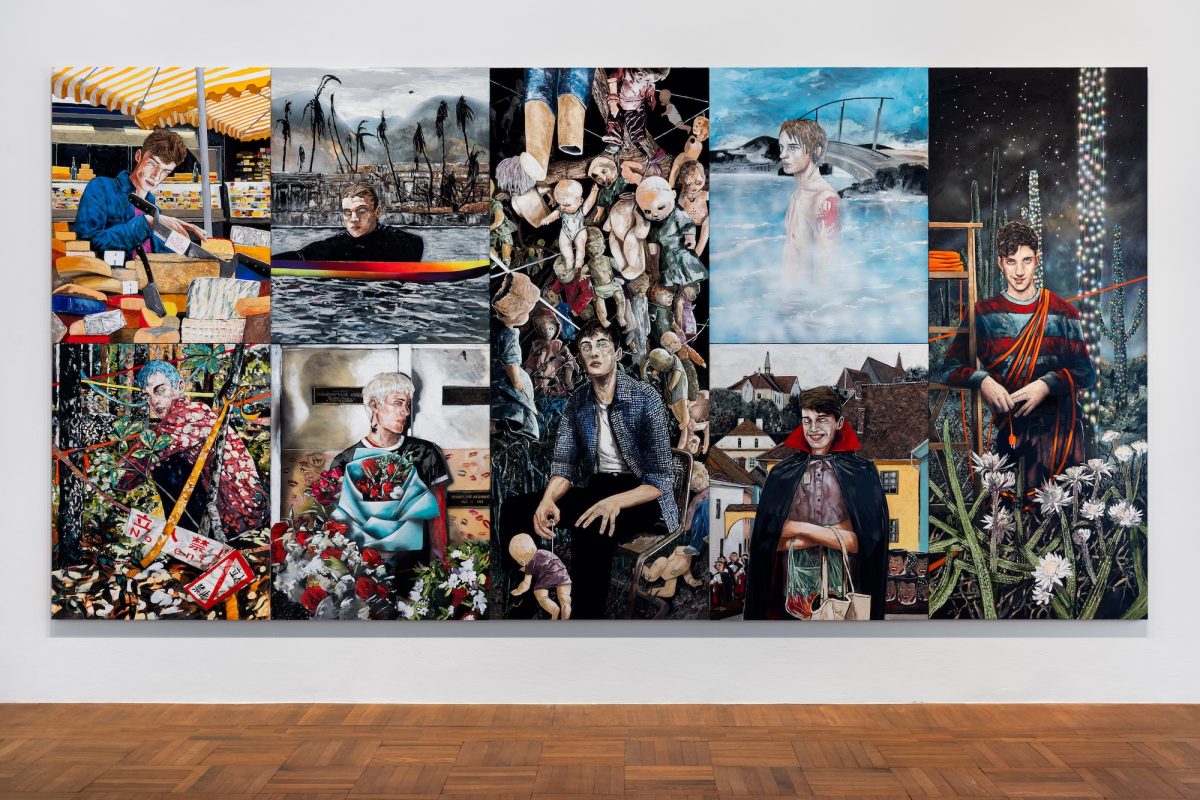
The Biennale may be the centrepiece, but there are lots of exhibitions scattered throughout the city. I’ve mentioned some before, and while I’d seen the Jenny Saville exhibition at the National Portrait Gallery and most of Michael Armitage’s works before, they just look better in a palatial setting. Hernan Bas is showing at Ca’ Pesaro alongside Saville, and I liked these fun paintings mocking the privileged white male tourist. Upstairs are the sculptures of Keita Miyazaki, who has also installed a large-scale sculpture on the island of Giudecca, given his link to traditional crafts, and this is the island where gondolas are constructed.
The works of the late Georg Baselitz are showing at Fondazione Giorgio Cini, and the gold upside-down figures work well in this setting. The late Ceal Floyer has some of her playful works at Palazzo Diedo. Amaoko Baofo’s paintings of black figures look at home in Palazzo Grimani, as do the minimalist lacquer works of Su Xiaobai at Palazzo Soranzo Van Axel. Other highlights include Lee Ufan’s meditative installations at SMAC and Parasol Unit’s Turandot at Palazzo Franchetti, where powerful works by 11 significant female artists from Central Asia are on view.
The Fondazione In Between Art Film returns with a building full of video works, including an important piece by Lawrence Abu Hamdan, investigating the use of a sonic weapon on peaceful protests in Belgrade. Gabrille Goliath’s Elegy was not permitted in the South African pavilion, but it’s found a better home in a church, where women on multiple screens sing a single note that reverberates throughout the space. As each singer tires, another steps up to take her place in a show of solidarity that draws attention to the many women displaced and killed in genocides.
If you get tired of pure contemporary art, then head to Fondazione Dries van Noten for an exhibition that pairs fashion with contemporary art, or the second floor of the Fondazione Querini Stampalia, which has newly opened the second floor for a look back at the history of the building, told through objects and historical artworks.
The truth is, there’s more art in Venice than anyone can take in. Trust me, I tried to see it all and failed. There’s a real mix of great and terrible art. I’ve chosen to focus on just those I liked in this piece and skip those that left me unimpressed. If you’re planning to go, make sure you take some good walking shoes, pack for all types of weather and let yourself be saturated by art.
The Venice Biennale runs until 22nd November, and many of the collateral events run for a similar duration. Entrance to the main sites is ticketed; other events are either ticketed or free.
Lead photo by Francesco Galli.
The main exhibition image is of Carrie Schneider’s work. Photo: Marco Zorzanello.
Giardini’s image is of Austria’s pavilion. Photo: Andrea Avezzù
Arsenale’s image is of India’s pavilion. Photo: Jacopo Salvi
The other pavilion’s image is of the Kosovo pavilion. Photo: Tabish Khan
The other exhibition’s image: © Hernan Bas. Courtesy the artist, Lehmann Maupin, Perrotin and Victoria Miro. Photo: Andrea Rossetti
Categories
Tags
- Alfredo Jaar
- Amoako Boafo
- Arsenale
- Arthur Jafa
- Austria Pavilion
- Carrie Schneider
- Ceal Floyer
- contemporary art
- Florentina Holzinger
- Gabrielle Goliath
- Georg Baselitz
- giardini
- Hernan Bas
- Jenny Saville
- keita miyazaki
- Kosovo Pavilion
- Lawrence Abu Hamdan
- Lee Ufan
- Lubaina Himid
- Luxembourg Pavilion
- Michael Armitage
- Minor Keys
- National Pavilions
- Richard Prince
- Somalia Pavilion
- Su Xiaobai
- Tabish Khan
- UAE Pavilion
- Ukraine Pavilion
- Vatican Pavilion
- Venice art
- Venice Biennale
- Venice Biennale 2026