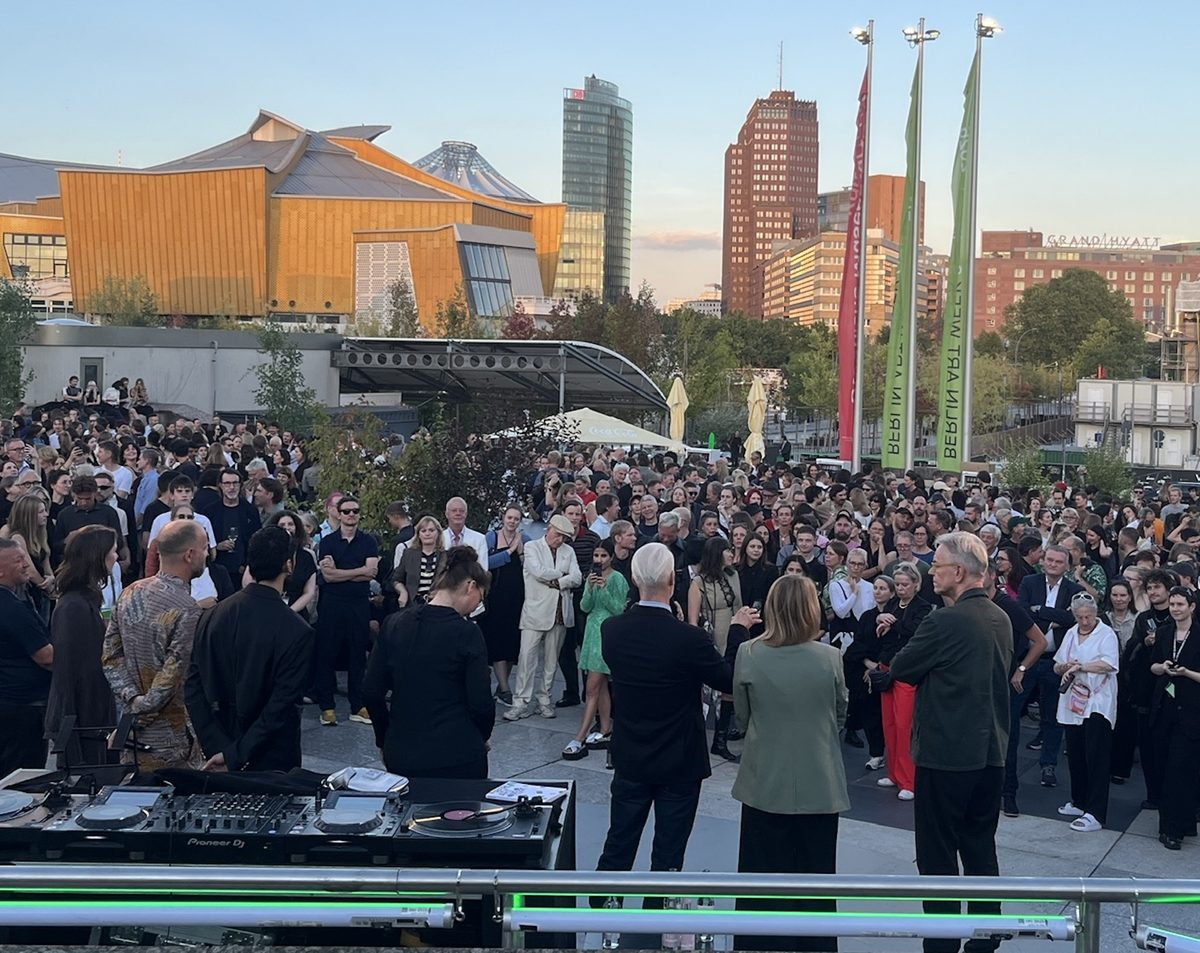
Berlin Art Week celebrated its 15th edition last week with 125 partners, more than 300 events and around 200,000 visitors.
Three hundred events. We had a couple of days.
So this isn’t an attempt to review Berlin Art Week in any comprehensive sense — I’m not sure anyone could. It’s more a record of the exhibitions, artists, installations and encounters that stayed with me once the running around had stopped.
Our base was the Hotel Bristol, where we didn’t have time to try the swimming pool — apparently one of Berlin’s oldest hotel pools — or the sauna or steam room. But there was something reassuringly optimistic about the décor, the staff were exceptionally friendly and helpful, and I had my best night’s sleep in a long while. Useful when your days involve trying to compress an entire city’s art scene into 48 hours.
What emerged was a Berlin Art Week moving between war and memory, architecture and displacement, fighter jets and intoxicated flies, alongside the arrival of one of contemporary art’s great showmen at the Neue Nationalgalerie.
Here are eight things that stayed with me.
1. Kyiv Biennial: A Bird That Cannot Land — KW Institute for Contemporary Art
Sometimes the art takes a back seat.
The most important part of A Bird That Cannot Land, the Kyiv Biennial’s expansive chapter at KW, was meeting some of the artists in the exhibition — people who live in Kyiv and are experiencing the reality of war. What struck me was how calm they seemed. Of course, they were there because of their art, but occasionally an encounter shifts how you experience everything surrounding it.
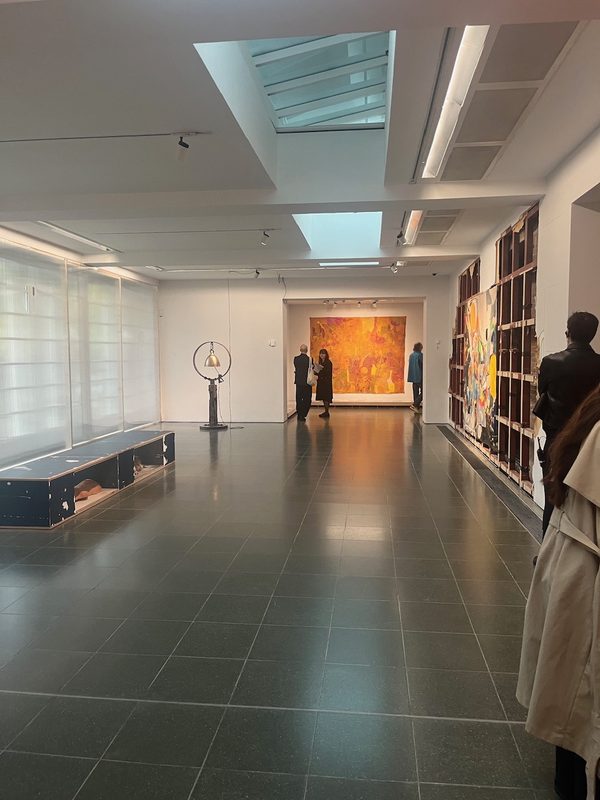
Spanning the whole of KW, the exhibition brought together more than 40 intergenerational and international voices around the idea of a “Middle-East-Europe”, connecting post-Soviet Eastern Europe with Central and Southwest Asia and the Mediterranean. War, coloniality, imperialism, displacement and exile run through it, but so does the question of how shared meaning can survive when the world around it fractures.
That premise inevitably feels different when some of the people making the work aren’t approaching war as history, metaphor or geopolitical subject, but as something happening around them now.
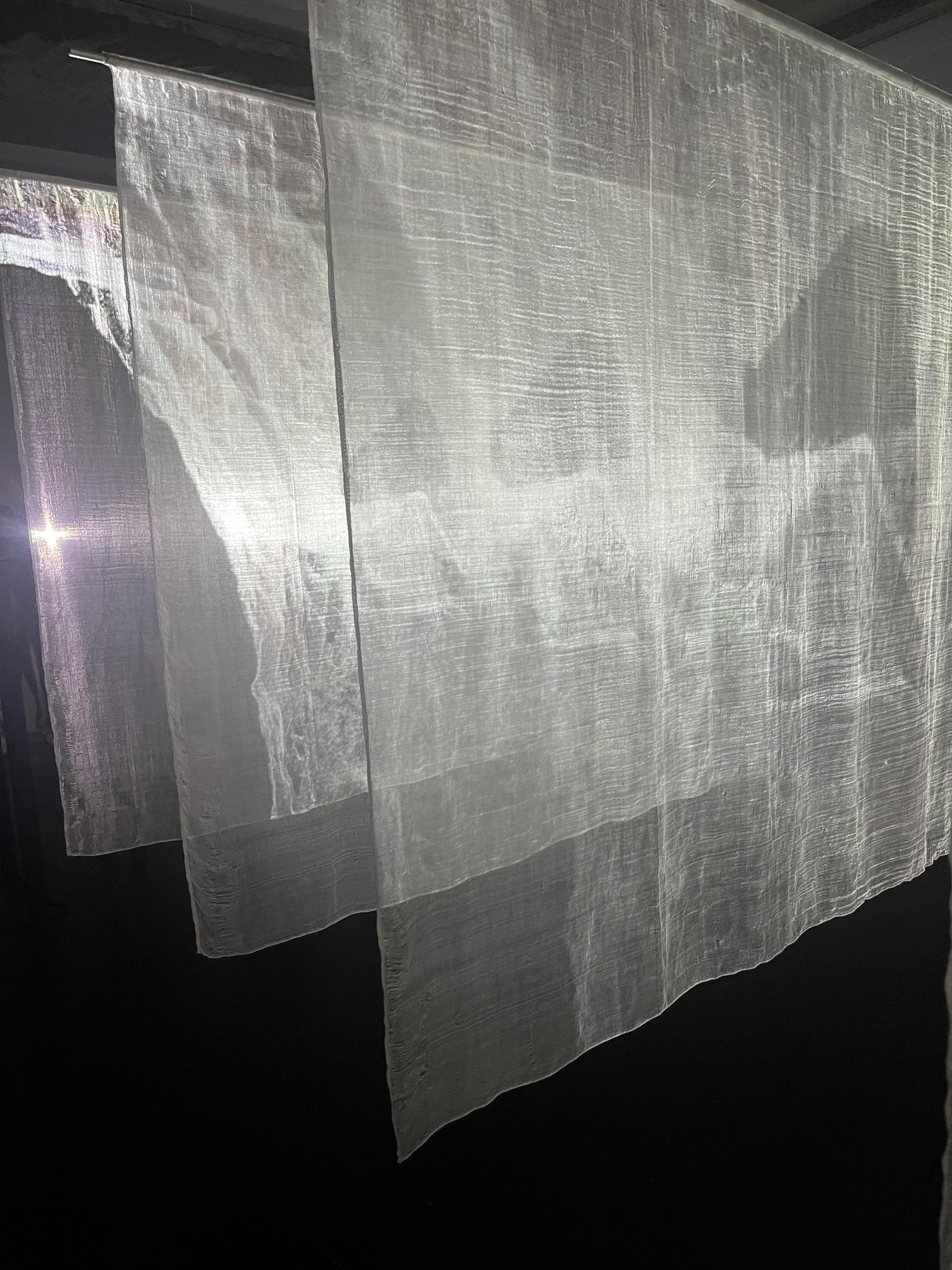
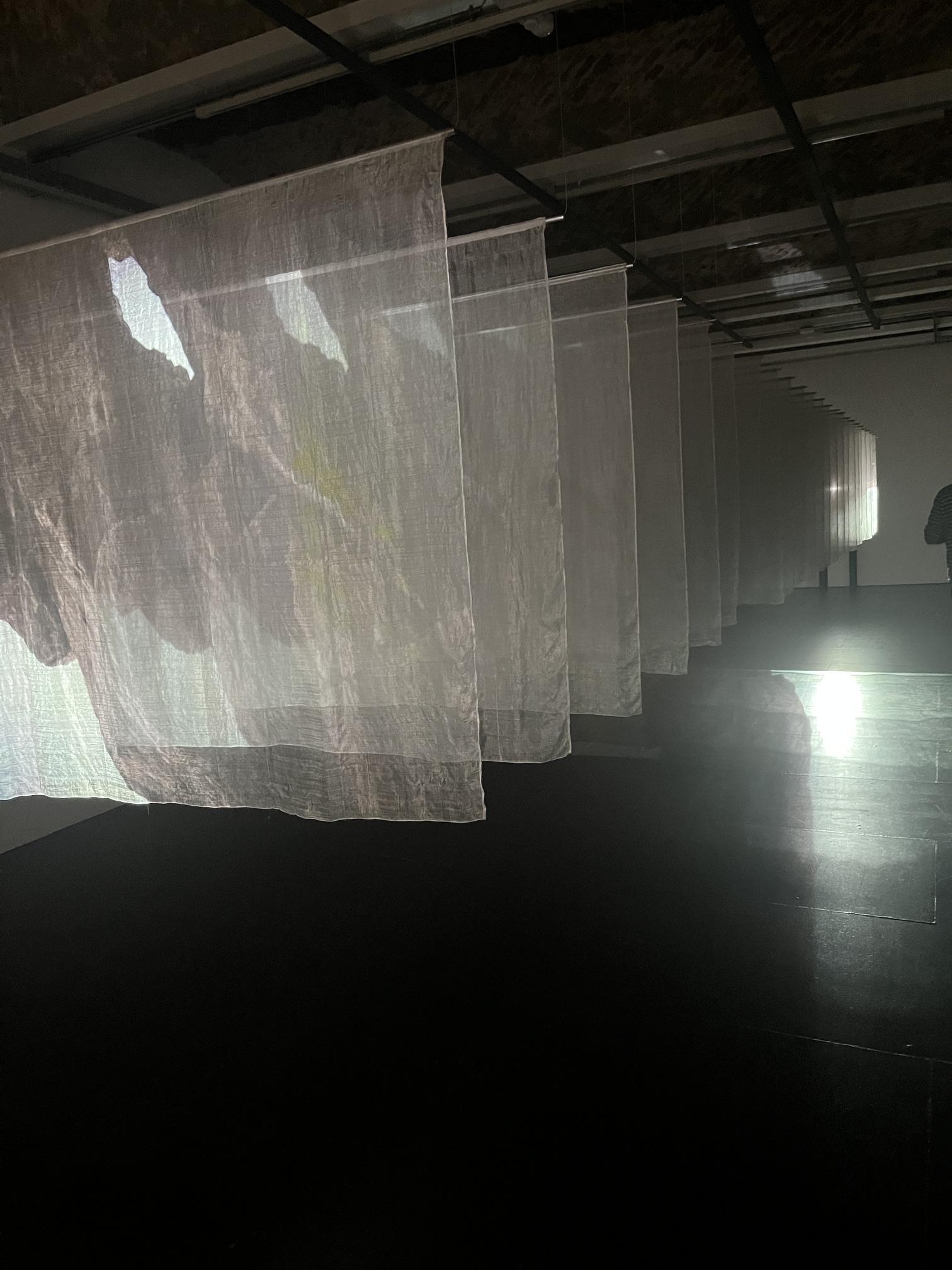
Among the works that stayed with me was Saodat Ismailova’s As We Fade, but in truth this was an exhibition where the experience of meeting its artists became inseparable from looking at the work itself.
Perhaps that’s exactly what a biennial conceived as artistic, political and social at the same time should do.
2. Kira Freije, Thu-Van Tran & Mischa Kuball — KINDL
KINDL offered the opposite problem: three exhibitions I wanted considerably more time with than Berlin Art Week allowed.
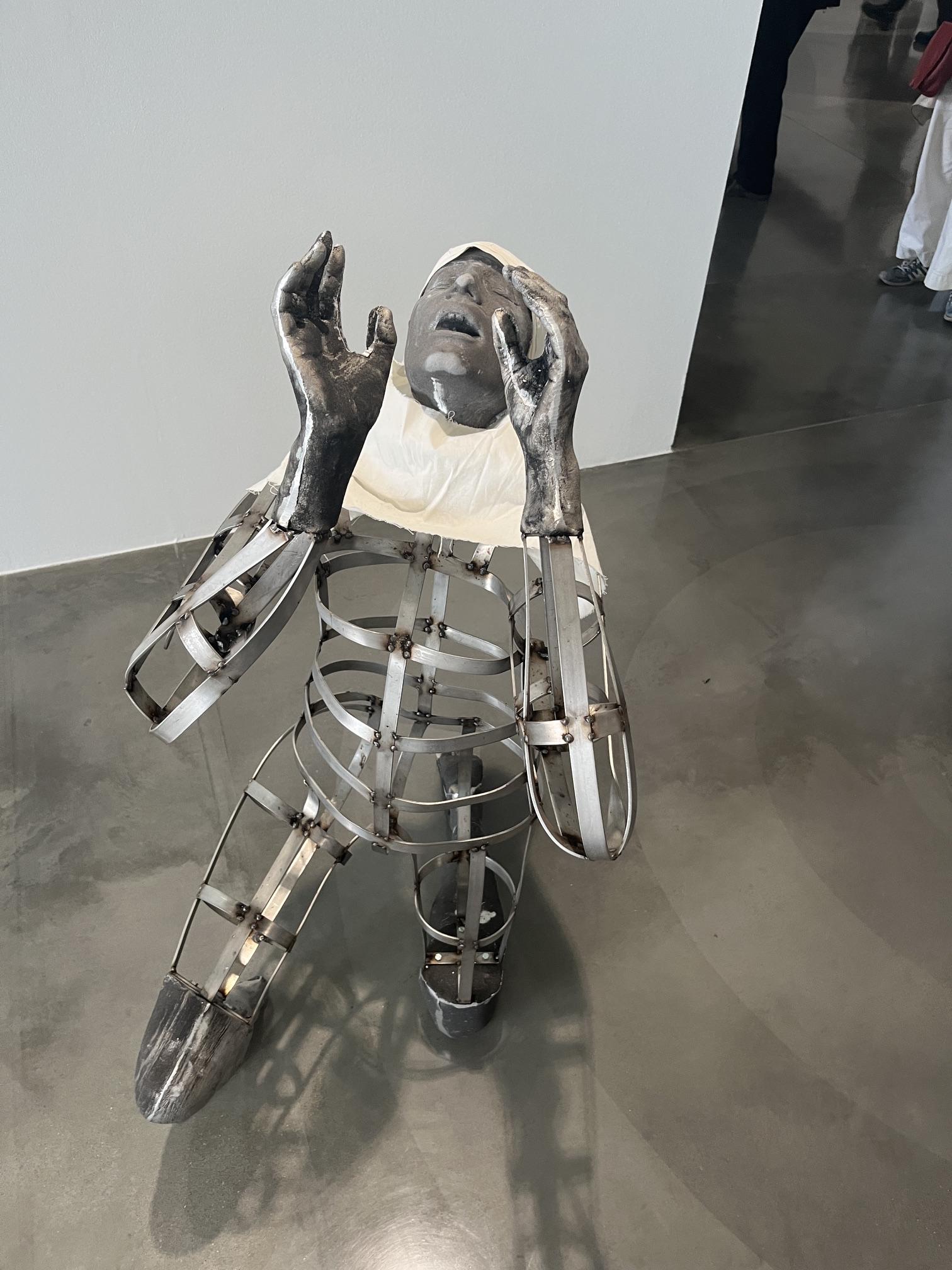
Kira Freije’s Between Sunlight, Thu-Van Tran’s Write As Beasts Scream at Night and a new site-specific intervention by Mischa Kuball occupy very different parts of the former brewery, and the industrial architecture makes moving between them feel almost like moving between separate worlds.
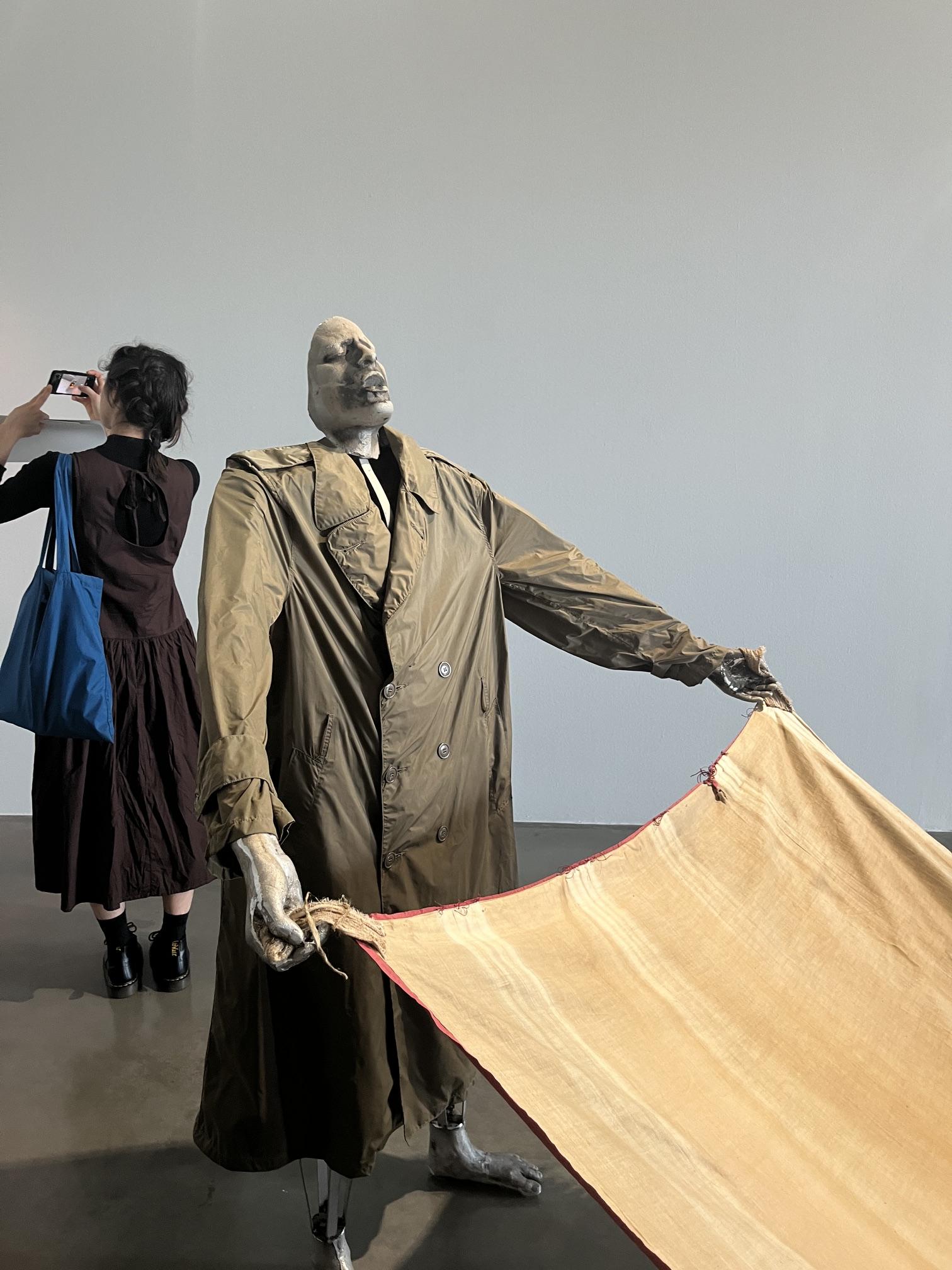
Freije’s sculptures have always had a strange psychological charge — figurative forms that seem caught between people, objects and memories of people — and KINDL’s Maschinenhaus gives them room to become almost theatrical. Tran’s exhibition similarly benefits from the building’s physicality, her work moving through histories of violence, material and memory without reducing those histories to illustration.
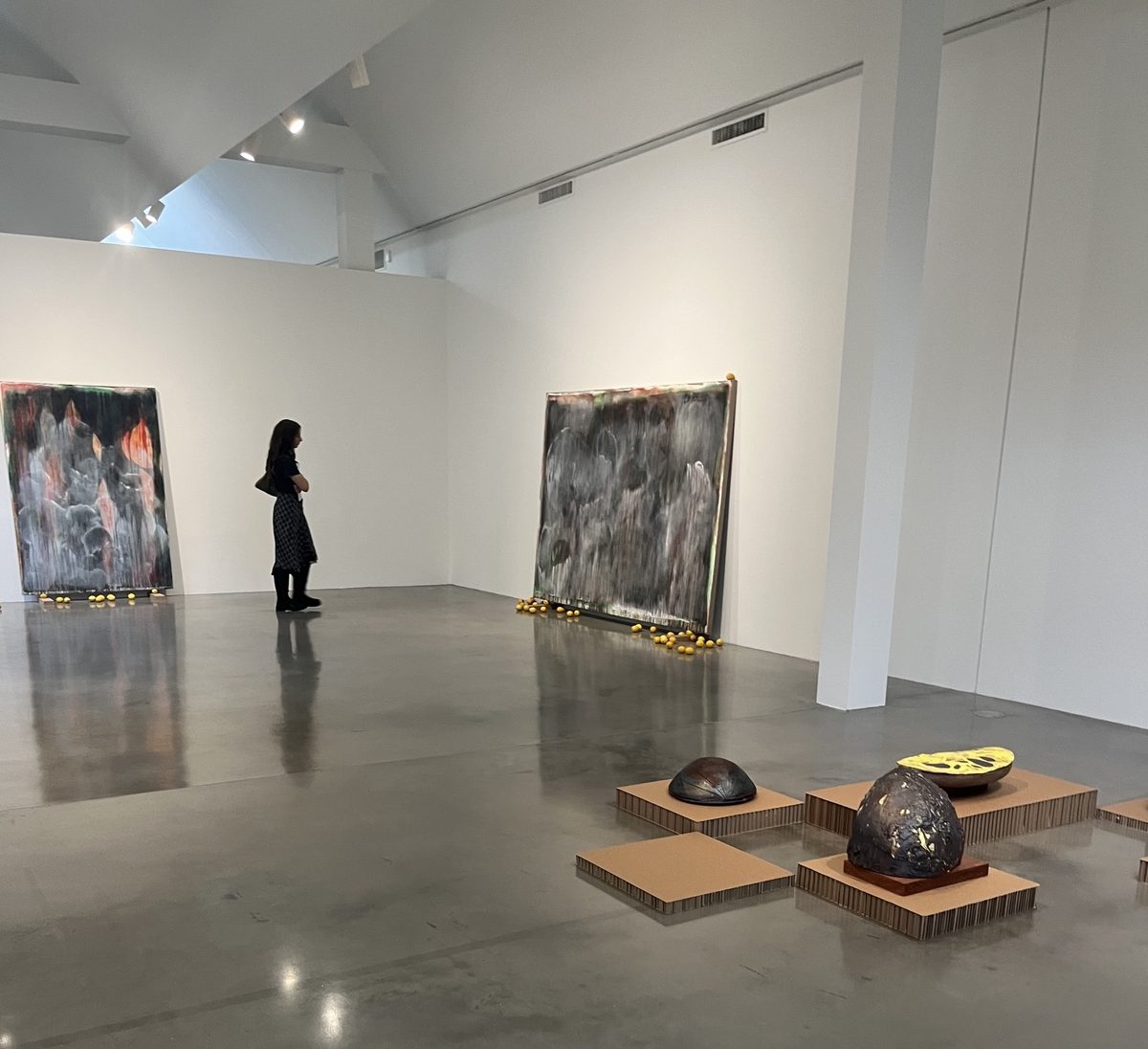
Then there is Kuball in the extraordinary Kesselhaus. An artist who has spent decades using light to interrogate architecture and the political histories embedded within it, Kuball has created a site-specific work connecting the building’s present with its past.
It’s a particularly good combination because KINDL isn’t a neutral container. Its scale, brick, machinery and accumulated history keep pushing back at the work.
Berlin has plenty of impressive exhibition spaces, but KINDL remains one where the building can become another artist in the show.
3. Carsten Höller: FLY ON AMANITA — PASSAGE
A fly gets high. Recovers. Then flies away.
That’s essentially Carsten Höller’s FLY ON AMANITA, and it was one of the simplest and strangest things I saw all week.
Installed at PASSAGE inside Hermannplatz U-Bahn station, Höller’s looping video follows a green bottle fly in a pristine white environment. It cleans itself, approaches a pale orange drop containing Amanita muscaria, feeds, becomes intoxicated, recovers and eventually departs. Then everything begins again.
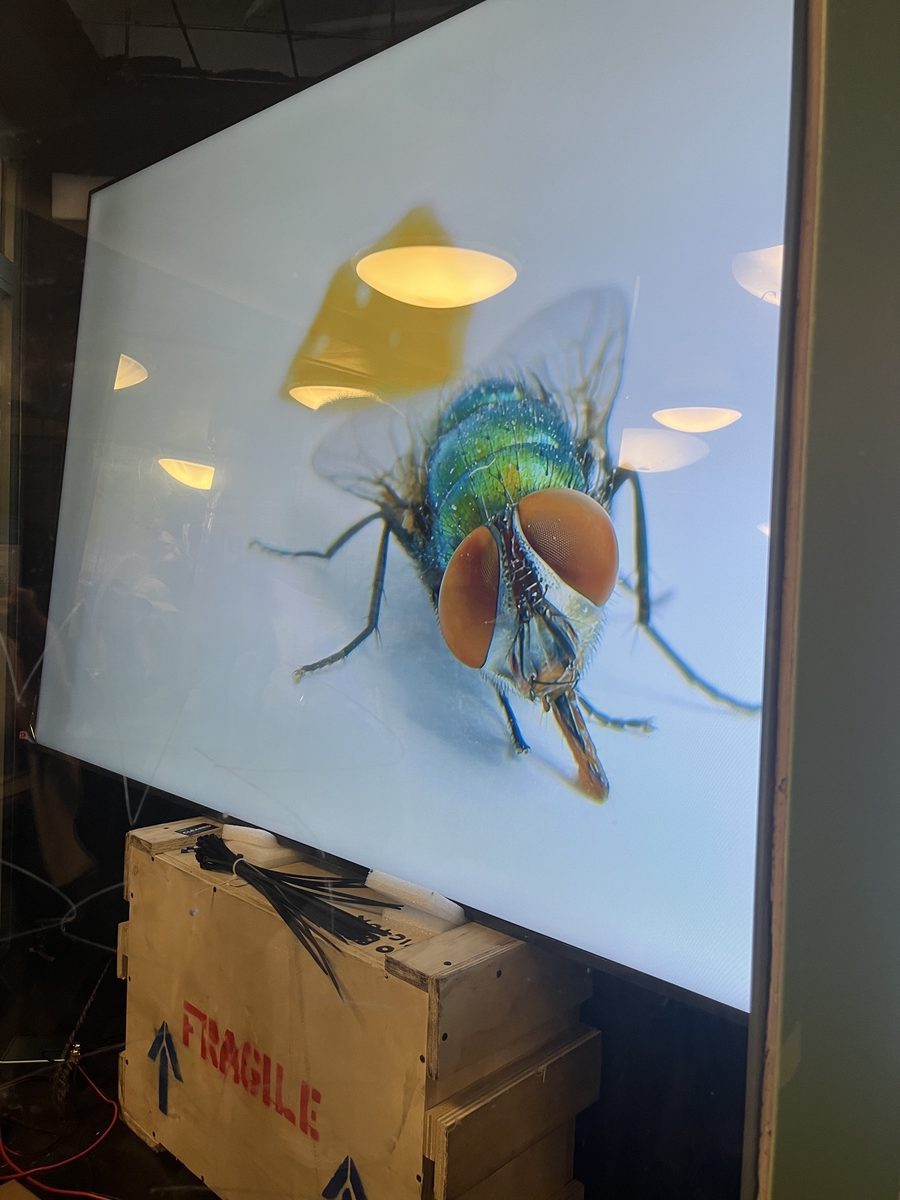
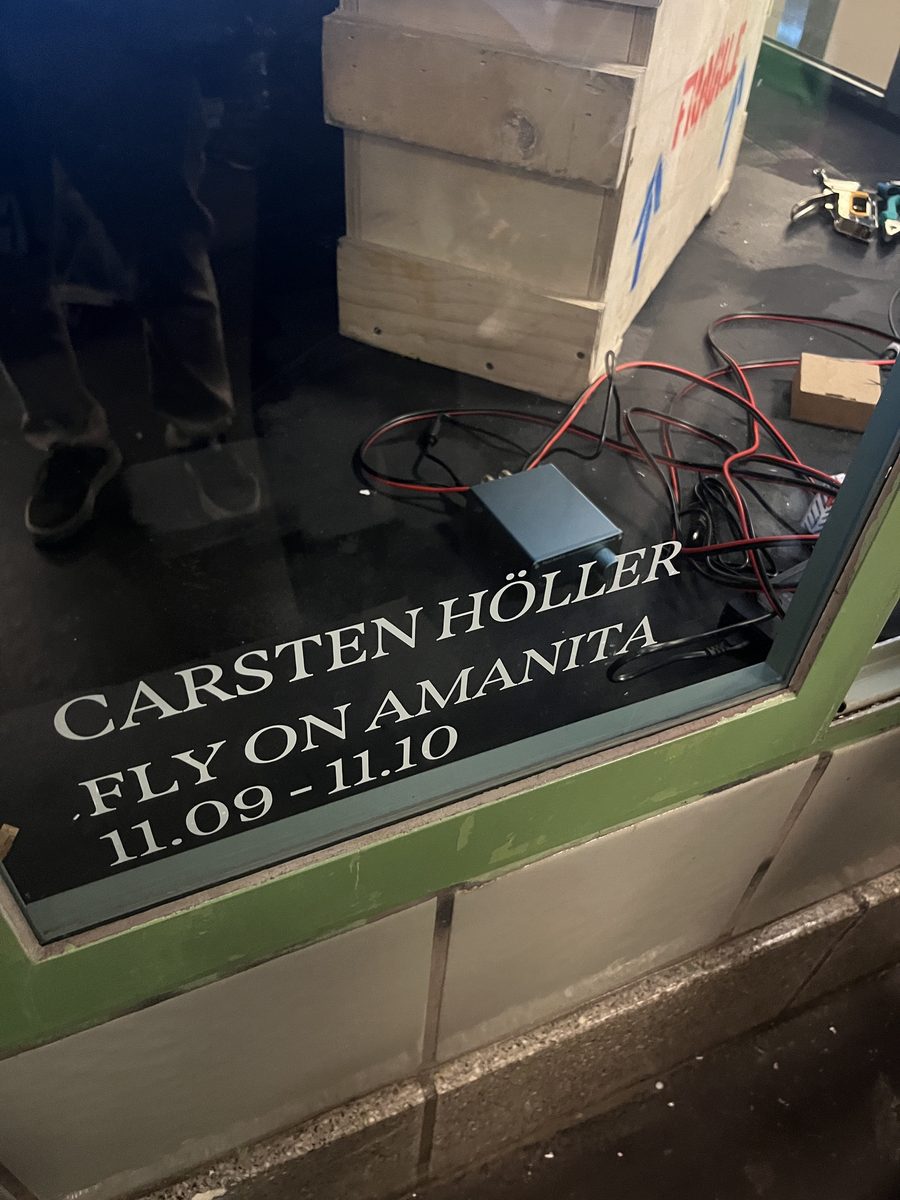
Höller trained as an agricultural entomologist before becoming an artist, and his longstanding fascination with experiments, altered states and Amanita muscaria makes the setup feel simultaneously like laboratory observation, choreography and a slightly surreal 1990s music video.
The location changes it.
Hermannplatz is a place where addiction is part of the everyday urban landscape, and suddenly the fly’s cycle of desire, consumption, surrender and recovery becomes harder to regard simply as an amusing biological experiment. The loop offers no judgement and no redemption. It just starts again.
And then comes the uncomfortable question: does the fly want to get high?
We can’t know. But Höller leaves enough uncertainty for us to project ourselves onto a tiny insect — which may be the funniest and darkest part of the whole thing.
FLY ON AMANITA, curated by Udo Kittelmann, continues at PASSAGE until 11th October.
4. Lucia Tallová: Moving Clouds — PalaisPopulaire
From an intoxicated fly to something much quieter.
Slovak artist Lucia Tallová, Deutsche Bank’s “Artist of the Year” 2026, has transformed PalaisPopulaire through paintings, collages, assemblages and room-filling installations that deal with memory, loss, ecology and forgotten female histories.
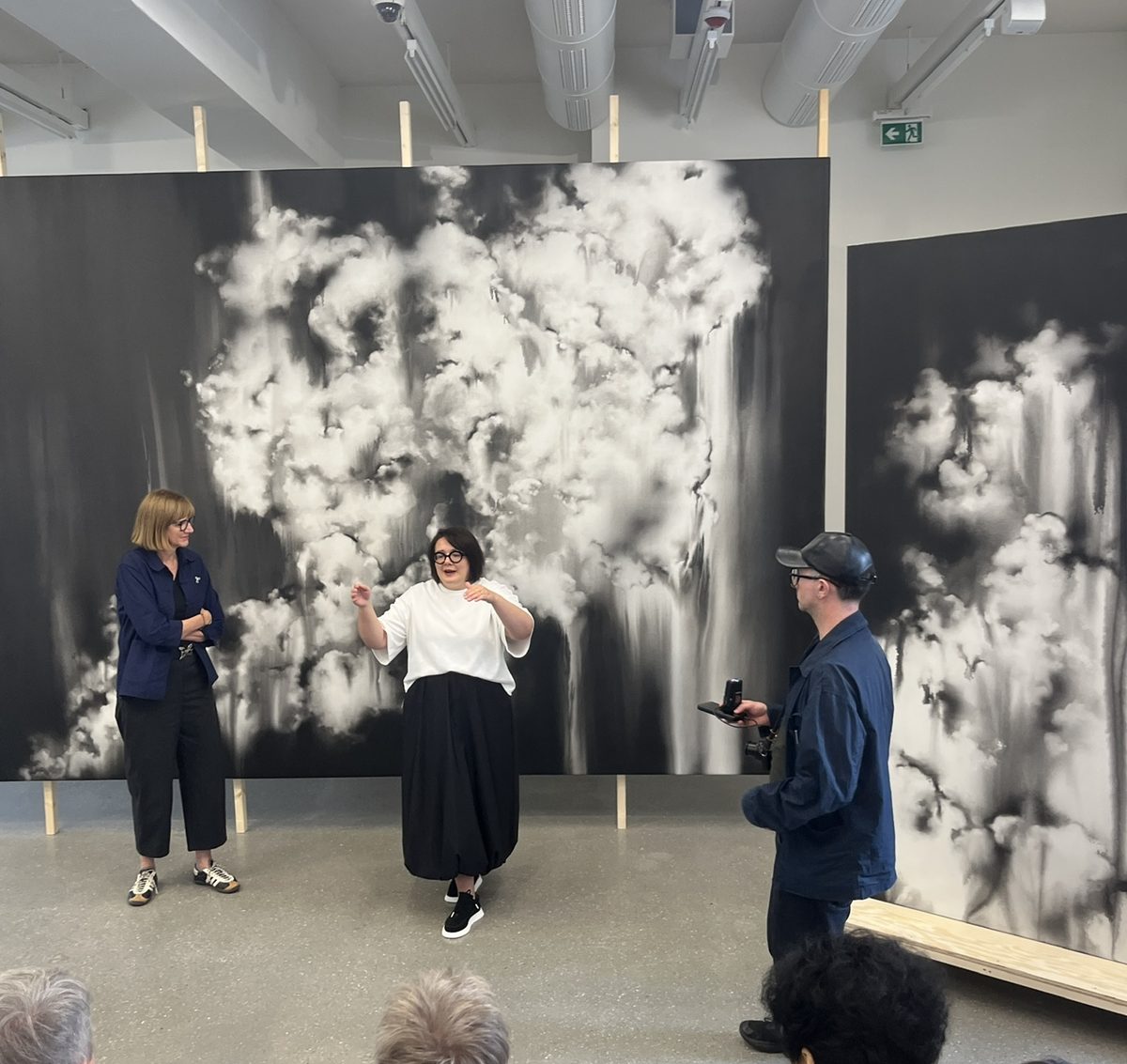
Tallová works entirely with analogue media, often taking photographs from old books and magazines and combining them with found objects, furniture fragments and natural materials. The resulting installations can feel like archives whose organising systems have been disrupted — histories reconstructed through fragments rather than facts.
Moving Clouds is her first institutional solo exhibition in Germany, and its title works on several levels. Clouds grow, change and disappear, but “moving” also refers to emotional movement: being affected by the beauty of the world while simultaneously confronting its destruction.
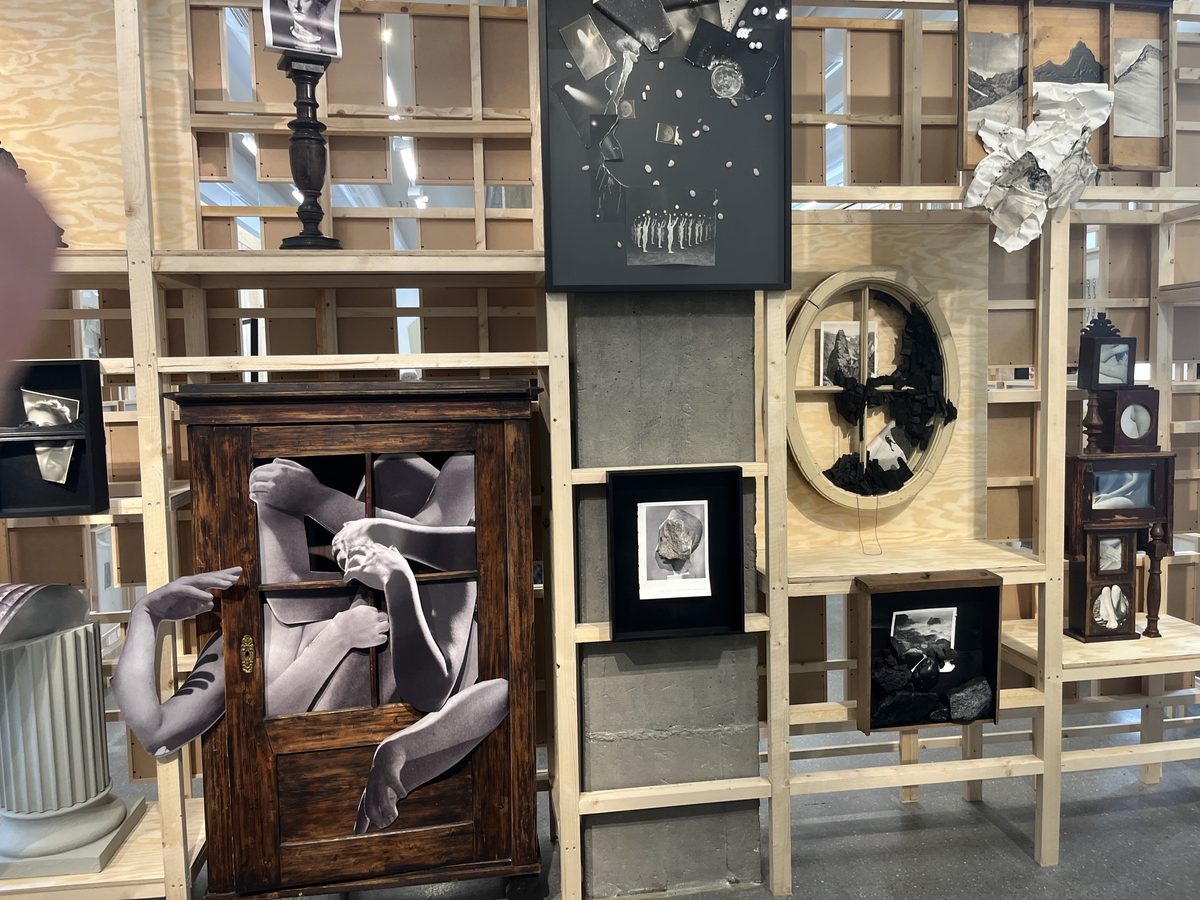
There is another history hovering underneath. Born in Bratislava in 1985, Tallová grew up through the collapse of the Eastern Bloc and its aftermath, and her work returns repeatedly to modernism, ideology and the rise and fall of predominantly male structures of culture and power.
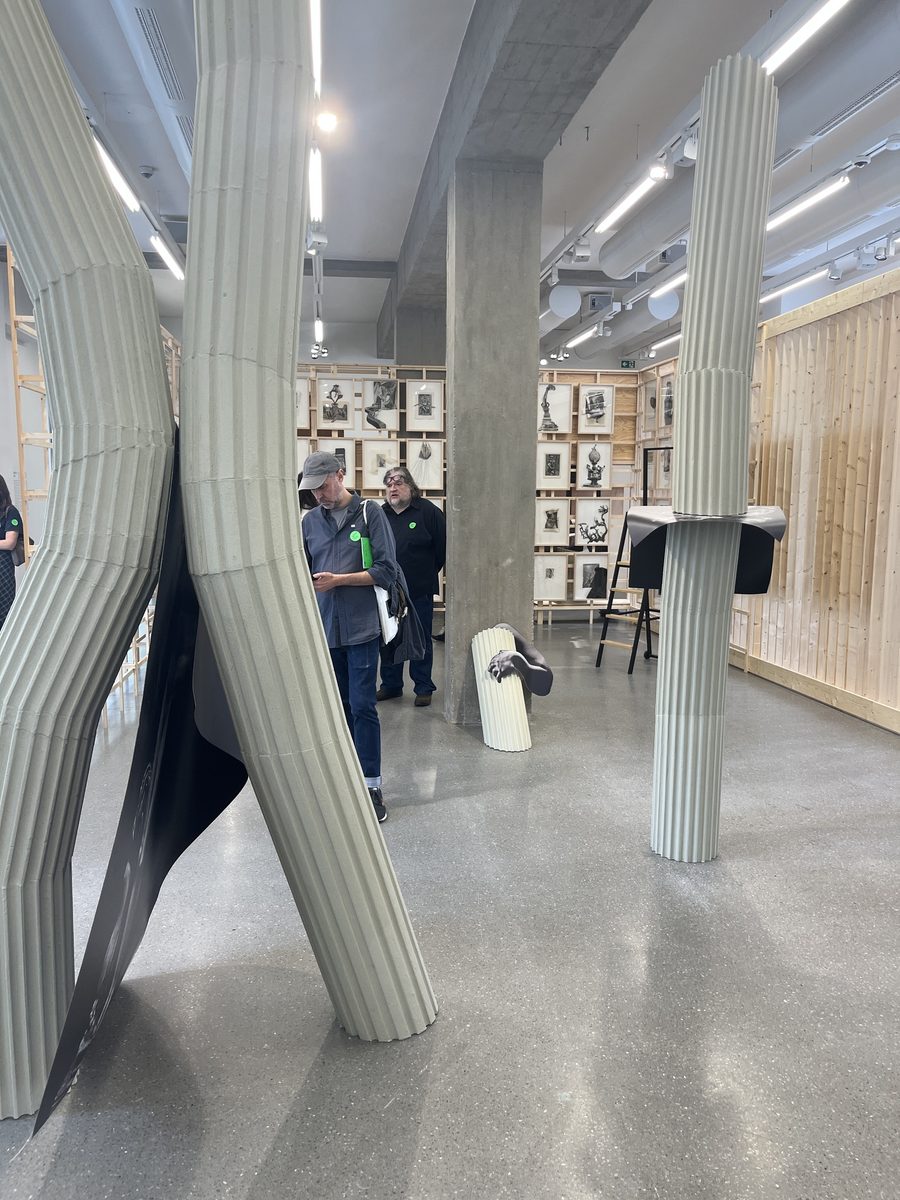
What I liked was its refusal to make memory solid. Tallová’s world is melancholic without becoming nostalgic: photographs, objects and images survive, but their original contexts don’t necessarily survive with them.
In an art week full of spectacle, that quietness was welcome.
5. Fiona Banner aka The Vanity Press: Poems for Helicopter Blades — Galerie Barbara Thumm
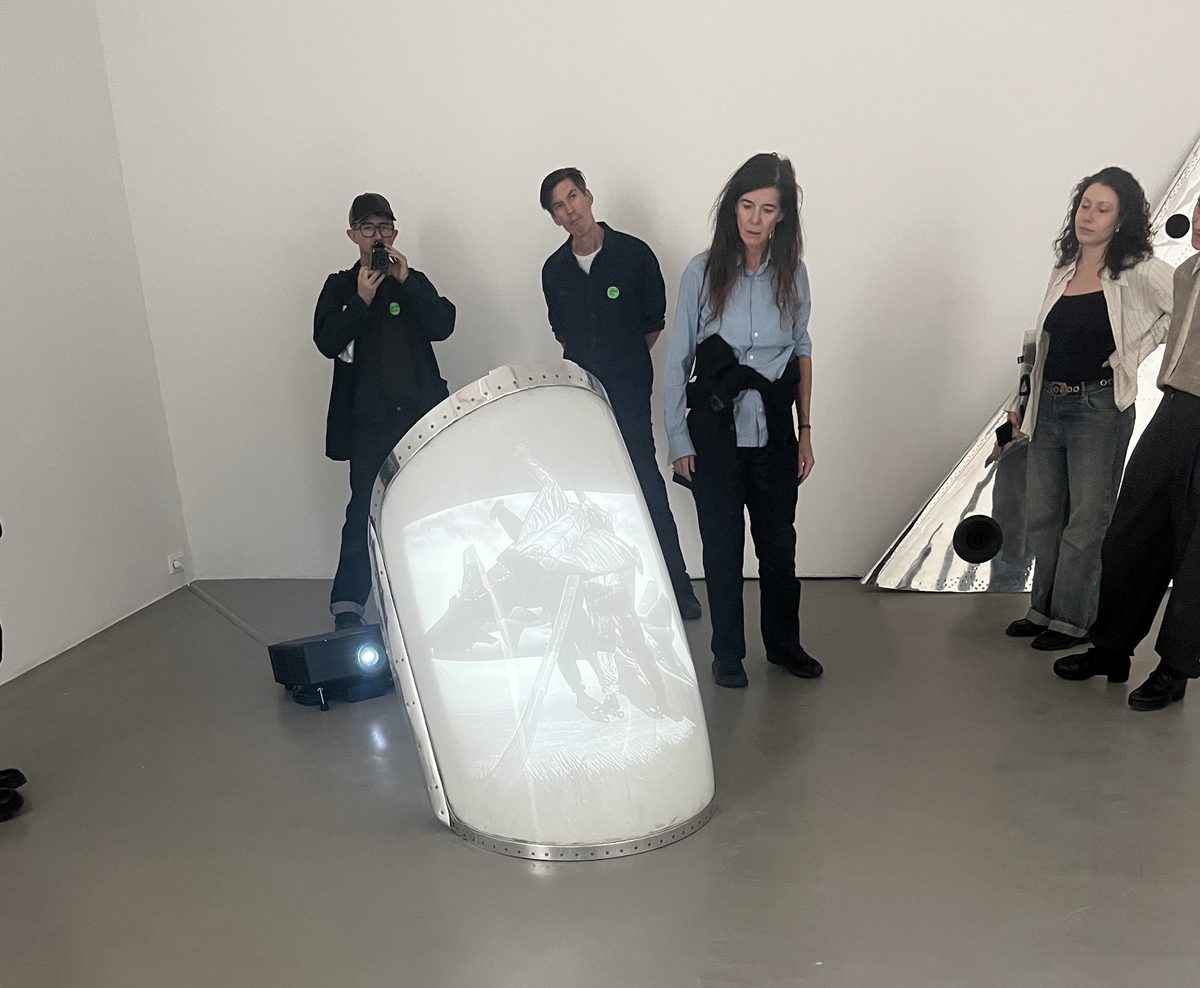
Fiona Banner has been turning the machinery and language of war inside out for decades, and Poems for Helicopter Blades finds her once again somewhere between attraction and repulsion.
At its centre is La Fin / Runway, projected onto the cockpit windscreen of a Jaguar fighter aircraft — the same huge eye that formed part of Banner’s Harrier and Jaguar installation at Tate Britain in 2010.
After that exhibition, Banner melted down the main bodies of both aircraft and stored the aluminium as ingots. Here the material returns, recast into sculptures and frames: weapons reduced to raw material and then made into art again.
The film itself is wonderfully absurd. Banner, her teenage daughter and others pose with inflatable Falcon and Typhoon fighter aircraft on something that is simultaneously catwalk, photo shoot, theatre and military runway. Humans become aircraft, aircraft become animals, and the seductive visual languages of fashion and warfare begin to collapse into one another.
Its origins make the connection even sharper. The work developed from Banner’s 2021 shoot with photographer Emma Summerton for Vogue Korea, where inflatable military aircraft became props in a strange post-human fashion performance.
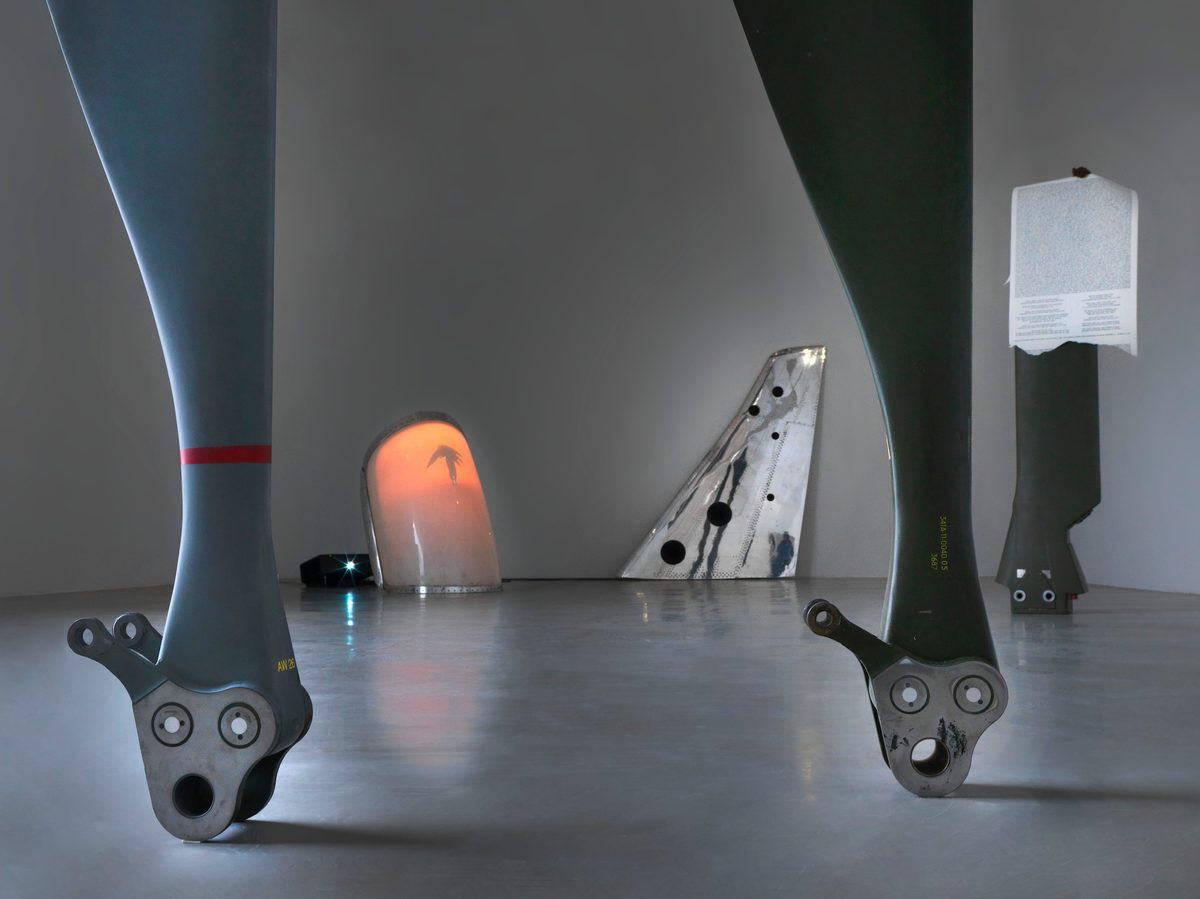
Nearby, Speaker Fin, a mirror-polished Harrier tail fin transformed into a loudspeaker, provides the soundtrack. Wild Is the Wind and Swan Lake hover somewhere in its DNA as seduction, conflict and melancholy blur together.
Banner has always understood that military hardware is designed to look powerful, beautiful and desirable. Poems for Helicopter Blades doesn’t pretend that seduction isn’t there. Instead, it makes the whole performance of power look ridiculous, vulnerable and strangely sad.
6. Not All Travellers Walk Roads—Of Humanity as Practice — HKW
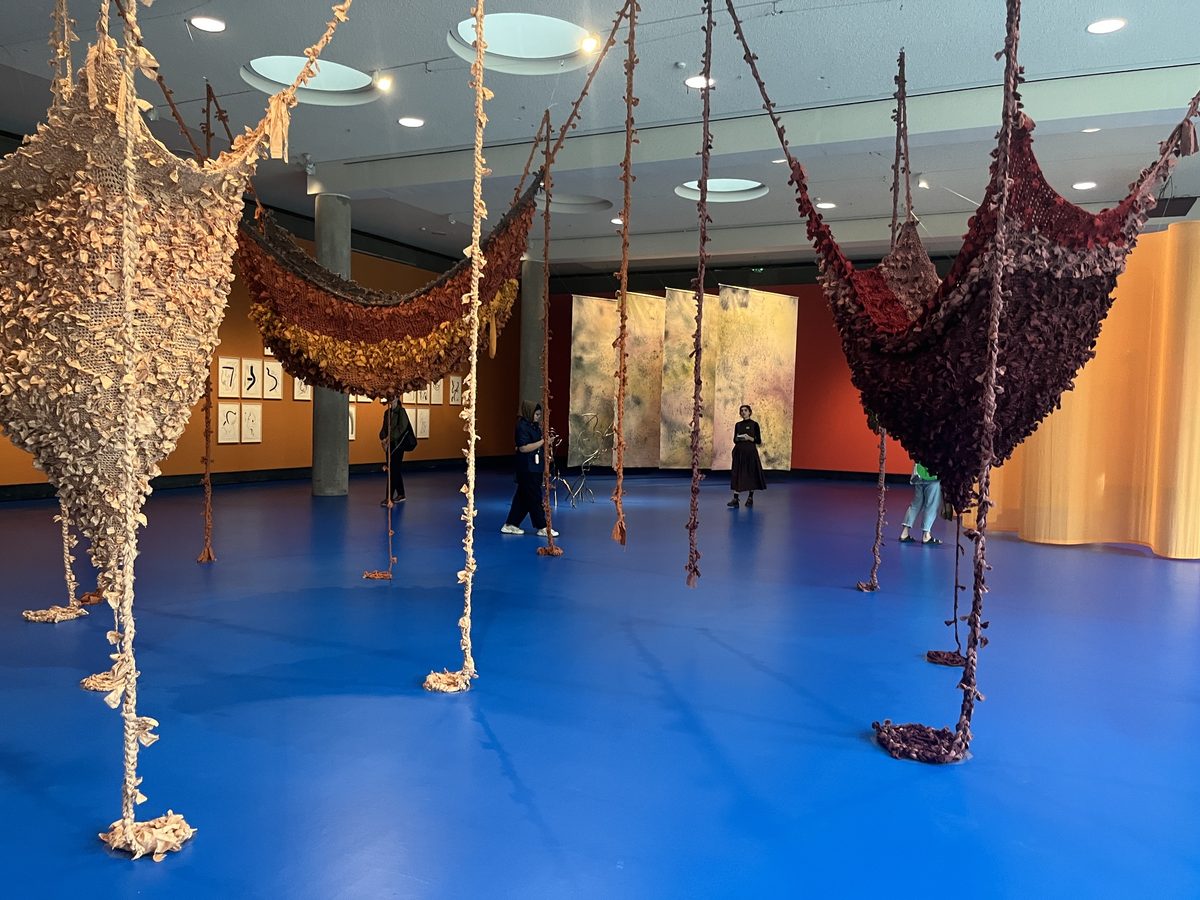
If there was one exhibition where our lack of time felt most frustrating, it was this.
HKW has brought an edition of the 36th Bienal de São Paulo to Berlin for the first time, with more than 30 international artists addressing the political and colonial inheritances of modernity while searching for ways of thinking about humanity through care, resistance, interdependence and imagination.
Fortunately, we had an excellent curatorial tour from Alya Sebti, which gave us a way into an exhibition that isn’t designed for a quick dash around.
Taking its starting point from a poem by Brazilian writer Conceição Evaristo, Not All Travellers Walk Roads—Of Humanity as Practice asks what it might mean to understand humanity not as a fixed condition but as something we continually have to practise.
That distinction matters.
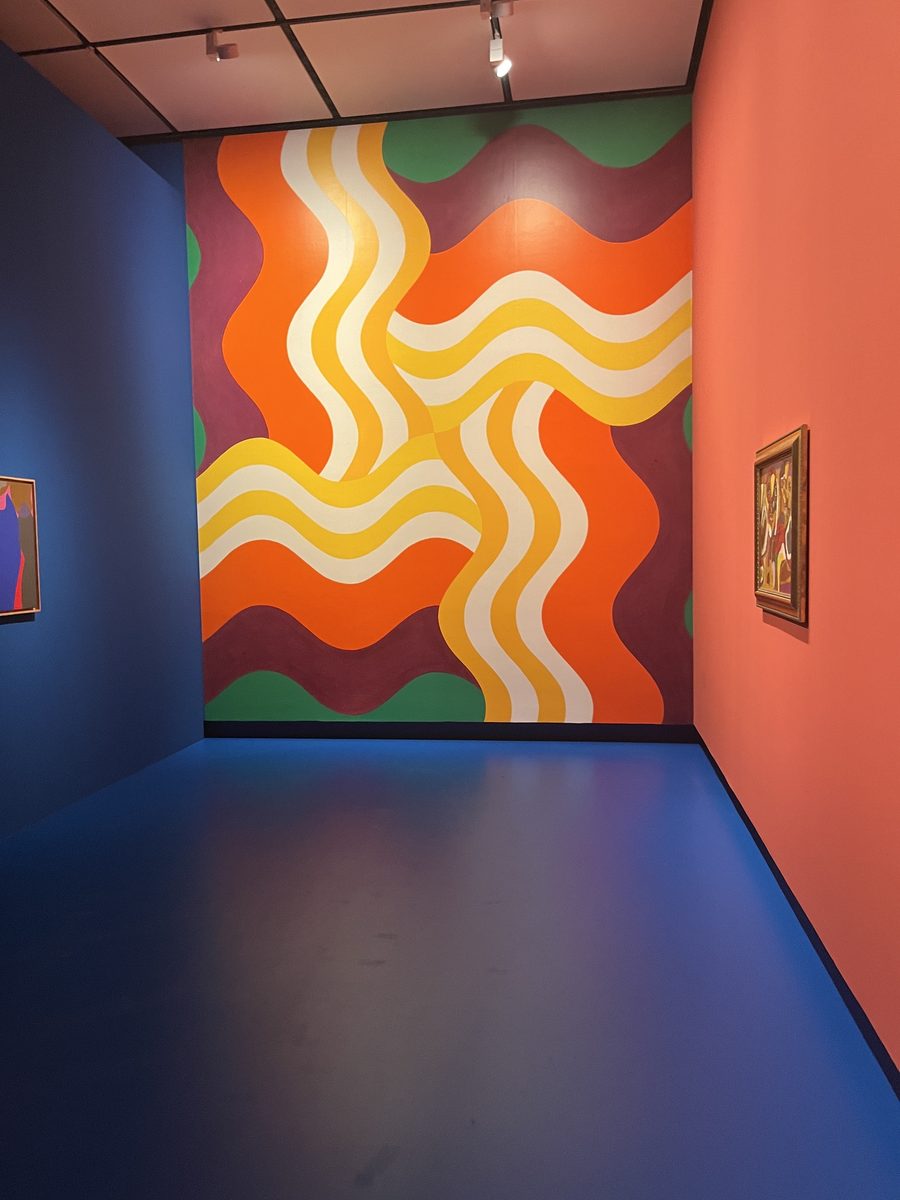
Across work by artists including Akinbode Akinbiyi, María Magdalena Campos-Pons, Forensic Architecture, Lynn Hershman Leeson, Leiko Ikemura, Emeka Ogboh, Ming Smith, Chaïbia Talal and Wolfgang Tillmans, resistance to colonialism, extraction and dehumanisation sits alongside care for other people, animals, plants, memory and spirit.
Beauty isn’t presented as a distraction from politics but as one of its tools. Joy, imagination and dreaming similarly become forms of resistance rather than escape.
I came away feeling I’d barely started it — which, in the context of Berlin Art Week, may actually be a recommendation.
Not All Travellers Walk Roads—Of Humanity as Practice continues at HKW until 6th December 2026.
7. Maurizio Cattelan: NIGHT — Neue Nationalgalerie
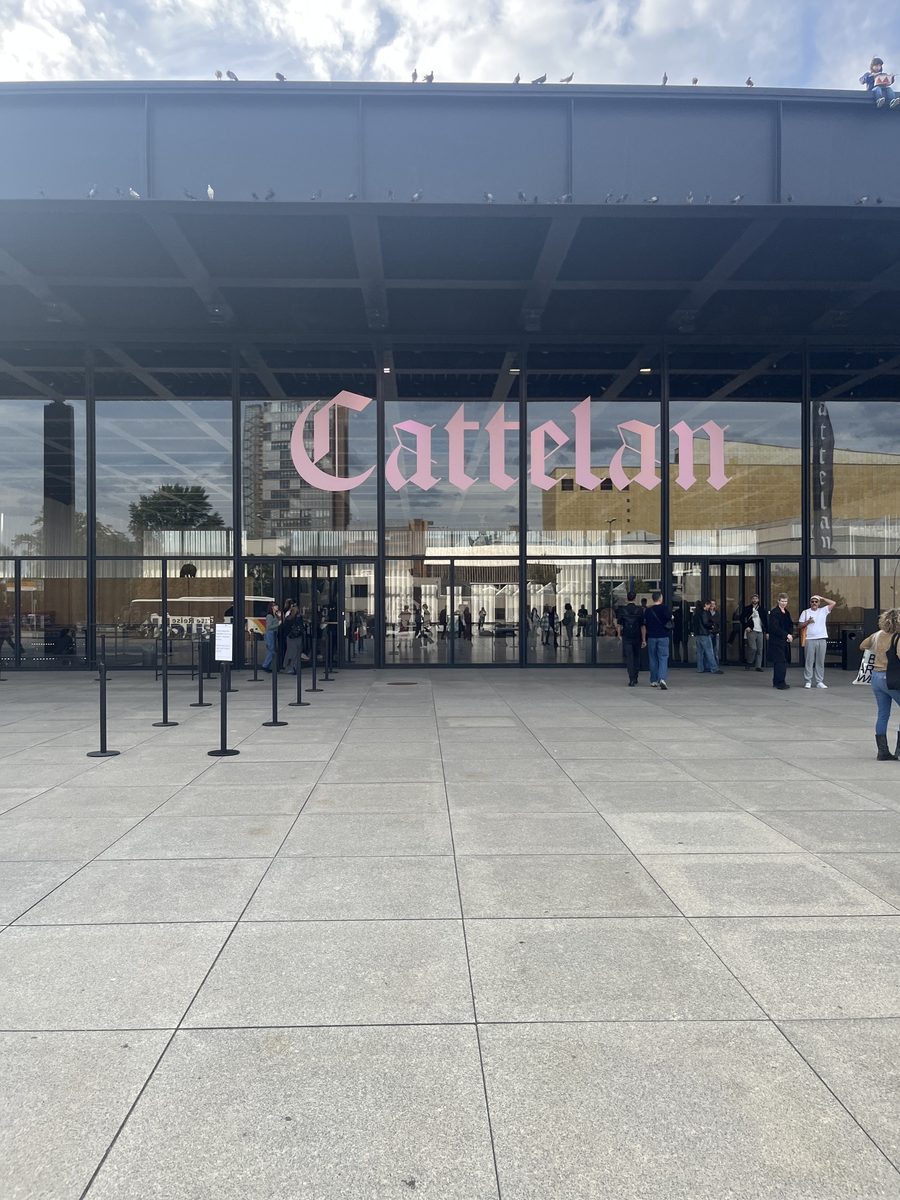
What can you say about Cattelan?
Well, you could start with the controversy.
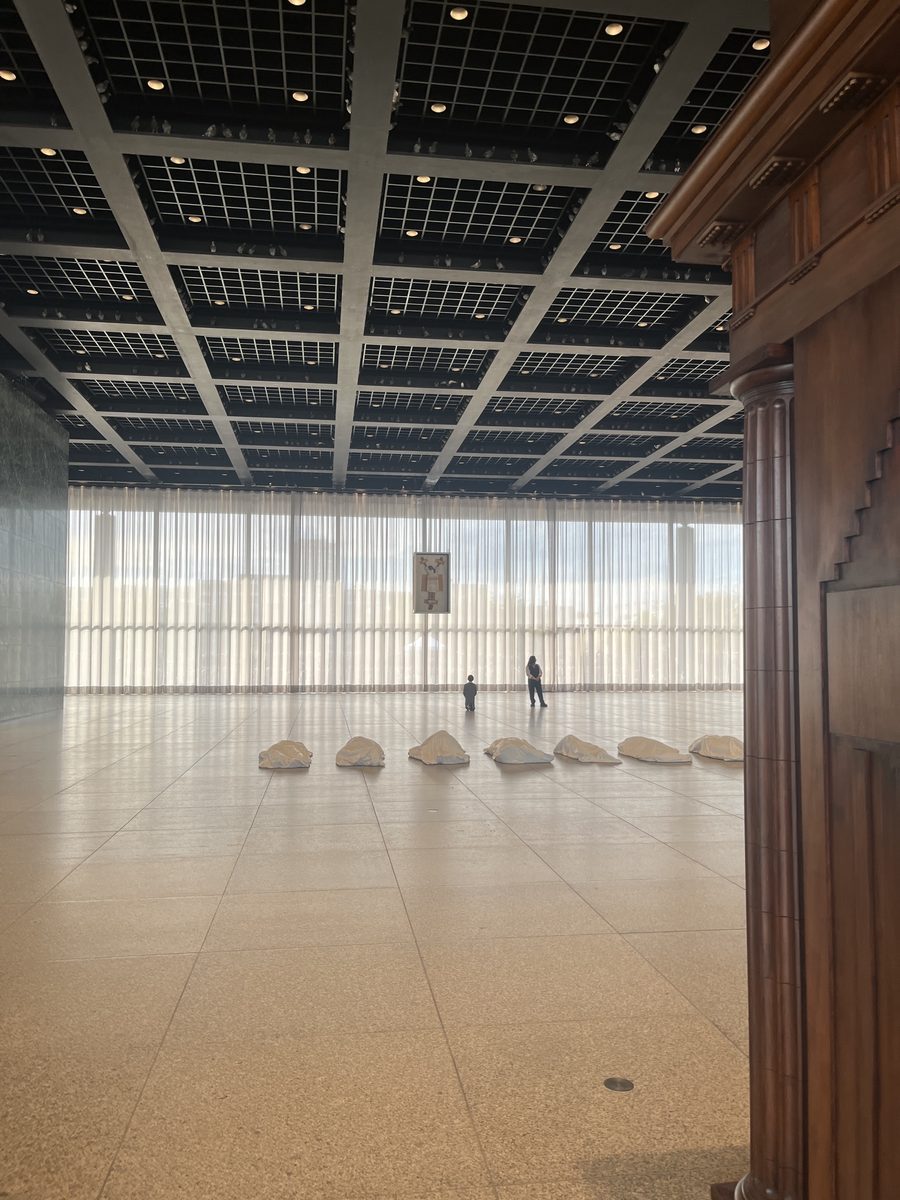
Cattelan’s NIGHT is the 2026 Preis der Nationalgalerie exhibition, and his selection inevitably raised eyebrows because a prize historically associated with recognising artists at earlier or mid-career stages had landed on one of the world’s most famous living artists.
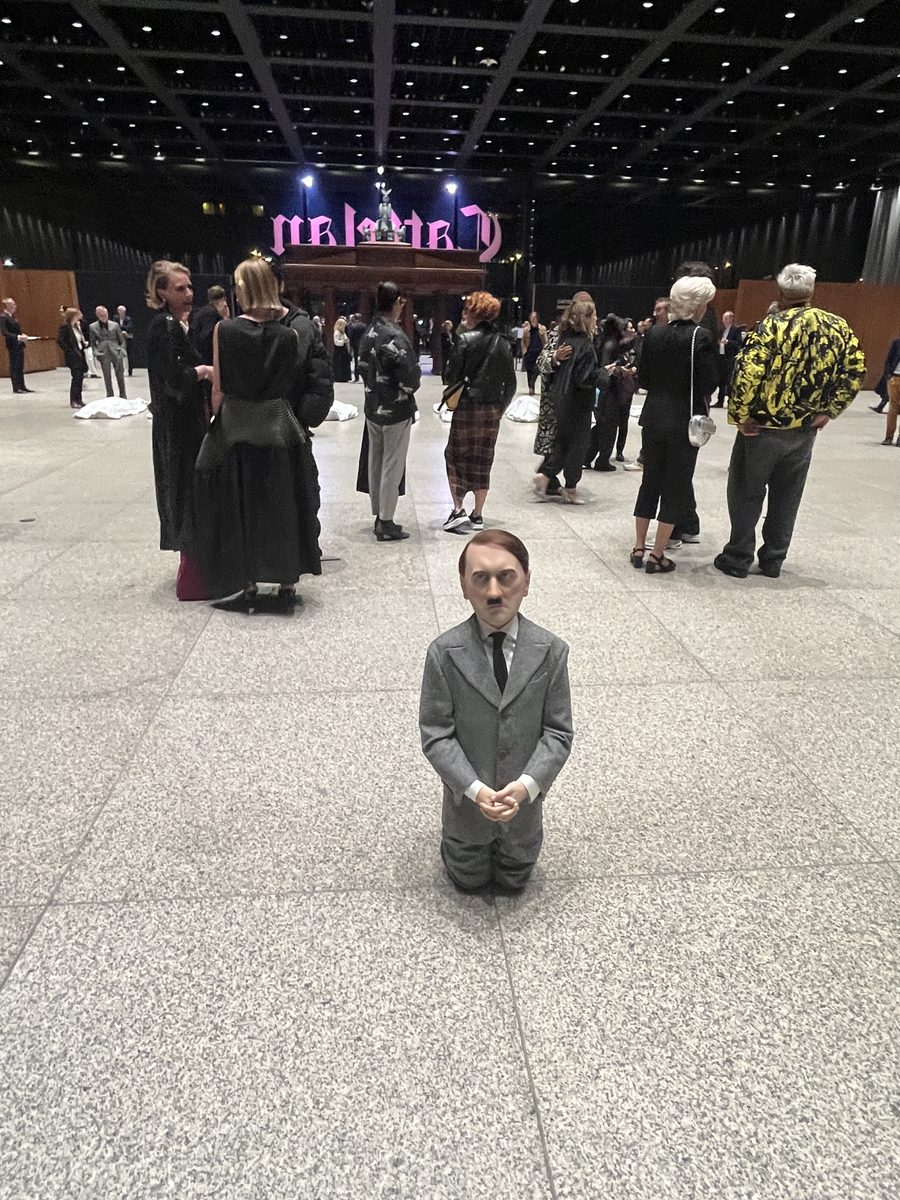
But then maybe Cattelan was exactly what Berlin Art Week needed.
Art weeks aren’t only about worthy exhibitions and serious curatorial conversations. They also need noise, glamour, arguments, crowds and something capable of projecting the city onto the international stage. Cattelan knows how to generate all of those things better than almost anybody.
And NIGHT certainly has the building for it.
This is Cattelan’s first major solo exhibition in Germany, bringing historical works including Novecento and Untitled together with new commissions inside Mies van der Rohe’s Neue Nationalgalerie.
The architecture is inevitably part of the spectacle. Cattelan’s recurring territory — innocence and violence, death, identity, historical memory, humour that stops being funny the longer you look at it — plays out inside one of modernism’s great temples.
Whether giving the Preis der Nationalgalerie to Cattelan represents a radical reinvention of the prize or an unnecessary coronation of an artist who hardly needs another one is a separate debate.
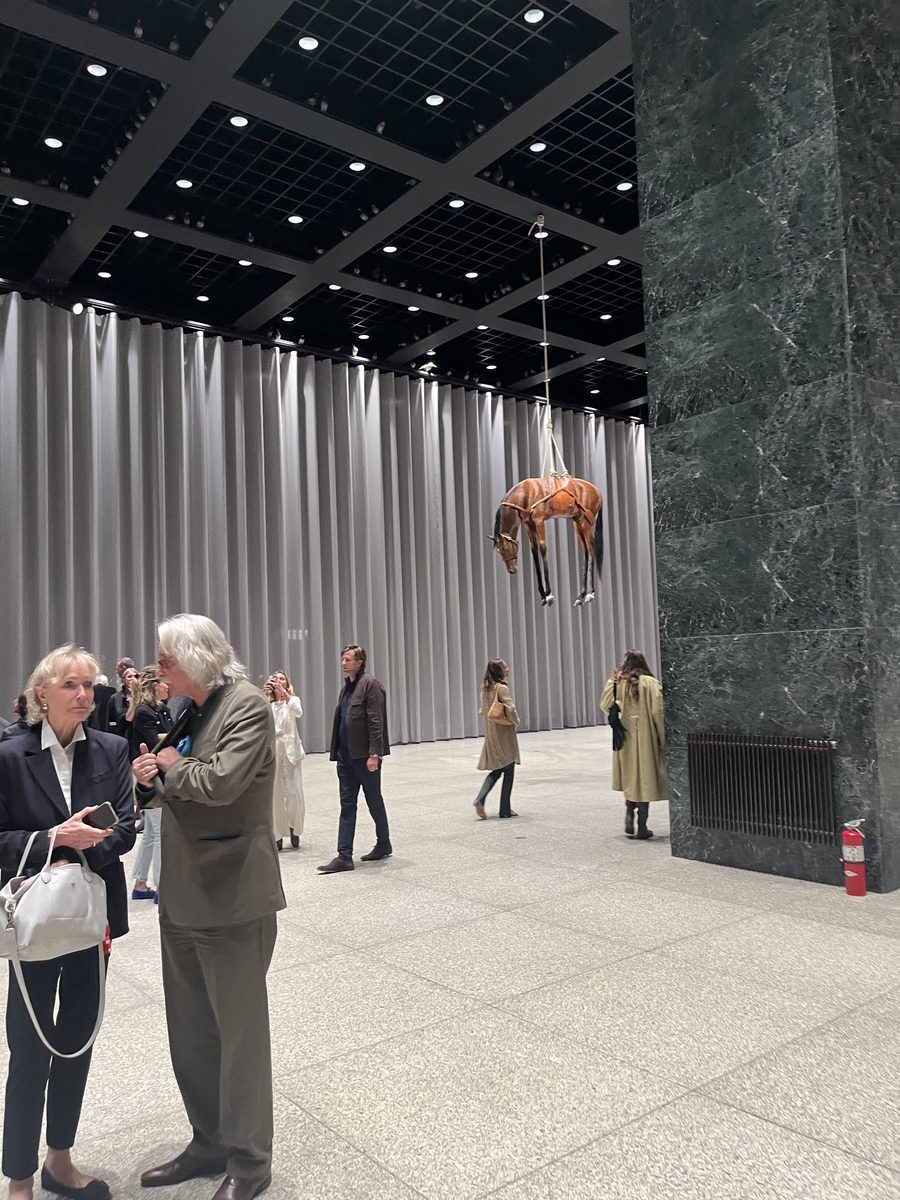
For Berlin Art Week itself, however, NIGHT did something useful: it made noise.
Sometimes an art week needs that too.
Maurizio Cattelan: NIGHT, Neue Nationalgalerie, through 7th March 2027.
8. Arash Nassiri: A Bug’s Life — Fluentum
And finally, one of my favourite combinations of artwork and venue.
FAD was already a fan of Arash Nassiri’s sculptures after encountering them with Ginny on Frederick at Art Basel Paris, but A Bug’s Life is his first institutional solo exhibition in Germany, and Fluentum feels almost uncannily right for it.
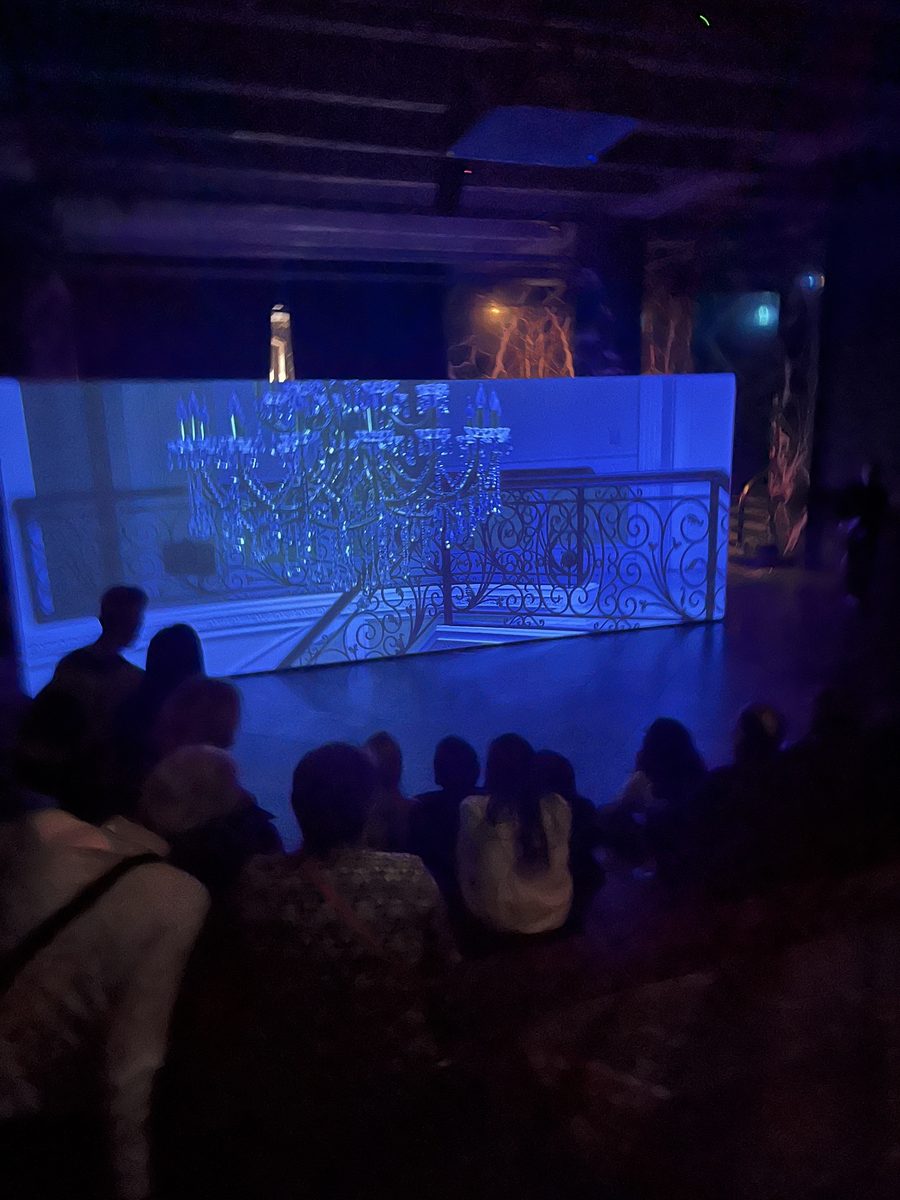
The film follows an insect puppet on a surreal nocturnal journey through an opulent Beverly Hills mansion. Marble floors, gilded staircases and expensive furniture become monumental obstacles when viewed from somewhere close to insect height.
But the house isn’t incidental. It is one of the last intact examples designed by Hamid Omrani, an Iranian architect whose elaborate homes became popular among wealthy Iranian diaspora families who settled in the United States after the 1979 revolution. Their mixture of architectural periods and styles was disparagingly labelled “Persian Palaces”, and Los Angeles eventually banned their construction in 2004.
Then Nassiri puts that film inside Fluentum.
The former military building carries its own architectural history rooted in German fascism. The film is projected onto a semi-translucent structure suspended between two monumental columns, bringing one architecture associated with migration and cultural displacement into direct conversation with another loaded with a very different history of power.
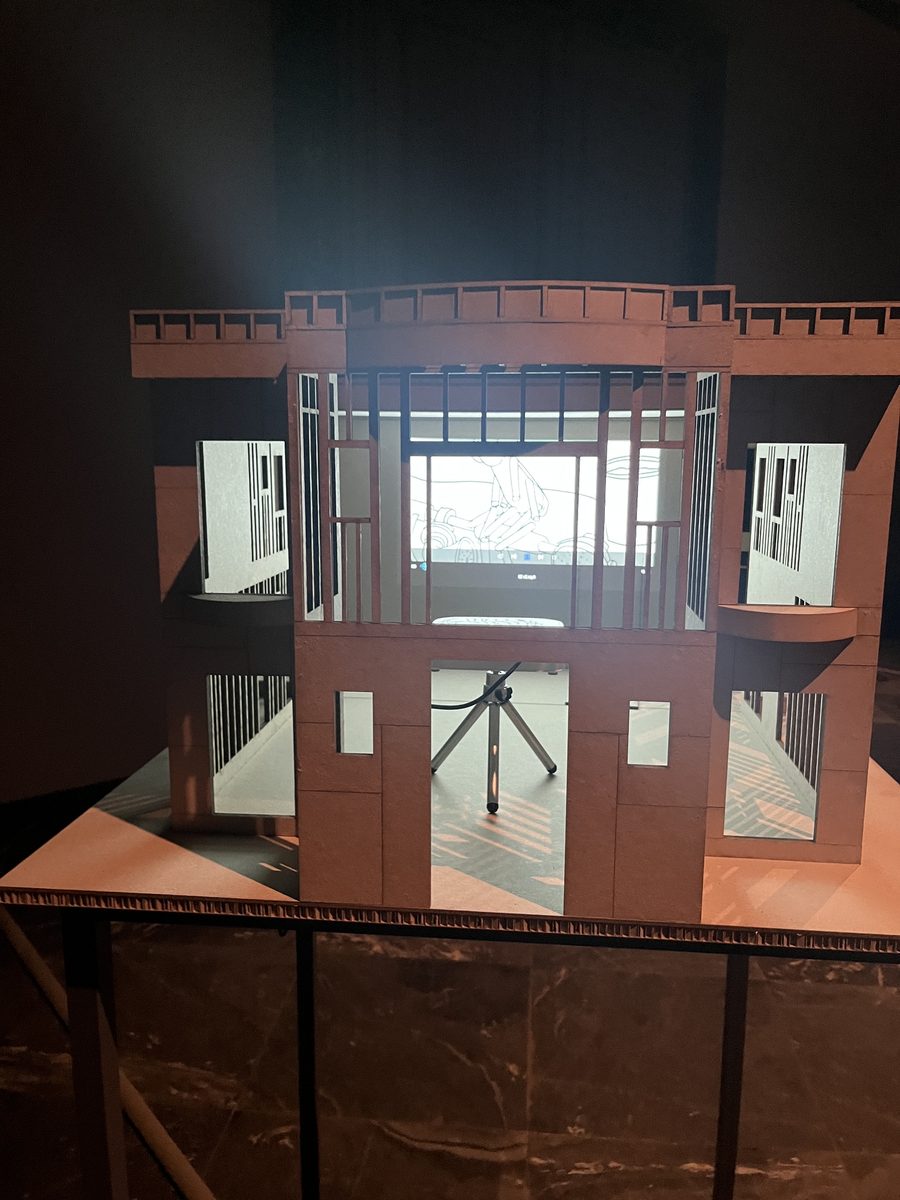
New sculptures extend the dialogue: architectural models recall Omrani’s houses, while tiny insect motifs are inlaid into leftover marble from Fluentum’s renovation using pietra dura.
Scale keeps shifting — mansion to model, monumental architecture to tiny insect, Beverly Hills to Berlin — and with it our assumptions about taste, belonging and who gets to decide which architecture has cultural value.
I loved the venue, and I loved how completely Nassiri’s installation understood it.
A Bug’s Life is a reminder of something Berlin continues to do particularly well: finding spaces where contemporary art doesn’t simply occupy the architecture but argues with it.
There was, inevitably, much more we didn’t see. Berlin Art Week’s 300-plus events make comprehensiveness impossible, and trying to achieve it would probably miss the point anyway.
What stayed with me wasn’t one overarching trend. It was the contrasts: Ukrainian artists living through a war standing calmly beside their work; Tallová rebuilding memory from fragments; Banner turning fighter jets into an absurd fashion ballet; Höller’s tiny fly apparently choosing to get intoxicated; the São Paulo Bienal asking whether humanity is something we have to practise; Cattelan bringing noise and spectacle to Mies van der Rohe; and Nassiri allowing two very different architectural histories to collide.
Berlin Art Week can be exhausting, sprawling and impossible to fully grasp.
But maybe that’s part of why it works.
MORE: @berlinartweek
All photos: Mark Westall