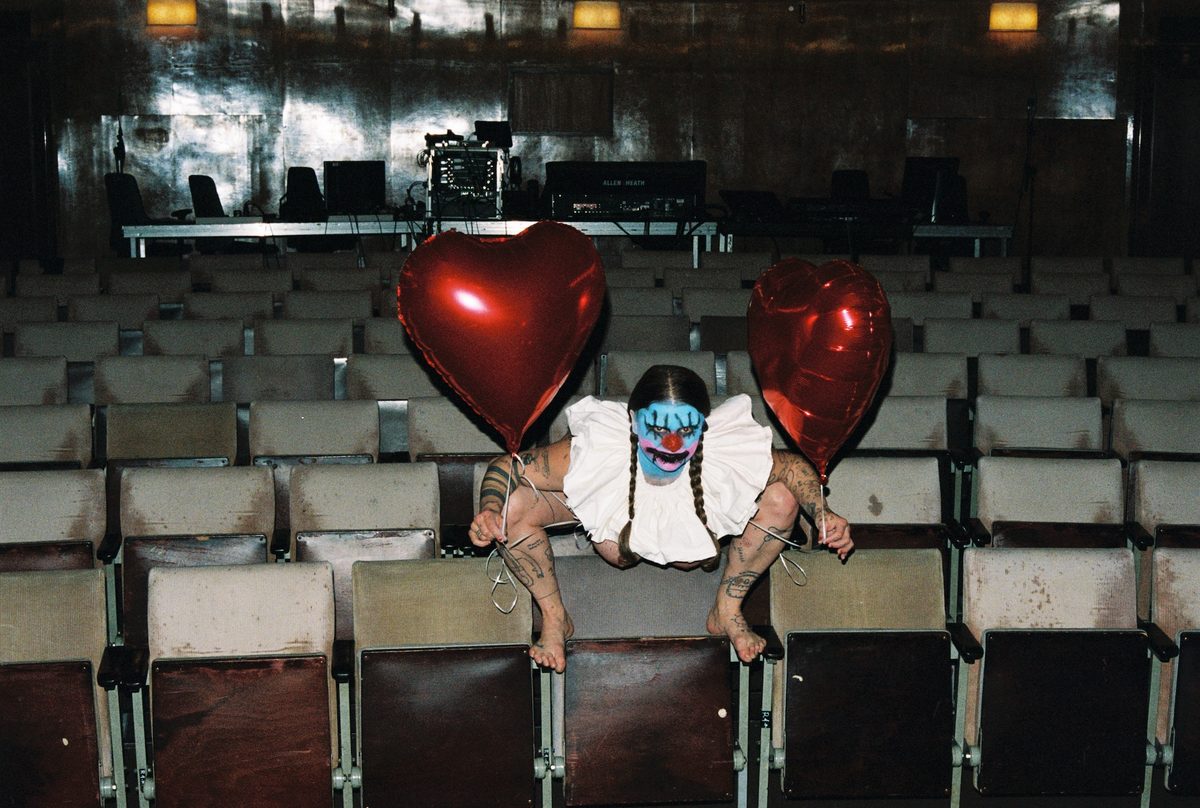
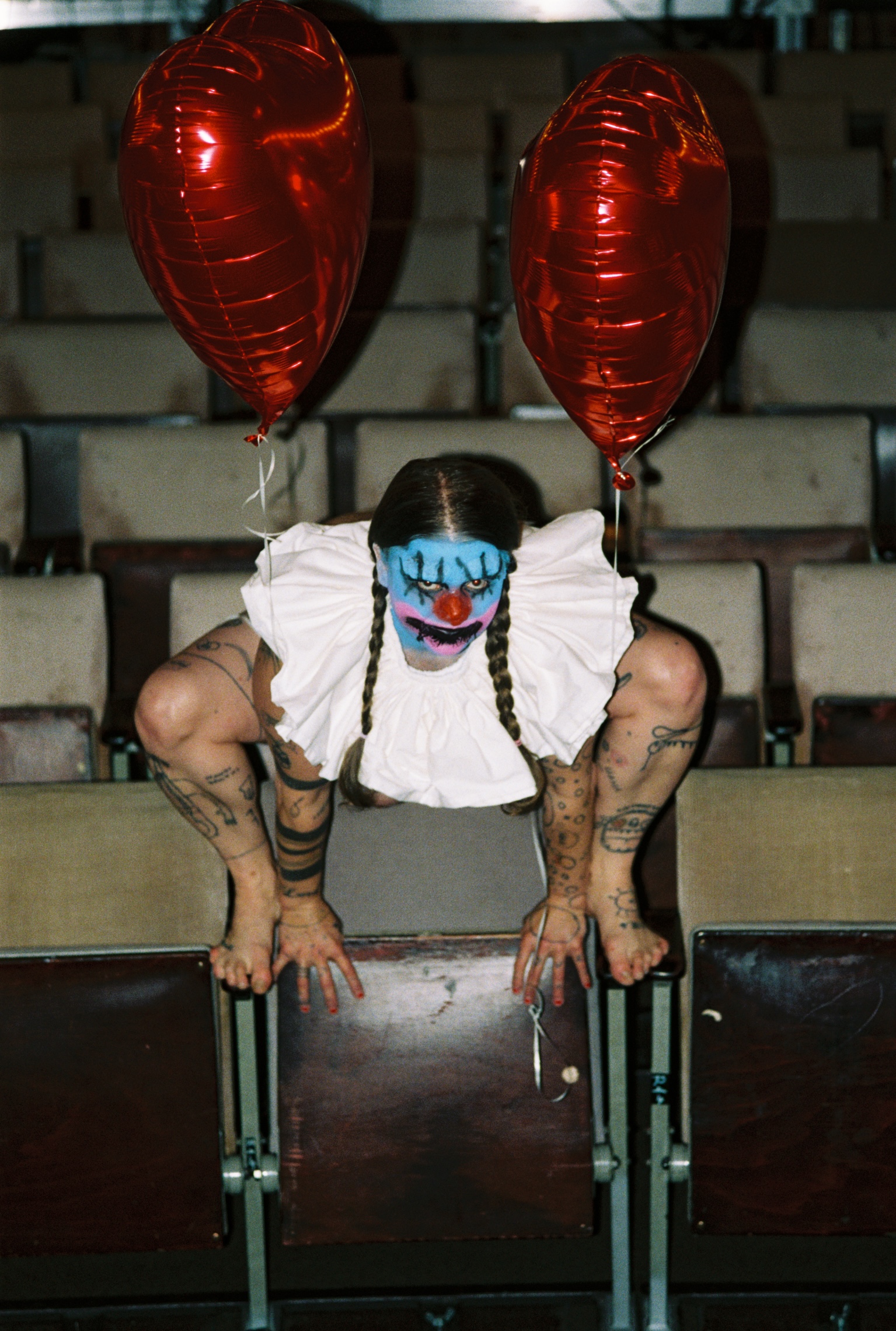
In Something Terrible Will Happen: The Cannibal Woman, Sophia Süßmilch brings her preoccupation with the body into the theatre for the first time. Premiering at Hebbel Am Ufer during Berlin Art Week, the performance begins with a familiar imbalance: female bodies are looked at, desired, judged, regulated, and consumed. Süßmilch’s cannibal reverses that relationship. She is no longer the object of consumption; she is the one who consumes. Across dance, drama, music, grotesque imagery, and clown-like absurdity, the work asks what happens when emotions that have been disciplined out of public life — fear, grief, longing, and especially anger — finally boil over.
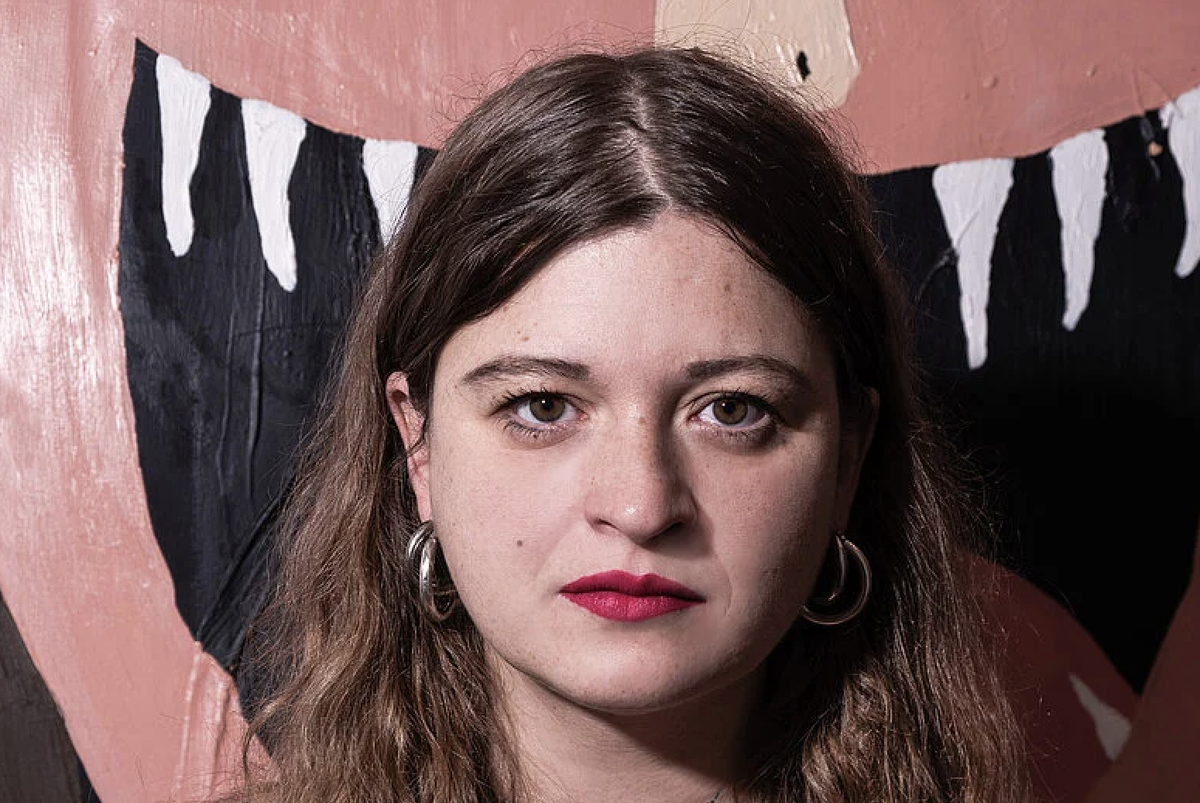
We caught up with Süßmilch to discuss her current project. In conversation with Camille Moreno, the German multimedia artist speaks about nudity, female rage, and the expectation that women endure pain. Her suspicion of performance’s longstanding investment in suffering opens into another transgression: one in which the body can be excessive, funny, angry, pleasurable, and potentially even dangerous without having to destroy itself in the process.
Moreno: You’ve used nudity quite a lot in your performances. What does nudity mean to you as a medium?
Süßmilch: I started working with nudity because I was so afraid of it. That was in 2007. It was a horror scenario for me. I had a lot of body issues, and the idea of standing naked in front of 300 people was a nightmare.
But nudity is something universally identifiable. You have nudity, I have nudity. We were all born naked, and the rest is drag. That pretty much sums it up.
I’ve always felt that, in a performance, nudity can function almost like a blank canvas. I don’t find it shocking at all anymore.
I used to have these dreams in primary school where I was wearing a shirt that came down almost to my feet, and I would keep pulling it down because it was riding up. I think it’s a kind of primal fear — the fear of being naked and laughed at. I grew up in a village in Bavaria, so maybe that has something to do with it.
But by now I feel much more comfortable being naked on stage. For example, in the HAU piece, there are costumes where some of the performers are essentially naked if they want to be. Others wear a big jacket. If they don’t want to be naked, they don’t have to be.
I didn’t cast the piece on the basis that everyone had to be naked. I actually find it more interesting that way.
Does it make a difference whether a naked body on stage is male or female?
Of course. I think it makes a difference. Not universally, but I feel that bodies that are marginalised are read differently. A white, naked, male body is still often read as much more respectable.
Look at f*cking Lars Eidinger, who shows his dick everywhere. It’s completely normalised. It’s bourgeois theatre, and nobody really finds it shocking. I don’t think it’s shocking either, but there are obviously many more projections placed onto different bodies.
I recently saw a naked body in Florentine Holzinger’s Pfingstspiel, and I didn’t know what kind of body it was — whether it was male or female. It was slightly confusing, and I thought, maybe that isn’t the point. But of course you still ask yourself the question. We read everything so binarily.
I think it can become more of a statement when a body is naked and visibly exposed, but with Holzinger there is also something about the naturalness of it. At a certain point, when I watch her work, I stop seeing the bodies as sexualised bodies at all.
You’ve criticised the way performance art is often associated with pain and endurance, particularly through artists like Marina Abramovi? and Florentine Holzinger. Why does that bother you?
Because when people think about performance art, the first things that come to mind are often pain and endurance. I think we’ve become so accustomed to that way of thinking.
I love entertainment. Entertainment is often about watching another body do something that you can’t do yourself. That can be completely fine. It’s like circus or a magic trick. Someone has a skill and you watch them do something you couldn’t do.
But when everyone is bleeding and there are hooks and people are sitting there watching, I sometimes think: is this actually interesting anymore?
I keep asking myself why women, in particular, have to put themselves through these things. Why do women’s bodies on stage so often have to hurt themselves?
I don’t think the interesting question is necessarily how much someone can endure.
Is the problem partly the audience’s expectation of the female body?
Yes. There are so many projections placed onto women’s bodies on stage, and expectations about what those bodies should do. I’ve had people compare my work to Marina Abramovi? for years. No matter what I was doing, people would ask how long I could endure something. And I’d think: That’s not the fu*cking point.
Long-duration performance is one thing within performance art, but Abramovi? made suffering into pop culture. That’s what people associate with performance now: suffering, endurance, danger.
And I don’t have an answer for what is more interesting than suffering and torture. But you can make funny things! You can entertain people without hurting yourself.
So what does “entertainment” mean to you?
I actually find theatre boring quite often. I don’t like that everything is so rehearsed and polished. It often feels stilted to me. I’m sitting there thinking, I don’t believe you.
When I say I like entertainment, I don’t just mean that I want to be amused. I like things that have a narrative strategy that keeps me engaged.
You’ve described the HAU piece as coming from a place of rage. Where does that rage come from?
I’m making it because I became so angry last year.
I became angry in a way I hadn’t experienced before. I was walking down the street and someone bumped into me and didn’t apologise. He walked away, then stopped to talk to someone else. I asked him, “Do you often walk into people without apologising?” He told me to go away.
I became so angry that I started pushing him. I had never experienced myself becoming that angry before.
I think some of that comes from a feeling of powerlessness, because political things are happening that I can’t control. I feel like I have to defend myself.
But that also creates a cycle of aggression and violence between people. I don’t want to become violent, but I also don’t want to simply suppress my anger. I felt like I had to do something with it — to make a theatre piece, or something. When your anger gets that intense, you want to scream. You reach a breaking point.
How does that connect to the idea of resilience?
Resilience is such an important concept when we talk about women, because women are expected to endure so much.
That’s why I question the idea that the answer is to hurt yourself even more, to demonstrate how much you can withstand. I don’t know if putting another hook through your skin to show how resilient you are is actually interesting.
I also think about what different bodies are allowed to do. Even when it comes to rage, I might be able to push someone on the street and have them apologise afterwards. A Black woman might not be able to do the same thing without being attacked. What I am allowed to do, another person might not be allowed to do because they are positioned differently within the social hierarchy. That interests me.
How do you work with the performers?
I have seven performers and two musicians. I work with each person individually. I ask them: What is your rage? What could your part be in this piece?
I think about what each person brings with them and how that can become part of the work.
There are also rehearsals where we work with the script, music and different elements of the performance. Some things have to be tried out physically before I know whether they work.
Can you still shock people through performance?
It depends who you’re talking to. I remember Rotten.com in the early days of the internet, around 1999 or 2000. You could see beheading videos, people falling from buildings, all kinds of death footage. That was genuinely shocking.
I think people become desensitised. You can still shock someone, but I don’t know whether you can shock people through art anymore. And even if you can, is that valuable? Shock in itself isn’t meaningful. It only makes sense if there is something important behind it.
I think when people go to a museum or a performance simply to be shocked, that’s something else. That’s just voyeurism.
What else can performance do now, if not shock?
I think performance is a good place to test boundaries, because art allows you to try things that would be difficult to do in ordinary life.
For me, consent is really important. I would never make something where the audience is completely taken over or coerced. I find that very uncomfortable. I hate that.
And I keep coming back to this question: what happens to the body when it isn’t being tortured? It’s interesting to imagine someone watching me being massaged for two hours. Probably not. But it would also be a provocation. Pleasure is simply less interesting to people.
I think art is a place where you can explore boundaries. But boundaries don’t always have to be crossed through pain.
Something Terrible Will Happen: The Cannibal Woman premieres September 12th during Berlin Art Week.
Snatch tickets HERE