As curator and founder of ArtFlow Studio, Huan Zhou recently presented Brighter Than White, Darker Than Blue at Fitzrovia Gallery, centring the work of Chinese ceramic artist Cheng Linyao. Cheng’s constellation of blue-and-white porcelain pieces invites a deep reading of material histories, cultural translation, and the quiet tension that sits inside aesthetic restraint. Zhou stages these works at the threshold between revered tradition and contemporary critique, proposing ceramics as both vessels of cultural memory and sites of conceptual restlessness. Yet the exhibition also recognises its own vulnerability: when meaning is carried by silence, can that silence speak with clarity?
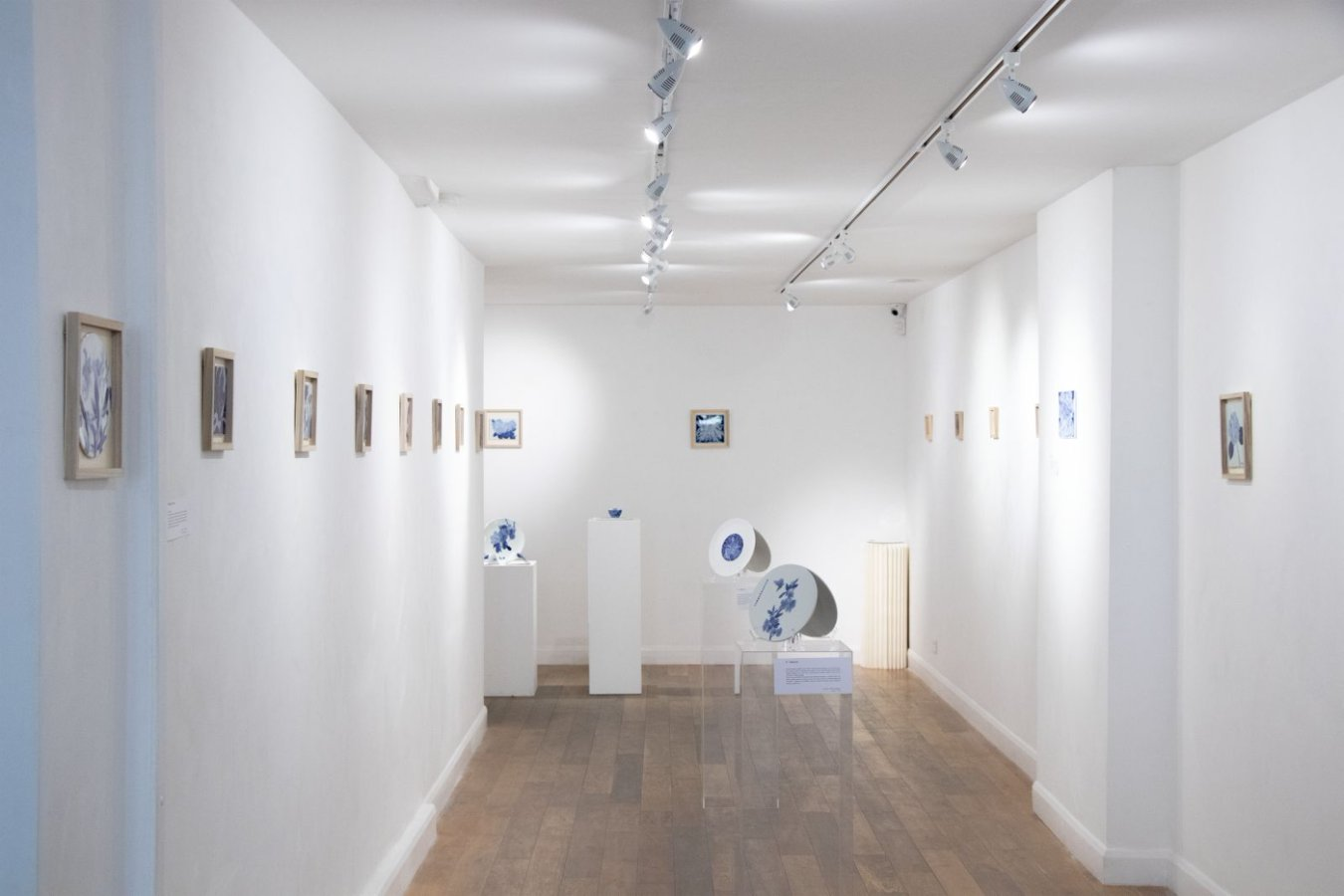
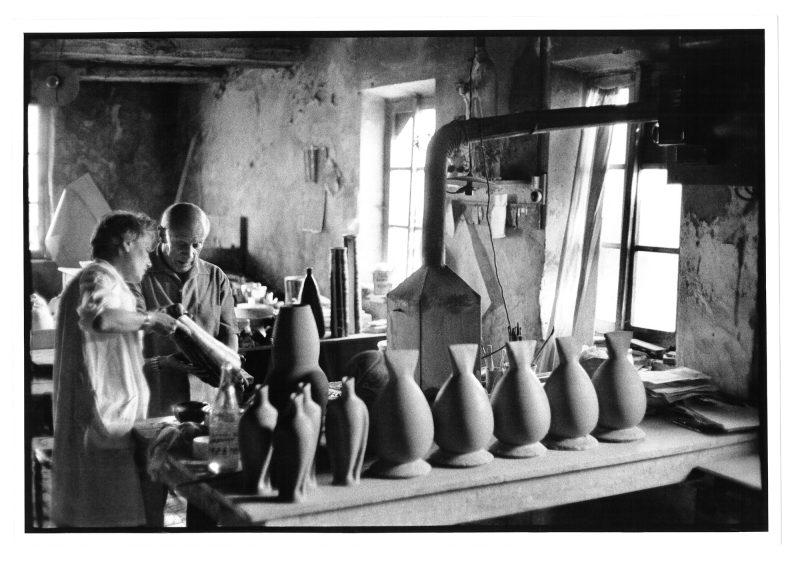
At the core of Cheng’s practice lies a material lineage shaped by global circulation. Cobalt blue — once ferried across trade routes — anchors her palette, but she refuses nostalgic reverence. Her pieces shrug off functional purpose, arranged with meticulous spacing and controlled illumination that heightens their self-awareness. They are no longer containers but propositions: what remains when a material’s inherited ways of knowing are stripped back, and what new agency surfaces in that erasure?
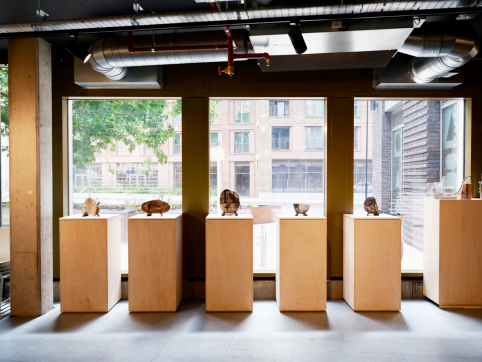
Zhou’s spatial choreography sharpens this pivot. The gallery becomes a slowed-down architecture, a deliberate pause in which each object must be encountered patiently, bodily. Rather than translating “Eastern aesthetics” for Western audiences through text, Zhou withholds narrative, inviting the viewer to engage through presence rather than explanation. This withholding becomes a curatorial gesture in itself — a refusal to translate too readily, and a stance that asserts critical value through restraint.
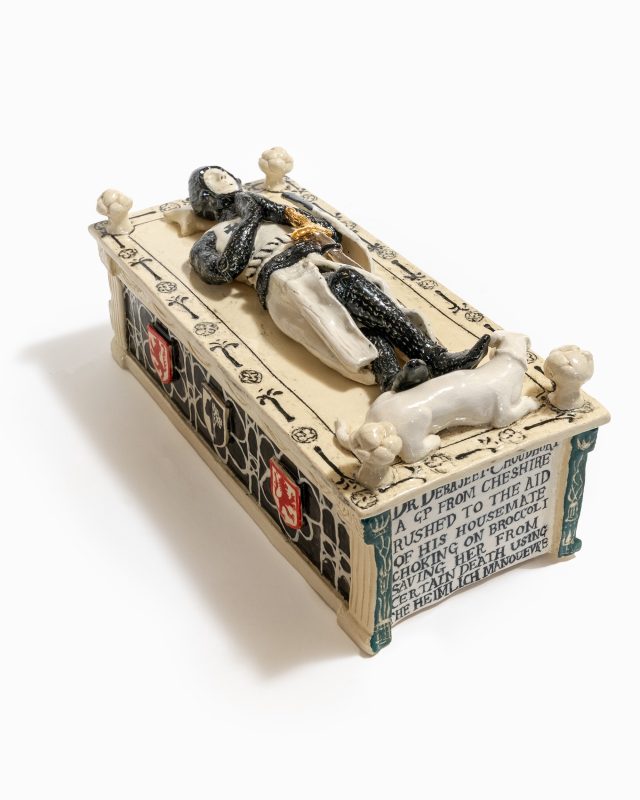
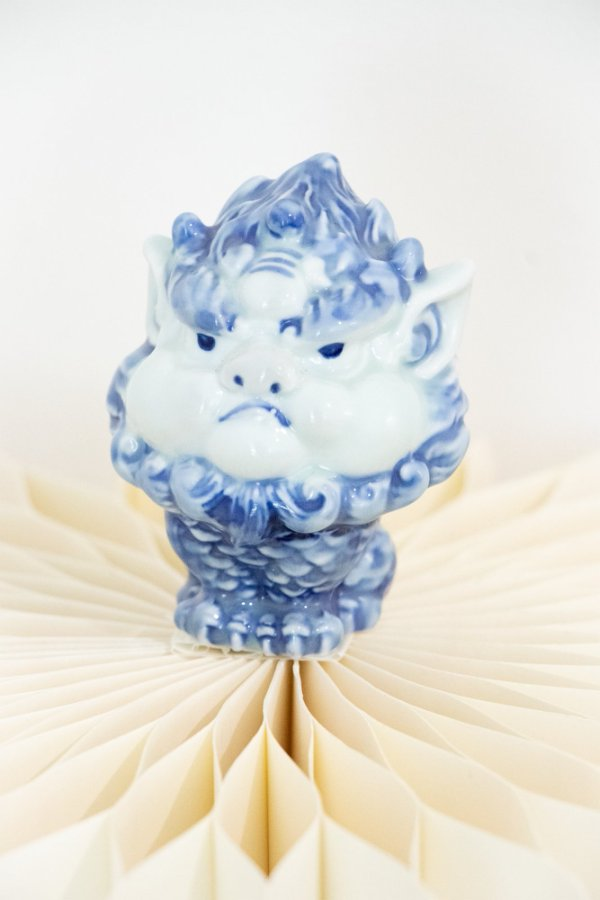
Even so, the cross-cultural dynamics at play require careful attention. Blue-and-white porcelain shown in a London gallery risks being flattened into a familiar token of “Eastern craftsmanship,” visually stable and decorative. Cheng and Zhou push against this through abstraction, fragmentation, and hybrid sculptural forms. Mask-like silhouettes, distorted vessels, and suspended motifs signal transformation rather than preservation. Yet the works operate delicately at the edge of symbolic legibility; their critique is understated, and at times the gallery’s immaculate serenity softens rather than amplifies their political charge.
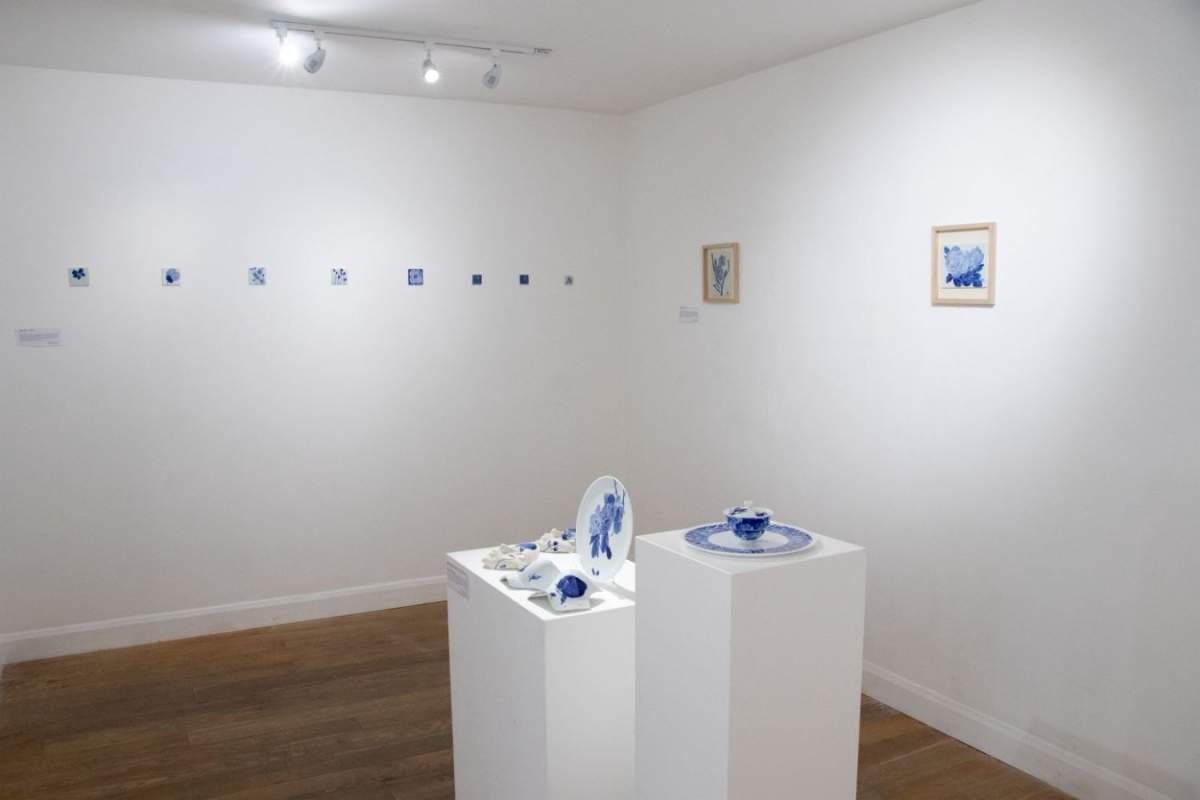
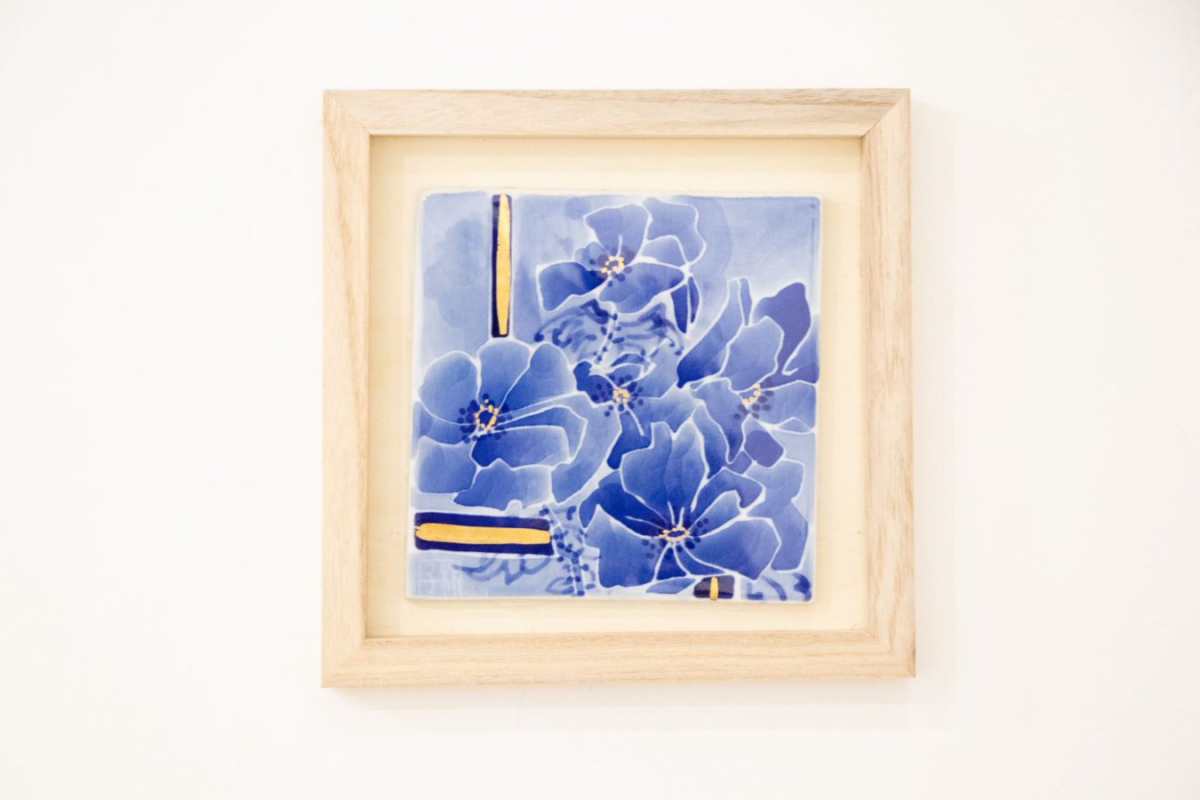
The exhibition’s strongest provocations emerge through material disruption. Cheng’s porcelain points to absence — not the Zen-tinged emptiness often associated with the medium, but absence as erasure: of labouring bodies, diasporic histories, and cultural translations smoothed over by aestheticisation. Cracks, glazes, and surface imperfections become counter-narratives within an otherwise polished display, challenging Western tendencies to classify ceramics solely as commodity or collectible.
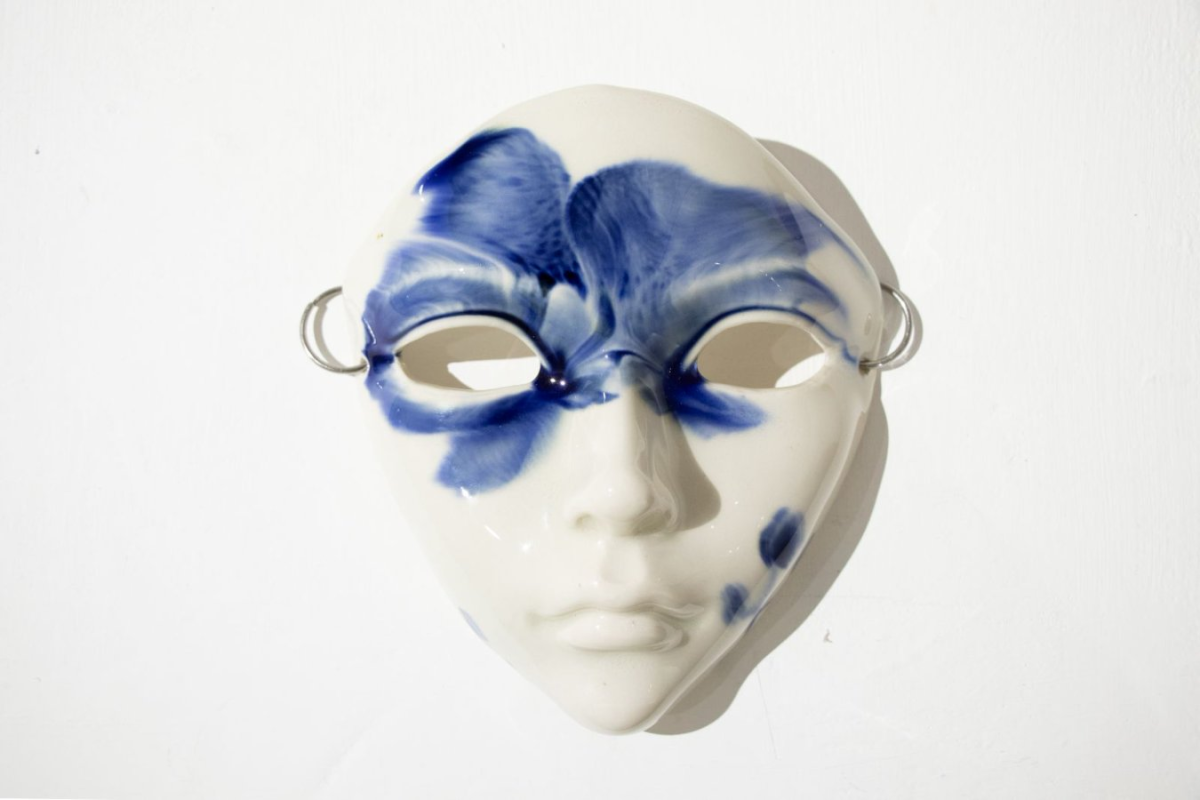
Zhou positions the works as interlocutors — agents that shape meaning on their own terms. The exhibition title gestures toward the ephemerality of whiteness and blueness, framing the viewer’s encounter as a space of translation. What fails to align culturally, aesthetically, or linguistically becomes fertile ground for inquiry rather than friction to be resolved.
The exhibition’s language — absence, resonance, silence — echoes a broader discourse in contemporary craft, yet its impact hinges on the viewer’s willingness to lean beyond surface beauty. A few works hover in the ambiguity they attempt to dissect: too finely crafted to fully escape decorative expectation, too abstract to claim political immediacy. Still, this ambiguity becomes the exhibition’s conceptual engine.
Ultimately, Zhou demonstrates how silent forms can be curated critically — without leaning on explanatory mediation, and without diminishing the quiet force of material thinking.
All the images © Artflow studio