Serpentine will present In Paperland, a major solo exhibition by Pierre Alechinsky, the last surviving member of the European avant-garde movement Cobra, marking the artist’s 100th birthday in 2027.
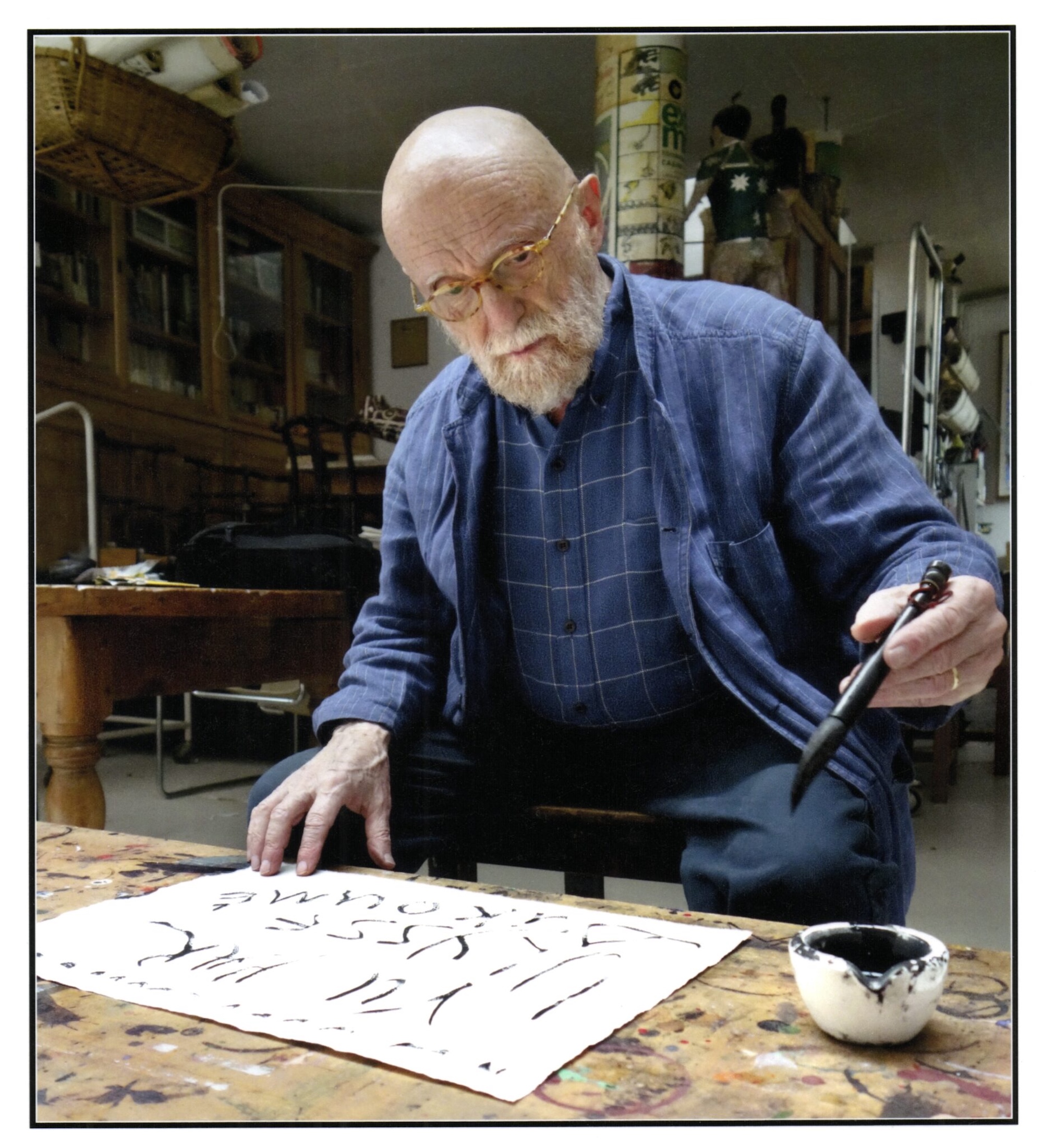
Opening at Serpentine South on 11th February 2027, the exhibition will be Alechinsky’s first major solo presentation at a UK public institution in more than 60 years. Conceived in close dialogue with the artist, it brings together around 50 works spanning six decades, from the 1960s to the 2010s.
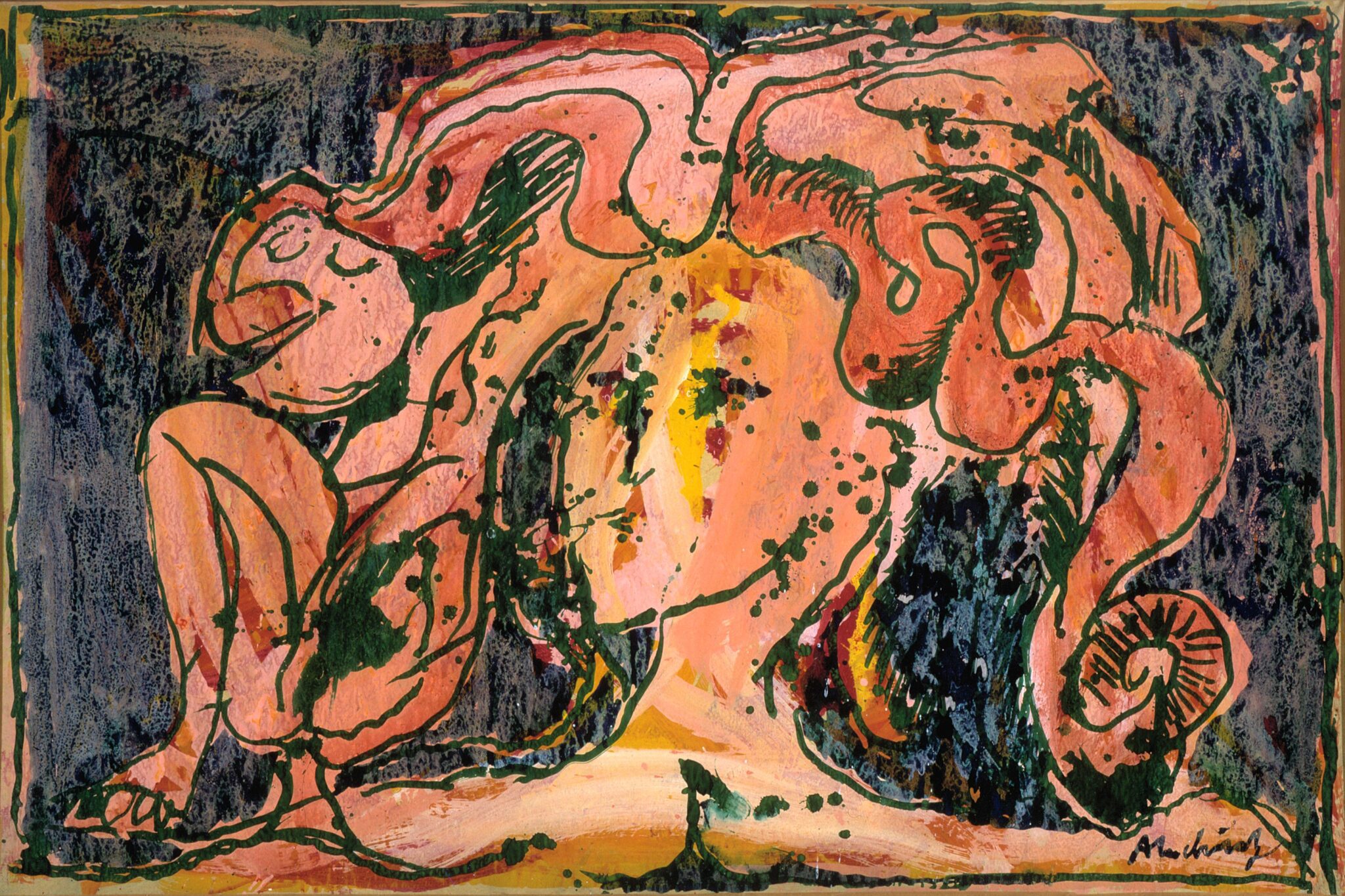
Across paintings and works on paper, In Paperland traces Alechinsky’s distinctive visual language of organic forms, anthropomorphic figures, imaginary creatures, calligraphic marks and gestural brushwork. The exhibition will include rarely seen Indian ink drawings alongside large acrylic compositions, highlighting an artist whose practice has consistently moved between painting, printmaking and drawing.
Alechinsky said:
“I came to painting through printing. Showing at Serpentine in 2027 means a great deal to me. I’m delighted that these works will be presented together, and that audiences will see them in this context for the first time.”
The exhibition also places particular emphasis on Alechinsky’s enduring influence. Keith Haring, who encountered his work in Pittsburgh in 1977, later recalled: “Alechinsky totally blew me away. From that point on, it changed everything for me.” Matt Copson, whose own solo exhibition will be presented at Serpentine North in 2027, is also cited as an artist deeply influenced by Alechinsky’s cartoon-like forms, saturated colour and expressive mark-making.
“Pierre Alechinsky turns 100 in 2027, and we are honoured to mark this milestone with a solo exhibition of his work at Serpentine South. Celebrating the last surviving member of the Cobra movement,ii Alechinsky has been closely involved in shaping every aspect of the show and its accompanying catalogue. In Paperland will explore key themes in his practice, from his enduring dialogue with poetry and literature, as well as his exchanges and collaborations with fellow artists, writers and thinkers. We are particularly delighted that the trailblazing feminist writer and philosopher Hélène Cixous, and close friend of Alechinsky, will offer fresh insights into his work through an extraordinary text published in English for the first time in the catalogue. Marking Alechinsky’s first major solo presentation at a UK public institution in more than six decades, the exhibition reflects Serpentine’s ongoing commitment to championing pioneering artists and bringing renewed recognition to their work.”
Bettina Korek, CEO, Serpentine, and Hans Ulrich Obrist, Artistic Director, Serpentine,
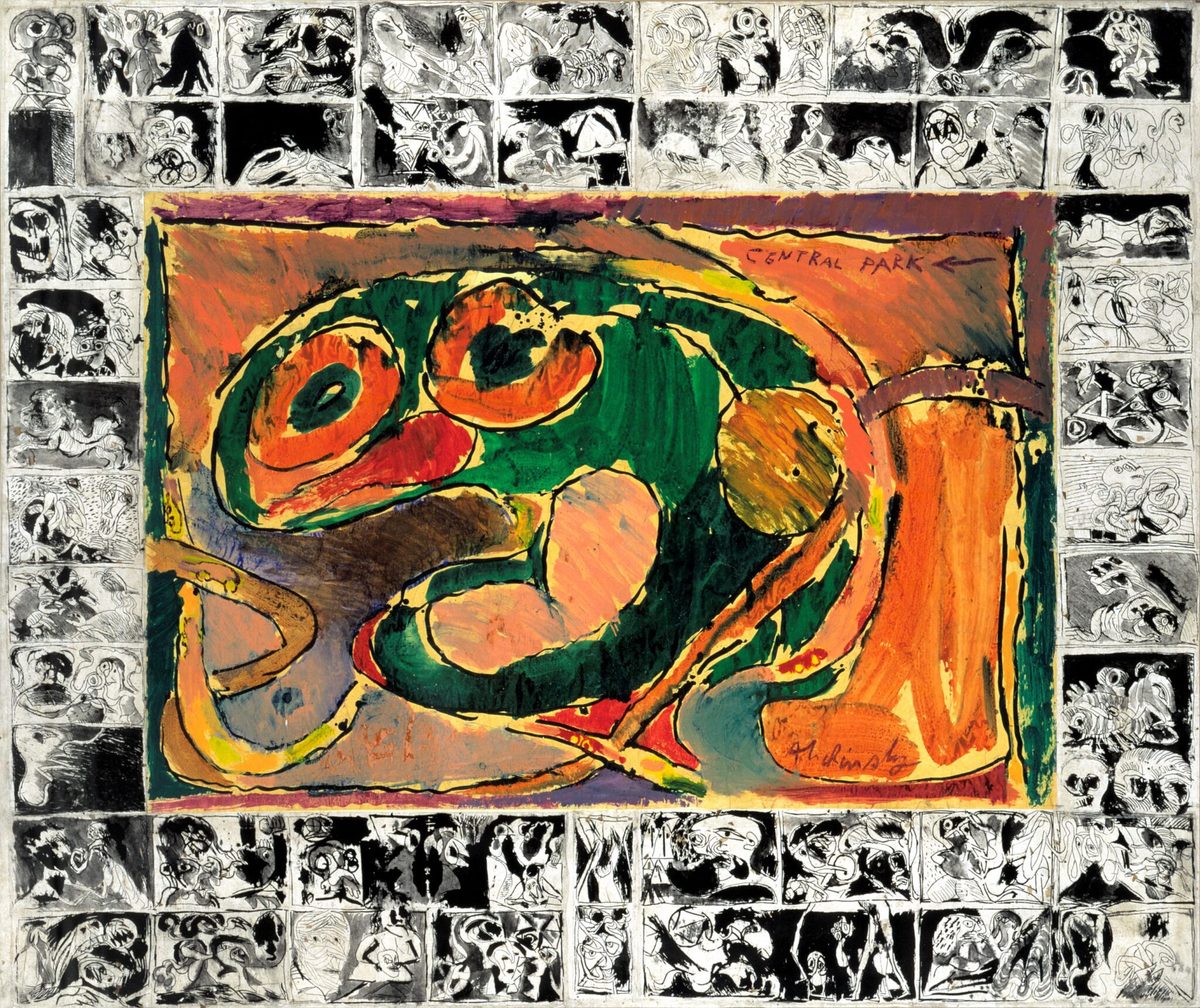
Among the key works is Central Park (1965), selected by André Breton for the 11th International Surrealism Exhibition in 1965. The work marked Alechinsky’s shift from oil to acrylic and exemplifies his signature “marginal remarks” technique, in which a central painted image is surrounded by smaller graphic drawings that operate as parallel narratives.
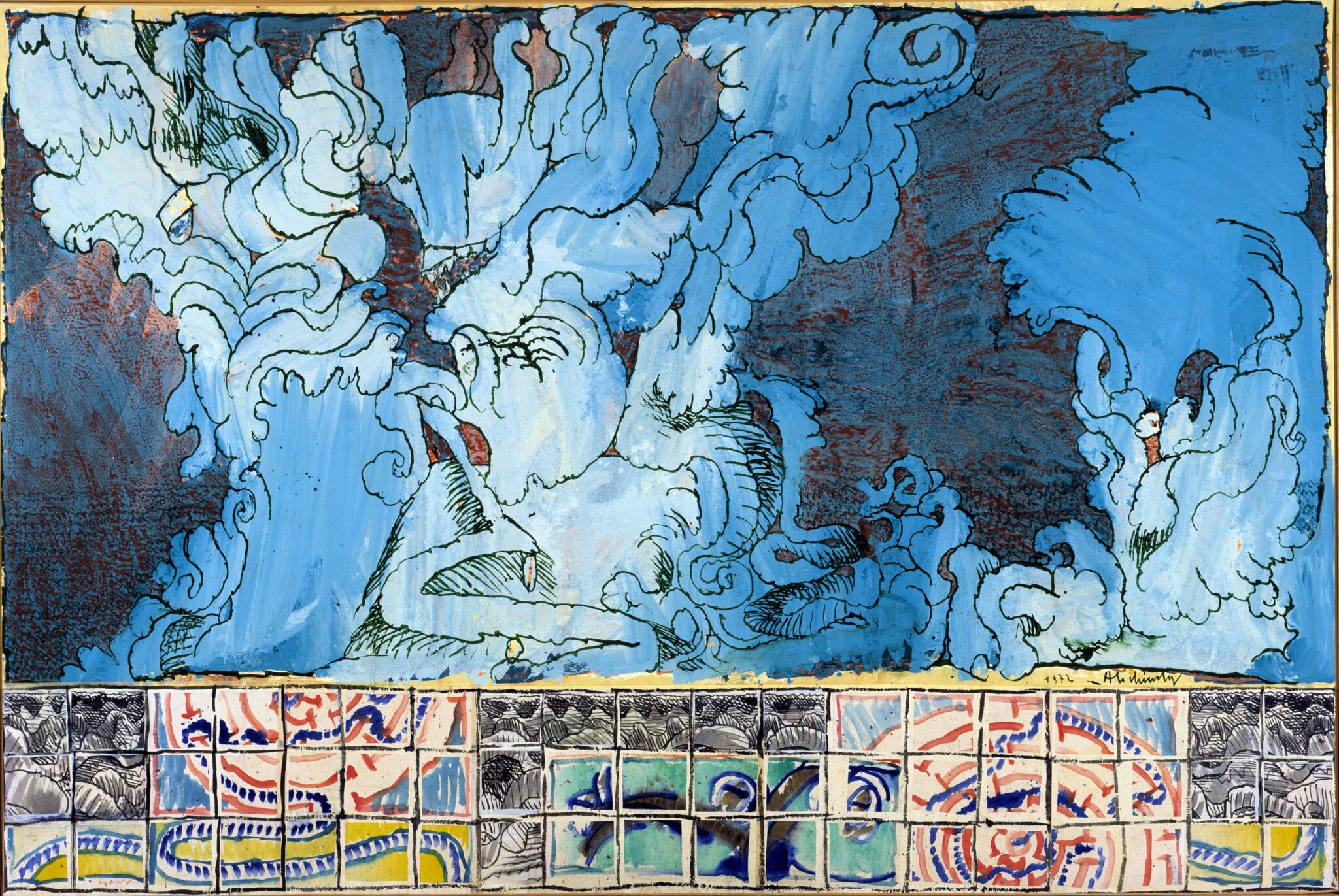
Also included are Journal déplié I and Journal déplié II from 1966, as well as large-scale acrylic works including Ultramarine and Le Passé inaperçu. Together they show how Alechinsky merged Eastern and Western traditions, particularly after his formative encounter with Japanese calligraphy in the 1950s.
Alechinsky joined Cobra in 1949 as its youngest member. Founded across Copenhagen, Brussels and Amsterdam, the movement rejected what it saw as the sterility of abstraction and the rigidity of post-war intellectualism, instead looking to folk art, mythology, graffiti, children’s drawings and non-academic practices for a more direct and instinctive visual language. After Cobra dissolved in 1951, Alechinsky moved to Paris and later developed a deep interest in Japanese calligraphy. His 1955 trip to Japan, where he encountered the avant-garde Bokujinkai collective and artist Morita Shiry?, proved pivotal to the fluid, spontaneous mark-making that came to define his mature work.
The exhibition will also explore his longstanding collaborations with writers, poets and philosophers, and his use of found manuscripts, maps, ledgers and legal documents as surfaces for drawing and painting. Works such as La Première heure and Dépeindre, décrire demonstrate how typography, literature and image have remained intertwined throughout his career.
Pierre Alechinsky: In Paperland is curated in close dialogue with the artist by Hans Ulrich Obrist, Artistic Director and Chris Bayley, Exhibitions Curator, with Liz Stumpf, Assistant Exhibitions Curator. Special thanks to Frédéric Charron.
Pierre Alechinsky: In Paperland, 11th February – 18th April 2027, Serpentine South
A major monograph will accompany the exhibition, including a newly translated text by Hélène Cixous, a conversation between Alechinsky and Hans Ulrich Obrist, and an extensive chronology of the artist’s life and work.
About the artist
Born in Brussels, Belgium, in 1927, Pierre Alechinsky studied typography and book illustration before turning to painting and joining Jeune Peinture Belge (The Young Belgian Painting Association). Since 1951, he has lived and worked in France. His work has been exhibited internationally with solo exhibitions at Fondation Boghossian, Brussels, Belgium (2024); Musées royaux des Beaux-Arts de Belgique, Bruxelles, Belgium (2021); Centre Pompidou, Málaga, Spain (2019); the Museums of Osaka and Tokyo, Japan (2016–17); Círculo de Bellas Artes, Madrid, Spain (2015); Musée Granet, Aix-en-Provence, France (2010); BNF, Paris, France (2005); Collection d’art graphique du Centre Pompidou, Paris, France (2004); Centre de la gravure et de l’image imprimée, La Louvière, Belgium (2000); Institut Valencià d’Art Modern, Valencia, Spain (2000); Jeu de Paume, Paris, France (1998); Guggenheim, New York, USA (1986); MoMA, New York, USA (1981); Carnegie Museum (formerly Carnegie Institute), Pittsburgh, USA (1977); Kunsthaus Zürich, Switzerland (1975); Louisiana Museum of Modern Art, Humlebaek, Denmark (1969); Van Abbemuseum, Eindhoven, the Netherlands (1963); and the Institute of Contemporary Arts (ICA), London, UK (1958). His work has been included in numerous international group exhibitions and biennales, including the 1972 Venice Biennale where he represented Belgium, together with Christian Dotremont.
His work is held in the collections of Museo Nacional de Bellas Artes (MNBA), Buenos Aires, Argentina; Musées Royaux des Beaux-Arts de Belgique, Brussels, Belgium; Museu de Arte Contemporânea da Universidade de São Paulo (MAC USP), São Paulo, Brazil; Centre Pompidou, National Museum of Modern Art/Centre for Industrial Creation, Paris, France; Bibliothèque nationale de France – BnF, Paris, France; Musée d’Art Moderne de Paris, France; Peggy Guggenheim Collection, Venice, Italy; Museo Tamayo, Mexico City, Mexico; Stedelijk Museum, Amsterdam, the Netherlands; Tate, London, UK; Los Angeles County Museum of Art (LACMA), USA; Museum of Modern Art (MoMA), New York, USA; and The Metropolitan Museum of Art, New York, USA, among many others. In 2018, he received the Praemium Imperiale Prize, Tokyo, Japan.