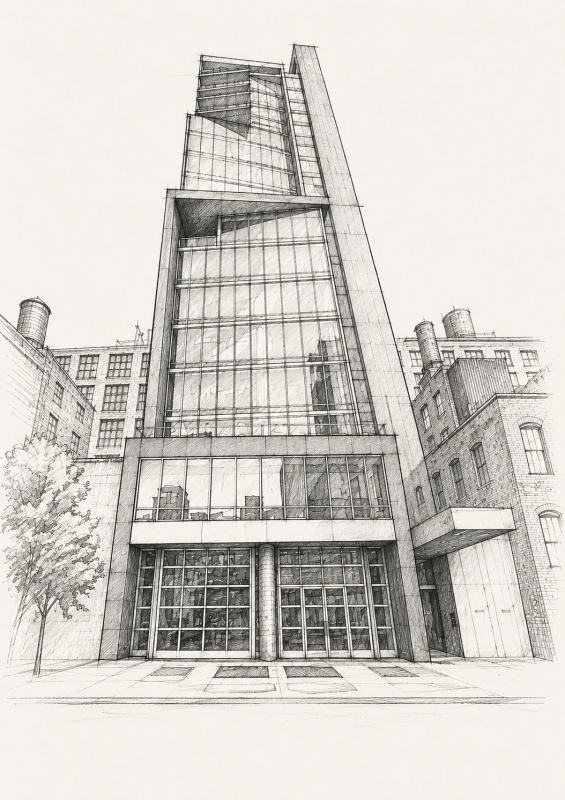
Swedenborg House, 20/21 Bloomsbury Way, London, WC1A 2TH, to 12th Sept 2026
An unusual location for a show provides an interesting perspective on the work of Hannah Hughes. ’After Fragments’ is at Swedenborg House, which takes forward the legacy of Emanuel Swedenborg (1688-1772). He made his name as a pioneering and influential scientist before switching tack – at 55 – after experiencing vivid dreams and visions which he believed had opened up the spiritual world, enabling him to converse with angels and devils and visit the afterlife. In 1758 he published ‘Heaven and Hell’, which outlined his notion of correspondences: that everything in the physical universe corresponds to a spiritual value.
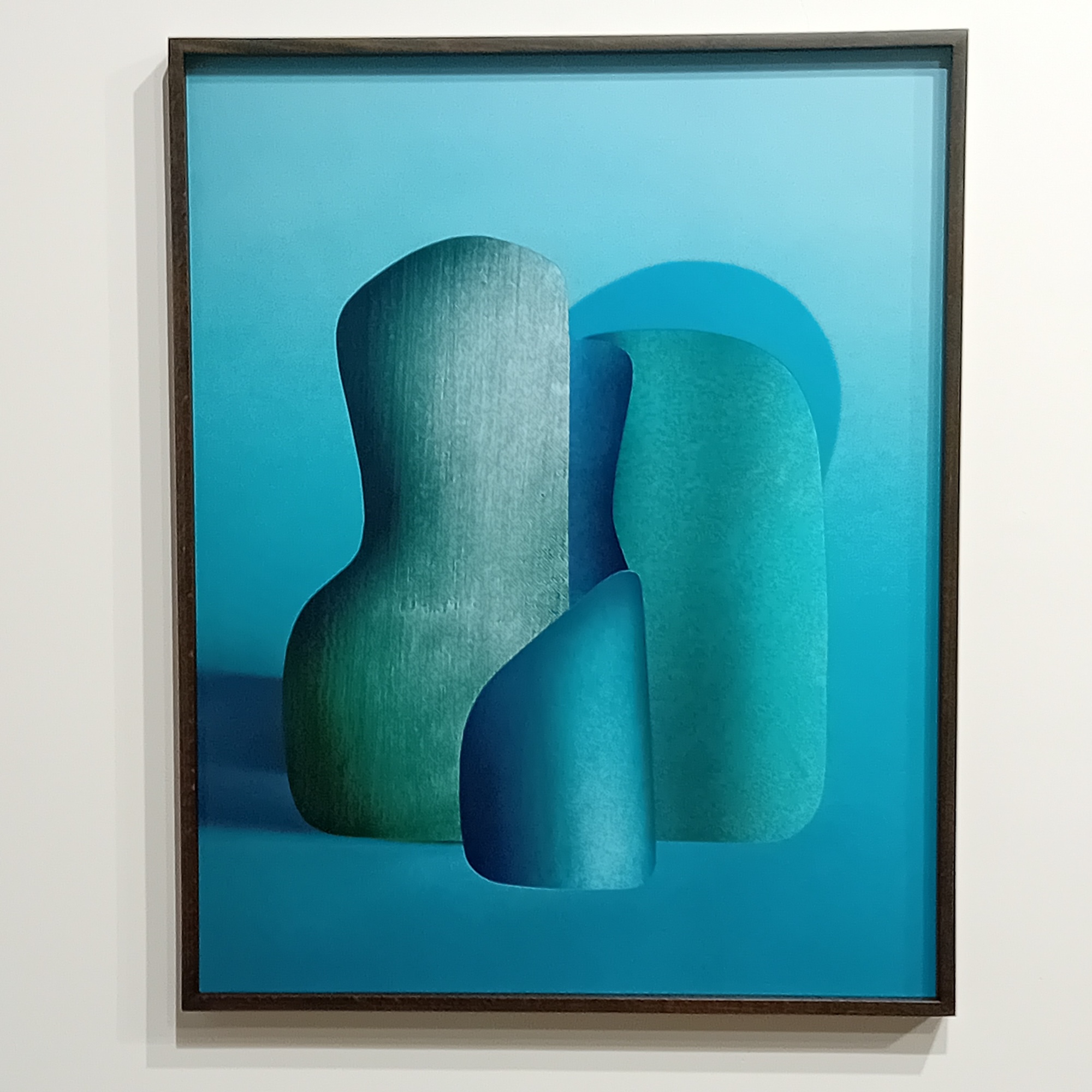
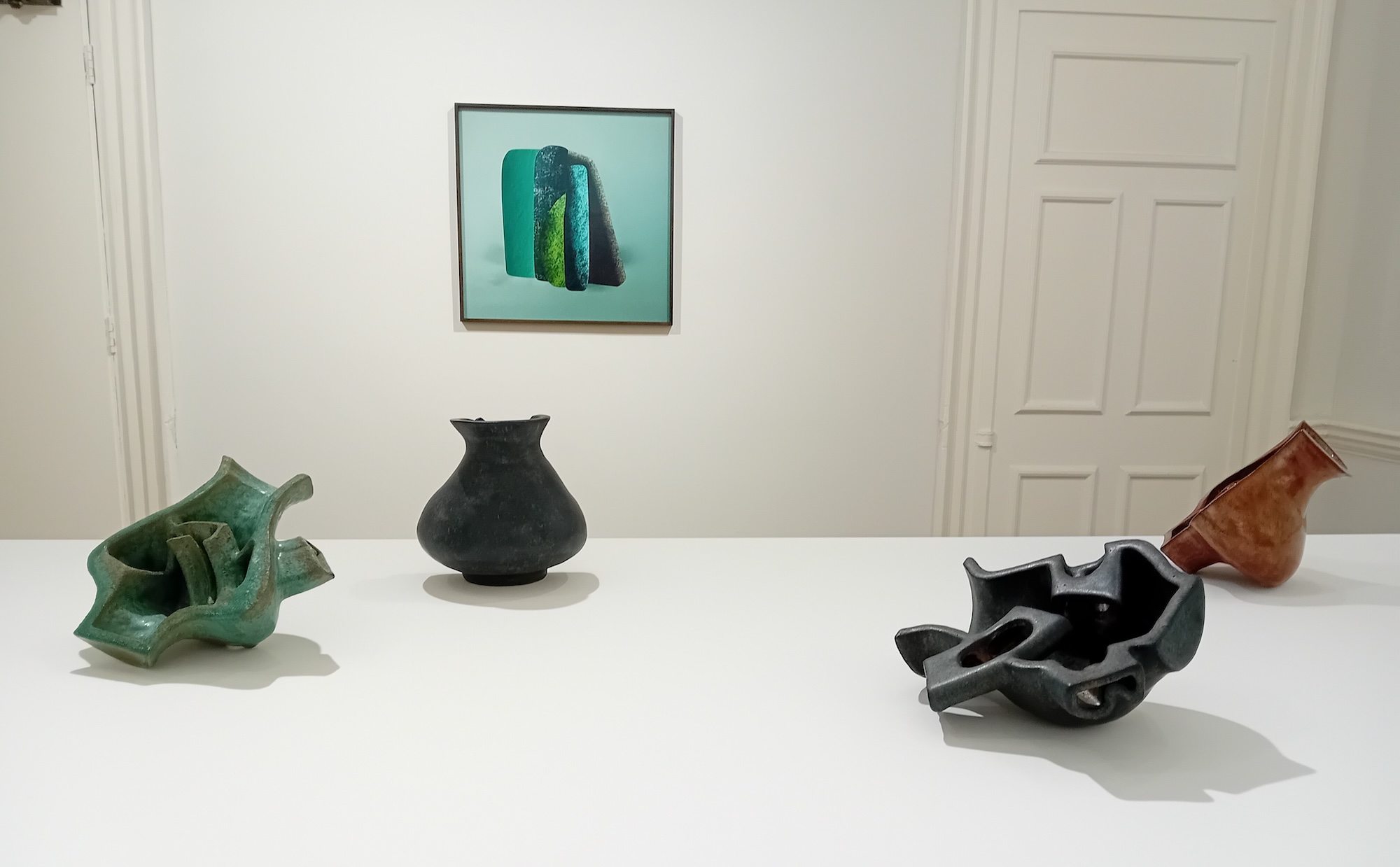
Hughes shows two bodies of work. First, her well-established series of collages constructed from the space between things – she has extracted the negative spaces between people or objects in magazine images to build up an archive – so what we see is not so much abstraction as the abstract elements between representations. In these works, the fragments used to make the collages have been created by photographing shadows cast from the original archive of cut-outs against backdrops in the studio. The new ‘negative spaces’ are cut out, and these fragments are assembled to make the images.
As the show title suggests, Hughes is ‘interested in how images exist in the memory as fragments, and how this might relate to the ways that we process photographic images in digital spaces’.
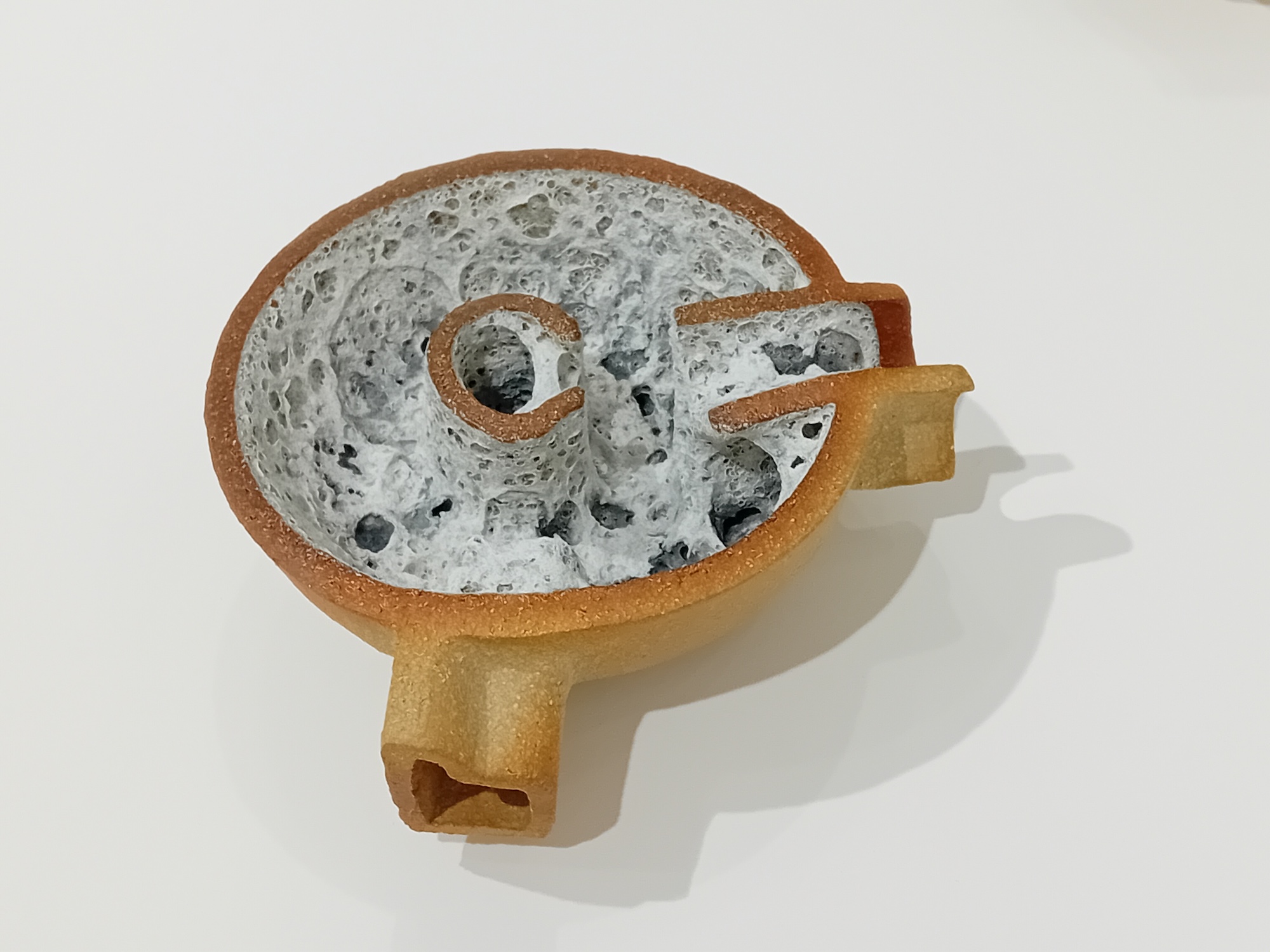
Second, ‘After Fragments’ includes a new departure in ceramic: glazed stoneware vessels which seem to have been cut in half, the cross-section revealing intricate internal structures. The depth here is real, unlike in the collages, yet the flat presentation of the truncations is their most compelling element. One might think of archaeological discoveries or speculate on possible industrial functions, but it is also no stretch to read the ceramics in bodily terms, like anatomical diagrams revealing the organs within. They also provide a three-dimensional route into reflecting, as Hughes puts it, on ‘the duality of the relationship between parts and wholes, the entanglements of things with place and time, and the symbolic potency of fragments intentionally broken or incomplete’.
So what would Swedenborg say? James Wilson, who has written on him extensively, adds a stimulating essay which kicks off by explaining how Swedenborg’s representations are immersive visual elements that convey a correspondence with a spiritual meaning. He sees a parallel with how Hughes ‘taps into all this – combinations of shapes and forms that speak of meanings from other planes’. That leads Wilson to speculate that he is glimpsing ‘strange planetary bodies in rare moments of alignment before they carry on spinning through their elliptical orbits’. And he notes that both Swedenborg’s representations and Hughes’ collages and ceramics constitute non-verbal languages through which we have a glimpse of a different reality. You don’t have to buy into the spiritual for this to resonate with how the art operates: the sense of there being something beyond the visible is central to both, albeit Swedenborg sought to explain, whereas Hughes is content to suggest.
Paul Carey-Kent selects a ‘Gallery of the Month’, a ‘Show of the Month’, a ‘Work of the Month’ and a ‘Book of the Month’ for his weekly column in FAD. A collection of previous gallery columns, ‘Paul’s Galleries To Go’, is available from FAD Bazaar.