At – 320°F, time ceases to flow: an effective removal from history, the silencing of voices, and the start of hermeneutics.
The latest play by Hideki Noda OBE takes the end of history as its starting point, with the removal of deific status as a prerequisite for anything other than communication itself. In essence, it stands as a stark reminder of the power of language to shape a very social reality that has (momentarily) put down its books and begun to dictate exactly what it wishes to see and hear.
As the play’s audience engages with a chronology that is overwhelming and thrilling in equal measure, the density of information being conveyed only matches its absurdist humour and feverish philosophy. Whilst typical approaches to the existential have been entombed in historical sediment – that is, having become a fundamental support that nonetheless goes unspoken and therefore remains perpetually without representation in discourse outside of comedy – Noda keeps his lens toward the archaeological as the vestige of the cutting edge; in the asking of timeless questions in ways that they have never been asked before:
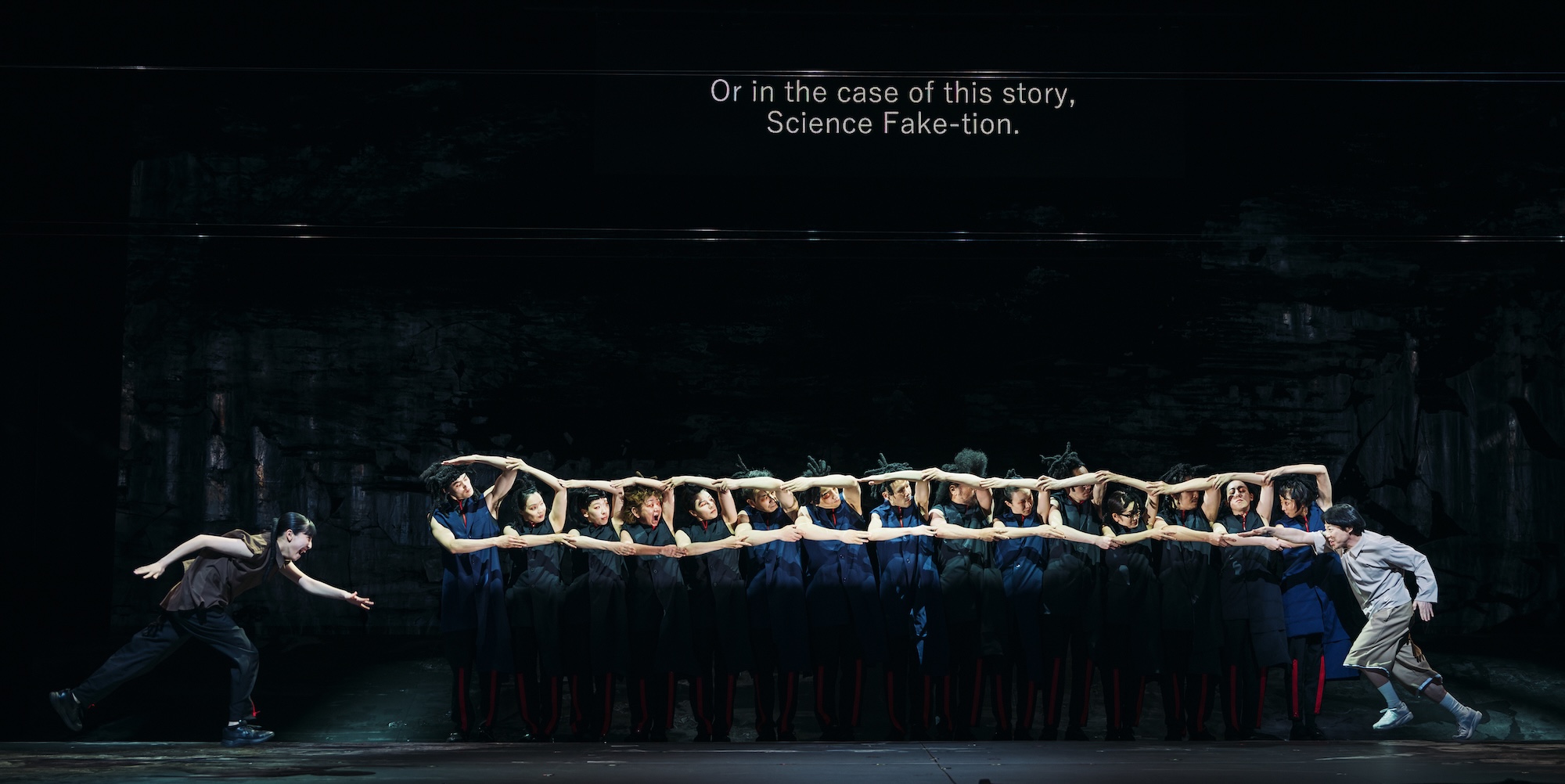
What if the future is an oncoming cyclist?
This return, both original and reflective, distorts and clarifies a point in recent history where old questions have returned to be answered and obvious answers have slipped back into the realm of unspoken theories and untruths. The narrative of the play follows a similar pattern, where seemingly evident givens are unwound, returning to history, and not only does history (and how we speak about it) threaten to repeat itself, but promises to continue this repetition, this winding and unwinding, ad infinitum.
Taking a step out of the theatre, it’s no secret that a number of popular issues once believed to be artefacts of the 20th century that have now returned to prominence. Even within our own era, the same ideas are recycled, blending into myth and then recurring violently in reality with a terrible human cost; a state unthinkable except in terms of absurdity, through which it can once more enter conversation. It’s at this point that Noda intervenes.
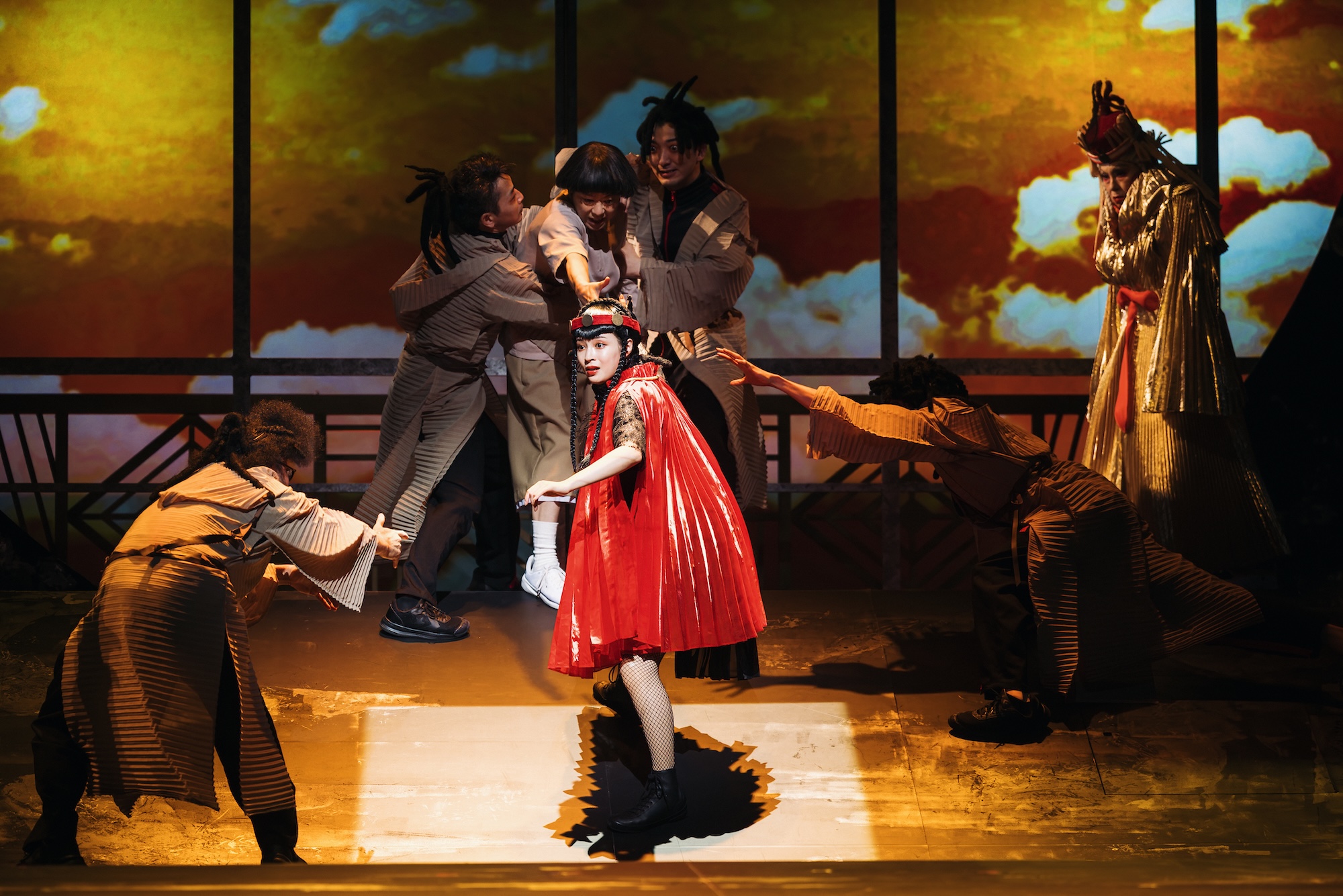
If today one might wish to forgo his bread, then Noda’s work wants to feed you the circus: a self-reflective (to poach from psychology, one could claim ‘metacognitive’) force that clarifies exactly how unstable, joyous, and at times frightening our period of history can be. Even Noda’s Mephisto isn’t safe, as the devil herself fluctuates between an archetypically playful control of those around her and being a victim of the very same making and unmaking of time, where old narratives and ideas stand boldly against the strain to undo them and are simultaneously deified as heroes and villains of our age. However varied its interpretations, ?320°F indubitably provides food for thought.
What more is to be asked of the play than this, but joy, courage, and good humour; all of which it provides: a world where Faust is Moust, and ‘angel bones,’ a delicate thread of naturalism that persists through all human invention, are what focus the divine in all of us?
– 320°F Minus Three Twenty Fahrenheit, Written & Directed by Hideki Noda, 3rd – 11th July 2026,
Sadler’s Wells