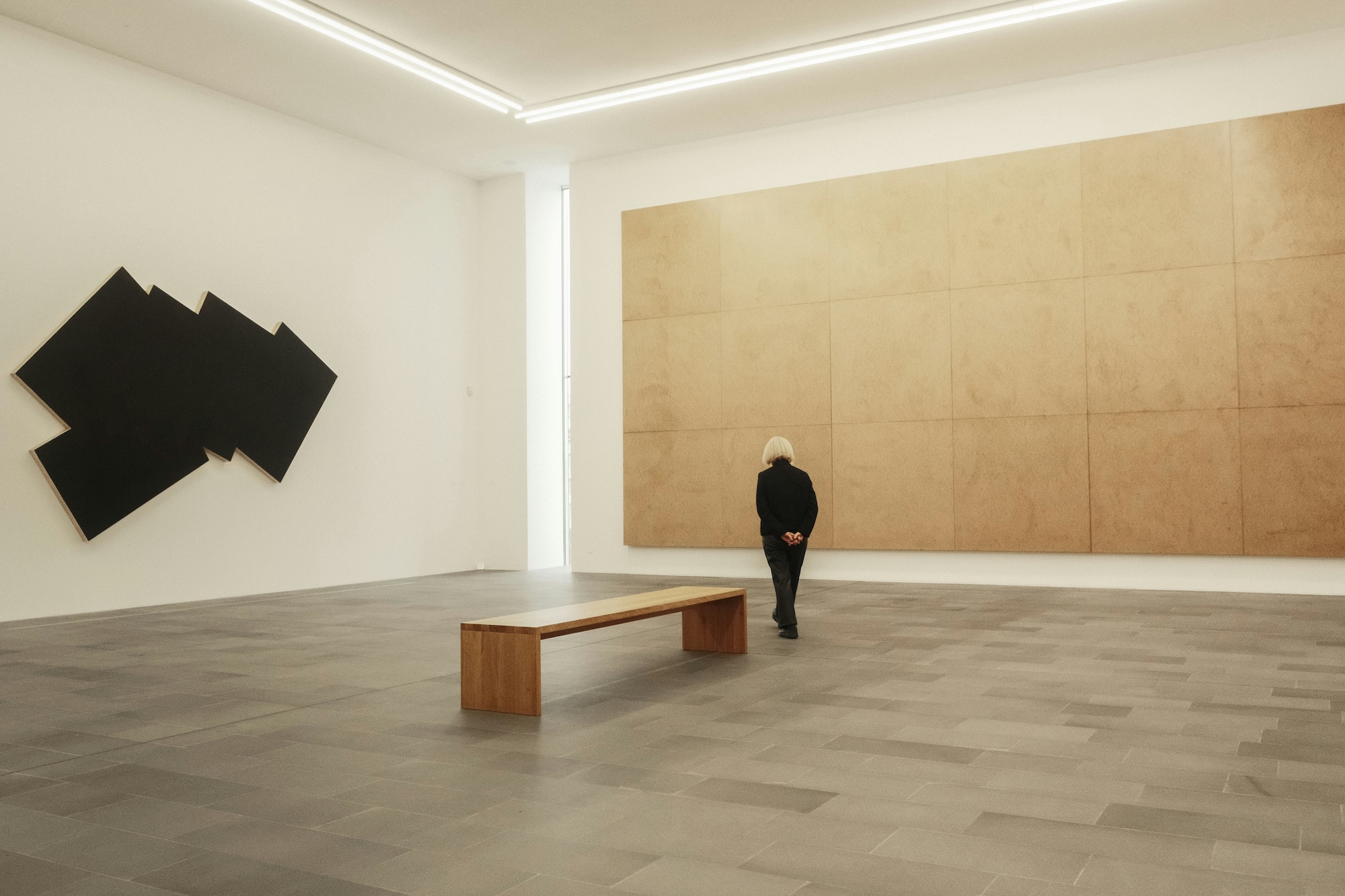
We can all call to mind the architectural “ideology” (for lack of a better term) behind modern art galleries: a sterile, self-contained environment where pristine white walls isolate creative artifacts from any hint of visual chaos. It may not be to everyone’s – or even every artist’s – taste, but it’s a structural detachment that serves the purpose of reinforcing a strict boundary between the object of display and the individual observing it. However, the rapid advancement of spatial technologies is beginning to dismantle these historical boundaries, transforming static exhibition spaces into dynamic environments where digital and physical realities overlap.
At the forefront of this institutional shift is the Museum of the Moving Image in Queens, New York, which is launching MoMI LAB – a brand-new, 2,400-square-foot co-creation studio and exhibition space designed by Ralph Appelbaum Associates alongside Lopergolo & Bartling Architects. Located on the museum’s lower level, this modular ecosystem challenges conventional gallery frameworks by integrating emerging tools directly into the public fabric.
Immersive digital environments
Suddenly, the focus shifts away from flat screens and toward multidimensional landscapes that occupy physical volume. Within MoMI LAB, visitors encounter advanced digital tools – including neural radiance fields (NeRFs), 3D Gaussian splatting, and complex projection mapping systems – that allow the physical gallery to function as a fluid canvas. Here, media doesn’t have to be an isolated artefact; they render “procedurally generated” environments that adapt to the physical contours of the room.
This methodology forms the core of the museum’s inaugural artist residency program, which opens with acclaimed media artist Rachel Rossin. Her practice, which balances traditional painting with virtual reality, utilizes spatial computing to examine the slippage between physical and virtual space. By creating hybrid sites that prompt neurological and emotional reflection, Rossin aims to move “beyond spectacle” to establish a more rigorous conceptual engagement with technology.
From a design standpoint, these ‘big ideas’ already have real-world use-cases, even if they are to be diluted from their concentrated forms into something more versatile. Nevertheless, they reflect our collective shift away from passive consumption of media and toward more active participation. It’s not a new concept, of course – there are so many virtual spaces that require us to interact with them in order for them to become the environments they emulate. The concept of the virtual casino has been a mainstay of digital design for decades – circa 1994, in fact – and, despite its major evolution between then and now, the running theme has been one of emulation. A successful site has to be able to emulate a real-world experience via player participation, and that experience has to feel authentic whether that player is following a solo pursuit via its online slots, or a communal experience in a live gameroom. Another fluid canvas, engineered around the concept of unique experiences and interaction.
At MoMI LAB, this systemic emphasis on user agency mirrors broader shifts in how modern society interacts with information, moving away from closed systems toward responsive, real-time dialogue. Within the exhibition space, these immediate feedback loops dismantle the traditional hierarchy of the art institution, encouraging a form of experiential literacy. Ultimately, this interactivity serves a vital demystifying purpose – transforming the general public from passive consumers of media into critical participants who can actively deconstruct the underlying infrastructure of contemporary technology.
Democratizing Creative Technology
The larger goal of the project is not just to experiment with art but is a deliberate effort to build widespread digital literacy. The lab is open and free to the public during normal museum hours and is supported by more than $5 million in funding from New York State officials, including Michael Gianaris, Kristen Gonzalez and Zohran K. Mamdani. This financial foundation breaks down the economic barriers that usually limit high-end technology tools to specialised studios or corporate labs. The program embeds artists-in-residence within a public educational institution, promoting a continuous exchange of ideas with the local community through workshops, open studio visits and hackathons. Curation becomes a public process, so the future of creative technology is shaped together, not behind closed doors.