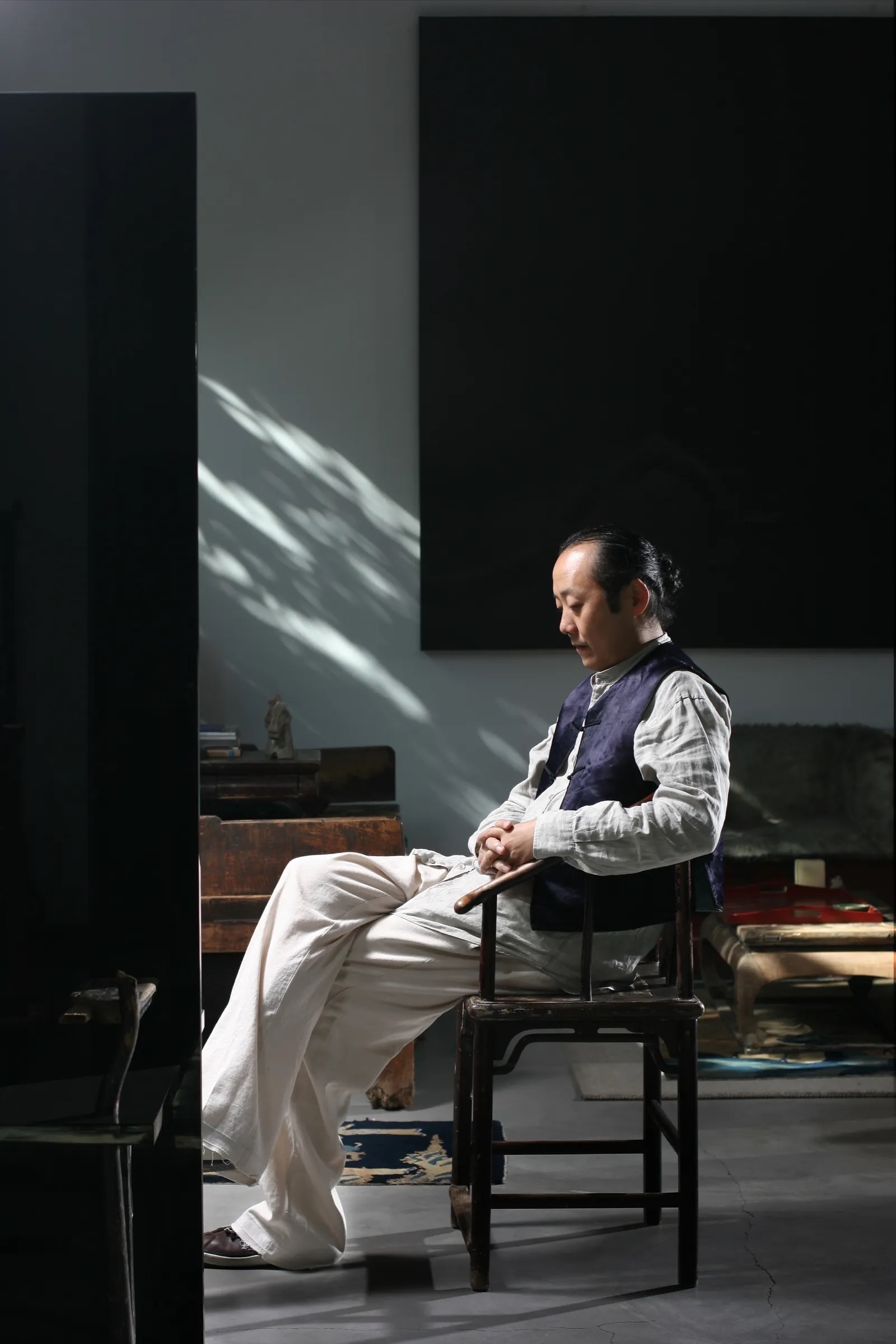
For Shao Fan (also known as Yu Han), painting is a way of experiencing life itself. Time in the studio seems endless, and through the repeated layering and retracing of lines, he gradually enters a state resembling that of a jade artisan patiently carving stone by hand. Within this process, the artist slowly withdraws behind the work, allowing the work itself to come forward – even allowing the “self” to gradually recede into the process of making.
During the interview, Shao Fan spoke about his desire to make the “self” smaller. It is precisely this Zen-like approach to creation that allows materials and techniques which may initially appear traditional to take on a distinctly contemporary significance today. Painting becomes something close to a meditative, metaphysical experience of life itself.
Huang Yichun: I’ve noticed that you’ve painted many rabbits, and each of them seems to carry a very different feeling. I wonder what first drew you to rabbits, and what kind of state or feeling you were searching for when painting them.
Shao Fan: At first, it was almost accidental. I had rabbits at the time, saw them every day, and eventually I just started painting them.
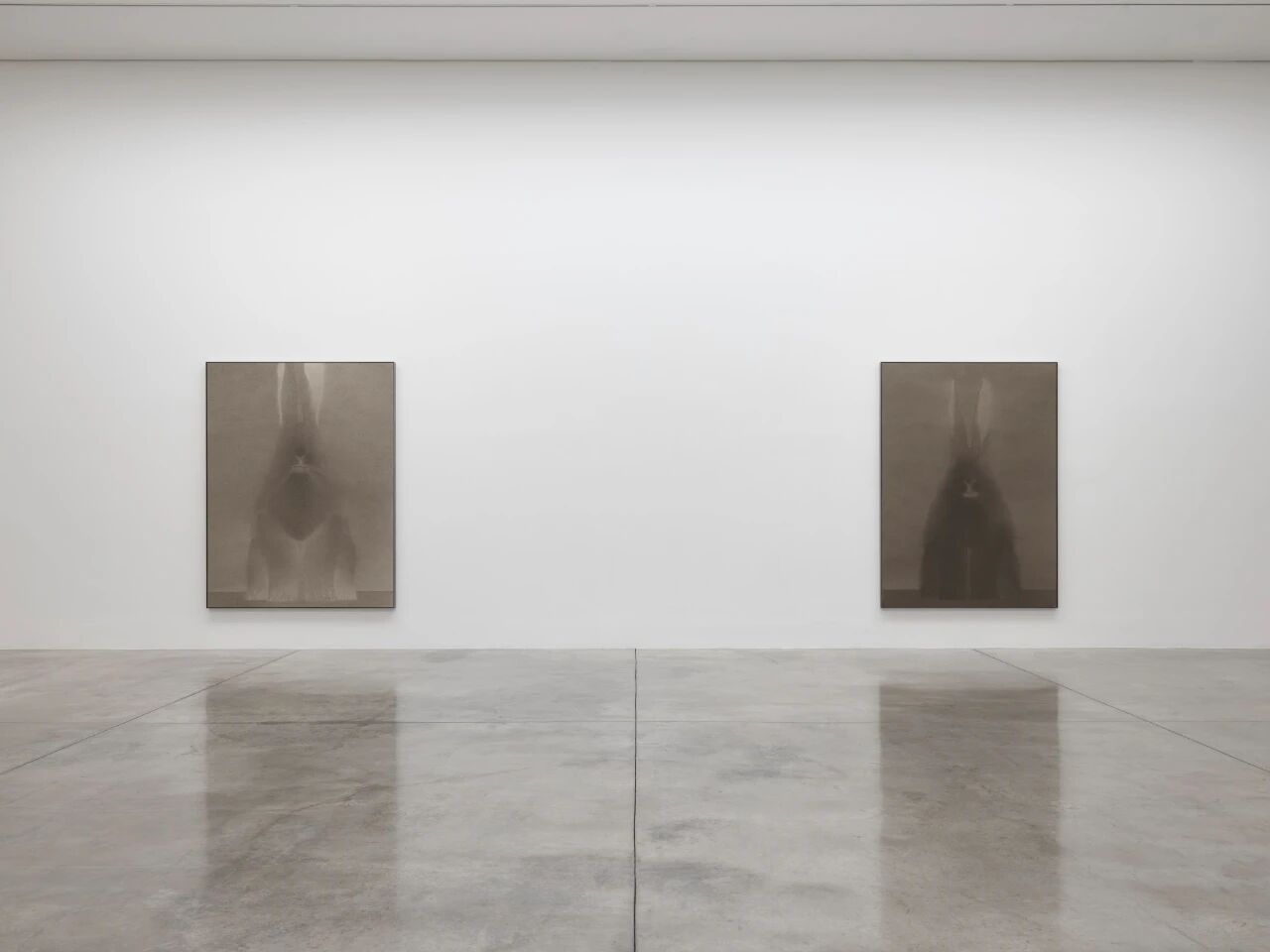
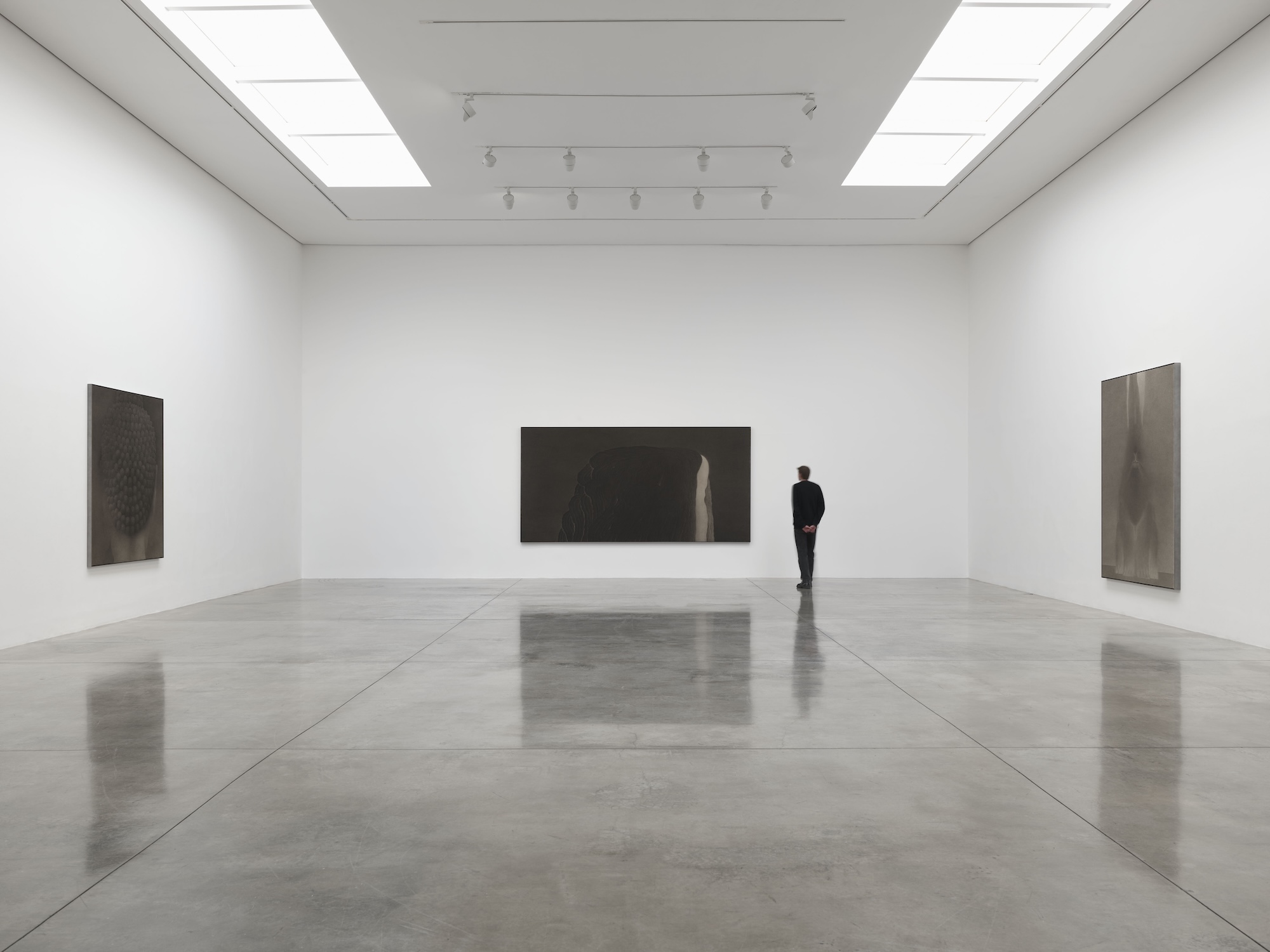
As I kept painting them, I gradually felt that rabbits somehow worked for the kind of state I was trying to create. Rabbits are ordinary, fragile animals, but I wanted to paint them almost like emperors, or lions – facing you directly, eye to eye. Once that happens, the relationship changes. Normally, humans look down on animals, especially something as weak as a rabbit. But when you enlarge it to almost a human scale, something shifts. You look at the rabbit, but the rabbit also looks back at you. Or maybe, through the rabbit, you start looking back at yourself. I felt rabbits suited this particularly well. The split upper lip naturally falls right at the centre of the composition, and I’ve always liked triangular, pyramid-like structures because they feel very stable. A lot of my paintings are centrally composed, so there’s always a kind of fixed relationship between me and the image.
At first, many of the rabbits had eyes. But I realised that whenever there are eyes, your attention immediately goes there. Later, I thought maybe I should remove them. And once the eyes disappear, something else starts to happen. The gaze is no longer concentrated in one place. Instead, it feels like the whole body is looking at you. Even every strand of fur seems to be part of that gaze.
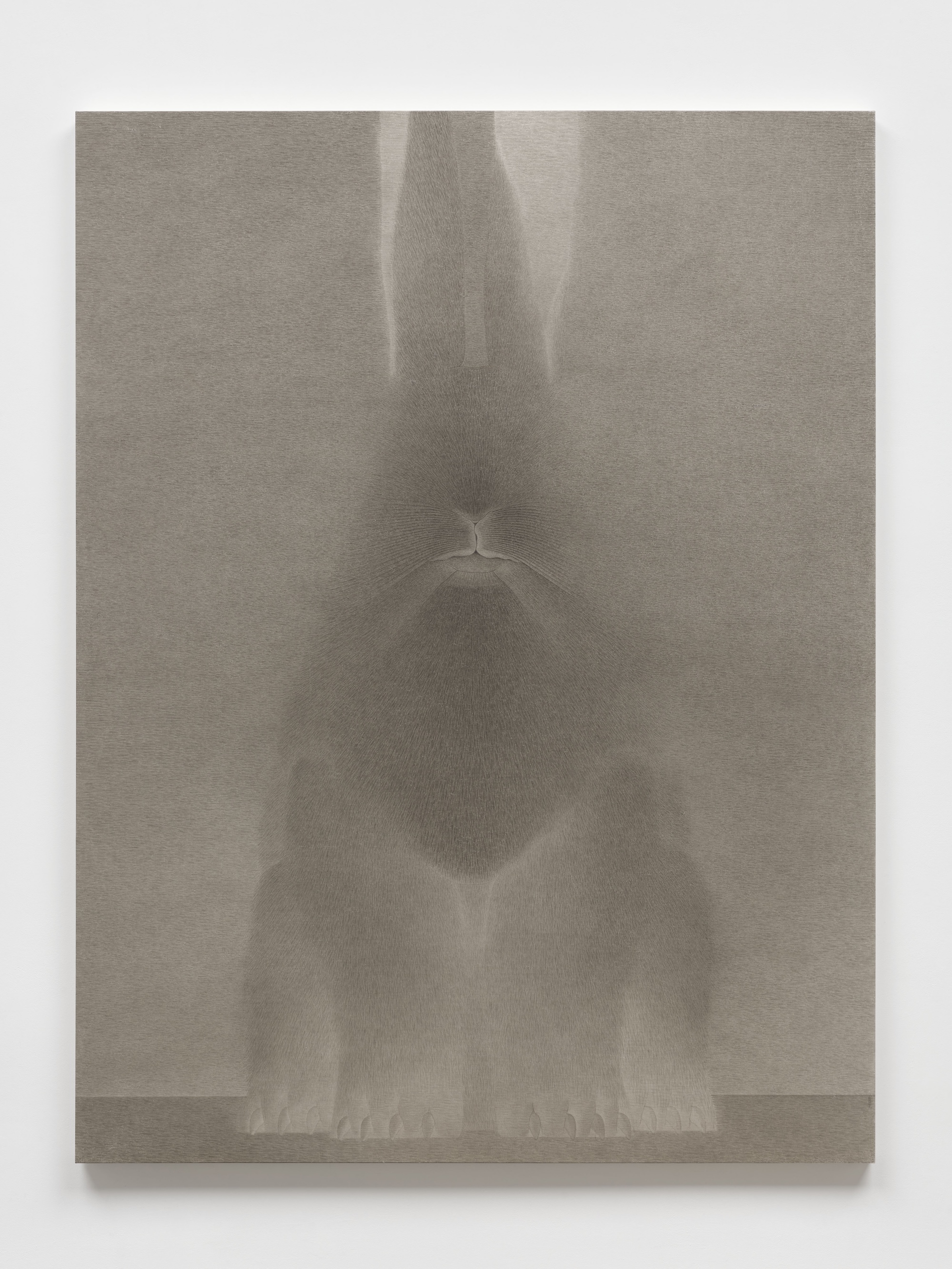
Could I understand it as a kind of presence? Even though you can’t see the eyes, you still feel it there – the whole state of it is still there.
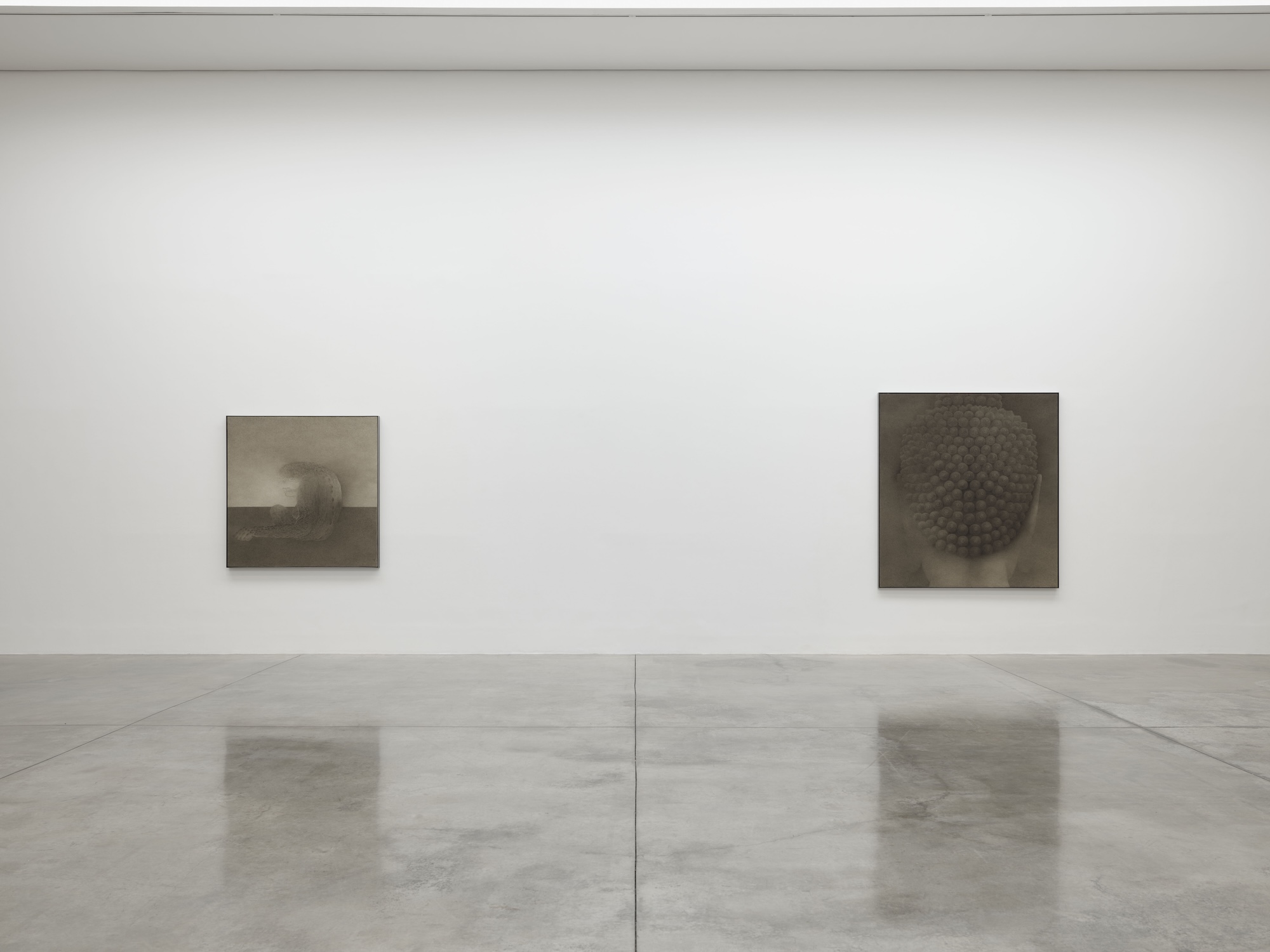
It’s actually very difficult to explain – it’s hard to really put into words. It’s more a kind of feeling. The way the fur is built up, strand by strand, creates this sense that it’s looking at you. What I’m trying to create is really a certain kind of state. These figures are animals, but at the same time, they’re also the artists themselves, and also the viewers. Through this kind of gaze – this looking back and forth – people start reflecting back on themselves.
Different animals bring different feelings, of course. The rabbit, for example, or later the kun fish, or the old ape. Because each creature is different in nature, each one also leads to a different kind of feeling or realisation. But overall, I feel they are at once the animal itself, the artist and the viewer.
I see. I imagine your process is very slow and very immersive. What kind of state do you enter when you’re painting? What does it feel like for you?
I’ve been searching for a certain kind of state.
I’ve been painting in ink for around thirteen or fourteen years now, but in the beginning that feeling wasn’t very clear. It was more like a vague intuition – as though there was a direction somewhere ahead of me, but it remained blurry and indistinct.
Then there was a period when I stayed in my studio in Beijing almost every day, painting for around 15 hours a day. Slowly, I entered a state I had never experienced before. It felt as though time had become infinite. It’s actually very difficult to describe. It’s like suddenly having endless time, and somehow that state perfectly matched the thing I had been unconsciously searching for all along.
I suddenly had the feeling that I had travelled back in time – as though I had returned to the Liangzhu period thousands of years ago and become a jade artisan carving jade by hand. Jade is an extremely hard material, and in that era, when everything had to be done entirely by hand, a single line needed to be ground over and over many times before it could truly come into being.
Later, I began to enter a similar state in painting. I would repeatedly retrace a line – what I call futa, or “refrain” – layering it again and again, building it up over time.
I feel this state is very close to the state of an ancient artisan.
In the past, we often thought of painting as something very free and spontaneous. In literati painting, or in the work of artists like Qi Baishi or Bada Shanren, one brushstroke and the image immediately appears. But this kind of repeated layering is actually much closer to the spirit of the artisan. That aspect is very important to me.
And once you truly enter that state, you begin to feel as though time has stopped. You mentioned time earlier, and honestly, that was exactly what I felt then – as though the dimension of time had disappeared completely. There was only the continuous act of repetition.
But it is precisely through repetition that, at a certain point, something begins to change. The feeling becomes completely different from making a single direct brushstroke. When a line has been retraced many times, it begins to create another kind of texture, another kind of sensation. And I think that’s something you can only really understand through repetition itself.
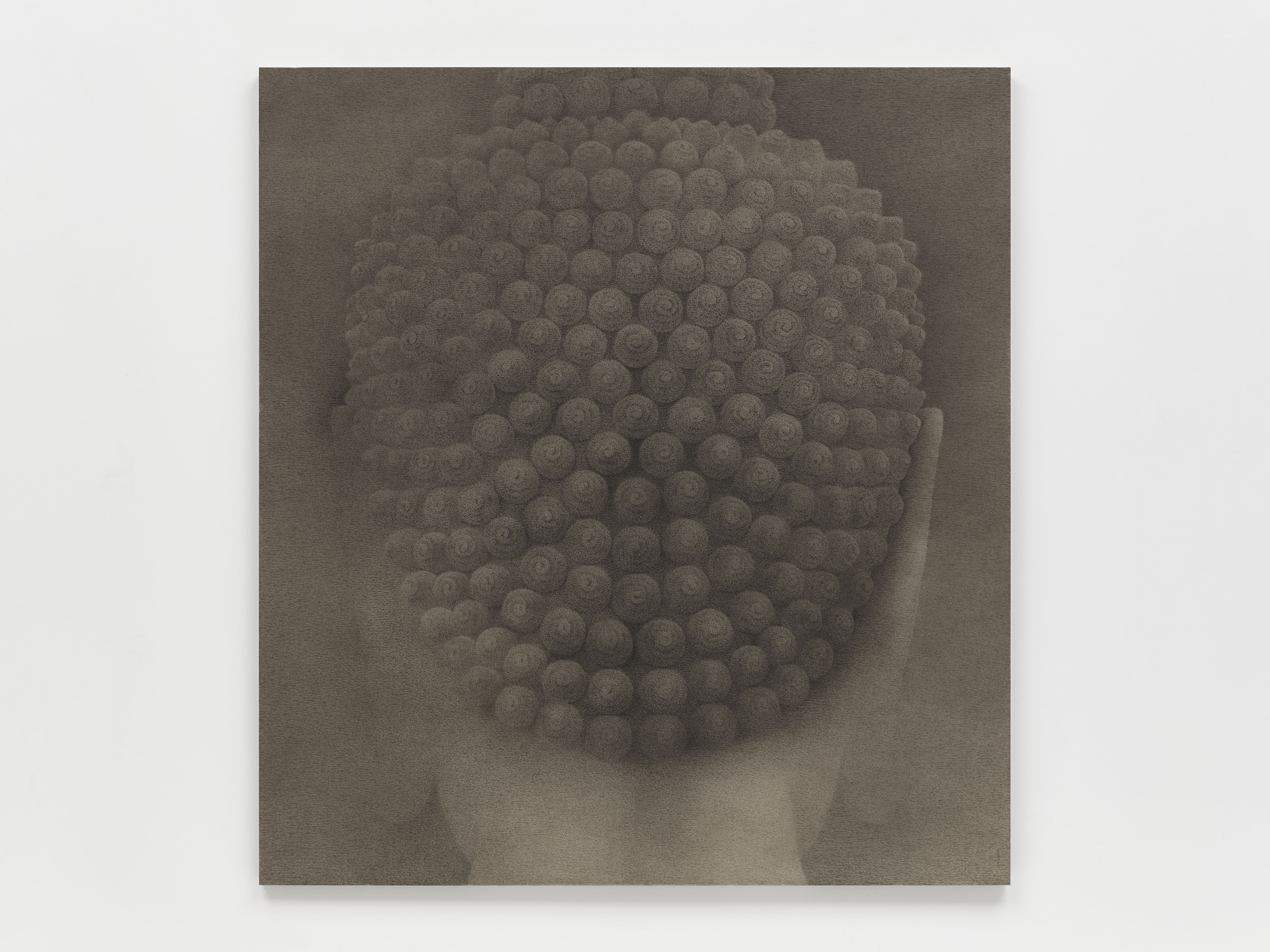
The state you described just now really makes me think of Zen Buddhism – especially this idea of repetition, of repeatedly retracing and layering the line. It feels like the process itself leads you into a very particular kind of spiritual state.
Yes, there’s definitely a similarity there. I think your understanding is quite accurate. When Buddhism came to China, the way it really took root here was through its relationship with Daoist and Confucian thought. There are similarities between them, but they also complement each other. Zen Buddhism may come from Buddhism, but in China it also absorbed many elements of Daoism and Confucianism.
I think today, when people talk about “faith”, they often understand it through very clearly structured religious systems. But within Chinese culture, things have always been a little different. Buddhism and Daoism in China were never quite the same as the kind of absolute religious belief often associated with the West. Historically speaking, Chinese culture has never really functioned that way. But I’ve always been very drawn to Buddhist and Daoist thought. They’ve given me a lot of inspiration, and in some ways even a sense of awakening.
I’ve learned a great deal from Buddhist texts, and I still enjoy reading them very much. But I wouldn’t describe myself as a religious believer in the strict sense. At the same time, I’m probably not someone who believes in pure materialism either.
I also wanted to ask whether you feel that art – or painting specifically – has any connection with the idea of spiritual cultivation or practice.
Yes, I do think there is a connection. It’s something many people have reflected upon.
But rather than religion or “spiritual practice”, I think it’s closer to a kind of dialogue with something beyond ourselves. For me, that feels like a more precise way of putting it.
At the same time, I’m not especially comfortable using words like “spiritual practice” or “cultivation”. Those words already carry too many fixed ideas and associations. I’d rather talk about a certain kind of state. The kind of state an artist is in naturally shapes the kind of work they make. For me, it’s more about feeling and perception. Different states lead to different kinds of experience, and the work gradually becomes a reflection of that.
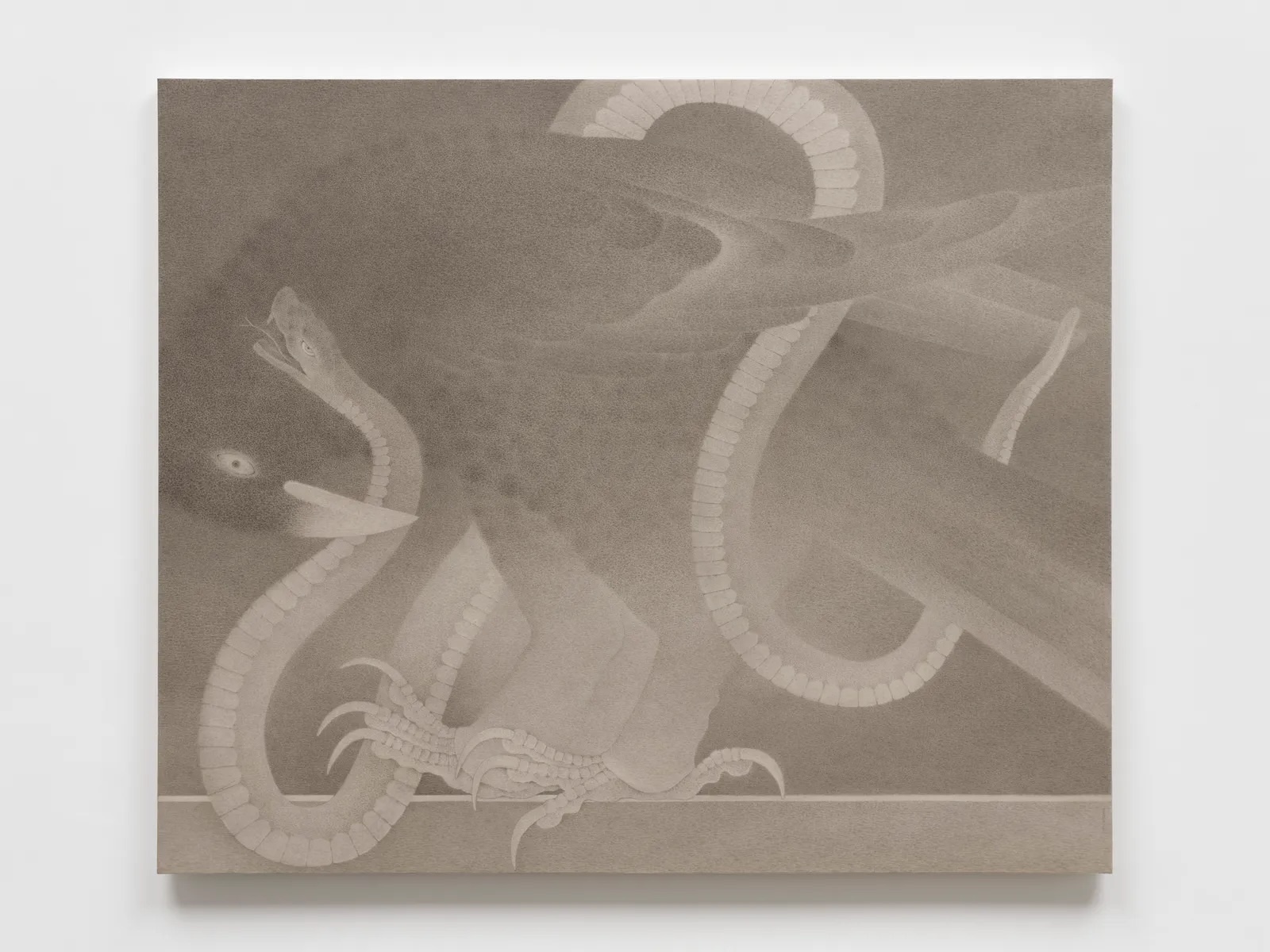
What first led you to paint Water and Fire and the old ape paintings?
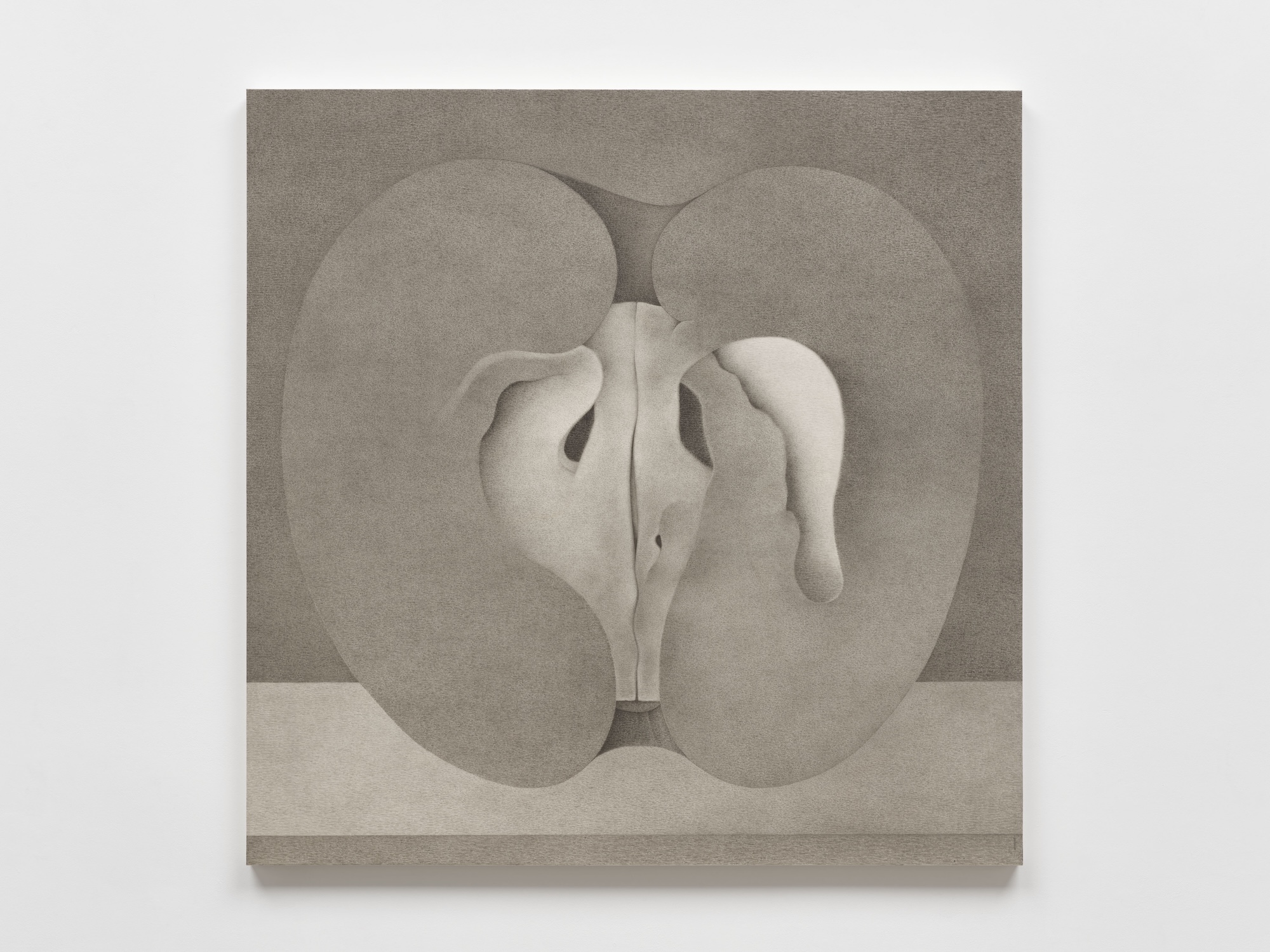
The old ape is actually one of the subjects I return to again and again. In general, I move between a few recurring motifs. The ones I paint most often are rabbits, old apes, old men or arhats, and things like apples or Chinese cabbages. These subjects keep bringing out new feelings and new ideas for me. Sometimes I suddenly want to paint another old man, or return to the ape again. They keep coming back into the work.
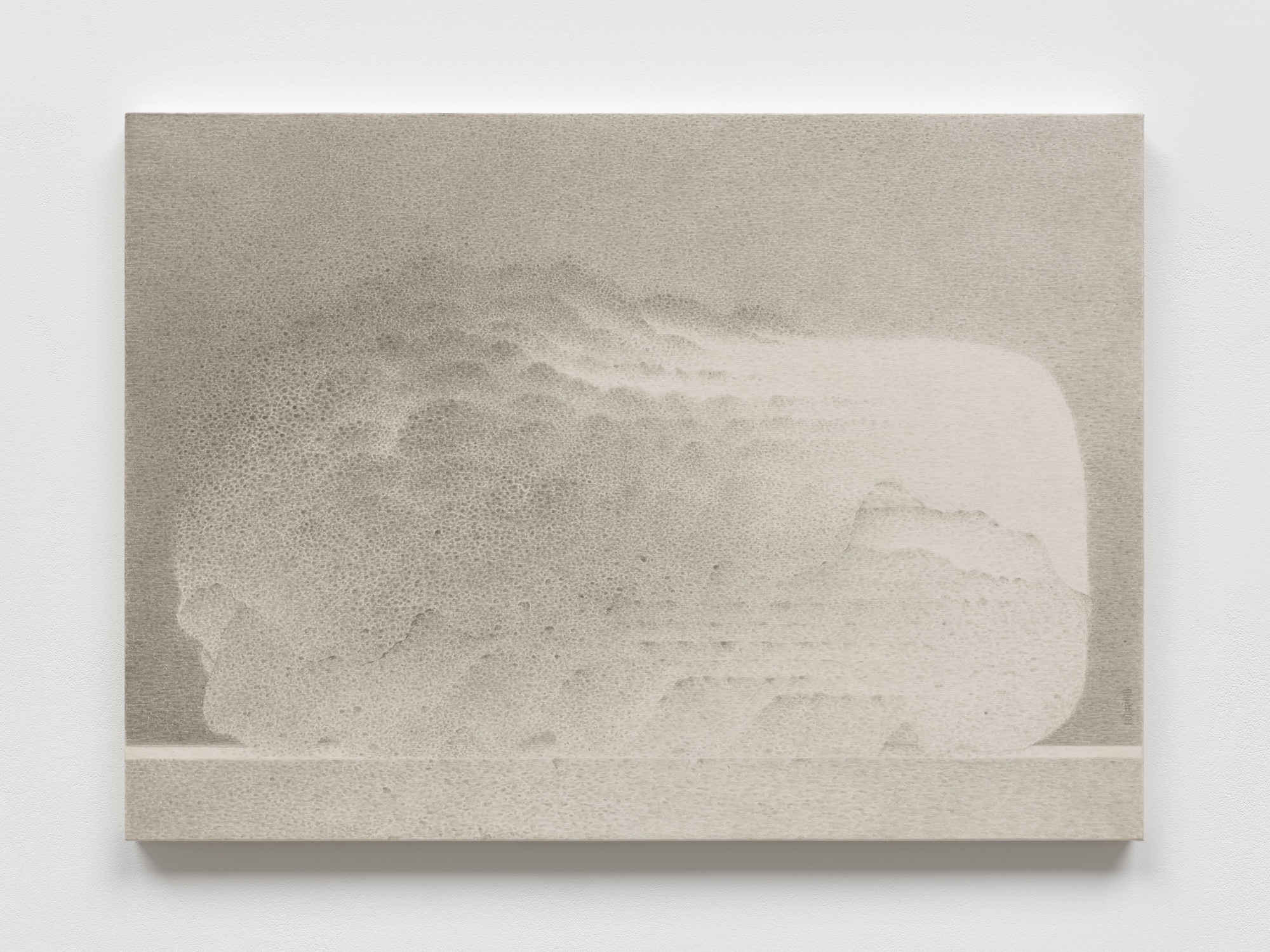
But works like Water and Fire belong to another series altogether – one connected to the sixty-four hexagrams of the I Ching. So far, I’ve painted three works based on hexagrams. Water and Fire is one of them – Hexagram 63, Shui Huo Ji Ji – After Completion. I also made works related to the Da Xu hexagram and the Ge hexagram – Ge meaning transformation or change. But these paintings aren’t meant as explanations of the I Ching. They’re really more like my own personal response to a particular hexagram – my own feeling towards it. It’s not that the hexagram itself necessarily “looks” like this. It’s more that a certain image, or a certain feeling within it, leads me towards the painting. In a way, it simply becomes a kind of entry point – or even an excuse.
For example, Xuanwu, the ancient Chinese symbol associated with the north and with water. Zhuque, associated with the south and with fire. Within the Five Elements, water and fire are naturally opposing forces.
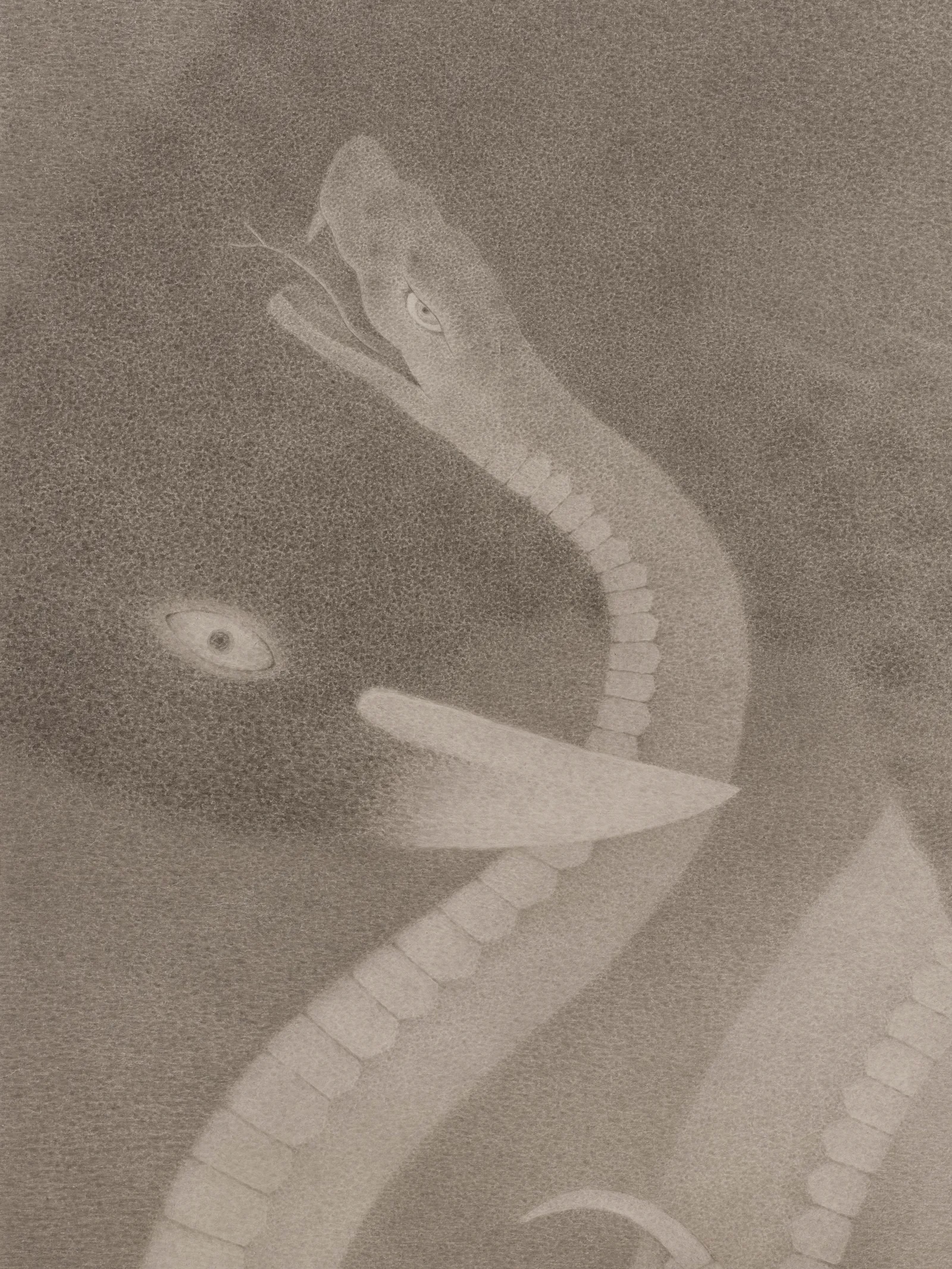
But the meaning of Ji Ji – “After Completion” – is that these conflicting elements have entered into a harmonious state. That’s why it’s considered an especially auspicious hexagram within the I Ching. What interested me was bringing these opposing forces into balance. Although they are natural enemies, they almost seem to be dancing together. Water and fire fundamentally oppose one another, but once balance is achieved between them, that opposition itself can become something positive.
Of course, within art, these interpretations are ultimately just a kind of subject matter. When a poet writes about a flower, for instance, they’re not really concerned with what species it belongs to, what colour it is, or how it grows. The flower simply becomes a way of expressing a feeling.
It’s the same for me with these hexagrams. I’m not trying to explain the I Ching. I’m borrowing its xiang – the symbolic imagery through which it understands the world. In fact, I’d even say that all painting is, in some sense, xiang. Even seeing you sitting here now is already a kind of xiang. The I Ching simply gathered these images into sixty-four forms.
I see, what first led you towards painting a hexagram such as Water and Fire? Was there a particular trigger or moment?
Actually, I think this is probably a question that every artist gets asked.
“Why rabbits?” “Why this particular subject?” – artists are constantly asked these kinds of things. But very often, I feel that the answers people give are slightly beside the point. Because the true original impulse is actually extremely difficult to explain.
Yes, it’s very difficult to put into words.
For example, people often ask me why I paint rabbits, simply because I’ve painted them so many times. And of course, later on, I might speak about ideas such as the Daoist relationship between humanity and nature, or a sense of equality between humans and animals, like we talked about at the beginning. But many of those interpretations come afterwards. They are not the original driving force itself.
Where that first impulse truly comes from – I honestly think it’s often impossible to fully explain. I’ve tried to think about it myself, but even then, I’m not sure my explanation would necessarily be accurate. Because the question of why one paints something is incredibly difficult in itself. And since you also paint, I think you probably understand this. You suddenly paint an apple, for example, and someone asks: “Why did you paint an apple?” But in truth, you may not really know. If you say, for example, that “apples are beautiful because of their colour”, or that “an apple symbolises peace”, those are all interpretations added afterwards. They are never the original impulse itself.
Later on, I tried to think more carefully about this question. There’s a phrase – I can’t remember the exact wording – but roughly speaking, it says that human beings are the measure by which we understand the world. In other words, we use our own bodies and perceptions to measure reality. Our body itself becomes the “scale” through which we see the world.
From that perspective, I think each of us carries a kind of unconscious understanding of ourselves. For example, because I started painting very young, I gradually became aware that my hands possessed a certain ability. I knew that through my hand, I could bring certain things into being through painting. It’s not necessarily a fully conscious awareness – more like an instinctive perception.
And that perception is always there. Then, throughout life, you constantly encounter things: a bottle of water, a painting, an animal… And sometimes, when you suddenly encounter a particular form, something inside you – your inner state, your bodily sensation at that moment – suddenly aligns with it.
And in that instant – suddenly – the spark appears.
For example, over time I became increasingly aware that the relationship between humans and animals should perhaps be one of equality. And those ideas, in turn, encouraged me to continue painting rabbits and deepening that direction. But by that stage, those thoughts have already become more conceptualised and systematised.
I see.
In many ways, these kinds of ideas or concepts only emerge afterwards. They gradually allow you to push the work further, to move more deeply and more purely in a particular direction. I think my own process has been like that as well.
I understand. So could I perhaps say that, when we’re painting, the beginning is often more instinctive or unconscious – that we’re not really thinking so much at first?
Absolutely. Very often, it’s simply a certain moment, or a certain encounter – and suddenly, something appears. Only afterwards do we begin to reflect on it and realise: perhaps there are Daoist elements within it, or certain other ideas. But those later reflections will then influence how the work continues to develop. What we call “concepts” or “ideas” gradually become rational structures afterwards. Whereas the initial impulse is usually much more emotional, instinctive, and intuitive. The rational side then helps to deepen or complete the work over time.
So would you say that creation requires a balance between intuition and rationality?
I think it’s very much as we were discussing earlier. The intuitive or emotional side is definitely extremely important. Perhaps even more important. But rationality becomes a kind of support structure.
First, you need a very sensitive intuitive perception. Then, with the support of theory or rational thought, the work can ultimately reach a greater level of depth.
But the final spark – the thing that truly appears – is still something that can never be completely explained in words.
Could I perhaps understand it as though there’s some kind of force behind you, constantly pushing you forward?
Yes, I think that’s a fair way of putting it. There are many things that human beings simply cannot fully explain. There’s one particular idea that I’ve never really agreed with. Some people believe that, as an artist, you must first understand why you make art – why you paint at all. Almost like the classic philosophical questions: Where do you come from? Who are you? Where are you going? They believe you must first understand what painting means to you before you can truly begin making work or studying art. Some even say: “If you don’t know why you paint, how could you possibly paint well?”
But I think that logic is completely reversed. No one first figures out why they paint, and only then begins to paint. Real creation doesn’t work like that. It’s like life itself. We don’t first solve the question of why we exist before deciding to live, do we? We are simply born into life. Nobody fully understands the meaning of existence before they begin living. If things worked that way, it would actually be putting the cart before the horse.
Yes, I completely agree with that.
So to me, that way of thinking places rationality first. It begins by asking: “What is painting?” “You must first understand what art is before you can make it.” But I feel that approach becomes overly philosophical.
For example, in my own case, I loved drawing from a very young age. I was already painting when I was three, or five years old. At that age, it would have been impossible for me to think about questions like: “What is painting?” or “Why do I paint?”
Those thoughts simply didn’t exist.
Only after you’ve painted for many years – after you’ve reached a certain stage in life – do you begin to reflect on those questions.
I’m not saying such questions are unimportant. Of course they matter. But they belong to a later stage. Only after you’ve already lived through the process of making work do you gradually begin asking yourself: What is painting? What does art mean for human beings? That, to me, is where rationality enters.
And it’s that later reflection that can ultimately deepen the work and elevate it into another dimension. So in a sense, this is exactly the relationship between intuition and rationality that we were discussing earlier.
Since you began painting from such a young age, I’m very curious about when you first became aware of these kinds of ideas. For example, the feeling we were discussing earlier – that there might be some kind of force behind you, or something almost like a dialogue with a higher spiritual presence. My feeling is that, at the beginning, one simply paints with great intensity and immersion. But as time passes and you grow older, you gradually begin to realise that painting is not only technical – it can also become something deeply emotional, even spiritual. So I’m curious when you first began to become conscious of these things.
I think throughout one’s life, you continue reflecting on these questions. And at every stage, your understanding changes and develops. For example, over the past few years, I’ve often found myself asking again: what is the meaning of painting for human beings? Gradually, I came to feel that, for me, art is ultimately more about experiencing life itself. It’s not entirely about expressing something, or trying to tell people something. That has never really been my primary motivation.
I’ve never felt a particularly strong need to impose an idea onto others. Whatever people experience from the work belongs to them – it isn’t something I consciously try to deliver to them.
What genuinely interests me is more my own experience and perception. From a Buddhist perspective, if we imagine that reincarnation exists, then perhaps we come into this life in order to experience it. Whether one is happy or unhappy, whatever state one finds oneself in, one must ultimately face it. Buddhism might describe this as “cultivation” or spiritual practice, but personally, I prefer to think of it as experience.
And through painting, I feel that I am experiencing life itself – experiencing time, existence, and the condition of living. People often say that art comes from life, and discuss the relationship between art and everyday existence. Of course life itself is important. But I think art carries life into a more metaphysical realm. To experience life through art is, in some sense, to experience it on a more transcendent level. Ordinary life can also allow us to experience existence, of course – but it remains closer to the level of everyday reality.
Have you been thinking about anything in particular recently?
Lately, I’ve been thinking a great deal about the relationship between myself and the work.
I’ve been hoping to make myself “smaller”.
By that, I mean that today, whenever people encounter a work of art, they often become very conscious of the artist behind it. Especially after modernism, artists increasingly began emphasising individuality and self-expression.
But in earlier periods – including Song dynasty painting in China – many paintings were not even signed. After modernism, however, artists increasingly foregrounded their own personalities. For example, when you see a Van Gogh painting, you immediately think of Van Gogh himself. His personal presence is incredibly strong.
But today, I find myself wanting the opposite. I would rather hide myself behind the work. To make myself smaller, and allow the work to become larger.
A kind of egolessness?
Perhaps. But the “egolessness” I’m referring to isn’t really about the complete absence of self. What comes to mind for me is something Wang Guowei once discussed. He suggested that “egolessness” is not about erasing oneself entirely, but about changing the relationship between oneself and the object.
For example, when a poet writes about a flower, sometimes the flower is merely an excuse – the poet is really expressing his own emotions. But true “egolessness” occurs when, in describing the flower, I do not place myself above it. I become equal to it – or even smaller than it.
And for Wang Guowei, that was the true meaning of “egolessness”.
You mentioned the I Ching earlier, but I’m also curious whether there are other Chinese classics that have had a deep influence on you.
The text I love most is actually Zhuangzi. I once made a series of paintings about the kun fish – three works altogether. The first was inspired by the line: “In the northern darkness there is a fish, and its name is Kun.” The first time I read that passage, I found it profoundly moving.
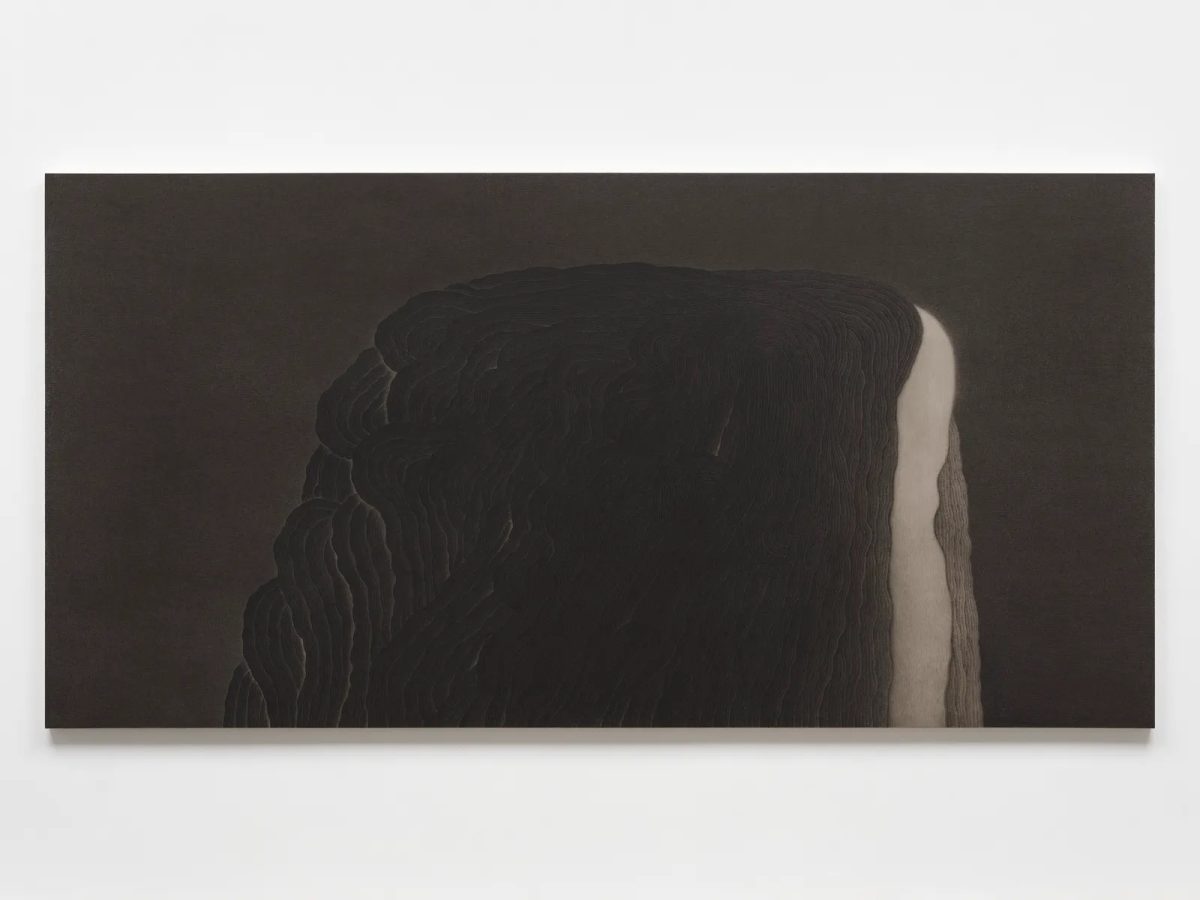
The second painting depicted the kun emerging from the sea, and the third became more like a fragment or partial form of the creature itself. There are so many things in Zhuangzi that fascinate me – the figures he describes, the stories; all of them are deeply compelling. Stories such as Cook Ding carving the ox, for example. In Free and Easy Wandering, Zhuangzi speaks about the kun, vast beyond measure, transforming into the giant bird Peng and rising ninety thousand li into the sky.
What he is really discussing is freedom. And also the relationship between the large and the small. Greatness possesses a kind of overwhelming grandeur and force. But smallness has its own kind of freedom as well. A sparrow, for instance, can rise and land freely at any moment. They are simply two different forms of freedom.
And in Cook Ding carving the ox, when Zhuangzi speaks of “using what has no thickness to enter the spaces between”, there is a similar idea at work. Sometimes, when something becomes sufficiently “small”, it gains a greater degree of freedom.
This is obviously an enormous question, but perhaps we can just speak about it freely. Do you think the meaning of life might simply be about living in the present moment – or perhaps about experience itself, as you mentioned earlier? What do you feel is most important for human beings?
Ultimately, if we look at it from a biological perspective, the most fundamental thing is simply survival. Whether we’re talking about humans, animals, or insects, the first priority of all living beings is to remain alive. I think there’s a great deal of truth in that. Because if you really think about it, almost everything we do is, in some sense, connected to survival.
Whether you’re admiring a beautiful landscape, eating, sleeping… all of these things are tied to the instinct to continue living. That is the underlying foundation beneath everything else. But once we move into the question of the meaning of life, it becomes something different.
If survival itself is no longer the issue, then what is it that people truly seek? Because without life, nothing else can exist. So the meaning of life is perhaps the greatest question of all. And yet, in a way, I don’t think we can ever fully grasp some absolute meaning. But perhaps that in itself is the meaning.
There’s also another important aspect of life: it is not infinite. Life is finite. And precisely because it is finite, it becomes meaningful. If life were endless, many things might lose their meaning altogether.
A lot of my understanding of life, death, optimism, and worldview has actually been deeply influenced by Buddhism. There is one Buddhist idea that I especially agree with: that “life is suffering”. In other words, human beings are not born into this world purely in order to enjoy themselves. And once you genuinely accept that, strangely enough, you can become much more optimistic. Because then every small thing you receive begins to feel precious. Even something as simple as drinking a glass of water can become a source of happiness.
But if someone’s entire worldview is built on the assumption that life should only be about pleasure, fulfilment, or gaining more and more, then the moment reality fails to meet those expectations, suffering inevitably follows. So in many ways, what truly helps people is first accepting that suffering is already part of life itself. That understanding is something I’ve received very deeply from both Buddhist and Daoist thought.
What do you think about the relationship between concept and form in contemporary art today?
For me, the most important question in art is not necessarily what you express, but how you express it. Whether you’re dealing with ideas about good and evil, feminism, social issues, or any other kind of concept, those things alone do not determine the quality of the work. What ultimately matters is how the work is realised. It’s the same in literature. Imagine ten writers telling exactly the same story – perhaps something very simple, like a story about a mother and son. The difference between an ordinary work and a great one does not lie in the plot itself, but in how the writer tells it.
Art is no different. You can paint rabbits, or the kun fish, or anything else. The subject matter is both important and unimportant at the same time.
What truly matters is whether you can genuinely bring that thing into being – and how you choose to present it. That “how” is, to me, the real core of art. Not simply the story being told.
So how do you think about the idea of “Eastern sensibility” or yijing?
I think the most important thing about yijing is restraint – that tension held in reserve, that sense of being elevated. The Chinese concept of ya – that quality of cultivated refinement is, in many ways, itself a form of restraint. And if you were to release emotion fully, to its absolute limit – you’d arrive at an entirely different world.
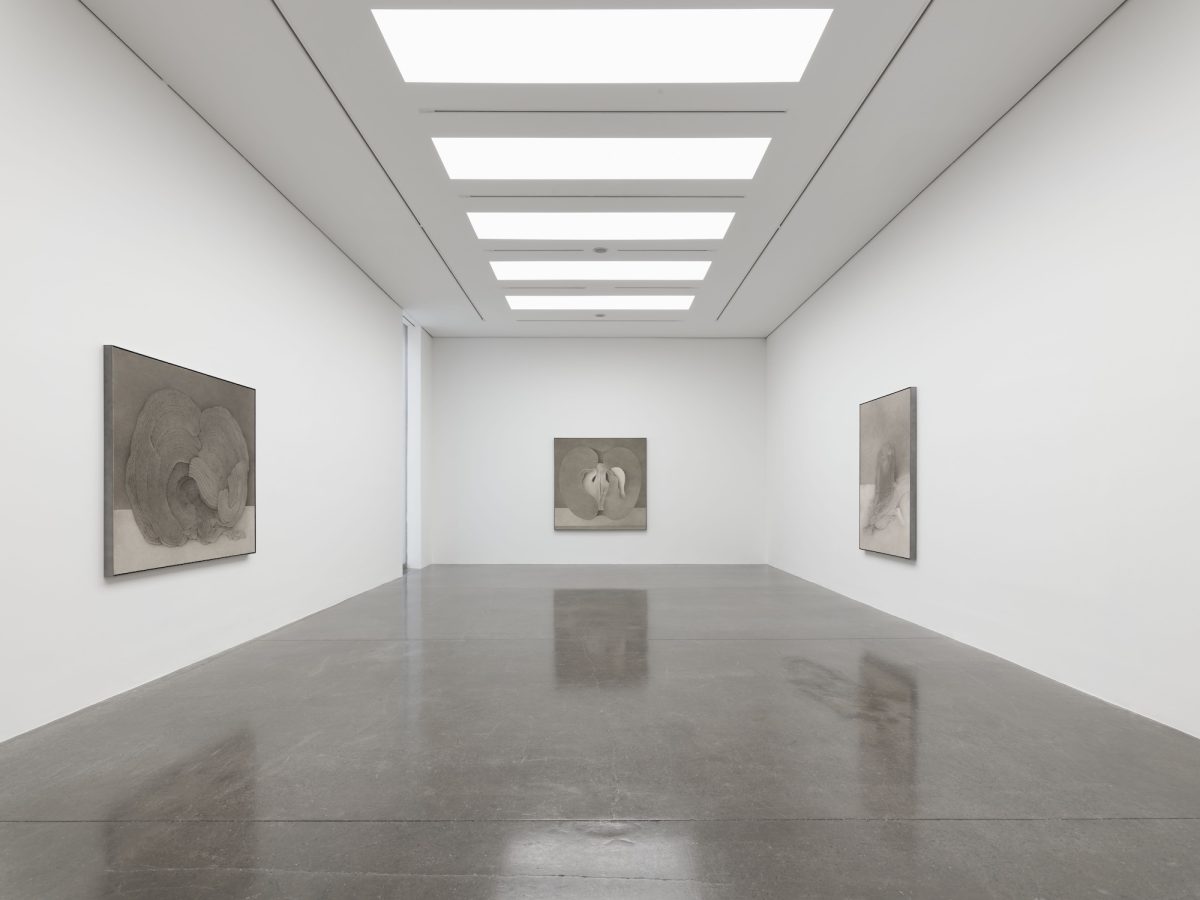
Shao Fan: Refrain, 22nd May until 27th June 2026, White Cube Mason’s Yard