© Nike, Inc
For most of the twentieth century, the gap between a designer’s vision and a client’s understanding of it was bridged by a combination of material samples, hand sketches, and the kind of expressive hand-waving that no amount of training can quite replace. The mood board — that carefully assembled collage of textures, tones, and references — became the industry’s most relied-upon shorthand. It was imperfect. Clients misread it. Expectations diverged. Costly revisions followed.
That shorthand is being retired. Not because mood boards lacked intelligence, but because something more precise has arrived to replace them. 3D interior rendering has moved from a specialist finishing tool to a central part of how the best designers in the world develop, refine, and sell their ideas. And the shift is not cosmetic.
What the Old Methods Could Not Do
The limitations of traditional presentation tools were never really about quality — they were about translation. A fabric swatch communicates texture but not scale. A reference image conveys atmosphere but not proportion. A floor plan gives dimensions but no sense of how a room actually feels when you stand in it. Even the most fluent designer, working with the richest set of references, is asking clients to perform a significant act of spatial imagination. Many cannot.
The result was a presentation process that was genuinely creative but structurally unreliable. Approvals were given based on incomplete pictures. The gap between what a client signed off on and what they received — when tiles were laid and furniture arrived and light fell into the space for the first time — was often wider than anyone had anticipated. Revision cycles were long. Relationships were strained.
What 3D Rendering Gives You That Nothing Else Does
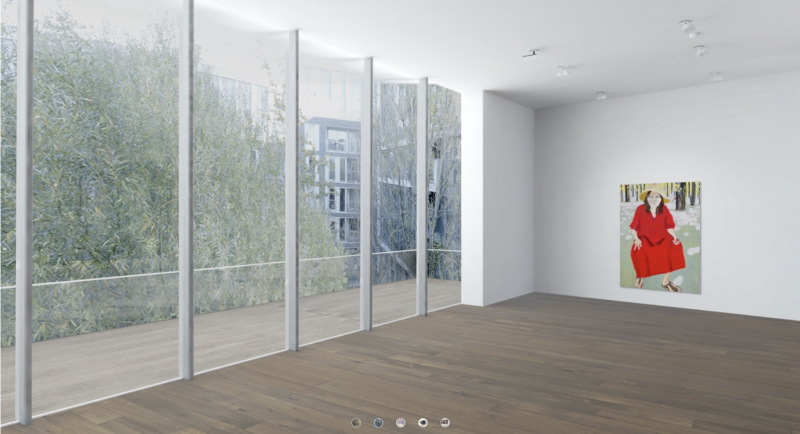
The core capability of 3d interior rendering services is deceptively simple: they show you what a space will look like before it exists. Not approximately. Not suggestively. With photorealistic accuracy that accounts for natural light at a given time of day, the reflectivity of specific materials, the visual weight of furniture at actual scale, and the spatial relationships between every element in the room.
This changes the nature of the design conversation entirely. When a client can see — genuinely see — how a deep charcoal wall reads against white oak joinery in afternoon light, the discussion becomes concrete. Preferences can be tested. Alternatives can be compared side by side. The decision to change a material or shift a colour palette happens at the render stage, not after installation.
For designers, the render is also a design tool in its own right. Working through a space in three dimensions — rather than assembling it from a collection of references — surfaces tensions and opportunities that two-dimensional planning simply does not reveal. A sofa that works on paper may overwhelm a room in practice. A lighting layout that looks balanced on a plan may leave a corner cold. Rendering finds these issues before they become problems.
The Evolution of Interior Rendering as a Design Medium
It is worth noting how significantly the technology itself has matured. Early CGI interiors had a quality problem: they looked like CGI. The telltale smoothness of surfaces, the slightly unnatural behaviour of light, the absence of the kind of atmospheric noise that makes a real room feel inhabited — all of these things marked out a rendering as a rendering, and clients read them accordingly.
That problem has been largely solved. Contemporary rendering software, combined with the expertise of skilled 3D artists who understand both the technical and the aesthetic dimensions of interior space, now produces images that are genuinely indistinguishable from photography. Materials behave correctly. Light sources interact with surfaces in physically accurate ways. The result is not a simulation of a space but a representation of it — one that carries real communicative weight.
Understanding how 3d render interior design applies across the full lifecycle of a project — from early concept approval to finished marketing materials — reveals just how versatile this medium has become. The same render that helps a client approve a scheme can be used in a planning submission, a portfolio entry, a social media campaign, or a press release. The asset has multiple lives.
Where It Fits in the Design Process
The most effective use of 3D rendering is not as a presentation tool deployed at the end of the design process, but as a working tool integrated throughout it. Designers who use rendering early — to test spatial compositions before they are committed to drawings, to explore material combinations before samples are ordered — find that it accelerates decision-making at every subsequent stage.
At concept stage, a rough rendering can communicate the essential character of a proposed scheme without requiring a finished set of specifications. It asks the client a productive question: is this the direction? The conversation that follows is focused, because both parties are looking at the same thing.
At design development stage, more detailed renders allow specific decisions — flooring finish, cabinetry profile, tile layout — to be visualised in context before they are made. This is where the investment in rendering pays back most clearly. Changes at this stage cost time. Changes after installation cost money.
At completion, high-resolution renders serve as marketing assets that can be produced in parallel with construction — meaning a project can be published, promoted, and added to a portfolio the moment it reaches practical completion, rather than waiting for a photography shoot to be scheduled.
What This Means for the Profession
There is a broader implication here that goes beyond process efficiency. 3D rendering has raised the baseline expectation of what a design presentation looks like. Clients who have seen photorealistic renders from other studios are harder to persuade with mood boards. The industry has moved, and the firms that have not moved with it are working at a disadvantage.
That is not a criticism of traditional methods — the intelligence that goes into a well-constructed mood board is real, and no amount of rendering replaces the curatorial judgement that underlies good design. But the presentation of that intelligence has changed. The most compelling design proposals today are the ones that show clients not what the designer is thinking, but what the finished space will look like. The gap between concept and reality has never been smaller.
The Mood Board Is Not Dead — But It Has a New Partner
The most thoughtful designers are not abandoning the mood board — they are supplementing it. The board still does something that a rendering cannot: it communicates atmosphere, cultural reference, and the sensory qualities of materials in a way that a screen image never fully captures. A piece of handmade ceramic tile has a weight and warmth that a render can approximate but not replicate.
What rendering gives back is spatial truth. The two tools, used together, cover the full range of what a client needs to understand before they commit: the feeling of a scheme and the fact of it. Together, they close the oldest gap in interior design — the one between what a designer sees in their mind and what a client is able to imagine from a description.
That gap was never inevitable. It was just, until recently, unavoidable.