

Walk into the world of Joe Rush, and machines rarely remain machines for long. Engines grow torsos, chains stretch into tendons, springs curl like vertebrae. Scrap metal reorganises itself into birds, insects and hybrid creatures that seem both ancient and futuristic.
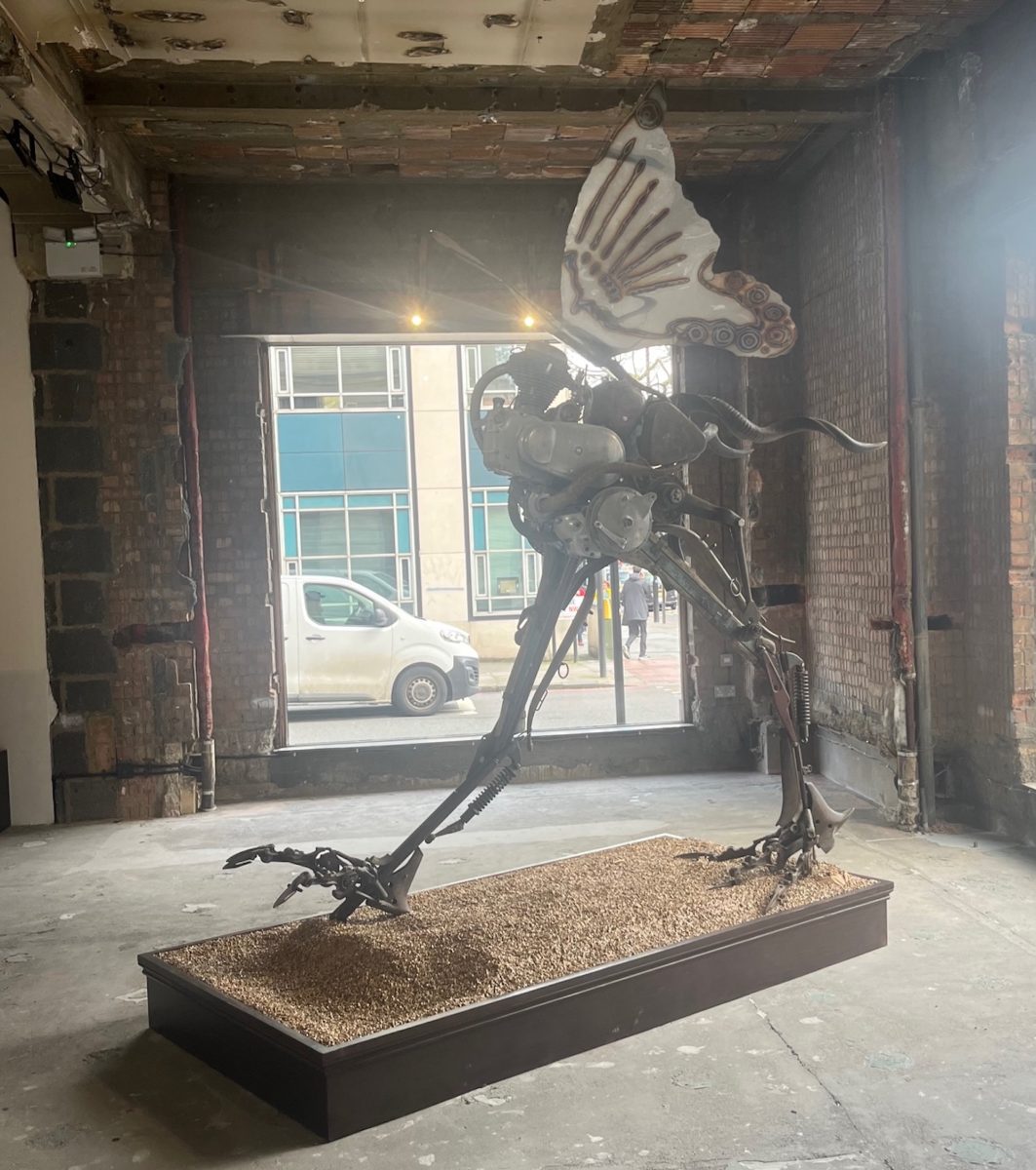
In UNNATURAL, opening at The Bomb Factory Art Foundation, Rush builds what feels like a speculative natural history museum — an ecosystem where animals appear to have evolved from the mechanical debris of contemporary life.
Birds emerge from engine parts. Horses form from clusters of industrial fragments. Upright engines stand like totems, heavy machinery taking on an almost anthropomorphic presence.
The sculptures feel both brutal and strangely tender: monuments to industry that simultaneously resemble living things.
Rush has spent more than four decades developing this language of transformation. As founder of Mutoid Waste Company, the influential collective that emerged from London’s underground scene in the early 1980s, he helped shape a new sculptural culture built from scrap, vehicles and salvaged machinery.
Their vast junk-built environments later became a defining presence at Glastonbury Festival, where towering mechanical sculptures animate the landscape beside the Pyramid Stage each summer.
But the impulse behind the work began long before the festivals.
“I’ve always thought it was art,” Rush tells me. “My parents were artists. My father was a painter, sculptor and illustrator, and my mother’s a writer and painter.”
Before sculpture, he learnt to build things in Britain’s film studios.
“I actually started in the film studios. That’s how I got my art education — working at Pinewood and the BBC. That’s where I learned to carve and paint and make things.”
That practical knowledge — fabrication, improvisation, problem solving — still sits at the centre of the work. Rush approaches materials less as a sculptor shaping form than as someone assembling organisms.
“It’s about how you make people look,” he says. “Just looking at waste. Looking at ways you can use scrap and old objects.”
The idea of looking differently runs through the entire exhibition.
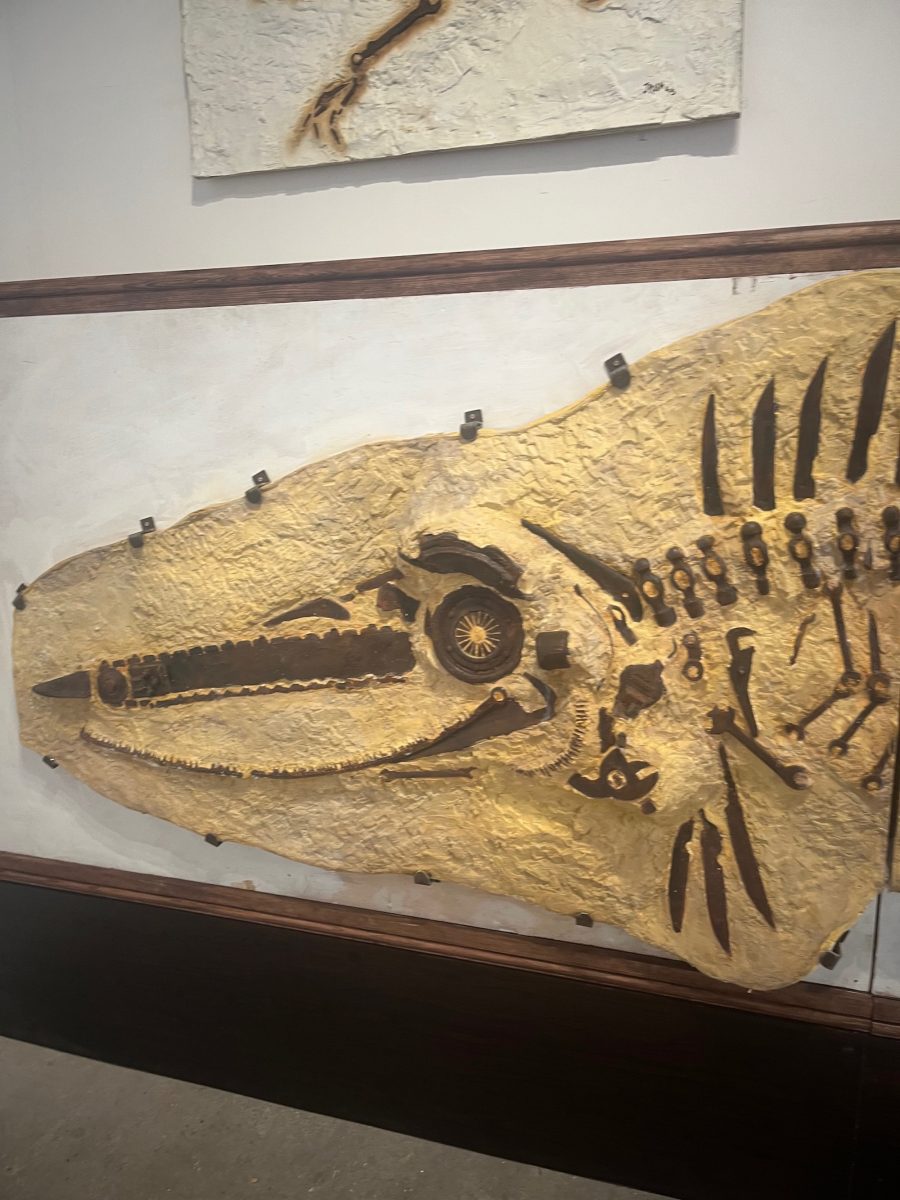
Chains become fossil patterns. Engine blocks resemble skeletal rib cages. Industrial fragments suddenly feel biological.
Rush even frames some of the works explicitly as archaeological artefacts.
“There’s an era now called the Anthropocene,” he explains. “The era where man’s activities are entering the fossil record.”
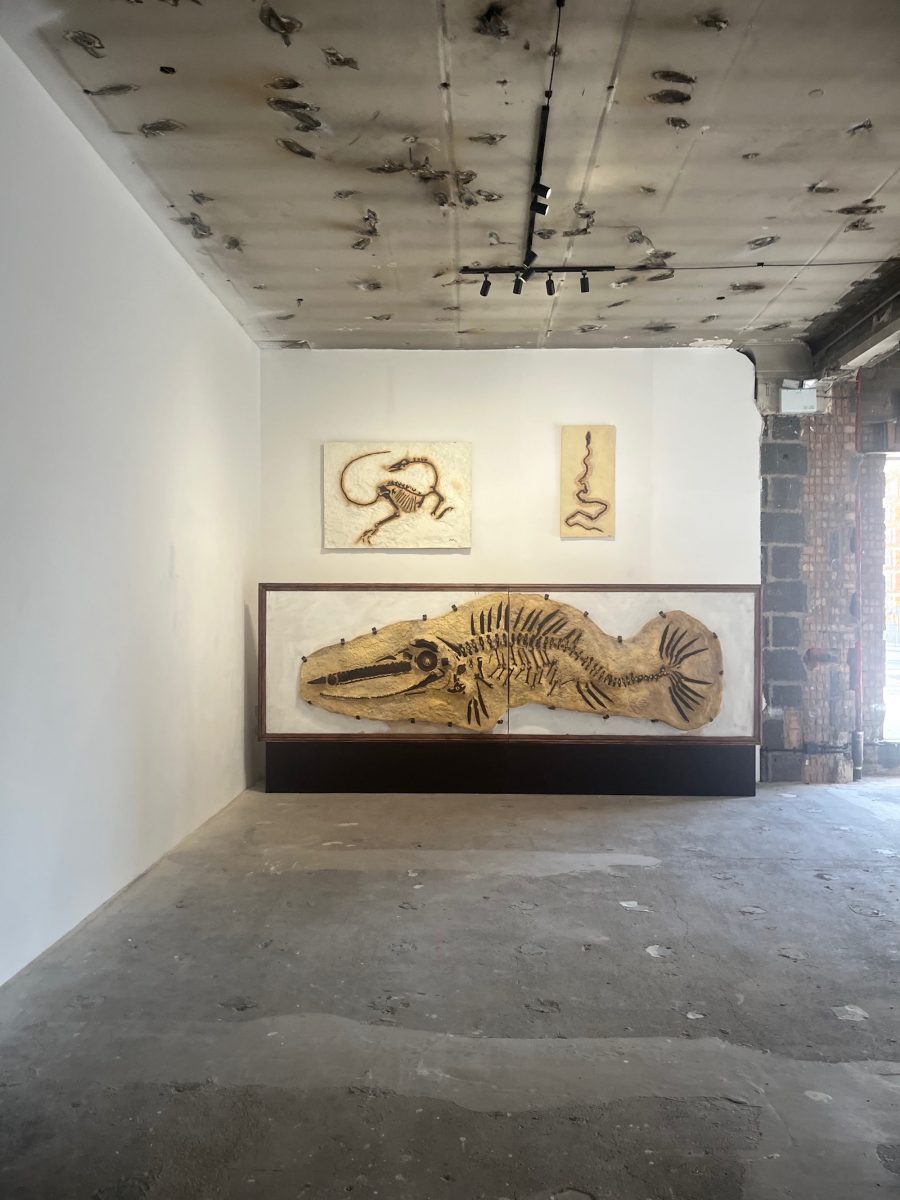
In the exhibition, wall-mounted reliefs made from bike chains and tools resemble museum fossil displays — except the preserved remains are industrial rather than prehistoric.
“I’ve taken these materials and turned them into fossils,” he says. “As if they’ve been discovered thousands of years later.”
Seen this way, the exhibition becomes a strange time machine: a museum from a future civilisation studying the mechanical bones of our own.
Rush’s fascination with machinery inevitably invites comparison with early twentieth-century Futurism, which also celebrated engines, speed and the aesthetics of industry.
But the comparison reveals a crucial difference.
For the Futurists, the machine symbolised power — speed, force and domination. Their fascination with industrial energy eventually fed into the political aesthetics of Fascism, where technology and violence were fused into visions of national strength.
Rush’s relationship with machinery moves in another direction.
Where Futurism saw power, Rush sees life.
Engines become animals. Chains resemble muscle. The debris of industry reorganises itself into creatures that feel strangely organic. Instead of glorifying the machine, the sculptures reconnect it with nature.
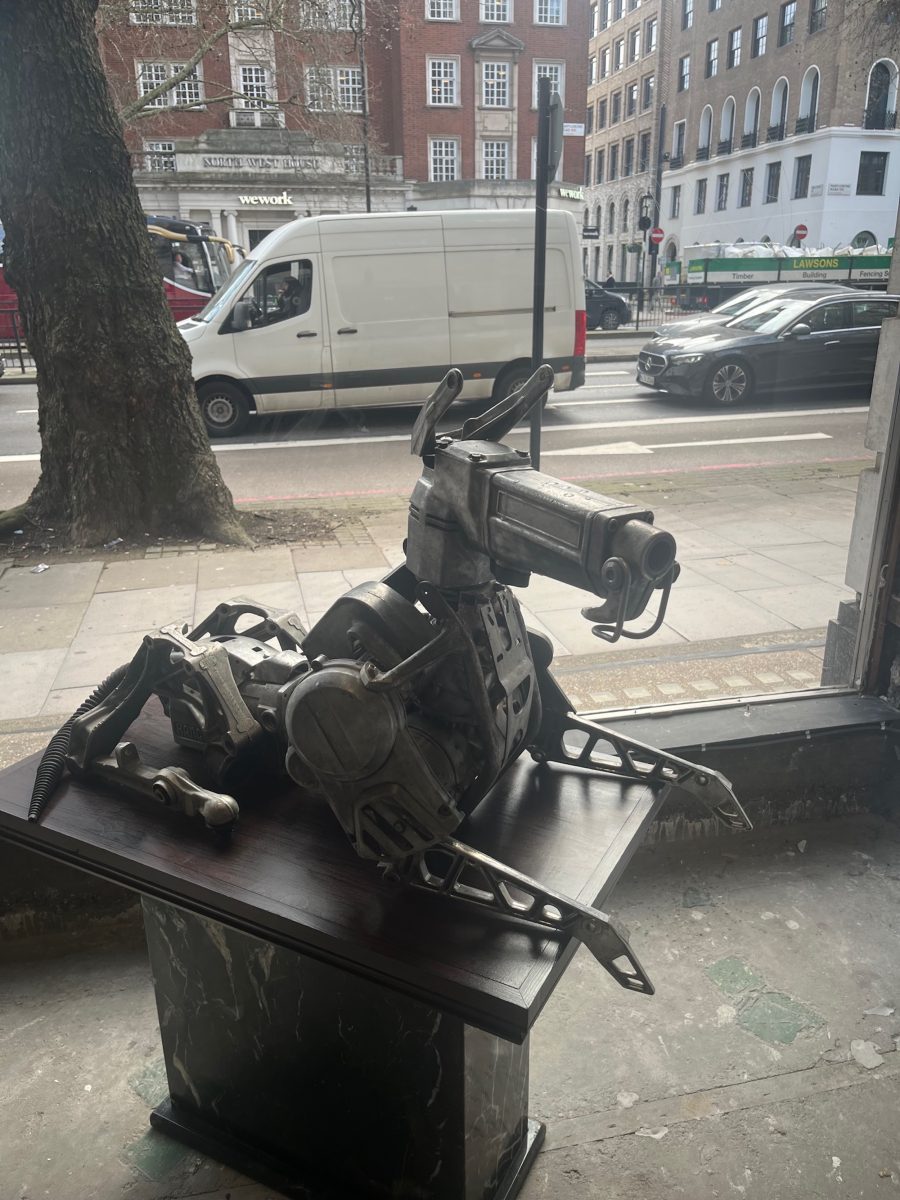
“My imaginary worlds are dreams,” Rush says. “Some are happy dreams, some are nightmares and some are prayers. They reflect my view and my concerns for the world we live in and the planet we inhabit.”
The comparison with Futurism also feels unexpectedly contemporary.
Today, the machine is no longer primarily mechanical but computational. Precision engineering has been replaced by precision code. Artificial intelligence reveals patterns in DNA, ecosystems and complex systems that were previously invisible.
And just as in the early twentieth century, the machine sits between two competing visions.
Some see beauty — the extraordinary complexity of nature mirrored in data and algorithms.
Others see power.
Rush’s sculptures quietly side with the former. By turning engines into animals and scrap metal into fossils of the Anthropocene, he reframes machinery not as an instrument of domination but as part of a larger ecological system.
Walking through UNNATURAL feels a little like stepping into a museum from a parallel timeline — one where machines have slowly evolved into animals and the debris of industry has become the fossil record of our age.
Rush’s sculptures carry the weight of engines, chains and industrial steel, yet they read unmistakably as living forms. Birds unfold from machinery. Horses emerge from scrap. Fossils of tools and bike chains hint at a future archaeology still waiting to be discovered.
In Rush’s hands, waste becomes anatomy and machinery becomes myth. Where earlier generations saw the machine as a symbol of domination, he reframes it not as an instrument of power but as part of a larger living system.
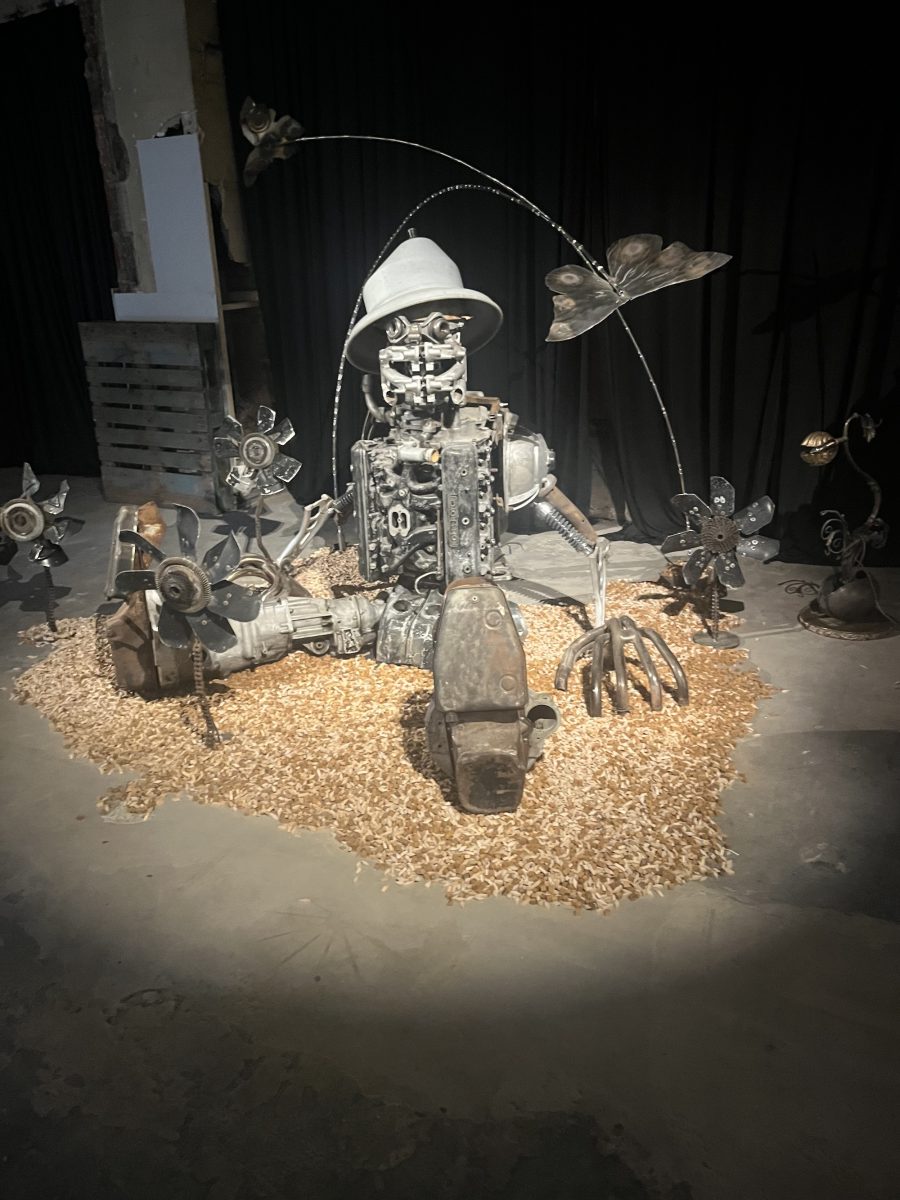
Joe Rush – UNNATURAL, 13th–29th March, The Bomb Factory Art Foundation, Marylebone Road
Opening Hours: Wednesday–Sunday, 1PM–7PM