The browser tab can feel like a quiet room until it starts to move. A scroll becomes a corridor, and a click becomes a door. Artists, game makers, and portal editors all use that familiar frame to stage stories in plain sight.
This shift matters because it changes what an “exhibition” can be. A show can update in real time, and still stay lightweight. It can also reach people on older laptops and basic phones without extra gear.
Why a single tab can feel immersive
A browser space is not only a delivery tool, it is part of the work. Menus, panels, and loading moments shape pacing in the same way as walls and labels. Once that idea clicks, many online formats start to look like close cousins.
When a web page becomes the gallery
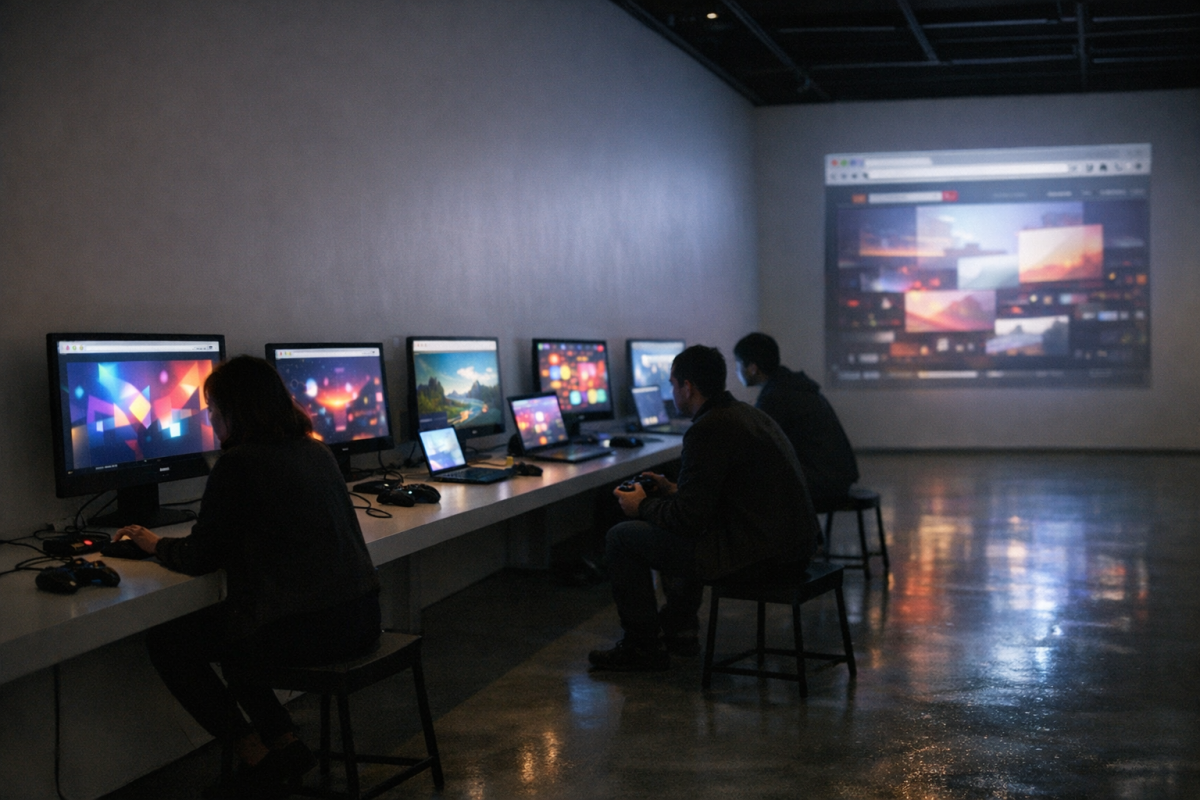
Some institutions now treat the browser as the exhibition room, not just a place to post images. A 2026 guide from the MacKenzie Art Gallery describes browser-based experiences that function like full shows. It points to Adrienne Matheuszik’s “Interstellar Illusions,” an interactive web game shown in the 2023 exhibition “There Is No Centre.”
These projects lean on simple actions that everyone already knows. In Norwegian online casino research, iGaming portals depend on scrolling, clicking, and navigation to guide attention. That shared language makes the browser feel like both wall and projector.
The web also makes preservation part of the creative brief. The MacKenzie guide notes that browser shows can be updated live and still remain accessible on low-end hardware. Tools like Rhizome’s Conifer and services such as the UK Web Archive show how a website can be captured for later viewing.
Browser-native commissioning keeps that momentum going. NET ART on the Commons runs a 2025 rolling open call that places web projects beside VR and AR work. Welcome to my Homepage has announced three-week virtual residencies, where artists like Samuel Edwards build new pieces mixing animation, games, and comics.
Stories built from clicks and windows
Long before endless feeds, net art explored the browser as a story engine. In 1996, Olia Lialina’s “My Boyfriend Came Back from the War” used HTML frames that split as the viewer clicks, as documented on the Rhizome entry. The screen fractures into a mosaic while a nonlinear story unfolds about a couple after the war.
Curators such as Michael Connor have described how the work borrows from film montage and adapts it to web space. That framing still appears in today’s browser exhibitions through panels, overlays, and in-page windows. Each division controls what arrives first and what must wait.
Indie browser games push the same idea with different tools. Fallen London, a gothic role-playing game, delivers more than 4.5 million words through a modest interface. It also runs seasonal events like Estival and Candlefinder, and long arcs such as the Railway to Hell.
Design choices often carry as much story as the plot itself. A single tab can hold a long narrative when text and choices stay legible. Sparse visuals can build tension over time, as seen in A Dark Room and its 2025 browser edition with new endings. Events and updates can make a world feel ongoing without heavy graphics.
Some games even turn online habits into the theme. Neal Agarwal’s “Stimulation Clicker,” released in January 2025, sends players chasing points through absurd upgrades like true crime podcasts. It ends in a deliberately hollow credits ocean that reflects on attention-hungry interfaces.
Portals that curate play at scale
Portal design can feel like a kind of curating, even when it serves play. Tech coverage in December 2025 described DoomScroll as an endless feed of thousands of Doom WADs from the past 32 years, playable instantly in the browser. It was curated by developer James Baicoianu and archivist Jason Scott, and it highlights a modding scene that shaped future professional developers.
Other hubs organise variety through a stable frame. Thumbnails, tags, and short blurbs turn discovery into part of the experience. Within that format, a Street View travel challenge like GeoGuessr can sit near a licensed online world like “Game of Thrones: Winter is Coming.”
That same visual hierarchy shows up in practical information portals, including online casino comparison and guidance. Clear labels, consistent menus, and plain language disclosures help readers move with confidence. The rhythm of scrolling and clicking can be designed, much like an online exhibition route.
Browser culture keeps expanding without giving up its simplest strength, the link that opens anywhere. Platforms that commission browser-native work still frame the web page as a frontier, even as VR and AR grow. Their calls suggest a future built from WebGL scenes, animation, and game-like mechanics that run inside familiar tabs.
Looking ahead
Across art, games, and information portals, a few patterns keep returning. Navigation acts like choreography, guiding how visitors and players feel time. Curation happens through interface choices, including panels, tags, and content order. Archiving often matters early, since a browser work is also a living file.
The browser will not replace galleries, consoles, or headsets. It keeps proving it can host experiences that feel deliberate, social, and strange. The most lasting works treat the tab as a real space, then invite the viewer to move.