Thirty years is almost a lifetime in digital culture. Since Rhizome was founded in 1996, the internet has travelled from dial-up modems, personal homepages and the early web to smartphones, social media, cloud computing and now artificial intelligence. Technologies have appeared, transformed how we live and, in some cases, disappeared altogether.
Art made with those technologies can disappear with them.
That makes Rhizome’s 30th anniversary rather more than a birthday. Founded as an email list in 1996, the organisation has grown alongside the modern web, becoming both a platform for born-digital art and something increasingly important: a memory institution charged with ensuring that the art of the internet doesn’t vanish as the internet itself changes.
This autumn, Rhizome is marking those three decades with an ambitious programme that looks both backwards and forwards at digital culture, anchored by a major relaunch of its pioneering ArtBase archive and an exhibition celebrating one of the internet’s original creative forms — the website.
“From our roots as a mailing list, we’ve now been building our community and infrastructure over decades,”
says Rhizome Executive Director Michael Connor.
“This fall – especially with the ArtBase relaunch – we will see some of the results of that long, patient work.”
Central to the anniversary is a major relaunch of ArtBase, Rhizome’s public archive of born-digital art.
Preserving digital art presents a particular problem: software disappears, browsers change, operating systems become obsolete and artworks created for one generation of technology can become inaccessible within the next. Over the past decade, Rhizome has been developing the infrastructure and conservation approaches needed to keep legacy digital works accessible
Supported by a grant from the Mellon Foundation, the overhauled ArtBase will introduce improved metadata, design and discovery tools alongside easier ways of finding restored and accessible works.
The relaunch will also see Rhizome reopen the archive’s accession process to a broader range of artists, with a more representative selection of digital works added, described and documented each year.
New additions to its ArtBase Anthologies programme — which re-performs and recontextualises historic digital artworks — will include restorations of online publications AQNB and X-tra Online, digital paintings by Lee Mullican and works from the Walker Art Center collection.
The anniversary season begins with a reminder that one of digital art’s oldest formats remains very much alive.
Rhizome has partnered with ARTXCODE for WEBSITES WEBSITES WEBSITES!, an exhibition curated by Vienna Kim and Benoit Palop of LAN Party exploring the website as a space for artistic experimentation, identity and autonomy.
Works by artists including Kim Asendorf, Petra Cortright, Rafaël Rozendaal, Maya Man, Damjanski, Lorna Mills, Auriea Harvey and Simon Denny will be presented as functioning websites installed physically throughout New Int. Picture Company in New York.
At a moment when much of online culture is funnelled through a small number of social platforms, the show’s proposition feels particularly pertinent: the website remains a space that can belong to the artist rather than a platform — and, crucially, one that “answers to no algorithm.”
Opening on 21st September and running until 27th September, the exhibition will also offer works for acquisition through a sale facilitated by Fellowship, with a portion of proceeds supporting Rhizome.
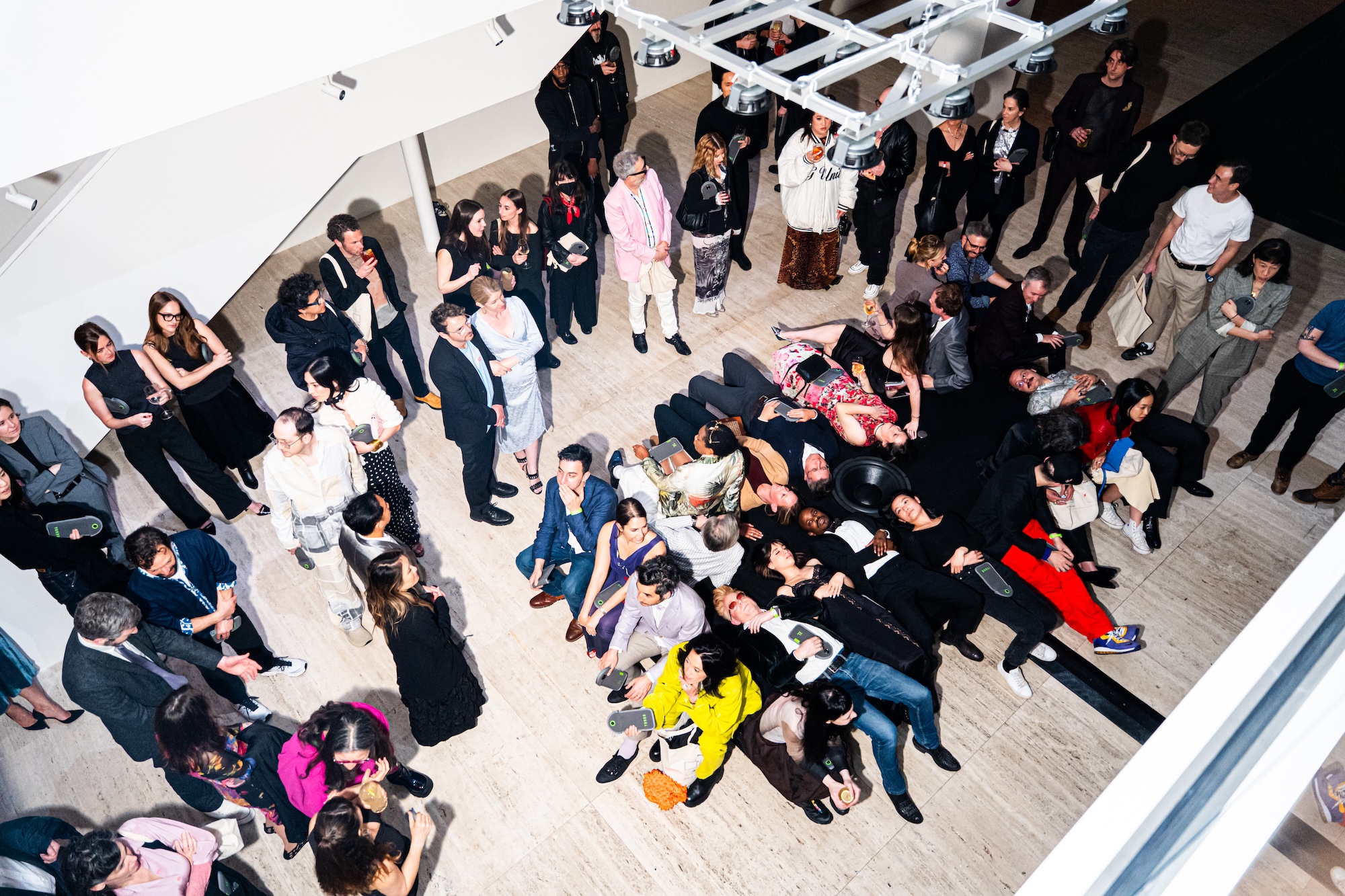
Two days after the exhibition opens, Rhizome will hold its 30th anniversary benefit at Capitale in New York on 23rd September. This year’s event honours artist and Indigenous futurist Skawennati alongside generative art innovator and Art Blocks founder Erick Calderon, with proceeds supporting Rhizome’s ongoing programmes.
The autumn continues at the expanded New Museum with an event exploring agentic aesthetics on 28th October, the latest edition of Rhizome’s long-running Net Aesthetics series, which began in 2006.
Its annual Microgrants open call will return in early October for a 13th year. One of Rhizome’s longest-running commissioning initiatives, the programme has provided many digital artists — particularly those working beyond established centres of digital art — with their first opportunity to work with a cultural institution.
Rhizome is also expanding geographically through a new City Fellows initiative, bringing regional perspectives into its online community. Upendra Vaddadi has been named the inaugural Bangalore City Fellow, with a second appointment to follow.
Its live podcast series with ArtWrld returns in September, while Rhizome will continue mentoring the Art & Code Track at NEW INC, where it has been a track partner since 2019.
The anniversary programme concludes at the New Museum on 12th December with Long-term Memory: A Short History of the Internet According to rhizome.org, previewing a forthcoming anthology assembled from three decades of Rhizome’s archives.
Drawing together personal reflections, media, community listings, discussions and debates, the project promises something approaching an alternative history of the internet — told through the artists and communities who were simultaneously trying to understand, create within and preserve a rapidly changing digital world.
Thirty years after beginning life as a mailing list, Rhizome’s anniversary arrives at a moment when questions around who controls digital culture, what survives technological change and how the internet’s history is remembered feel anything but nostalgic.
MORE: @rhizomedotorg
About
Founded in 1996 and an affiliate in residence at the New Museum in New York City since 2003, Rhizome is the world’s preeminent institution for born-digital art, championing the medium through commissions, exhibitions, digital preservation, and scholarship. At the heart of its mission is the stewardship of digital art history: the ArtBase, a unique online archive of more than 2,200 works of born-digital art encompassing net art, software, code, websites, moving image, games, and browser-based works by artists across the globe. Rhizome’s digital preservation program has spent more than fifteen years developing open-source tools and systems. A highlight of which is its long-term investment in the Emulation-as-a-Service platform, which allows legacy software-based artworks to be experienced in their original context on a contemporary browser, and now offers preservation services to institutions and estates worldwide. The ArtBase is presented through online and IRL curatorial programs that surface and contextualize key projects from the history of digital art, from the landmark online exhibition series CyberPowWow to Laurie Anderson’s CD-ROM Puppet Motel, for contemporary audiences.
Rhizome’s programs span artist commissions and microgrants, the annual 7×7 conference pairing leading artists and technologists to create new work, and curatorial exhibitions presented online and at the New Museum and partner venues worldwide. Its commissions program, founded in 2001, has awarded more than 100 grants to artists including Trevor Paglen, Heba Amin, Aleksandra Domanovi?, Tega Brain, and Mindy Seu, whose microgrant-supported Cyberfeminism Index has become a landmark resource in the field.
Rhizome was founded in 1996 by artist Mark Tribe as an email discussion list among some of the first artists to work online, and has played an integral role in the history of contemporary art engaged with digital technologies and the internet ever since.
The New Museum is the only museum in New York City exclusively devoted to contemporary art. Founded in 1977, the New Museum is a center for exhibitions, information, and documentation about living artists from around the world. From its beginnings as a one-room office on Hudson Street, to the inauguration of its SANAA designed flagship building in 2007, to the OMA-designed expansion of its home on the Bowery in 2026, the New Museum continues to be a place of experimentation and a hub of new art and new ideas.