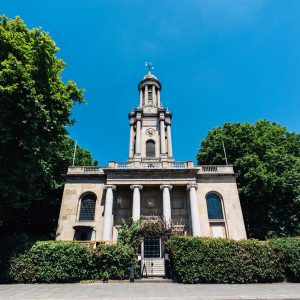
Recently, Rhizome hosted an annual conference at the New Museum spotlighting artists working within the bounds of the internet. Rhizome was founded in 1996 by Mark Tribe as an email list and has evolved into an annual conference and residencies that focus on the evolution of art and technology.
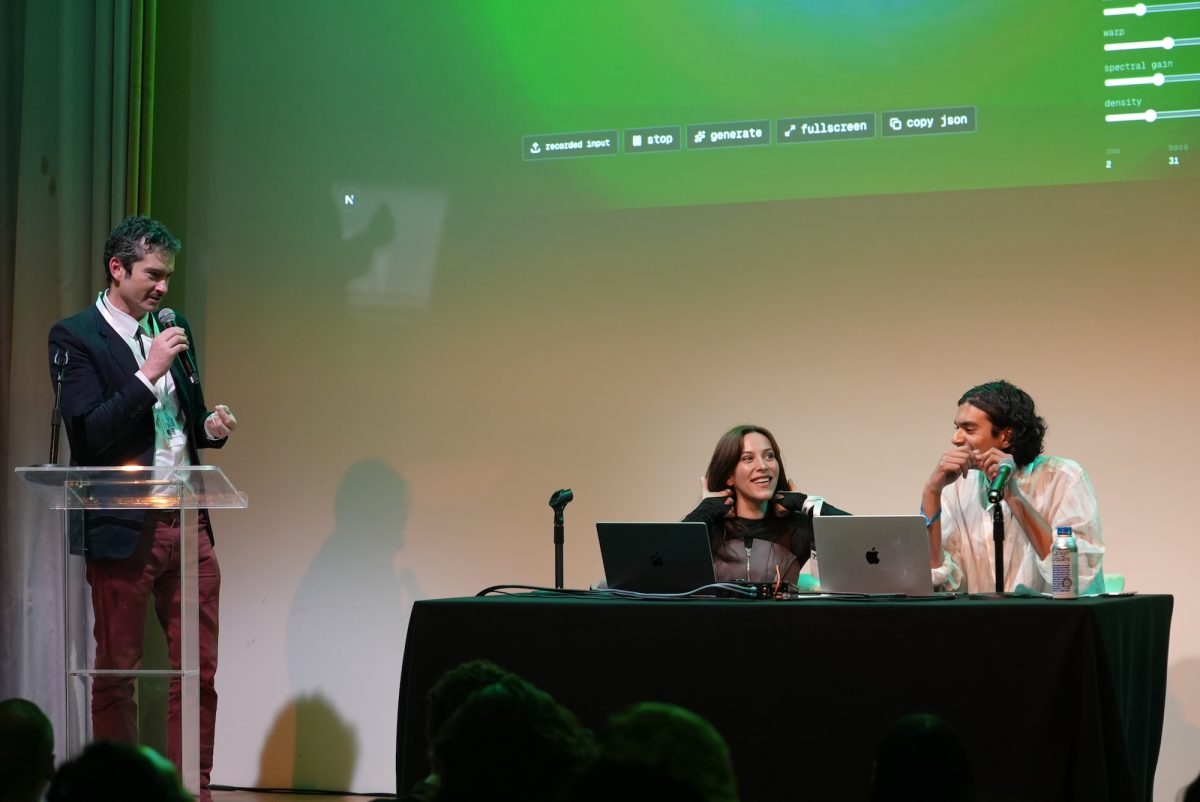
After the conference, the director, Michael Connor, sat down with me to discuss this year’s findings and the conference’s evolution over the years. Quantum, the first NFT (non-fungible token), was created at Rhizome’s conference in 2014 by Kevin McCoy and technologist Anil Dash. NFT’s then took the art world market by storm in 2021. McCoy’s work proves that this is not just a conference; it is the cutting edge of art and technology’s constant collision over the years. Rhizome created NFTs years before the art market commercialized this sector. The NFT market in 2021 was valued in the millions.
As the Director of Rhizome states, “Artists are engaging the tools of the moment.” This year’s discussion focused on combatting AI, focusing on how creativity has recently been in decline recently. Originally, the format of the conference featured artists and researchers gathering one day before the meeting. But over time, Rhizome concluded that the growth of strong collaborative efforts took time. To create flourishing creative relationships, more time and collaboration were needed for the final presentation and output between artists, computer scientists, and creative thinkers.
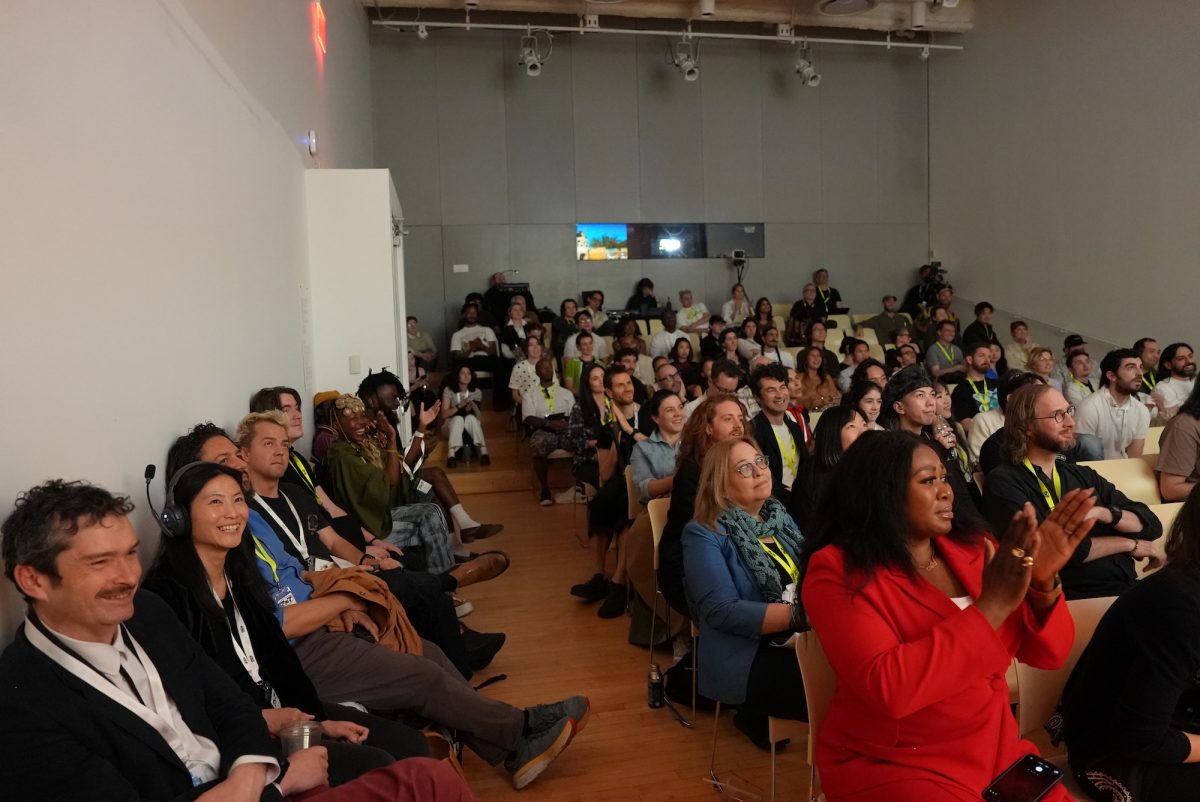
He went on to say that the discourse around AI is incredibly saturated and that more people are producing both art and media with AI. His greatest concerns are around attention regulation, which is not being discussed fully in an age where communication, art and the way we inhabit the world are increasingly digital and isolationist. As people are defaulting to these new technologies, they aren’t really thinking about the pace at which they are consuming them. This growing realization troubles us both deeply.
Connor mentioned a work project that began to blend both public and private realms of life. As people are more digitally encumbered, privacy has become a form of luxury and a rarity in the modern-day. One of the leaders of the conference chose public photos that the audience had posted and wove together a narrative based on everyone’s shared images. When the audience realized what she had done, it brought to the surface many questions about what our shared memories mean to us, as well as what privacy in the current day and age is for the average person.
He highlighted that one artist who presented at the conference was Michael Levin, the scientist from Tufts University, who described patterns within art. Levin brought up the idea that intelligence forms can be pulled from any source, including the idea that artwork could be a source for computational data, positing that art can be pattern-based. This brings another dimension to the evolving conversation between art, technology, and data. Can artwork be a source of information in the age of technology? Should artwork be reframed as a form of data? Certainly, under a different framework.
Connor felt the best way to encapsulate the conference was a quote from Container From Intelligence, which says
‘the environment is a bearer of intelligence’.
In hopes of creating a space at Rhizome, the environment is rife for intellectual discussion and collective understanding. Particularly, the next generation can grow and age in wisdom around technology and media usage.
MORE: @rhizomedotorg