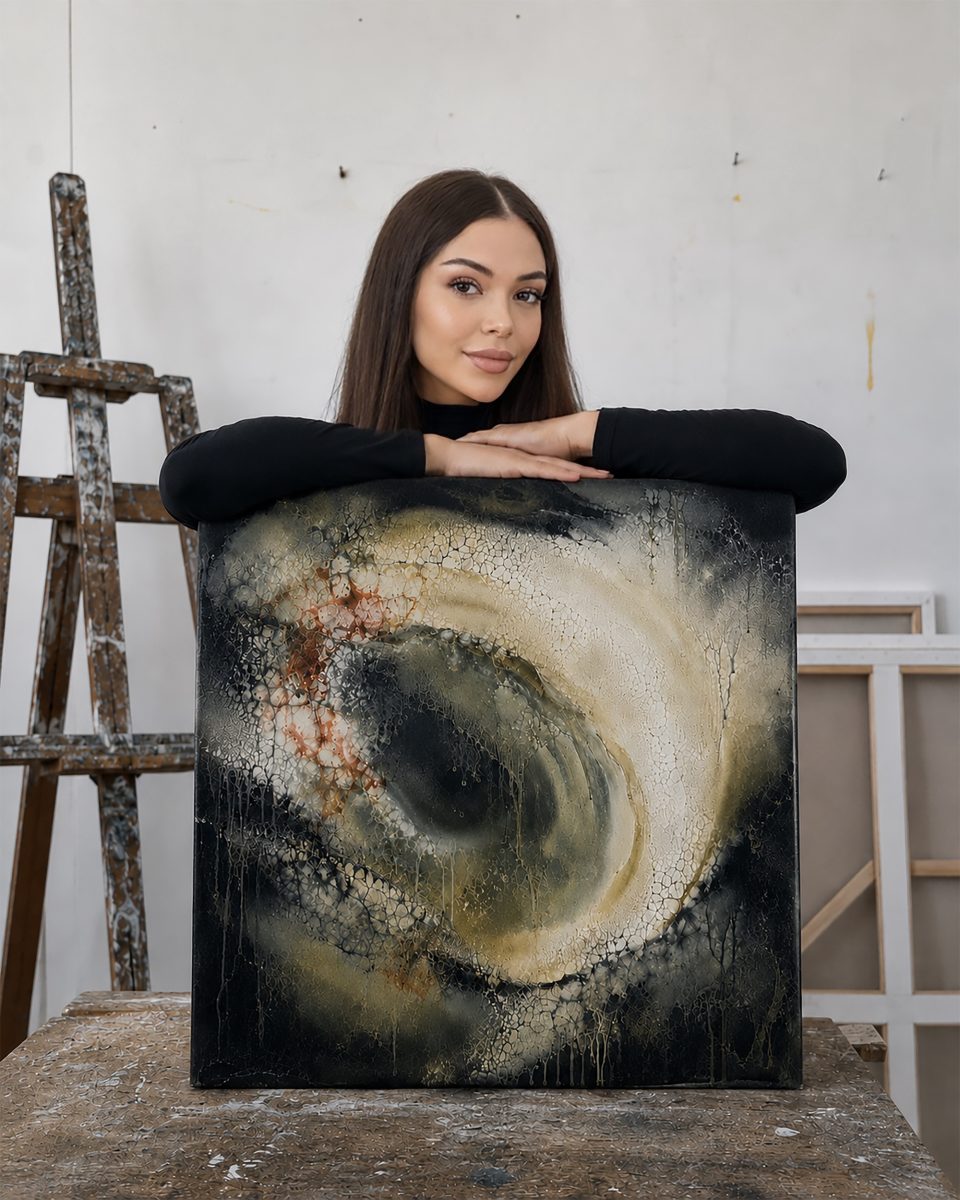
There is so much we can see and sense from the world around us, using our five senses, but there’s just as much that remains beyond our perception. A woman may appear stoic to us, but we may not know she’s deeply anxious about major life decisions; a man may appear to have it all in hand, but he may be processing trauma beneath the surface.
It’s not just how people are perceived, but how we perceive them, projecting our own thoughts, prejudices and biases onto everyone that we meet. This take on perception lies at the heart of the painting practice of Zibeyda Seyidova, inspired by the French philosopher Maurice Merleau-Ponty, who considered perception an ongoing dialogue between our lived experiences and how we perceive the world based on them.
We see this in her abstract ‘memory of matter’ series, where there is plenty of detail on the surface, with gradations of colour and fractures in the surface for us to examine. However, it’s not just about the surface but what lies beneath the surface that she’s interested in unearthing. Using earthy tones in her paintings hints at ground that must be broken to discover what lies beneath. It’s as if we’re with her in this journey as we try to dig into each work to find the hidden meaning that lies beneath.
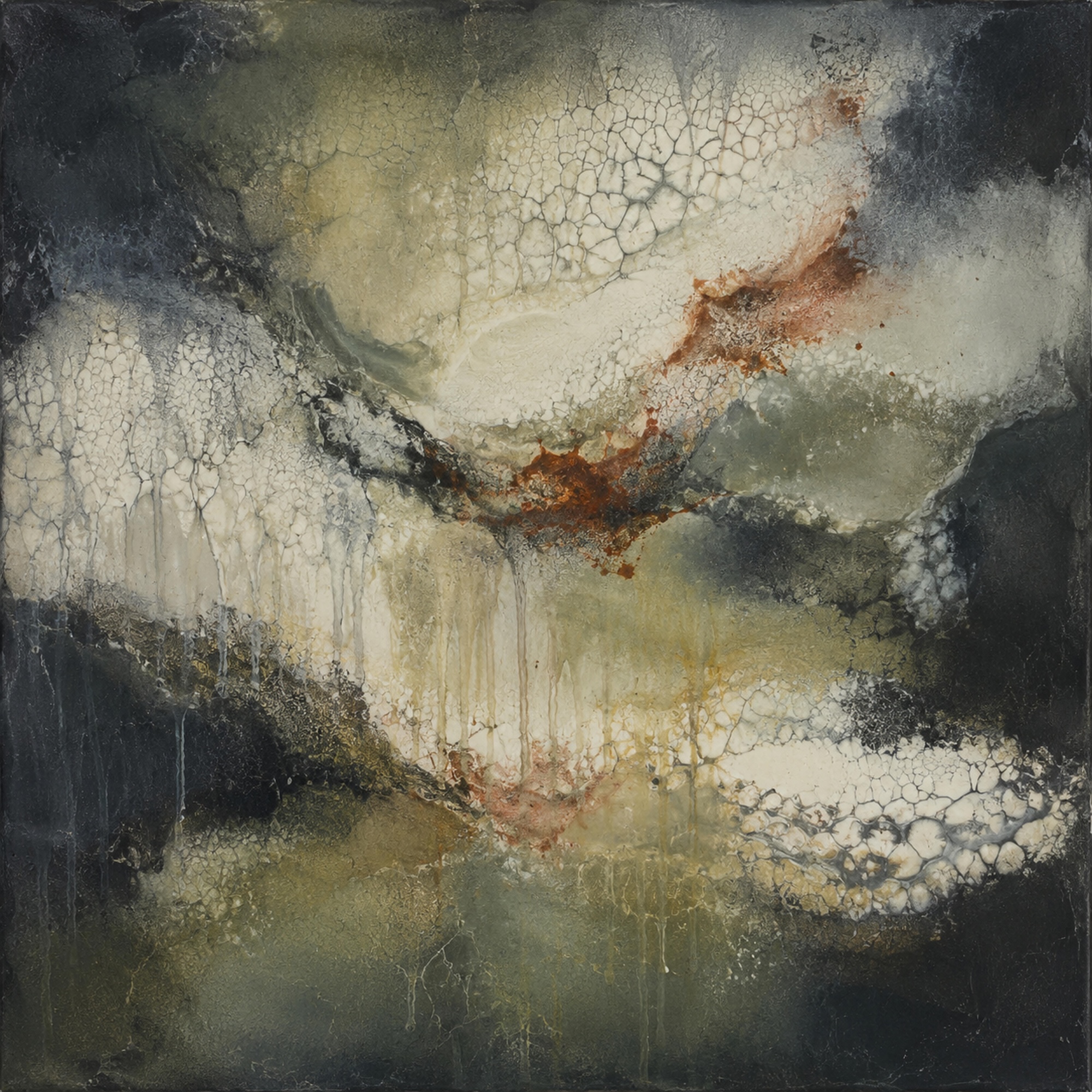
We can see parallels with contemporary artists such as Anselm Kiefer, who uses similar breaks in the surface of paintings on themes of war and history in his large-scale works, and while his work is more pointed, it also contains ideas around memory and how the past is perceived, which connect with Seyidova’s practice. We can also see similarities in the gestural elements of Julie Mehretu, who deconstructs ideas and representational images until they form abstract drawings, creating works that incorporate layers of places and memory, in a style that resonates with Seyidova’s.
Looking further back in art history, we can also compare her work to that of the Abstract Expressionists, such as Helen Frankenthaler, Clyfford Still, and Lee Krasner. Like these artists, Seyidova is not trying to portray a particular image but to convey a feeling, an emotion triggered in that moment. As with these great painters, it’s not simply about what the artist wants you to feel; rather, in keeping with Merleau-Ponty’s and Seyidova’s philosophies, we bring our own perceptions to the works.
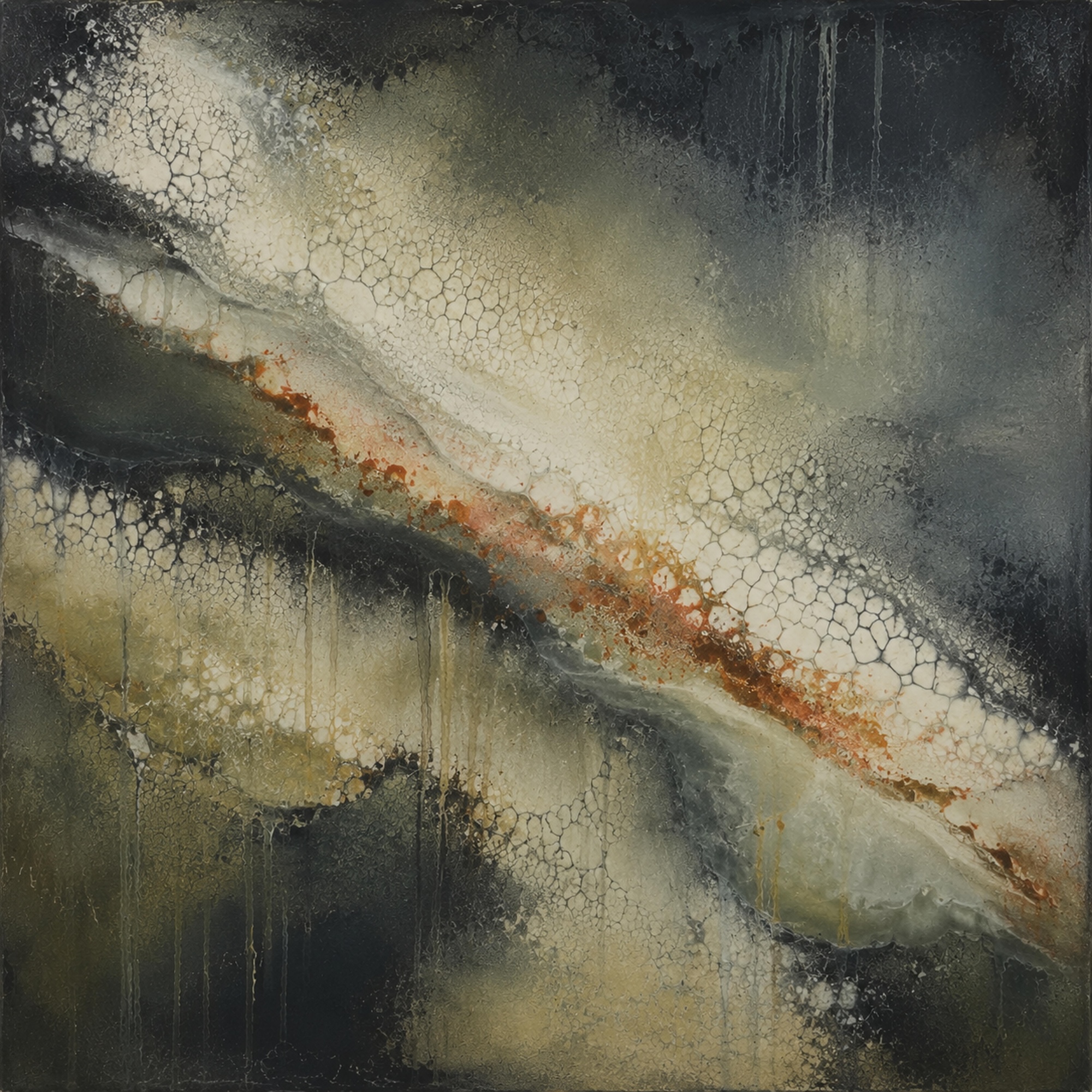
When we recognise elements in her work, is that coming from her or from our perception of reality, and will this vary by time of day or year? As the artist says in her own words: “I do not depict what can be seen. I work where the visible ceases to be an image and becomes memory.”
The contrasts between light and dark are abstract, but they draw on a deep history in art, stretching from the chiaroscuro of Caravaggio and Artemisia Gentileschi to more recent painters of light, including Vilhelm Hammershoi and Anna Ancher. We see this in her more figurative works as well as in her more abstract pieces.
Just as all perception is a hybrid of the views of the observed and the observer, Zibeyda Seyidova’s works also resist a simple narrative. It’s by staring into her colours, lines and breaks in the surface that we start to understand something about the painting and about ourselves.
More information on the artist may be found on their website.
All images are copyrighted and courtesy of the artist.