I enjoy it when an arts thinglyness demonstrates what it says it’s doing. Such ‘formalisum’ is rare in artworks; rarer still in art events. Crossings, the second chapter in YDP’s series of performance afternoons titled Living, Rehearsing, is an example of my formalist love.

Guest curated by Zhuo Mengting, with YDP’s Erin Li and Billy Tang, Living, Rehearsing uses the physicality of YDP’s home – an 18th-century townhouse in Bloomsbury – to ‘test the possibilities’ of how we might ‘reconfigure and reimagine our lives as we venture into the unknown each day’. Treating the idea of rehearsal as a metaphor for diasporic life – the daily impact of assimilation and a life lived code-switching between various points of sociocultural dwelling – each chapter brings together a range of artists from the greater Asia region – Japan, China, through to the Middle East. As a curatorial prompt, each artist was asked to interpret the concept of ‘rehearsal’, with their subsequent performances relaying their personal perspectives of this. (To note: the artists were specifically asked to draw upon their own experience of migration, contingency and how they navigate the sociocultural thresholds that shape their lives.)
Unlike the programmatic structure commonly used across the art world (and beyond), where an artist is given a slot in a line-up defined by the singularity of a creator, Crossings iterative programme refracts the ‘perpetual movement’ embodied by human bodies as they shift and change over space and time, to demonstrate the innate fluidity of existence – the care and multiple co-contingencies involved of being alive. Bringing together KIMVI, Woody Kwong, Rie Nakajima, Osamu Shikichi, Swilipino, and Abbas Zahedi with Dave Meckin in four changing Variations, the structural form of Zhuo, Erin Li & Billy Tang’s programming breaks with rigid art-world norms, allowing a more collective mode of liveness to emerge. That is, here, as the constitutive parts of the event – artist, performance lineup, setting and audience – shift across the day, a shared sense of agency is provoked.

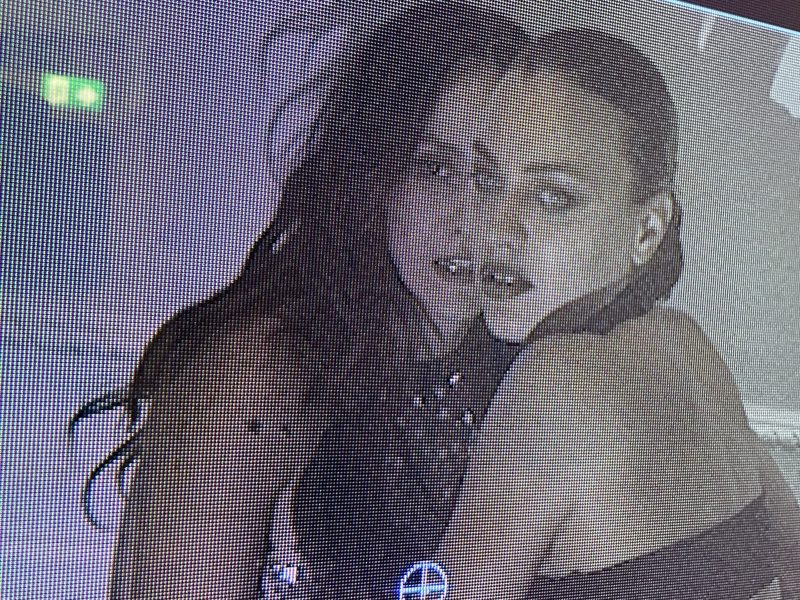
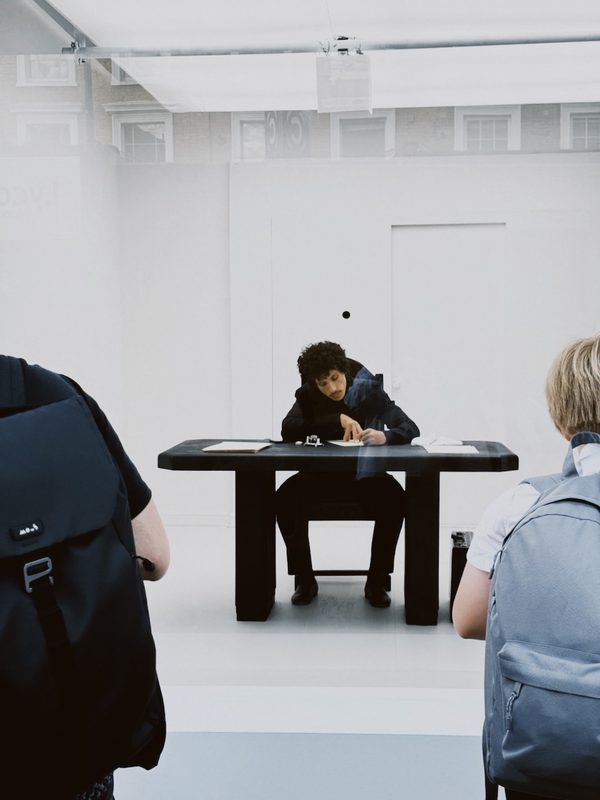
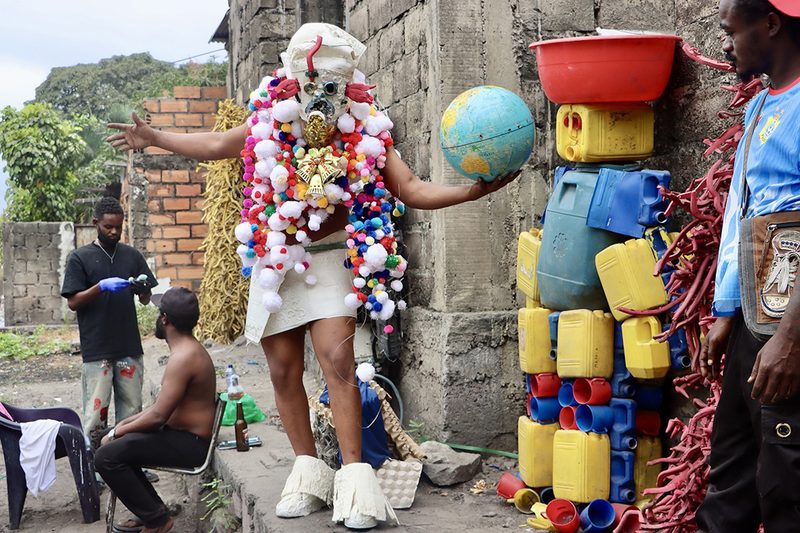
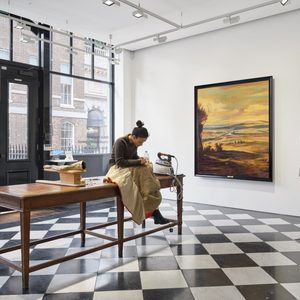
As alluded to above, the performances that constituted Crossings were grouped and regrouped over the afternoon in four Variation line-ups. This provided each artist multiple opportunities to perform their work, while also asking them to rapidly adapt this to the changing conditions of the day. At its core, this approach sparked serendipitous conversations between artworks – between artworks and viewers, amongst different viewers also. For example, the asymmetric click-clangs produced by Rie Nakajima’s Tinguely-like orchestra of domestic object assemblages chattered nicely with the toe twitch to total body shimmers seen in Woody Kwong’s semi-site responsive dance – it was as if Kwong became the bodily vessel for Nakajima’s work as they responded to the architecture of YDP’s space. The formal dialogue I heard in this translation rang loud in my ear when, during another of the day’s Variations, I encountered Abbas Zahedi and Dave Meckin’s playable performance. This participatory work transformed one of YDP’s rooms into a percussive instrument, with the latent heartbeat of the space only being heard once the audience broke with the stand-offish decorum typical to art viewership and started tapping the space’s white walls arhythmically.

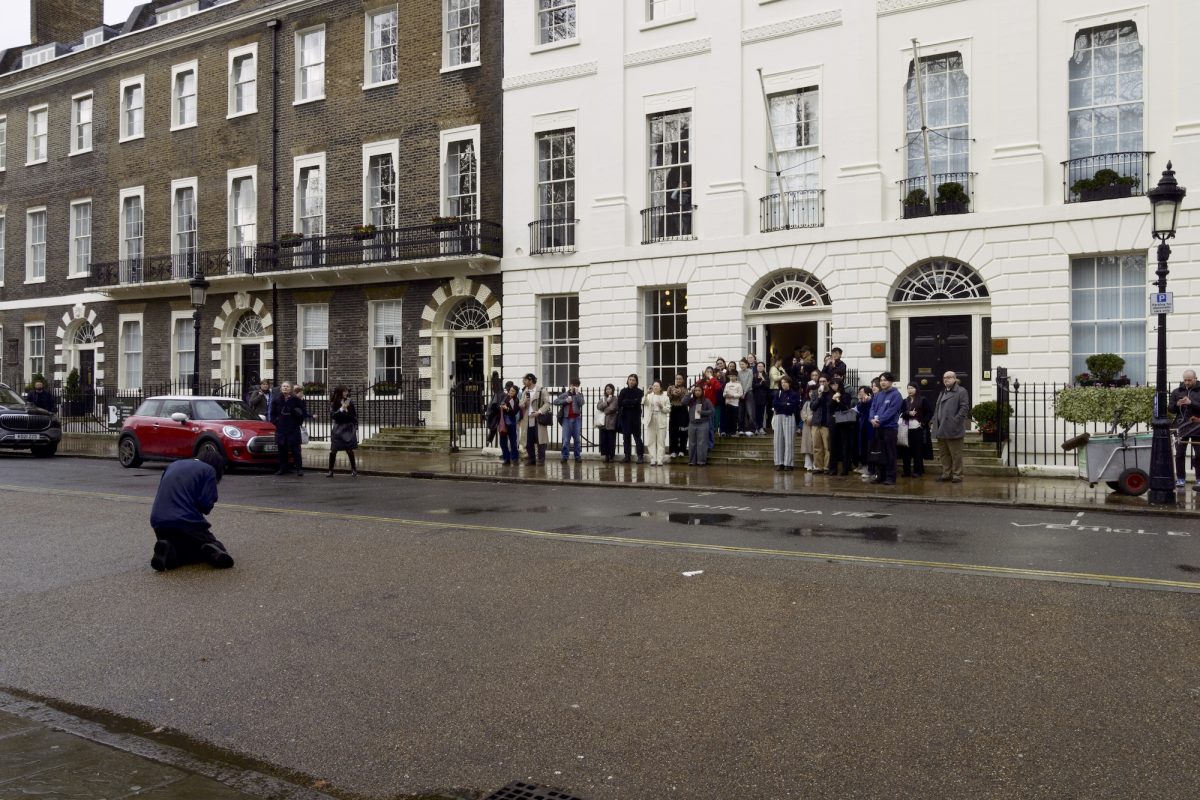
For me, Zahedi + Meckin’s reprogramming of art’s normative spatial and social structures – a site-responsive click-clang in itself, a la Kwong – resurfaced in KIMVI and Osamu Shikichi’s performances. Specifically, both these performances seemed to critically dwell on the relationship between a body and the hidden structures which influence it. KIMVI’s durational performance sees the artist standing in YDP’s courtyard, holding a large square canvas above her head, becoming subject to the weather – London rain. With arms shaking, KIMVI slowly lowered the square, holding this over an antique oil lamp to scorch its surface. This gesture both exposes the labour entailed in art-making as well as how external life forces are often overlooked in the sacred space of art. Shikichi’s slow-moving dance work operates similarly. Seemingly informed by interactions with hand sculptures cast in ice and blurry iPhone footage of hands (his own and Kwong’s), here Shikichi flows across the performance space, before striding out of the building, kissing the windows au revoir with a bloodied mouth. Arriving on the street, Shikichi stands, coughing up a chain. Read critically, as a provocative gesture, Shikichi’s performance malforms processes of bodily assimilation – how a self changes the way of moving through the world to appease certain visions of how they should be.
As a live rehearsal – a practice or trial run – I felt a visceral sense of disorientation as Crossings unfolded. Far from jarring, this feeling made me feel part of the event’s making, like a co-performer in the reconfiguration of the everyday at Crossings’s core. Unchained from the nullifying structures of the art world, Zhuo, Erin Li & Billy Tang’s programming is a wonderful demonstration of artistic formalism – how criticality comes to life through a careful cohesion of constituent parts. To think this as a metaphor, it seems poignant to consider how such acts of co-caring could reinvigorate the structures of social life, allowing us all to play an equal part in the creation of a future rooted in perpetual possibility.

Living, Rehearsing … Chapter 2: Crossings YDP, London, Saturday 7th February 2026 YDP
Here’s looking forward to YPD’s next living rehearsal (chapter 3, Reverberance takes place on Saturday, 28th February).
All images Crossings, Chapter 2 of Living, Rehearsing…, performance series at YDP, 2026. Photography by Anne Tetzlaff. Image Courtesy of YDP.