Einspach & Czapolai, hardback 320 pages, £45, contributions by Dávid Fehér, Neal Brown, Dan Fox, Frederico Campagna, Zsikla Monika
My ‘Book of the Month’ may seem at the high price end, but is arguably cheap given the production values of an outstanding monograph on Peter Peri, with a cover that subtly imitates one of his paintings, 252 mostly-full page illustrations, four substantial essays and an interview. The best way to obtain it is to visit a show of recent work by Peri, freely viewable at the Liszt Institute, the Hungarian Cultural Centre a stone’s throw from the National Gallery. The book will be for sale there until 27th February (alternatively DM @peter___peri on Instagram).
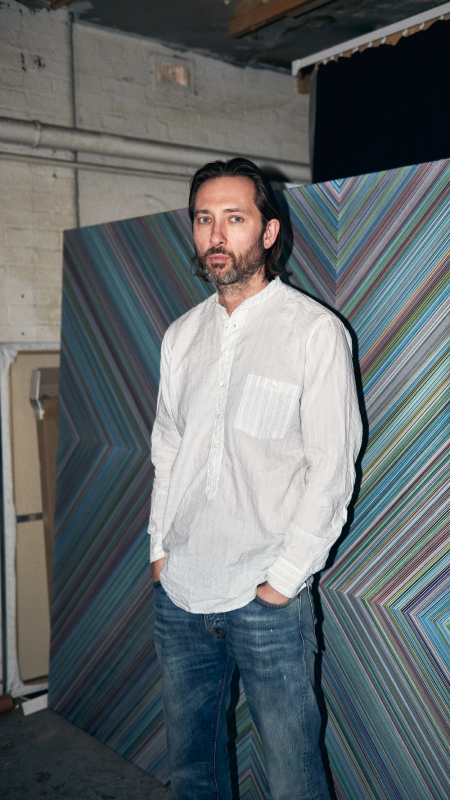
Of course, the best production is only of interest if the art is worth pondering – but here, too, the book scores. An unusual background feeds into Peri’s work: he is three quarters Hungarian, but grew up here because his grandfather, the renowned constructivist artist Peter Laszlo Peri, fled Berlin for London in 1933 after a run-in with the Gestapo. Peri manages his grandfather’s estate and makes the most of the opportunity to feed such an artistic heritage directly into his own work. Equally unusual is that Peri was a sufficiently provocative graffitist in the late 80’s to have spent time in prison for it, and that also carries a legacy in the now-subtle defacements incorporated into some of his work – ‘hair in the soup’, to adopt an attractive Magyar idiom.
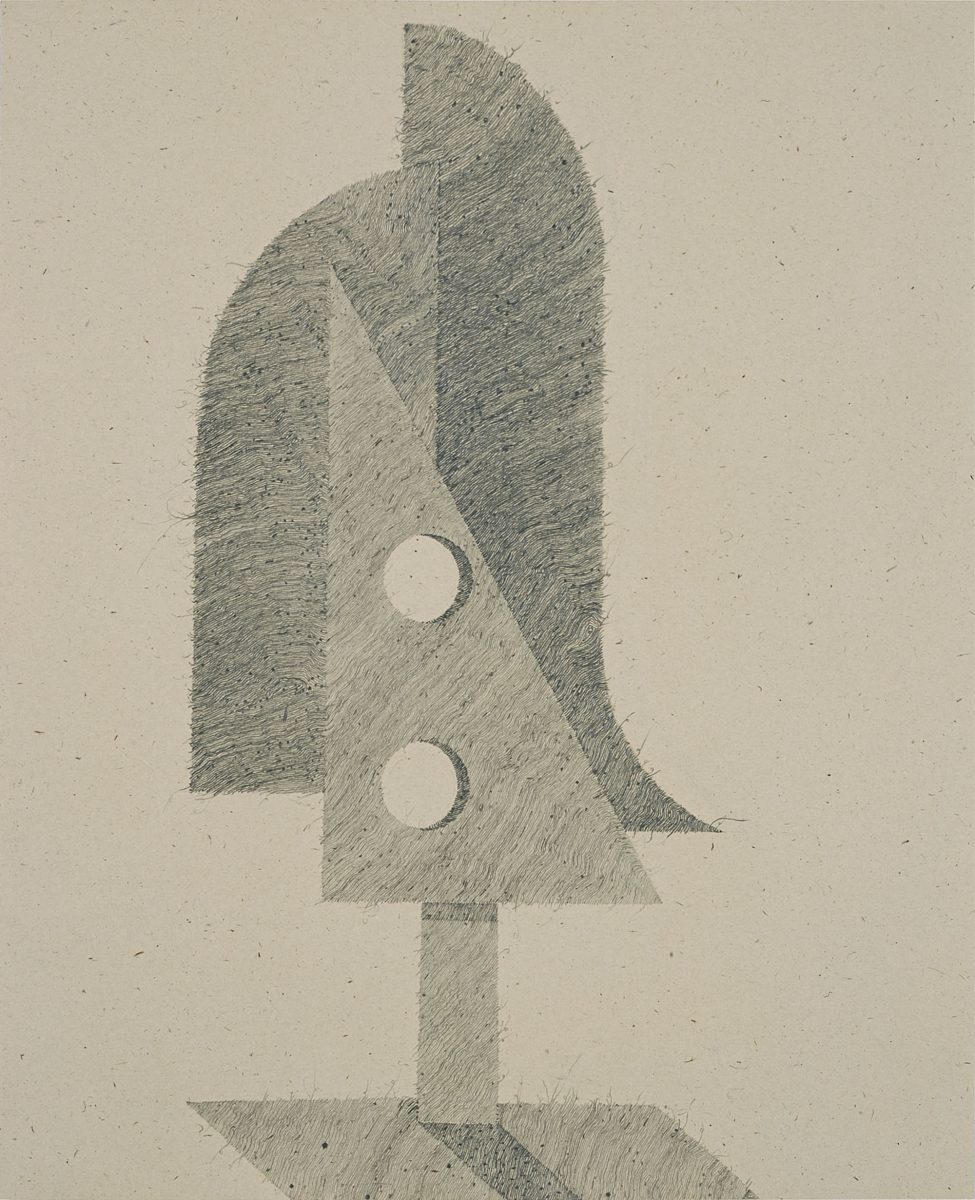
Out of this emerges what Neal Brown describes as ‘an almost religious commitment to making hyper-intense works articulating a psychic vision’. Peri has found distinctive line-based visual languages to do that in both painting and drawing: the former typically feature fragile architectures of wire-taut parallel lines that operate between abstraction and diagrammatic representation; the latter see thousands of curling, creeping pencil lines coalesce into shapes. As Dan Fox describes it, the ‘trademark Peri technique’ is that the pencil marks are hard at the top edge of each form, but at the bottom they trail off like unruly strands of hair, and ‘these fades and straggles create the effect of light’ such that ‘the weather gets into the work’.
That is to deal with form, but there is also plenty of content in Peri’s work, and the book discusses references to the historic Avant-garde, Chinese landscape painting, psychoanalysis and esoteric traditions. All that remains sufficiently under the surface to act indirectly, yet somehow spiritually: one of Peri’s teachers, Brian Dawn Chalkley, termed that ‘a residue of intensity’ at the book’s launch event. There isn’t space to chase all that down, but I’ll end by allowing Peri himself to describe what he’s about in the drawings of his ‘Head’ series: ‘I have always been attracted to those paintings where there is a circle – a moon or a window, for instance – that functions like an eye… You have the idea that the artist has left an impersonal version of himself to carry on looking back out at you. It is this desire for the thing you make to somehow represent your effacement. And it is not like self-portraiture because it bypasses representation and uses the idea of a hole in representation, so you are in a continual circular movement – looking through the hole to see your own gaze returned, almost as if the artist haunts the picture from all of its apertures.
I could, incidentally, have chosen a more modestly-priced book, as my own ‘Paul’s Galleries To Go’ has just been published by FAD Magazine at a mere £5. There’s a launch for that on Saturday 7th February, 2PM at IONE & MANN , 1st Floor, 6 Conduit Street, London W1S 2XE
Paul Carey-Kent selects a ‘Gallery of the Month’, a ‘Show of the Month’, a ‘Work of the Month’ and a ‘Book of the Month’ for his weekly column in FAD.