Entering the exhibition To the Nameless at the London Design Festival, the space of Fitzrovia Gallery appeared exceptionally clean. Not far from the entrance of the exhibition, a simple display stand quietly caught the attention of the visitors. The attraction was not derived from the spectacle created by the works, but from a subtle sense of presence. On the display stand were three file folders, so plain that they seemed almost ordinary. They looked like they came from some administrative archive: anonymous, sealed, and unremarkable. However, when the visitors approached and attempted to touch them, an unexpected transformation occurred. The surface of the file folders gradually revealed text upon being touched. It was ink activated by the temperature of the hand – the most human contact, awakening the hidden language that had been concealed.

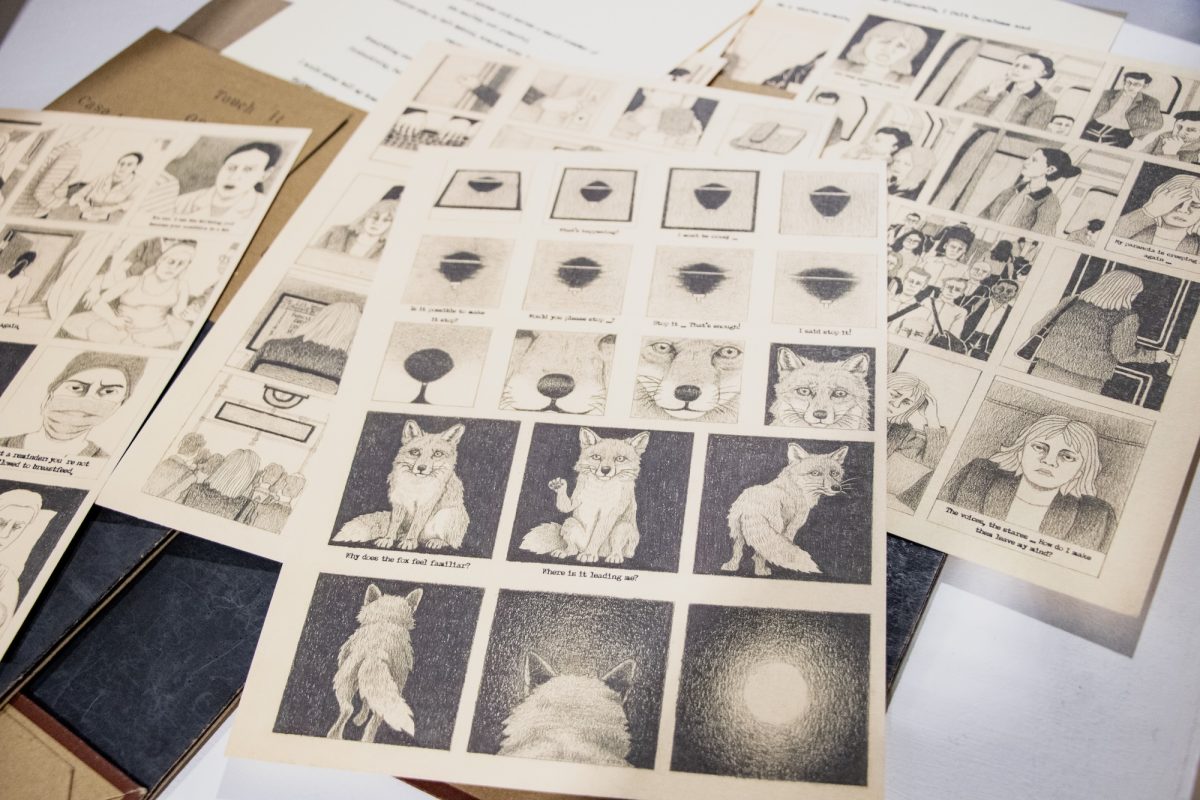
This is the interactive visual archive created by Ziyuan Wang –The Unseen The Unheard. It does not announce itself with spectacle or noise. Instead, it operates with patience — asking the viewer to slow down, to feel before understanding. Each envelope contains stories of people living with HIV and depression in the form of painting. They are the communities made invisible by fear and moral panic. Their experiences are hidden beneath the heat-sensitive ink on the surface of the envelope, and can be made visible through touch. This makes the act of contact itself a form of revelation.
Currently, interactivity is often closely linked to spectacle and dazzling technology. However, Wang’s works appear rather simple. His ‘archives’ are not digital; they have a human scale. The three archive bags need to be activated by touching. The audience’s behaviour becomes part of the grammar of this artwork.The Unseen The Unheard presents not just archives, but an encounter. ‘Archives’ here are redefined; they are no longer a cold container for storing memories. When people’s hands touch the surface of the archive bags, the text emerges. However, this emergence is temporary; it reappears after the heat subsides. The emergence and disappearance of the text constitute the appearance and disappearance of understanding, just like society’s attention and forgetting towards marginalised groups.
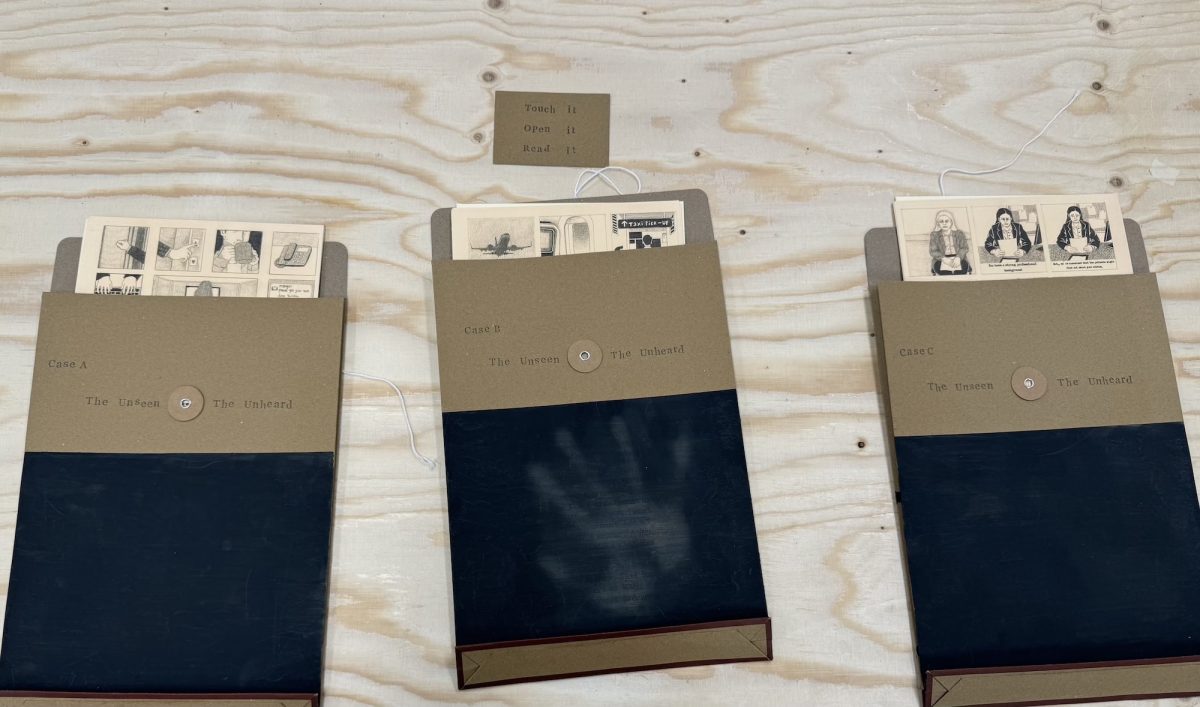
Wang calls the work ‘a non-functional system of empathy’. The phrase echoes Derrida’s Archive Fever— the idea that archives are not neutral storage devices but emotional and political instruments, capable of both preserving and suppressing memory. Wang reverses this logic: his archive is not about control but about vulnerability. It depends entirely on the viewer’s participation. Without warmth, it remains unreadable; without care, it stays silent.
The Unseen and the Unheard
The stories contained in these folders tell the tales of those who have become metaphors due to illness. Just as Susan Sontag discussed in her book Illness as Metaphor, society rarely allows diseases to retain their biological characteristics; they turn into moral narratives, symbolizing weakness, contagion or shame. Wang attempts to counter this mechanism through his works. The artist does not speak on behalf of these people with images, but creates the possibility and space for listening. The audience’s hands become a medium – only when you truly approach, touch and give warmth, will those stories emerge. Empathy here is no longer just an idea, but a practical action.
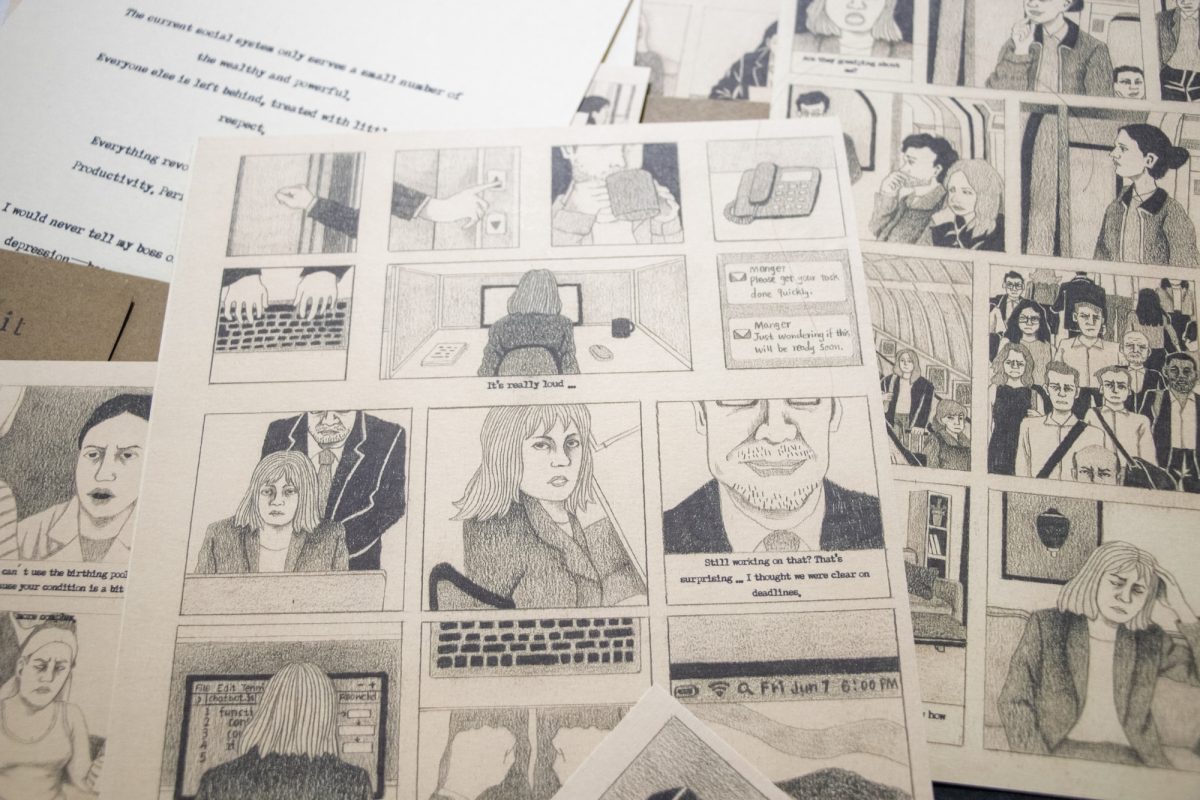
Unlike art that seeks to dramatize pain, The Unseen The Unheard maintains a fragile equilibrium between distance and closeness. The images and words in the painting do not convey repentance, but rather a sense of existence. They speak in the modest tones of documentary Their fragility is their resistance. While rejecting excessive aesthetic expression, Wang retained the humanistic qualities of the subjects he depicted. He refused to embellish or whitewash their experiences in order to gain attention. Instead, he merely wanted to present and showcase their humanity through his works.
Between Anger and Care
The origin of the work is a sense of anger. Wang said frankly:
“Because of my nationality and race, I sometimes feel neglected in the UK.”
It was a subtle and hard-to-describe marginalization. But precisely because of this personal experience, he was able to empathize with the ‘inequality visibility’ in society. Later, through a friend who worked in the NHS, he came into contact with some patients and heard their stories. He realized:
“What truly causes pain is not only the disease itself, but the stares and rejection from society and family.”
At that moment, his anger transformed into a deeper emotion – care.
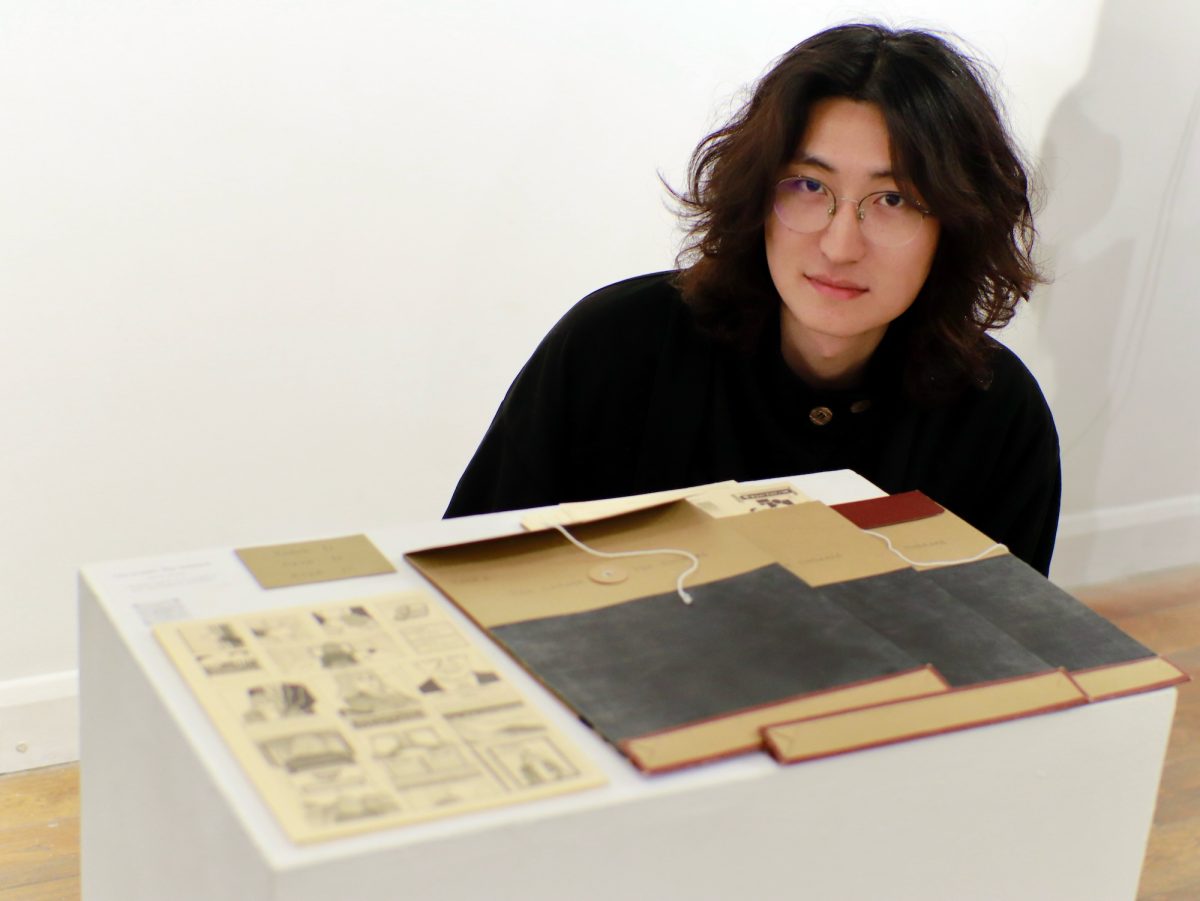
From ‘being ignored’ to ‘listen’, this transformation constitutes the ethical foundation of the work. The work does not only speak on behalf of other but also it creates a space where others can be heard. Its tenderness contains strength – not compromise, but a conscious restraint. Wang does not advocate using slogans to forcefully express his ideas; instead, he hopes to establish an architecture that attracts attention. His art does not blame anyone; rather, it is an invitation. He hopes to offer a possibility of being seen. However, beneath its gentle appearance lies criticism – an unspoken accusation of the phenomenon of how society organize.
Touch, Temperature, and Time
The mechanism of the work seems simple: heat-sensitive ink reveals when touched. However, this manifestation is temporary. When the temperature dissipates, the text disappears again. The appearance and disappearance form a cycle – this is a metaphor about ‘time’. Empathy also has a temporal dimension. People are often touched at one moment, and then quickly forget about it. Wang uses this ‘physical cycle’ to remind the audience: If understanding lacks continuous attention, it will also fade away like the temperature dropping. In this era dominated by digital speed, this ‘delayed viewing’ itself is a form of rebellion. Viewers have to wait, have to stay, and have to take the time to ‘see’.
In addition, touching itself is also an adventure. This requires the courage and trust of both parties, especially in a global culture and atmosphere where there is a tendency to maintain distance (whether from diseases or from differences). That means people need to cross boundaries – the fear and prejudice of illness. As the artist said, “Only when people are willing to approach can understanding begin.”
Between Art and Ethics
Multiple artworks of social engagement fall into the trap of ethical clarity and provide empathy in the form of spectacle. In order avoid this situation, Wang acknowledges the representation’s paradox. Namely, showing pains also means aestheticizing it. In addition, he suggests withholding to make the stories emerge naturally via the engagement of viewers.
Such restraint ethics expands to his materials. As an easy-to-erase medium, pencil embodies the instability of voices of the subjects. Due to the fragility, the paper resists monumentality. It is believed that memory can be vulnerable and dignified. In an era of trading digital art in perpetuation, Wang’s archive regards impermanence as a truth.
Meanwhile, the installation may have a conversation with artists such as Felix Gonzalez-Torres. Their minimalist works transform vulnerability and intimateness into political actions. Similar to Gonzalez-Torres, Wang shifts simple gestures (e.g. waiting) into unity rituals.
Echoes in the Gallery
The exhibition won strong responses. A female suffering from a skin disease mentioned that the works reflected her shadows. Even though her diseases were different from others in the archives, she could strike a chord with the discrimination posed by the diseases. Another female with HIV admitted that she felt to be “seen again” via the drawings. Besides, a nurse who brought convenience to initial encounters of Wang said: “what you do is right. This may help comfort them a bit.”
Under these testimonies, the boundary between audiences and artwork gets blurred. These communications enable the continuation of the project. As a result, it turns into an open system. With every conversation, another element is added to the archive.
Wang stand close to the entrance and watch visitors approaching the table. From initial hesitation and uncertainty, they become curious and reach out fingers. Then, blurry sentences emerge for a while. Some people show smiles, while others keep silence, as if they have just heard vulnerable things. That moment, the gallery turns into a space for listening.
The Quiet Radicalism of Tenderness
In the work of Wang, tenderness is a method rather than the sentimentality. In a fast-paced world, he practices patience, selects to slowly paint and listen, and allows the slow emergence of work. As revealed by his work, empathy should be practiced, rehearsed, and renewed. As demonstrated by The Unseen The Unheard, gentleness can be a radical action to challenge the cold technologies and prejudice.
More importantly, the project of Wang embodies the artist’s position in social stories. He shows himself as participant to listen, record, and share. Owing to this humility, the work becomes credible. Similar to the viewer, the artist becomes a part of the same fragile care ecosystem.
Toward Understanding
In The Unseen The Unheard, there is no simplification. Instead of providing resolution, it establishes a small space for attention. In this space, empathy can stay prior to disappearance. Under neutral light of Fitzrovia Gallery, the three envelopes are placed quietly on the exhibition table. Without proclaiming, they just wait. Faint fingerprints (warmth traces from lots of hands) are still left on their surface. Temporary understanding is witnessed silently.
Without spectacle and great discourse, there are merely three envelopes, some drawings, and a quiet conviction. However, some grand things are hidden in their restraint. It argues for the touch value, listening need, and courage for truly seeing another human.
As shown by Wang’s archive, art does not always need to be heard through shouting. At time, the most powerful stance is just to listen and to keep listening despite the fading of warmth.
Without spectacle, there is just honesty. Under that quietness, Wang claims that true listening starts from courage rather than sympathy.
MORE: @wang_96_7