Oxford (like Cambridge) is a much-visited city that has plenty of art: in traditional and modern museums, attached to its colleges, round and about… Oxford also has an art fair, the interesting-looking ‘Depot’, which ran 26th-28th Sept this year, a week too early to coincide with my visit, which was tied in to the opening at Modern Art Oxford. Here’s what I was able to catch:
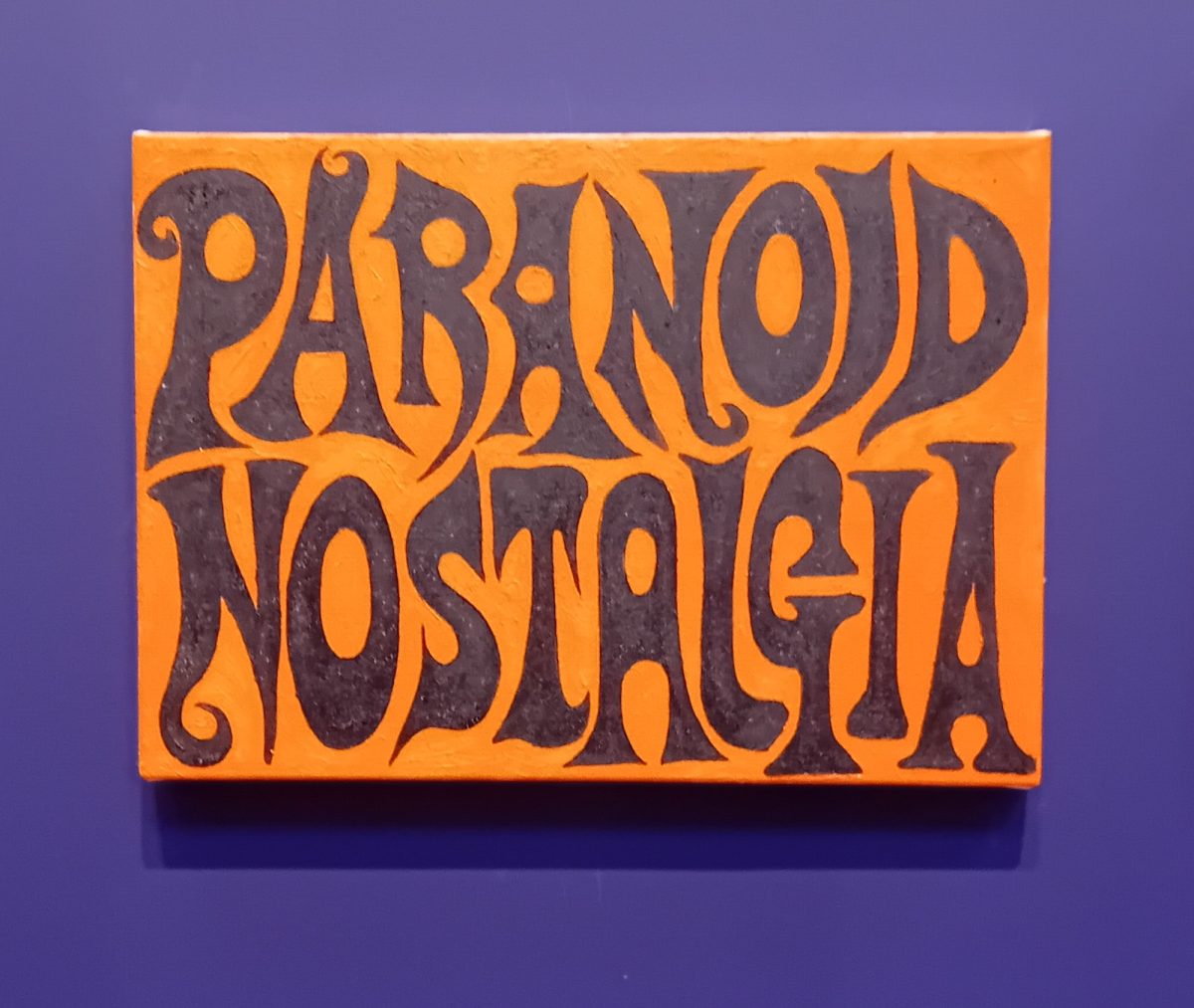
Modern Art Oxford has added internal walls to maximise the space for ‘Prophetic Dreaming’, a remarkably comprehensive retrospective of Suzanne Treister. There’s plenty to see and think about in her characteristic multi-work projects which, in the gallery’s words, ‘examine emerging technologies, exploring fictional worlds and unconventional narratives to reveal the hidden structures of power, identity and knowledge that underpin contemporary society’. I recommend a full visit, the comprehensive catalogue and – for the recent work – my interview with Treister at Artlyst. ‘Q: Would you recognise a Virtual Paradise? Painting from within the Virtual Castle: Paranoid Nostalgia’, 1996, works nicely as a mysterious text painting, but it’s also part of a series of paintings imagining a hypothetical VR world in which, says Treister, ‘reality is upended, perception expanded and time and space suspended, where love and sex are to be found in the coding of a text within a computer generated morph… Will we find ourselves in states of perpetual paranoia, of paranoid nostalgia and/or perpetual excitement, and what will be the nature of virtual love? What might a virtual paradise be, and how will we navigate it?’
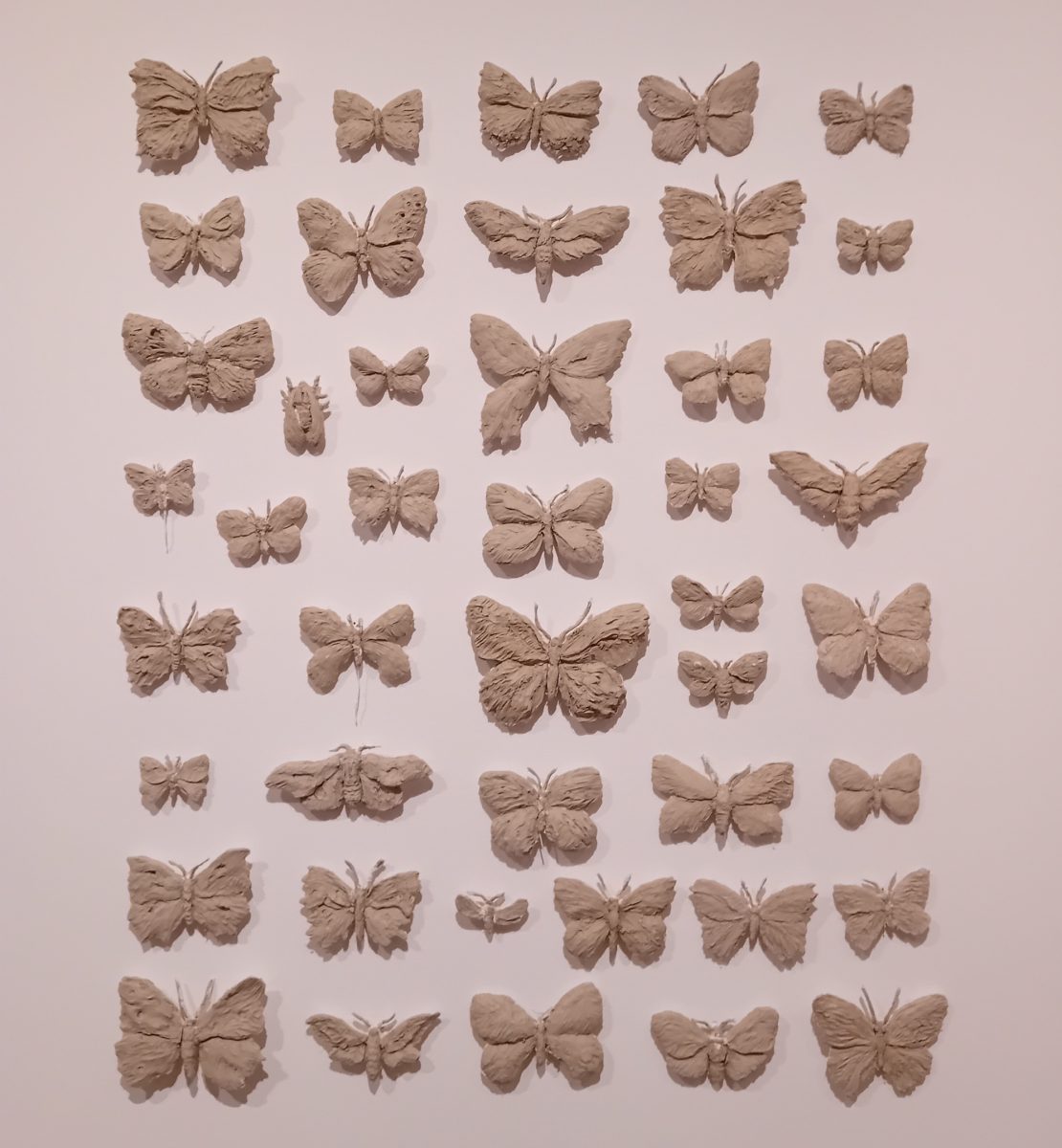
Daphne Wright’s display at the Ashmolean Museum includes a series of wall-hung sculptures that derive from collectible posters that were once given away with The Guardian newspaper – and hung on the bedroom walls of her children. Wright has turned them into a series of sculptures made of unfired clay, as if the illustrations are on their way to coming to life. However, these strangely solid butterflies have lost the distinct markings and colours that were the original subject and purpose of the image. We are used to artists making objects dysfunctional: here Wright is making an image dysfunctional by turning it into an object.
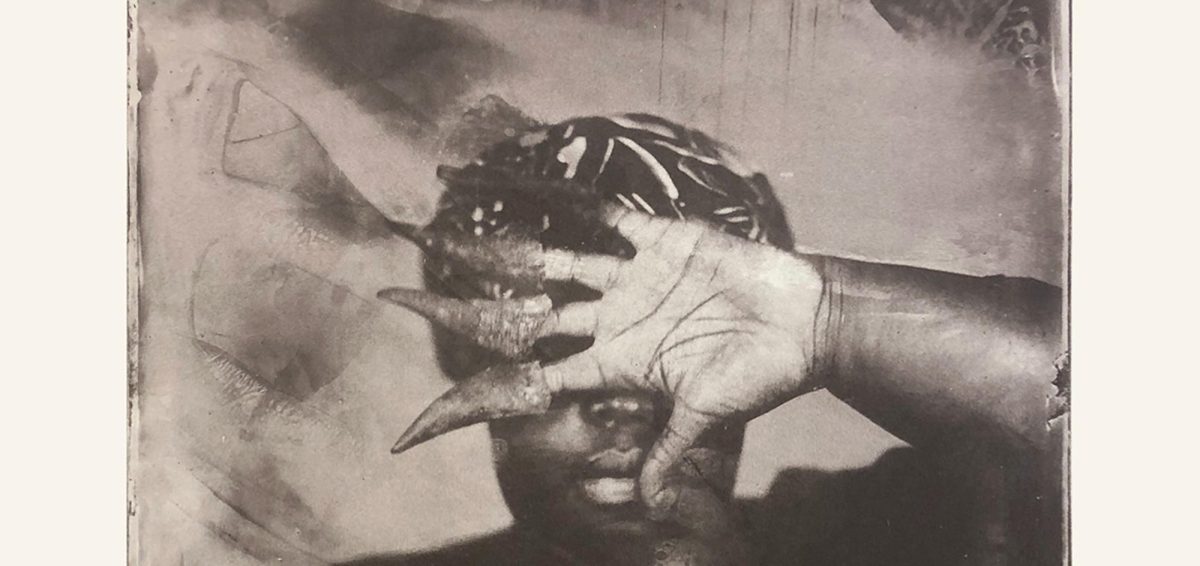
The Pitt Rivers is a packed and divertingly eccentric anthropologically-based museum with a worthwhile programme of special exhibitions. The upper gallery features a series of nine silkscreen prints by Khadija Saye (1992-2017), exploring her fascination with the ‘migration of traditional Gambian spiritual practices’ that formed a part of her childhood experience growing up in London with Gambian parents. They’re scans of the original tintype photographs by an artist who has come to some prominence after dying in the Grenfell Tower fire.
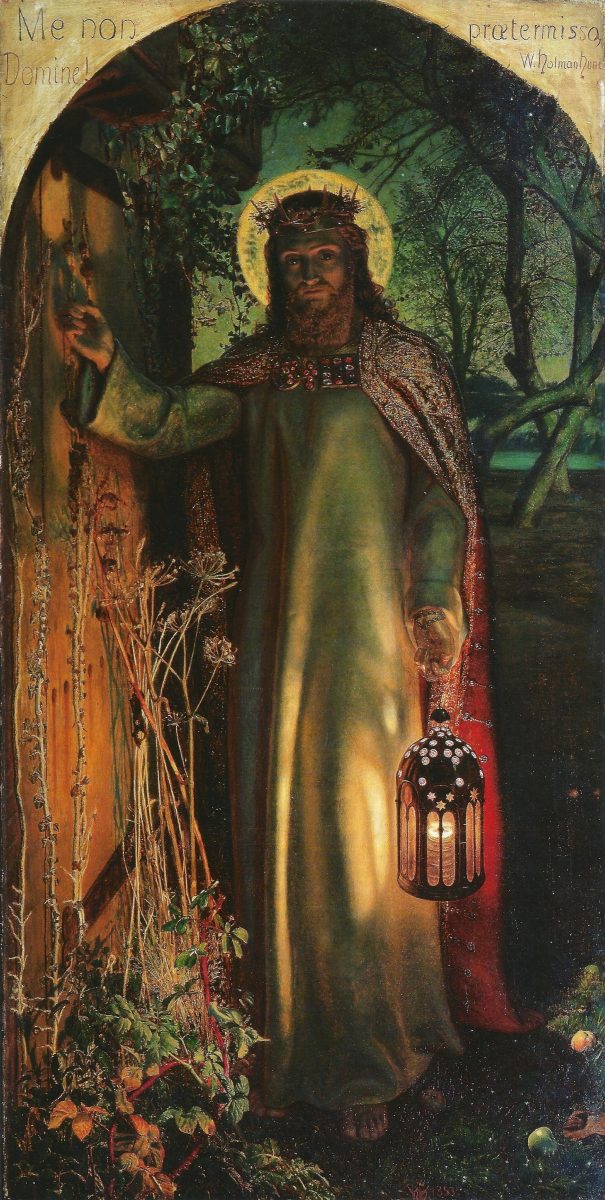
My own college – Keble – has a famous painting in its chapel: the original version of Holman Hunt’s ‘Light of the World’, 1853 (a larger replica, painted by Hunt some fifty years later, hangs in St Paul’s Cathedral). It is publicly accessible when the college is open (as always is to its alumni). The lantern is the light of conscience and the light around the head is the light of salvation. The door representing the human soul, which cannot be opened from the outside. The writing under the picture is taken from Revelation 3 ‘Behold I stand at the door and knock. If any man hear my voice and open the door I will come in to him and will sup with him and he with me.’
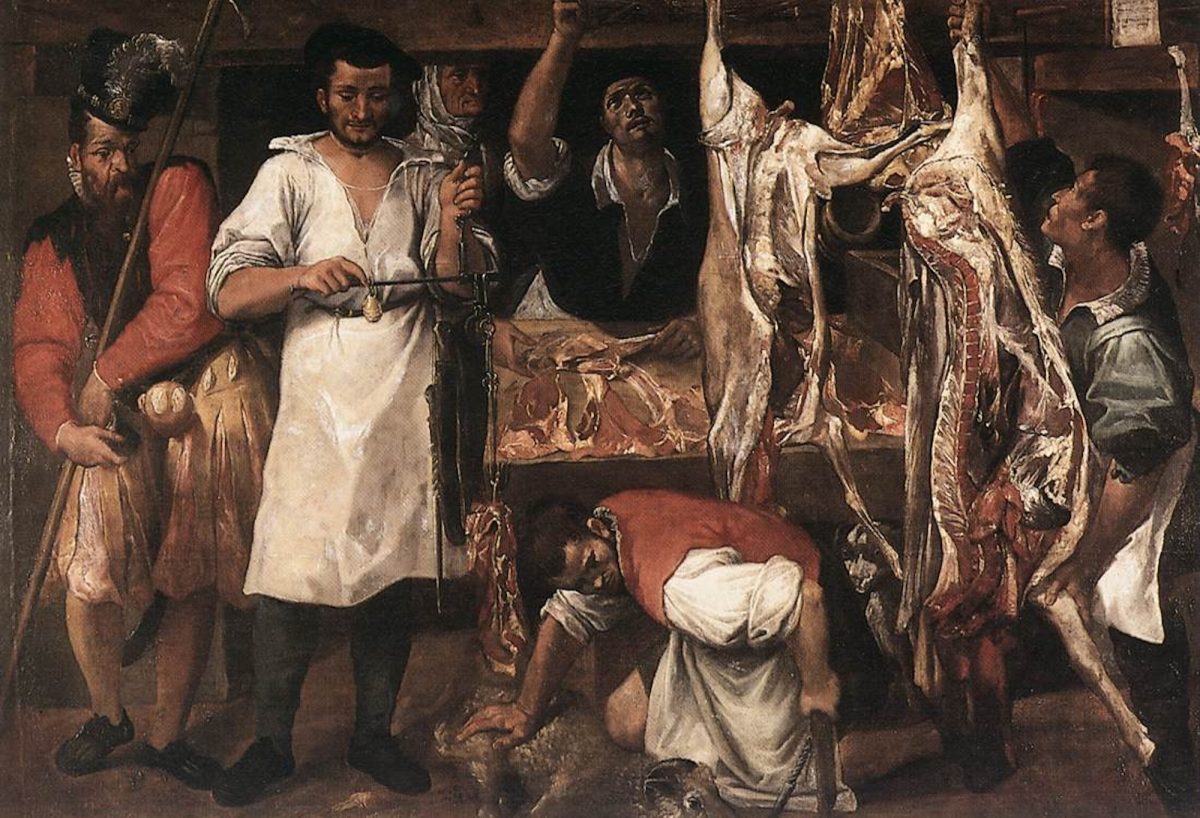
Christchurch College, older and richer than Keble, has a whole Picture Gallery for its collection of Italian art from the 14th-18th centuries. The college describes the Bolognese painter Annibale Carracci’s ‘The Butcher’s Shop’, c. 1583, as ‘perhaps the most spectacular in the collection’, and ‘of great historical significance: this was the first time that an artist treated a modest genre-subject, in this case the interior of a butcher’s shop, on a monumental scale (190 x 272 cm).’ It has been suggested that it was commissioned by a butcher’s guild, or for use as a sign.
I happened across the Oxford Art Society’s substantial annual open exhibition in the Kendrew Barn Gallery of St John’s College. It was – perhaps unsurprisingly – of a good standard. In the era of Trump, Helen Pakeman’s entertaining ‘We Can Fix This…’ might stand in for not a few hopelessly optimistic attempts to make light of the world’s problems.