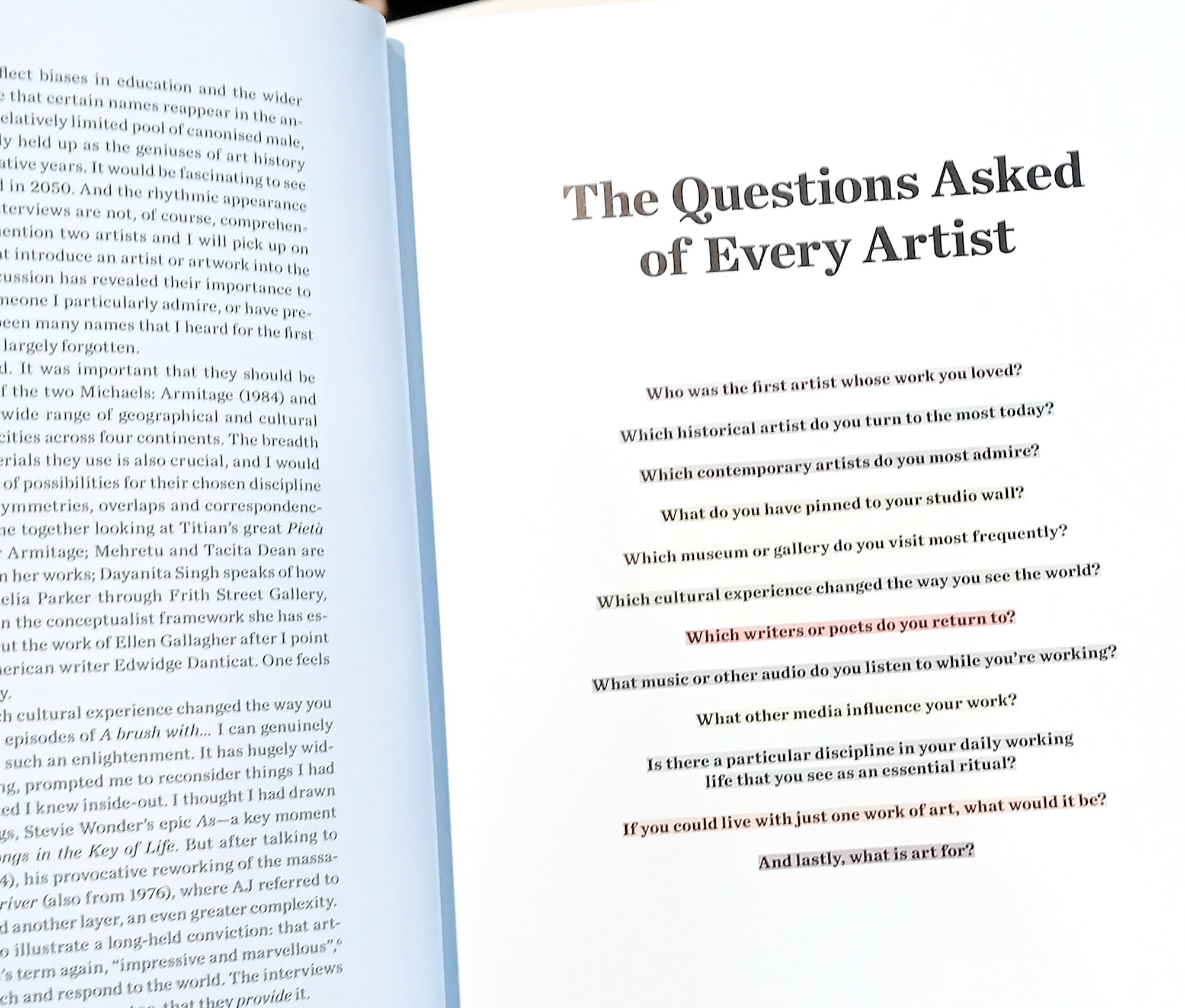
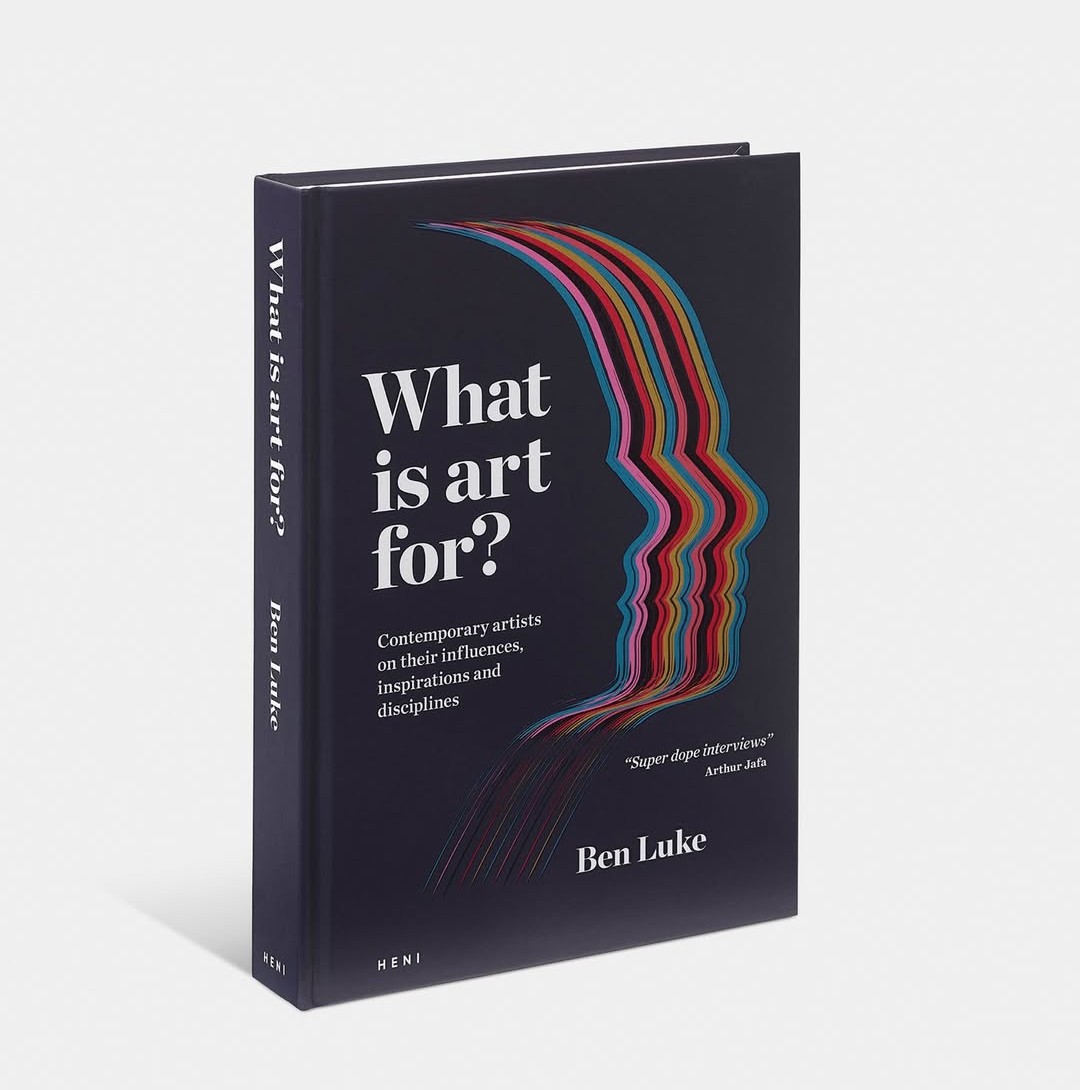
I’m currently reading Ben Luke’s ‘What is art for? Contemporary artists on their influences, inspirations and disciplines’. Like Luke, I like talking to artists – indeed, we were the primary interviewers for the short-lived, though widely-loved, magazine ‘Art World’, for which I began writing on art in 2007-09. There are various interview styles available: some foreground the artist’s personality, such as Robert Diament and Russell Tovey’s well-known ‘Talk Art’ series of podcasts. I like to concentrate on specific works, as in my 50-odd interviews for Artlyst in recent years. Luke’s ‘A Brush With…’ series of podcasts for the Art Newspaper looks into an artist’s practice as a whole, and what lies behind it. He starts with an insightful overview of the artist’s concerns; moves on to discuss those through relatively free form questions; and concludes with a set of 12 standard questions, which pan out into the artist’s broader influences. Luke is an exceptionally informed and attentive interviewer, and the choice of artists is of high quality – so the podcasts are excellent. Now 25 (of more than a hundred to date) have been turned into an attractive hardcover book, the selection driven by maximising the variety of the artists’ backgrounds, ages and choices of media.
What is the advantage of this shift in medium? Why not just listen to the podcasts, when you have the extra benefit of hearing from the artists through their own voices? There are four gains. First, permanence. As Luke himself says, ‘few fields are more prone to precarity than audio production’. Second, helpful illustrations can be more conveniently provided. Third, it becomes possible to take a more selective approach to your reading, for example of you want an overview of the writers and poets who have inspired artists. Fourthly, emerging from that, and in Luke’s words again, ‘the overlaps and parallels between the interviews and the shared passions and fascinations of different artists, feel more palpable’. That has led him to add some extra material: the book is punctuated by short texts on five artists frequently cited by the interviewees: Velasquez, Goya, Manet, Duchamp and Bourgeois are designated ‘anchor artists’. That’s a choice from available options, as the excellent index reveals that, for example, Titian, Rembrandt, Picasso and Rauschenberg are cited with comparable frequency.
One way to ‘road test’ the book is to see how useful it is in providing background to enrich your enjoyment of a particular show. I tested it on Mark Leckey’s substantial survey in Berlin, and it held up well. There is, however, one disadvantage. The book is based on the responses to standard questions. Those are certainly interesting, especially as Luke delves into the answers to ask supplementary questions. But you don’t get – for reasons of space, presumably, given it is already a 400 page book – the more discursive questions focused on the artists’ particular practices. Luke does expand his introductions to incorporate some of that material, but – from my perspective – some of the best parts of the interviews are missing in this format. Back with the Leckey, we miss, for example, the detailed discussion of ‘To the Old World (Thank You for the Use of Your Body)’, 2021, his remarkable generation of urban transcendence through the portal of repeated smashing of a bus shelter.
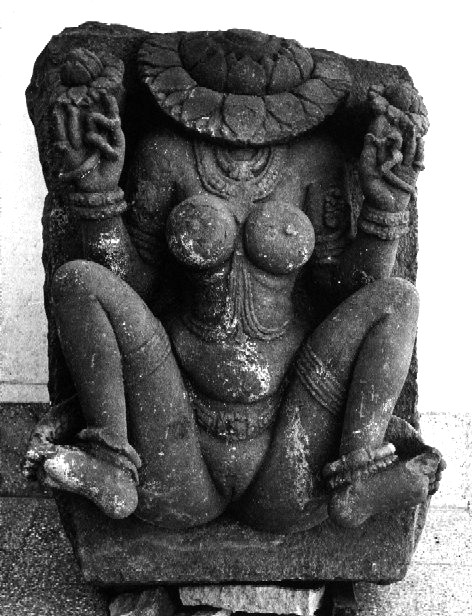
Perhaps that’s just to say that the book operates differently from the podcasts. Still, if stuck on a desert island, I’d probably take the podcasts before than the book, to give a fuller picture and supply company as well as stimulation – though having both would be even better. I’ve headed this article with one of the works chosen in response to the question: ‘If you could live with just one work of art, what would it be?’ Three artists have works chosen by two of the 25: Velasquez, Rembrandt and Brancusi. Several artists opt for something outside of the mainstream of the western canon, indeed, they choose works I’ve never seen. One such is Dayanita Singh’s selection: a 7th century sculpture by an unknown artist of the goddess Lajja Gauri from the museum in Badami, India that speaks to creation. She is the goddess of fertility, explains Singh, ‘on the ground with her legs up in a birthing position and a flower covering her head so you don’t see her face… The power in that sculpture is something I could live with the rest of my life.’