This autumn, rarely seen paintings, drawings and prints by Walter Sickert (1860–1942) from the personal collection of American art collectors Herbert and Ann Lucas will be on display at Piano Nobile.
SICKERT Love, Death & Ennui will feature over 80 works from The Herbert and Ann Lucas Collection, including many that have not been seen in public for over 20 years. Alongside a number of loans from private collections, the exhibition promises to be a unique opportunity to see rare works by one of 20th century Britain’s great artists.
Following the death of Mr Lucas in November 2024, and Mrs Lucas in 2018, the exhibition will now reveal some of these treasures and celebrate their lives as collectors. The Lucases had interests ranging from Attic pottery to Etruscan art, but their abiding interest in 20th-century British art has led to an incredibly wide-ranging collection of work by Sickert. Meticulously assembled over 30 years, many of the works have rarely been exhibited until now.
Due to the focused approach adopted by Herbert and Ann Lucas, the collection includes both his squared-up life drawings as well as the prints they relate to, clearly demonstrating the translation, replication and serialisation which were a key part of Sickert’s practice. Many of the items are also enriched by Sickert’s dedications, colour notes and annotations, offering a new dappled light on a man that remains mercurial.
Sickert was a vivacious and charismatic personality, well-beloved by his many friends from Oscar Wilde to Winston Churchill. He developed a personal style from the French Impressionists, especially Edgar Degas whom he described as ‘the lighthouse of my existence’. Since his death his work has been admired by artists as various as Frank Auerbach, Francis Bacon and Lynette Yiadom-Boakye.
He encompassed many different styles during his eclectic career, from the low-toned naturalism of his famous Camden Town period, the bright lights of his music hall paintings, to the free impressionism of his architectural studies around Europe. Besides painting and drawing, he mastered a variety of printmaking media including lithography, soft- and hard-ground etching, and engraving, deploying them in unexpected combinations.
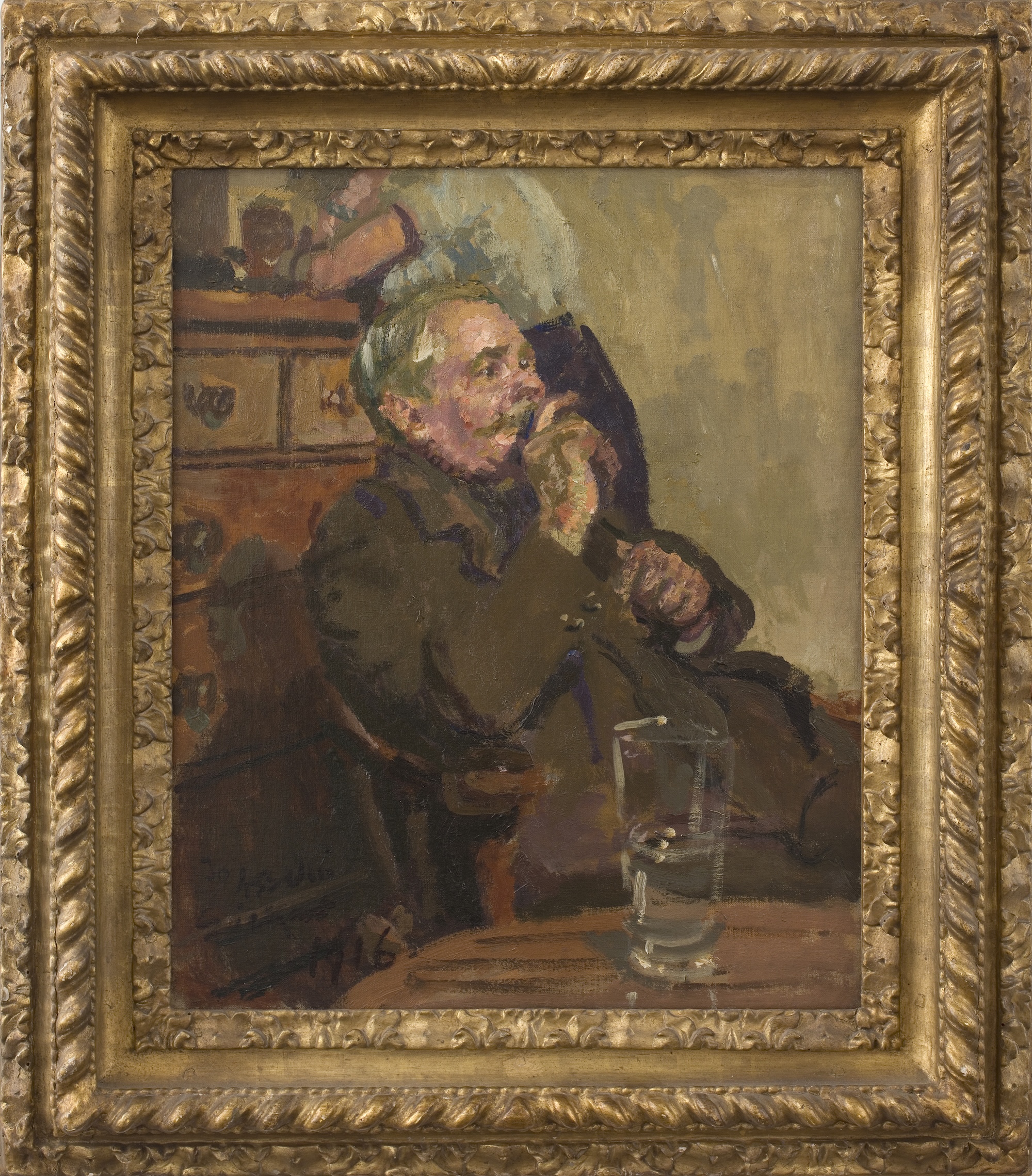
On display will be one of his most critically acclaimed and celebrated paintings – seen as the culmination of his Camden Town period – Ennui (1913-14), one of five in a series of paintings he executed about the boredom of married life. The title, which signals a state of existence and not merely a scenario, differs from other works of the period. In its two-figure composition it allegorises the emotional situation of the husband and wife; the former seated and raising a cigar to his lips with an expression between boredom and vacancy, the latter looking off hopelessly with her back turned and her own head cropped from view.
The Lucas collection version of Ennui was possibly made in a preparatory phase before the largest version of the subject (owned by Tate). Two other versions are owned by the Ashmolean Museum and HM King Charles III, while another is in a private collection. The colourful history of ownership of the Lucas version includes “gangster” actor Edward G. Robinson, who himself was the subject of a Sickert work drawn from a publicity shot for the 1936 film Bullets and Ballots. Visitors will be able to see the Lucas version alongside the corresponding etchings.
As none of the paintings are dated, the chronology of creation for each version is complicated, although the version on display is the only one with an inscription; a dedication to Sickert’s painter friend Maurice Asselin (1882–1947) dated 1916. The execution is lively and with a richly colourful palette, from viridian green, to purple and dapples of dark pink, which differs from the more muted tones of the later and larger version.
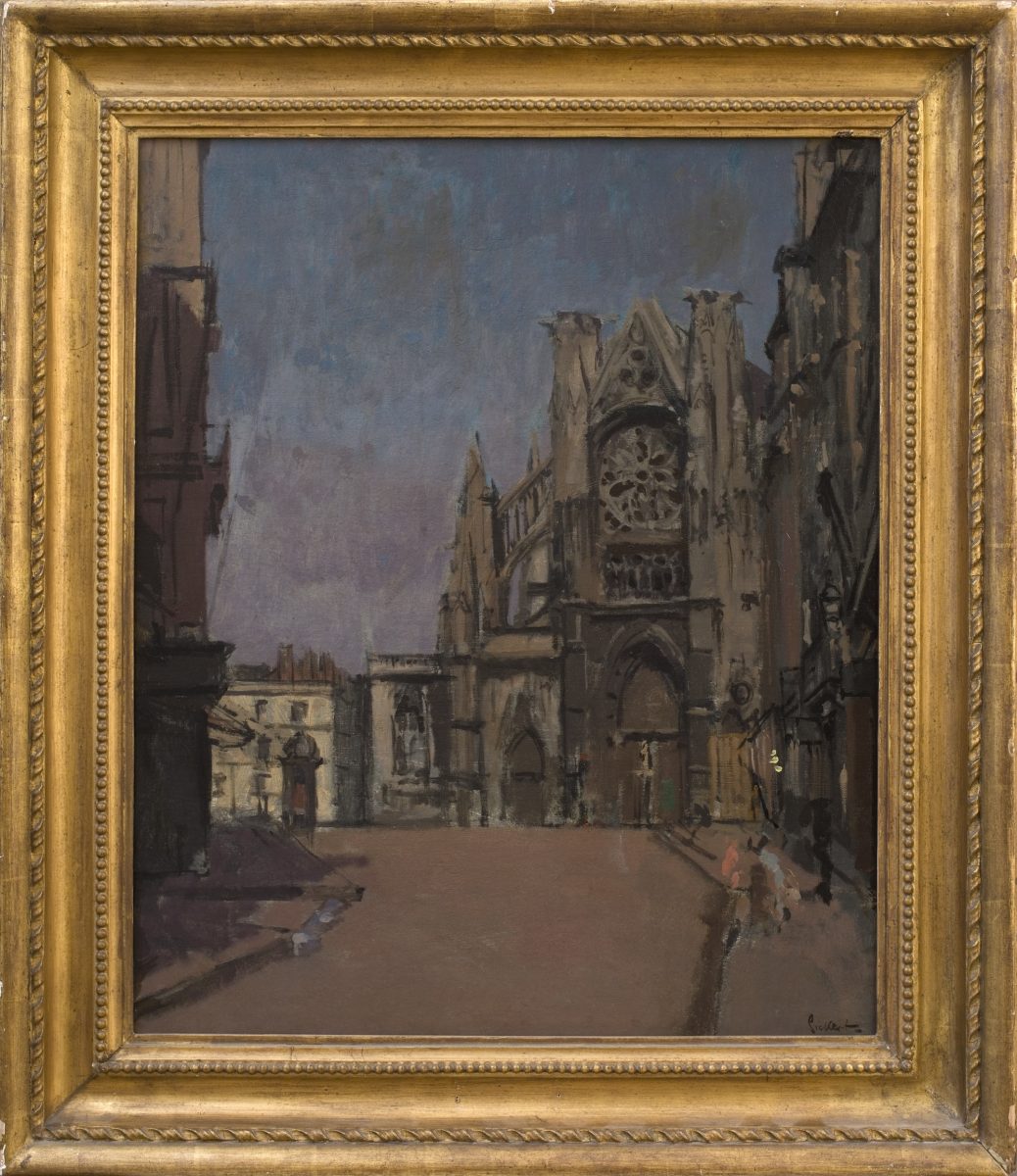
Another work on display will be Église St. Jacques, Dieppe (1902), a church that he kept returning to in his work, specifically the western façade. As evening turns to night and the setting sun fades, inky shadows pervade the scene, outlining the church architecture of mouldings, tracery and pointed arches. This was one of the later paintings Sickert made of his favourite subject, most were completed at the end of the 19th century, but this one has been dated to 1902, the same year he executed a large-scale version for a restaurant.
Cosmopolitan, eccentric, maverick – there are many descriptors of Walter Sickert, both of the man and his output, and these works will join many others, including important examples of prints from every period of Sickert’s career as a printmaker, to delve deep into an artist whose reputation continues to soar.
The exhibition provides an exceptional chance to further understand the genius of Walter Sickert, as a scholarly collection comes out of the shadows.
The exhibition will be accompanied by a fully illustrated publication, featuring essays by Kate Aspinall and Richard Shone, new research on Ennui and its versions, as well as one of the artist’s letters that has never been reproduced in full.
Matthew Travers, Managing Director of Piano Nobile, says:
“This exhibition is a rare opportunity to see one of the best groups of works by Walter Sickert in private hands. The collection is impressive for its depth and coherence. It includes paintings and drawings of the highest quality as well as several unique prints, most of which have not been publicly exhibited for 20 years.
“Seldom is there the opportunity to access such a carefully selected group of works from a private collection, and this exhibition affords a rare glimpse into the mind of two great collectors, Bill and Ann Lucas.
“Walter Sickert is one of the great artists of the 20th century and Piano Nobile regularly handles his work. A significant influence on the artists who followed him, from Auerbach and Freud to Howard Hodgkin and Lynette Yiadom-Boakye, Sickert’s work continues to inspire and excite. The contents of this exhibition are yet another reminder of his great talent, humour, vision and charisma.”
SICKERT Love, Death & Ennui: The Herbert and Ann Lucas Collection, 26th September – 19th December 2025 Piano Nobile