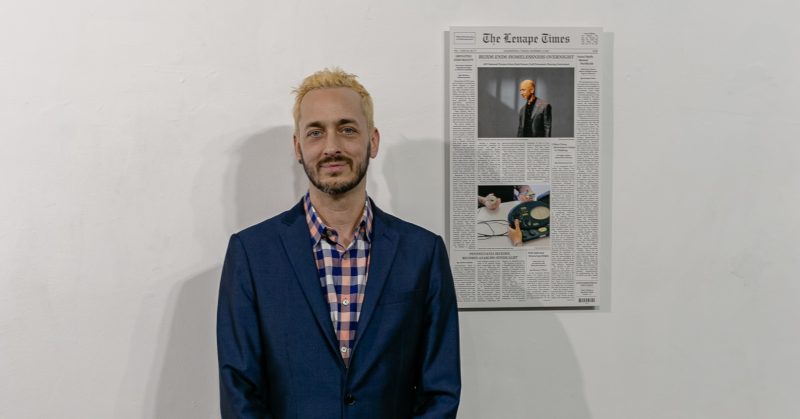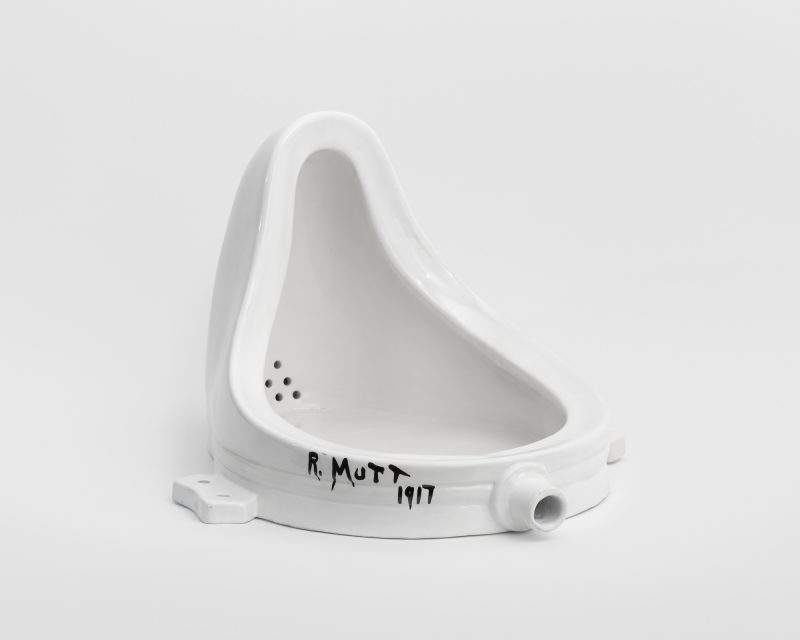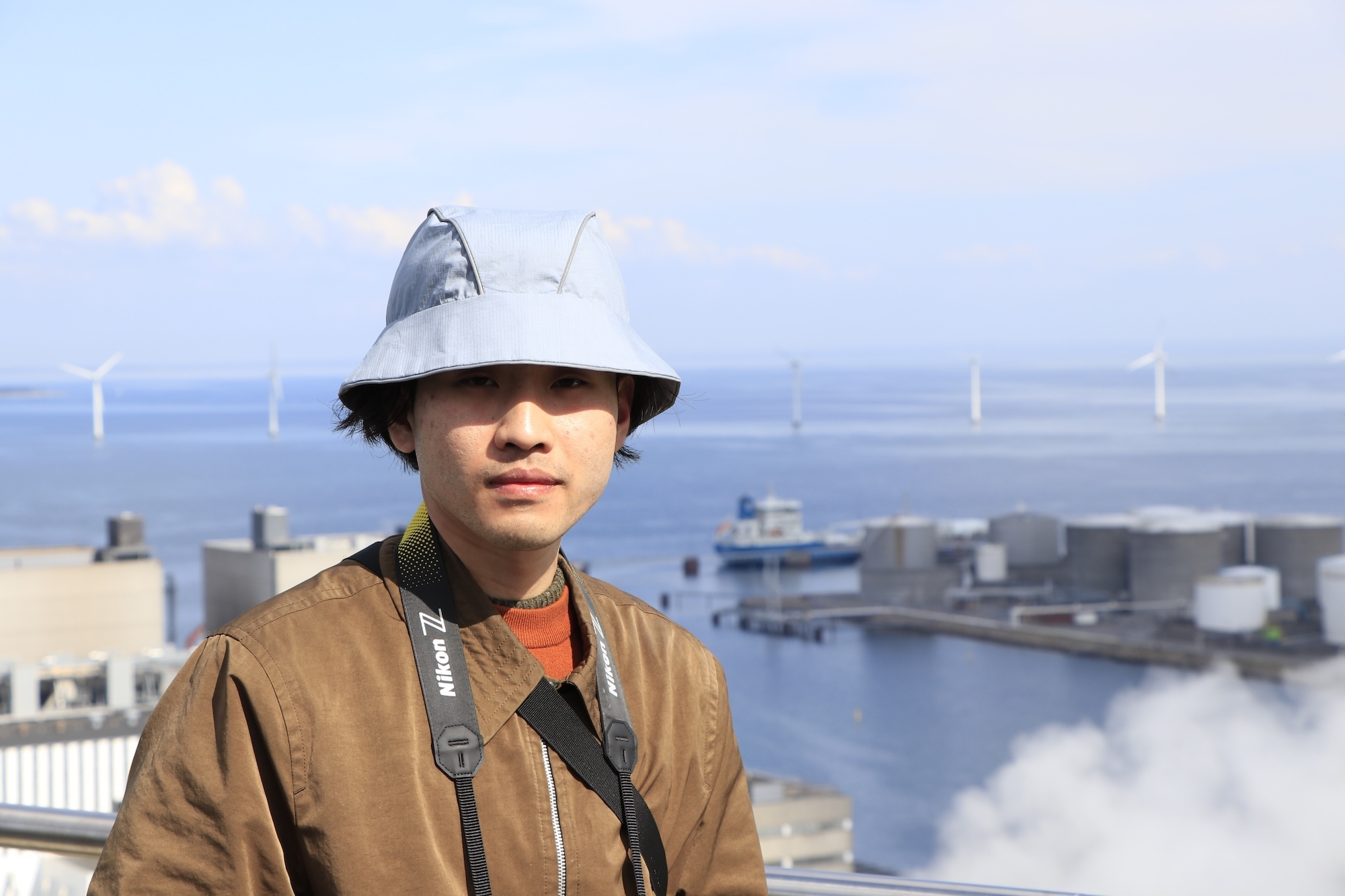
Haochen Ren (b. 1995, Beijing) is a London-based conceptual artist whose practice probes the architectures of perception, meaning, and institutional framing. Working primarily with everyday objects and mixed media, Ren’s interventions explore site-specificity and institutional critique, drawing upon a lineage that includes Marcel Duchamp’s radical recontextualizations, Michael Asher’s spatial dissections, and Danh Võ’s critical examinations of cultural systems. At the heart of Ren’s practice is a persistent inquiry into how environments, labels, and gestures condition collective cognitive experience.
Rather than presenting discrete objects for passive contemplation, Ren stages subtle disruptions that implicate both space and viewer. His approach resonates with artists like Andrea Fraser and Tino Sehgal, whose practices interrogate the performative and relational dimensions of contemporary art. In Ren’s Untitled, familiar materials—curtains, pedestals, labels—are rearranged into fragile constellations that resist immediate recognition. A pedestal supports nothing; a label points to absence; a curtain stirs imperceptibly. These quiet, nearly invisible gestures cultivate a form of heightened attentiveness, asking viewers not merely to look but to look again. This ethos recalls Ryan Gander’s The Useless Machine with Blowing Curtain (2013), where a barely perceptible movement generates a profound shift in attention, and Ceal Floyer’s minimal interventions, where everyday objects are reconfigured into conceptual provocations.
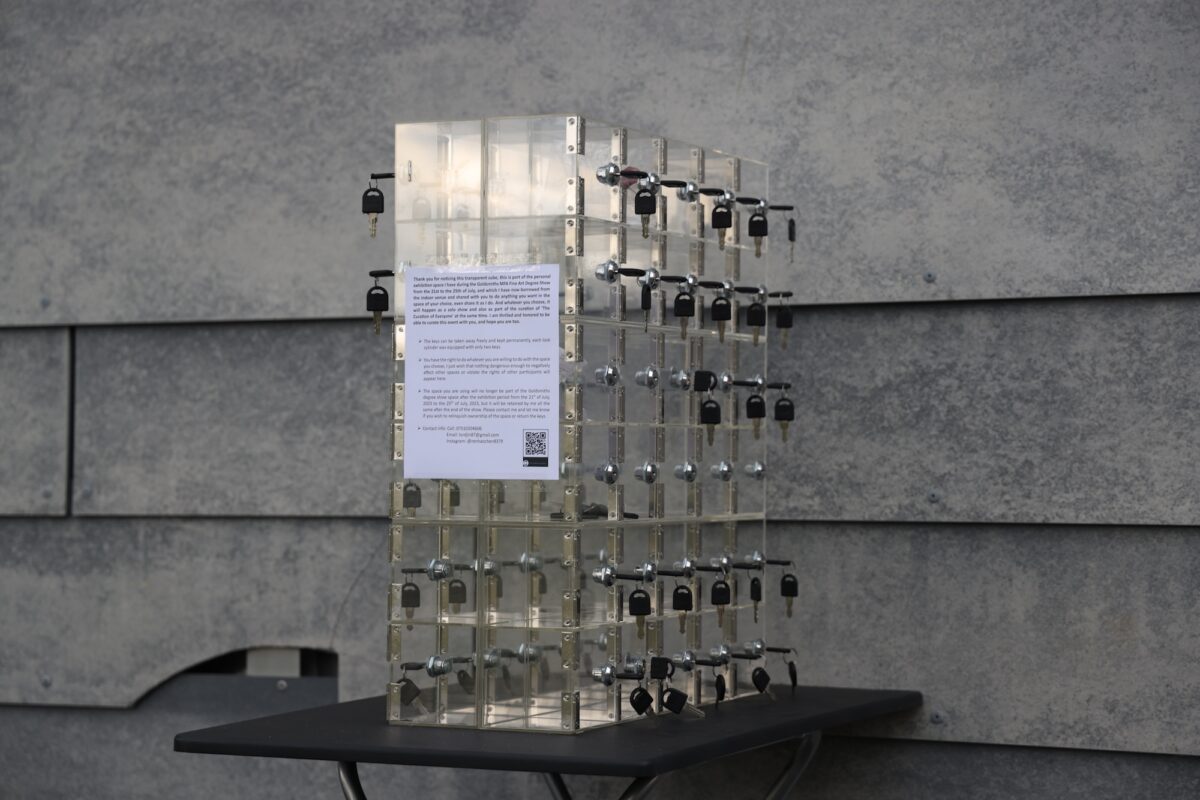
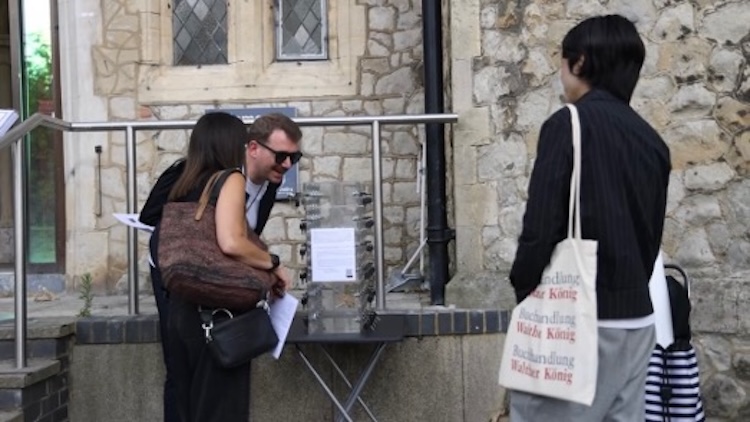
Ren’s minimalism shares affinities with Martin Creed’s works, notably Work No. 227: The lights going on and off (2000), which similarly directs focus toward the ambient conditions of experience rather than the production of spectacle. In Ren’s hands, the gallery becomes both site and subject, inviting a deeper awareness of the often-invisible structures that frame our encounters with art. His work rewards slowness, curiosity, and a willingness to inhabit uncertainty—qualities increasingly rare in an accelerated culture.
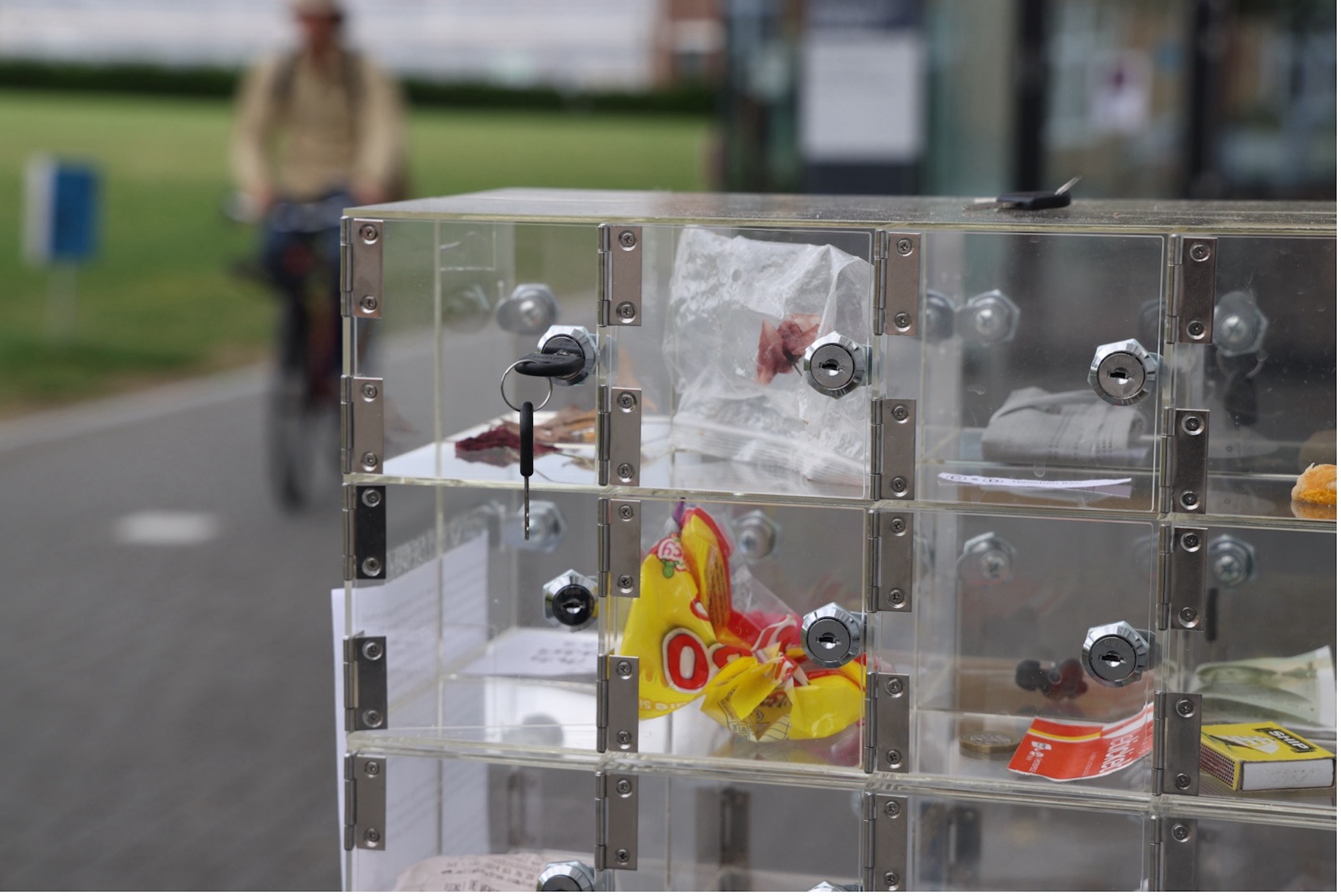
A pivotal evolution in Ren’s practice is encapsulated in The Untitled Collection (2023), a project that treated the exhibition format itself as a mutable, critical medium. This exploration evolved into no title, an ongoing body of work exhibited across contexts including OBSCURA – SHADOWS AND WHISPERS (2023) and ITERATION with the Koppel Collective (2025). In no title, Ren’s focus narrows to one of the most overlooked yet powerful components of exhibition-making: the label.
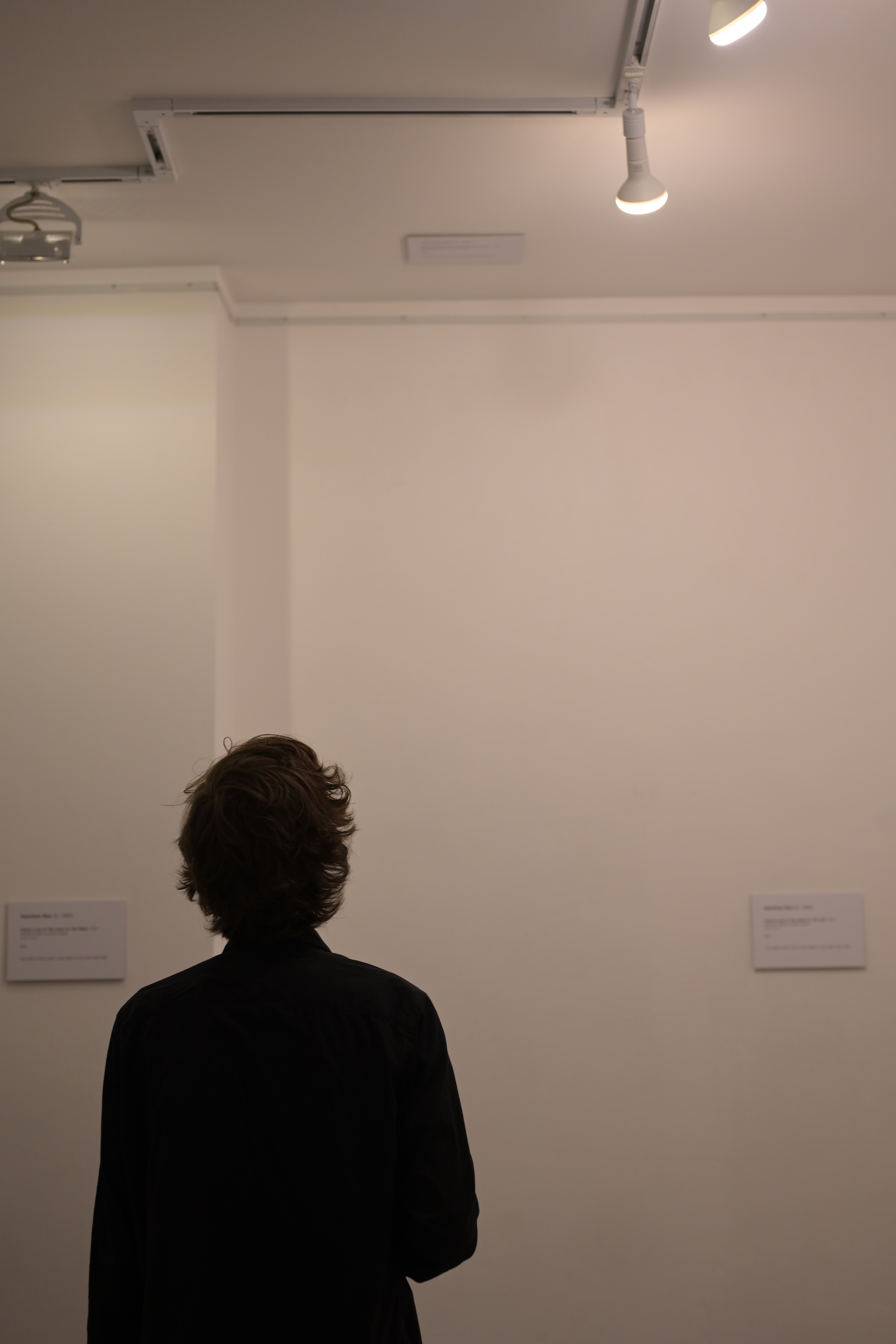
Where labels are typically ancillary, functional, or didactic, Ren elevates them to the status of protagonists. Drawing on the legacies of Joseph Kosuth, who used text as material; John Baldessari, who collapsed distinctions between language and image; and Claire Fontaine, whose critiques spotlight structures of visibility and power, Ren questions the implicit authority embedded within the exhibition label. What happens when the label is the artwork—or when it misdirects, inverts, or refracts meaning?
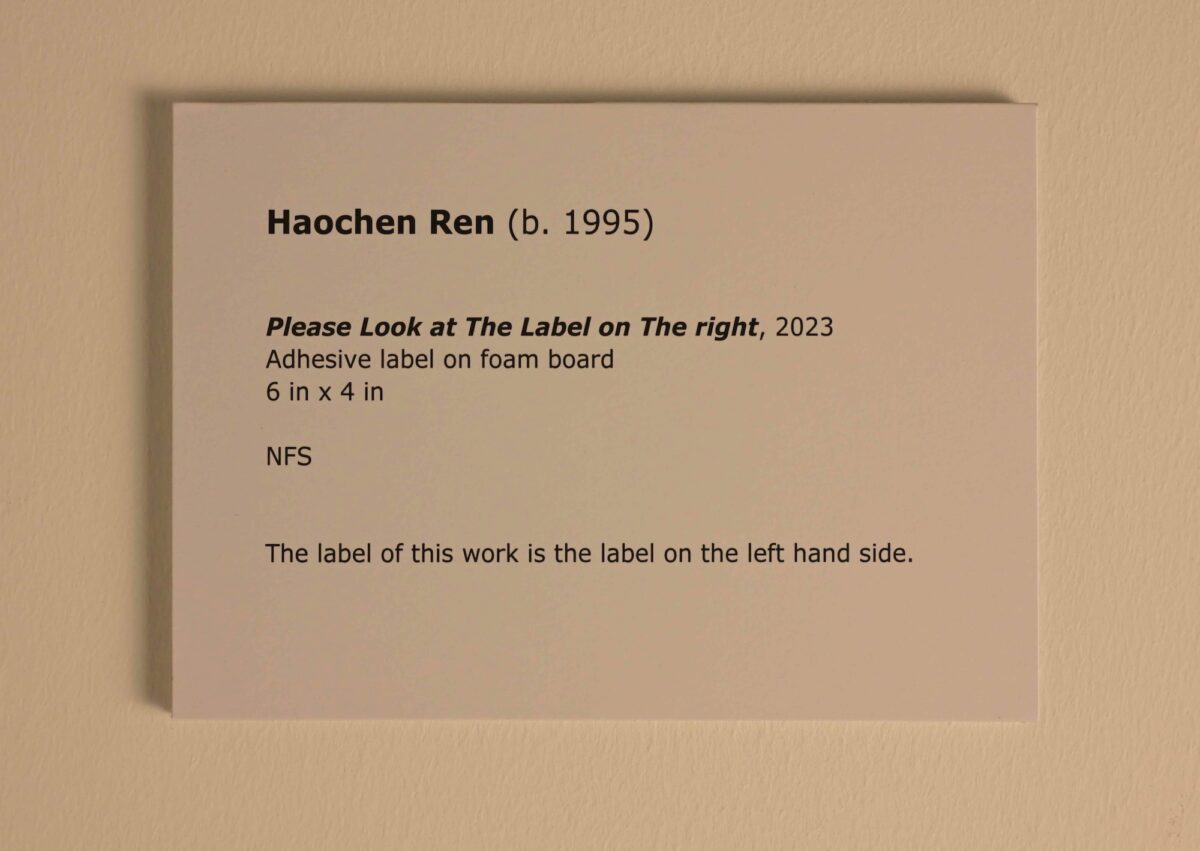
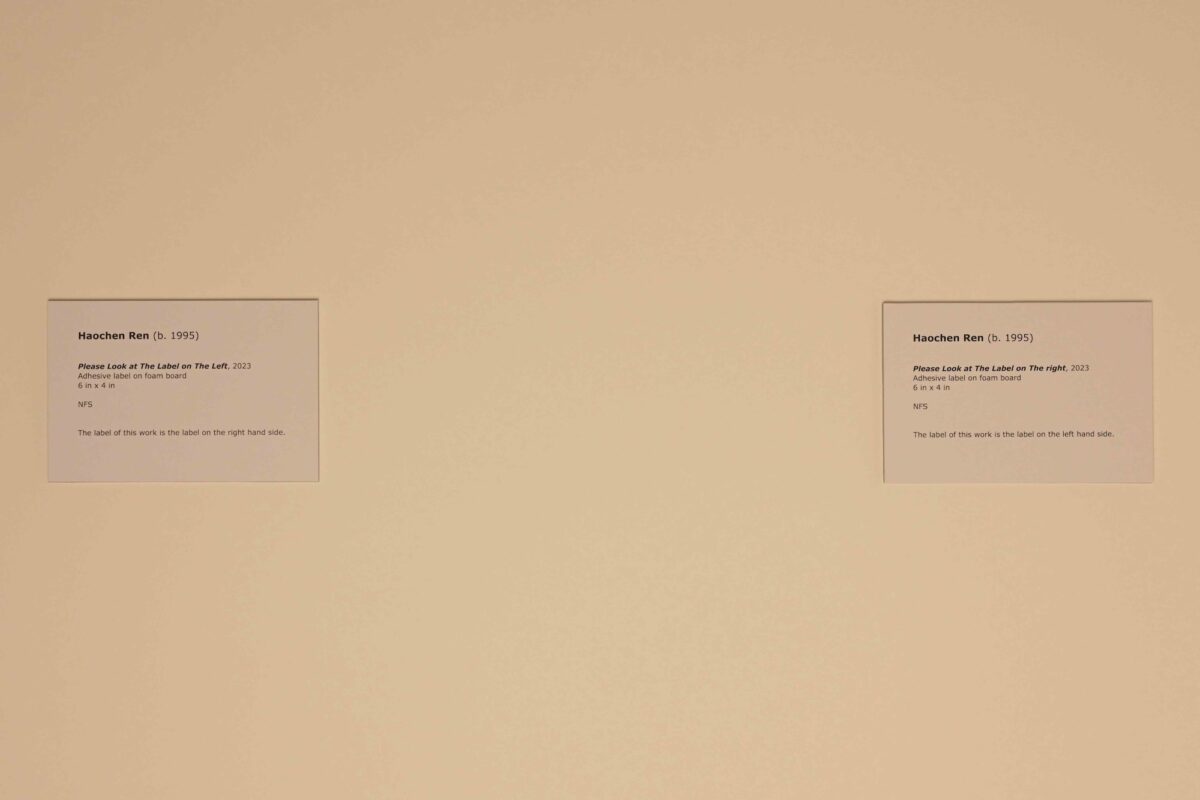
In no title, the gallery space becomes a choreography of attention: viewers move between text and object, navigating a feedback loop that destabilizes traditional hierarchies of meaning. The spatial relationship between work and label becomes an uncertain zone where authorship is diffused and institutional framing is laid bare. If viewers read first, they find their perception conditioned before they look; if they look first, the label reshapes their reading after the fact. In this oscillation, Ren reveals the subtle contracts between artist, curator, and viewer—contracts that usually remain invisible but quietly shape interpretation.
This reflexive, participatory dynamic aligns Ren with Rirkrit Tiravanija’s concept of the exhibition as a social situation rather than a static display. Like Tiravanija, Ren refuses to allow viewers to remain passive recipients; instead, he invites them to complete the work themselves. His installations are not answers but provocations—open-ended structures that ask: Who assigns meaning? Who holds authority? What happens when even the smallest structural elements are called into question?
Ultimately, Haochen Ren’s practice constitutes a potent critique of the systems through which art is framed, valued, and understood. By attending to the nearly invisible infrastructures that organize aesthetic experience, and by transforming minor gestures into major sites of inquiry, Ren offers a radical reimagining of attention, presence, and participation. His work stands as a quietly subversive yet profoundly generative contribution to the evolving conversations around conceptual art, institutional critique, and the politics of perception.
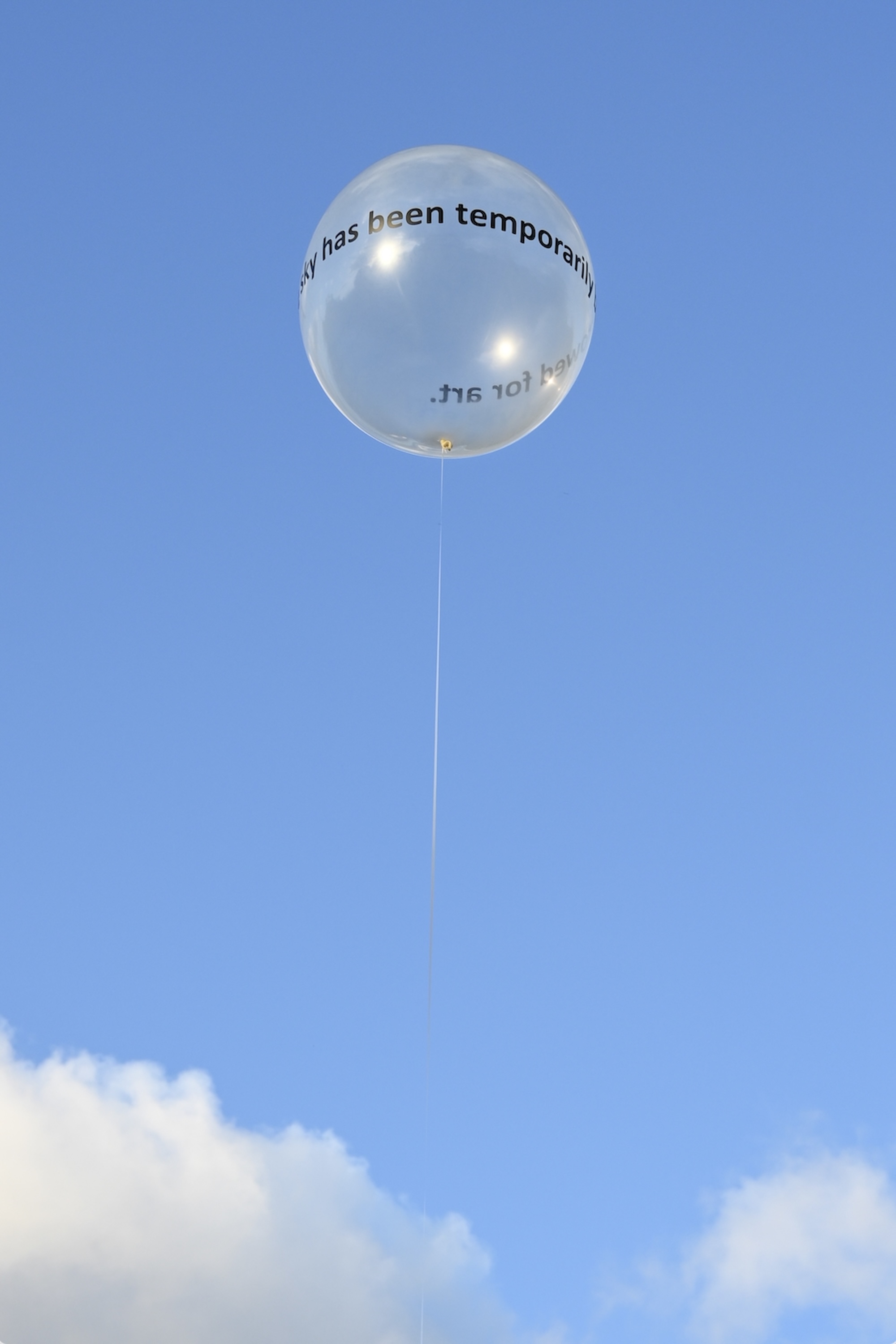
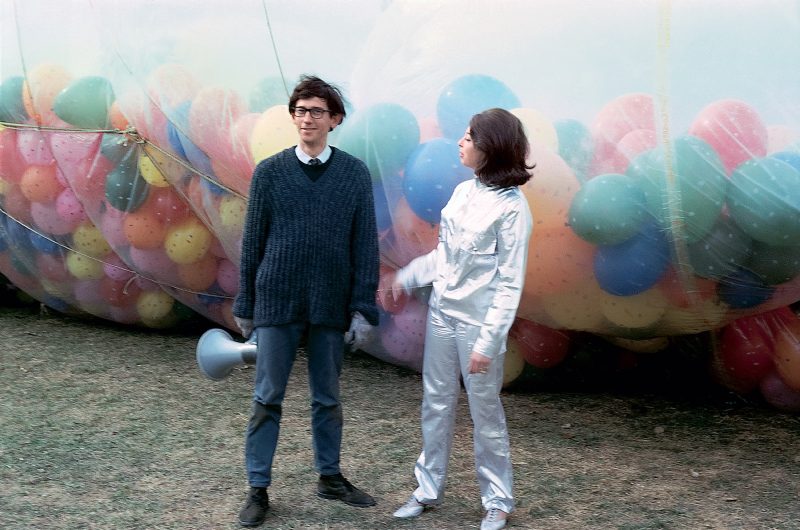
A significant extension of Ren’s practice can be seen in his outdoor work, which uses the sky not as backdrop but as medium. In this project, a reflective balloon occupies the expanse of the sky, inviting inquiry into the ontological status of art—what it is, what it produces, and how it articulates our ways of perceiving and relating to the world. Here, Ren stages a confrontation between the infinite and the ephemeral, the borrowed and the claimed. The sky, an enduring symbol of vastness and universality, becomes an active collaborator. The balloon does not simply exist in space; it mirrors and disturbs it, asking whether the balloon itself, the reflected sky, or the conceptual gesture of ‘borrowing’ from the sky should be understood as the work of art.
Rooted in a critique of institutional centrality, the project turns outward—both literally and conceptually. It resists the closed circuit of the white cube and reorients attention toward the broader cultural and environmental context. In doing so, it implicates not just the artist but the entire network of exhibition-making: curators, institutions, and publics alike. Ren raises important questions about authorship, participation, and humility. The gesture of borrowing the sky, a resource shared yet unpossessable, challenges the authority of the artist and reframes art as an ongoing negotiation rather than a declaration.
This work further complicates the boundaries of art’s definition. Can it remain art if it disavows objecthood, if its most significant gesture is conceptual and contingent? What happens when art refuses to offer itself as answer but instead becomes a structure for sustained public reflection? In line with Ren’s broader practice, the sky project unsettles authorship and decentering, asking whether the value of art lies in the object, the gesture, or the collective consciousness that surrounds and sustains it.