
The exhibition In Other Words takes translation as its central concept, exploring how images, materials, space, and meaning are transformed across different contexts. The curatorial framework approaches translation as a generative process, in which meaning inevitably shifts, diverges, or becomes reinterpreted. The exhibition text highlights concepts such as slippage, misreading, and reinterpretation, suggesting that artworks often begin from something pre-existing – such as a text, image, object, or memory – and develop into new visual or conceptual languages through processes of translation. In this sense, the exhibition focuses not on the source itself, but on the process between the original and its transformation. Within this framework, meaning is understood as something constantly evolving rather than fixed or stable. Through the practices of different artists, the exhibition seeks to demonstrate how materials, space, and cultural references can be reinterpreted across different media and environments, forming new narratives. The exhibition is hosted by Qloud Collective as part of its first anniversary program.
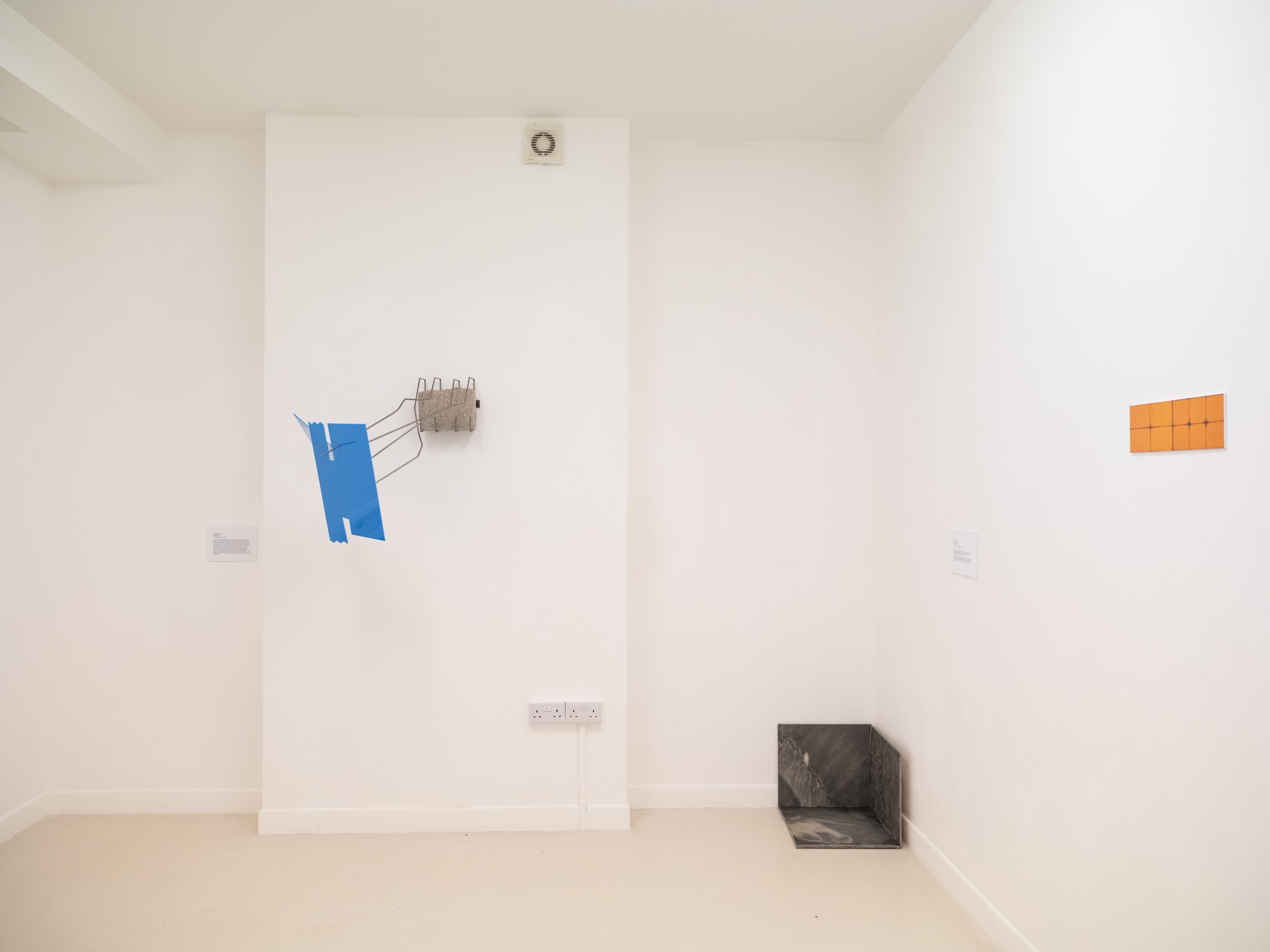
Within this curatorial context, the work of Hannami Kim presents a compelling example of material translation. Her practice is grounded in material-based research, particularly focusing on the reinterpretation of traditional Korean materials within contemporary art. Her work revolves around two main series: the Mountain series and the Soil (or Star Fragments) series. Through the concept of Sann-Heuk (Mountain and Soil Aesthetics), the artist explores the cyclical relationship between the spiritual and the material. While the Mountain series focuses on atmosphere and spatial tension, the Soil series examines time and material transformation. In the Star Fragments series, the artist uses Jangpan-hanji, a traditional Korean flooring paper. Hanji, made from mulberry fibres, has historically been used in writing, architecture, doors, windows, and flooring. Jangpan-ji in particular was used as floor covering in traditional Korean houses and is closely connected to the Ondol underfloor heating system, where heat is distributed through the floor. As modern architecture developed, this material gradually disappeared from everyday use. By reintroducing it into her artistic practice, the artist transforms it into a cultural material that carries memories of domestic space.
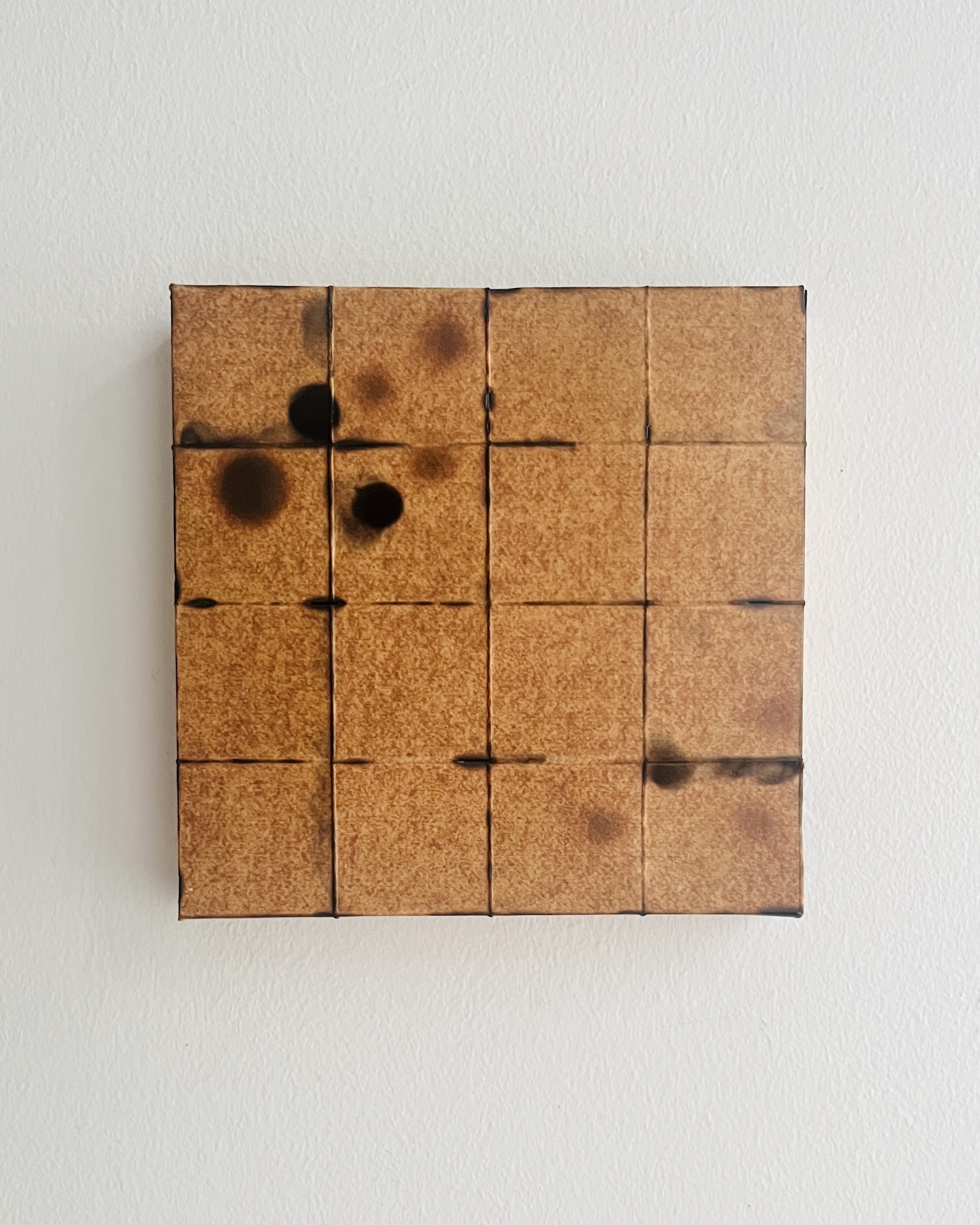
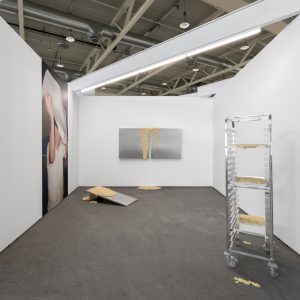
In the Star Fragments series, the artist does not create images through conventional painting. Instead, she applies fire and controlled heat to the paper’s surface, leaving burned traces that form grid-like and star-shaped intersections. These structures create visual patterns while also referencing the spatial logic of the traditional Ondol heating system, where heat rises from beneath the floor. Through this process, thermal energy embedded within architectural structures is translated into visual imagery. This transformation can be understood as a sequence of energy – material reaction – image formation, where the artwork emerges from the physical interaction between material and energy. Such a method can be understood as a form of process-based abstraction.
Within this series, translation occurs on multiple levels. First, there is material translation, in which a domestic flooring material is transformed into contemporary abstract art. Second, there is energy translation, where temperature and tactile experience are converted into visual form. Third, there is cultural translation, in which traditional Korean architectural culture is recontextualised within contemporary artistic discourse. From an art historical perspective, this practice can also be connected to the Korean monochrome painting movement, Dansaekhwa of the 1970s. Dansaekhwa emphasised materiality, repetitive processes, and meditative surfaces. Similarly, Hannami Kim’s work foregrounds material and process; however, instead of paint, she employs fire and heat as her primary tools. In this sense, her practice can be understood as a contemporary extension of this tradition.
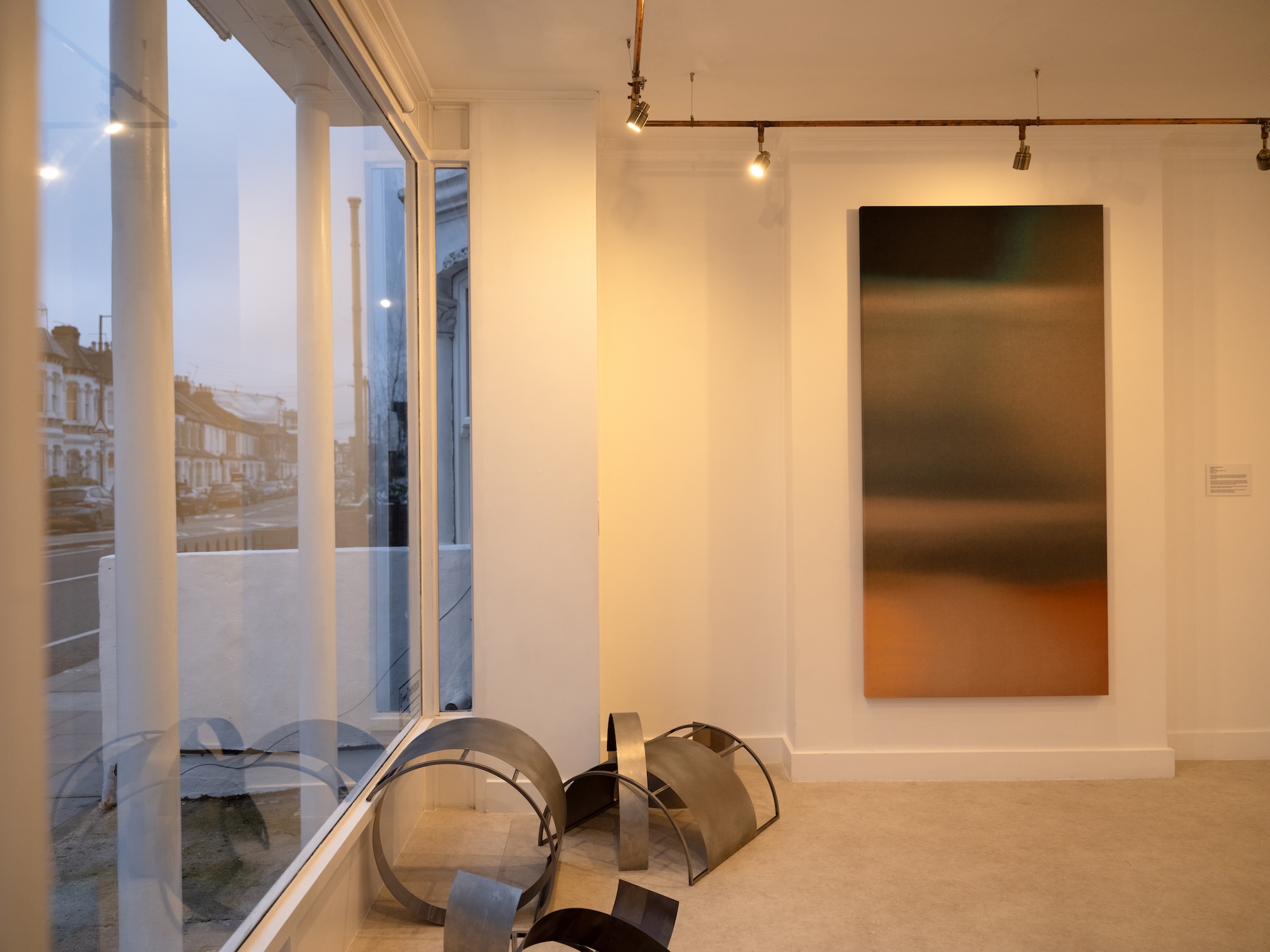
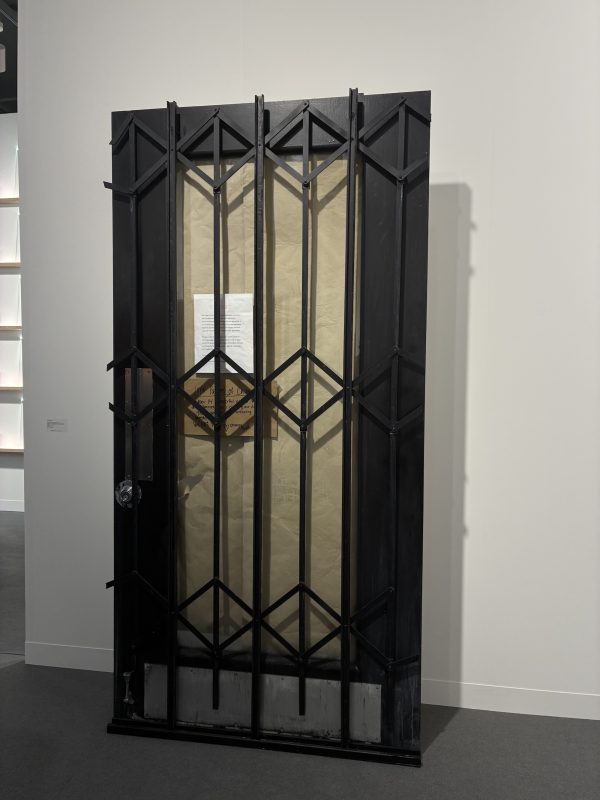
In contrast to Hannami Kim’s focus on material transformation, the practice of Ziling Yu is more concerned with the translation of space and architectural structures. Her work explores the relationships between materials, architectural elements, and spatial contexts, as well as how architectural forms shift when they move between environments. Having relocated from her hometown in China to London, the artist exists between two different urban and cultural contexts. This experience informs her observation of city spaces, architectural forms, and cultural memories. She pays particular attention to surfaces, structures, and materials within built environments, examining how they change across contexts.
Through strategies of reconstruction and juxtaposition, she reorganises architectural elements that originally belonged to specific locations. In doing so, structures that once had clear functions or historical meanings are transformed into unfamiliar spatial forms, making it difficult for viewers to identify their origins. This method can be understood as a process of spatial deconstruction and reconstruction: architectural structures are first dismantled and then reassembled within a new context. Within the curatorial framework of In Other Words, this practice represents a form of spatial translation. Architectural structures that once belonged to a specific urban environment are repositioned within a new artistic context, thereby altering their meanings.
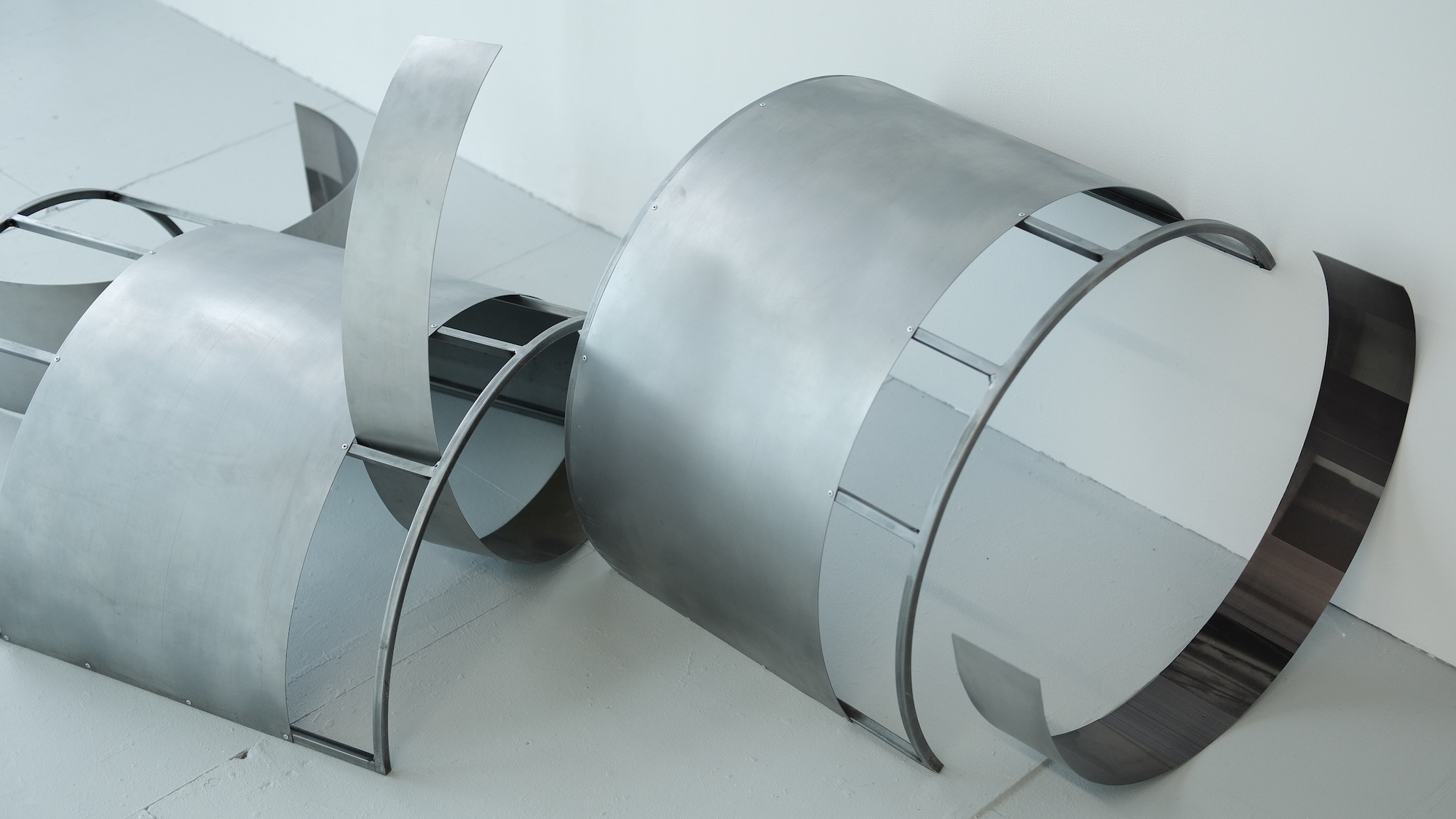
At the same time, the artist’s cross-cultural experience introduces another dimension of translation. Local architectural memories are reinterpreted within a new cultural environment. Ziling Yu is particularly interested in how materials carry cultural memory. Architectural materials do not only possess physical properties; they also embody historical and social narratives. When these materials are relocated into new spatial contexts, their meanings inevitably shift. Her work, therefore, examines not only architectural structures but also how materials move between different cultural and spatial frameworks.
Overall, the exhibition In Other Words presents a layered exploration of translation through the practices of different artists. While Hannami Kim’s work emphasises the transformation of materials and energy, Ziling Yu’s practice focuses on the movement and reconstruction of architectural structures and spatial contexts. If the former represents translation at the level of material transformation, the latter highlights translation within spatial and cultural frameworks. Together, these approaches expand the concept of translation beyond language or text, extending it into the realms of material, space, and cultural experience. Through these artistic practices, the exhibition raises a central question: when something moves from one context to another, what elements remain, and what meanings inevitably change? It is through this ongoing process of transformation and retelling that new meanings continue to emerge
In Other Words, March 8th–11th, 2026, Corner Gallery, Parsons Green @qloud_collective
Featured work by artists including Lydia Lott, Yujin Lee, Ziling Yu, Hannami Kim, Khwaish Gahlaut, Tutu Tugce Sonmez, Shimeng Liu, Angel Dan Rong, Christabel Png, and Divyam Raghunath.